LimX Dynamics' Humanoid Robot Makes New Strides: Running, Stair Climbing | Oasis Vitality

Real-time terrain perception, full-body motion control, hardware platform performance

LimX Dynamics has unveiled the latest progress on its humanoid robot, with CL-1 completing single-step stair climbing and round-trip running — advances made possible by improvements in real-time terrain perception, full-body motion control, and hardware platform performance.
LimX Dynamics Humanoid Robot CL-1 Update: Single-Step Stair Climbing and Round-Trip Running
Real-Time Terrain Perception Enables Single-Step Stair Climbing
Building on real-time terrain perception, LimX Dynamics' CL-1 has progressed from its previous demonstration of taking two steps per stair to now alternating feet with one step per stair — achieving a more human-like dynamic stair-climbing motion.
(More context 🔗 LimX Dynamics Unveils First Dynamic Tests of Humanoid Robot CL-1)
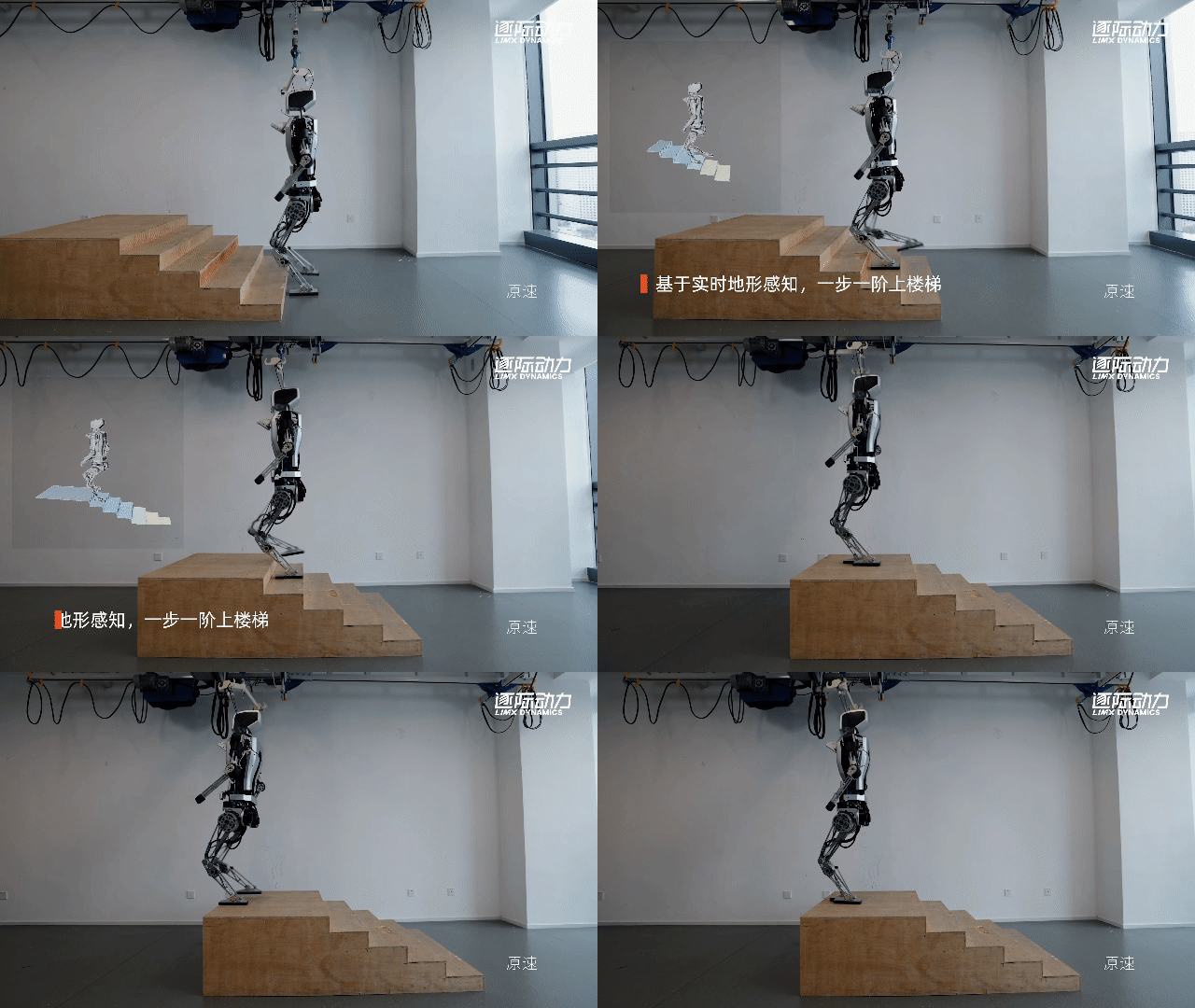
Based on real-time terrain perception, CL-1 dynamically climbs stairs with single-step alternation
Full-Body Motion Control for Round-Trip Running
LimX Dynamics has for the first time released test footage of a humanoid robot running. CL-1 completes the entire sequence continuously and dynamically — from standing still, starting, accelerating, decelerating, stopping, and running back and forth.

Based on full-body motion control, CL-1 completes the complete running motion sequence
Synchronized Software and Hardware Upgrades
On the software side, by integrating more real-time and precise terrain perception data, CL-1 achieved faster, larger, and more stable stair-climbing strides compared to before. To optimize high-dynamic motion in humanoid robots, LimX Dynamics further iterated its full-body motion control algorithms. Through real-time planning of whole-body movements, CL-1 demonstrated more coordinated arm and leg motions in this test, with significantly reduced body sway during movement.
On the hardware side, both the larger stair-climbing strides and round-trip running placed more demanding requirements on the robot's power performance and stability. To meet these demands, CL-1 enhanced joint performance (torque, rotational speed, and response time) and optimized the overall structural design — achieving greater impact resistance with lower overall weight, balancing both power performance and stability.
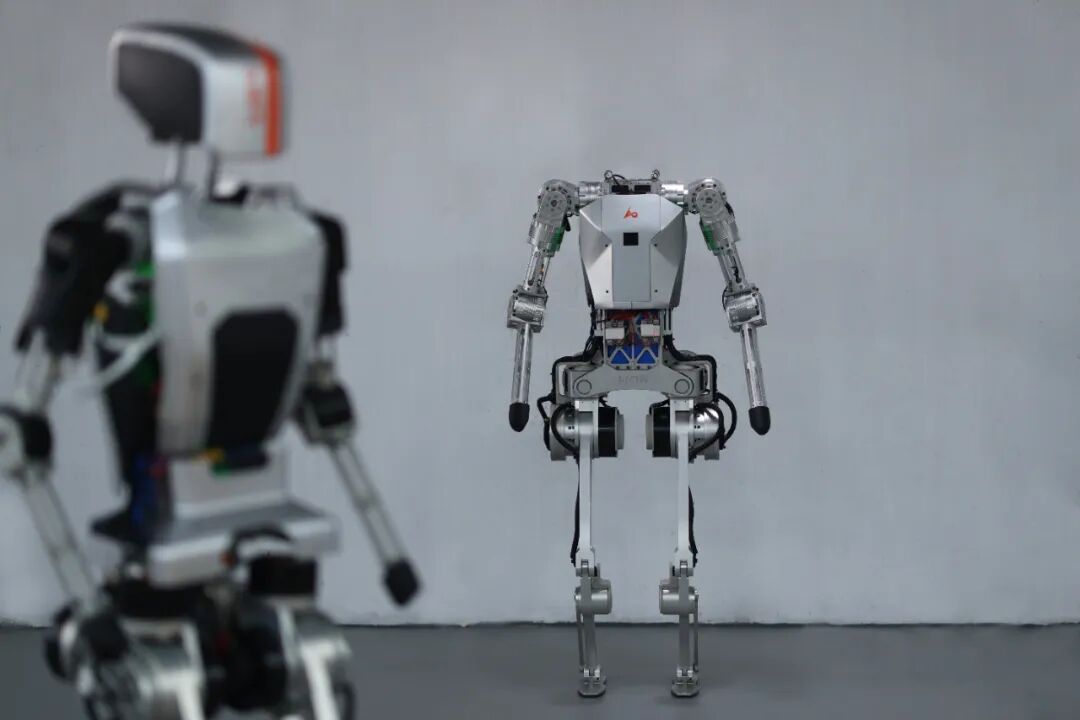
LimX Dynamics upgraded real-time terrain perception, full-body motion control algorithms, joint performance, and overall structural design
Making Humanoid Robots Not Just Walk Fast, But Actually Run
In this test, CL-1 smoothly switched between running speeds, completing the full sequence from standing to starting and from running to stopping, while achieving larger running strides — demonstrating a high-dynamic effect of actually running, not merely walking fast.
Achieving stable, controllable running in humanoid robots presents several key challenges:
- Longer motion cycles and large variations in center-of-mass height place high demands on motion planning performance
- Running requires both feet to be airborne simultaneously, increasing the difficulty of state estimation
- Coordinated control of all limbs across the robot's body is required
- Higher demands on the robot's overall hardware power and stability, including greater joint power density and stronger whole-body structural impact resistance
To tackle the challenge of humanoid robot running, LimX Dynamics' R&D strategy focuses on two directions: full-body motion control algorithms and hardware systems. The team systematically analyzes and understands the motion control problems underlying running, designing generalizable and scalable motion control algorithms. By synthesizing data from algorithms, simulation, and real-machine testing, they define the performance requirements for the overall hardware and establish the technical roadmap and design specifications for the hardware system.
As R&D continues to advance, LimX Dynamics' humanoid robot CL-1 will further integrate real-time perception with reinforcement learning to deliver additional breakthroughs.