"LimX Dynamics' Wei Zhang: Humanoid Robots Won't Enter Factories, Embodied AI Won't Hoard Real-Robot Data" | Oasis Vitality

Counselor Vitality

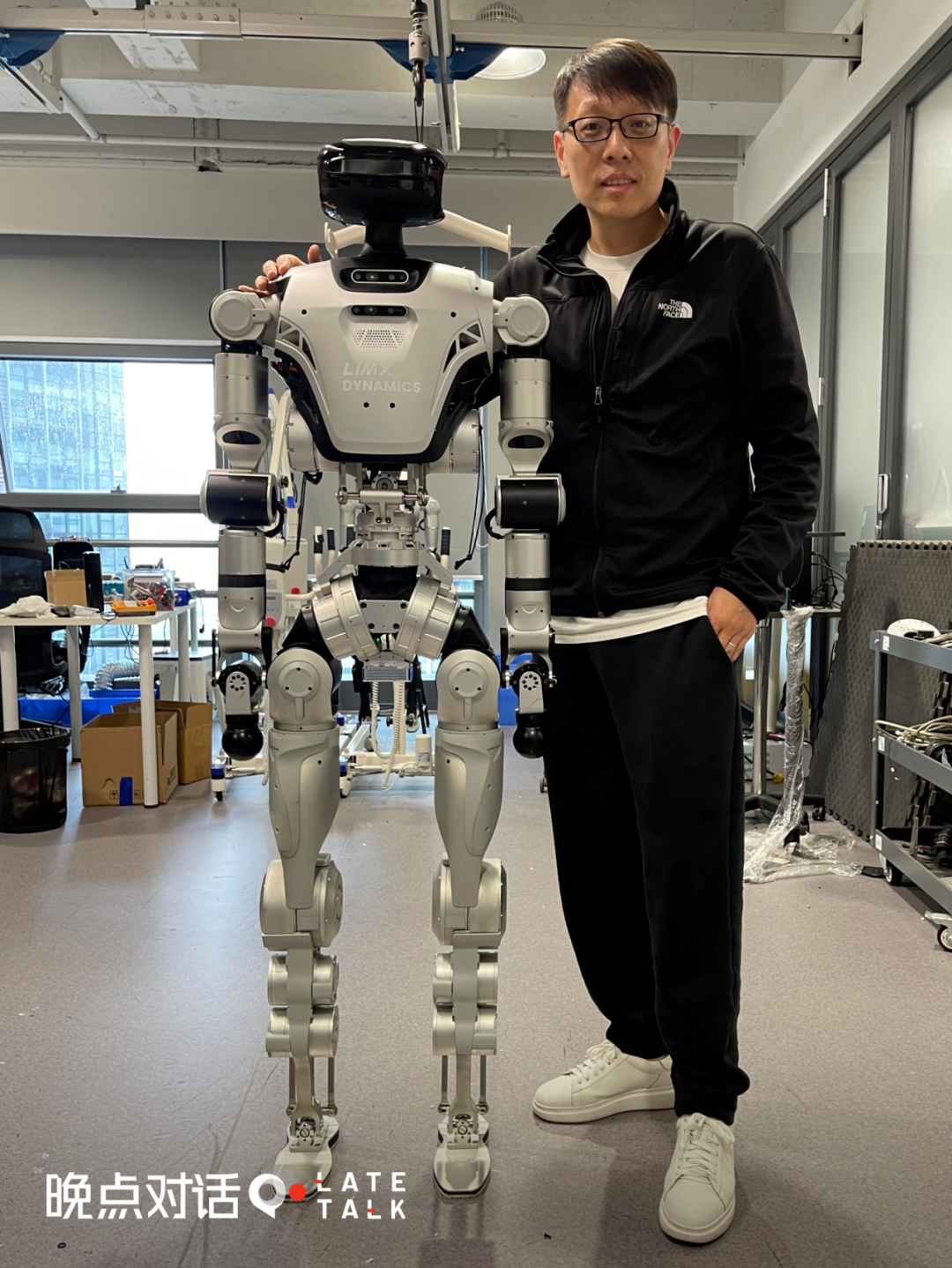
"If winning were just about piling up data and compute, there'd be no room for startups here." — Zhang Wei, founder of LimX Dynamics
This article is republished with permission from LatePost (ID: postlate)
By: Li Zinan
Editor: Manqi Cheng
At AI Day in October 2022, Elon Musk stood beside a wire-exposed Optimus prototype and declared that humanoid robotics would become the largest manufacturing industry in human history.
Five months before Optimus's debut, LimX Dynamics was founded in Shenzhen, China. Prior to this, LimX founder Zhang Wei had spent 16 years in the United States — earning his PhD from Purdue University's School of Electrical and Computer Engineering, completing postdoctoral research at UC Berkeley, and becoming a tenured professor at Ohio State University in 2017.
Those who secure tenure in the US typically don't leave easily. Yet Zhang returned to China shortly after, explaining simply: "I didn't want to stay abroad forever."
The transition from professor to entrepreneur felt natural to him. He realized that perhaps only 10% of future robotics progress would come from raw academic innovation; the remaining 90% would depend on engineering execution — and industry could accomplish far more than academia.
While most humanoid robotics and embodied AI companies aim to provide integrated hardware-software products, Zhang — who had previously attempted "factory floor" deployments — chose a distinctive positioning for LimX: becoming an embodied intelligence tools company. It would supply robot bodies and AI software tools to embodied application innovators seeking to deploy in specific industries and scenarios — whether seasoned system integrators, customers with intelligent robot needs, or tinkerer developers.
Viewing the industry through the lens of an embodied foundation tools provider, Zhang believes what's most lacking — and most valuable — are the humanoid robot's "cerebellum" and embodied "brain." The cerebellum, working with the body, solves whole-body control and all-terrain locomotion; the brain handles generalization, enabling robots to learn more tasks.
The poorly developed brain is the core reason humanoid robots remain un-deployable today. The key to building one lies in finding efficient methods for producing embodied intelligence models — what he calls the "machine tool" of the embodied intelligence field. Competition among robotics companies is fundamentally about methods and efficiency in producing embodied intelligence models.
LimX just released its video-generation-large-model-based embodied manipulation algorithm, LimX VGM, last Friday (February 14). Using human operation video data rather than relying on real robot data represents a crucial approach LimX has found to improve model production efficiency.
To address cerebellum and all-terrain mobility bottlenecks, LimX has successively unveiled R&D achievements including bipedal robots and full-size humanoid robots.
Embodied brain R&D is a race with no clearly visible track yet: technical approaches haven't converged, and a cohort of embodied intelligence companies are climbing routes they believe in. Some use smarter teleoperation methods to collect real-machine data; some are all-in on simulation; others like Tesla plan to directly manufacture thousands of robots and put them to work in factories.
Where there's divergence and uncertainty, risk and opportunity often coexist. Humanoid robotics remains a field where large companies can't fully leverage resource advantages: "If winning were just about piling up data and compute, there'd be no room for startups here," Zhang says. This is LimX's opportunity.
The following is LatePost's conversation with Zhang Wei, founder of LimX Dynamics.
LimX Is Not a "Legs" Company
LatePost: At the 2024 Apsara Conference, you discussed "what to look for in humanoid robots" with Xingxing Wang of Unitree, He Wang of Galaxy Universal, and Jianyu Chen of Star1 AI. He Wang emphasized robotic hands and manipulation capabilities; you said "first check the legs." Many perceive LimX as a company aiming to enter general-purpose robotics through mobility capabilities. Why this choice?
Zhang Wei: That's a misunderstanding. We're not limited to mobility — we pursue whatever component creates the most value.
Any robot form factor's primary value has three parts: the body, the cerebellum, and the brain. The cerebellum is tightly coupled with body morphology, handling motion control; the brain requires more intelligence — perceiving environments, understanding tasks, and completing complex operations.
Humanoid robots with "legs" and their motion-control "cerebellum" represent the hardware form most worth investing in currently. All-terrain locomotion and whole-body control for humanoid robots is a direction where technical approaches only began converging after the recent AI technology transformation — there are no truly usable products yet (not demos). As Musk said: physically possible, not yet reality, but future-necessary.
The more valuable "robot brain" hasn't converged yet. I believe the robot brain is determined by tasks to be accomplished, so it's diverse — not one monolithic model, but many different embodied models connected together, highly coupled with tasks.
LatePost: Is this view mainstream or not? For instance, Xiang Li believes robot models will eventually unify into a single VLA (Vision-Language-Action) model.
Zhang Wei: Not contradictory — just definitional differences. "End-to-end" is a particularly hallucination-inducing term.
Actually, any functional module can train an end-to-end model given sufficient input-output data. End-to-end models rely on end-to-end data, and data depends on the module's task scenarios and objectives. Single tasks suit end-to-end approaches; multi-task scenarios favor capability composition. For example, robot walking and hand-cube manipulation should be different skill models, though they could be encompassed within a so-called end-to-end large model activated by different tasks. MoE (Mixture of Experts) and AI Agent technologies used in large model deployment are both examples of small-model composition.
LatePost: Can a startup like LimX handle building multiple embodied models simultaneously?
Zhang Wei: The key is finding the right way to produce models — what we call the "machine tool" for embodied models, a set of methods and toolchains for model production. This is what general-purpose robotics lacks most currently.
I emphasize the machine tool's importance because the industry still mainly focuses on embodied model performance metrics. What matters more to me are the evaluation metrics for the "machine tool" that produces models — model production efficiency, not the embodied models themselves.
LatePost: How do you build this "machine tool" for embodied models?
Zhang Wei: We differ from mainstream approaches — we don't pursue performance gains by piling up data.
In principle, any process that can "produce" embodied models qualifies as a model "machine tool." The currently popular end-to-end real-machine data approach is one such machine tool: given enough real-machine data, embodied tasks can be completed, and more data yields better generalization. But this method is too inefficient, training costs too high — no one can currently acquire sufficient robot data at commercially acceptable costs, not even large companies.
So we pursue "data-performance" conversion rate — training better-performing embodied models at lower data costs. This approach hasn't converged in the industry yet. If it had, there'd be no startup opportunity — game over — because it would become a resource game.
LatePost: Companies are all working to improve "data-performance" conversion rate. Some are all-in on simulation and synthetic data; others are working to improve teleoperation efficiency for real-machine data. What's LimX's distinctive approach?
Zhang Wei: Robots currently have three main data types:
First, real-machine data that everyone obsesses over — having robots move and collecting data. This data is scarce, expensive, and loses utility when robot hardware changes — camera angle shifts, and data becomes unusable.
Second, simulation data, essentially modeling-dependent.
Third, internet text, image, and video data.
I believe all three are indispensable. Among them, properly leveraging internet image and video data has substantial potential for improving data-performance conversion rate.
LatePost: But one problem with video data is insufficient precision, and videos lack certain real-world physical dimensions like object weight, friction when grasping, textures of different materials, etc.
Zhang Wei: We don't need to consider this yet — robot tactile sensors remain immature, with too little usable tactile data.
We actually see internet data as an opportunity. With increasingly capable video generation and understanding technologies, we can now obtain more manipulation data and top-tier manipulation decision capabilities at lower cost. Generating 2D video alone isn't enough — we also generate depth-informed video, enabling robots to develop spatial intelligence. We've also decoupled algorithms from body morphology, allowing embodied model training using only human operation video data — take the action of picking up a cup, abundant in internet videos. Why collect this via real machines? Though many dismiss these videos as poor quality and unusable, we see this as an opportunity. We've preliminarily tested it and find it quite promising.
LatePost: Simulation is another efficiency approach beyond real-machine data. How do you view simulation's importance, and what is LimX's practice?
Zhang Wei: You could call simulation data "model data." Models are essentially compressions of existing human knowledge and data. Whether Newton's laws or large language models, both are models — Newton just compressed motion data more extremely, into differential equations, a few symbols. Now we've found compression methods for discrete data like language, storing models in neural networks. So simulation's essence is modeling the physical world.
We also value simulation highly. We don't develop simulators themselves; we focus more on Real2Sim2Real capabilities. This helps us construct real scenarios and environmental perception information, then train robots for manipulation tasks through reinforcement learning. We believe simulation + RL (reinforcement learning) approaches potentially far exceed end-to-end approaches in model production efficiency.
Serving Robotics Industry Innovators, Not Entering Factories
LatePost: You previously said the current priority is making embodied models "generalize" rather than improving efficiency and stability for specific scenarios. Yet you initially worked on quadruped robots for factory inspection. What changed from serving specific scenarios to pursuing generalization?
Zhang Wei: Initially we used scenarios to iterate technology. Later we developed deeper understanding of the relationship between scenarios and embodied technology, and clearer positioning: we don't directly build solutions, but rather standardized robot products and required AI toolchains to help system integrators deploy across scenarios.
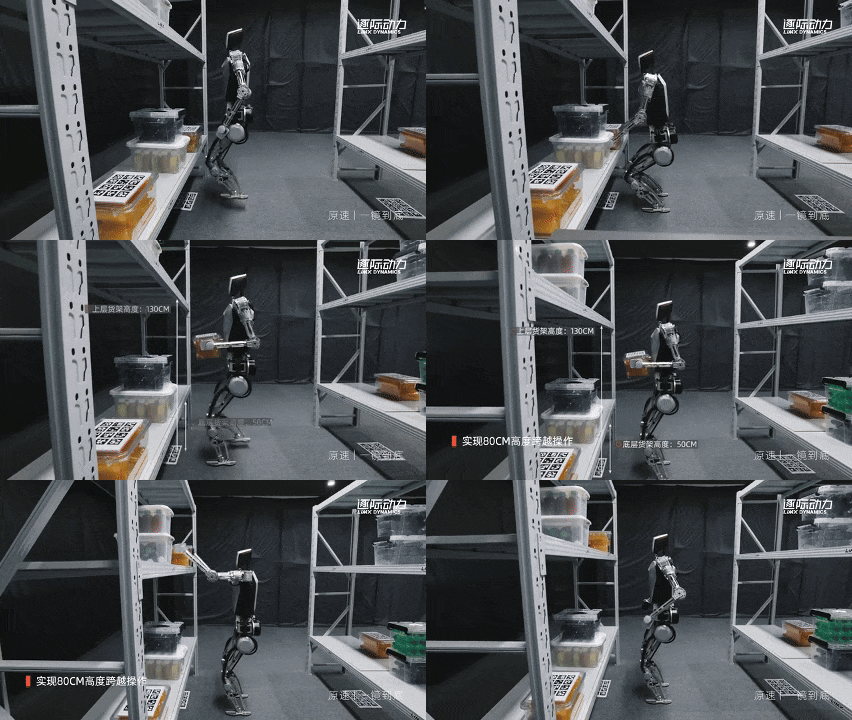
LimX humanoid CL-1 whole-body motion control, completing box-moving. Source: LimX Dynamics.
LatePost: What was LimX's decision process for explicitly not entering factories?
Zhang Wei: There's no right or wrong — it's a choice based on our characteristics.
Two main reasons. First, technical strengths and scenario demands don't match. The key transformation from this wave of large models is "generalization" capability, while factory deployment requires reliability, high efficiency, precision — not strengths of embodied intelligence technology, some actually weaknesses. Moreover, factories currently lack much infrastructure supporting humanoid robots; the ecosystem doesn't support deployment.
Also, humanoid form factors — whether wheeled dual-arm or bipedal humanoid — aren't optimal for factory scenarios. Even if future embodied algorithms advance enough for robots to tighten screws, there's no need for humanoid forms; traditional robotic arms, or even dedicated machines plus AI, would be more efficient.
Another reason: factory scenarios don't match our entrepreneurial goals. My previous startup focused on industrial scenario deployment — those people deserve immense respect. You must genuinely love the scenario, accumulate substantial industry know-how to truly excel, and startups can only focus on one scenario. I believe entering factories and developing general-purpose robotics technology are currently contradictory.
LatePost: Then who are your customers?
Zhang Wei: We position as an embodied intelligence tools company, providing robot bodies and AI software tools to innovators seeking to deploy embodied intelligence applications across industries — we aim to be the NVIDIA of embodied intelligence.
I saw Jensen Huang in an interview saying they've reduced computing costs 1 million-fold over the past decade — excellent. NVIDIA accomplished this, enabling various AI application deployments. He essentially serves innovators; we want to do something similar.
We have two main goals: making innovators more efficient at innovating, and enabling more people to become innovators. AI development has primarily benefited from abundant tools; however robotics innovation involves hardware-software integration with too many pain points remaining.
LatePost: Is this achievable for a startup? NVIDIA initially targeted specific scenarios like gaming before gradually becoming innovation infrastructure for more domains.
Zhang Wei: When NVIDIA transitioned to AI computing, Jensen Huang said the "market was zero." NVIDIA wasn't a large company then; bigger companies didn't understand or want this direction.
NVIDIA's key to success was being a critical enabler and efficiency improver in AI innovation, understanding AI R&D and innovators' needs, then guiding their own hardware iteration. We're doing something similar in embodied intelligence — lower barrier than chips, but more involved chains requiring deep understanding of large model technology innovation, humanoid robot design, traditional robotics algorithm design, and robotics deployment processes.
This is an emerging market full of unknowns requiring rapid iteration, involving much cross-domain emerging technology where many things need redefinition — hence it's a startup opportunity.
LatePost: More specifically, would your current primary customers be universities, research institutions, and labs like Unitree's humanoid robots?
Zhang Wei: Who do you think NVIDIA charges? Serving innovators doesn't mean only selling to universities. Companies doing large model training and applications need GPUs; even hobbyist technicians buy 4090s (a NVIDIA consumer GPU) to test algorithms. As long as embodied intelligence keeps developing and we can significantly accelerate innovation and scale, we can create commercial value.
LatePost: How large could this service market become?
Zhang Wei: I can't predict accurately — scale predictions suit mature industries better. But what's more certain: embodied intelligence is a paradigm shift for all traditional industries, reshaping manufacturing, services, and all aspects of life. Every niche market has considerable scale, and the industry won't see one dominant player but rather百花齐放 (a hundred flowers blooming).
We care more about what drives transformation. I see an "embodied tools + innovators" future, like how people who can't program now use AI to create content, or even develop applications with tools like Cursor. Embodied deployment is more complex with more complex tooling needs; we want to solve this pain point, making embodied innovation simple and efficient.
LatePost: So what are you mainly selling now?
Zhang Wei: As an embodied toolchain company, long-term our products will include robot bodies and a series of hardware-software toolchains covering data collection, processing, training, and deployment.
Currently we're still startup-stage, so starting from scarce bipedal and humanoid bodies. Last year we released the multi-form bipedal robot TRON 1, supporting innovators developing various reinforcement learning and locomotion algorithms. We've also found strong demand from startup teams and companies for campus inspection, influencer filming, and construction digital monitoring — though we need continuous improvement in cost and development experience.
Our humanoid robot body is quite distinctive but still in pre-research phase, not yet officially for sale. We hope to launch a truly developer-friendly full-size humanoid robot in '25.
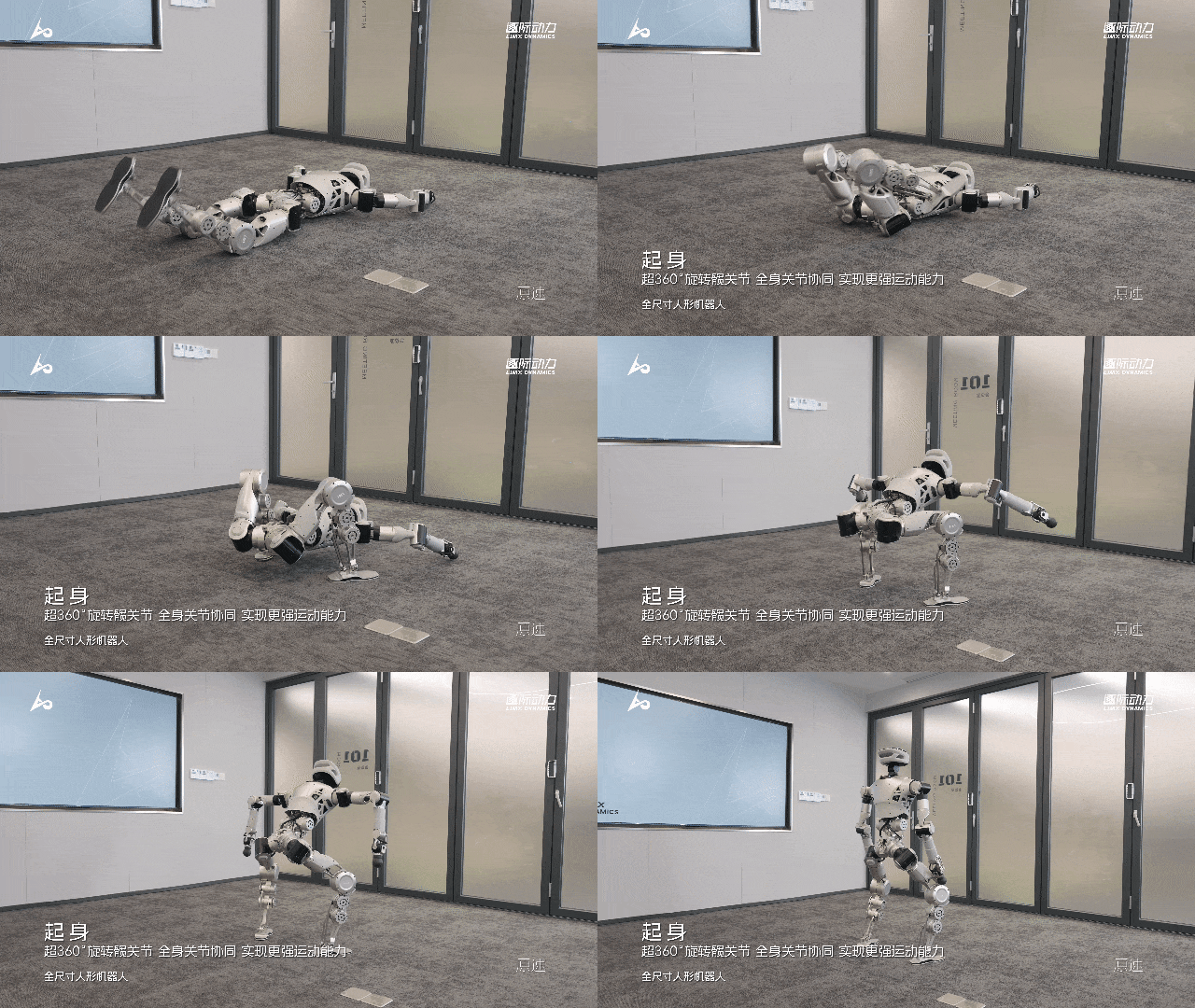 LimX's humanoid robot rising from prone to standing, requiring greater lower limb joint range of motion and stable waist-leg coordination. In 2025, LimX will iterate a new full-size humanoid robot.
LatePost: What risks do you see in your current deployment path?
Zhang Wei: The challenge is we must both understand cutting-edge technology and trend judgment, and have strong product thinking to extract industry common needs. From understanding the most frontier AI technology, down to improving robot reducer performance — you need to know it all.
Another aspect: facing humanoid robots as a new species, how to build new organizational structures for more efficient operations. You're simultaneously managing factories and a bunch of AI innovators — completely different. I define this myself as combining top-tier AI capability with top-tier manufacturing capability.
LatePost: The "AI Four Dragons" initially wanted to be technology platform and tool suppliers without entering specific scenarios. But they later reflected that insufficient proximity to end customers led to substitution after technology diffusion: companies originally using SenseTime or Megvii algorithms later built internal teams for AI.
Zhang Wei: We're different from them — many AI companies were software-biased, too replicable and substitutable. NVIDIA's strength is doing hardware-software integration, truly finding underlying common needs.
A company's value lies in whether it identifies the industry's greatest pain point, then uses its strengths and organizational capability to solve it. Don't worry about the rest — create value, and that's enough.
LatePost: Embodied intelligence companies currently entering factories, retail, and other scenarios can build better scenario understanding and commercial relationships. LimX focuses on tackling embodied models and generalization — won't customers be all taken by then?
Zhang Wei: Our customers aren't factories or retail stores. We serve innovators doing integration and solutions; system integrators and the embodied companies you mentioned are potential competitors. Our mission is enabling integrators to possess the best and most efficient embodied model development and application capabilities. So our customers and other embodied companies' customers aren't the same people — there's no "running out" situation.
Finding and Solving Underlying Common Needs Creates Long-term Competitiveness
LatePost: You founded LimX in 2022, before this wave of robotics entrepreneurship. Why choose to start a robotics company then?
Zhang Wei: I'm fairly straightforward — I've always been in this industry. My thinking: what stage has this industry reached? If you want to continue creating value, what should you do?
In 2019, I felt robotics had reached a stage where hardware iteration became crucial. Abroad was too slow; China had hardware advantages, so I wanted to return. I also realized the industry had reached an inflection point where perhaps only 10% of new value came from raw academic innovation, 90% from engineering execution. Writing papers in school was becoming useless; entrepreneurship was needed to maximally advance robotics.
LatePost: You started embodied intelligence before Optimus's debut and the large language model hype, then experienced the industry boom. How did the temperature change feel?
Zhang Wei: Investors' thinking hasn't changed much — just more investors paying attention to robotics. Future Capital approached me proactively in 2022 after seeing my paper. Now more people are chasing this, it's gotten lively — which isn't good.
LatePost: Why is market excitement bad?
Zhang Wei: The entire industry is somewhat overheated. Early-stage startups need patient accumulation. Now it's all rushing in, people becoming浮躁 (restless).
From 2023 to now, many humanoid robot products have emerged in China — at least in appearance, there's great variety. We'd say, perhaps even people not specifically researching this can make something decent-looking. But they don't know what it's for, can only walk a few steps on flat ground, functionality remains limited.
I call this "great leap robot-making" behavior — it actually makes things harder for those truly wanting to build robots.
LatePost: Tesla says they'll produce thousands of robots this year, sending them to factories to collect data. What do you think of their plan?
Zhang Wei: Musk has money; if I were him I'd be even more aggressive. His超前 (advanced) investment in humanoid bodies is valuable — among the dazzling array of humanoids, most are merely prototypes. Optimus's engineering level remains most advanced, especially dexterous hand accumulation.
But producing thousands for factory data collection — I'm not very convinced. Embodied brain technical approaches haven't converged; we're not yet at the scaling stage. I prefer small steps, fast iteration, finding technical switches. For instance, if our video-generation-large-model-based embodied manipulation algorithm validates scaling law, then piling up real machines for data collection becomes meaningless.
LatePost: We've previously spoken with robot suppliers, curious about one thing: for companies like Tesla, how do they define whether suppliers meet their requirements?
Zhang Wei: They certainly have clear processes, but many humanoid component technical approaches are immature, requiring deep communication with suppliers. In new technology's early stage, suppliers are essentially part of company R&D — can be considered outsourced R&D in a sense, needing R&D-style management rather than mature mass-production supply chain management from the start.
LatePost: What industry changes might occur in 2025? What are LimX's plans?
Zhang Wei: The biggest AI增量 (increment) in 2025 will be Agents. I personally believe Agents are the best way to truly land large model technology.
In embodied intelligence, more entrants will join, and the industry will begin demystifying technology. Remember when we first saw ChatGPT, we were utterly amazed — now basically everyone can build some kind of Chatbot. Humanoid robots are the same; more humanoid robots will emerge. The industry will grow numb to flashy tech demos and start focusing on products and commercialization.
Our most important 2025 goal is初步跑通 (initially running through) the business闭环 (closed loop) of serving innovators, and building new organizational structures fitting the new AI era. For products and technology, we hope to launch truly usable humanoid robot products for innovators, and find more efficient embodied model "machine tools."