MiniMax updates model M2.1, built for real-world complex tasks | Luzhou Shengmingli

Let AI Truly Enter Everyday Life

Lvzhou Ecology Enterprise MiniMax has completed a partial update to its open-weight model, releasing MiniMax M2.1.
Whether measured by underlying performance matching or exceeding Claude Sonnet 4.5, or by the completeness of Agent participation in concrete task execution, this marks a firmer step forward for Chinese large language models in frontier exploration. We also see MiniMax, as a major driver in the Agentic Era, continuing to demonstrate pragmatic yet forward-looking technical evolution.
Below is a detailed introduction to this update. Enjoy.
MiniMax has been transforming itself in a more AI-native way.
The core drivers of this process are models, Agent scaffolding, and organization. Through exploration, our understanding of these three elements has deepened. Today we're opening up the model portion of this update — MiniMax M2.1 — hoping to help more enterprises and individuals find more AI-native ways of working and living.
In late October's M2, we primarily addressed model cost and openness. In M2.1, we're focused on improving performance on complex real-world tasks: specifically targeting usability across more programming languages and office scenarios, aiming to reach best-in-class levels in these domains.

MiniMax M2.1 Model Highlights
Exceptional Multi-Language Programming Capability: In M2.1, we've systematically improved capabilities across Rust, Java, Golang, C++, Kotlin, Objective-C, TypeScript, JavaScript, and more. Overall multi-language performance reaches industry-leading levels, covering the full chain from low-level systems to application-layer development.
WebDev and AppDev: Addressing a widely recognized industry weakness in mobile development, M2.1 significantly strengthens native Android and iOS development capabilities. We've also systematically enhanced the model's design comprehension and aesthetic expression in web and app contexts, enabling excellent construction of complex interactions, 3D scientific scene simulations, and high-quality visualizations — pushing vibe coding toward a sustainable, deliverable production practice.
Enhanced Complex Instruction Compliance, Making Office Scenarios Viable: As the first open-weight model family to systematically introduce Interleaved Thinking, M2.1's systematic problem-solving capabilities have leveled up again. The model doesn't just focus on whether code executes correctly, but also on its ability to integrate and execute "complex instruction constraints," achieving higher usability in real office scenarios.
More Concise and Efficient Responses: Compared to M2, MiniMax M2.1 produces more concise responses and reasoning chains, significantly improving response speed in actual programming and interaction experiences while reducing token consumption — making workflows in AI coding and Agent-driven continuous pipelines smoother and more efficient.
Outstanding Agent / Tool Scaffolding Generalization: M2.1 performs excellently across various programming tools and Agent frameworks. It delivers consistent and stable results in Claude Code, Droid (Factory AI), Cline, Kilo Code, Roo Code, BlackBox, and others, with reliable support for Context Management mechanisms including Skill.md, Claude.md / agent.md / cursorrule, and Slash Command.
High-Quality Dialogue and Writing: M2.1 isn't just "better at code" — it also provides more detailed and structured responses in everyday conversation, technical documentation, and writing scenarios.
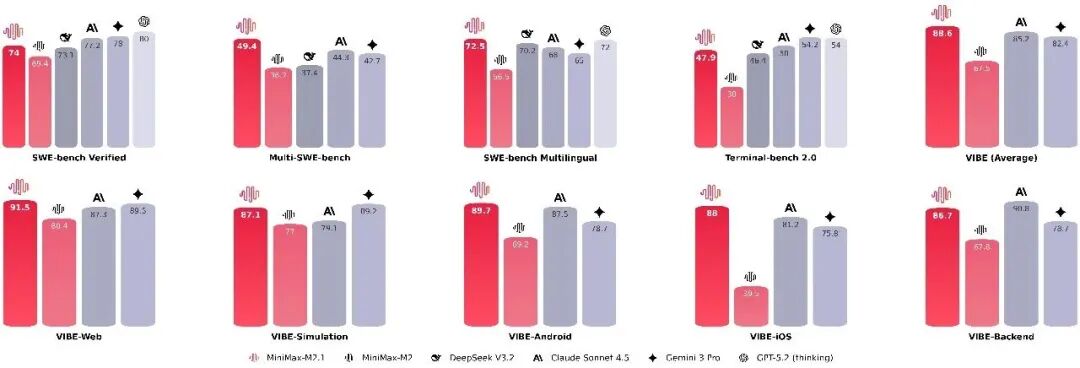

Benchmark Overview
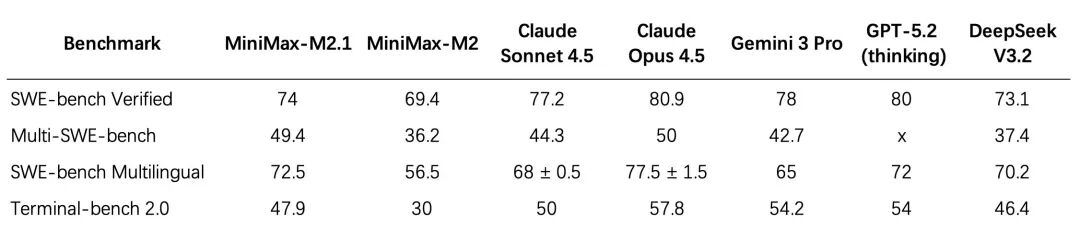
On core benchmarks for software engineering scenarios, MiniMax M2.1 shows significant improvement over M2, especially in multi-language contexts, surpassing Claude Sonnet 4.5 and Gemini 3 Pro and approaching Claude Opus 4.5.
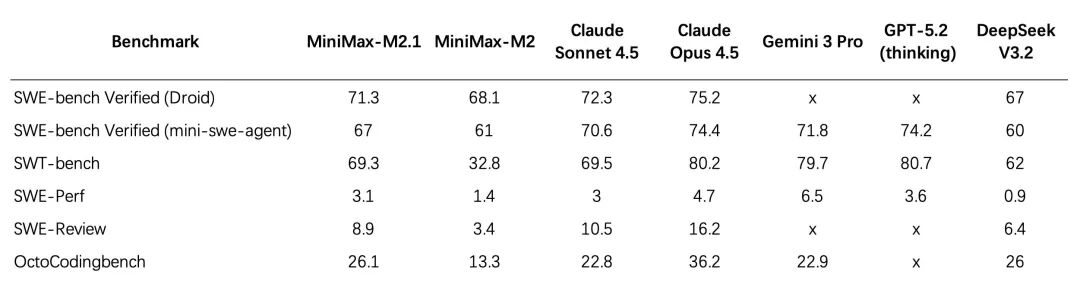
We tested SWE-bench Verified across different coding agent frameworks, and results show MiniMax M2.1 has strong framework generalization and stable performance. On public benchmarks for test case generation, code performance optimization, and our own proprietary benchmarks for code review (SWE-Review) and instruction following (OctoCodingBench), MiniMax M2.1 shows comprehensive improvement over M2, matching or exceeding Claude Sonnet 4.5.
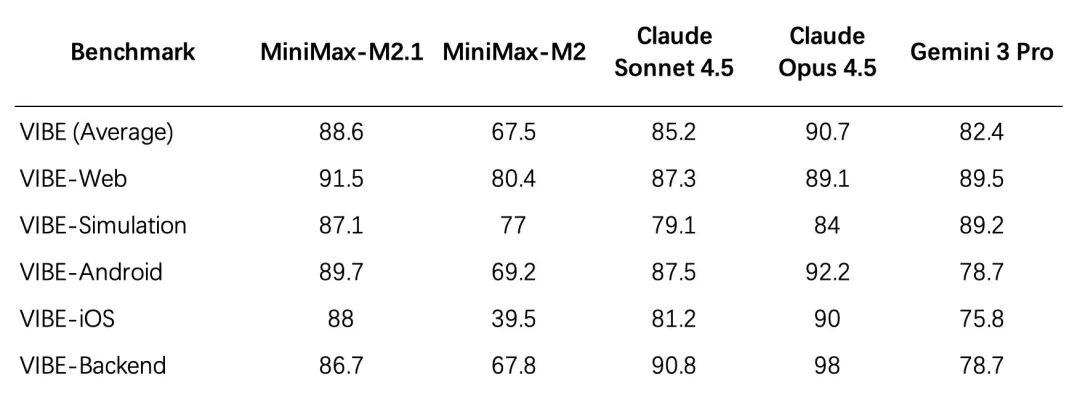
To measure models' full-stack ability to build complete, runnable applications "from zero to one," we built and open-sourced a new benchmark: VIBE (Visual & Interactive Benchmark for Execution in Application Development), covering five core subsets: Web, Simulation, Android, iOS, and Backend. Unlike traditional benchmarks, VIBE uses an innovative Agent-as-a-Verifier (AaaV) paradigm to automatically evaluate generated applications' interaction logic and visual aesthetics in real runtime environments.
This evaluation suite will be open-sourced on GitHub shortly.
VIBE: https://huggingface.co/datasets/MiniMaxAI/VIBE
MiniMax-M2.1 demonstrates outstanding performance on the VIBE comprehensive leaderboard, scoring 88.6 on average and showing full-stack construction capabilities approaching Claude Opus 4.5, significantly outperforming Claude Sonnet 4.5 on nearly all subsets.
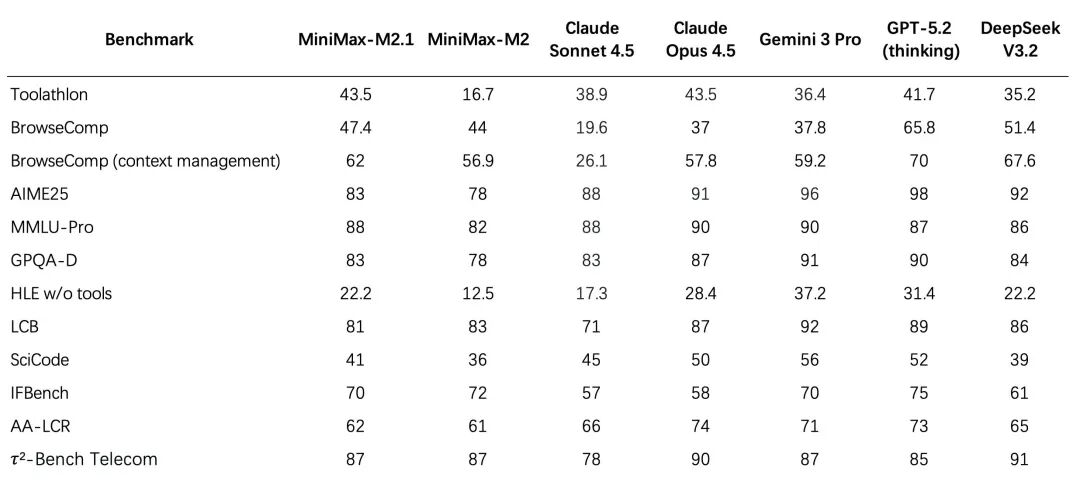
In office scenarios, long-horizon tool calling, and composite intelligence indices, MiniMax M2.1 also shows steady improvement over M2, reflecting the model's growing ability to solve more complex real-world tasks.

User Feedback
Over the past few days, through MiniMax's global developer community, we opened M2.1 for internal testing and received extensive enthusiastic feedback. Below are evaluations from some international leading AI platforms and partners (partial selection).
Factory AI (Droid):
"We're incredibly excited for powerful open-weight models like M2.1 that deliver frontier-level performance across all kinds of software development tasks — even outperforming leading closed models in some scenarios.
Developers deserve choice, and M2.1 is exactly the high-quality option everyone needs!"
— Eno Reyes, Co-Founder, CTO
Fireworks:
"MiniMax M2.1 demonstrates strong alignment with production-grade engineering requirements in readability and idiomatic structure, with stable performance across multi-language scenarios including Go, Rust, and C++. Its refined interleaved reasoning mechanism significantly compresses logical pathways, reducing redundant steps and enabling higher-precision completion of complex tasks like multi-file refactoring and bug fixing.
What's particularly valuable is that M2.1 delivers reliable performance despite limited activated parameters, providing a balanced solution that optimizes both efficiency and resource utilization for large-scale agentic coding workflows. We look forward to continued close collaboration with the MiniMax team, supporting their latest innovations on the Fireworks platform!"
— Benny Chen, Co-Founder
Cline:
"The MiniMax M2 series has distinguished itself with exceptional code generation capabilities, rapidly becoming one of the most popular models on the Cline platform over the past few months. M2.1 represents another significant leap in capability, and we look forward to deepening our collaboration with the MiniMax team to advance AI coding technology together."
— Saoud Rizwan, Founder, CEO
Kilo:
"We're thrilled about the M2.1 release! Our users already depend on MiniMax for best-in-class programming assistance and exceptional value.
Internal testing shows M2.1 excels across the full chain from architecture design, service orchestration, code review through deployment, with leading speed and resource efficiency."
— Scott Breitenother, Co-Founder, CEO

Showcases
Physical World Agent:
Once a model achieves sufficient generalization, it's somewhat surprising that what it learned in virtual worlds can actually drive physical-world robots.
Multi-Language Coding:
MiniMax M2.1 built a "3D Dream Christmas Tree" using React Three Fiber and InstancedMesh, successfully rendering 7000+ instances with gesture interaction and complex particle animation, demonstrating advanced 3D rendering capability.

Try it: https://yuyl27wq92.space.minimax.io/
Cutting-Edge Web UI Design:
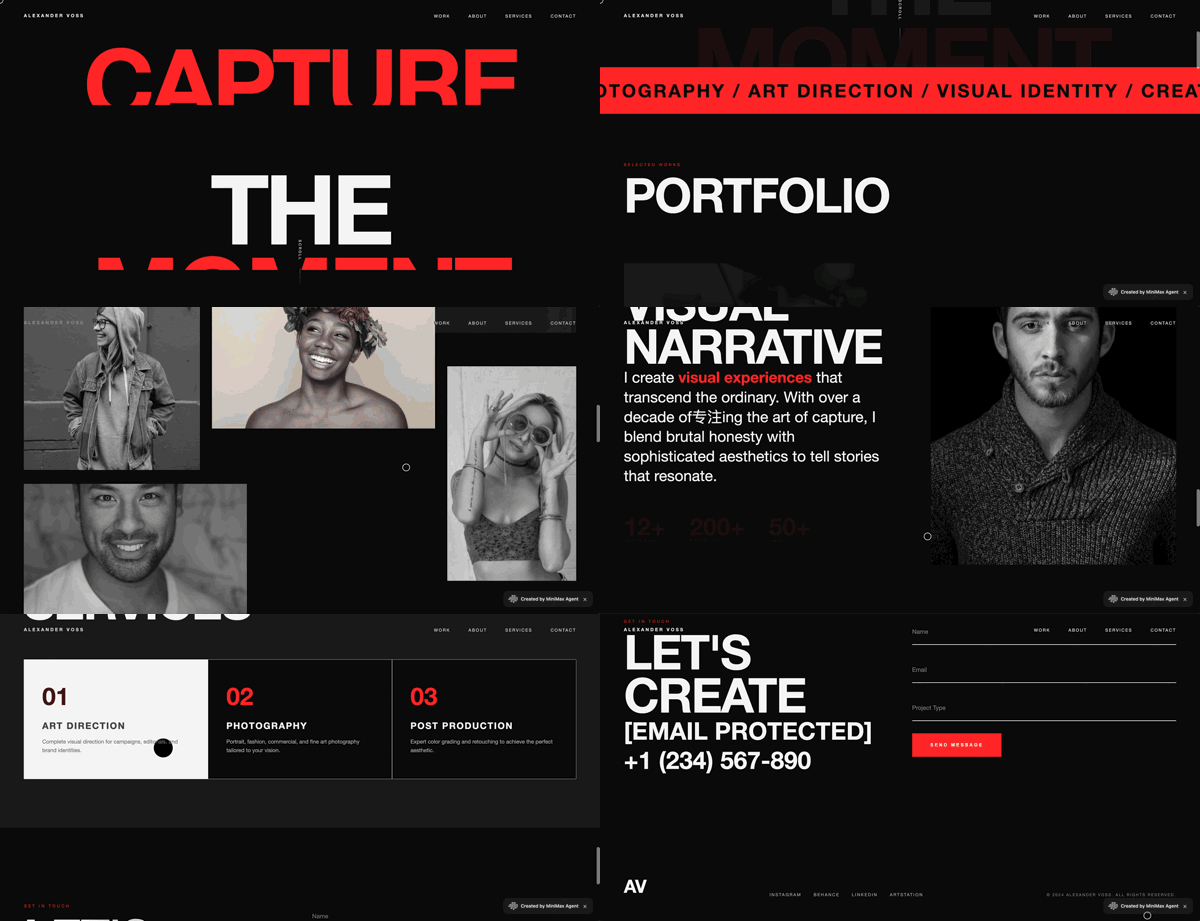
M2.1 can generate a minimalist photographer portfolio with asymmetric layout and black-white-red color blocking, combining immersive imagery and bold typography for striking visual impact.
Try it: https://m6xkaf07udss.space.minimax.io/
Native App Development — Android:
M2.1 developed an Android native gravity simulator using Kotlin, leveraging gyroscope sensors for silky-smooth gravity control and designing clever visual Easter eggs — through natural UI transitions and collision effects, it elegantly reveals the message "MERRY XMAS MiniMax M2.1."
Native App Development — iOS:
M2.1 wrote an iOS home screen interactive widget featuring a "sleeping Santa" tap-to-wake mechanism, with complete logic and native-level interaction animations — Santa lives in your home screen widget, and if you tap him ten times, he wakes up to surprise you! 🎅🎁
Web Audio Simulation Development:
M2.1 developed a 16-step drum machine simulator based on the Web Audio API, integrating synthesized drum sounds, non-linear rhythm algorithms, and real-time Glitch effects for a cutting-edge electronic music experience!
Try it: https://21okxwno2u.space.minimax.io
Rust Security Audit TUI:
M2.1 built a CLI + TUI dual-mode Linux security audit tool in Rust, supporting one-click deep scanning and intelligent risk rating for processes, networks, SSH, and other critical items.
Python Data Monitoring Dashboard:
M2.1 developed a Matrix-style real-time data monitoring panel in Python, achieving dynamic capture and rendering of high-frequency data streams. The panel transforms core metrics into cyberpunk visual symbols, delivering unique sci-fi aesthetics while maintaining real-time monitoring precision.
C++ Image Rendering:
M2.1 used C++ and GLSL to implement complex light transport algorithms, accurately reproducing in real time the physical refraction of a crystal ball, SDF-detailed snowman modeling, and shimmering snow surface effects.
Java Real-Time Danmaku:
M2.1 implemented a high-performance real-time danmaku system in Java, with a clean and intuitive user interface and millisecond-level response capability.
SVG Generation:
M2.1 generated an SVG interactive isometric island map, constructing a richly detailed miniature world supporting one-click zoom to freely explore four themed zones.
Agentic Tool Use:
M2.1 demonstrated Tool use capabilities, autonomously calling Excel and Yahoo Finance tools to complete the full workflow from market research data cleaning and analysis to chart generation:
End-to-End Office Automation:
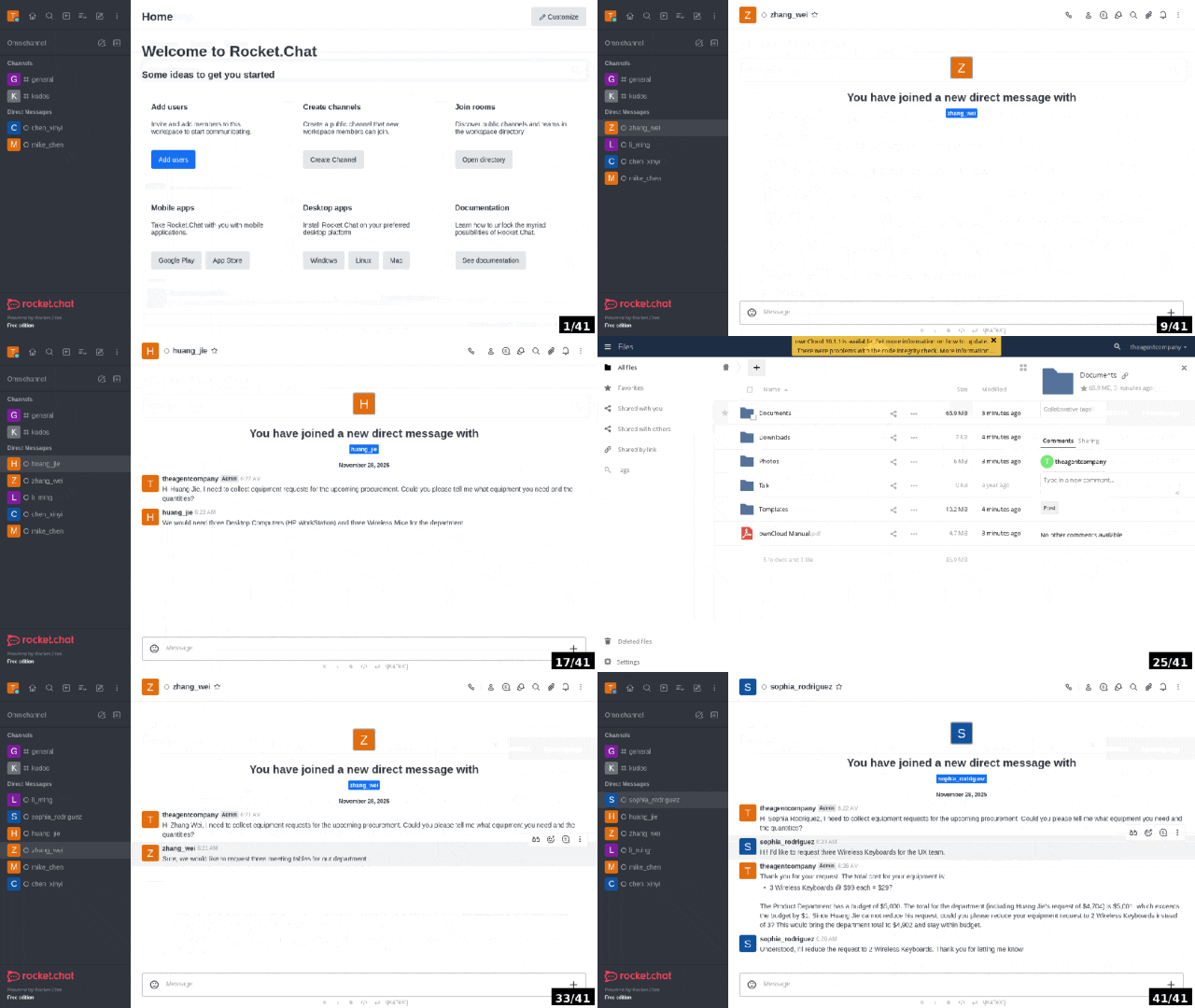
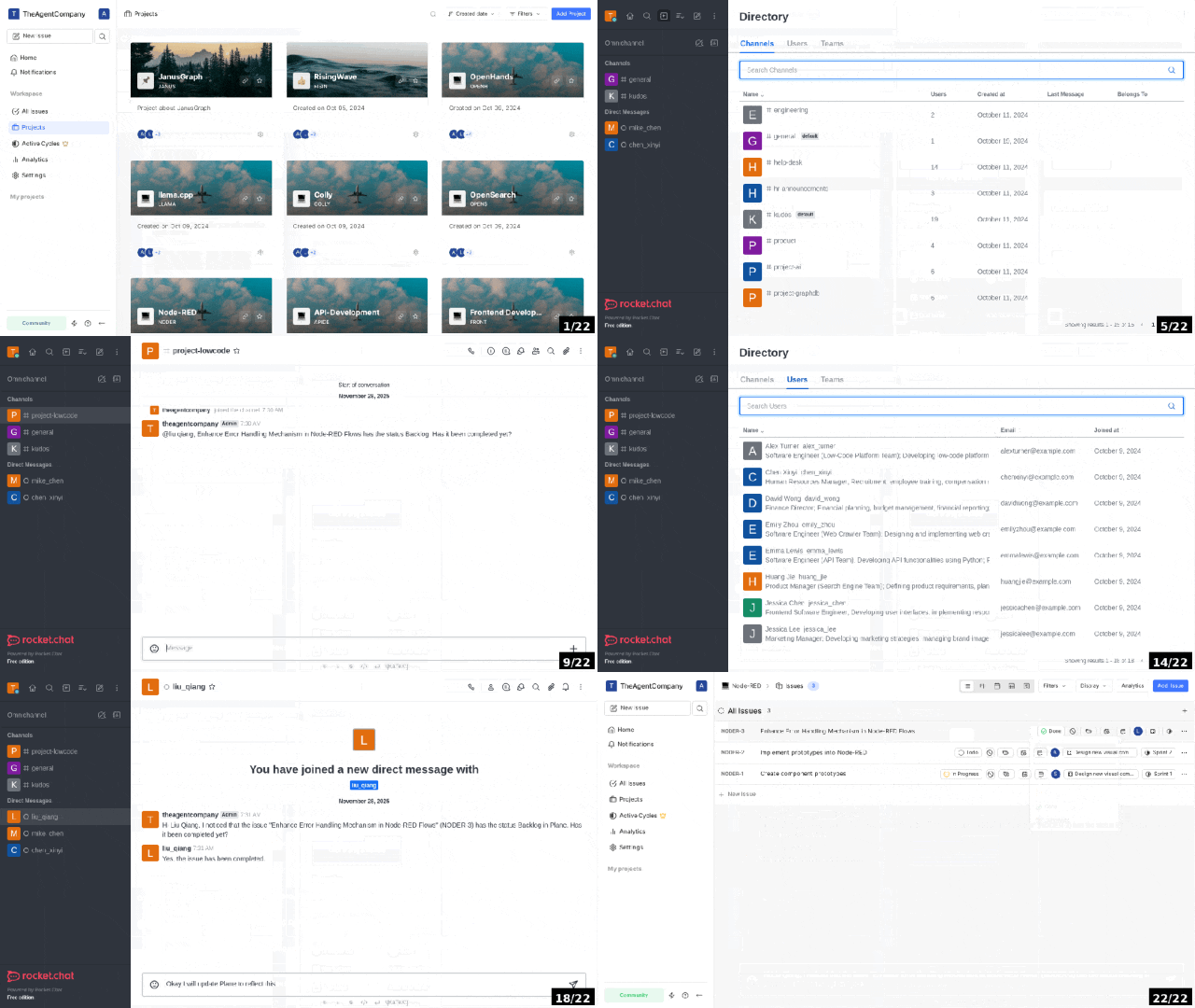
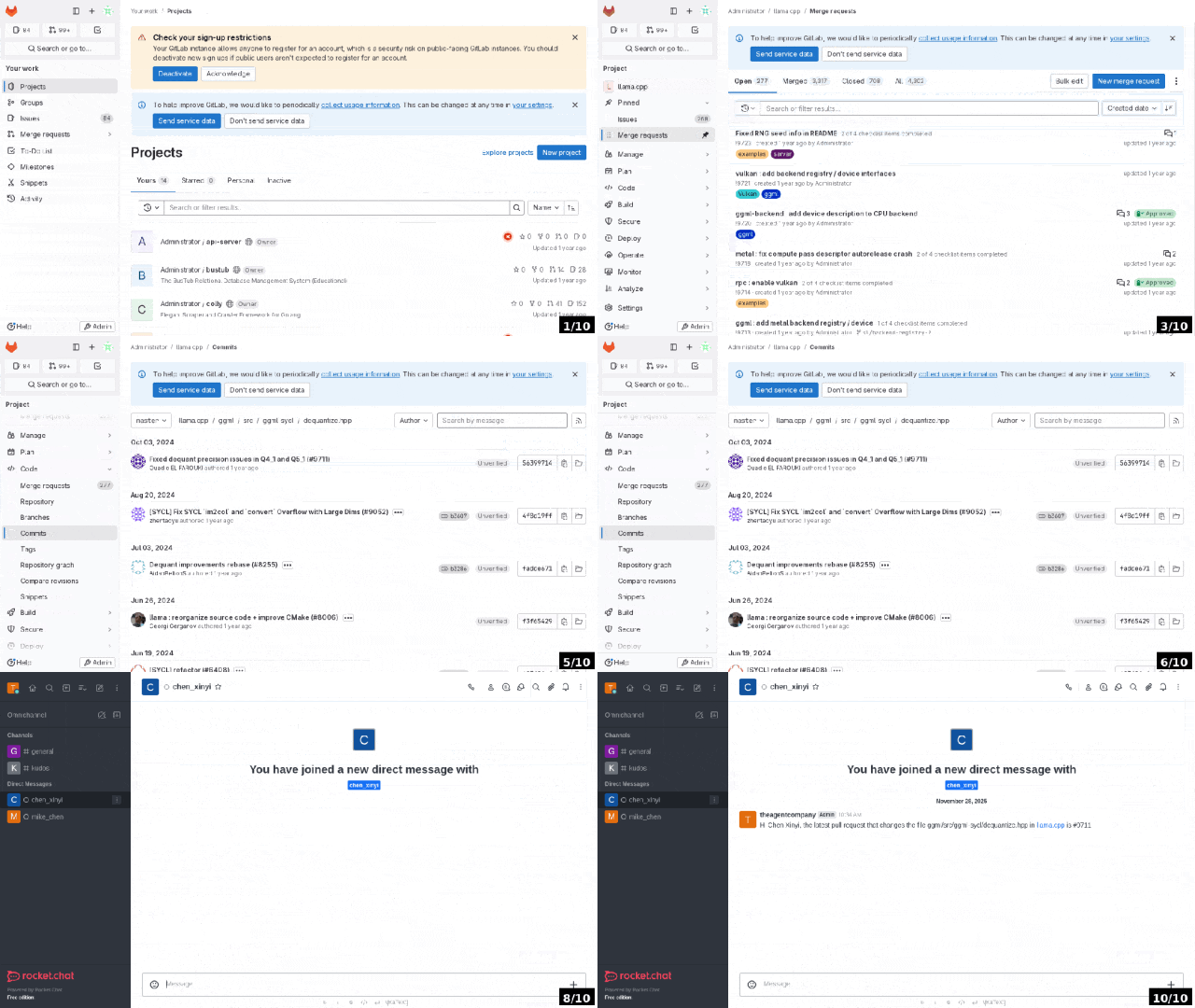
Digital employees are a key capability of the MiniMax M2.1 model. M2.1 can accept web content presented in text form and control mouse clicks and keyboard input through text-based commands, completing end-to-end tasks in administrative, data science, finance, HR, and software development scenarios in everyday office environments. The following demonstrates M2.1's behavior trajectory on the AgentCompany Benchmark.
- Proactively collecting employee equipment requests on communication software, then searching internal enterprise servers for relevant documents to get equipment prices, calculating total costs and determining whether departmental budgets are sufficient, then recording equipment changes —
- Finding blocked or backlogged issues on project management software, then locating relevant employees on communication software to consult on solutions, and updating issue status based on employee feedback —
- Finding answers in code repositories. For example, when a colleague wants to know which was the most recent merge request that changed a certain file, retrieving relevant merge requests, finding the ID, and informing the colleague —
How to Use
MiniMax M2.1 API is now live on the open platform:
https://platform.minimaxi.com/docs/guides/text-generation
The general-purpose Agent product based on MiniMax M2.1, MiniMax Agent, is now fully open for use:
Open-source and local deployment:
https://huggingface.co/MiniMaxAI/MiniMax-M2.1 (To ensure M2.1 usage accuracy, we're aligning testing with multiple deployment platforms and will fully open-source weights in a few days.)
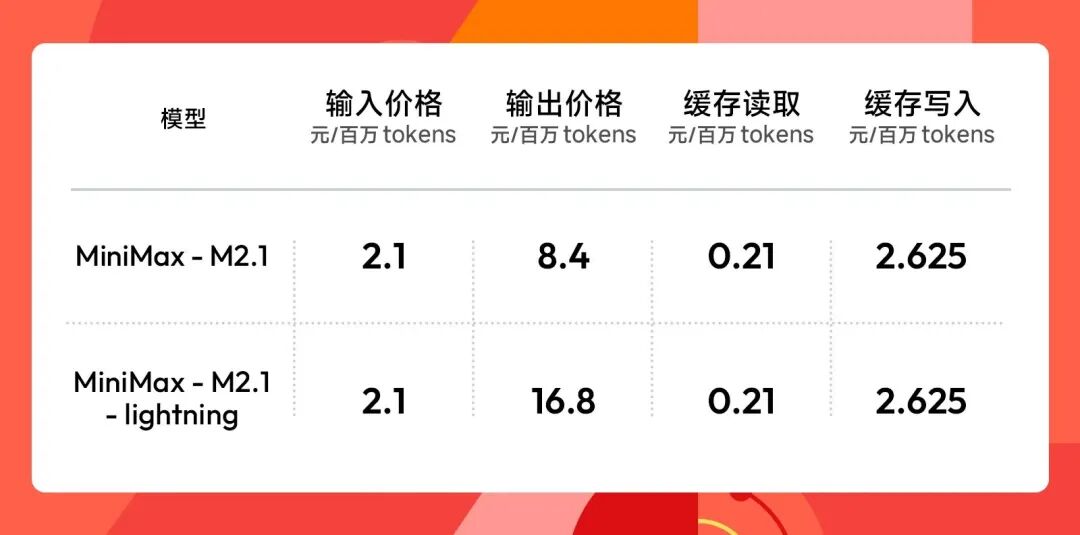
For user convenience, we provide two API versions: M2.1 and M2.1-lightning. Both produce identical results, but the latter is faster — ideal for users with TPS requirements. Additionally, building on M2's manual Cache, M2.1 fully supports automatic Cache with zero configuration required, automatically taking effect to deliver a smoother experience, lower costs, and better latency for developers.
In our Coding Plan, we'll allocate users a large proportion of M2.1-lightning based on resource load, while keeping Coding Plan pricing unchanged. In other words, Coding Plan users get faster inference speed for free, most of the time.
Direct access:
https://platform.minimaxi.com/subscribe/coding-plan