Borey Technology Launches 3D Printing Solution for Humanoid Robots | Oasis Capital Vitality

"参赞生命力" appears to be a fragment without sufficient context for accurate translation. This could be: 1. A book or article title — possibly *Vitality* or *On Vitality* (if following the pattern of classic Chinese essay titles) 2. A section heading about "vitality" in some larger text 3. A product or brand name Without more context, a literal rendering would be "Counseling Vitality" or "Advising on Vitality," but these sound awkward. "参赞" can mean: - A counselor/diplomatic role (参赞 / *cānzàn*) - To participate in and assist - To appreciate/admire (in classical usage) If this is a title or heading about wellness, health, or life energy, it might intend something like *Cultivating Vitality* or simply *Vitality*. Could you provide more context — the surrounding sentences or what publication this appears in?

Humanoid robots are steadily moving from concept to reality, showing broad market potential. Global sales are projected to exceed one million units by 2030, with output value potentially reaching hundreds of billions of RMB within ten years. These robots demand significant performance improvements — particularly in lightweight construction, high strength, and flexibility — and innovations in new materials are injecting fresh vitality into their future development. As a revolutionary additive manufacturing technology, 3D printing combined with high-performance materials will undoubtedly usher humanoid robots into a revolutionary new era. Oasis Capital portfolio company Polly Polymer Technology has introduced a 3D-printed multilayer structured honeycomb composite material designed for humanoid robot applications.
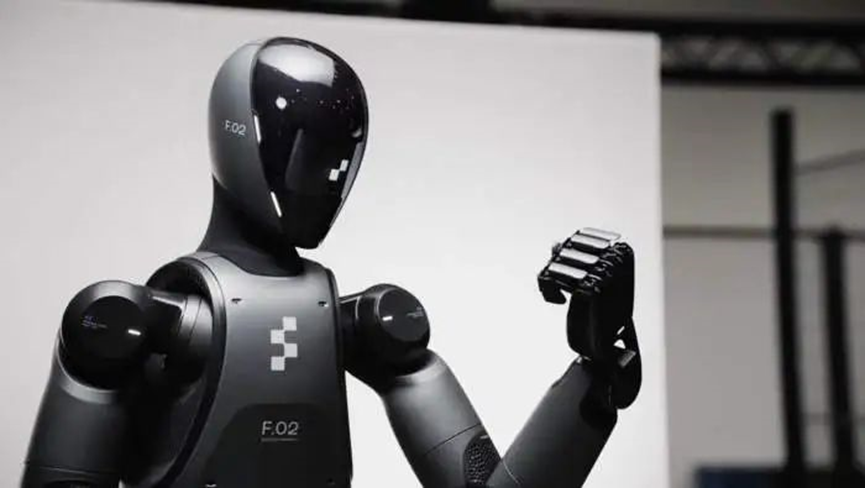
Humanoid robots, also known as "androids," are biomimetic general-purpose robots that imitate human appearance and behavior. They excel at handling complex, varied tasks and integrate easily into human daily activities. Their designed purpose is to replace humans in factory and commercial work, or to assist and serve people in everyday life.
Humanoid robots integrate advanced technologies including artificial intelligence, high-end manufacturing, and new materials. They are poised to become a disruptive product following computers, smartphones, and new energy vehicles — one that will profoundly transform how humans produce and live, reshape global industrial development patterns, and serve as an important indicator of a nation's high-tech capabilities and development level. Compared to other robots, humanoid robots require far greater combined capabilities in intelligent perception, motion control, intelligent decision-making, and human-robot interaction.
Humanoid Robots: An Iconic Product of Future Industrial Innovation
In the Liezi·Tangwen, the tale of "Yanshi's Artificial Man" describes a master craftsman who created a lifelike automaton that walked naturally and was indistinguishable from a real person. This ancient "robot" represents humanity's romantic imagination and bold experimentation with the fusion of machinery and humanity.
Today, robotics technology advances by the day — evolving from simple repetitive labor to complex precision operations, from single-function tools to multi-task integrated systems, constantly moving toward greater intelligence, autonomy, and personalization. As the ultimate application of AI, humanoid robots are considered the next disruptive transformative force. Tesla is a pioneer of the "embodied intelligence" wave, and CEO Elon Musk believes that robots will eventually outnumber humans on Earth. Data shows that China has become the world's largest robot consumer market and manufacturing powerhouse. Industry reports project that the humanoid robot market will reach 75 billion RMB by 2029 and 300 billion RMB by 2035, becoming a critical engine driving a new round of technological revolution and future industrial transformation.

On the policy front, national support for the humanoid robot industry began in 2016. In November 2023, the Ministry of Industry and Information Technology released the Guiding Opinions on Innovative Development of Humanoid Robots, setting targets for key technological breakthroughs and supply chain establishment by 2025, and reaching internationally advanced levels by 2027. In January 2024, MIIT and other departments called for accelerating technology breakthroughs in humanoid robots and other high-end equipment, signaling accelerated commercialization of the industry chain. MIIT's goal is to build a humanoid robot innovation system by 2025, achieving internationally advanced products and scaled production.
On the application side: (1) Compared to traditional industrial and service robots, humanoid robots hold clear advantages in executing complex tasks, with particular room for growth in B2B manufacturing. In automotive manufacturing, for instance, humanoid robots have begun replacing industrial robotic arms for final assembly and other precision operations. Global automakers including Tesla, Xpeng Motors, BMW, Honda, Toyota, and BYD are actively advancing humanoid robot applications in car manufacturing. UBTECH's Walker S humanoid robots undergoing training at new energy vehicle plants, and Tesla's Optimus training on battery pack assembly, mark the accelerating industrialization of humanoid robots in automotive manufacturing. (2) Humanoid robots possess advanced perception systems with enhanced autonomous decision-making and interaction capabilities, giving them even greater potential in B2C applications. As AI technology advances, the generalization capabilities of humanoid robots continue to strengthen, with enormous application potential in consumer sectors such as home care and public services.
How hot have humanoid robots become? In a sluggish primary market, they are unquestionably the hottest track, with capital pouring into AI at astonishing speed. Crunchbase data shows that in the first half of 2024 alone, over $35.5 billion flowed into the humanoid robot sector globally. Startup Figure AI raised $750 million in just two years, with its latest round this past February — a Series B of approximately $675 million (nearly 5 billion RMB) — backed by investors including Amazon, Microsoft, NVIDIA, Intel, and OpenAI. Essentially half of Silicon Valley competed to invest, demonstrating just how hot Figure AI is and how much expectation it carries.
"The World's Strongest" Humanoid Robot, Figure 02, Has Arrived!
Flexible fingers, flipping wrists to grasp objects, clocking in at factories... with every gesture, robots inch closer to humanity. This is "Figure 02," the latest robot from this year's hottest robotics company Figure AI, dubbed "the world's strongest robot." The new Figure 02 underwent a "complete hardware and software redesign," including upgrades to its AI systems, computer vision, battery packs, electronics, sensors, and actuators — using thousands of components in total, hundreds of them unique. It features significant improvements in appearance, integrated joints, actuators, bionic feet, dexterous hands, head design, and full-body range of motion. Physically, Figure 02 stands about 170 cm tall and weighs 70 kg — roughly the height of an adult male — designed specifically to work in human environments.
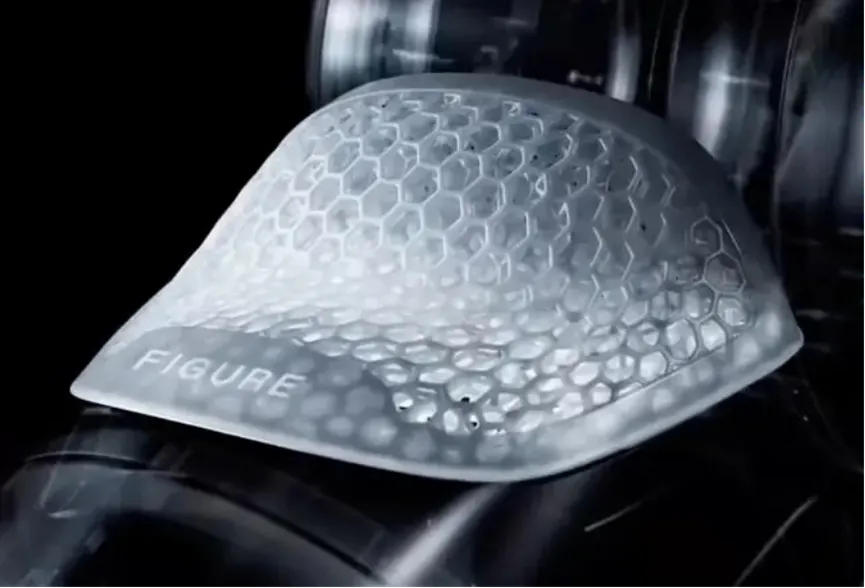
One important and novel design feature: Figure 02 uses 3D-printed new composite materials. Honeycomb-like compressible tissue has been added near the knee and elbow joints. This soft-stop mechanism primarily provides motion cushioning while enabling lightweight construction and enhanced heat dissipation — giving the humanoid robot greater flexibility and significantly extending its service life. Professor Li, a professor at Soochow University's School of Mechanical and Electrical Engineering and a robotics evaluation expert, believes that high-performance materials carry great significance for the entire humanoid robot industry. Figure AI's use of 3D-printed new honeycomb composite materials on its latest Figure 02 humanoid robot is crucial for enhancing robot performance — one could say that this material is what truly makes humanoid robots "move."
-
Shock absorption system: This new composite material is installed at Figure 02's elbow and knee joints, providing necessary motion cushioning that prevents collision between the forearm and upper arm, and between the lower leg and thigh. Before this material was applied, humanoid robot joints typically used traditional metal materials. To avoid collisions, limiters had to be added — greatly restricting robot flexibility and use cases. This honeycomb structure allows robots to break free from limiter constraints to some degree, as it absorbs impact during motion, reducing damage to the robot itself while protecting precision internal components from vibration.
-
Lightweight construction: Humanoid robot weight must be strictly controlled. Excessive weight increases servo motor torque burden, making it difficult to meet the drive requirements for robot movement. Honeycomb structures manufactured through 3D printing technology enable material lightweighting. This structure maintains strength and rigidity while substantially reducing robot weight — critical for improving energy efficiency and motion performance. 3D printing enables structural integration and honeycomb structures, conveniently allowing changes to honeycomb texture and porosity in radial and axial directions to achieve lightweight design.
-
Heat dissipation system: The new composite material enhances heat dissipation effects. At critical robot joints where motion and electronic component heating occur, effective heat dissipation becomes particularly important. The honeycomb structure increases surface area, helping disperse and conduct heat, thereby improving robot stability and durability.
The 3D-printed honeycomb new composite material used on Figure 02 plays important roles in improving motion performance, reducing weight, enhancing heat dissipation, and increasing durability. This innovative application not only elevates robot performance but also demonstrates the enormous potential of 3D printing technology for manufacturing complex structures. This new material application advances materials science for humanoid robots and is expected to lead new trends in future robot design.
Polly Polymer Technology Introduces 3D-Printed Multilayer Structured Honeycomb Composite Material
When it comes to high-performance shock absorption and lightweight materials, 3D printing applications in footwear first come to mind. Previously reported 3D-printed slippers that went viral for their "true stepping-on-poop sensation" won consumer favor with their breathability, cushioning, and comfort — selling tens of thousands of pairs on Douyin in a single summer. In other words, this 3D-printed lattice elastic material has already achieved mass production.
Elastomer materials represent a special category among 3D printing materials, with relatively few manufacturers entering the space. But Polly Polymer Technology has been cultivating this field for seven years. Unlike traditional 3D printing companies, Polly's technical approach starts from the most core material end — developing adapted equipment based on material properties, and creating HALS ultra-high-speed 3D printing technology to achieve 3D printing of high-performance polymer materials. Currently, Polly has achieved scaled mass production in footwear, bicycle saddles, helmets, lumbar supports, pillows, and other fields.
Polly possesses strong R&D capabilities in polymer materials. As early as 2023, Polly had developed over 5,000 sets of 3D-printed polymer material formulations. Since then, Polly has annually introduced new materials (such as dental materials, engineering materials, anti-static materials) to develop multi-industry 3D printing solutions.
Polly Polymer Technology has now introduced a 3D-printed multilayer structured honeycomb composite material for humanoid robot applications. This composite material features high elasticity, tear resistance, and extreme fatigue performance, with large elastic modulus and elastic limit. It achieves adjustable strength, hardness, color, and toughness, with bending fatigue resistance of ≥1 million cycles.
Material test video
For shock absorption, it effectively absorbs and disperses impact forces. Integrated into key humanoid robot motion nodes, this material reduces direct contact between metal components, lowering wear and potential damage risk. For lightweight construction, Polly Polymer Technology's material is equally outstanding. Through precise 3D printing processes, it not only improves robot energy efficiency but also enhances dynamic response capability, making robots more agile and efficient when executing tasks. For heat dissipation, the multilayer structured honeycomb design increases heat exchange area, optimizing heat conduction and dissipation.
Data shows this composite material can effectively improve energy absorption rates and avoid strain concentration problems in structures under force. The 3D-printed multilayer structured honeycomb composite material absorbs energy up to four times higher than traditional honeycomb structures, while possessing strong deformation recovery capability. This strong deformation recovery gives it excellent energy absorption performance under cyclic loading conditions.
Professor Li believes that applying 3D-printed multilayer structured honeycomb structures to humanoid robot components offers clear advantages: from a materials perspective, the internal super-elastic body can store energy, reducing structural damage. From a structural perspective, the internal flexible layer provides constraint and lateral restraining force, thereby reducing structural damage. This undoubtedly makes the entire component more compact while maintaining cushioning and flexibility.
Polly Polymer Technology's innovative material not only plays a key role in enhancing humanoid robot performance but also demonstrates the enormous potential of 3D printing technology for manufacturing complex structures. As Polly's materials find wider application, humanoid robot design and manufacturing are advancing toward a new era of greater efficiency, safety, and durability.
Looking Ahead
From human muscle to intelligent sensors, to lightweight cushioning, shock absorption, and structural components, Polly Polymer Technology's 3D-printed multilayer structured honeycomb composite material offers new possibilities for humanoid robot development with its unique properties. As materials science and robotics technology continue to advance, we believe high-performance composite elastomer materials will find increasingly diverse and deep applications in humanoid robots.
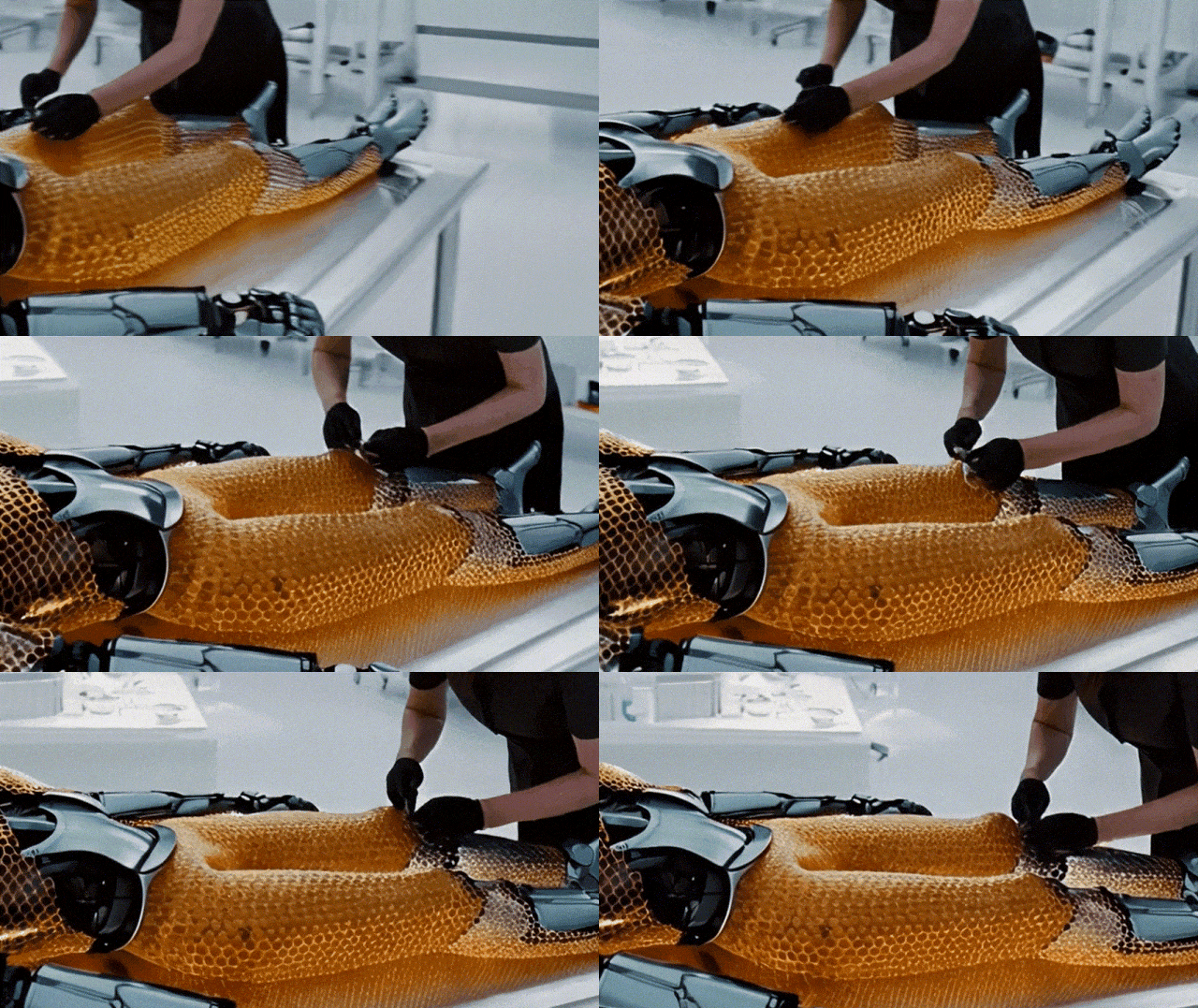
Looking ahead, continued advances in humanoid robot technology will bring unprecedented opportunities to the new materials market, while also presenting new challenges — such as how to further improve material performance, reduce production costs, and achieve sustainable production. As demand for humanoid robots rapidly increases, the synergistic development of humanoid robots and the 3D printing industry will push humanoid robots into their next new era, opening a moment full of innovation and transformation!
Beginning in late 2022, Oasis Capital has believed that new-generation AI technology is not merely a technological transformation but a social transformation sufficient to influence the progress of civilization. We have actively invested in a series of embodied intelligence companies including LimX Dynamics, Qianxun Spatial Intelligence, and Exoshell. In October 2023, we visited a series of American robotics companies including Figure, and have been actively advancing China-US cooperation in the robotics field.
We look forward to building the future world together with entrepreneurs!
 October 2023: Oasis Capital team visits Figure