Light-Driven Carbon-Negative Compound Synthesis: "Guangyue Biotechnology" Raises Nearly 100 Million RMB in Pre-A Round Led by Oasis Capital

A Leader in Next-Generation Synthetic Biology

Recently, Guangyue Biotechnology, a light-driven synthetic biology company, completed a nearly RMB 100 million Pre-A funding round led exclusively by Oasis Capital. The new capital will primarily fund next-generation pipeline development, a negative-carbon synthesis facility, and team expansion.
Professor Jun Ni, founder and CEO of Guangyue Biotechnology, stated: "We are deeply grateful for Oasis Capital's support and recognition. Throughout our collaboration, they have provided multi-dimensional advice and assistance. Guangyue Biotech is committed to becoming a platform company that leverages leading light-driven synthetic biology technology for 'negative-carbon' biomanufacturing, while further strengthening the moat around our proprietary light-driven synthetic biology platform. This will enable high-precision metabolic reprogramming, efficient strain iteration, and ultimately rapid product commercialization. We aim to build the world's largest photosynthetic cell factory library and continue to lead the field of light-driven synthetic biology."
An investment principal at Oasis Capital commented: "Oasis Capital has long been tracking investment opportunities in synthetic biology. As a leader in next-generation negative-carbon synthetic biology technology, Guangyue Biotech employs rational design, multi-dimensional editing, and electron chain remodeling to efficiently convert CO2 into target products using light energy. The company has developed multiple 'AI × metabolic reprogramming' technologies based on its proprietary computational platform, including DeepMARS, a pathway ultra-optimization system that uses AI to optimize the spatial structures of multi-enzyme systems, providing precise guidance for molecular machine assembly and rapidly improving synthetic pathway efficiency. The R&D team led by Professor Jun Ni has mastered numerous core technologies in light-driven synthetic biology, giving these innovations tremendous application potential. Negative-carbon biomanufacturing represents a new production paradigm that combines social and economic benefits. Oasis is honored to join Professor Ni's team on this journey and support their exploration and breakthroughs in light-driven synthetic biology."

Founded in 2021, Guangyue Biotech is an innovative synthetic biology company focused on light-driven CO2 recovery. Carbon dioxide represents an essentially unlimited carbon resource. Guangyue Biotech rationally designs and multi-dimensionally edits photosynthetic cyanobacteria, developing nearly 100 varieties of "negative-carbon" cell factories that directly use light energy to efficiently convert CO2 into target products. Unlike heterotrophic biomanufacturing platforms that depend on sugar resources, this next-generation synthetic biology technology "manufactures compounds from air and reshapes the world with recycled carbon."
Guangyue's core R&D team has accumulated over a decade of expertise in photosynthetic organism engineering, artificial photosynthetic microbial community development, and metabolic modeling. The company holds multiple core technologies in light-driven synthetic biology and has built a photosynthetic cell factory library enabling the directed manufacturing of pharmaceutical ingredients, chemical raw materials, and biodegradable materials from carbon dioxide — achieving substantial cost reductions. Guangyue's current focus areas are functional active ingredients, nutritional health, and sustainable agriculture. The company has already signed commercial cooperation agreements with multiple industry-leading enterprises, with plans to collaborate with sector leaders to launch various products in the coming years, advancing raw material inorganicization and reducing carbon footprints.
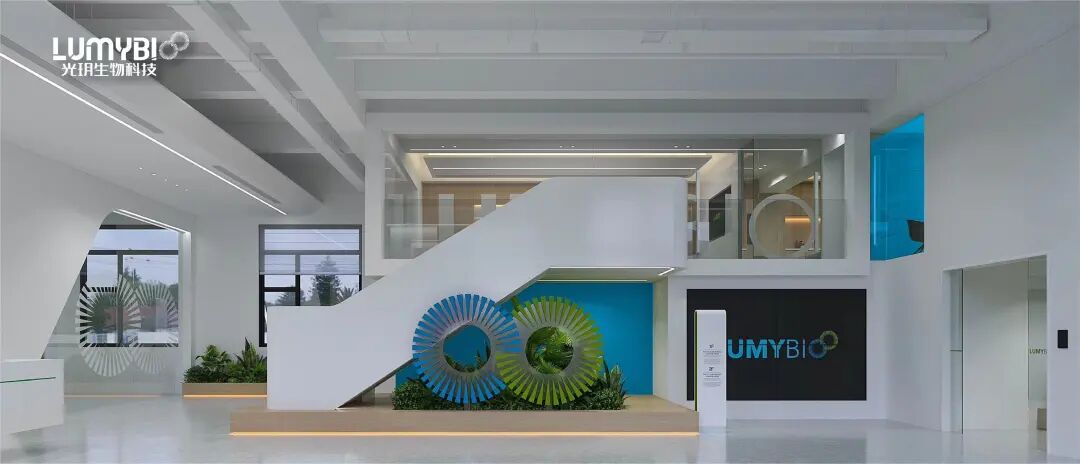 Guangyue's R&D center at Shanghai Lingang Bay
Engineering Photosynthetic Cyanobacteria
Cyanobacteria (blue-green algae), as a type of prokaryotic algae, are the oldest oxygenic photosynthetic organisms and played a massive role in transforming Earth's atmosphere from anoxic to oxygen-rich. Today, as a novel chassis for synthetic biology, cyanobacteria are being called "green E. coli" and are expected to contribute across biotech, cosmetics, biomedicine, and other fields while delivering highly positive environmental and climate impacts.
"Due to their thylakoid structures and abundant photosynthetic electron drive, photosynthetic microorganisms are exceptionally well-suited for producing natural products and reduced substances," explains Guangyue founder Jun Ni. Many natural product biosynthetic pathways require multiple plant-derived enzymes, but these oxidoreductases are difficult to express in traditional chassis and lack the reducing power to drive reactions. Cyanobacteria and other photosynthetic microorganisms can efficiently express synthetic metabolic pathways and possess strong electron drivers to push synthetic reactions forward.
Additionally, unlike eukaryotic algae and plants, cyanobacteria's entire inner membrane system can perform photosynthesis, giving them photosynthetic efficiency roughly 100 times that of terrestrial plants. Although photosynthetic microorganism cultivation requires light energy, their inorganic culture systems are less susceptible to contamination by other microbes. Guangyue has developed elemental substitution technology enabling "open" fermentation, saving energy costs for sterilization and process control.
In terms of strain production speed, Guangyue's independently screened and engineered Synechococcus chassis Lumy-7 achieves a doubling time within 2 hours, with optical density (OD) reaching up to 200 and dry weight exceeding 30 g/L — surpassing the growth rates of heterotrophic microorganisms such as yeast. On this basis, producing one ton of natural products can fix over a thousand tons of carbon dioxide, contributing to carbon neutrality.
Synthetic Biology Platform Technologies
Building on its synthetic biology technology platform, Guangyue Biotech has developed multiple foundational synthetic biology technologies, including the DTL-B synthetic biology paradigm with cofactor self-cycling Cell-free systems, to increase throughput and automation in cellular metabolic pathway engineering; and the DeepMARS pathway ultra-optimization system based on AI molecular structure tools, for rational design of catalytic molecular machines.
In the conventional synthetic biology paradigm of DBTL (Design-Build-Test-Learn), the "Build" step for strain construction involves numerous stages: in vitro synthesis of target genes, plasmid construction with appropriate promoters and terminators, plasmid transformation into cells, and verification of transformation efficiency and product testing. Currently, achieving high-throughput automation across all these linked stages remains difficult.
Guangyue Biotech developed the DTL-B paradigm by coupling a cofactor self-cycling system with a cell-free protein synthesis system for pathway prototyping and optimization. "Using cell lysates and protein synthesis systems to simulate intracellular transcription and translation, we determine the balance relationships at each node of the metabolic pathway based on the amount of plasmid or linear DNA template added. This allows us to modulate multiple enzymes and reaction steps involved in metabolic pathway processes in microplates, enabling rapid high-throughput optimization of metabolic pathways." Because this process does not involve microbial transformation and cultivation steps, the entire workflow can be automated using workstations and microplate readers. "We have tested optimization of different product synthesis pathways using this system, and can increase substrate conversion rates from 20-30% to over 90% in a short time."
Product Pipeline and Commercialization
Beyond platform technologies for engineering chassis cells to synthesize specific compounds, Guangyue Biotech has also developed flexible photosynthetic electron chain/carbon fixation remodeling systems and high-precision photobioreactor technology to optimize product fermentation. "We don't excessively pursue photosynthetic microorganism growth rates; instead we target synthesis efficiency for specific products. Through photosynthetic electron chain remodeling, we can increase cyanobacterial photosynthetic efficiency by 70% while directing nearly 50% of fixed carbon toward target product synthesis. Meanwhile, using parallel photobioreactors for spectral intelligent recognition and inorganic component high-throughput scanning allows us to set photosynthetic fermentation parameters with greater precision," Ni explains. Additionally, when producing antioxidant substances where metabolic reactions require substantial electron drive, beyond light energy electron drive, the company also utilizes partial electron release from phosphite oxidation — "equivalent to an electron hybrid system, with both light energy and inorganic chemical energy simultaneously driving synthesis."
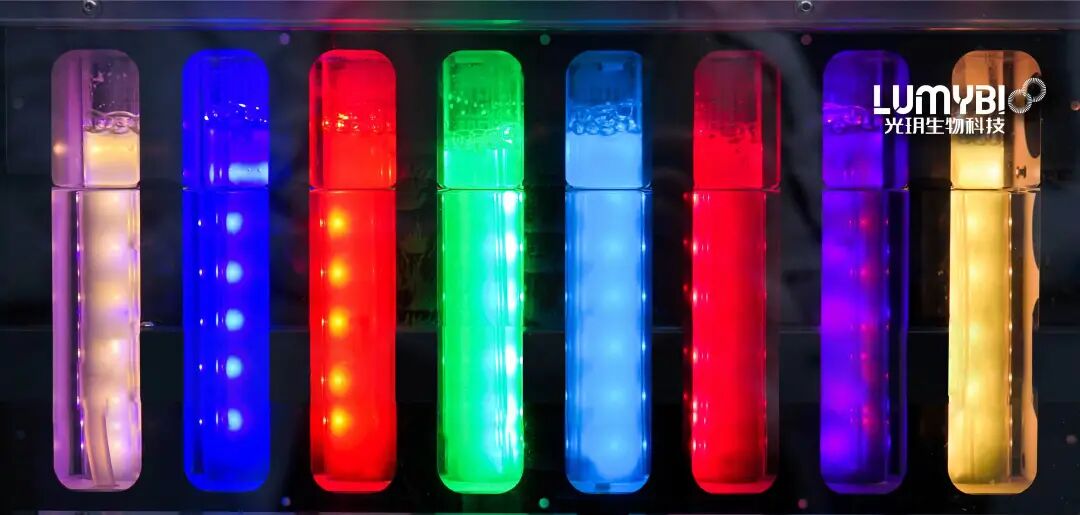
Spectral intelligent recognition system based on parallel scanning
Currently, Guangyue Biotech has achieved negative-carbon industrial development of high-value products including sakuranetin, ergothioneine, and bisdemethoxycurcumin. Shao Hui, co-founder of Guangyue Biotech, notes that "Guangyue's product pipeline falls into three categories: first, high-value components with clear market demand, where negative-carbon synthesis technology achieves cost reductions of over 50%; second, novel high-efficiency functional ingredients where we build multi-dimensional protective barriers based on synthesis technology; and third, commodity chemicals, which are largely developed through partnerships to help corporate partners embed environmental concepts into their products and reduce carbon footprints within economic constraints."
Regarding high-value components with clear market demand, Shao acknowledges that competition is inevitable. The foundation lies in cost and quality advantages brought by advanced technology, with stable sales channels as the safeguard. For its sales model, Guangyue Biotech relies on leading brand companies and quality distributors as downstream channel guarantees; current brand partners are primarily domestic leaders in daily chemicals and medical aesthetics. Beyond raw material sales, Guangyue Biotech also assists energy and materials companies with technology development, jointly building negative-carbon production platforms.
Synthetic biology is delivering on its tremendous technological potential and market prospects. Third-generation biorefineries using third-generation feedstocks such as CO2 and methanol for "negative-carbon production" are gaining favor with numerous international first-tier brands including Unilever, L'Oréal, and Lululemon, offering more environmentally friendly ways to obtain fine chemicals while reducing carbon emissions. The "negative-carbon production model" of light-driven synthetic biology technology aligns closely with national dual-carbon policies and future manufacturing trends. Guangyue Biotech will continue to dedicate itself to biological carbon capture and valorization, reshaping the world with recycled carbon.
Source: 36kr Vitality in Partnership
What do you think vitality is?
Vitality is resilient yet gentle growth. Its resilience lies in the ability to constantly break through and expand regardless of environment; its gentleness lies in bringing sunlight, oxygen, and joy to others and all living things. Finally, I look forward to Oasis's continued growth, spreading everywhere.
— Professor Jun Ni, Founder and CEO of Guangyue Biotechnology




Oasis Capital is a new-generation venture capital firm in China, dedicated to discovering the most vital entrepreneurs of the next decade and growing alongside them to create long-term value. "Vitality in Partnership" is Oasis's vision and mission. This Vitality represents both the direction of structural transformation in the era and the resilience and evolutionary power of entrepreneurs.
Oasis Capital focuses on early and growth-stage investments, with individual investments ranging from $3 million to $30 million USD, concentrating on robotics, artificial intelligence, technology services, and other fields, supporting China's technology-driven new service upgrade.