Thinking Through AI's Impact on Social Structure: The Industrial Revolution as a Reference Point

The New Globalization

Recently, Oasis Capital had the honor of being invited by 36Kr to deliver a keynote speech at the 2023 AIGC Industry Development Summit, where we shared our reflections on the social structural changes brought by AI from the perspective of the Industrial Revolution. Below is the edited transcript. Enjoy.
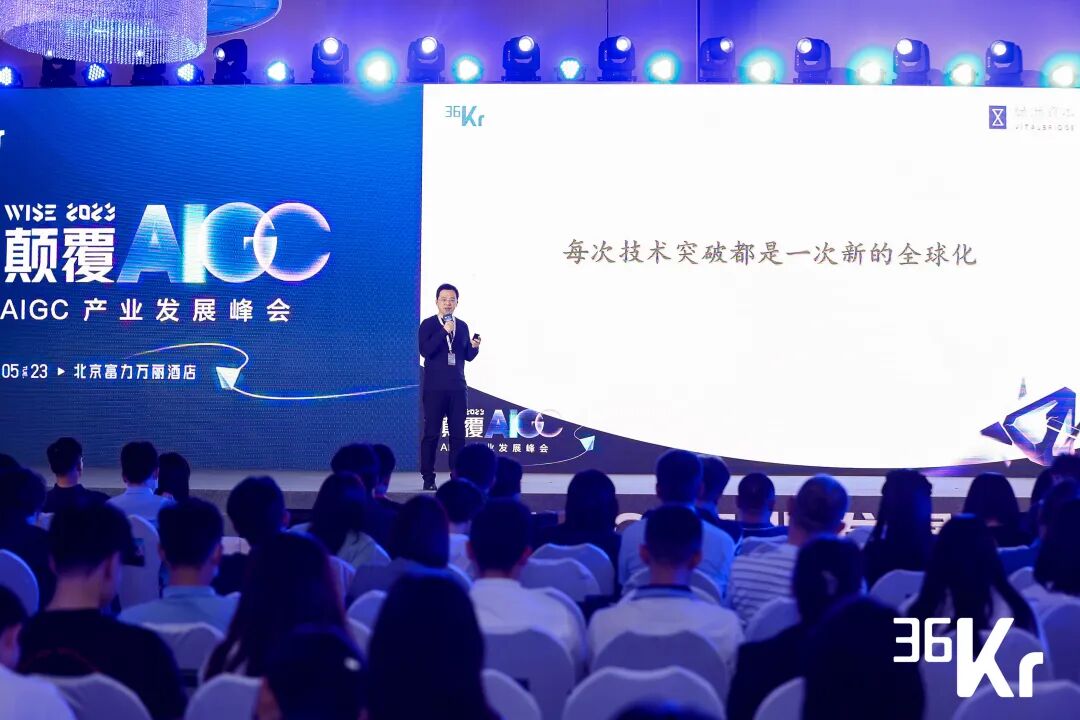
As a new generation of theme-driven investment firm, Oasis Capital is dedicated to discovering the most vital entrepreneurs in China over the next decade. We approach China's transition from scale-driven to quality-driven growth through two lenses: "demographic structure" and "technological innovation." Over the past period, Oasis has invested in approximately 10 AI companies across various sectors domestically, from image generation startup Tiamat to large language model company MiniMax, making us one of the most active funds in China's AI space, spanning applications to foundational models. Over the past year, we've watched these companies evolve and grow rapidly. Today, I'd like to amplify Oasis's observations.
People have talked so much about large models, so much about products, all discussing technological transformation. But what truly matters to us in the end is the societal transformation that technological change brings. Just as the intelligent age has given us many things, I believe none of you here achieved your success by investing in TCP/IP protocols or smartphones. The number of outstanding companies created by smartphones in China remains countable on one hand. Yet the multitude of companies born from transportation, dining, and entertainment enabled by the smartphone era — those are countless. Today, when we use DiDi, Meituan, or Dianping, the reason we use these excellent products isn't the technological transformation itself, but the structural changes in society that technology brought. Today, I'd like to offer you a perspective: think about what kind of structures technology actually creates? For instance, starting from the second half of this year, we may encounter technological unemployment. From a Marxist perspective, all commodities are essentially the crystallization of laborers' "person" and "time." But if labor as a person becomes worthless, is time still valuable? If person and time are worthless, are commodities still valuable? If commodities are worthless, what does society become?
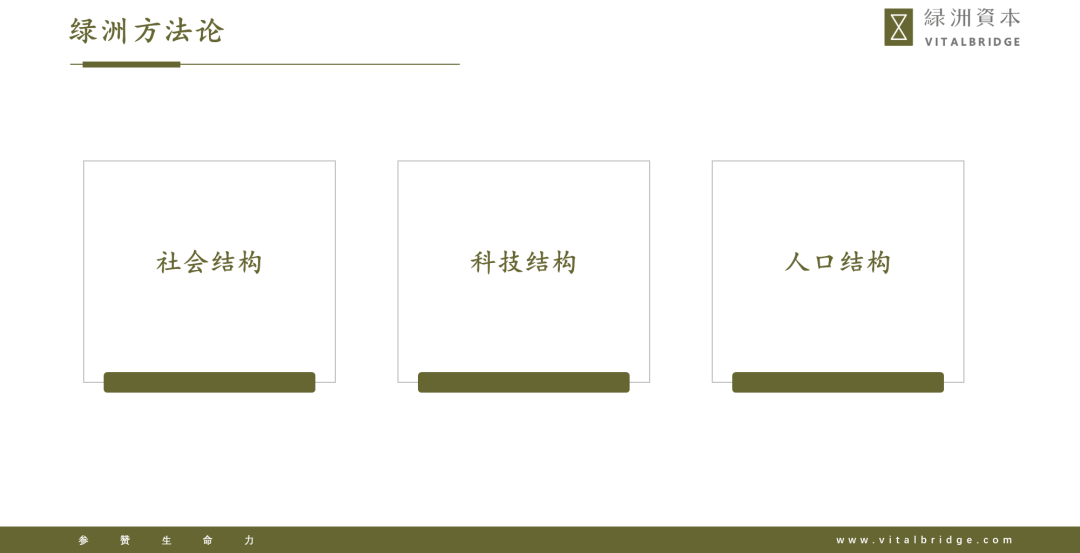
So when we consider change, it includes not only social structural change, but also technological structure and demographic structure. When we predicted the rise of food delivery in China, was it because we saw the technology? Not entirely — it was also demographic change. Globally, if you look at demographic structures, whose does China's most resemble? Japan's. Japan at what point in time? Japan 20 years ago. Here are two charts — Japan in 2000 and China in 2020. Can you really tell which is which? You'll find these two countries remarkably alike. Because Japan also had a population expansion plan back then, and later implemented family planning, so its demographic structure is very similar to China's today.
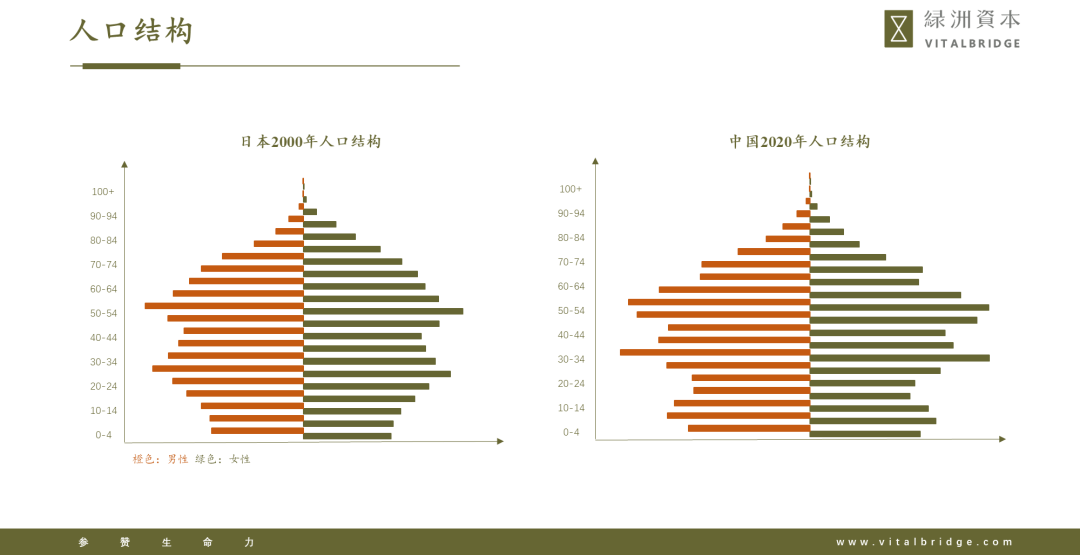
The same applies to consumption. Over the past years, we've said Chinese consumption would rise and consumption patterns would change — not only because technology and society are changing in China today, but because China's demographic structure has reached this stage, and this is simply what should happen. Japan also had its generation of anime enthusiasts, its disaffected generation, its lying-flat generation. Many things are fundamentally determined by opportunities arising from demographic and social structures. For example, when we looked at food delivery back then, we predicted it would become one of China's booming markets. Why? Because in the 20 years after 1960, Japan's food delivery grew 14-fold — what became today's bento culture. But note: during those 20 years, Japan had no express delivery, not even the internet. So why did Japan's food delivery culture rise at that particular moment? It was Japan's family structure — from 1970 to 1990, increasingly more people chose to live alone, more chose not to marry, more chose not to have children after marriage. Because family structures changed, consumption habits changed too. Think about it: if your parents are at home, and there are children in the household, you probably wouldn't order delivery — you'd cook yourself, or choose pre-prepared meals. When you're home alone, there's a high probability you'll just order delivery.
So when we look at entire industry cycles, whether economic systems, social systems, or technological structures, they all reinforce one another.
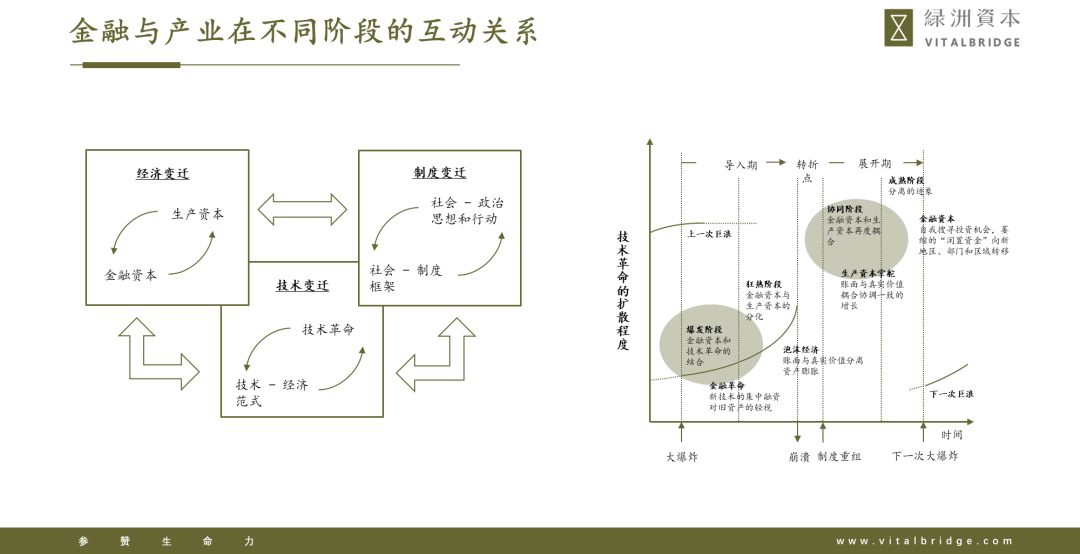
After investing in some AI companies, we've realized that the structural changes the AI era brings may far exceed what anyone can imagine today. If there's a period in human history comparable to the changes AI is bringing today, it would be the Industrial Revolution — the 200 years of British history from 1700 to 1900. So when we discuss demographic structure, we look to Japan; but if we want to understand what China's AI is bringing to the world today, I believe we should look at Britain — at what happened during those 200 years, and what reference that history offers us today. In 1785, Watt discovered and improved the steam engine. Who knows what the greatest significance of improving the steam engine was? Before the steam engine, there were only two sources of power: wind and water. Textile manufacturing wasn't nonexistent then — it's just that most of it was household handicraft workshops, unable to achieve scale. With the steam engine's emergence, large-scale gathering of textile workers appeared for the first time in human history, and precisely because of this, fundamental industrial development became possible. Moving forward, in 1801, Britain saw the beginning of a second large-scale enclosure movement. What was the enclosure movement? At that time, Britain had many farmers — small farmers, medium farmers; generally the largest were medium farmers, with no large farmers. Why? Because you only had so many laborers, you could only cultivate so much land. But after the steam engine appeared, what began to happen? Some farmers applied steam engines to agriculture, and farmers began using steam engines for large-scale land production. Thus emerged the first large-scale farmers. Large farmers began enclosing medium farmers' land, medium farmers began enclosing small farmers' land. For the first time in human history, a large-scale enclosure movement driven by technology began.
Have you considered which industry today resembles agriculture back then? Is there any industry where today there are only "small farmers" and "medium farmers," and "large farmers" have never appeared? Could AI's emergence create "large farmers" in this industry? Carry out an industry "enclosure"?
After 1801, large numbers of farmers became workers. What phenomenon then emerged in society? Large numbers of workers began continuously producing goods, and goods became increasingly cheap. People no longer worried about being unable to buy goods or going hungry. Goods flowed nonstop from one small town to all corners of Britain. Thus, railways appeared. Railways were for transporting goods out; in the process of transportation, retail formats also changed. Previously there were no retail distribution networks, but now they were needed. Looking further at this history, the first factory owners had accumulated substantial wealth. They discovered that the considerable time previously spent cultivating land — now, besides consumption, they didn't know what to do with the remaining time. So they built large numbers of public buildings. What were those buildings? The flourishing diversity of Victorian architecture. Large numbers of churches, large numbers of public buildings — much of this resulted from rapid wealth accumulation.
So when AI gives us more time, where will this time go? What "public buildings" will carry our time? Will we put our time into games, into the Metaverse? Or into architectural structures that don't even exist today? What opportunities exist within this?
So often when we discuss the Industrial Revolution, people only see that Watt discovered or improved the steam engine. But we may have forgotten the industry-wide changes that the steam engine era brought. Another example: in 1801, the first wave of farmers became the first industrial workers in human history. Seventy years later, they aged. These people had never lived in cities before — they lived in suburbs, they were farmers, their children were farmers too. When they became workers, what were their children? Did they still want their children to be farmers? No, they didn't want their children to be workers either — they wanted their children to become factory owners. Thus so-called modern education began, because increasingly more people were needed to teach these children literacy, to familiarize them with factory rules, to enable them to live in cities, even hoping they'd develop business acumen and become factory owners. So in 1870, Britain's Elementary Education Act was issued, and humanity began magnificent education reform centered on literacy rates — the core being to divide education into more specialized roles. But where did all this come from? From Watt, from the Industrial Revolution. So things we find familiar began to enter the historical stage. Working-class living conditions were poor then; because of large-scale coal use, air was polluted too. Many novels described that era, such as Oliver Twist. Meanwhile, Marx and Engels emerged, because someone needed to protect working-class interests.
The initial cause of all of this? Watt's improved steam engine.
Returning to today, someone has improved large language models, improved AI, and so we see continuous streams of products, continuously discover new things, continuously replace much of human mental labor. Where will these people go next? Where will abundant time be spent? Because of these people's changes, how will classes change? Who will represent these classes? What other changes will emerge? All of this is what we should be thinking about.
When we discuss the Industrial Revolution, what do people first think of? Textiles. But looking across that 200-year history, there were actually three pillar industries: textiles, steel, and transportation. Why did transportation emerge? Just as mobile internet changed our transportation and travel patterns, that era saw goods increasing dramatically in quantity and beginning to circulate worldwide — first from small towns to every corner of Britain, then from Britain to continental Europe, from Europe to the Americas, then to East Asia. So we see that in civilization's history, transportation is the final industry, and this industry also changed many things.
Looking at what other industries developed rapidly during these 200 years — we've analyzed that there were 8-9 additional industries. Agriculture, because of the enclosure movement. Metallurgy, construction, shipping. Why shipping? Because Britain needed to transport goods globally. Education, because large numbers of workers wanted their children to become factory owners. Finance. Each of these industries — if you examine that 200-year history — each gave rise to hundreds of super-wealthy individuals during this cycle.
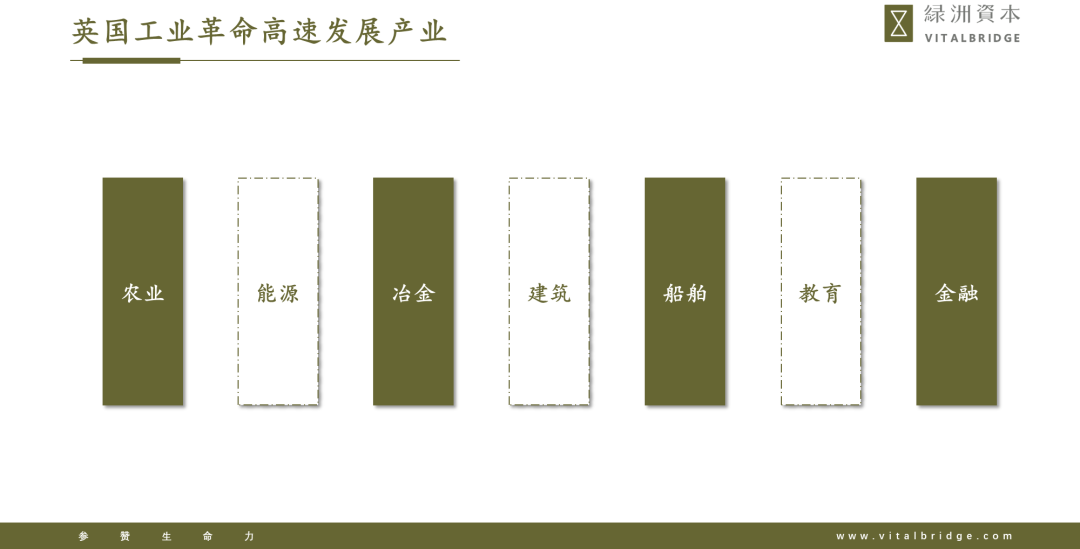
AI is not a large model. AI is not an application. AI is an opportunity for transformation that concerns every single person here — every industry will have the chance to be transformed. So within this massive wave of AI opportunity, it far exceeds AI applications and AI large models. Ten years from now, at humanity's current pace of progress, we may traverse in 30-50 years what took Britain 200 years. What does this mean? It means many among us will have opportunities to create super-wealth in the coming 10-30 years, and this opportunity is just beginning today.
Today is still 1785 — the moment Watt has just improved the steam engine. More than 100 years of history are still unfolding. In this process, Oasis has invested in some large model companies, and also in many industries where computing power is currently scarce. People often worry: will we be choked by supply constraints? Without computing power today, can our industry not develop? Because of restricted talent flow in advanced manufacturing or core technologies, might China's AI fall behind? I want to tell you: don't worry at all, because technology blockades have appeared at every stage of history. Today we see some US technology blockades against China, but from 1700 to 1900, there was an even larger-scale technology blockade in human history — Britain's blockade against the United States. Back then, Britain had a policy: any British citizen leaving Britain's territory, regardless of destination, would immediately lose British citizenship if away for more than six months, because they were deeply worried you'd take technology with you. You may know of the "spinning jenny" — then, not only were there no drawings to take from textile factories, everyone had to be searched when leaving. British customs conducted strict body searches on all people leaving British territory. But you all know the final outcome: Samuel Slater brought the designs to the United States from memory. America grew within such stringent technology blockades to become truly the first nation built on industrial civilization. Thus came today's United States, a nation built on railways and highways. Today, the US has many technology blockades against China, but compared to Britain's measures against the US back then, these are nothing.
So I believe that in this new wave of technological change, China will give rise to a new wave of opportunity, and also generate a new kind of global opportunity. We also hope that in this process, we may have the possibility to go global. Britain took its goods worldwide, and some people went to America, where they founded a new great power. So if we survey history broadly, every technological breakthrough is essentially a new globalization.
So when we look today at the transformation AI brings, don't stop at China, looking at China's opportunities; don't stop at the United States, looking at US opportunities. Fundamentally, this isn't a Chinese opportunity, nor an American opportunity — this is a new opportunity that human civilization faces at this stage. In this new opportunity, in this new process of globalization, what role can each of us play? Where will we be in 10 years? In 10 years, will we be the small farmers who were displaced? The industrial workers? Or will we become giants and leaders of another emerging industry? The wheels of history have already turned onto new tracks. We welcome you to explore the future built by AI together with Oasis. We also look forward to, beyond the business opportunities we see in AI today, investing in more opportunities belonging to the commercial civilization of the entire era. In this process, we believe every entrepreneur with upright intention and courage — they are the most vital seeds of this era. We hope to connect with these seeds, to discover these seeds, and we believe the era itself is this fertile soil. When these seeds take root, sprout, and grow strong, this era will naturally become an oasis. This is also why, in 2019, when we left a large dollar-denominated fund, we named ourselves "Oasis Capital."
We welcome AI practitioners and founders interested in AI to connect with us, to explore a new human civilization and technological development over the coming 30-50 years together. Thank you all!




Oasis Capital is a new generation venture capital firm in China, dedicated to discovering the most vital entrepreneurs in China over the next decade, growing alongside them, and creating long-term value. "Nurturing Vitality" is Oasis's vision and mission. This vitality is both the direction of era-defining structural transformation and the resilient, evolving force of entrepreneurs.
Oasis Capital focuses on early and growth-stage investments, with individual ticket sizes ranging from $3 million to $30 million, concentrating on robotics, artificial intelligence, technology services, and other fields, supporting China's technology-driven new service upgrade.