Shentao Qin: Building a New Organ for Humanity | The North Face Project

The Interaction Infrastructure Reshaping the Physical World

Making machines more human-like has been the dominant direction in embodied intelligence development over the past few years.
But there's another path: instead of having machines learn from humans, humans and machines co-evolve. When human skills, experience, and intent can be understood, transmitted, and amplified, human-machine integration may enter a fundamentally different paradigm.
In this episode of Signal and Noise, we invited Shentao Qin, founder of OriginFlow and a post-00s Tsinghua PhD, to discuss a technical approach distinct from brain-computer interfaces, motion capture, and exoskeletons — starting from motor neural signals, capturing and understanding human intent before movement occurs, and transforming the infrastructure of physical world interaction.
Beyond the technology, we also talked with him about entrepreneurship, playing from behind, and vitality. Why building a company is a form of Founder in Gaming, and why some questions are worth answering with your entire life.
Welcome to the show.

If you have any thoughts you'd like to share, feel free to leave a comment below.
The original podcast transcript was approximately 22,000 Chinese characters; this article has been edited and condensed to roughly 8,000 words.
Enjoy
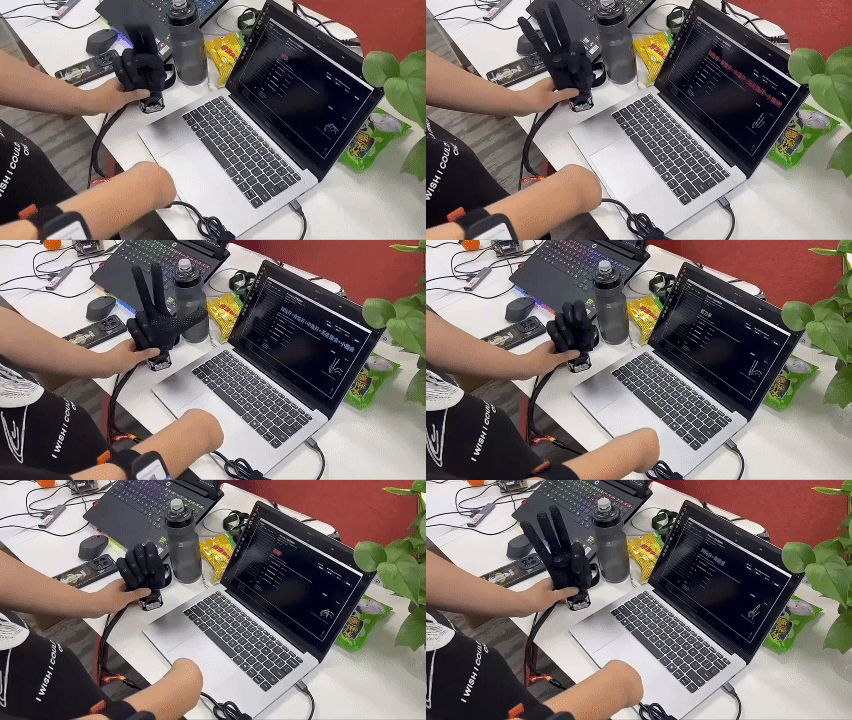
Oasis Capital: Your demo video was genuinely surprising — a person with disabilities wearing a black wristband, controlling a robotic hand through muscle electrical signals. My immediate reaction was that this is deeply meaningful. No matter what issues you have with your terminal limbs, fundamentally they can be supported again, and your whole life extends from there. In the future, human hands could become infinitely longer, or feet could run incredibly fast.
Many people may not be familiar with what you're doing now. If you had to describe it simply, how would you explain it?
Shentao Qin: Here's an analogy — an interesting thought experiment. Imagine if OpenAI had been founded before the internet existed, lacking massive amounts of data, but we believed that advanced reasoning intelligence could emerge from vast quantities of text tokens. How would we even begin?
We'd have to scour the globe for books, take this relatively low-entropy, higher-quality information and build a tokenizer from it, just to have a shot at training an initial small model. To iterate further, we'd need practitioners across industries to meticulously document their domain expertise.
You'll notice this process closely mirrors what Physical AGI is going through today. I was born after the internet had already developed for decades, after billions of users had accumulated massive amounts of content — you could call this a kind of "sacrifice" by all of human civilization. By comparison, Physical AGI is premature. Large numbers of researchers and entrepreneurs have flooded into this track, trying to build a physical intelligence foundation model on par with large language models. But we lack a knowledge base of physical scene experience, and supporting infrastructure and technical accumulation are severely insufficient. Yet all resources and attention are pouring into this赛道, forcing us to accelerate technical落地.
So if we think of Earth as an open-world game called World Online that's been running for billions of years, and assume the real world itself already has a mature model, then the optimal choice is definitely not to start from scratch and build a brand new engine, but to "distill" from real-world samples.
Distillation (Knowledge Distillation): Using the probability distribution output by a large model as a supervisory signal, compressing its decision-making patterns into a smaller model, drastically reducing size and inference cost while preserving as much of the original capability as possible.
Oasis Capital: So do you want to distill the world, or distill people?
Shentao Qin: The core is distilling human behavior, migrating human operational capabilities to robots.
It's difficult to skip over existing technical foundations and forcibly build the next generation of underlying infrastructure. A more pragmatic path is to work within the current system, creating low-cost, non-invasive, imperceptible peripheral devices that we call "digital organs," continuously collecting behavioral data and iteratively optimizing models. Of course, the signal-to-noise ratio of initial collected signals will be somewhat limited, but we have mature technical means to steadily improve data quality.

Oasis Capital: The human body contains vast amounts of information. Some pursue brain-computer interfaces, others motion capture, to extract it. When you talk about "distilling people," what does that mean in your vocabulary?
Shentao Qin: We can simplify the world into two core elements: Agent and Environment, which continuously interact, constantly producing data in the process. If we further categorize agents, there are broadly carbon-based humans and silicon-based robots. Our goal is to enable both to interact efficiently with the physical environment. For Physical AGI at its current stage, our interim goal can be described as: making silicon-based agents' ability to interact with the physical environment approach human levels as closely as possible. But this contains many contentious points: there are no two identical humans in the world, nor two completely identical machines.
Information transfer between silicon-based agents is highly efficient; between humans it's much harder — the transmission of a craft, for instance, often takes a very long time. And the more fundamental question is: how do we migrate human capabilities to machines? The large language models and large video models we see now are essentially about inputting data of a certain modality, extracting Features in Latent Space (hidden space), and the learning direction of these features requires clear gradients to guide them toward preset output objectives.
This is also the underlying logic of why we want to migrate human behavioral capabilities to robots. Most previously validated successful attempts have essentially used human behavior as strong supervisory signals.
Hidden Space (Latent Space): A low-dimensional compressed representation of raw data, retaining only key features of its underlying structure. Neural networks map high-dimensional inputs like images and text into this space through representation learning; semantically similar samples cluster closer together, and the model's classification, generation, and reasoning all occur here.
Oasis Capital: Actually, current embodied intelligence development has basically two paths. Spirit AI and LimX Dynamics are fundamentally answering how to make machines look more human. We chose to be your first investor because at the time there was an important theme called Human Tokenization — today you could also call it "distillation" — how to extract human information.
But from what you just described, these two paths of machines becoming human and humans becoming machines will eventually converge.
Shentao Qin: They will definitely converge. We often joke that our Phase 1 goal is making machines interact with the world as human-like as possible; our Phase 2 goal is more interesting — making humans interact with the world more like machines.
Oasis Capital: But do people really want to be like machines? Haha, is that even a human need?
Shentao Qin: Haha, when we say "more like machines" it's in quotes. Imagine a scenario: one day an "Albert Einstein lobster" awakens, and its skills and cognition can be synchronized to all lobsters, sharing a single knowledge system, with skills rapidly transmitted globally.
But in human society, knowledge transfer between individuals is much less efficient. I'm a post-00s, with only about twenty years of life experience accumulated, while you, Jin Jian, have many more years of experience than me. I can't fully absorb your cognition and experience in a short time — the bandwidth of information transfer is very limited.
If future society's material production capacity is radically liberated, and humans are no longer constrained by production, what becomes the next pursuit? I believe human capability augmentation will be a long-term exploration direction. When material abundance is achieved, new differences between people may come from the degree of capability augmentation — for instance, the development of Neural Interfaces could give people more precise cognition and control over their own health states.
Neural Interface: A direct communication system established between the nervous system and external devices, utilizing the electrical properties of neural signals. Electrodes record electrical activity from the brain or peripheral nerves, and can reversely apply electrical stimulation to modulate neural activity, thereby enabling bidirectional information transfer in both "read" and "write" directions.
In the future, large amounts of cognition and capabilities will emerge that exceed humans' native boundaries, and this amplification of capability will require a new kind of carrier — digital organs that fuse carbon and silicon.

Oasis Capital: Between the emission of neural signals and the completion of terminal movement, how much time lag is there?
Shentao Qin: From what we currently know, it leads by several tens of milliseconds.
Oasis Capital: In the past, we've seen a lot of motion capture, especially in games and animation, and there's always been delay. The final result ends up feeling poor, always seeming choppy.
In that case, your device is actually the first opportunity to achieve synchronized movement on screen before the movement even comes out — or even earlier than the movement I make?
Shentao Qin: Precisely because the signal precedes the movement, we can perform temporal alignment and achieve complete sensory synchronization. So for competitive gaming, the experience ceiling with a motor neural interface actually exceeds that of keyboard and mouse — after all, with keyboard and mouse you have to wait for your fingers to complete the keystroke before input registers, which adds an extra layer of latency. As people often say, some people's minds move fast but their mouths can't keep up; it's the same principle in finger-based competition.
Oasis Capital: For humanity, this could be a milestone. In the future, it probably won't be peripherals like we have now. Because by comparison, all our current peripheral devices are backward. If afterward you're still using backward peripherals, we wouldn't even be the same generation, right?
Shentao Qin: It's roughly a generational gap, like the difference between 5G and 1G. When the next generation grows up accustomed to this high-bandwidth human-machine interaction, looking back at our current input efficiency, they'll likely find it unimaginable — just as we now look back at telegraph transmission speeds.
Oasis Capital: From that perspective, isn't typing just sending telegrams? Currently, even when I type as fast as possible, I'm still using keys; fundamentally I'm still operating at the extremities. But if you intercept at the level of consciousness, what information can you actually capture?
Shentao Qin: We've recently been building our self-developed foundation model and discovered that EMG signals and text signals are essentially the same — both can be represented using Tensors. With our current hardware solution, a single channel has 16 channels, each sampling at 2000 Hz, with 24 dimensions per sample at 3 bytes. Roughly converted, that's approaching hundreds of KB per second, about hundreds of megabytes per hour — the information density is far richer than intuitive perception suggests. With pure visual motion capture, without targeted signal denoising and filtering, you'd mix in massive amounts of invalid noise. But the Tensors we collect from the neural execution side are overwhelmingly valid, high-quality motor information.
Tensor: A multi-dimensional array that can be efficiently computed on GPUs, generalizing vectors and matrices to higher dimensions. In EMG signal processing, it carries multi-channel, multi-timestep EMG data and serves as the standard input format for deep learning models.
Channel: In electromyography (EMG), one channel corresponds to one independent signal collected by a pair of electrodes, reflecting the electrical activity of a specific muscle region. Multi-channel systems place electrodes at different locations to simultaneously record coordination and temporal changes across muscle groups.
Oasis Capital: Because a person can type about 140 characters per minute, continuously typing for an hour equals roughly 8,400 characters — theoretically, the magnitude of your interaction with the outside world is on an entirely different level.
Shentao Qin: Both the dimensionality and efficiency of interaction would be much higher.
Oasis Capital: Assuming this workflow is stable and the wristband simply outputs 100 megabytes per hour to the outside world, theoretically what changes would occur in how I interact with the world?
Currently our product form is still primarily wristbands, while we're also exploring more form factors for neural interface solutions. Looking further ahead, human capabilities have the opportunity to become as strong as silicon-based intelligence.
Oasis Capital: Besides wristbands, in your imagination, what forms might emerge in 3 years, 5 years?
Shentao Qin: Something like a full-body EMG sensing suit might appear, similar to the mech pilot suits in Pacific Rim.
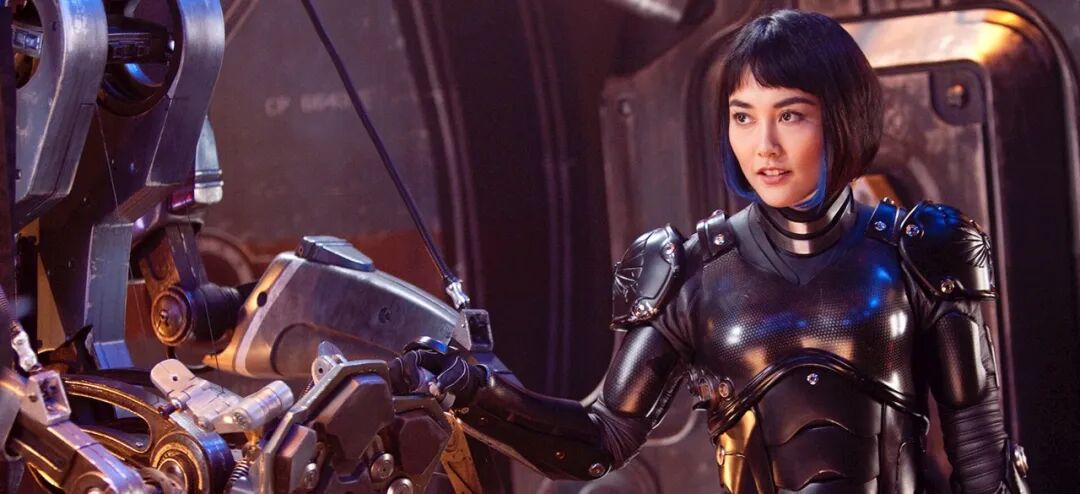
Oasis Capital: Essentially the same form as current clothing, collecting and processing full-body muscle electrical data. Is there an even more direct approach, like implanting chips at birth?
Shentao Qin: Our judgment is to first push non-invasive peripheral neural interfaces to their limit. Once the technology matures, there may also be possibilities to explore inside the human body.

Oasis Capital: When did you first decide that this was what you needed to devote your life's main energy to?
Shentao Qin: Throughout my entire undergraduate period, my exploration in this direction had nothing to do with commercialization. At the time I purely thought this was cool and interesting. Later, progress at the deep learning level made me realize this technology had the opportunity to achieve qualitative improvement over the previous generation. However, the biggest challenge for human-facing interaction technology lies in generalizing effects across scenarios and populations — at that time, the entire industry still had no clear answer.
It wasn't until Meta, with years and nearly ten billion dollars in R&D investment, published related results in Nature's flagship journal, validating the scaling effects of this technical path, that I first became certain this was worth fully committing to. Before that, I was mostly following it from a technology enthusiast's perspective.
Oasis Capital: When did you decide to do this through building a company and organizing people?
Shentao Qin: Last July I had this idea, and that's when I first met Jinjian. At the time I had zero concept of "advancing this through a company structure" or how much acceleration organizational operations could bring.
Roughly one or two weeks after National Day, I had a tremendous amount of reflection and suddenly realized this was worth dedicating myself to completely. Using a gaming analogy: games typically have two modes, normal matches and ranked matches. Normal matches you can play casually, having fun with teammates and opponents alike, practicing new heroes, losing doesn't matter. But ranked matches are different — you have to respect your teammates and respect your opponents. At that point I figured it out: stop playing normals, go play ranked now. And I was very clear that the ultimate opponent in this track wouldn't be startups in the same space, but sooner or later we'd have to directly face global top players like Meta and Neuralink.
There's actually a very interesting strategic divergence here: Neuralink chose to enter from the most difficult brain-computer interface. In my view, the ultimate answer for neural interaction will definitely point to the brain center, but before reaching that endgame, we can start from peripheral neural interfaces and let the technology land and grow step by step — the underlying technical foundations are connected. The difference is that Elon Musk's overall plan anchored humanity's ultimate questions in energy, matter, and information from day one, placing the anchor there. But if one day he turns around and says he wants to really do neural interfaces properly, his layout for Neuralink might be much richer, not necessarily limited to brain-computer interfaces.
Oasis Capital: Listening to you describe this, I can feel your ambition. Many people think ambition comes from reaching a certain position — because he's Elon Musk, because he's CATL, so he has ambition. But actually it's the reverse: because he had ambition, he achieved Tesla, he achieved Elon Musk.
Many entrepreneurs don't feel like they're playing an elimination tournament. People don't initially set their sights on truly competing with Meta. Many entrepreneurs' angle is: I just look at this problem in front of me that needs solving and innovate, as if there's no such thing as competition. We met in July, and by October you'd figured this out — at that point you were a 3-month entrepreneur. How did this idea emerge: I want to win, and from the start I'm targeting the strongest person in the world in this field?
Shentao Qin: To put it somewhat sharply, even with players like Elon Musk and Meta ahead, I believe today's neural interaction industry is far from reaching the development speed and maturity it deserves. Mark Zuckerberg and Elon Musk are both extremely top-tier leaders, but currently neither has placed core attention on this track.
But I always believe neural interfaces will be the core infrastructure of next-generation human-machine interaction, worthy of the world's top entrepreneurs devoting 99% of their energy, even exceeding 100%, to deep cultivation — and this track has not yet received highest-priority full commitment.
When we see DeepSeek training a model with potentially much higher efficiency than OpenAI, with much higher human efficiency, most people think "wow, impressive." Our feeling is: when a company's founder hasn't focused full attention on the track, hasn't personally become the most extreme expert in this domain, hasn't built an AI-native high-efficiency organizational structure, they might spend $100 but produce less than $1 of results. Conversely, if we can build an extremely focused, higher human-efficiency organization, and we firmly believe in the long-term value of this, why wouldn't it be worth our full commitment?

Oasis Capital: When you just talked about what an entrepreneur's "entire life" means, I think many people don't understand.
I previously had the opportunity to meet a global enterprise founder, now in his 70s. We chatted for over an hour, and afterward he asked me one question: "Jinjian, how many hours do you sleep per day?" I said I try to guarantee 8 hours, though sometimes I can't manage it, but at least 6 hours. The old gentleman looked at me and said: "You sleep too much." Haha, I was stunned at the time. I talked with his colleague afterward: the gentleman, from the day he started his company until now, has never exceeded 4 hours of sleep per day, because he manages business spanning over 100 countries worldwide, and to this day is extremely, extremely clear on the gross margin of every single country. At that moment I actually understood what you meant by giving your entire life.
But what's driving this "grind" of yours?
Shentao Qin: Actually this morning I only got back to the hotel to rest at 6 a.m., and after 9 a.m. I went to a conference, then came straight here to record the podcast. I think this might be the normal state — you don't have time for sleep, you can only catch naps when there's a gap. I believe more often, people can control their bodies; the body's potential is stronger than you imagine.
Oasis Capital: So for example, returning to the hotel at 6 a.m., meeting at 9 a.m., only about 3 hours of sleep — how do you do it?
Shentao Qin: Many entrepreneurs use a term called "gaming" — founder in gaming. Like when you're completely absorbed in gaming, fully immersed, you really can go 24 hours without sleeping and still be in decent competitive form. The essence is that attention and state are highly focused on the goal, the body naturally mobilizes to optimal condition, hormones adjust to a very high threshold, and once in this state, fatigue is suppressed to very low levels.
Oasis Capital: So for you, entrepreneurship is basically like gaming.
Shentao Qin: Way better than gaming.
Oasis Capital: Haha, even better than gaming. I loved gaming as a kid too. I remember once I broke my leg playing basketball. My dad took me to the hospital to get it wrapped up, then dropped me off at the school gate and left. After he left, I realized I was right there at the gate, so I grabbed my crutches and went straight to an internet café. When my dad got back, he realized he'd forgotten to give me my meds. He came to the school, found I hadn't returned to class, and started searching the nearby cafés.
Then my other leg broke too (laughs).
But a lot of people treat entrepreneurship like a job — they don't get that absorbed. How do you do it? Do you think it's innate?
Shentao Qin: The phrase "your entire life" — I think it deserves to be understood as deeply as "gaming." When someone truly enters a gaming state, fully committed, all their energy naturally tilts toward that one thing.
I remember gaming as a kid, desperately hoping my parents would go to sleep early. Afraid of getting caught staying up all night, I'd time it so I'd crawl back into bed at 5 a.m. for an hour, then pretend to wake up normally at 6. When you're really in that state, you find ways to compress your entire life to make more room for it.
Oasis Capital: Have you been like this since you were young, or did you become this way?
Shentao Qin: Always been this way. It comes from a particularly interesting observation my mother made. She noticed that when a lot of people play games, they're genuinely having fun — but when I lost, I'd get furious.
Oasis Capital: Hahaha, furious when you lost.
Shentao Qin: Massive multiplayer online games have matchmaking balance mechanisms. If your win rate stays too high, the system pairs you with inconsistent teammates to regress your win rate toward 50%. Sometimes fighting against that mechanism made me really angry. Later you can actually change this mechanism through winning. The trick is being able to play "from behind." In other words, if World Online really is a massive game, the most exhilarating character and raid is Zhu Yuanzhang — starting with nothing but a begging bowl, building everything from scratch.

Oasis Capital: Do you see yourself as a "violent" person in the entrepreneurial process?
Shentao Qin: If this were a true-or-false question, I'd answer "yes."
When discussing matters of fact, I don't tend to factor in many other considerations — I just judge based on the logic of the thing itself. And in the process of pushing forward, to clarify priorities and concentrate resources on what matters most, you have to be a "violent" person.
Oasis Capital: I get it — you have to seize the principal contradiction.
Shentao Qin: Right. If something is judged to be important enough, once the core information is clear, you need to start thinking within 10 seconds, establish high priorities within one to two minutes, and immediately start pushing. Our internal rhythm is: first draft in three days, smoke test running in one week, then continuous rapid iteration.
I deeply agree with one saying: A lot of the time you can't wait for everything to be ready before you set out — you have to practice running before you've learned to walk, try flying before you've learned to run. In short: "take off from where you stand, refuel mid-air, force the landing."
Oasis Capital: Listening to you just now, I can sense the killer instinct — there's something very sharp in there. I think this sharpness connects to what you said earlier about staying in the game, playing ranked rather than casual matches. You're someone with very strong execution?
Shentao Qin: I think the logic is simple. Since everyone chose to play ranked, the goal is obviously to win. If someone says "I'm your teammate, but winning or losing doesn't matter to me," then they're better suited for casual matches — no need to queue up for ranked.
Oasis Capital: Got it. Since we're playing this game, let's play it seriously.
Shentao Qin: Exactly. That's respect for yourself, your teammates, and your opponents.

Oasis Capital: Since you love playing from behind. After so many games, what do you think it takes to win a game you're losing?
Shentao Qin: It's actually common sense — keep your mental game steady.
Generally speaking, if you personally can play well from behind, it proves you didn't create this situation. So, can you accept that your most trusted teammate made a critical mistake that caused the whole game to tilt toward collapse?
First you have to respect this reality, accept that you're collapsing, and understand your teammate's mistake. But the right mentality in this situation is bringing the team together to find a way back. The hardest part of this process is: the person who made the mistake feels guilty, the people who didn't make mistakes feel resentful, and you have to pull everyone's attention back to the objective, lead everyone to find breakthrough points, catch the opponent's mistakes, and use their mistakes to claw your way back. And this back-and-forth often lasts a long time — dozens of minutes, even over an hour.
Oasis Capital: I understand. Right. Because you have to endure enough tearing and pulling to actually develop.
Shentao Qin: It has to be this way.
Oasis Capital: Okay then — what's the biggest game you've played from behind in your life so far?
Shentao Qin: Before starting a company, I thought I'd played a few games from behind. Looking back after becoming an entrepreneur, none of them really counted.
Oasis Capital: Hahaha, so it was all bronze-tier, just hair-pulling chaos.
Shentao Qin: Right, small-time bronze stuff. The real games from behind haven't even started.
Oasis Capital: Then what's the biggest game from behind since you started your company?
Shentao Qin: I feel like we're still in silver tier. When we enter the field of vision of top-tier players like Neuralink and compete on the same stage — that's when we've reached gold. If we can achieve deep technical collaboration with the world's most advanced companies, that's diamond tier. But we're nowhere near challenger tier yet. True challenger tier is genuinely representing China in the global industry's first echelon. Still a long road ahead.
Oasis Capital: Interesting. So essentially, what tier you're in is determined by your competitors.
Shentao Qin: Exactly. I actually really hope my opponents are strong enough. Anyone who games regularly knows this: If you want to max out experience and capabilities with the least resources in the shortest time, the fastest way is encountering top-tier opponents — they won't give you room for error, they'll force you to grow rapidly through high-intensity confrontation. That's the most interesting thing in itself. Especially facing opponents with far greater resources than you, being suppressed forces you to improve, because you can't accept losing.
Oasis Capital: At this point you don't accept it — first you don't accept them, hahaha, then you don't accept yourself, right?
Shentao Qin: Admit you're noob, but don't accept losing.
Oasis Capital: Right, don't accept losing, and at first don't admit you're noob either, hahaha.
Shentao Qin: I think Elon Musk is my favorite example of a founder in gaming. Look at him founding SpaceX on Day One — he genuinely didn't know much about rockets. He admitted he was noob, but wasn't afraid of losing.

Oasis Capital: Throughout your journey, there must have been many painful moments in life. How do you maintain this vitality?
Shentao Qin: I later realized that the direction we're exploring is essentially about amplifying human perception and experience of the world to the extreme. So whether problems arise at the personal or team level, to me they're just part of life's ups and downs: some are tuition you have to pay, others are simply part of what makes life vivid.
Oasis Capital: But so-called experience is always posterior — in the moment, a person's feelings are real. How do you recover from pain?
Shentao Qin: Honestly, I just face it head-on.
Oasis Capital: Haha, very violent — you're violent with yourself too. We've always emphasized "participating in and enhancing vitality." When we first met, you looked a bit more green than you do now. Though you've encountered many challenges along the way, I feel like the vitality in you has grown stronger.
For you, how do you understand vitality? And how do you preserve your own?
Shentao Qin: I think vitality is Live in gaming, and eventually become a game changer.
Oasis Capital: That's a cool understanding. If you could give one piece of advice to yourself when you were just starting out, what would it be?
Shentao Qin: Follow your calling.
Oasis Capital: What causes people not to follow the calling in their hearts?
Shentao Qin: There's a question: "If you could do it over, what would you change?" I might feel I don't need to do it over. At every stage of the past seven years, I've done my utmost. This utmost doesn't mean the results couldn't have been better — it means every decision was made following your heart and calling, never betraying your original intention.
I think life is like a game with a server shutdown. When your character's time to leave the server comes, will there be any moment you want to replay? If on that day I can still say "no need to," that'll be enough.
Because every step I've chosen is the result of following my calling.