VAST Raises Another Tens of Millions of Dollars, Launches AI-Powered All-in-One 3D Workstation | Oasis Vitality

Counselor Vitality

3D large-model startup VAST has closed another Pre-A+ round of tens of millions of dollars. The round was led by the Beijing Artificial Intelligence Industry Investment Fund, with Eminence Ventures participating. VAST's angel round was led exclusively by Oasis Capital. Other shareholders include Fortune Venture Capital, Primavera Venture Partners, Inno Angel Fund, and Shuimu Tsinghua Alumni Fund.

VAST has also officially launched Tripo Studio, the world's first AI-powered one-stop 3D workstation, and is about to release its new algorithm, Tripo 3.0.
This round of funding will primarily go toward R&D for the Tripo series of large models and the Tripo Studio product and ecosystem platform, accelerating the construction of a full "AI + 3D" industry chain. The goal is to build an end-to-end product system of "foundation model + ecosystem plugins + native workstation," creating a complete gradient of creator profiles spanning professional-grade (PGC producers), influencer-grade (PUGC creators), and mass-market (UGC users) levels — further solidifying the team's global leadership in 3D generation.
Founded in March 2023, VAST is an AI company focused on general-purpose 3D large models. It aims to build a mass-market 3D content creation platform, making 3D-based spaces a core element of upgraded user experiences, innovative content expression, and new-quality productivity growth.
Since early 2024, VAST has been continuously iterating on the Tripo large model, successively launching the Tripo 1.0 to Tripo 2.5 series of 3D large models with billions of parameters. It has also released open-source foundation models like TripoSR, TripoSG, and TripoSF, which have gained wide recognition in the global open-source community, alongside a suite of 3D software ecosystem plugins.
To date, VAST has provided Tripo 3D large-model services to over 2 million 3D creators, more than 35,000 small and mid-sized developers, and 500+ large enterprises globally, with cumulative model generation exceeding 30 million.
The recently launched Tripo Studio, the world's first AI-powered one-stop 3D workstation, received highly positive feedback from global users in its first week of closed beta, with product paid conversion rates increasing 4x.
01
From "Selling Tools" to "Delivering Results"
In over 1,000 hours of in-depth user interviews worldwide, we've met creators from remarkably diverse backgrounds: a 76-year-old retired art teacher in the United States, a Japanese WebAR creator working in public welfare, a Russian miniature model craftsman, an Israeli full-stack game developer, a veteran concept artist at The Walt Disney Company, and a former Blizzard art director, among others.
Through the views outside windows around the world during video calls, and through the flickering creative pipelines shared on screen, these practitioners spanning gaming, film and television, XR, industrial design, and public welfare art have continually given us moments of "use-case epiphany."
We've shared the joy of 3D beginners completing their first model with Tripo, while also clearly understanding our technical boundaries from professional user feedback: if you try to feed a Tripo-generated initial model into an industrial pipeline, it still requires extensive manual retopology, texture calibration, and structural optimization.
This user pain point — arriving with a creative vision but leaving with a half-finished product — is precisely what gave birth to Tripo Studio.
What we set out to solve is enabling every creative idea to move from vague conception to complete result, so that 3D creation no longer stops at model generation but yields complete, usable, valuable interactive 3D content.
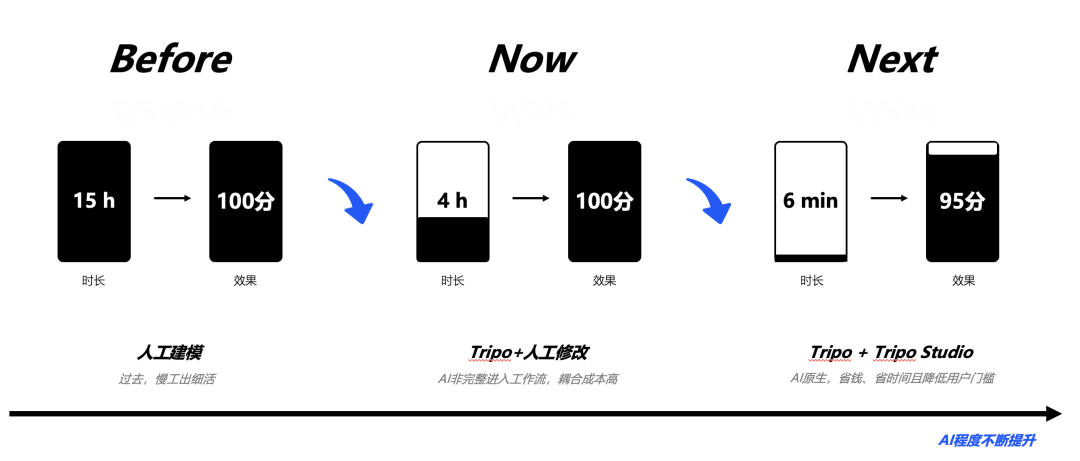
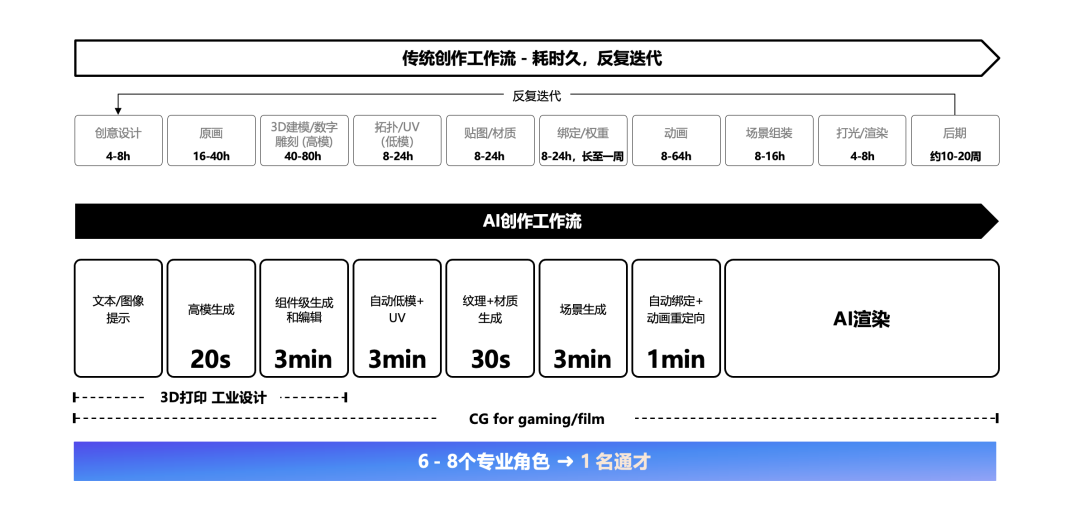
Tripo generates 3D models in seconds + 4 hours of manual adjustment in DCC software —>
Tripo generates 3D models in seconds + Tripo Studio completes editing in 6 minutes
We designed new algorithms around the core user experience and workflow, from generation to part-based editing, from texturing to rigging, and launched Tripo Studio, the world's first AI-powered one-stop 3D workstation — redefining the AI-driven 3D content creation workflow.
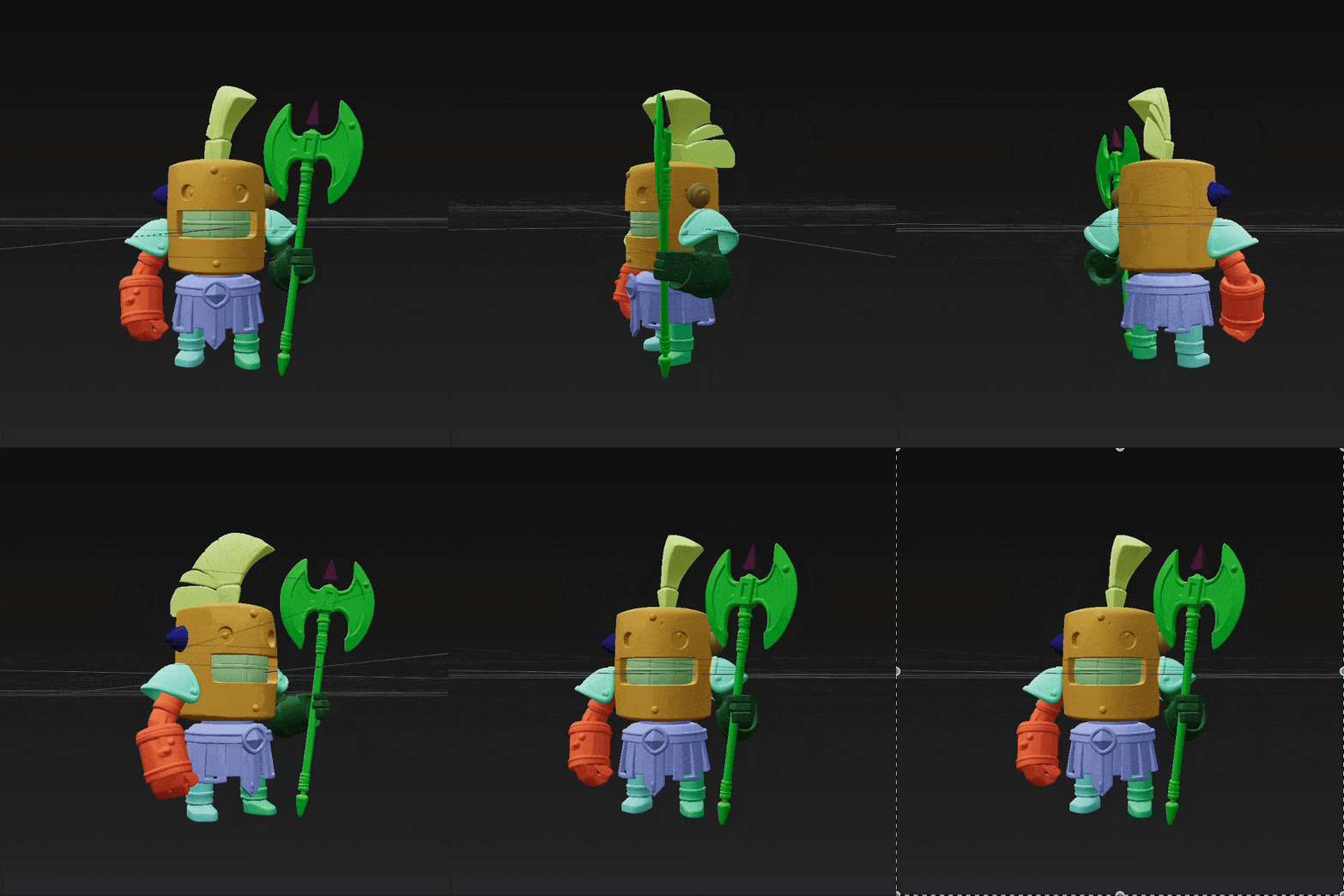
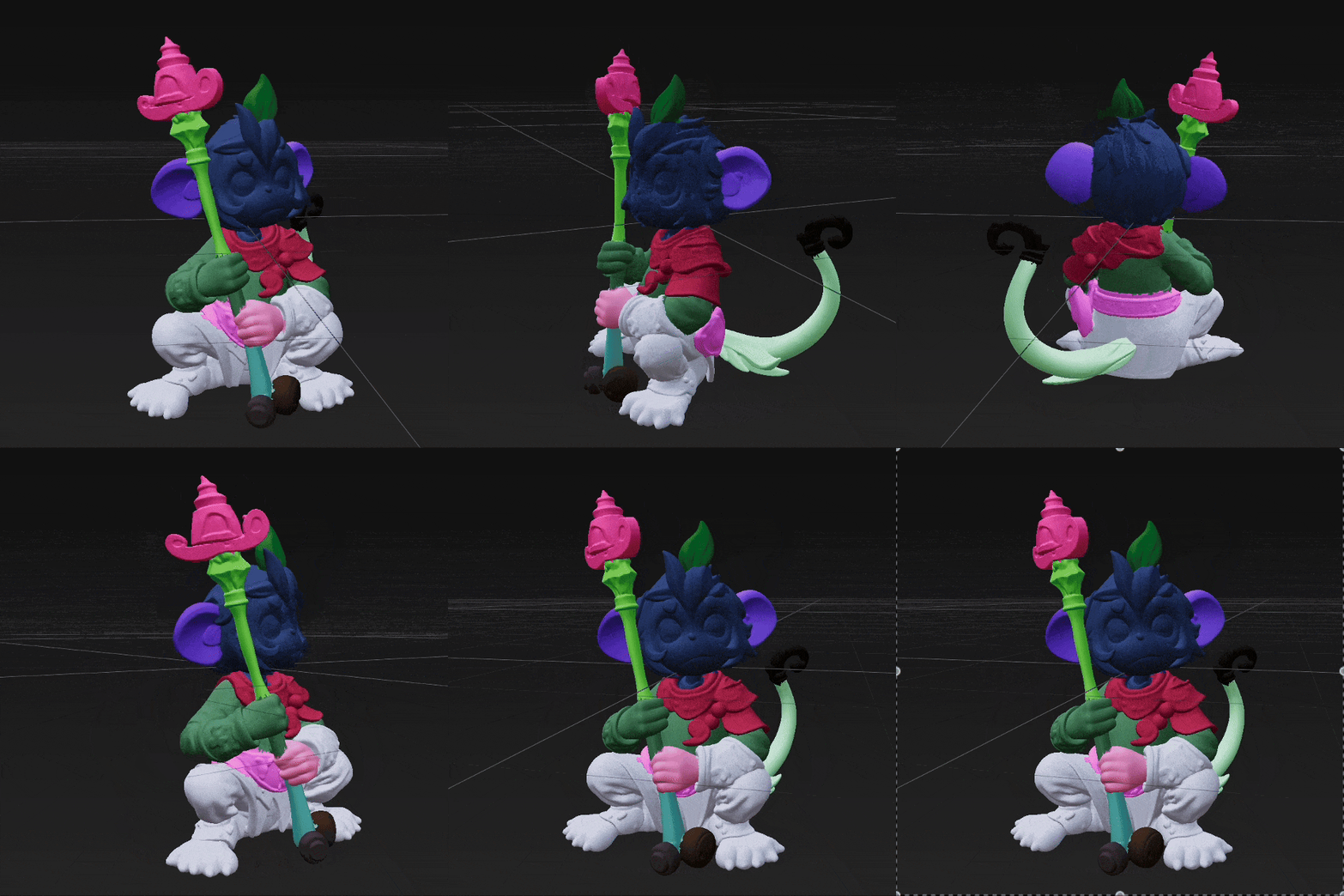
Intelligent Part Segmentation
Despite years of development, video and image generation models still don't allow track editing or layer operations. But Tripo Studio achieved, for the first time globally, precise controllable editing of assets in the 3D modality.
This breakthrough not only significantly boosts creative efficiency but also opens up enormous commercial application possibilities.
For 3D printing, Tripo's intelligent segmentation automatically breaks down models by component, allowing direct color assignment for different regions in slicing software — no more manual cutting or topology reconstruction, greatly improving multi-color printing efficiency and precision.
For game developers, the split model parts can be selectively retained or replaced, enabling rapid access to a part-level asset library. This algorithm comes from HoloPart, developed by VAST.
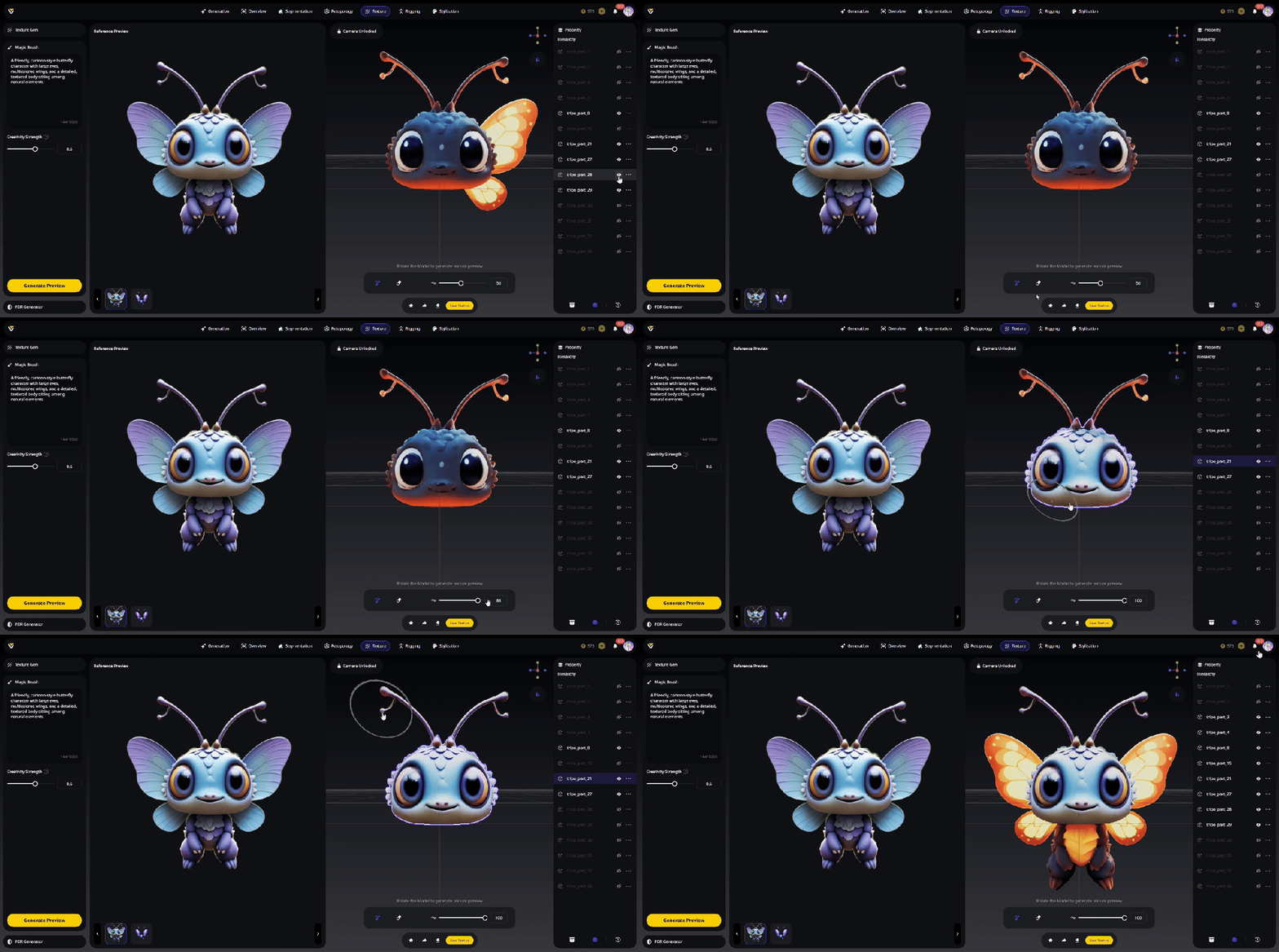
Texture Magic Brush
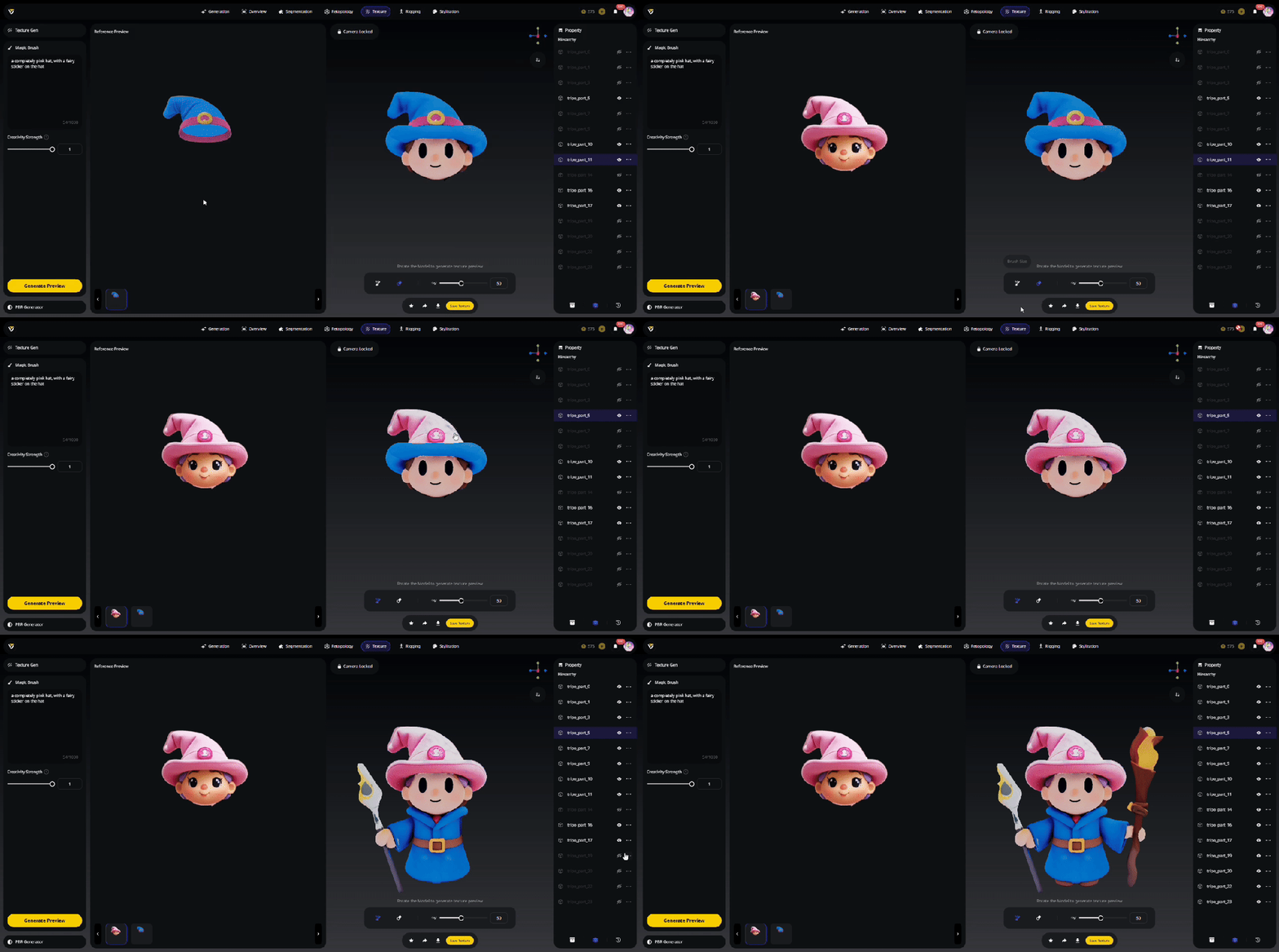
In traditional 3D creation workflows, UV unwrapping and texture processing have long been critical bottlenecks constraining efficiency. In game character modeling especially, fixing texture flaws often consumes substantial time.
With the Magic Brush, users simply circle a target area, and the system quickly completes flaw repair while maintaining high consistency in texture style. When combined with the "Intelligent Part Segmentation" feature, users can modify individual parts in isolation — for example, to swap a character's face, directly select the "head" block, make a light stroke on the texture, and instantly get a new look.
Intelligent Low-Poly Generation
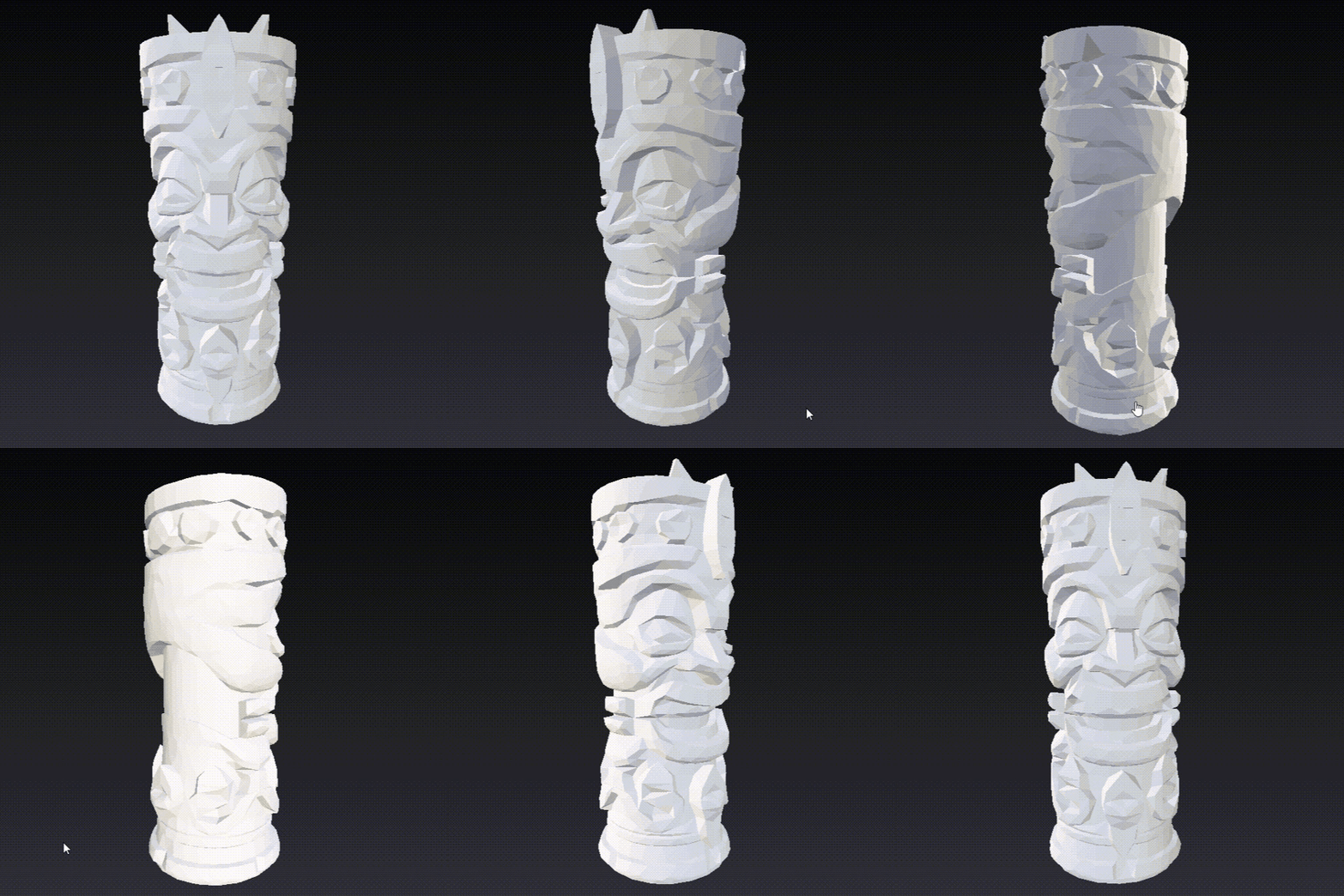
In the world of real-time rendering, the tension between high fidelity and performance constraints is ever-present. Traditional optimization requires manual topology reduction, which is not only time-consuming but also prone to causing texture stretching and structural distortion.
"Intelligent Low-Poly Generation" is the first to introduce autoregressive models into the 3D generation domain. Through intelligent identification of key model features, it can preserve model details while slashing polygon counts from hundreds of thousands down to thousands or even hundreds.

Universal Auto-Rigging
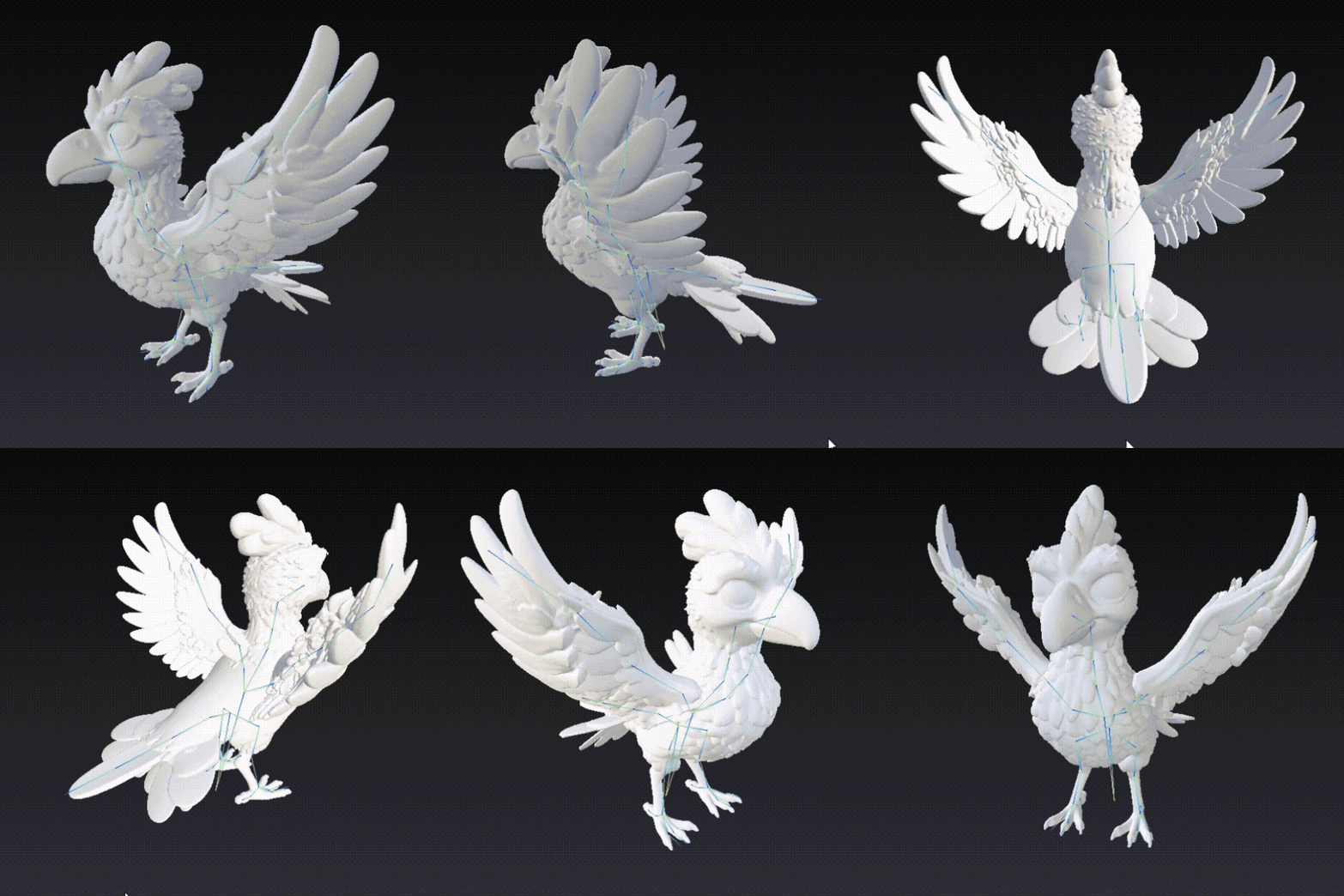
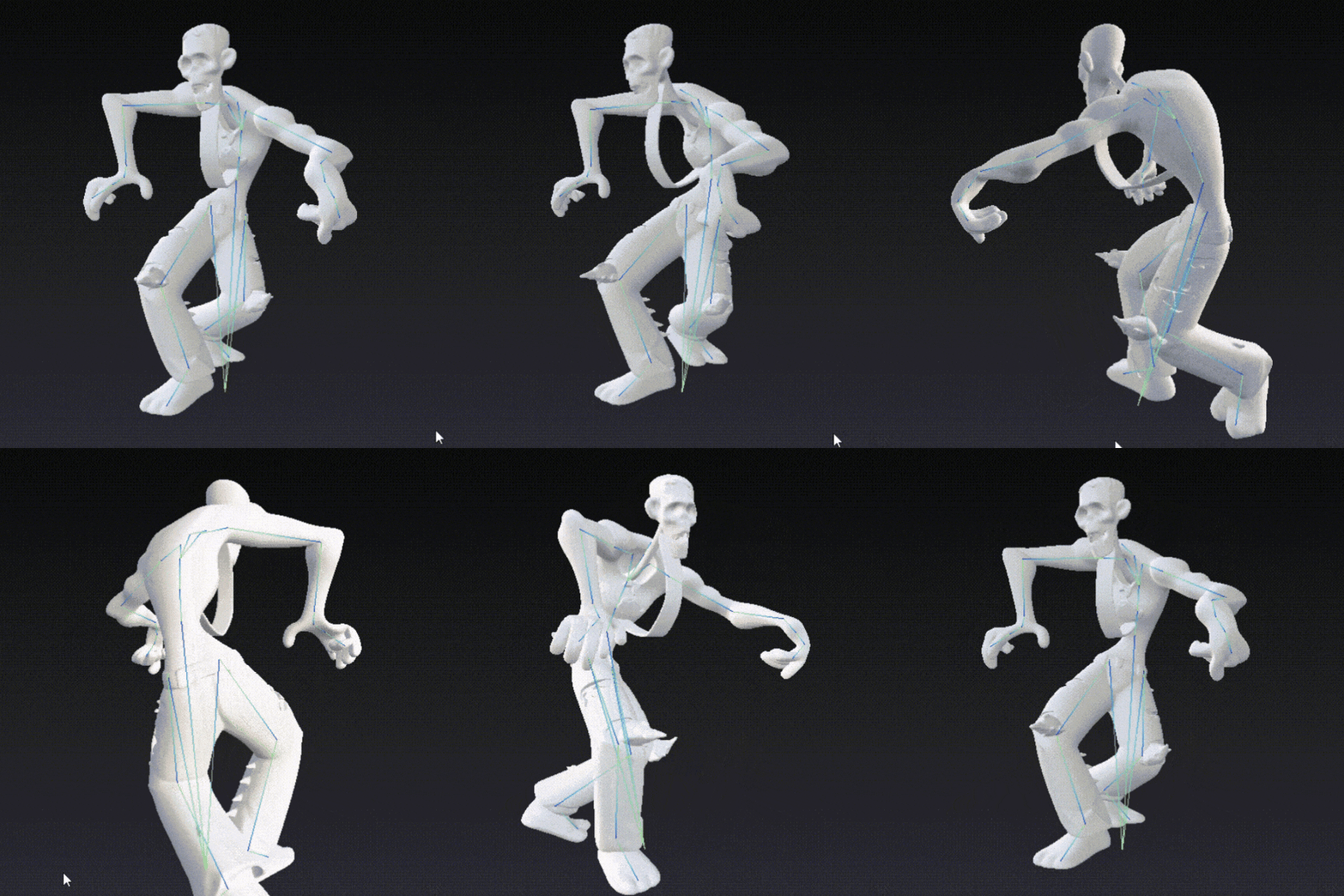
When animating 3D characters, rigging has always been the most time-consuming part.
This stage has also long faced a "digital divide" — even basic skeleton binding takes animators 8-10 hours in traditional DCC tools like Blender.
Tripo Studio's universal rigging feature is powered by UniRig, an algorithm developed by VAST that automatically parses a model's body structure to complete skeletal binding. For example, when a fish model is input, the system can precisely identify fin pivot axes, spinal bending paths, and other key motion dimensions, rapidly completing bone position estimation and skin weight assignment, with export support for mainstream formats like FBX.
Most of Tripo Studio's core features — Intelligent Part Segmentation, Texture Magic Brush, Intelligent Low-Poly Generation, and Universal Auto-Rigging — originated from VAST's Open Source Month in April.
Among them, the foundation model TripoSF redefined "the upper limit of 3D generation model quality," achieving breakthroughs in detail, complex structure, and computational scalability.
The full potential of TripoSF will soon be presented in its complete form as Tripo 3.0, with hundreds of billions of parameters, inside Studio.
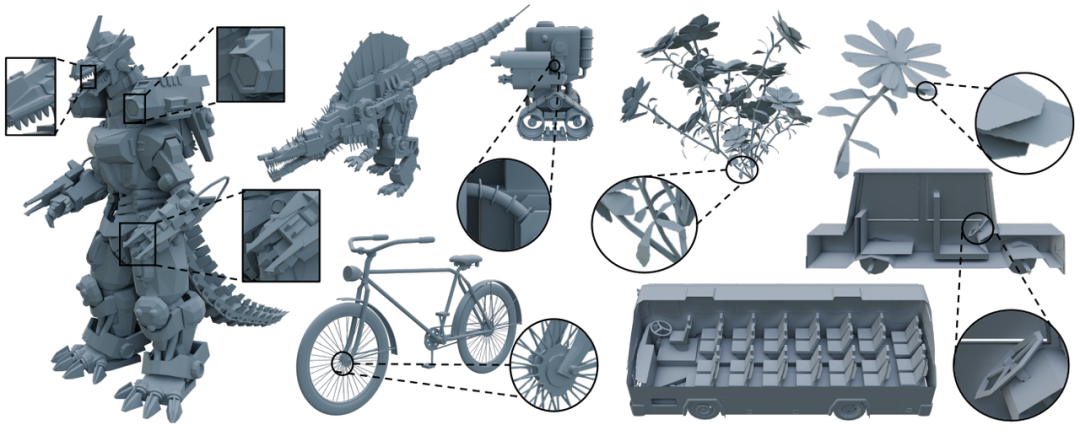
TripoSF
02
Believe First, See Later
Traditional 3D modeling requires multi-role collaboration across art, topology, rigging, texturing, and more. Now, non-professional users can complete the full workflow independently through Tripo Studio. Moving from simply providing algorithms to using a complete workstation to carry creative intent, we hope Studio achieves not just simple efficiency gains, but rather a "process reinvention" that breaks down professional barriers — letting technology truly serve the complete realization of creative intent.
Smartphones objectified the world into images through cameras, advancing the logic of "images establishing the world" — deriving images from reality. What VAST is engaged in is another media revolution: ascending from images to reality itself.
Enabling more people to create and share 3D content has been VAST's long-standing mission.
Over the past two years, Tripo has served numerous partners, including Tencent Games, NetEase Games, ByteDance, Alibaba, and UBTECH, helping them complete the full chain from concept generation to production application within their pipelines. In industrial design, VAST has collaborated with many of the world's top consumer 3D printer teams, including Bambu Lab, Anycubic, and Creality, providing creative workstations for mass-market makers.
To better reproduce the details of generated models, we've partnered with full-color 3D printing teams to offer users print-to-door customization services.
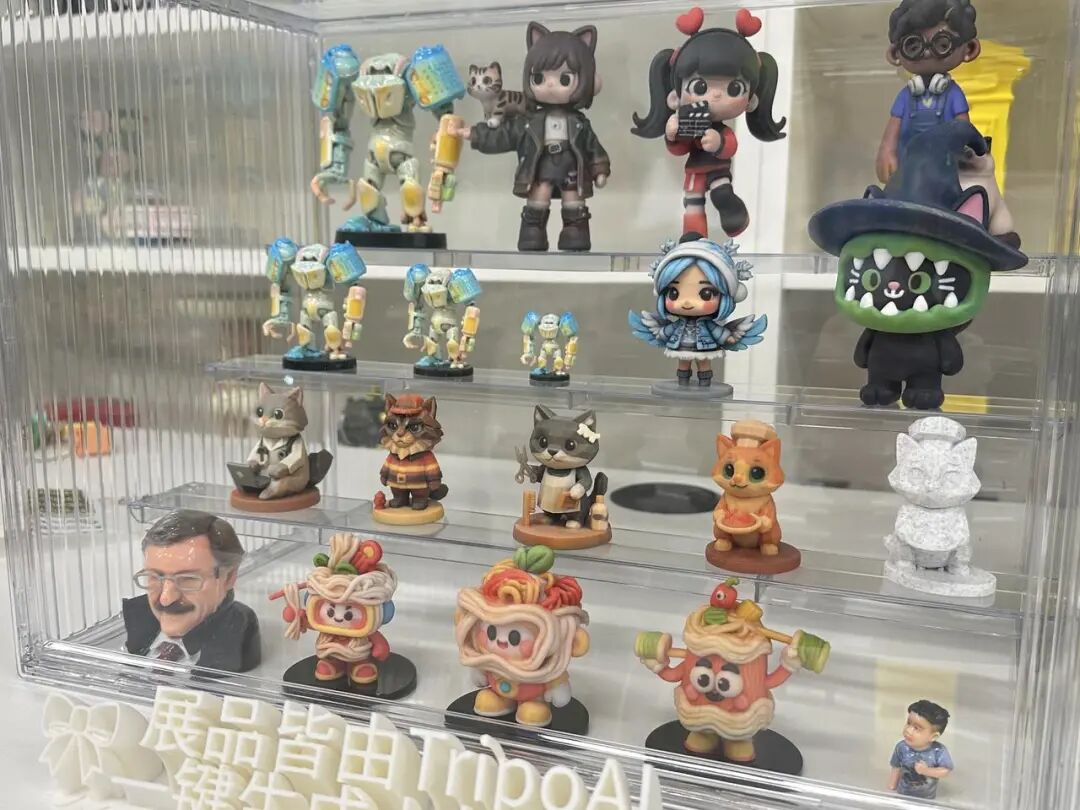
The finished product shown above comes from TripoAI's enterprise Taobao store
In architecture and spatial design, we've partnered with platforms like Kujiale and Homestyler to integrate AI-generated solutions into design pipelines, offering personalized home experiences for lifestyle enthusiasts worldwide.
At the same time, we're seeing more possibilities for 3D generation to become gameplay itself: NetEase Games' heavily promoted Where Winds Meet early this year featured the highlight mechanic "Universal Tai Chi," allowing users to command the virtual world with their words and bringing players entirely new interactive experiences; its home system lets users sketch to generate 3D furniture models and preview placement effects — 3D generation has evolved from an efficiency tool for professional pipelines into an "interaction engine" for mass digital creation.
Going forward, we look forward to 3D content advancing further toward "creation as gameplay," moving from behind the scenes of industrial production to the front stage of user interaction. No longer the closed-door professional output of designers, but the creative expression that naturally emerges as users interact.
VAST Founder and CEO Yachen Song said: "For the past two years, VAST has been focused on one thing: pushing our technology to global SOTA. Now, we're focused on productization, engineering, and commercialization. We believe creators don't just need a half-finished product of 'model as product' — they need an entirely new AI-centric workflow that lets them improve efficiency while maintaining control and creativity. Our team brings together a group of fanatical content consumers and creators; we're building this product for ourselves too. In the foreseeable future, we believe mass-market 3D creator tools and content platforms will emerge, and the production relations of 3D creation will be transformed."
An Oasis Capital investment principal said: "The arrival of Tripo Studio opens new possibilities for free 3D creation. As an angel-round investor, Oasis has witnessed the team's rapid evolution from underlying models to product delivery, and has seen their deep understanding and continuous innovation across technology, product, and creator ecosystem. We believe VAST stands at the forefront of a paradigm shift in creation, one that will significantly lower barriers and make 3D content as ubiquitous as photography. Oasis will continue to accompany the team forward, witnessing the blossoming of its vitality."