Penn Venture Club Visits, Oasis Capital Shares Views on Embodied AI | Vital Views

Counselor Vitality

Last July, visiting members from the University of Pennsylvania Venture Capital Club sat down with Oasis Capital for an in-depth face-to-face discussion on "How to View AI Development." This year, the Penn VC group returned — 25 students from diverse academic backgrounds joined us for a two-hour session on "Embodied AI: Reality and Future Through the Lens of Oasis."
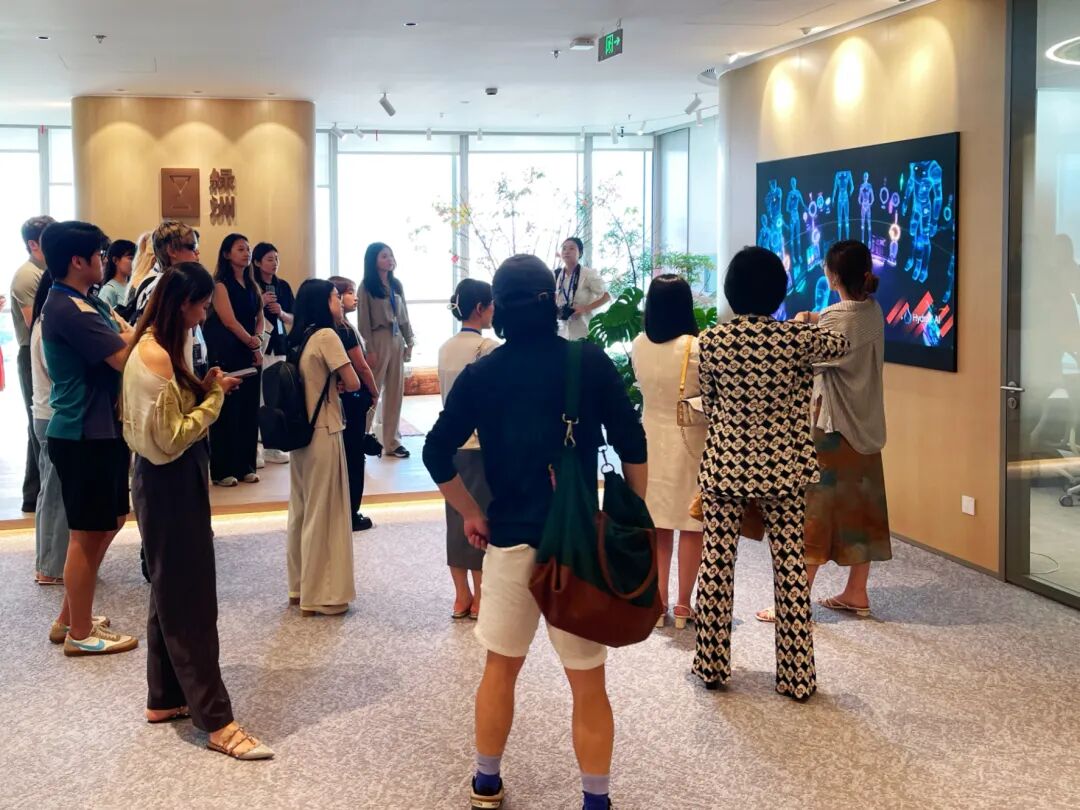
Over the past decade, advances in artificial intelligence have continually reshaped our imagination of "intelligence." From perception and recognition to generation, AI has demonstrated unprecedented capabilities in information processing and cognition. Yet the evolution of human society depends not only on information processing — it requires action. Only when machines possess both cognitive and physical capabilities does intelligence truly enter the physical world and become an extension of human capacity. Oasis began tracking foundational AI technologies in late 2022 and started systematic research into embodied AI in 2023. Even then, we observed that Scaling Law was not only accelerating the evolution of AI models but also making generalized robot capabilities a reality. The emergence of critical models and systems for robot control — PaLM-E, RT-X, VoxPoser, RoboCat — represented a leap for embodied AI from "mere movement" to "seeing, thinking, and learning," further validating the feasibility of industrialization. Sustained policy support, high-level national strategic priority, and the momentum of landmark projects like Tesla Optimus have helped more people recognize that embodied AI signifies something beyond cloud-based inference and information generation: deep integration with real environments, with the ability to perceive, understand, and autonomously complete tasks in the physical world. This is not merely a technological revolution — it will profoundly reshape future modes of production and social organization.

At that time, we recognized that future opportunities in embodied AI would arise from the convergence of three long-term trends: First, the coming decade will be defined by an AI compute revolution. Large models have laid the groundwork for perception and reasoning, enabling machines to move beyond executing fixed instructions toward complex, autonomous, and adaptive behavior; Second, as AI matures, it will inevitably transform how we interact with technology. Some new terminal or system will emerge that translates software capabilities into physical reality; Third, China's accumulated strengths in industrial clustering, engineering talent, manufacturing ecosystems, and supply chain systems — combined with the underlying resilience of its tech practitioners and entrepreneurs — will enable faster global-scale iteration and breakthroughs. Beyond these trends, we could clearly sense palpable shifts in the industry at that moment. AI was becoming a technical consensus across industries at an unprecedented pace, and the prospects for humanoid robots were gaining broader acceptance. The field was increasingly focused on the actual timeline for deployment, the paths to get there, and where startups could find their entry points. From when we first began paying attention, a steady influx of technical talent has poured into relevant directions, while collaboration and co-building among capital, government, and industry players continues to accelerate — and industry consensus keeps expanding.
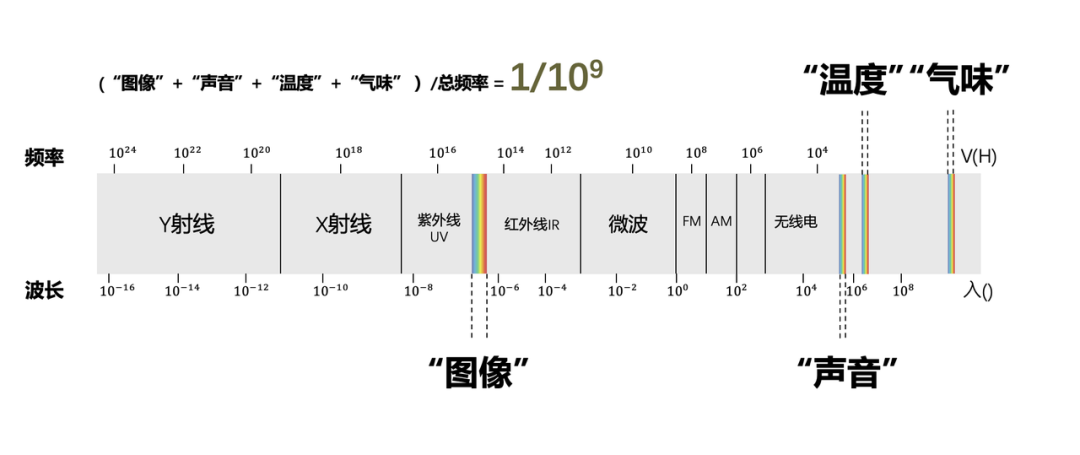
Our foundational thesis draws on a long-standing understanding and application of signal theory. Humans are fundamentally signal-processing systems; the signals we receive and output across the frequency spectrum are extremely limited, far smaller than the total information contained in the physical world. When widespread pessimism held that Scaling Law would gradually fail due to a "shortage" of data, we took the opposite view: the information resources currently available for utilization remain drastically underexploited. Because at root, it is not that humans need AI hardware — it is that Agents need AI hardware. Imagine: when the hardware serving as an Agent's physical platform can acquire information more flexibly, and with theoretically unlimited compute, AI can expand its information input and processing capabilities across an infinite spectrum, enabling the emergence of higher-dimensional intelligence.

During the interactive session, students raised many penetrating questions:
If we want mass production, how do we keep costs and maintenance down while preserving complex functionality? In robot control, what are the trade-offs between centralized and distributed architectures? How do you choose? In dynamic environments like homes or hospitals, how can robots learn on the job while working, and quickly reroute when encountering new obstacles? As robots are expected to make more complex decisions independently — like automatically responding to emergencies — how do you resolve the tension between model size and inference speed? How do you ensure their morality?
Definitive answers to these questions remain works in progress, yet they made us more acutely aware that embodied AI is not only a technological transformation but also a profound reshaping of social trust and values.

Over the past two years, we have invested in several well-known embodied AI projects including LimX Dynamics, Spirit AI, Inxbot, and Lxson. From a broader perspective, embodied AI represents not merely a boost in productivity but a fundamental reconfiguration of how society collaborates and how we think. Once robots enter human life, how they truly integrate into daily routines and become reliable assistants will require long-term validation and accumulation. Compared to software or pure algorithms, embodied AI is a highly complex, long-horizon systems engineering challenge — involving integrated hardware-software design, reliability in extreme scenarios, ongoing maintenance, and cross-industry validation. We believe that the entrepreneurs who ultimately go furthest are rarely those chasing the hottest concepts. They are the ones who can maintain focus amid complex information, stay dedicated over the long term, and keep iterating through change — people with genuine vitality. When more people approach embodied AI from a more systematic and longer-term perspective, this transformation — not merely a technological revolution, but a deep shift in the relationship between humans and society — will truly enter a more profound and sustainable phase of development.