Growth as a Mirror: Strategy Is Only the Surface, Structure Is What Matters | Vital Views

Counselor Vitality --- *Note: "参赞" (cānzàn) is a diplomatic title — "counselor" or "counsellor" (a mid-ranking embassy official, below minister/ambassador). Without additional context, this appears to be a section heading or title. If this refers to a specific publication, company, or creative work, please provide context for a more precise translation.*

In the journey of building a company, "growth" is a topic that simply cannot be avoided. We tend to understand growth as a set of plannable, executable strategies: content, paid acquisition, conversion, channels, data modeling... But in practice, it is never an isolated problem. More often, it is a systemic challenge encompassing business model, organizational structure, and timing.
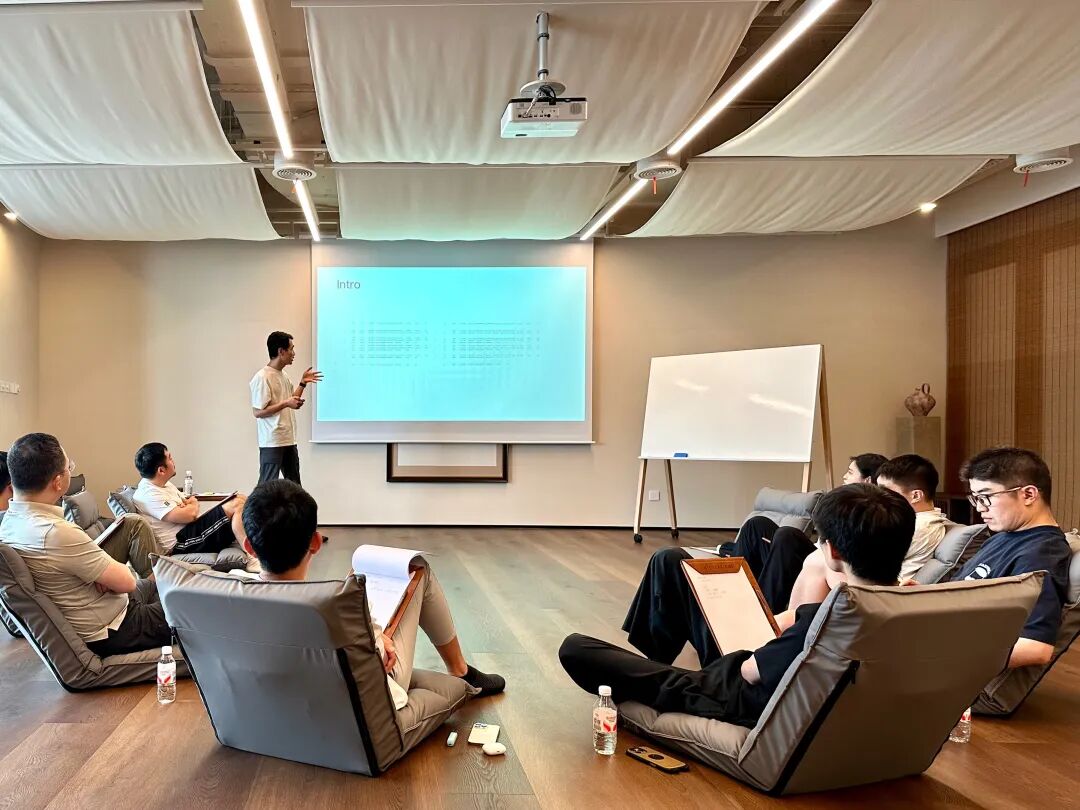
At the third "Closed-Door Growth Talk on Going Global" hosted by Oasis Capital, guest speakers including Rubin, Kuan Sun (founder of Hypershell Tech), Renjie Guo (founder of Lxson), Yueguang Zhang (founder of Muyan Zhiyu), and Tao Liu (founder of Speediance) engaged in an eight-hour deep discussion around the critical junctures and real problems each had faced in their growth journeys.
From domestic to overseas markets, from acquisition strategy to user understanding, from growth models to organizational collaboration — every link proved far more complex than it appears.
This discussion did not arrive at any universal methodology. But it offered a sharper lens: what we typically call a "growth bottleneck" is often not a problem with growth itself, but rather that the deeper structural systems are not yet ready — organizational mechanisms, team capabilities, user insight, and timing choices.
Growth is simply the part that gets illuminated, built on top of all of this.
Below is an excerpt from the de-identified content of this closed-door session. Enjoy.

"I've worked at the two strongest growth organizations in China.
These two companies used very similar methods, nearly identical models — but the results were completely different."
Rubin's opening immediately shattered the illusion that "growth is replicable."
He pointed out that what truly powers a high-performing growth system is not merely methodological "buying techniques" or "user acquisition strategies," but whether the organization possesses the capacity for systematic reflection, accumulation, and knowledge transfer.
At the companies he had experienced, every A/B test, every model validation, every strategic adjustment was structurally documented, attributed, summarized, and then transformed into shared organizational knowledge assets — ultimately forming cognitive consensus.
Rubin also emphasized: Whether growth is sustainable depends far more on strategic choices at the organizational level.
He recalled a typical project he had led. Through the coordination of multiple growth capabilities, the product's DAU broke through 100 million in a short period. Later, the team attempted to shift target users from lower-tier markets to urban demographics, even considering rebranding through a name change — yet they could never unlock breakthrough growth at greater scale. Where was the problem?
"Brand positioning determines the audience you attract; the audience determines the content tone of your product; and your content tone determines who the next round of users will be.
Once this closed loop locks in, your growth ceiling is set."
Product is the foundational infrastructure of growth. If early strategies rigidify product positioning, then even as tactics constantly evolve, the user structure cannot truly break through. Growth is destined to remain trapped in path dependency.
This experience further validated Rubin's core judgment: Without strategic collaboration across the organization, teams cannot truly understand or iterate on growth; and when growth cannot feed back into the product, it ultimately remains stuck at the level of superficial tactics.

Rubin's systematic deconstruction of software growth offered the entrepreneurs present a fresh perspective. His sharing also prompted them to return to their own businesses and re-examine the proposition of "growth."
In the hardware direction, several founders offered different viewpoints:
"The growth logic for hardware is not the same as software. Channel capability is the key variable.
Software growth relies on platform distribution; channels are not zero-sum, and can accommodate multiple similar products coexisting. But hardware market share is more like 'one radish, one hole' — you need to claim your spot early, fighting for first-mover advantage.
Additionally, online-offline synergy is extremely important — as stores roll out, online marketing needs to simultaneously push forward to maximize results."
When the topic turned to going global, the group expressed consensus:
"Domestic sales, whether direct-operated or agency-operated, are all being handled with精细化 refinement.
Overseas is actually the same.
You can't blindly treat overseas as a monolith. You need to treat every country as an independent unit on par with China."
They summarized:
"The education cycle for hardware products is too long.
You have to slow down, building user awareness through density and frequency."
This series of discussions revealed a core insight: Hardware growth is not merely traffic-driven, but structure-driven. From channel layout to user education, from market rhythm to regional management, hardware companies are walking a heavier, longer-cycle path that demands comprehensive, deep cultivation.

Before truly advancing growth strategy, a critical question is often overlooked:
Do you actually understand the real profile of your target user?
Growth in reality demands that teams confront users' actual behaviors from the very beginning, using data to retroactively calibrate the initial assumptions embedded in product and strategy.
One founder who had launched his first product on Kickstarter shared:
"For earlier-stage, more innovative hardware products, you need to shorten the delivery preparation period as much as possible before going to market.
Otherwise, during the gap while R&D and production capacity are being prepared, users can easily lose attention, and competitors will rapidly fill the void."
He admitted that Kickstarter is a stage for directly facing real users. Once a product goes live, it sends the signal "we're ready" to the outside world. But in reality, many teams are not fully prepared at the product, delivery, or even supply chain levels.
Growth is not a "quiet validation," but a public market conversation. When preparation is insufficient, growth behaviors that seek market validation bring not just无效无效 attention, but a depletion of user trust.
Another founder, from an observer's perspective, analyzed a judgment偏差偏差 in user profile for a certain fitness product.
Internet fitness products generally focus on young, socially-driven user groups, packaging and promoting around keywords like "challenge" and "extreme." But subsequent market feedback showed that those truly willing to pay continuously and form high retention were actually a different category of user.
"Real usage and purchase data showed that the core paying audience for the product was actually middle-to-high-net-worth users with stronger spending power, who cared about companionship and safe experiences."
Growth cannot proceed from assumptions to push market expansion; user profiles cannot be defined out of thin air.
It must originate from real market feedback, using data to reconstruct who the actual users are — rather than catering to the team's initial idealized target.

In this closed-door discussion, terms like "viral growth" and "user acquisition" rarely appeared. More attention fell on organizational structure, collaboration, user insight — these underlying variables that determine the quality of growth.
Because growth has never been just a metric. Truly valuable growth is not an explosion brought by one round of paid acquisition, but stems from the elevation of endogenous organizational capabilities, and from maintaining judgment and consistency amid uncertainty.
Growth is an outcome, but also a mirror: it reveals whether a company has sufficient structure to bear complexity, sufficient mechanisms to digest feedback, sufficient patience and conviction to walk in the right direction.
Rather than running fast, we should care more about whether the organization is ready to face the tearing and重塑重塑 that growth brings, and whether it has the capacity to transform a moment of growth into part of long-term capability.
This is the true meaning of growth — not just growing outward, but also taking root inward.
Celebrating vitality.