Let Relationships Happen, Let Experiences Grow | Vital Young

From Capability to Interaction, AI Products Are About More Than Just "Working Well"

In 1994, Stanford University professor Clifford Nass and his research partner conducted a fascinating experiment.
Participants first completed a learning task on a computer, then evaluated the computer's performance. Some filled out their feedback on the same computer they had just used; others responded via pen and paper or a different machine.
The results showed that when facing the very same computer that had just served them, people gave more positive and more consistent ratings. In other words, participants seemed to be considering the machine's "feelings."
This wasn't because they actually believed computers had personalities. The researchers found that even when people knew full well they were dealing with a machine, they still unconsciously applied social rules like politeness and reciprocity in their interactions. This line of research was later summarized as CASA (Computers Are Social Actors).

Thirty years ago, even simple feedback was enough to change how people felt about a machine. Today, AI can understand language, retain memory, and take initiative — opening up new possibilities for how products relate to people. It can help people find each other and say the things left unsaid; it can let plants express their state, let art respond to viewers, and turn content into a world that can be entered, participated in, and continue to grow.
Driven by curiosity about these changes, the new edition of Vital Young Market on August 28 took "From Capability to Interaction: AI Products Beyond Just Being Useful" as its theme, inviting seven founders to showcase the AI interactive products they've built from different directions.

Both Lianlian AI and Paralife move agents from passive response to active participation: the former helps users find and connect with the right people, while the latter explores the life users truly aspire to through AI characters in a parallel world. Veggi translates plant states into expression, turning real plants into desktop companions that can respond to people.
With Vibe Coding, Camellia Stationery Shop Letter-Writing Workshop helps people put difficult feelings into words, while ART LOOKS BACK lets viewers enter art and interact with it. Ideas that were once hard to validate are becoming real products faster.
WOV and Miniwo explore interactive content and AI worlds: the former fuses film, games, music, and social into continuously evolving content, while the latter lets users create a world where stories keep unfolding.

Together, they point to a shift: AI products are no longer satisfied with just delivering results — they're starting to create back-and-forth between people and products.
This interaction doesn't necessarily take the form of conversation, nor does it require making AI into a human-like character. What matters is that users are no longer just making requests and receiving outputs; people's choices influence what happens next, and the product's responses spark new actions. Products need to understand context, retain necessary memory, know when to respond and when to initiate, and leave enough room for user choice.
Capability determines whether a product can complete a task; interaction determines whether, once the task is done, people want to stick around and see what happens next.
Thirty years ago, simple feedback was enough to change how people felt about computers. Today, AI can offer far richer responses, and the question products need to answer is shifting from "what else can AI do" to "how will people live with it over the long term."
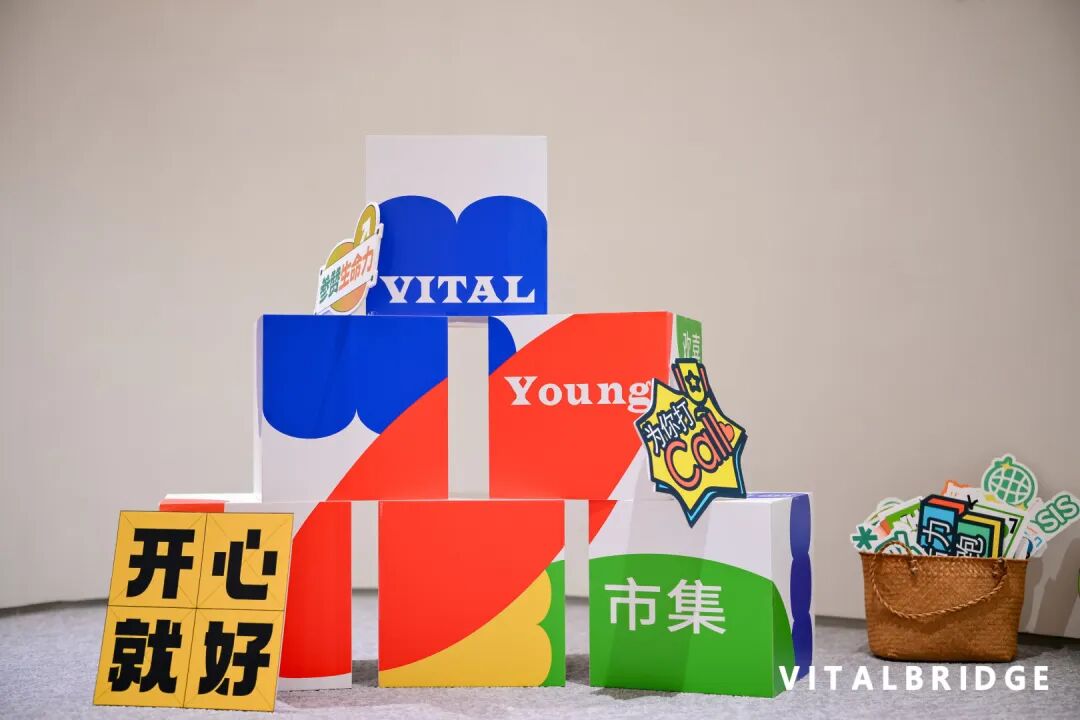
What Vital Young wants to provide is precisely a place where new products get seen, new ideas get discussed, and interesting people meet each other. We don't aim to have answers every time — we want to take seriously the attempts that are still immature, still hard to define.
Keep coming to the market with your questions, curiosity, and products still under construction!