The Riemann Hypothesis Has a 17-Million-Line Code Proof—Who's Going to Read It? | Yunqi Tech Pi

Has this really been proven this time?
Take a sheet of paper, write the numbers from 1 to 20, and circle the primes. 2, 3, 5, 7, 11, 13, 17, 19 — eight in all. Now what if you replaced 20 with a trillion?
On November 20, Anthropic mathematician Levent Alpöge released roughly 17 million lines of Lean code, claiming that he and Claude had found a proof of the Riemann Hypothesis. The next day, the Lean and Mathlib communities issued a joint statement confirming that the code proves the original mathematical proposition, and that the derivation passed multiple independent checks.
As a student, Alpöge set himself a plan he told no one about. He wanted to spend decades on this problem, learning one branch of mathematics after another that he might eventually need. When the proof went public, he said it felt as if he had lost a goal that had guided him for years. Now, he wants to understand the proof and then explain it to others.
In this edition of "Yunqi Tech Pi," we explore what happens if the Riemann Hypothesis is proven.
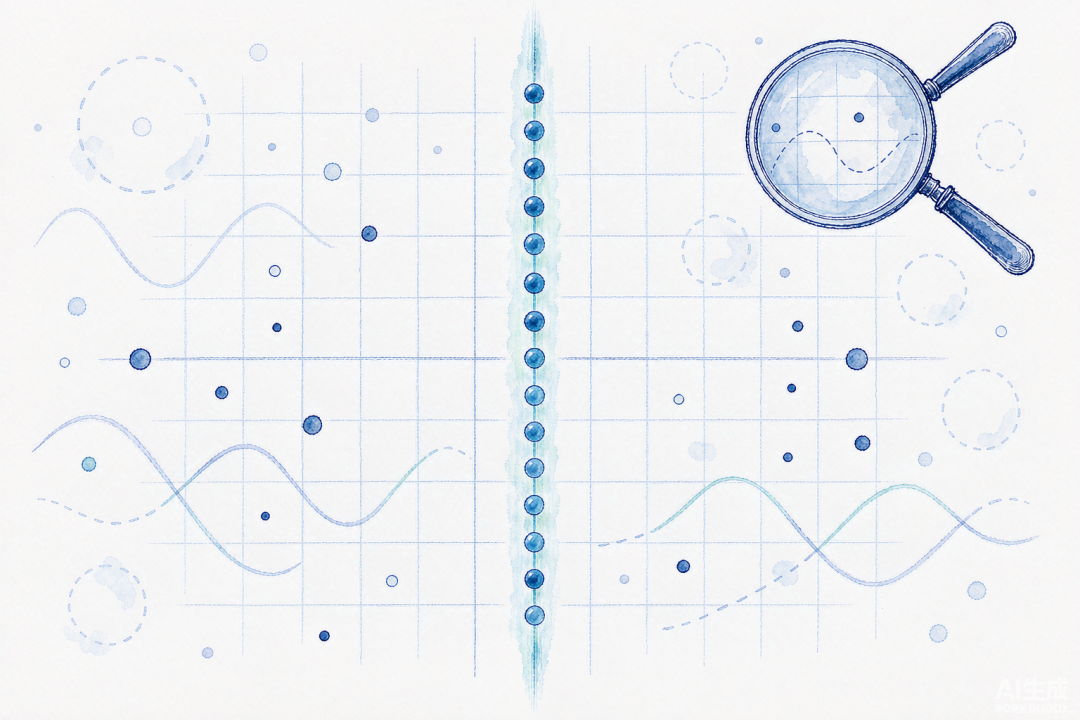
What exactly is the Riemann Hypothesis conjecturing? If you count up to a trillion, the prime number theorem can give you an estimate of roughly how many primes come before it. As for how far the actual count deviates from that estimate, Riemann found a way to study it in 1859. Plot the points where the Riemann zeta function equals zero on the complex plane, and he conjectured that all the "nontrivial zeros" lie on the same vertical line where the real part equals 1/2.
What you count on paper are integers, but what you ultimately examine is how neatly the points line up on the complex plane. The positions of the zeros determine how large the error in prime counting can be. Once the conjecture holds, all those results in number theory that currently have to be written as "if the Riemann Hypothesis is true, then..." can drop that opening "if."
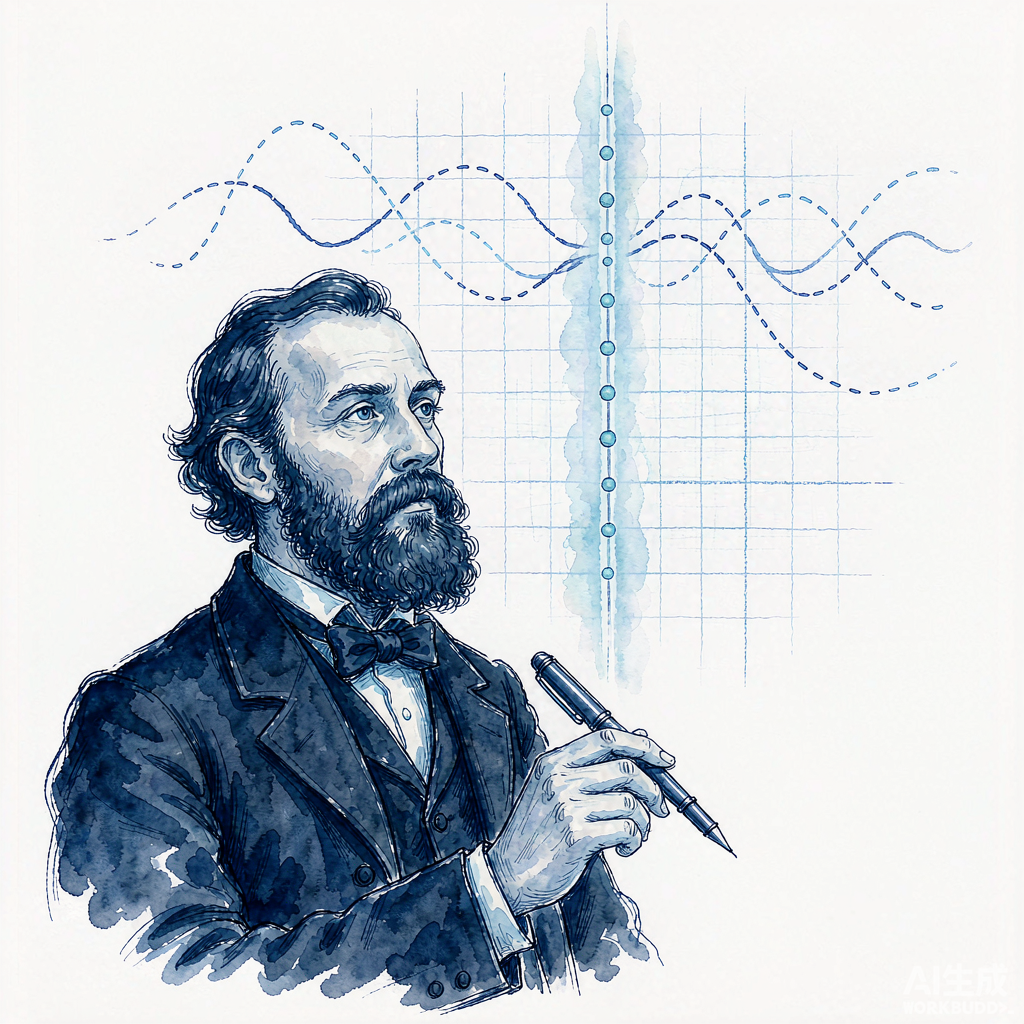
Bernhard Riemann (1826–1866)
Is it really proven this time? Based on the verification results made public so far, the classical Riemann Hypothesis now has a formally verified proof that has passed independent verification.
Lean is a proof assistant that can check derivations according to explicit logical rules. The verification team first compared the mathematical proposition, then independently reproduced the compilation, checked the axioms the proof depends on, and cross-checked with multiple verifiers. The verification published by MIT mathematician Andrew Sutherland also covered the generalized Riemann Hypothesis for Dirichlet L-functions.
As of November 23, the Clay Mathematics Institute's website still lists it as "unsolved." The institute's prize review has a separate process, requiring the result to be published in approved channels for at least two years and to be generally accepted by the mathematical community.
The mathematicians discussing it these past few days have each emphasized different things. Shing-Tung Yau called it a major contribution, then asked where mathematics should go next. Yu Deng wants to wait for a version that mathematicians can read before evaluating the work. Terence Tao's initial assessment is that the proof seems to draw on many results from the Langlands program and arithmetic geometry, and that it will take time to sort through.
What kind of math is AI good at? Last year, Google DeepMind's Gemini Deep Think reached gold-medal level at the International Mathematical Olympiad. In September of this year, OpenAI announced a result on the three-dimensional Navier–Stokes equations. Under specific external forces, an originally smooth solution can develop a singularity in finite time — one of the scenarios listed in the Clay Institute's original problem. According to OpenAI, finding the result took about 88 hours and roughly ten thousand collaborating agents. By November, Alpöge and Tristan Buckmaster had announced, with AI assistance, a claimed proof for the case without external forces.
Also studying fluids, this year's Fields Medalist Yu Deng, together with Zaher Hani and Xiao Ma, started from the collisions of a large number of small spheres and rigorously derived the equations describing macroscopic fluids, advancing one direction of Hilbert's sixth problem. One problem asks where the equations come from; the other asks whether, if you keep calculating according to the equations, the flow can remain smooth indefinitely. The three-dimensional Kakeya conjecture, proven by fellow 2026 medalist Hong Wang and Joshua Zahl, requires first clarifying what "big" even means. Imagine a set that contains a chopstick-length line segment in every direction. Its volume can be zero, yet its dimension is still three.
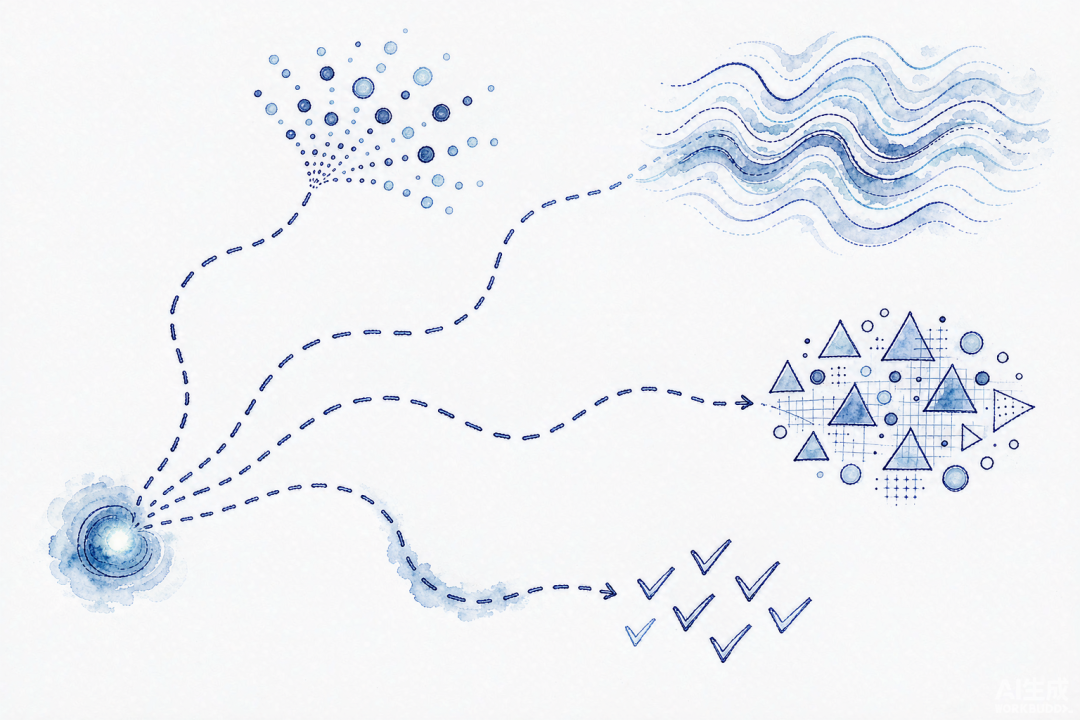
At this point, asking "Is AI smarter than humans?" requires first clarifying what exactly is being compared. Once the problem and the verification conditions are clearly stated, AI can pursue many paths simultaneously and will find approaches experts didn't anticipate.
Alpöge recalls that he started with a simplified problem and guided Claude toward a similar situation; later, the construction the model proposed surprised even him. As for how deep to push a fluid problem, or what to use to measure the size of a set — that's a different kind of skill.
Who gets to be the judge? The reason this Riemann proof could begin verification so quickly is that a precondition was already in place: the problem had long been stated clearly, and Lean's verification rules were already there. Multiple verifiers check the derivation step by step, while the community has to confirm they are checking the same problem and which axioms were used. What the machine did and what the humans did can both be seen in the public review materials.
On a factory floor, the acceptance criteria have to be negotiated from scratch. A model looks at a quality-inspection photo and flags an anomaly. The people on site need to ask: which defects, if missed, would require reworking an entire batch? If eight out of ten alerts are false positives, will workers still stop to look next time? These questions need to be settled first before accuracy has any concrete meaning.
For early-stage investors, the question is how a company knows its product is actually working. If someone is willing to hand over their first production line to the team for a trial and to set acceptance standards together, the team has a chance to learn from real results what to change in the next version.
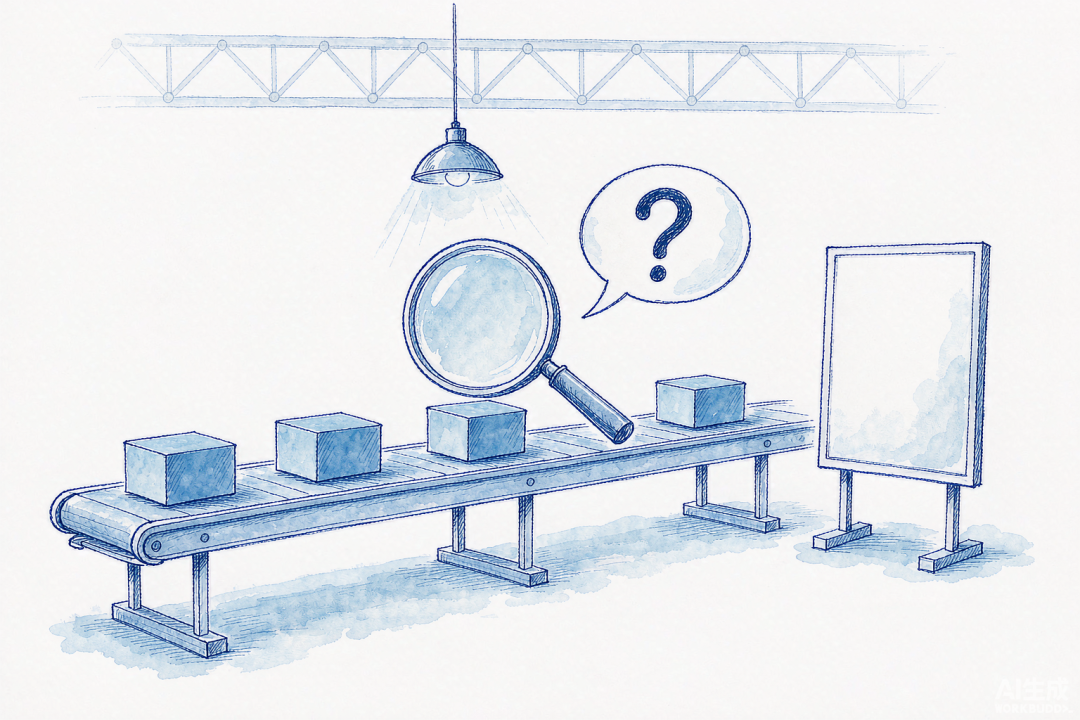
After the proof, a translation is still owed. Among those 17 million lines, are there steps that can be copied onto a sheet of paper and taken to discuss with people working on other problems? Can that approach be used elsewhere? Once a proof is explained to this level, mathematicians have another tool they can keep using. The alliance for mathematics and the humanities has raised the issues of readability and research responsibility, and Alpöge has made understanding and clearly explaining this proof his next task.
When discussing this breakthrough, Shing-Tung Yau also raised a question: can powerful AI be made fairly accessible to researchers? He has previously said that basic research needs longer evaluation cycles so that young people dare to tackle big problems. The two can be considered together. Young researchers need both tools to try things and a period of time when they can still fail to produce results — only then do they have a chance to pursue a problem they can't yet articulate clearly.
Who has the conditions to tackle the next problem? In a widely discussed recent article, "The Model Generation," young people who once took classes and skipped classes together find that, not long after graduation, the tools they can access, the colleagues they meet, and the salaries they earn are already vastly different. The article also tells a small story. A young person who already had access to good models shared his quota with a high school classmate studying traditional engineering. The latter started using AI to write code and eventually published a paper.
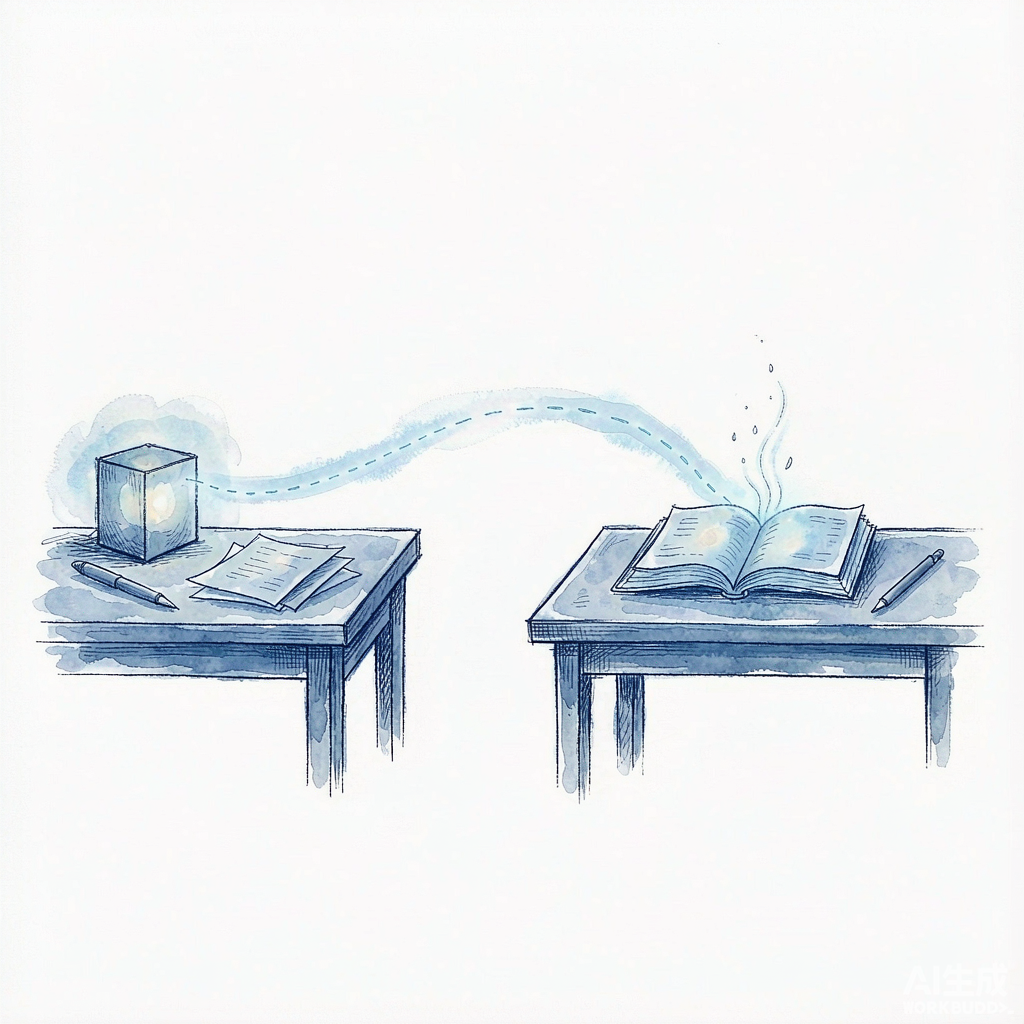
Put the two together, and the opportunity gap takes on concrete shape. Some people finish their first project and come away with experience, and someone around them can guide them through a second. Others had never even tried once, until someone lent them an account. Money can buy computing power, and it can also pay the cost of that first experiment.
When Alpöge was a student, he set aside decades for a single problem. When the proof came, he was willing to spend time understanding it. Today, someone just out of university naturally wants to know which path is safer. Beyond these very practical calculations, how much time can they still set aside for something whose payoff is unclear right now but that they genuinely want to figure out?
References 1. Levent Alpöge's four-page note
-
Joint verification statement from the Lean and Mathlib communities
-
Andrew Sutherland's independent verification record
-
Clay Mathematics Institute | Riemann Hypothesis
-
Clay Mathematics Institute | Millennium Prize rules
-
Alliance for Mathematics and the Humanities | Statement on the Riemann Hypothesis proof
-
Terence Tao | Blog post on the Riemann Hypothesis and fluid equation progress
-
OpenAI | Research note on the Navier–Stokes Millennium Prize Problem
-
Google DeepMind | Mathematical research progress with Gemini Deep Think
-
International Mathematical Union | 2026 Fields Medal
-
Yu Deng, Zaher Hani, Xiao Ma | Papers related to Hilbert's sixth problem
-
Hong Wang, Joshua Zahl | Paper on the three-dimensional Kakeya set conjecture
-
Yifan Jiang | The Model Generation
-
China Science Daily | Shing-Tung Yau, Maynard, and others on the Riemann proof and AI in research
-
Shing-Tung Yau | Guarding Curiosity About Truth
-
Beijing Daily | Yu Deng on the readability of the Riemann proof