90% Localization Rate: "Langdao Suiyan" Unveils EUV Light Source Prototype for the First Time | Yunqi Partners

One Step Closer to Commercializing the "Heart of the Lithography Machine"
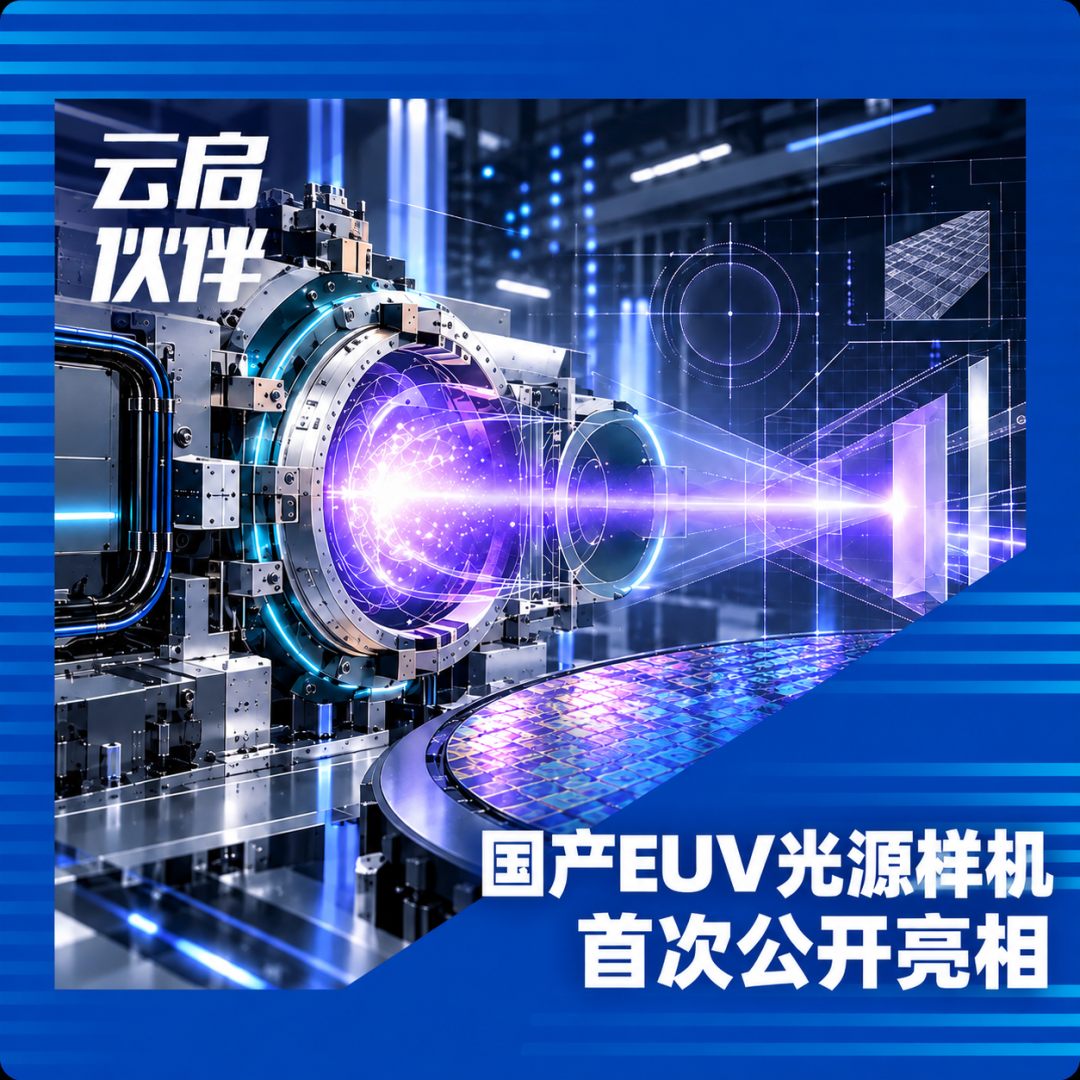
At the recent 26th China International Industry Fair, Yunqi Capital portfolio company Landau Suiyan publicly unveiled its extreme ultraviolet (EUV) light source system prototype for the first time.
According to information released at the event, the exhibited light source system achieves a 90% domestic localization rate, with the vast majority of core components developed in-house. Its technical approach aligns with that of leading international manufacturers, and the system is already capable of chip exposure testing. This also represents the most advanced domestically developed EUV light source system prototype publicly demonstrated to date.
In this edition of Yunqi Partners, we share the latest updates on Landau Suiyan.
The following is adapted from Tiantian IC, EETOP, and other sources
Why EUV Light Source Is Called
"The Heart of the Lithography Machine"
As chip manufacturing processes continue to advance toward smaller nodes, the demands on the light sources used for lithography grow ever more stringent.
EUV lithography uses extreme ultraviolet light with a wavelength of just 13.5nm — a dramatic reduction from the 193nm light sources used in conventional DUV lithography — making it a critical technical foundation for pushing advanced processes forward.
But 13.5nm light cannot be produced directly by ordinary lasers.
One of the mainstream industry solutions currently adopted is LPP (Laser Produced Plasma): a high-power laser strikes micron-scale tin droplets at high speed and with extreme precision, converting them into high-temperature plasma that then emits EUV light.
This seemingly straightforward process simultaneously involves high-power lasers, tin droplet control, plasma physics, precision optics, contamination control, and complex system integration. The precision, stability, and longevity of every single link directly determine whether the entire system can actually make it onto the production line.
Even for international manufacturers that have already achieved commercialization, EUV light sources underwent a lengthy engineering process. ASML has disclosed that the EUV output power of its early prototype systems was only about 1W, which was subsequently raised to several tens of watts, then 100W, and finally reached 250W in 2018 — laying the groundwork for scaled production.
This is also one of the most difficult aspects of EUV light sources: proving the principle is only the starting point. The real challenge is making a beam of light strong enough, stable enough, and able to keep working continuously.
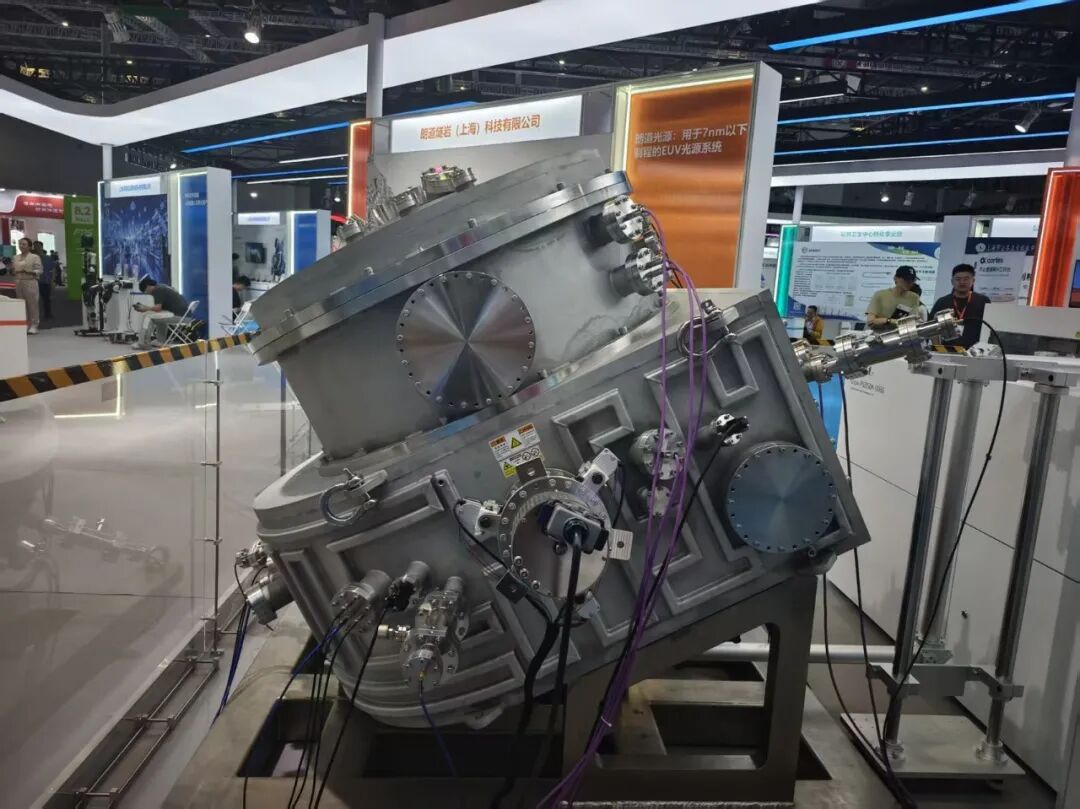
The EUV light source system prototype displayed by Landau Suiyan at the Industry Fair
From a Beam of EUV Light,
To a Working System
Founded in 2024, Landau Suiyan's founder Dr. Hao Wang and his team built their technical foundation at Tsinghua University's Gas Discharge and Plasma Laboratory, with long-term focus on LPP-EUV lithography light sources.
Since its founding, the company has secured support from three categories of capital: financial investors, strategic industry investors, and local government funds — financial investors include Yunqi Capital, Woyan Capital, and Xinneng Investment; strategic industry investors include China Fortune-Tech Capital and Zijin Mining; government guidance funds cover Shanghai Zhangjiang Hi-Tech Park Development Co.,Ltd., Jinqiao Capital, and Changzhou Financial Holding, among others.
The company has already established a product roadmap evolving from low-power verification toward high-power systems.
Its low-power EUV light source system, FlintNano LPP-OXXO, has entered the productization phase. According to publicly released parameters, its drive laser power is 1000W, with a laser frequency of 1–20kHz, conversion efficiency exceeding 2%, EUV output exceeding 15W, and continuous operation time exceeding 100 hours.
The higher-power FlintMicro-LPP series has also completed principle verification.
Centered on the complex LPP-EUV system, the company continues to extend toward underlying key capabilities. Landau has now established three major business segments — "Suiyan," "Huiguang," and "Tiansuan" — respectively covering EUV light source systems, high-power CO₂ lasers, and plasma simulation software.
From the light source itself, to the drive laser, to the computation and simulation of underlying physical processes, these capabilities all ultimately point toward the same goal: continuously improving the power, stability, and engineering viability of EUV light sources.
Landau Suiyan's official website
From Prototype to Production Line,
Engineering Has Only Just Begun
This Industry Fair debut marks the first time a domestic EUV light source has entered public view as a more complete system prototype.
At the same time, the Landau team maintains a clear-eyed assessment of the pace of industrialization.
According to on-site staff, the system is still estimated to require 3–5 years before true mass production. The core issues that remain to be addressed include further increasing output power, long-term operational stability, and overall system reliability.
For a highly complex precision system like EUV, the gap between "being able to produce EUV light," "building a prototype," and "running stably for extended periods and entering the wafer production line" still contains a massive number of engineering challenges.
But it is precisely for this reason that this progress deserves to be documented.
It means that a foundational technology long considered to have exceptionally high barriers is gradually moving from laboratory verification toward real engineering systems, in the hands of a domestic team.
We continue to pay attention to entrepreneurs working on technologies with long R&D cycles and high technical barriers — those that may genuinely push forward the underlying capabilities of an industry.
From a beam of light in the laboratory to truly entering the production line, there remains a long road. Landau Suiyan is taking it step by step, turning it into a system that can be verified, iterated, and eventually put to use.