Embodied Artificial Intelligence Reaches Its API Moment: Why Poke Robotics Tackled 10 Things First | Yunqi Capital

Before robots enter our homes, they first built an interface.

Today, Poke Robotics (PokeBot), whose seed round was led by Yunqi Capital, unveiled RoboAPI: feed it a robot's observations, state, and a natural-language instruction, and the model outputs subsequent actions in near real time — with no need for users to collect data or train models themselves. Powering it is Poke's self-developed first world-action model, Poke-Aurora. During the technical preview period, it's free for the entire industry, accessible at platform.pokebot.com.
Founded in March 2026, Poke Robotics' founder Huazhe Xu is an assistant professor at the Institute for Interdisciplinary Information Sciences, Tsinghua University, and head of Tsinghua's Embodied AI Lab. The company closed a multimillion-dollar seed round in April this year, led by Yunqi Capital, followed by a hundred-million-dollar Pre-A round in August.
In this edition of Yunqi Shiganpai, we share the latest on Poke Robotics, plus 10 reflections on product and entrepreneurship from founder Huazhe Xu. We also had an in-depth conversation with him on our podcast "Attent!on" — Leading Poke Robotics' Seed Round: A Deep Dive with Huazhe Xu on Home Robots and the "Real Ticket" to Physical AGI | Yunqi Attent!on Podcast
RoboAPI
Making Robot Models "Ready to Use Out of the Box"
Today, Poke officially launches RoboAPI: an embodied API for the real physical world, publicly accessible and ready to use out of the box.
It receives a robot's observations and state, then — based on user instructions — predicts and outputs subsequent robot actions in near real time.
The parallel here is the path language models took: GPT-3 was the first to show that language models could shift from "NLP tools for specific tasks" to "general-purpose foundation models capable of handling diverse tasks through natural-language prompts." The subsequent GPT-3 API let developers access cutting-edge foundation models without training or deploying them themselves, achieving out-of-the-box usability through simple API calls.
But bringing this same paradigm into the physical world is far more complex than with language models. Unlike the uniform digital formats of text, images, and video, different robots vary significantly in structure, sensors, and control methods. This means that even when a capable embodied foundation model is publicly available, developers still have to slog through one or more lengthy, difficult cycles of "data collection — model training — validation — supplementary data collection" to get it working on their own robots for target tasks.
RoboAPI's core goal is to build zero-shot generalization capabilities that more people can easily call upon — no additional data collection or model training required, just let the robot follow user instructions and get to work.
Internal testing Robots were deployed across dozens of different scenarios inside Poke. Colleagues were invited to give random instructions based on the immediate environment. Generally speaking, as long as the instruction was clear enough, RoboAPI handled the task well.
External testing A group of friends worldwide were invited as beta users to connect their own robots with everyday objects in their own labs to RoboAPI for random testing, sending back videos of the execution process.
During the technical preview period, RoboAPI is free for the entire industry at platform.pokebot.com. It should be noted that RoboAPI is currently for non-commercial use only and does not provide products or services to for-profit third parties.
Poke-Aurora
How It Was Trained
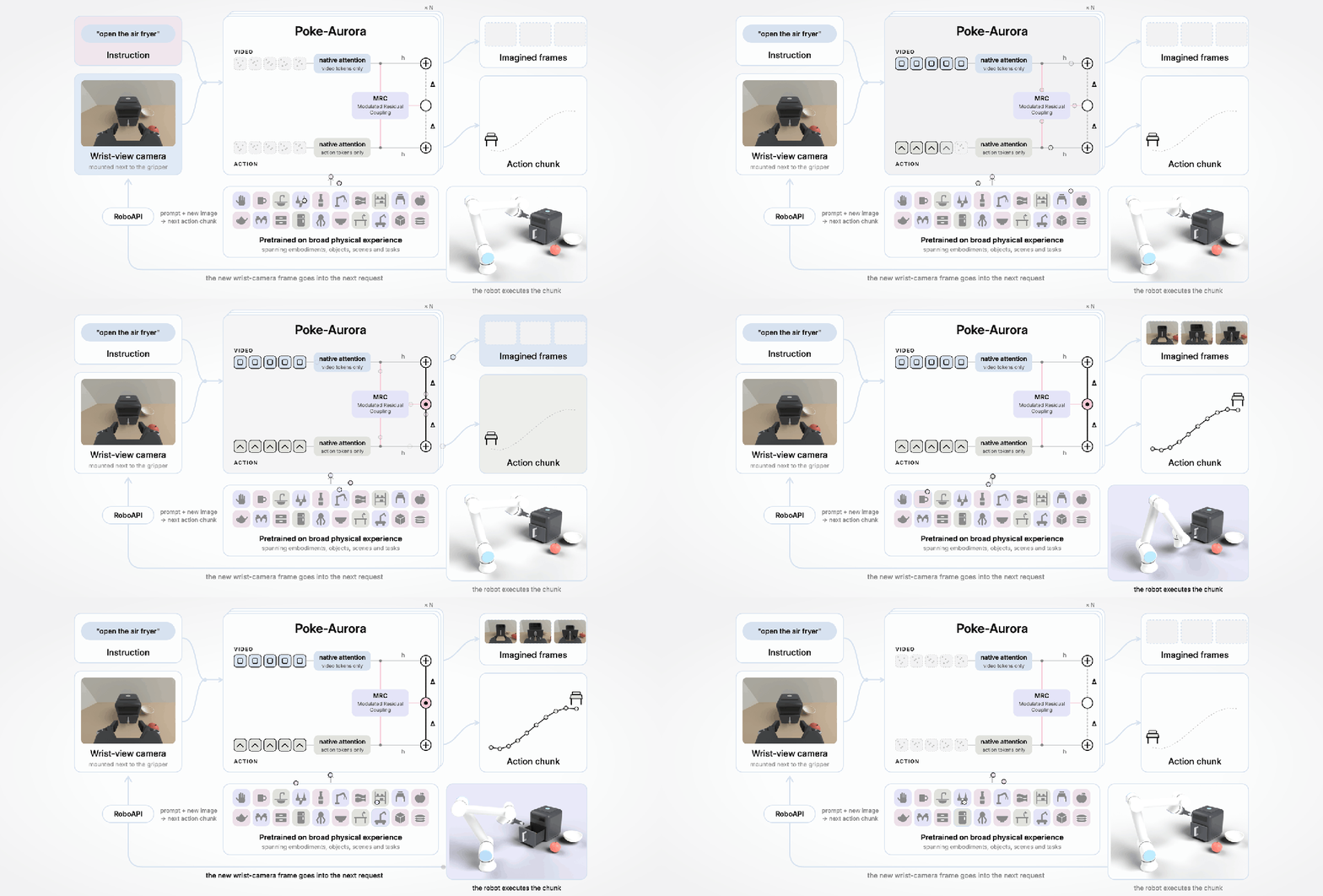
RoboAPI is powered by Poke-Aurora — Poke's first world-action model.
World-action models learn shared patterns of object motion and interaction by predicting future frames, providing a foundation for transferring manipulation experience across objects and scenarios. However, in actual model training, the team found that a world-action model's capacity to model the world doesn't automatically translate into reliable action capabilities. How to get video learning and action learning to reinforce each other remains a key challenge.
To address this bottleneck, they proposed a Modulated Residual Coupling (MRC) mechanism in Poke-Aurora: while preserving each module's native computation path, it establishes learnable cross-module interactions. The team observed that MRC enhances gradient consistency between video prediction and action prediction, aligning the learning directions of both tasks more closely in their shared representations. This allows the model's understanding of object motion and interaction processes to better serve robot action learning. Further details will be covered in Poke-Aurora's technical report.
Post-training addresses another challenge: cross-morphology generalization. For robot manipulation, "morphology" is the combined constraint of "arm structure + arm control method + sensor layout." Different robot arms vary widely in joint configuration, and visual sensors differ even more dramatically in number and spatial arrangement. These differences combined mean that embodied models trained under different morphologies effectively speak different "languages."
Inspired by UMI, Poke defined and designed a post-training morphology of "wrist-mounted fisheye camera + end-effector pose control." Because both observation and control are end-effector-centric, this UMI-style morphology strongly facilitates cross-embodiment generalization. Using consumer-grade action cameras also effectively lowers the difficulty and cost of obtaining this morphology.
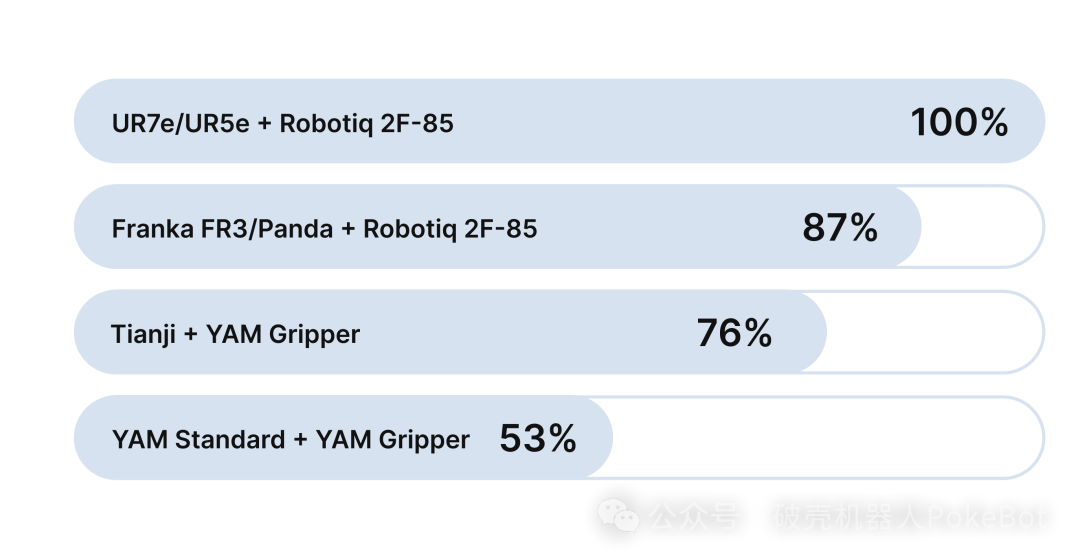
Once aligned to this morphology, the team found that switching between different brands of fisheye cameras (e.g., from Insta360 Ace Pro2 to DJI Action 6) had virtually no impact on model performance. The model could also smoothly transfer to completely unfamiliar, even substantially different robot morphologies (e.g., from UR7e to YAM-standard). This means that simply mounting an action camera on the wrist of any robotic arm with reasonably good inverse kinematics (IK) solving capabilities allows RoboAPI to control that arm for task execution.
The "API Moment" for Embodied AI
Letting the Model Face Scrutiny from Everyone
Unlike language models, embodied AI has long lacked widely accepted, unified evaluation benchmarks.
One well-known reason is that different models typically use highly customized robot morphologies and task definitions, making results hard to compare directly. A deeper reason is that existing embodied models generally have limited generalization capabilities — evaluation often requires additional data collection and fine-tuning for specific tasks, substantially increasing evaluation costs and reproduction difficulty, while also failing to reflect a model's true general-purpose capabilities.
As training progressed, the team found that Poke-Aurora began to exhibit perceptible but hard-to-quantify generalization across multiple dimensions: environmental scenes and distractors, object categories and instances, instruction following, and long-horizon coherent execution. Evaluation through task-specific fine-tuning increasingly failed to capture its true generalization potential.
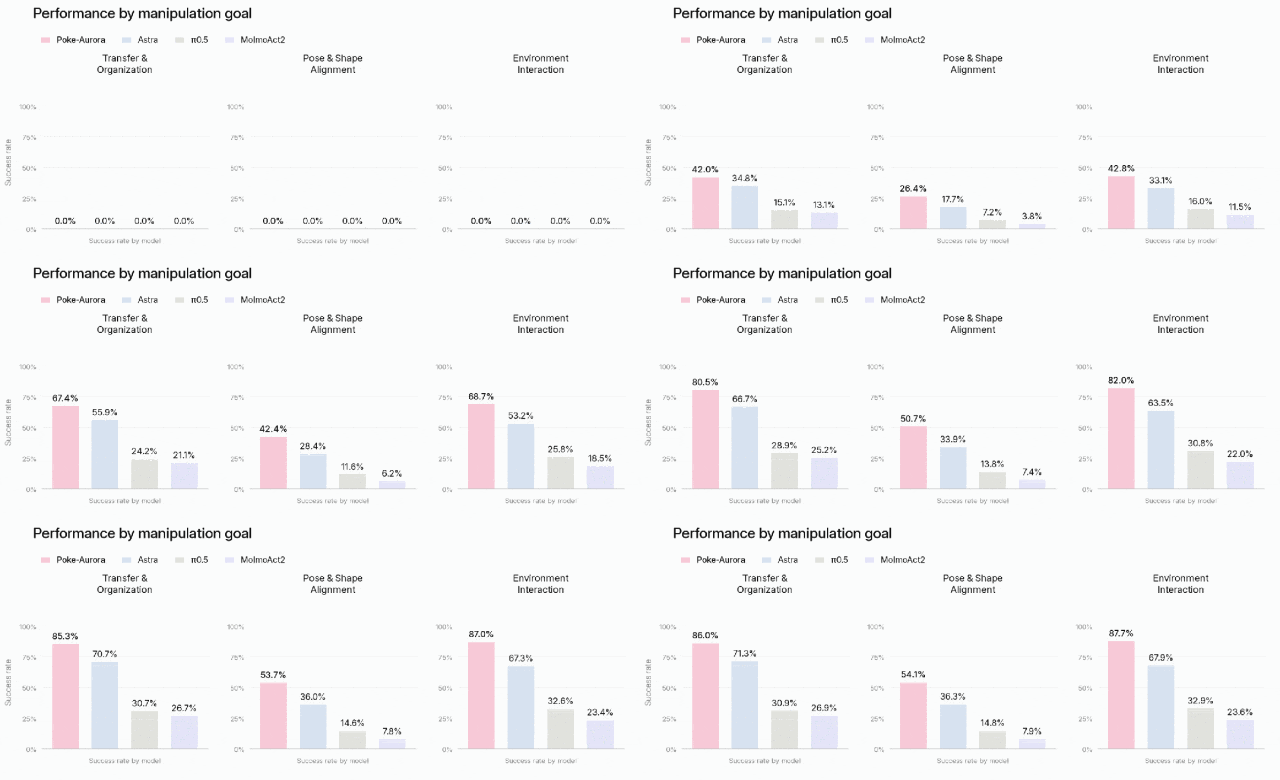
After a period of exploration, Poke developed a scalable evaluation system: covering nearly a thousand operable common object instances, organized into nearly ten thousand distinct instructions, spanning three common foundational action types — object transfer and organization, pose and shape alignment, and environmental interaction and tool use. Poke-Aurora leads comprehensively on this self-built benchmark.
The team also clearly states their boundary of judgment: we cannot guarantee that your experience using RoboAPI will perfectly match the statistical numbers, but we believe this is precisely RoboAPI's greatest significance — the generalization capability of a cutting-edge embodied model shouldn't be determined by its creators alone, but should be continuously subjected to real generalization tests from any external user, at any time.
The product thinking behind RoboAPI is directly connected to Huazhe Xu's read on the "home" scenario. Below is an extended conversation he had this April.
The following dialogue is excerpted from the WeChat account "DeepTech" article "Dialogue with Huazhe Xu: 10 Things Home-Bound Robots Need to Get Right First," by Jiayang. We've edited it slightly without changing the original meaning.
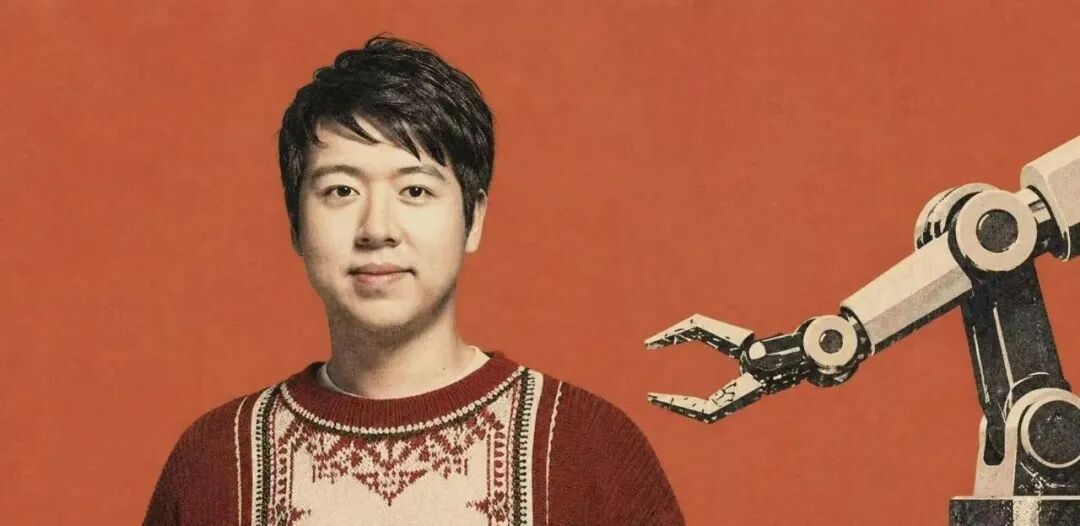
In February 2026, Huazhe Xu left Xinghai Tu, which he had co-founded, to start a new venture — Poke Robotics, targeting the consumer embodied AI track with the goal of entering homes.
Previously, Xu was chief scientist and co-founder of Xinghai Tu, as well as an assistant professor at the Institute for Interdisciplinary Information Sciences, Tsinghua University, and head of its Embodied AI Lab. He earned his PhD at UC Berkeley and did postdoctoral work at Stanford University. The 3D Diffusion Policy (DP3) that he and his team proposed has become one of the most widely adopted and extended 3D visual imitation learning architectures in the industry.
data anonymization, on-device processing where possible, and clear user consent frameworks. These are table stakes for any consumer hardware company today.
DeepTech: The second major initiative you mentioned was online learning. What does that look like in practice for a home robot?
Huazhe Xu: Online learning, in our context, means the robot improves from every interaction it has in a real home. Not batch updates shipped monthly, but genuine continuous adaptation. The key challenge is doing this safely — you can't have a robot that learns a bad habit from one household and propagates it everywhere.
Our approach is to separate fast adaptation from slow, validated updates. The shared base model changes slowly, through a rigorous validation pipeline. But each robot can carry lightweight local adapters that learn household-specific quirks — how this particular drawer sticks, where this family prefers dishes placed. These local layers don't feed back directly to the shared model; they're more like personalizations.
DeepTech: That sounds computationally demanding for a consumer device.
Huazhe Xu: It is, which is why we're designing our hardware stack with this in mind from day one. We're not taking an existing robot platform and bolting on learning capabilities. The compute budget, memory hierarchy, even thermal design — all of it needs to support inference and lightweight training simultaneously.
DeepTech: Let's shift to the transition from scientist to founder. You mentioned earlier you're now handling things like office orientation and rent calculations. What's been the most disorienting part?
Huazhe Xu: The sheer breadth of decisions. As a researcher, your optimization function is relatively clean — interesting problem, good results, clear publication. As CEO, every day you're trading off ten dimensions that don't commute with each other. Hire this person now or wait for someone better? Spend on compute or facilities? Optimize for six-month survival or two-year positioning?
The "doing a lot every day" feeling comes from context-switching constantly. Morning I'm reviewing model architectures, afternoon I'm in a lease negotiation, evening I'm thinking about consumer brand positioning. None of these use the same mental muscles.
DeepTech: Was there a specific moment where the weight of that shift hit you?
Huazhe Xu: Probably the first time I had to let someone go. In academia, you don't really fire people; the timeline is bounded, everyone moves on eventually. In a startup, keeping the wrong person is a decision that compounds. That was concrete in a way that research never is.
DeepTech: Do you miss the research purity?
Huazhe Xu: Sometimes. But I also find this more honest. In research, you can spend years on a problem that turns out to be a dead end, and the failure mode is subtle — maybe the metrics were gamed, maybe the problem was ill-posed. In building a product, the feedback is brutal and immediate. Either the robot hangs the shirt or it doesn't. Either customers buy or they don't. I find that clarity energizing.
DeepTech: Looking ahead, if you get the 10 things right, what's the next horizon? Back to the squirrel mandarin fish?
Huazhe Xu: [Laughs] Eventually, yes. But the real next horizon is the transition from "robot does tasks" to "robot manages the home." That's when it stops being a tool you command and becomes something closer to a capable presence — anticipating, coordinating, truly understanding the physical and social dynamics of a household. The squirrel fish is a benchmark. The deeper goal is a different category of machine.
First, you need a clear agreement with users and scenario partners spelling out exactly where data can and cannot go. That's the prerequisite for everything.
Second, there needs to be an obvious indicator. Like smart glasses — they light up when recording so you know "I'm being filmed, it's active." That seems small, but it's psychologically crucial.
Third, the industrial design itself needs to look approachable, not aggressive. Beyond actually being safe, it needs to look safe. People's psychological comfort matters.
Fourth, in the structural design, when it's not working, people need to clearly feel "it's not invading my privacy right now." This might involve lens covers, retracted arms — design elements that make the dormant state visually unambiguous.
Fifth, blurring. If users consent to cloud uploads, we still need to do face-blurring and similar work, so no facial privacy leaks out.
These issues have already been thought through and solved in the robot vacuum industry, in the early facial recognition industry. With home robots, we just need to be more careful and comprehensive in addressing them.
DeepTech: What about catastrophic forgetting? It's an old problem in large models, and it's amplified in embodied intelligence.
Huazhe Xu: Catastrophic forgetting is a major focus for us — it's essentially the problem that online learning needs to solve.
What is online learning? When my model has already been trained to a certain point, can it take on a new task and keep getting better and smarter with use, without degrading on old tasks?
There are many paths to approach this, but whether you're actually doing it determines whether your company, your model, can really land in general service scenarios. For C-end users, you're either a fully defined product, or a product that gets better with use. You can't get worse with use — that's way too risky.
So online learning aims to solve catastrophic forgetting. In the large model space, people have discussed this quite a bit. In embodied intelligence, there's been much less discussion, and I think it'll become a critical proposition in the coming period.
DeepTech: On manipulation tasks, the industry mainstream for the past two years has been imitation learning and VLA. But since the second half of last year, more teams have been stacking real-world reinforcement learning on top of imitation learning to break through the success rate ceiling. RL is moving from locomotion control into manipulation. How do you see the respective roles of these two?
Huazhe Xu: Imitation learning and reinforcement learning have different missions. Imitation learning learns priors — roughly how to do things, roughly how physics works. It's the fast way to scale up, to get robots to a baseline level. But after imitation learning training, you typically get 70–80% success rates, not 100%.
Reinforcement learning comes in at a later stage: making it move fast enough, maintaining generalization, achieving high success rates. These are naturally very different roles.
RL also has a benefit that imitation learning lacks: it evaluates and scores data — that's the value function. Whether the current state is good or bad, it gives you feedback. That's incredibly valuable because it tells us what's bad, what's suboptimal, not just "what's right." That signal is more critical for robots than people realize.
DeepTech: Where do you think the key breakthroughs for RL will come in the next year?
Huazhe Xu: There are several clear directions:
First, scale. Previously people didn't do much RL, and mostly single-robot setups — single-robot, non-reusable, not very meaningful. The value of scaled RL is essentially making your sampling capacity scale linearly with robot count.
Second, multi-task. Scale isn't just "1,000 robots doing one thing," it's "1,000 robots doing 500 things." This involves scheduling, experience sharing, mutual enhancement across tasks.
Third, training speed and efficiency. Why did RL work so well for AlphaGo but then stagnated for a while? Because AlphaGo had unlimited room to try — you could run billions of simulations in Go. But with robots, the space you can try becomes too large and too expensive, using real robots to experiment, so output was slow.
But now it's different. Pre-training gives you a good model, and on that foundation, your sampling space is massively "trimmed." I think the sampling space is already "almost correct" — what remains is turning "almost correct" into "correct." That's a completely different order of magnitude of work.
So I think RL will have extremely high training efficiency going forward. People's previous impression of it as "slow" or "extremely data-hungry" should change significantly in the next year or two.
DeepTech: Putting scaled RL and online learning on Poke Robotics' roadmap, when do they actually land in the product?
Huazhe Xu: We hope that within an 18-month to two-year timeframe, we'll have a meaningful scale of deployment, with robots in real scenarios, data flowing back, forming a true closed loop. That's a realistic timeline.
DeepTech: When the first-generation product ships, do you have a rough target success rate in mind for each of those 10 tasks?
Huazhe Xu: There's no specific number for this — it's similar to autonomous driving. What's the threshold for "good" — every how many kilometers or miles without intervention? It's hard to say. Even if an autonomous car drives better than a human, users might not be satisfied.
But I think human-comparable success rates are necessary for robots. Only then will people feel buying a robot is worthwhile, that it genuinely delivers value, rather than something that always needs supervision and rework.
DeepTech: What if it encounters something it can't solve?
Huazhe Xu: There are several layers of design here:
First, compliant control in robots is incredibly valuable and important. Simply put: can it be soft enough? Because compliant control largely determines whether it'll hit people, whether it'll have problems after bumping a table. That's the first ring.
Second, touch is the prerequisite for compliant control. Only with touch can you really do compliant control well. So we'll have tactile sensors on the body. Hanging clothes, organizing — these tasks involve large amounts of deformable objects, with very high demands on contact force perception. There's no shortcut here.
Third, it needs good enough understanding to know which things "I can't do right now." The robot needs a built-in task taxonomy, a judgment of "what I shouldn't attempt." This itself is an important source of product safety — a robot that knows its boundaries is a robot you can put in a home.
DeepTech: You were Chief Scientist at Xinghai Tu before, and it seemed like you didn't have a strong attachment to "being CEO or not." Now that you're the leader yourself, what feels different?
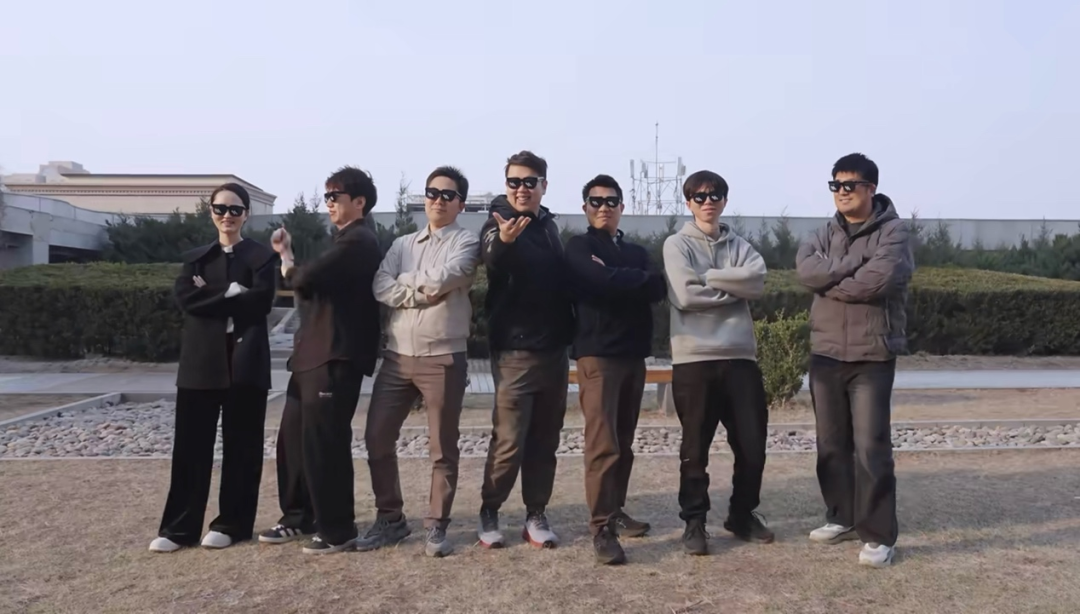
Poke Robotics team photo (Source: Interviewee)
Huazhe Xu: Definitely different.
More things to do, more dimensions, more richness. From a personal growth perspective, I'm growing faster too — just like models, the boundary of data is the boundary of AI; for people too, the complexity of what you handle determines the boundary of your capability. For me this is a great experience, and it's more enjoyable to do.
On another level, looking at the broader large model industry, many companies are actually led by technical people — whether it's Zhang Peng at Zhipu AI, or Zhilin Yang at Moonshot AI. On many technical judgments, on many investment trade-offs, I can make decisions starting from my own, or our small group's, technical judgment. Strategically, there's much greater flexibility.
This is quite meaningful to me. Every OpenAI needs an Ilya to provide certain ideas — if Day 1 there had been no Ilya, no him and a few core technical leads, they wouldn't have charged down the Scaling Law path. So here too, we'll respect the developmental logic of technology more, in weighing various trade-offs.
Put more simply: I think it's great, it feels great to do. Tons of things to do every day, able to use all my energy — that's something I'm especially happy about. As Chief Scientist before, it was more about the AI model itself, I hadn't fully released all my potential.
DeepTech: You now have an academic position, you're running a startup, and your Xiaohongshu is pretty active too. Between Tsinghua and the company, how do you divide your energy?
Huazhe Xu: At this point in time, what we should really look at is: what are we trying to accomplish?
Whether you're at Tsinghua or Peking University, at Poke Robotics, or at OpenAI and ByteDance — ultimately it comes down to what you've accomplished. Where I am is the same to me. I put 100% of my energy into Physical AGI, and that's it.
DeepTech: The switch from scientist to startup founder is usually "more things, more trivial stuff." Were there difficulties you completely didn't anticipate, that you're actually dealing with now?
Huazhe Xu: There are definitely difficulties.
The first difficulty was finding an office. Because the physical world can't be accelerated. As an AI scientist, the office was just there when I arrived; I didn't have to care which building versus which building was more suitable, the price, the orientation, the floor. But at the very beginning of a startup, I had to go look at these myself, compare them myself.
It's just one example. The real issue is: early in a startup there's a huge pile of concrete, unacceleratable, unleveraged things that require you to max out your own time to do. An AI scientist's work mode is high-leverage — one idea, one paper, one algorithm can be reused by countless robots. But finding an office: one hour spent is one hour, there's no second you.
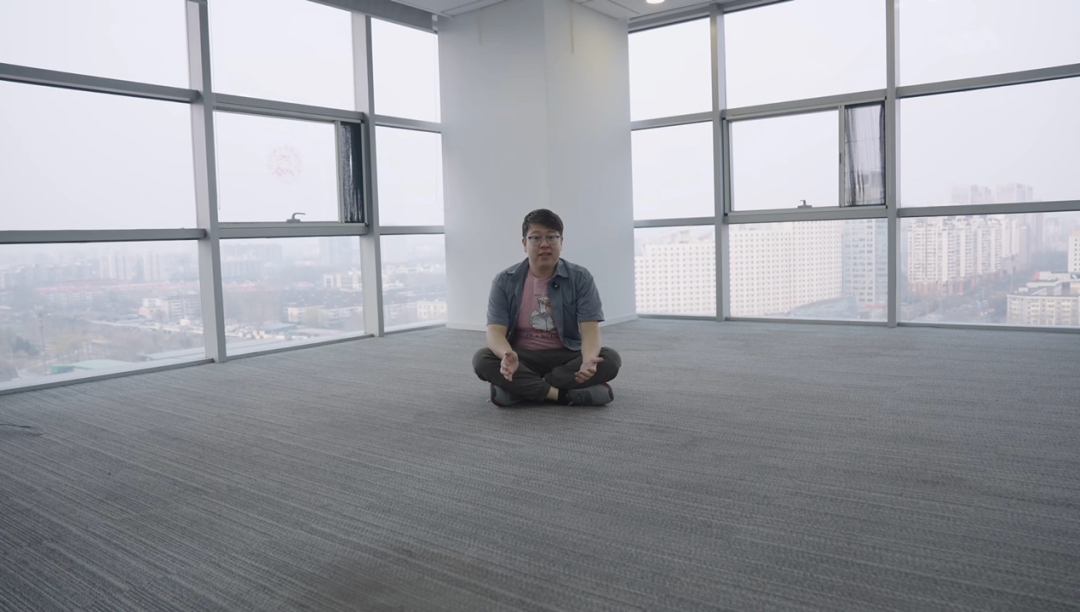
Huazhe Xu and his new office (Source: Interviewee)
The second is the change in decision-making dimensions. The dimensions you consider definitely increase, since you're now an organization, not an individual. You're responsible for your teammates, for the people working with you — that responsibility is heavier. The change itself isn't dramatic, but it's a "background noise" that's behind every decision you make.
The third is hiring. The difficulty here lies more in judgment. It's a serious challenge for anyone who has to recruit, because everyone has strengths and weaknesses. You need to hire for your weak spots, but if you're terrible in that area yourself, how do you know if someone else is strong? Your value function is off. That's when you need more tools — rapid learning, reading people's energy, using every method you can to evaluate them.
At the same time, you have to win over people in unfamiliar domains, in areas you don't know well. That's also tough. In AI, I know what GPUs you want, which model, how many. In robotics, I know too — roughly what form factor you want, how smooth you want the robot to be. But running a company also means you need PR. You have to understand what a good PR colleague wants in a work environment, what value they hope to provide — all of that you have to learn fast.
Before, you didn't need to care much about that stuff. You just had to do AI well. Now you have to understand them and win them over. That's still challenging for me. We're growing fast too.
DeepTech: Last question. If we sit down again a year from now, what do you hope Poke Robotics will have accomplished by then?
Huazhe Xu: I hope that by then, you can come to my office, give the robot some commands directly, and experience for yourself what it can actually do.