When Paper Meets Partner, How Many Possibilities Does AI Still Hold? | Y Transformers

When Young Researchers Worldwide Meet AI Founders: On Tech, Capital, Products, and the Choices of the AI Era
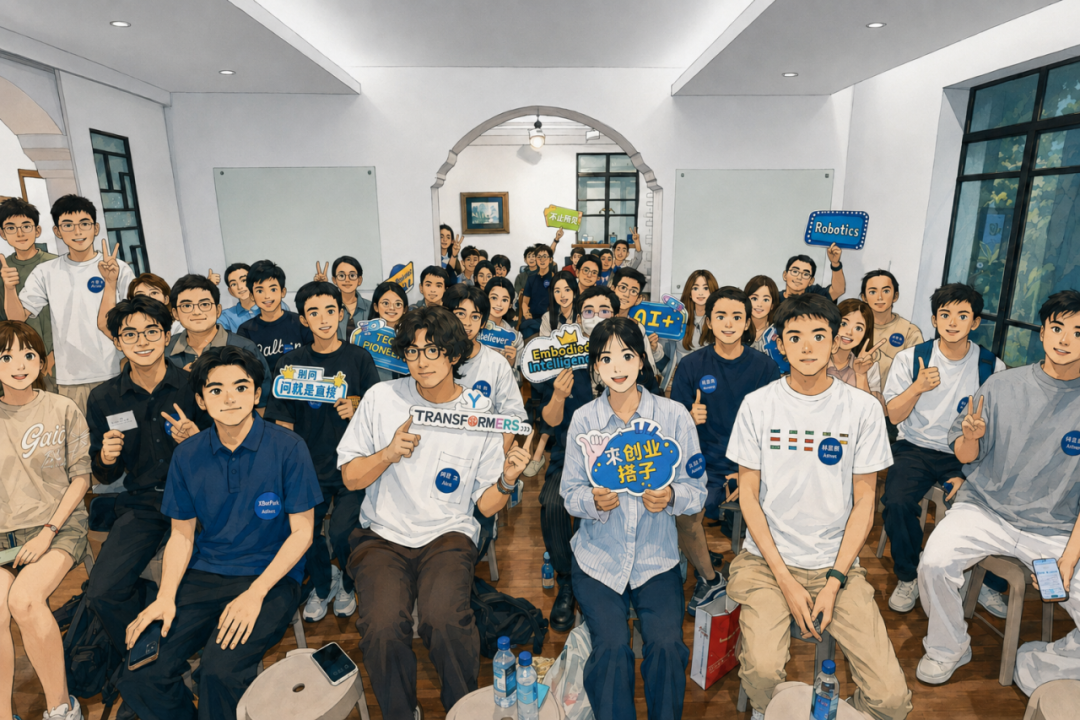
On August 14, remnants of Typhoon Dolphin brought relentless rain to Shanghai. At 3:30 p.m., nearly 30 PhDs, postdocs, and young professors from global universities including MIT, Stanford University, and University of Cambridge, along with nearly 20 domestic AI entrepreneurs, braved the storm to gather at Yunqi Partners. They were there for "Paper, Partner, Possibility: Overseas PhDs and Domestic AI Entrepreneurs Exchange BBQ," co-hosted by Yunqi Capital and Future Origin Community, to discuss research commercialization, entrepreneurial pathways, and collaboration opportunities.
Paper: From Top Conferences to Market

What Lies Between
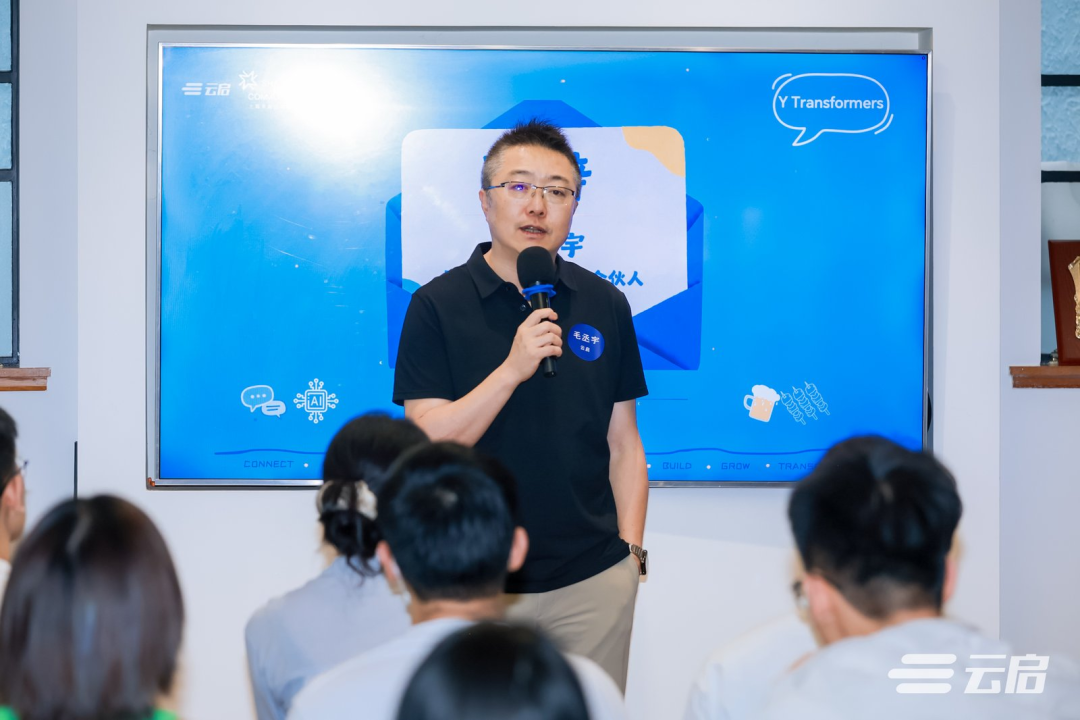
Michael Mao, founding and managing partner of Yunqi Capital, noted that the profile of entrepreneurs is quietly shifting. Over the past two years, tech ventures driven by engineers, PhDs, and university professors have reached unprecedented levels of both buzz and intensity. In the nearly 20 early-stage projects of the "Yunqi-SJTU AI Angel Fund," the vast majority of founders hold doctoral degrees. Paper is becoming the starting point of entrepreneurship.
But a starting point is not a through road. A Yunqi investor added data to complete the picture: China's venture capital market has been weakening since 2021. While Q4 2024 showed a turning point, new capital is flowing disproportionately toward more mature, later-stage projects with greater certainty. Over the past year, pre-Series A investment dropped from roughly 36% of total deal value over the past decade to just 16.72%; the top five sectors now account for nearly 70% of institutional activity. Globally, AI commands 76.7% of venture capital deal value, yet displays a pattern of "value prosperity, volume contraction" — massive funding concentrates in a handful of leading companies, while early-stage firms still face a challenging financing environment.
Paper may open the first door, but the path behind it is narrower than imagined. As capital gravitates toward certainty, industry and academia must shoulder more of the "connecting" responsibility.
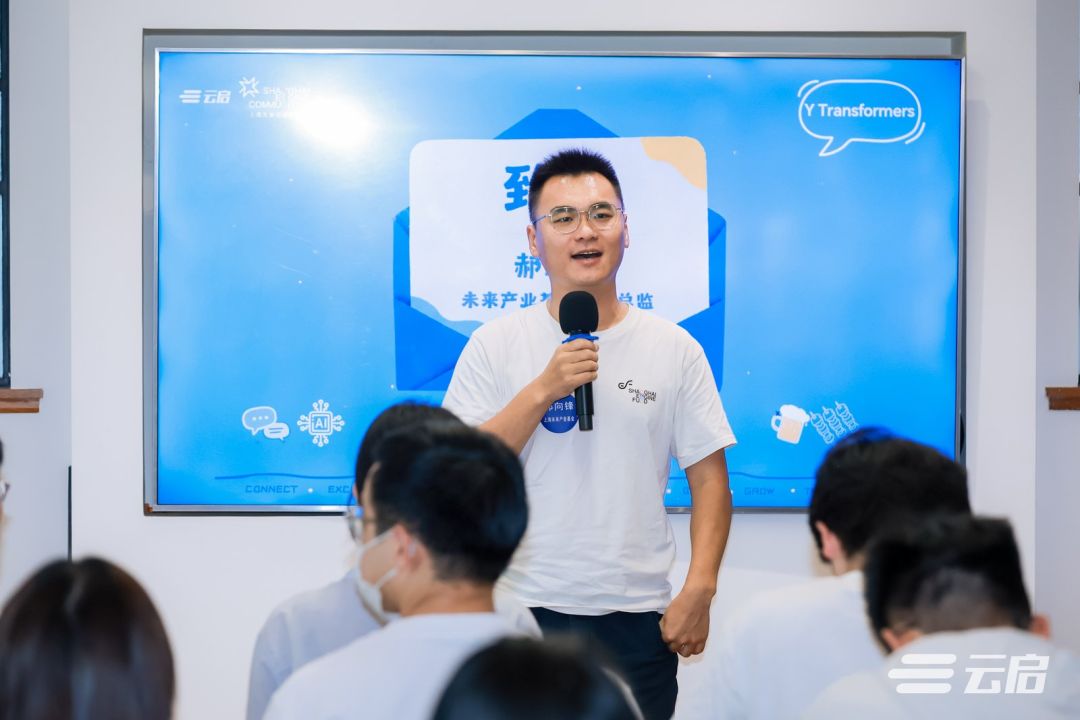
On the industry side, Hao Xiangfeng, investment director at Future Industry Fund, explained that the fund pursues both direct investments and fund-of-funds strategies, partnering with multiple universities and industry leaders to leverage academic research capabilities and industrial expertise to identify frontier projects. The fund's focus is deliberately "bottom-layer", because in Hao's view, as energy costs, chip design, and computing expenses decline, computing power will migrate from servers into more devices and everyday scenarios, becoming an accessible, foundational capability.
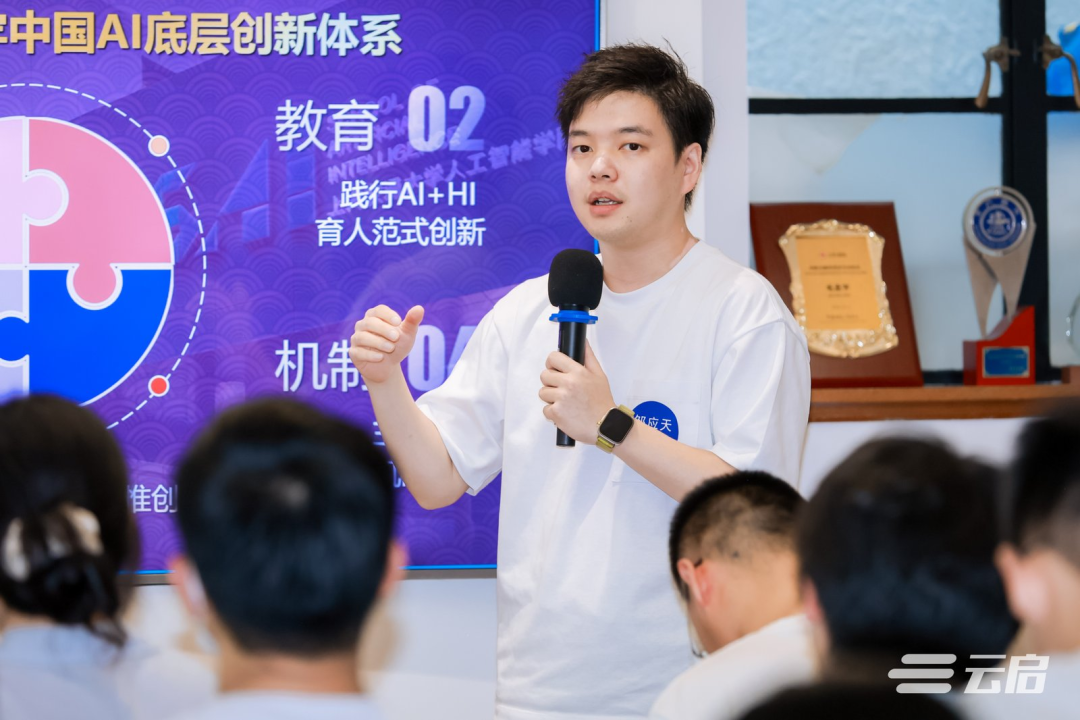
External resources are drawing closer to universities, and internal rules are loosening too. According to Zou Yingtian, assistant professor at the School of Artificial Intelligence, Shanghai Jiao Tong University, SJTU is advancing a "3+3+3" talent program — roughly one-third each from top domestic universities, top overseas universities, and industry. The School of Artificial Intelligence is the pilot program. The school is also exploring new evaluation mechanisms that de-emphasize single metrics, incorporating innovative achievements, industrial impact, and entrepreneurial practice into assessment, and driving commercialization through research startup funds, venture funds, and "super labs." Zou himself, who earned his PhD at National University of Singapore and previously worked at Huawei, is one of the faculty recruited from industry.
From VC early judgment, to industry fund resource connections, to university internal talent and evaluation mechanisms — these three perspectives ultimately converge on one question: how to help frontier talent and technology move more smoothly out of the lab. Between continuing research, joining a startup team, or founding independently, more interconnected pathways are emerging.
Partner: Direction Is Discovered
Not Designed
Systems provide the soil, but whether seeds sprout depends on how entrepreneurs themselves find direction amid real needs, and whether someone is willing to iterate with you through mistakes.
Yang Bolin, founder of SigmaZ AI Lab, may be the person at the event who best understands this "search." Born in 2003, he started his first company at 16, secured funding months into his master's program at University of Cambridge, and chose to pursue entrepreneurship full-time. As one of the first entrepreneurs backed by Yunqi's "Y Transformers" dedicated fund, SigmaZ has since completed multiple additional funding rounds after Yunqi Capital's investment.
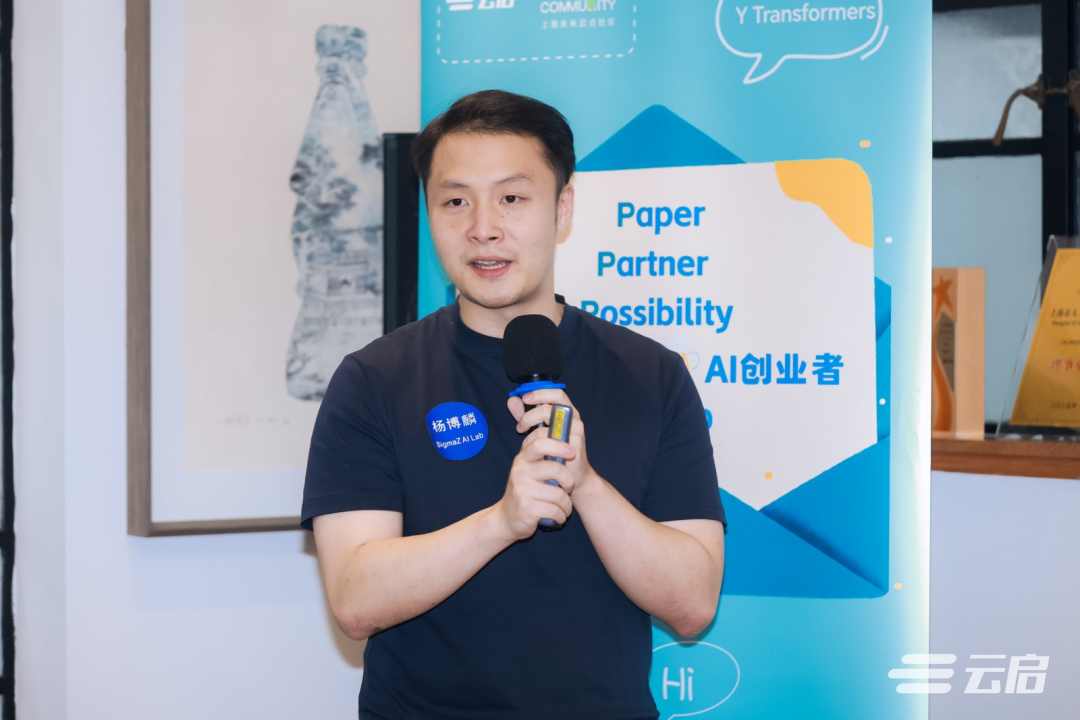
But the company's direction wasn't clear from the start. SigmaZ initially built an AI Tutor that converted course materials into interactive videos. After gaining over 20 million overseas impressions, the team discovered something unexpected: users weren't primarily using the learning features — they were using the video generation function, and the content they created went far beyond course materials. Based on these real needs, the company pivoted to code-driven real-time interactive intelligence. Currently, SigmaZ focuses on post-training of diffusion language models and code-driven visual AI.
In Yang's view, future multimodal content will be composed simultaneously of code and pixels: code handles motion, structure, and logic; pixel models complete visual rendering; and diffusion language models' faster decoding enables real-time video generation and interaction. The new product hasn't officially launched, yet has already secured cooperation interest from 21 customers.
"Direction is discovered, not designed." Yang likens entrepreneurship to a Bayesian process: continuously gathering feedback, rapidly correcting course. "Building is cheap, learning is expensive." AI makes prototype development faster and faster, but time and learning speed are the scarce resources. The sooner a product goes live, the sooner it reaches users, the faster a team can discover biases in its judgment.
Beyond product and customers, he also sees "narrative" as a capability entrepreneurs need to build early. A clear narrative must answer why change is happening, what the team believes, where the future is heading, and what should be done now. It shapes how a company communicates with customers and investors, and serves as a shared cognitive foundation within the team.
For overseas young researchers still weighing whether to start a company, this on-the-ground reference from the entrepreneurial frontline may be more concrete than any data: technology determines where you begin, real needs shape how direction evolves, and organization and narrative determine whether a team can go far. And on this path, early funding like Y Transformers, and real feedback from users, are both indispensable Partners.
Possibility
If There's More Than One Road
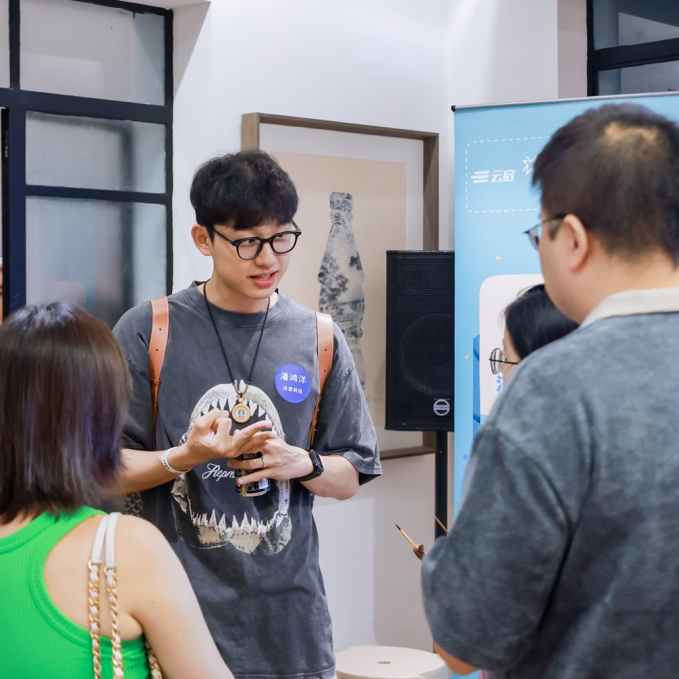
After the themed presentations, the microphone began passing between young researchers and domestic AI entrepreneurs. The open mic brought AI and entrepreneurship from abstraction into the personal — into daily life, choices, and uncertainties. One moment the conversation was on protein multimodal design and computational fluid dynamics; the next, stocks, tour guiding, and I Ching divination.
The most ridiculous thing I've done with AI was just now asking it,
what's the most ridiculous thing I've done?
My experience with AI has three stages. First, I used Codex frantically until my tokens ran out — like "I'm alive, but my money's gone." Second, I couldn't stand seeing AI idle, so I made it work frantically, but I couldn't keep up with it — like "I'm dead, but my money's unspent." Third, the school gave me unlimited tokens, and I finally let go: you can't compete with infinite tokens using finite time and energy. What truly matters is reserving attention for more valuable problems.
I think what's most irreplaceable by AI is genuine human contact,
because our skin has so many receptors,
that's the result of millions of years of evolution;
and also, AI can't decide for us "what we truly want to do."
My biggest bottleneck right now is transitioning from statistics to AI. It used to be transporting watermelons by bicycle; now it's by car, and statistics is that obsolete bicycle. What do you do when your field falls behind due to technological revolution?
This counter-question struck a nerve. In the rapidly evolving AI era, technical concepts emerge endlessly. As one audience member put it:

If the AI industry were a weather system, right now it's "plateau snowfield" weather —
changing several times a day, you know there's spectacular scenery ahead,
but no stretch of road can be controlled in advance.
And these unpredictable changes are precisely the industry's charm. For those present, Paper is the road already traveled, Partner is the person still being sought, and Possibility is the area ahead that's unclear but worth walking into.
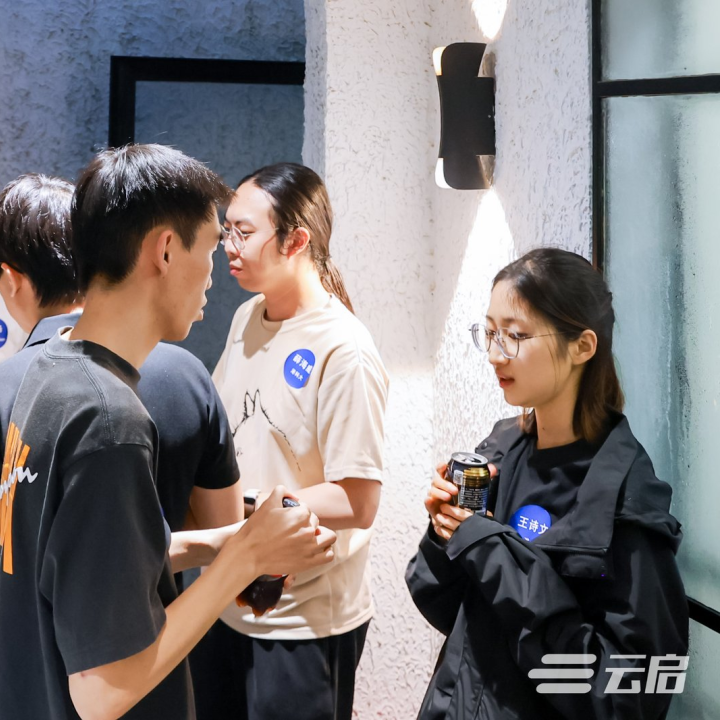
After the open mic, the BBQ officially began. The rain outside hadn't stopped; inside the small building, a warm yellow glow spread. Some picked up skewers to continue conversations left unfinished; others clinked glasses and exchanged WeChats; still others pressed for more details on the underlying technical architecture of code-driven video...
There may be no universal path from Paper to Possibility, but Partner often begins with a specific conversation, a person willing to keep talking. This is also Yunqi's original intention in organizing this: to be a "Partner" on the entrepreneurial journey — beyond investing real money to "fuel" entrepreneurs, continuing to create relaxed spaces where between Paper and Possibility, there are a few more places to sit down and talk.




About
Y Transformers
Y Transformers is a dedicated initiative launched by Yunqi Capital for a new generation of AI changemakers, focused on supporting post-'98 "AI native" early-stage entrepreneurs. With a total fund pool of 100 million RMB, it expects to back 25 post-'98 AI startup teams. The mechanism emphasizes "fast, genuine, comprehensive, light" — decisions within two weeks, real capital investment, comprehensive resources, and founder-friendly terms — providing early startup funding and necessary resources. Y Transformers hopes to be the first light for a new generation of AI changemakers, accompanying more young ideas into reality!
Scan to apply for the "Y Transformers" program