Talking Embodied Artificial Intelligence with Yu Chen: Embrace the Bubble, but Manufacturing Must Eventually Do the Math | Yunqi Capital Insights X Tencent Technology

The truly slow and expensive variable is data accumulated bit by bit by people in the real world.
Embodied Artificial Intelligence is arguably one of the hottest — and most valuation-divisive — sectors right now.
Yunqi Capital began tracking and investing in embodied AI companies across the value chain at an early stage. Our Managing Partner Yu Chen recently sat down with Tencent Technology's Lingting theSignal to discuss:
Why capital keeps concentrating in embodied AI, why use cases are slowly converging on logistics and household services, whether world models are a true technological watershed or just a tool, and why data is the slowest and most expensive variable in this sector.
The following is excerpted from Tencent Technology's Lingting theSignal.
Written by Lingyu Gu, edited by Yang Su
On August 19, 2026, Unitree listed on the STAR Market. Its share price touched 1,100 yuan, pushing its market cap past 440 billion yuan. By the close on September 11, the stock was at 477.12 yuan per share, with a market cap of 192.9 billion yuan.
An old question in humanoid robotics has been pushed back into the spotlight: when an industry whose commercialization remains distant begins to be priced by public markets, how long can market imagination hold up?
Yu Chen, Managing Partner at Yunqi Capital, doesn't believe a single robotics company's short-term stock performance is enough to serve as a barometer for the embodied AI industry. In his view, a stock in its early post-IPO days is shaped by multiple factors — float size, trading structure, market sentiment — and short-term prices are out of sync with a company's long-term fundamentals.
Chen is a dollar-fund VC who has lived through cycles and is still active at the table. He has followed AI, autonomous driving, and robotics since the early days, with past investments including MiniMax, Independent Variable Robotics, Astribot, Keenon, RealMan, Neolix, and Poke Robotics.
Recently, I spoke with Chen about the embodied AI sector, which some outside observers worry is cooling. Our conversation began with two sides of the same question: why has an industry that hasn't yet entered daily use formed a capital consensus so quickly — and what allows a robotics company to survive after the bubble?
Chen's answer can be summed up in three points: short-term stock swings at a single company won't drain the primary market; bubbles can be embraced, but manufacturing companies will ultimately be valued as manufacturers; and to judge a company, don't look at what it says — look at what it has produced.
In his view, what the market is trading today isn't necessarily the real value of embodied AI. With limited float, secondary-market prices mostly reflect sentiment. Nor does primary-market heat come entirely from the projects themselves — it comes from capital having nowhere else to go. As with the secondary market, to judge whether primary-market heat persists, watch liquidity. Neither capital nor technical buzzwords can secure a company's position at the top; mass production, supply chain, and delivery capability are what may decide the next reshuffling.
The truly slow and expensive variable is data accumulated in the real world, bit by bit, by people.
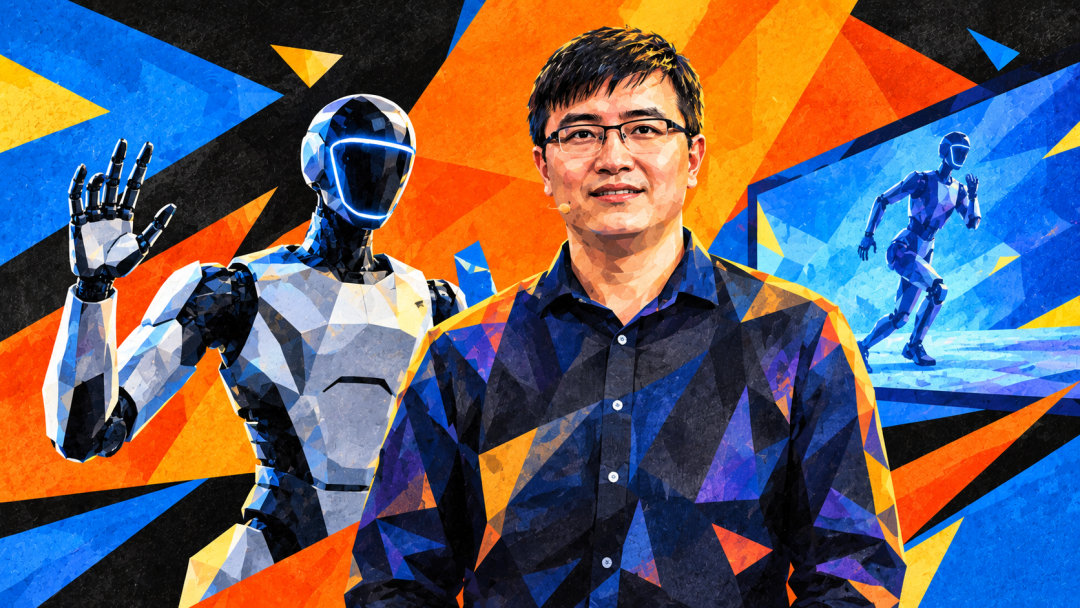
Yu Chen, Managing Partner at Yunqi Capital
Stock Prices Trade on Sentiment First
Embodied AI Hasn't Yet Been Priced by Public Markets
Lingyu Gu:
Did this pullback surprise you?
Yu Chen:
By strict financial metrics, robotics companies' valuations are generally high right now. Unitree is certainly still in its lock-up period, with limited shares in circulation. In that situation, even a small volume of trades can amplify price swings — much of it reflects market sentiment.
Before the lock-up expires, short-term price fluctuations don't necessarily align with a company's true fundamentals. I don't take the current stock price too seriously; I'll observe once the trading structure is more fully developed.
Lingyu Gu:
What does Unitree's IPO actually mean for the industry?
Yu Chen:
In some sense, it's definitely the most-watched robotics listing of the year. But one company's business structure, technical path, and business model can't fully represent the entire embodied AI industry. So I think its short-term stock performance will have some emotional impact on the primary market, but it's not enough to become a pricing anchor for the whole industry.
Lingyu Gu:
In this round of trading, who can actually cash out?
Yu Chen:
Paper returns and ultimately realized gains are two different things. You also have to account for lock-up periods, liquidity, and subsequent market performance — so it takes much longer to tell.
Capital Will Keep Pouring In
But the Bubble Will Eventually Settle on Manufacturing Logic
Lingyu Gu:
Why is capital still concentrating in embodied AI?
Yu Chen:
Because the sector is highly unified now — unlike ten years ago. Ten years ago there was O2O, online education, and other directions. Now it's basically just AI-related targets, nothing else — and there's definitely more money than ten years ago.
The primary market is fundamentally asset management. Having raised all this money, funds must deploy it within a set timeframe — and there are no other sectors to choose from. Everyone is now highly concentrated in AI, robotics, and commercial aerospace; the only question is how to allocate within those.
If no new industry emerges to absorb the liquidity, this state will persist. The primary market will stay hot for a long time. The secondary market depends on macro liquidity; the primary market depends on whether new investable sectors appear.
Lingyu Gu:
Have valuations detached from fundamentals? Compared to 2021, how is today's heat different?
Yu Chen:
Yes — and we don't understand it either. But there's no choice; there's only so much liquidity in the market. The last crazy period was 2021, and even that wasn't this crazy.
Embodied AI companies raise a lot of money in their first rounds, largely because of the heat. The bar for building a demo is lower than before, and there's some FOMO in the market. But truly making a good product — achieving generalization, stability, and delivery — remains extremely hard.
Judging by deal volume, capital supply in this industry is still fairly abundant. Two to three hundred companies appearing in one sector in a short span itself shows how concentrated the money is.
Lingyu Gu:
Knowing many projects may never work, why do institutions keep following on?
Yu Chen:
It's irrational, but in hot sectors, capital easily herds and huddles together. This has happened in many past cycles — the sharing economy, energy storage.
Funds themselves have set investment cycles and allocation requirements. When investable sectors are highly concentrated, money naturally clusters further into a few hot directions.
Some people deliberately push valuations up: set the valuation very high, show that famous institutions are participating and that huge sums have been poured in, and everyone is more likely to treat it as a leading star project — reinforcing follow-on investing and herd behavior.
If an industry were clearly understood, valuations would be rational. And if valuations were rational, none of these numbers would hold up.
Lingyu Gu:
Is this the bubble you mean? How should early-stage investors face a bubble?
Yu Chen:
Yes, this is a bubble. A bubble can attract more talent into the industry and accelerate its development; it can also make money for some early investors.
For early-stage investors, what matters more is identifying trends ahead of the market while maintaining investment discipline. Bubbles draw more talent and resources into an industry and speed up its development.
Lingyu Gu:
How do you value a manufacturing-type robotics company?
Yu Chen:
A manufacturing company should carry a manufacturing valuation.
Of course I'm bullish on component companies — I invest in them too. But the market needs to think clearly: is it manufacturing, or is it something intelligent? Some things right now are obviously manufacturing, yet they're given "intelligence" valuations — sometimes even more exaggerated than embodied-brain companies.
For a brain company to build hardware is relatively easy in China. China's hardware supply chain is mature, so engineering the physical body is comparatively straightforward. So ultimately it comes down to whether the real moat is manufacturing capability or intelligence capability. Component companies aren't without value — it's just that manufacturing should get a manufacturing valuation.
Lingyu Gu:
Will going public rewrite the competitive landscape, or constrain the company itself first? How much of the paper return actually lands in the pocket?
Yu Chen:
I don't think an IPO directly changes the industry landscape. If anything, being public becomes a drag on the company: stock price swings immediately show up, and corporate strategy often gets affected. Before listing, you can do anything; after listing, everything is exposed.
But stock prices feed back into the primary market. If the stock does well, primary-market companies raise money more easily; if it does poorly, primary-market companies collapse.
Reality is harsh. You can't simply equate paper returns with final gains. After listing there are lock-ups, liquidity issues, and price volatility — how much can truly be realized takes a long time to verify.
Lingyu Gu:
To judge whether the heat will fade, do you only watch liquidity?
Yu Chen:
Just liquidity — same as the secondary market. The most important thing is how big the total primary-market pool available for investment is.
Right now, including long-term capital, new money continues to flow into the primary market.
Use Cases Are Converging
But Demos Are Still Far From "Default Daily Use"
Lingyu Gu:
As of today, have embodied AI use cases started to converge?
Yu Chen:
Embodied AI first emerged in a wave around 2023–2024. Back then the sector hadn't taken off, and nobody knew what embodied AI could really bring — it was a fairly chaotic state: uncertain technical routes, uncertain use cases, everyone groping around.
Now, with two to three hundred embodied AI companies, everyone's story is starting to converge — everyone talks about world models. You'll notice the use cases are slowly converging too. The two scenarios most companies work on are logistics and household services.
These are the scenarios where people are willing to pay and try new things.
Lingyu Gu:
Why logistics and household services? Does focusing on specific scenarios sacrifice generalization?
Yu Chen:
These high-value scenarios themselves force embodied AI to develop its technology and solve problems.
In household services, generalization matters a lot. The scenarios are diverse and so are the tasks — tidying, cleaning, cooking. In logistics, take Independent Variable Robotics doing parcel sorting: what needs solving is inference optimization, otherwise efficiency can't get there. Normally embodied robots move slowly — videos have to be sped up to look normal. But in specific or industrial scenarios, inference speed and cycle-time consistency become critical.
So beyond commercialization, these scenarios also push everyone to solve technical problems. By 2026, if you're going to invest in embodied AI again, the company has to tell you whether it can stand out in a specific scenario. You have to be relatively focused and defined from the start.
The scenarios themselves also demand generalization. Household services, for example, require high generalization across tasks and environments.
Lingyu Gu:
In the next year or two, what counts as real deployment?
Yu Chen:
I think real deployment is still far off. The concrete progress so far is mostly companies landing some POC orders.
Tell me today — aside from Independent Variable Robotics doing parcel sorting, where efficiency more or less meets the bar — which robot's operational efficiency actually meets the standard? You can't be the one dragging things down.
Lingyu Gu:
So most progress is still demos?
Yu Chen:
Many demos are carefully selected and staged. There's still a big gap between that and long-term, continuous operation in real environments.
Lingyu Gu:
What's the difference between the "daily use" you describe and today's POCs?
Yu Chen:
Daily use means the solution is used by default every day — robots doing this work every single day. If it's just showing off "look how much progress I've made, look how impressive I am," that kind of demo may help with fundraising, but it doesn't mean much to actual end users.
And the funny thing is, once it's genuinely used every day, people take it for granted — it's no longer sexy. Just like autonomous driving: every new car today has urban NOA. When it truly enters millions of households, the industry stops being sexy.
Lingyu Gu:
Why are you not optimistic about factory scenarios?
Yu Chen:
The cycle-time problem hasn't been solved. Logistics and factories are both industrial scenarios with efficiency requirements.
Factories already have automation solutions. You have to beat the existing automation, or offer flexible deployment. Factories are extremely ROI-sensitive — every cent saved counts. They don't need the robot to be high-spec or impressive; they won't pay extra for that. They want exactly enough.
Here's an example with logistics vehicles: why is range set at 200 kilometers instead of competing at 300, 500, or 800 kilometers like passenger EVs? Because logistics companies won't pay one extra cent for one extra kilometer of range.
World Models Are Just a Tool
Data Is Embodied AI's Slowest Variable
Lingyu Gu:
Are world models this cycle's true technological watershed?
Yu Chen:
Yes — but it's just a tool. Like autonomous driving, which has gone through four or five waves of technical paradigms over the past decade, latecomers even have an advantage: they don't have to waste time and money on the earlier routes.
World models aren't the endgame either. If a company's moat is just the label "world model," I'd be cautious.
The companies we've invested in are all capable of building world models, but none of them brands itself as a world-model company.
Lingyu Gu:
Does building models alone justify a standalone company?
Yu Chen:
I don't buy it. For building the brain, different technical routes are available at different times. World models are just one important route at this stage. Simply producing a world model, by itself, no longer constitutes a high enough moat.
Many current approaches are based on open-source video models, trained further with physical constraints and robot data. So the real differentiation lies in how the model, data, and real-world scenarios are combined.
Lingyu Gu:
What has it actually delivered in terms of data efficiency?
Yu Chen:
World models are fundamentally about improving how efficiently data is used. They're already more data-efficient than VLA. World models and VLA aren't contradictory — they can be combined. The original idea was to make use of massive video data, so that common, foundational manipulations could be learned from video.
But the fact that robots can do more today than two years ago definitely isn't due to a single factor. Data volume has grown, and there's been plenty of other academic progress.
Lingyu Gu:
Would you still invest in embodied-data companies? Why isn't the data company story over?
Yu Chen:
We're looking, but embodied-data companies are still at a relatively early stage, with homogenous technical approaches. Meanwhile, foundation model companies' data procurement is no longer limited to corpus data — it includes expert annotation, user trajectories, reinforcement learning environments, and more. It keeps evolving with training techniques and application scenarios, and requires practitioners to have a deep understanding of model training.
Data will be a long-term demand. Data accumulation for embodied AI is still very early — even leading companies are mostly at the scale of millions of hours. In my personal judgment, to move further toward AGI in the physical world, the required data scale will need to grow by orders of magnitude, probably to the hundreds-of-millions-of-hours level. Precisely because of that, as model capabilities, training methods, and application scenarios keep evolving, embodied data itself will keep iterating.
Lingyu Gu:
From millions to hundreds of millions of hours — can data accumulation accelerate?
Yu Chen:
No. Real-robot data — even a few seconds of it — always requires a human to produce it. Even with crowdsourcing, it takes time. Embodied data accumulates far more slowly than LLM data.
It's a stock-based but growing business, defined in hours. Revenue can be generated now, but growth is very limited, because it genuinely depends on people. Something built by stacking human labor becomes a linear-growth business. The demand is real — it's just too labor-heavy.
No Sudden Technological Leap
Mass Production and Delivery Will Reshuffle the Rankings
Lingyu Gu:
Is there any technological leap in embodied AI today that still stuns you?
Yu Chen:
Not recently — lately the companies have all been quite pragmatic. A company that amazes is, by definition, far ahead of its moment.
Back in 2021, when MiniMax told me about multimodal foundation models, that was a shock. You rarely encounter that now. For us, technology today develops continuously; it's hard for anything to exceed expectations.
If generalization suddenly became dramatically stronger, or efficiency suddenly jumped, you'd notice immediately. But you haven't seen that.
Lingyu Gu:
Why is the path from demo to delivery harder than people imagine?
Yu Chen:
There's still a big gap between the lab and final mass production.
Some companies from the previous generation are also building humanoids — it's not that they haven't tried to stay at the table. But staying at the table requires launching products suited to this era. Whether the product can be delivered and whether the supply chain can be built are entirely separate questions.
Lingyu Gu:
Can capital secure a company's position at the top?
Yu Chen:
No. There's always a chance of reshuffling. When new technology emerges, previous companies die. Before foundation models arrived, a wave of NLP companies and video-analysis companies died.
After going public, a company can raise money at a larger scale — but a capital advantage doesn't necessarily translate into a product advantage.
Ignore the Story and the Valuation
Look at Three Cost Items and One Revenue Line
Lingyu Gu:
At the early stage, which matters more — the product prototype or the founder's background?
Yu Chen:
I don't invest in people based on their background; the key is what they've built. Early-stage doesn't mean no product. From a demo you can gauge the rough level. A company with no demo at all — that's PowerPoint fundraising; though not everything is PowerPoint fundraising.
For AI companies, it comes down to three things: algorithms, data, infrastructure. Those correspond to three cost items: how much is spent on people, how much on data, how much on GPUs. Looking at these three, you basically know whether a company is really doing technology or faking it.
With that much data and that many parameters, you need corresponding GPUs to process it. If there's genuine large-scale model training happening, the corresponding data and compute spending is visible. From the scale of those inputs, you can also judge different companies' R&D stages and investment intensity.
Lingyu Gu:
At what moment does a high valuation become pressure? What proves a company is doing real work?
Yu Chen:
If the valuation is clearly high, the pressure is enormous. If it's just a few hundred million dollars, I wouldn't call that pressure.
In the end, you find out who's been swimming naked. Investors put tremendous pressure on founders with high valuations — they must produce work that matches the valuation.
Don't look at what they say; look at what they put out. Companies like Independent Variable Robotics that candidly show what they've built are rare: open-sourcing models, livestreaming their logistics operations, going into real homes for household services even knowing they don't do it well yet. Everyone can see and touch the work it's doing.
Investors Must Empty Out Their Experience
But Never Lose the Feel for Judging People
Lingyu Gu:
Why are you more willing to give young teams a chance? Does a huge funding round help young founders first, or test them first?
Yu Chen:
The advantages of youth: first, drive — no historical baggage; second, they're relatively closer to the frontier, working on the cutting edge.
It's obvious when I discuss AI projects. My own feeling is that young founders are usually more willing to dive straight into technical details and are often closer to the latest frontline developments; some experienced founders tend to start from their past experience and resources.
If you don't give a young person that much money, how will they ever learn? They have to see that much money first before they can slowly learn how to use it.
But there are two outcomes here: one is not knowing how to spend — money accelerates the company's death; the other is being very rational, gradually learning to manage and deploy it, leading to a good outcome. I think the former is more common — more people don't know how to use money.
Lingyu Gu:
How do you keep from missing the next generation of founders? What most distinguishes the "post-2000 prodigies" you mention from the previous generation?
Yu Chen:
Staying sensitive. Why do I still personally meet with projects instead of sitting on the IC listening to pitches? Because you need to keep your feel for it. You have to keep meeting new founders and hearing them out to know what this era needs. Founders' styles have been changing over the years too.
The post-2000 prodigy style: first, they've produced academic work that holds up internationally; second, their opportunity cost is relatively low, and they're more willing to commit long-term to something they genuinely want to do.
Lingyu Gu:
Would you skip a star project outright because of its high valuation?
Yu Chen:
If the absolute valuation is high but the ceiling is equally high, I can accept that. Though historically, the projects that truly broke out weren't this expensive at their early rounds either. History has proven time and again: don't look at what they say — look at what they put out.
Lingyu Gu:
If you miss this round of technological explosion, what's the cost?
Yu Chen:
Technology can't advance at this steep a slope every year. In history there are certain inflection points — some important invention drives rapid progress for a stretch; then things flatten out for a while, until the next inflection point erupts.
If you miss the feast while technology is advancing rapidly, you're essentially being eliminated by society.