When an Autonomous Driving Veteran Starts Building Robots: PHYMI's First Product Is Here | Yunqi Capital

"Sachima" Goes Live
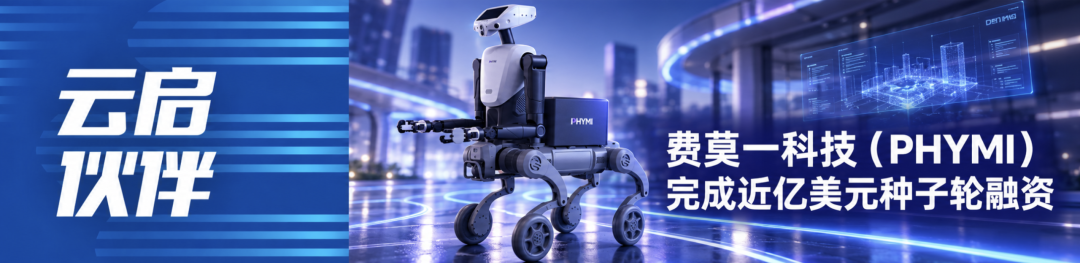
Having a robot deliver something sounds like the simplest thing in the world. But it has to find the object, grab it securely, walk to the right spot, and hand it over to a person. For robots already capable of walking, doing backflips, and executing complex maneuvers, stringing these steps together remains a formidable challenge. Today, PHYMI officially launches its first robot product, Sagi — Chinese name "Saqima" (a playful nod to the sesame pastry). With its distinctive "quadruped-wheeled humanoid configuration," it combines mobility, manipulation, and transport capabilities, aiming to make robots true "action partners" that actually get things done for people.
Founded in 2026, PHYMI announced in September this year that it had raised nearly $100 million in seed funding, with Yunqi Capital participating. In this edition of Yunqi Shiganpai, we introduce this newly debuted "Saqima" and share a previously unpublished in-depth conversation between founder Nianqiu Liu and our team, shedding light on the product thinking behind PHYMI.
A Robot That Doesn't Look Very Human
Four Wheeled Legs, Two Arms, and a Backpack Box
This configuration is designed so the robot can complete the entire sequence of "move — manipulate — transport — hand over" in one go.
On October 28, PHYMI officially launched its first robot product, Sagi, nicknamed "Saqima." Rather than the common bipedal humanoid design, it features four wheeled legs, a humanoid upper body with two mechanical arms, and a small box on its back for carrying items — what the company calls a "quadruped-wheeled humanoid configuration": the four wheeled legs provide multi-point support for stable movement; the humanoid upper body and arms accommodate the vast number of objects designed around human proportions in the real world; and the backpack box offers independent cargo space, freeing up the arms for the next operation — no need to keep hands occupied throughout the entire transport.
What It Can Do
Office — Fetch a phone or documents and deliver them to the right person;
Community — Act as a courier runner delivering packages, continuously navigating pedestrians and changing passage conditions along the way;
Outdoor Camping — Transport drinks, move equipment, letting the backpack handle hauling while the arms manage grasping and handover, beginning to participate in people's leisure activities.
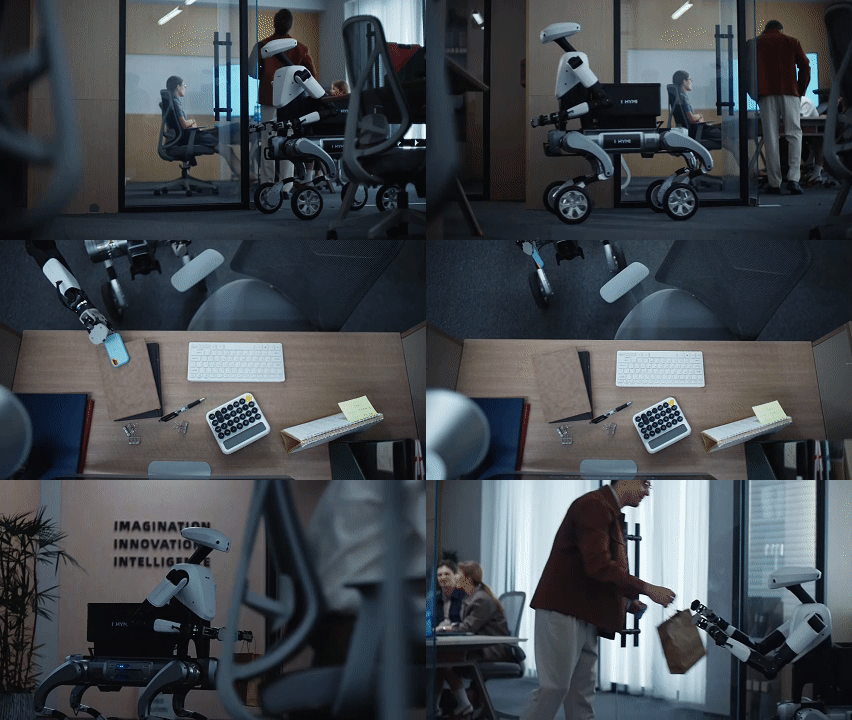
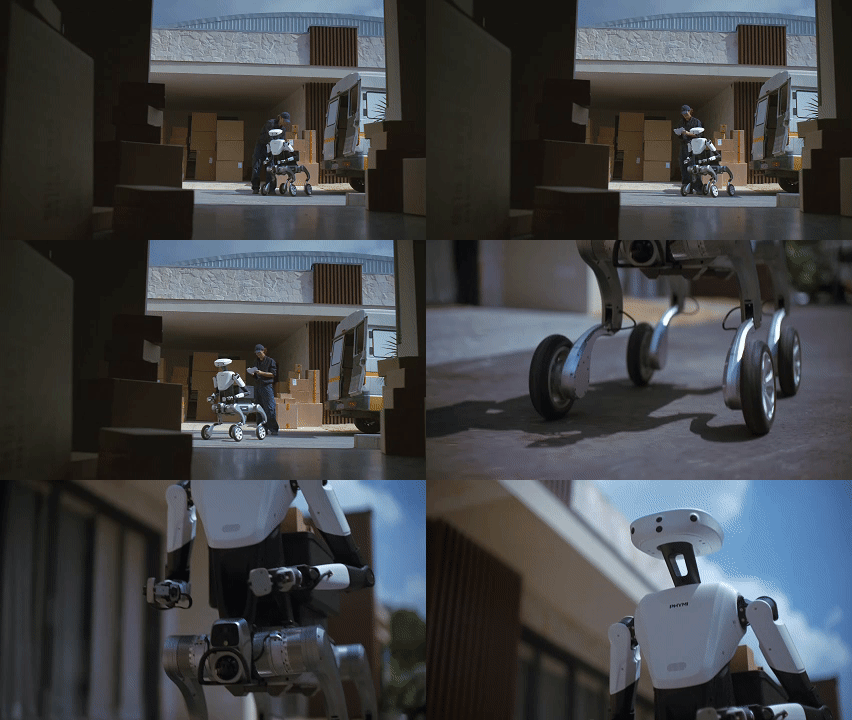
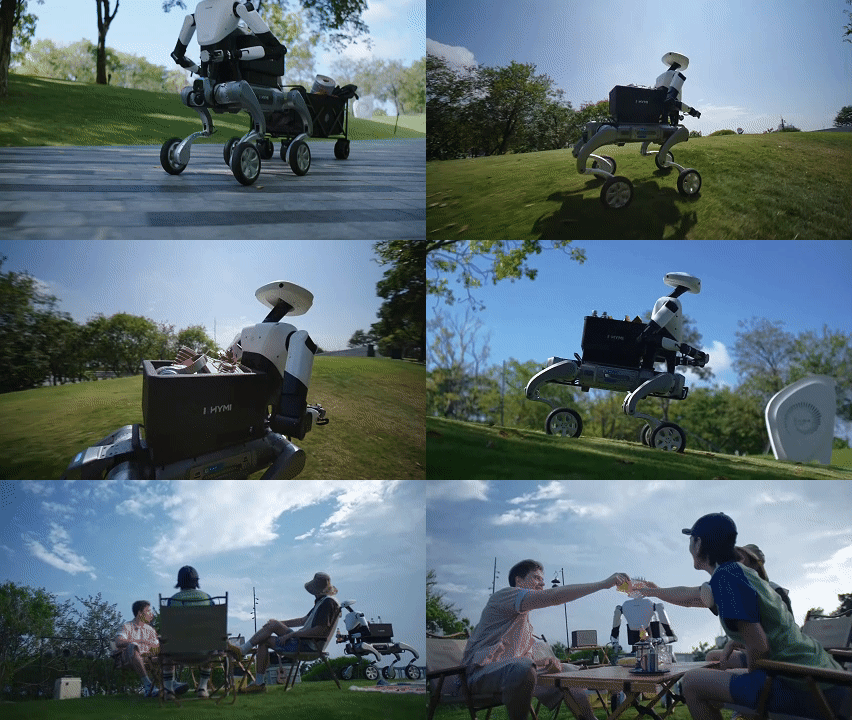
None of these three scenarios involve complex tasks. What they share is the need for the robot to switch back and forth between moving, manipulating, transporting, and handing over. PHYMI has positioned it differently from traditional humanoid robots — as a Physical Agent, or "action partner": not merely executing a fixed action, but understanding human goals, organizing steps autonomously, and adjusting subsequent actions when circumstances change. Smooth demo footage doesn't mean it can already do this autonomously in any unfamiliar environment; temporary obstacles, shifted object positions, or mid-task changes from users all remain to be tested and validated.
Cognition, Behavior, Contact
How BRAIN 1.0 Breaks a Task Down
Having a body isn't enough — when the task changes, the robot still needs to know what to do next.
Cognition Layer — Understand where to pick up from and who to deliver to, organizing task steps;
Behavior Layer — Determine how to move and what actions to take, bridging operational steps;
Contact Layer — Rapidly adjust based on force-tactile feedback and proprioceptive state, avoiding unstable grasps or improper contact.
This is PHYMI BRAIN 1.0, the asynchronous multi-frequency multimodal architecture powering Sagi — three layers each running at their own required frequencies, then coordinating through information connections, balancing long-horizon task planning with local action correction. All three layers above are addressing the same small task: fetching a document for someone. The plan doesn't need to be rebuilt every moment, but physical contact adjustments must be timely.
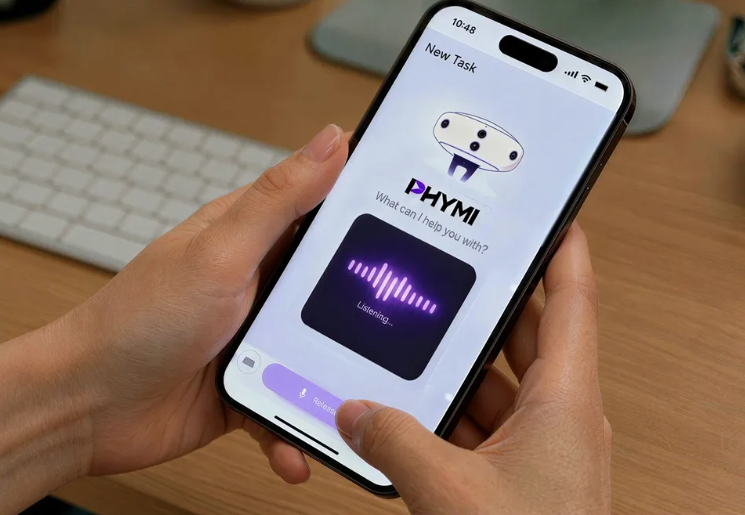
Beyond the model is data. PHYMI has built the PHYMI DATA system and developed a proprietary 360° full-view capture headband that synchronously records environmental image sequences and human motion trajectories during real human activity, which after alignment and filtering is used for training and evaluation; feedback from actual robot execution also flows back in. Connecting humans and robots is PHYMI LINK: state objectives, check progress, change requirements mid-stream — and when information is insufficient or beyond capability, the robot can turn around and ask humans for help. That's the easily overlooked half of what "partner" means.
Price, official delivery timeline, and success rates for extended autonomous operation — PHYMI hasn't disclosed any of these yet. For a robot aspiring to be an everyday helper, completing a fetch-and-deliver in a demo is just the beginning.
Why Sagi takes this form is directly connected to the path Liu has walked. Below is his recent extended interview.
Excerpted from the WeChat account "Zuolin Youli" (by Zhe Tian, edited by Juemin Lin, with some editorial adjustments preserving original meaning)
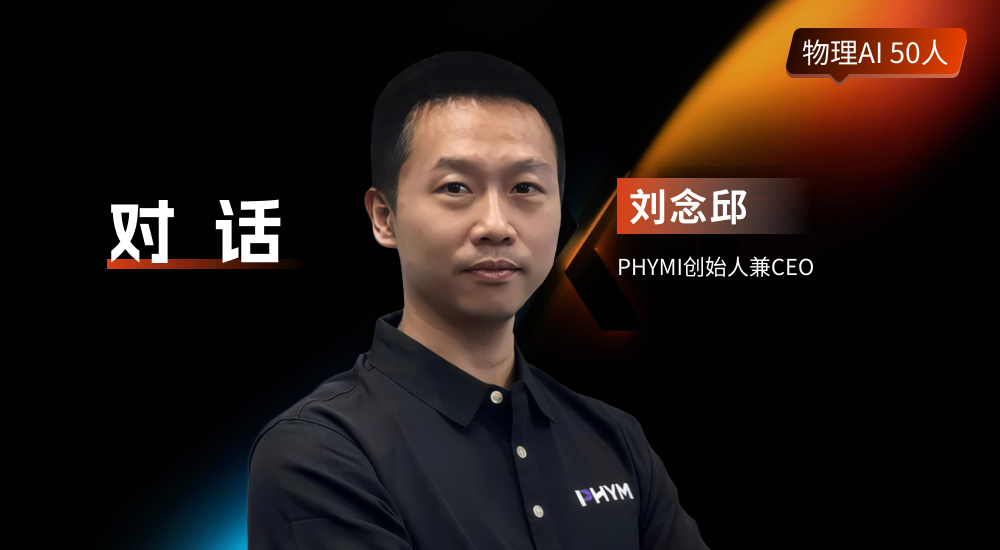
Nianqiu Liu doesn't fit neatly into the typical embodied intelligence entrepreneur template.
He's not an academic from a robotics lab, nor a serial entrepreneur who entered Physical AI only in the past two years. He worked on new process and equipment R&D at Intel, founded startups in IoT and industrial intelligence. In 2018 he joined autonomous driving company DeepRoute.ai, progressing from hardware through to Robotaxi operations, product, data, mass production, and after-sales service.
In 2026, Liu added another identity — founder of PHYMI.
Starting in 2024, he closely tracked embodied intelligence developments, poring over papers and continuously studying upstream supply chains and technical approaches. By late 2025, he judged the timing for entrepreneurship ripe: on one hand, robot supply chains had matured enough that startups no longer needed to expend enormous effort filling gaps in bodies and hardware; on the other, AI-driven technical and data paradigms were becoming clear enough to begin forming genuinely long-term valuable technical accumulation.
Liu prefers to call PHYMI's robots "Physical Agents." He believes robots must ultimately enter open living environments, completing tasks for different people at different times and places.
Over the past two years, the most common embodied intelligence commercialization path has been to first find a sufficiently bounded scenario. Factory screw tightening, hotel deliveries, warehouse moving — define the task clearly first, then engineer and model your way to higher success rates.
Liu doesn't dismiss the commercial value of these scenarios, but his question is: if robots work long-term only in highly defined environments, how much of the capability they accumulate can actually transfer to another scenario?
So PHYMI chose a more ambiguously bounded route — open dynamic scenarios. Commercial districts, office buildings, residences, activity areas — these are all "living circles" Liu hopes robots gradually enter. It might fetch things, buy coffee, take out trash, or step in for parts of a courier's job when they're swamped. The robot isn't predetermined as any single profession, but continuously adapts its tasks based on environment and demand.
PHYMI calls this role "partner." The richer the environments robots enter, the more people, objects, and tasks they encounter, the more likely they are to develop cross-scenario transfer capabilities.
A crucial piece of PHYMI's work this year is initial data collection, with plans to begin multi-point deployment next year, gradually forming a deploy — data — train — redeploy loop for Physical Agents.
Further out lies a problem the entire industry hasn't solved yet: open-world complexity has almost no upper bound. A robot completing 1 out of 10 tasks in a demo, versus being able to complete tasks whenever a user asks, are entirely different standards.
01 DeepRoute.ai's Pivotal Turn
Halting Robotaxi, Betting on Mapless
Zuolin Youli: DeepRoute operated Robotaxi in Shenzhen for a period and had built up a core user base. Why shut it down?
Liu: We operated for over a year. We were actually among the earliest doing unmanned taxi operations in downtown CBD areas.
Later we concluded that the HD map-based approach had no future, and prepared to go mapless. As a startup, you can't execute both paths well, and we didn't have sufficient resources, so we decided to halt Robotaxi and go all-in on mapless.
That's also why we were the first to launch a no-HD-map solution. Many people didn't believe it at first, until we landed production contracts.
Zuolin Youli: When did you first sense the HD map route was a dead end? What specifically did you do in the decision to halt Robotaxi and pivot to mapless?
Liu: In 2021, I began thinking about the viability of continuing to develop that business.
Because I was directly responsible for operations, I was quite clear on actual operating costs, and would continuously examine how this business could develop and whether it could work at scale. Based on these realities, I began raising the idea of adjusting direction within the team.
I mainly combined the problems I saw on the operations side with R&D's judgments. The final direction choice was discussed and decided collectively by the core team.
Zuolin Youli: You invested tremendous effort in Robotaxi operations. When DeepRoute actually halted Shenzhen Robotaxi, what wrap-up work were you responsible for?
Liu: It was a gradual wind-down process.
After deciding to pull out, we gradually reduced fleet size rather than shutting everything down the same day we made the call. There was still a small group of fairly loyal users at the time, and customer service reached out to explain the situation and walk them through it.
The product work that had been oriented toward Robotaxi operations began pivoting toward mass-production products and OEM partnerships. The team started rethinking: for L2 assisted driving, what features should the product have, how should it operate under different road conditions, and how should it disengage? The concerns were already quite different from the ones we'd had when building products around Robotaxi operations.
The focus during that period was twofold: on one hand, gradually winding down the original operations business; on the other, redirecting product work toward the new mass-production direction.
Zuolin Youli: The shift from HD map-based to mapless autonomous driving — what did that mean for the entire technical architecture?
Nianqiu Liu: It was basically a complete rebuild.
The previous map-based version was fairly conventional: perception, prediction, tracking modules, plus HD map-based localization, plus planning and control.
Going mapless dramatically expanded the boundaries of perception — it basically absorbed map localization into itself — and became extremely tightly coupled with planning. The entire data requirements changed too. So it was a very significant architectural overhaul.
Zuolin Youli: When developing the mapless solution, what specific tasks were you responsible for? What did Maxwell Zhou and other core executives handle?
Nianqiu Liu: On my side, the more important work started with sensor scheme adjustments.
After shifting to mapless, the system became more visually dependent to some degree. In mass-production projects, we needed to reconsider how to select and configure sensors to satisfy subsequent algorithm requirements while also being suitable for mass production.
Another piece was building out the data production system. Once the solution became more data-dependent, we needed to establish systems for how data gets produced, how to coordinate with external partners, and how to control costs. I was involved in this work as well.
Everyone had a basic consensus on direction. Specific ideas would get proposed and then discussed together. It wasn't a situation where one person could see something that everyone else couldn't. In actual execution, it was more about surfacing problems from different areas and jointly discussing how to solve them.
Zuolin Youli: For something that no one in the industry had done before, how did you set deadlines at the time?
Nianqiu Liu: It's hard to set a particularly rigorous deadline for a research project, because no one can be certain that results will come by a specific time.
It was more about everyone going all out, constantly judging which path was right, and then rapidly validating.
For example: how to perceive roads, how to understand road structure, how to do data annotation — the method you settled on today, you might collect data and test tomorrow and find it doesn't work, and switch to something new the day after.
What we emphasized then was moving fast, adjusting fast, failing fast.
Zuolin Youli: How did you fail fast?
Nianqiu Liu: First define the model architecture, then decide how to collect data, how to label it, how to train it, then run it and see if there are problems.
When problems arise, immediately diagnose: was the road understanding wrong, or was the understanding correct but the planning wrong? If the understanding was wrong, was it a model capability issue or a front-end data issue?
The whole process was constantly breaking down problems. So as long as we had compute, we basically wanted the compute to keep running when people rested.
Zuolin Youli: DeepRoute, as a startup, concentrated all resources on challenging something no one in the industry had done. Was the team under intense pressure at the time?
Nianqiu Liu: Wherever problems flowed, things got tight there.
It wasn't that everyone in the entire company never rested, but core departments basically had no fixed days off. After the team scaled up, there were also engineer rotation and back-to-back work mechanisms.
But the truly core judgments ultimately still converged on a fairly small number of people, because there actually weren't many people who had a clear understanding of the problems.
Zuolin Youli: From deciding to go mapless to actually landing a designated project, how long did it take?
Nianqiu Liu: About a year.
But the pressure actually got bigger after landing the designated project, because the next step wasn't proving the technology could work — it was figuring out how to mass-produce it. When we were doing Robotaxi before, things were relatively more relaxed. After shifting to mapless and then mass production, the pressure on the entire team clearly increased.
Zuolin Youli: There was a lot of external skepticism about mapless at the time. What did you think?
Nianqiu Liu: I thought it was perfectly reasonable.
At that point in time, within the areas already covered by HD maps, traditional map-based solutions would definitely perform more maturely. Mapless was more about proving future possibilities.
Moreover, many peers were themselves in the HD map industry and would naturally resist it. Also, just because others hadn't done it, they couldn't immediately acknowledge that your solution was good just because you did it.
But looking back, I think mapless was a turning point for the entire industry. In the past, urban intelligent driving could only be used in a handful of cities. It was only when mapless began large-scale deployment that consumers felt this was something they could actually use where they themselves drove.
Zuolin Youli: When the first "flatbed truck test" happened, what role did you play?
Nianqiu Liu: Compared to the so-called "flatbed truck test," what left a deeper impression was a modification of a mainstream, well-known vehicle before we landed the designated project with a top tech company.
At the time, the other party had already experienced our vehicles and was interested in DeepRoute's capabilities and solution, but wanted to see how this capability would perform on a mainstream, well-known model. They gave us a vehicle without intelligent driving and hoped to experience DeepRoute's solution on their car as soon as possible.
I remember the entire modification process took less than two days. The vehicle arrived without the corresponding intelligent driving system installed. We needed to cut holes, replace glass, add controllers and sensors, restore the vehicle, connect the algorithms, and go out for road testing and evaluation. Everyone worked in shifts during those days, continuously connecting these tasks.
On the hardware and delivery side that I was responsible for, I needed to translate the customer's experience requirements into an actual vehicle: install sensors and controllers, connect the system, then coordinate subsequent testing and problem resolution.
In a very short time, the customer saw us transform a traditional vehicle they provided into a prototype capable of autonomous driving testing. This demonstrated the team's execution and delivery capabilities to them, and increased their confidence in our continued push toward mass production.
This modification certainly didn't equal completed mass production, but it allowed the customer to judge whether this team could face actual vehicles and actual problems and push things forward. I understand that customer trust in the team was gradually built through processes like this.
Zuolin Youli: But customer recognition doesn't equal mass production. From "mapless can run" to "mapless can be mass-produced," what was the hardest problem you personally had to solve?
Nianqiu Liu: For me, the biggest challenge was system integration and coordination with OEMs.
In the R&D phase, we used a system we built ourselves. As long as the software could run in the R&D environment, we could conduct tests. But entering mass production, we had to work with the automaker to clearly define a massive number of engineering details, including diagnostic signals, signal matrices, middleware communication reliability, and function safety-related exceptions and handling mechanisms.
Additionally, there were quality assurance, version management, and after-sales coordination. In the past, automaker after-sales were more accustomed to handling problems where a certain component was damaged. Intelligent driving system diagnostics required both parties to jointly work through and establish a corresponding after-sales diagnostic system.
This work allowed us to complete the full mass-production engineering process once. Beyond algorithms, there were numerous system, quality, and collaboration issues to resolve. For me, what was particularly stressful at the time was connecting all these links with the automaker, so that capabilities developed in R&D could truly enter the mass-production delivery system.
02 The Making of an Embodied AI Entrepreneur
Zuolin Youli: Your connection to autonomous driving actually started earlier than many people imagine. You originally got your start building autonomous driving hardware for Maxwell Zhou (DeepRoute.ai founder and CEO). Can you tell this story from the beginning?
Nianqiu Liu: I really started working on intelligent driving around 2017. At that time, I was helping Maxwell Zhou and others build autonomous driving hardware. They were more algorithm-focused at the time, and needed someone to coordinate on the hardware engineering side. I had been working on industrial intelligence through entrepreneurship, so a lot of the early equipment on the vehicle roof — LiDAR, controllers, and so on — was built by us for them. 2017 counted as my entry into intelligent driving, and I began understanding what intelligent driving actually was.
In 2019, DeepRoute raised what was then one of the larger single funding rounds domestically, and invited me to join. I thought it would be a good opportunity to learn deeply, so I officially entered the intelligent driving industry.
Zuolin Youli: Before this, your background actually seems quite far from autonomous driving?
Nianqiu Liu: I had previously founded companies doing IoT, industrial intelligence, and automation. At Intel, I was responsible for new process and new equipment development on a global scale.
It sounds different, but the technology is fundamentally quite similar. Detecting materials and environments on production lines requires sensing systems, plus a control system — there are many parallels with intelligent driving later on.
Zuolin Youli: When you first joined DeepRoute, what was the company roughly like?
Nianqiu Liu: A few dozen people. Basically core technical personnel who had previously worked together. Everyone thought the project was promising and the people were solid, so they kept at it.
Zuolin Youli: What were you specifically responsible for at DeepRoute at the time?
Nianqiu Liu: Whatever was needed.
The core team was mainly working on perception, planning, and map localization. I was responsible for hardware and engineering. I basically built the entire hardware team in the early days.
Zuolin Youli: So what was the first task you received?
Nianqiu Liu: The first task I received was to build a hardware synchronization controller for different sensors on the vehicle.
At the time, the vehicle needed to use mechanical rotating LiDAR, integrated navigation systems, and industrial cameras — not the automotive cameras we have now. These devices originally came from different industries and each had different operating modes: LiDAR had scanning cycles, integrated navigation had its own frequency and timing requirements, cameras had exposure and trigger conditions. To use them in the same autonomous driving system, they needed to trigger at specified time points and have their collected data timestamps on the same timeline. The synchronization precision required at the time was better than 1 millisecond.
The hands-on work I did was to first understand the characteristics of these devices, then design a circuit system to interface with various sensors and complete interaction and synchronization control. Unifying multiple devices' timelines to the millisecond level.
At the time, autonomous driving R&D was still modularly divided: perception, planning, mapping and localization teams, each with their own responsibilities, taking on different modules. I was mainly responsible for the hardware side.
Zuolin Youli: Many core members at DeepRoute in the early days had their own divisions, but it seems like yours kept expanding. How did that happen?
Nianqiu Liu: I think the most critical change was moving from hardware R&D to external delivery.
DeepRoute initially only had an R&D team. When products were built and began interfacing with partners like Dongfeng, someone needed to be responsible for vehicle modification, delivery, and subsequent operations. I was responsible for hardware R&D at the time, so vehicle modification and delivery naturally fell to us first. As we did this work, we gradually took on operational coordination and operations management as well.
As the business moved forward, we also needed to actively seek new partnership opportunities, so my work gradually extended to business development and commercial expansion. Later, when shifting to mass production, the work further involved product, quality, data, and after-sales.
Zuolin Youli: Your responsibilities kept growing. Who was handing you these things?
Nianqiu Liu: This wasn't a situation where someone handed me an entire set of responsibilities on a particular day. It was that the company reached a stage where someone needed to take these things on. I had previous entrepreneurial experience and was also fairly willing to engage with customers and partners, so I followed the business needs and did what was required. For me, the process of expanding responsibilities was continuously picking up what came after the technology was built.
03 Following Embodied AI for Years
Why Start a Company Now?
Zuolin Youli: You were in autonomous driving for years. When did you start seriously paying attention to Physical Agents?
Nianqiu Liu: 2024.
That was when Figure and Unitree's H1 started showing up frequently in public view, though people were mostly demoing walking and stair-climbing. Robots didn't walk as naturally back then.
I've always been personally interested in robots, so I began looking more carefully at where the industry stood and where it was headed.
Zuolin Youli: At what point did you feel Physical Agents had real startup potential?
Nianqiu Liu: By 2025, it started feeling mature enough to focus on actually getting work done.
I spent a lot of time reading technical materials and understanding the upstream supply chain, and I could see that the old approach — accumulated expertise plus optimized control — was shifting toward genuinely AI-driven Embodied Artificial Intelligence.
Before late 2025, most efforts were still exploratory, targeting specific tasks. After 2026, people increasingly started talking about heterogeneous data, multi-source data, generalization.
Go in too early, and you burn resources on specialization and exploration without necessarily building core advantages. Go in too late, and others have already accumulated those advantages.
Right now, I think people have mostly formed understanding — there isn't yet a huge time gap.
Zuolin Youli: The industry entering its window is one thing. Why did you personally decide to leave and start something now?
Nianqiu Liu: One reason is supply chain maturity. When building embodied systems, you're no longer constrained by weak robot bodies and supply chains like in the past, having to spend enormous energy filling those gaps.
Another is that the technical and data paradigms are gradually becoming clear enough to start building real accumulation.
Zuolin Youli: Some intelligent driving companies are doing Embodied Artificial Intelligence now. Why not build this inside DeepRoute.ai?
Nianqiu Liu: Embodied AI requires extremely high resource investment, intense focus, and large numbers of excellent people.
Also, for me personally, at DeepRoute I'd basically gone through 0 to 1, 1 to 10, and 10 to 100. Many departments were already established and operating systematically.
What I'm good at couldn't generate particularly differentiated value at DeepRoute's current stage. For me, rather than "lying flat" there, it made more sense to do something from 0 to 1 and 1 to 100 again at a point where industry conditions were maturing.
Zuolin Youli: Did any former DeepRoute colleagues come out with you?
Nianqiu Liu: Almost none. We're basically building the team from scratch.
But what I brought from DeepRoute is know-how: large-scale data flywheels, technical judgment, engineering, planning.
Having this project experience changes the logic of how you build a new embodied team.
Zuolin Youli: What's the biggest advantage of someone who's been through the full autonomous driving cycle, coming into embodied AI?
Nianqiu Liu: One crucial experience is going from demo to engineering to real deployment.
Robots are already in the middle-to-late demo phase. The next step will definitely be about how to deploy.
By deployment, I don't necessarily mean mass production immediately — it's about moving from "can be shown" to "can be used."
Succeeding 1 out of 10 times, or picking the one good performance out of ten scenarios to film, is completely different from a user being able to use it whenever they come.
At this stage, what matters isn't just the upper limit of single-point capability, but the floor across a range of scenarios.
Another experience: when the technical paradigm shifts, can the organization shift with it?
DeepRoute's transition from map-based to mapless was extremely painful because the entire organization had been built around map-based. Robots will definitely face similar problems — the current technology isn't the end state.
Finally, scale. Technical advantages ultimately need to convert to commercial advantages, which also requires ecosystem, operations, and business management.
04 Physical Agent as Partner, Not Tool
What PHYMI Wants to Build
Zuolin Youli: PHYMI defines itself as building Physical Agents. Why not use the more common term Physical AI?
Nianqiu Liu: Physical AI, to me, represents a capability, not a productive force.
What we want to build is a physical-world Agent — like digital-world agents, it assists people in completing tasks, and people can also help it grow when necessary, to accomplish tasks in people's lives and solve concrete problems.
It needs decision-making in cognitive space, planning in action space, fine alignment in contact space, and memory.
So we feel it's more like an Agent.
Also, "Agent" is more direct for users — it's something that can do work for me, not just a concept.
Zuolin Youli: What is PHYMI most focused on at this stage?
Nianqiu Liu: Deployment in open, dynamic environments.
No one can say which model is the final answer yet, but whatever the model, it ultimately has to learn in the actual environment where you'll use it to work in that environment.
Zuolin Youli: Why not start with relatively closed, single scenarios like factories or hotels?
Nianqiu Liu: You have to balance single-product deployment with long-term technical roadmap.
If you're tightening screws in a factory every day, doing it excellently doesn't mean you can deliver takeout on the street tomorrow — there's no natural transferability.
We want Physical Agents to face more open, real environments from the start, encountering diverse people and scenarios.
Today it might deliver food, tomorrow packages, the day after it might clean. It can move things in a café and do similar tasks on the street.
Capabilities accumulated this way will be more transferable.
Zuolin Youli: So your concept of "life-circle partner" is essentially this logic?
Nianqiu Liu: Yes. Different people, at different times and places, have different needs.
Someone might pay to have their trash taken out. Camping in a park, you need someone to clean up the site. Out somewhere and suddenly want coffee with none around — someone has to walk far to buy it.
These are all real needs. A Physical Agent isn't fixed to a single job position, but operates within a life circle, helping different people according to demand.
Zuolin Youli: Why "partner" and not just tool?
Nianqiu Liu: Because especially early on, it won't always be robots helping people — people will help robots too.
A robot walks a kilometer and can't find its way; the user can look through its eyes and tell it which way to go. At a restaurant with many bags, it doesn't know which is yours; the person can help it judge.
As capabilities improve, the proportion needing human help will decrease, and the proportion of robot-helping-human will increase.
That relationship feels more like a partnership to me.
Zuolin Youli: Before robots enter life circles, do they need mapping or heavy upfront deployment like early autonomous driving?
Nianqiu Liu: No. We don't even use HD maps for intelligent driving anymore — Physical Agents definitely can't use them.
HD maps themselves have many problems, especially in open environments with constant pedestrian traffic and ongoing change — they're very hard to maintain long-term.
We want to go data-driven, letting robots continuously evolve like humans.
Zuolin Youli: Why are you so opposed to using engineering hacks to solve problems quickly?
Nianqiu Liu: I think this is a crucial point of being AI Native.
In intelligent driving's past, extensive rule-writing worked well when boundaries were small. But once boundaries expand, every added rule can affect other scenarios — it's very hard to guarantee the whole system stays stable.
If today you keep adding engineering rules to deploy faster, problems get solved short-term. But once you have tens of thousands of users, you have to keep maintaining that system, and it eventually shifts from advantage to burden.
So we have to go the data-driven AI route, letting Physical Agents continuously learn and evolve through real tasks.
Zuolin Youli: What's PHYMI's product timeline for this year and next?
Nianqiu Liu: This year we'll release our own robot body, plus a large model version, and start doing some deployment demonstrations. Also critically important this year is initializing data collection — we have our own collection equipment.
Next year we begin multi-point deployment, truly launching the loop from deployment to data back to model.
Zuolin Youli: If the goal is robots entering human-designed living environments, why does the product need to retain fairly strong humanoid characteristics?
Nianqiu Liu: Because we want it to do all kinds of work, and we want it to walk itself to where the work is.
So the core is needing hands, a head, and visual height close to human. If the robot is too short, it always sees under tables, never the tabletop — completely different from human perspective.
It also needs legs. Not necessarily parkour right now, but ordinary stairs and small obstacles people encounter daily — it has to get past them.
As for quadruped wheeled versus biped, each has advantages. Wheeled is more stable, safer, and higher payload early on; biped takes less space and can enter more crowded places.
Our core isn't looking human, but being able to enter these environments and complete tasks like humans.
Zuolin Youli: What is PHYMI's true long-term technical moat?
Nianqiu Liu: Most core is still technical advantage.
Put simply: the robot has to perform well.
In the past, we won intelligent driving projects essentially because our product performed well, and at that stage only we could provide a mapless solution.
It's the same with robots. Users ultimately have to feel that this solution really solves their problem.
Long-term, many companies will certainly get there. We want to be among the first, converting technical advantage into commercial advantage.
Closing Notes
Nianqiu Liu said two things that stuck with us.
One, recalling when he first joined DeepRoute.ai: he described his state as: "Whatever was missing, I did."
The other, explaining why he'd start over after having gone through 0 to 1, 1 to 10, and 10 to 100 at DeepRoute: "Rather than 'lying flat' there, it's better to do something from 0 to 1 and 1 to 100 again at a point where industry conditions are maturing."
The two statements are years apart, but say the same thing. Nianqiu Liu seems to like showing up when something hasn't been fully defined yet.
Early on at Intel, he worked on new processes and new equipment R&D. His first startup, he went into IoT and industrial intelligence when those were still early.
In 2017, he helped Maxwell Zhou and others with autonomous driving hardware. Autonomous driving was far from mature then — a test vehicle carried massive LiDAR, industrial cameras, and integrated navigation, with different devices even running on different time systems.
In 2018, he officially joined DeepRoute. He started with hardware, then moved into delivery, operations, and business development. Later, as DeepRoute shifted toward mass-producing autonomous driving solutions, product, quality, data, and after-sales support all became part of his portfolio. While many people's careers follow a single specialty deeper and deeper, Nianqiu Liu's path kept expanding the boundaries of what he could do.
With PHYMI, Liu has chosen yet another problem whose edges are hard to define in advance. He wants robots to enter commercial districts, office buildings, and residential communities — fetching things for people one day, buying coffee the next, maybe taking out the trash the day after. The environment won't be pre-arranged for them, and the tasks won't stay the same. In a way, it's a lot like much of what he's done before.
We asked him which moments in the past made him feel like something had truly been accomplished. His answers: 1) When Robotaxi started getting real ride requests, and some people became loyal users; 2) Later, when mass-production deals were secured and the system actually reached users through one new car after another.
"At the core, it's still about the product being recognized by others."
This also explains many of Liu's judgments about robots today. Rather than one stunning demo, he cares more about whether a robot can move from occasionally completing tasks to being reliably available at any moment.
Liu's understanding of entrepreneurship is simple — it doesn't have to mean being the boss. It's about seeing what's missing in an ecosystem, identifying what truly matters, and then figuring out if you can build it.
So when asked what he hopes PHYMI will look like in three years, Liu didn't talk about market share or give some grand number. He said he hopes that in many places, people will actually be using their "partner."
Some people excel at taking something already proven and making it bigger. Others prefer to stand at the moment when something hasn't fully taken shape yet, summon their courage, and try to build it. Nianqiu Liu is probably the latter.