Yunqi Capital Backs Zhudong Technology to Advance Brain-Computer Interface Clinical Applications | Yunqi Partners

Sets Record for Brain-Computer Interface Angel+ Round
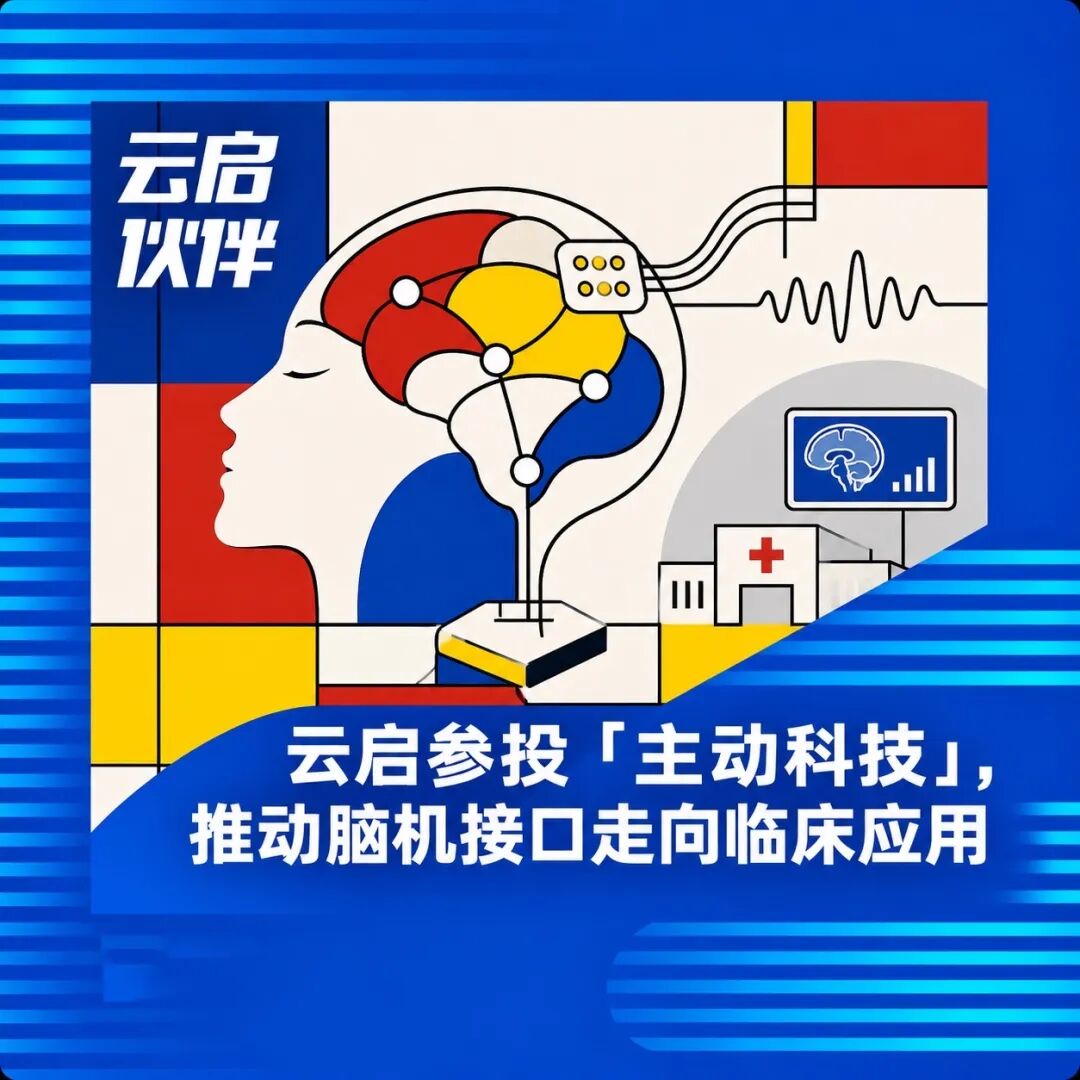
Zhudong Technology was incubated by Lingang Laboratory, building full-stack in-house capabilities spanning flexible electrodes, dedicated chips, encoding/decoding algorithms, and system integration. The company is advancing three product lines — motor, visual, and emotional — with its flagship product Tianshu targeting motor and speech impairments caused by stroke, spinal cord injury, and ALS. Less than a year since founding, it has completed two funding rounds — angel and angel+ — totaling roughly RMB 800 million, with participation from the Yunqi-SJTU AI Angel Fund.
In this edition of "Yunqi Partners," we take a closer look at Zhudong Technology. We continue to follow the journey of invasive brain-computer interfaces from laboratory to clinic.

Yunqi Capital's Perspective:
Brain-computer interfaces represent a critical frontier where artificial intelligence intersects with life sciences, with the potential to unlock new breakthroughs in human-computer interaction. Invasive brain-computer interfaces carry exceptionally high technical and industry barriers. Drawing on the cutting-edge research积累 of a national laboratory, Zhudong Technology has built full-stack technical capabilities covering flexible electrodes, dedicated chips, encoding/decoding algorithms, and system integration, achieving leading progress across multiple therapeutic indications.
Recently, Zhudong Technology announced the completion of an RMB 464 million angel+ round. The round was co-led by Gaorong Ventures, Shanghai SDIC Pioneer Fund, and Shanghai Science and Technology Innovation Group, with Yunqi Capital, Bayland Capital, China Internet Investment Fund, Guotai Haitong Securities, Shanghai Pudong Venture Capital, Shanghai Science and Technology Innovation Fund, Guangzhou Pharmaceutical Capital, and Minjin Investment participating as follow-on investors. Existing shareholders also added to their stakes.
The proceeds will fund continued R&D in invasive brain-computer interfaces, clinical translation, and industrialization efforts, while creating conditions for further industry partnerships. Based on publicly disclosed financing information to date, this round sets a domestic record for angel+ funding in the brain-computer interface sector, and the combined angel and angel+ total also sets a record for cumulative angel-series financing in this space.
On August 3 of this year, Zhudong Technology announced its RMB 330 million angel round; less than three months later, the angel+ round garnered support from both new and existing shareholders, bringing the two-round total to approximately RMB 800 million.
Founded in February 2026 and incubated by Lingang Laboratory, Zhudong Technology focuses on the R&D and commercialization of invasive brain-computer interface technology. Oriented around clinical needs, the company has developed in-house capabilities spanning flexible electrodes, dedicated chips, encoding/decoding algorithms, and system integration — with core links under autonomous control — and has established three brain-computer interface product lines: motor, visual, and emotional.
All three product lines share the same electrode, chip, and algorithm foundation; engineering experience gained on the motor line can be transferred to the visual and emotional lines. This platform approach — rather than a single-product strategy — shapes how the company invests in R&D: nail the underlying technology first, then deploy across different clinical scenarios.
Among the three, the motor brain-computer interface is the most advanced. The flagship product Tianshu addresses motor and speech impairments caused by stroke, spinal cord injury, ALS, and other conditions, helping patients rebuild motor function and their ability to interact with the outside world. In November 2025, the 1024-channel invasive brain-computer interface system developed by the company's core team received type inspection certification, laying groundwork for subsequent clinical research and product translation. The visual and emotional lines are being developed in parallel, drawing on the team's scientific research积累 in relevant fields to address distinct clinical needs.
In the next phase, the company will continue advancing core technology R&D and clinical translation across all three product lines, while building out its R&D, production, and quality management systems to strengthen engineering and industrialization capabilities. While focusing on Class III medical devices and patient needs, it will also explore the integration of brain-computer interfaces with artificial intelligence and embodied AI.
The above is adapted from the WeChat account VBData, edited by Dong Liu.