云启资本

云启资本

@yunqipartners

科技常新,寻找未来开创者

534 articles18 episodes

Articles

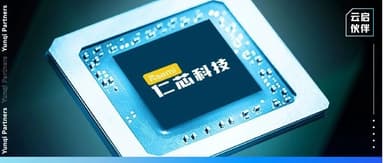
A Deep Dive into 70 Years of Optical Computing: What New Breakthroughs Await Beyond Moore's Law? | Yunqi Science --- In 1965, Gordon Moore, then director of the R&D laboratory at Fairchild Semiconductor, published an article in *Electronics* magazine titled "Cramming More Components onto Integrated Circuits." In it, he made a bold prediction: the number of transistors on an integrated circuit would double approximately every year, with computing power growing exponentially while costs declined. This observation, later refined to a doubling every 18–24 months, became the famous "Moore's Law" that has driven the semiconductor industry for nearly six decades. However, as transistor sizes approach the atomic scale, the physical limits of silicon-based electronic computing are becoming increasingly apparent. Heat dissipation, quantum tunneling effects, and manufacturing costs are all pushing traditional computing toward a wall. In this context, optical computing — using photons instead of electrons as information carriers — has emerged as one of the most promising paths beyond Moore's Law. This article traces 70 years of optical computing development, examining its technical principles, key breakthroughs, and the new frontiers it may open in the post-Moore era. ## The Physical Advantages of Photons Why light? The answer lies

A Deep Dive into 70 Years of Optical Computing: What New Breakthroughs Await Beyond Moore's Law? | Yunqi Science --- In 1965, Gordon Moore, then director of the R&D laboratory at Fairchild Semiconductor, published an article in *Electronics* magazine titled "Cramming More Components onto Integrated Circuits." In it, he made a bold prediction: the number of transistors on an integrated circuit would double approximately every year, with computing power growing exponentially while costs declined. This observation, later refined to a doubling every 18–24 months, became the famous "Moore's Law" that has driven the semiconductor industry for nearly six decades. However, as transistor sizes approach the atomic scale, the physical limits of silicon-based electronic computing are becoming increasingly apparent. Heat dissipation, quantum tunneling effects, and manufacturing costs are all pushing traditional computing toward a wall. In this context, optical computing — using photons instead of electrons as information carriers — has emerged as one of the most promising paths beyond Moore's Law. This article traces 70 years of optical computing development, examining its technical principles, key breakthroughs, and the new frontiers it may open in the post-Moore era. ## The Physical Advantages of Photons Why light? The answer lies

"The Future Computer" will have a computing architecture composed as follows —

Podcasts