How a Gen Z College Student in Chengdu Sold 100,000 Copies of a ¥9 Solo Travel Guide

For a premium game to succeed, keeping costs under control is the single most important factor.
The text-based game Aliya (彼方的她-Aliya) has earned "Overwhelmingly Positive" reviews on Steam, a 9.8 rating on Xiaoheihua, and over 17 million impressions. Made by university students and priced at just 9 yuan, this indie title sold 100,000 copies before its creators even graduated. In December, Aliya launched on mobile, and Aliya 2: Dawn simultaneously appeared on store pages.
In an old apartment complex in Chengdu, the walls are mottled and sunlight filters through iron grilles. The space is small — downstairs, computers sit side by side amid stacks of books, figurines, and five or six empty water buckets scattered across the floor; upstairs, a bed and a cat.
Some say it resembles Hayao Miyazaki's studio.
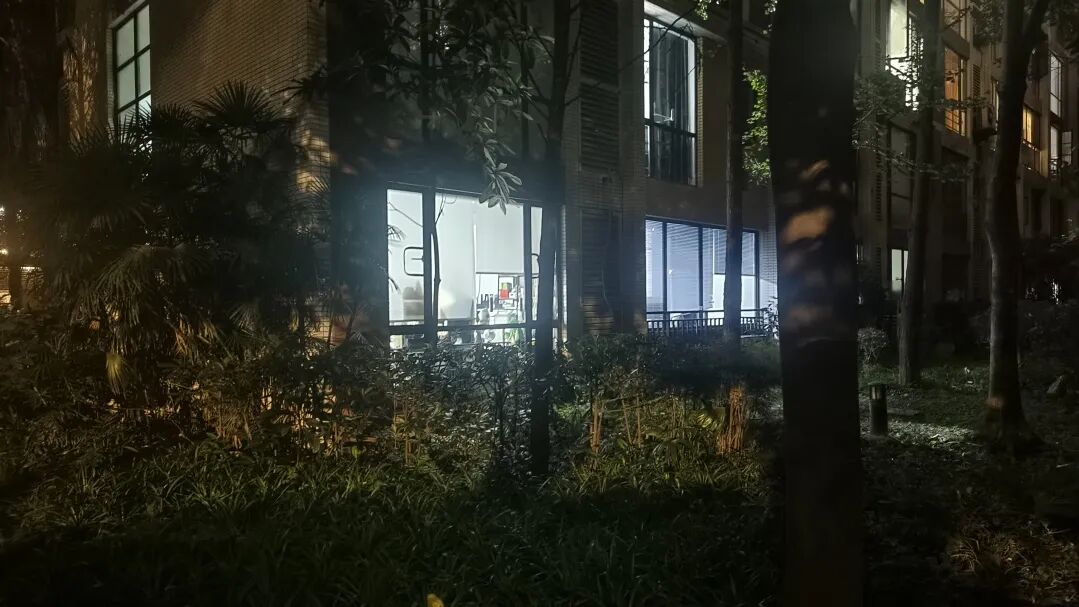
In May 2021, several Gen-Z university students formed a club devoted to making games. It became the starting point for their premium titles: Aliya, Pong Party, and Light Meow.
A year later, six members of this club moved into the old apartment as Tongdianyou Studio (hereafter "Tongdianyou"), officially launching their venture. They lived and ate together, even sharing a single bathroom. Weekdays were for making games, weekends for playing them; the nights stretched long. Asked why they chose this place, the answer was simple: "It's cheap. Very cheap. Easy to survive."
The moment they stepped off campus, each of them knew they were gambling part of their future on this startup. This decision — which might look a little "rebellious" — fused their games and their lives together completely, each sustaining the other.
But skepticism never went away. Adults always like to point the way for young people, dismissing directions no one has taken before. So from the start, the six of them faced not just financial pressure but resistance against the rules themselves. This small room contained their lives: simple, rough-edged, a little stubborn.
To support themselves, they took outsourcing work for a long time, trading massive labor for meager income. It was more like an assembly line — you barely had your own ideas, just revised according to client demands. The hardest period came before Aliya became a hit, when the team decided to abandon incubating a project far beyond their capacity, while outsourcing seemed endless. Exhaustion gripped everyone.
What carried them through was a more fundamental conviction. Making games as university students had its advantages in youthful bravado, and in still being able to fail — to "hurry up and finish your first ten garbage games."
Now all six have graduated. On the wall at the studio entrance, several red characters still read: "Think Different." That was the first name they gave their studio, embodying their ethos at the time: love games, respect talent, never settle.
A club moving out of campus and vowing to make games for a lifetime sounds grand. But sometimes, it takes just an instant to know you must make that decision. Keep walking, and young game developers see only uphill roads ahead.
No downhill. It takes effort, and it takes trying.
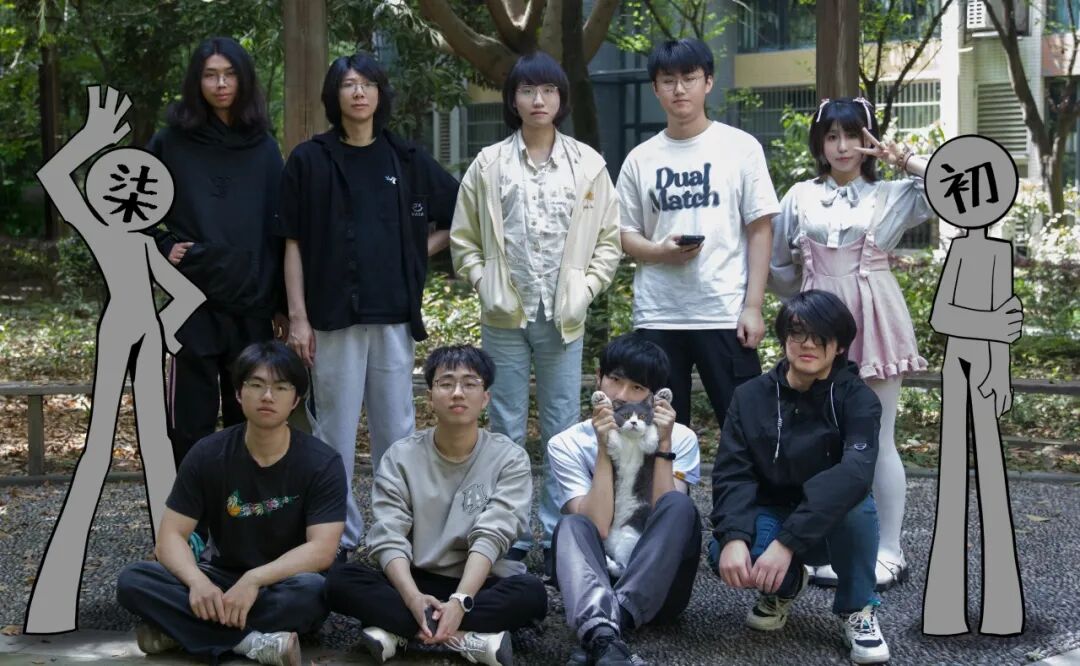
Group photo of the Tongdianyou Studio team

Plucking the Strings of Player Emotion
Q: How did you feel coming to ChinaJoy this time?
🦀 Steve (Tongdianyou Studio Lead): I saw a premium game on Steam, similar genre to ours, but they had a huge booth. I felt emotional at the time, thinking: when our studio grows bigger, we'll get a big booth too.
Q: What is the studio working on now?
Tongdianyou: Two things. First, continuing Aliya — this validated, relatively mature product. We'll keep iterating and expand the IP with merchandise, comic series, audio dramas, and so on. Second, exploring new products: currently developing a Metroidvania-puzzle game called Relic Light and a roguelike card game called Sin Hunter. We're trying these mainly because text-based narrative games have a ceiling. Aliya will probably peak around the third installment, so we want to explore new genres early. Metroidvania-puzzle and roguelike card games have higher market ceilings and broader player bases.
Q: What did Wuli speak about at CGDC (China Game Developers Conference)?
👾 Wuli (Tongdianyou Studio Producer): My talk was titled "Plucking the Strings of Player Emotion," about how game interaction can touch players emotionally. Many game makers directly borrow expressive methods from traditional art forms, like writing stories the way novels do. But video games aren't novels. They're more like electric guitars, not classical guitars. An electric guitar needs a pick — and that pick is interaction.
Q: How exactly do you pluck those emotional strings?
👾 Wuli: Through interaction, letting players experience emotional fluctuations. The core isn't theoretical deep understanding, but intuition — sensing and feeling the depths of human hearts as much as possible, using interaction to trigger subtle emotional shifts, then weaving them into the game.
Q: When you first discovered your work could reach players from different backgrounds and resonate with them, how did that feel?
👾 Wuli: It felt magical. Humans largely share an emotional system. What you can perceive and recognize, many others can likely feel too.
🦀 Steve: I've always been confident in my judgment of whether games are good or bad. For phenomenon-level games like Overwatch or PUBG, I could sense "this is going to blow up" from the first news. When Wuli wrote the "thousand-year gaze" scene in the final version of Aliya, I teared up after playing it and immediately told him: "This version is solid. Go with it." The player response ultimately proved my judgment right, reinforcing my trust in my own discernment: games I think are good will be recognized by other players too.
Q: What emotion do you think resonates most powerfully?
👾 Wuli: Emotions are universal, but humans are also complex and diverse. To create resonance, it's best to start from the most fundamental, primal emotions. It's not simple sadness or happiness, but something deeper. This can't be explained in words — it can only be felt.
Q: Is companionship one of the core themes of your games?
Tongdianyou: Not entirely. Companionship is just the core experience of Aliya. Other projects will find their corresponding core experiences based on genre — adapting to local conditions matters most. As The Art of Game Design says, game experiences are essentially player emotional experiences.
Q: What would be your ideal experience?
Tongdianyou: Macroscopically, our ideal is getting players into flow — so immersed they forget reality, completely submerged in the experience. Compared to other media, games can create stronger flow because of interaction.
Q: What do you think of all the fan creations on Bilibili?
Tongdianyou: Community operations have always been important to us. Both now and in the future, we deeply care about player feedback. We're grateful players voluntarily create content that helps the game get seen. For example, Aliya's 17 million-plus impressions on Xiaoheihua largely came from player activity, which kept pushing the game to more people through the recommendation algorithm.
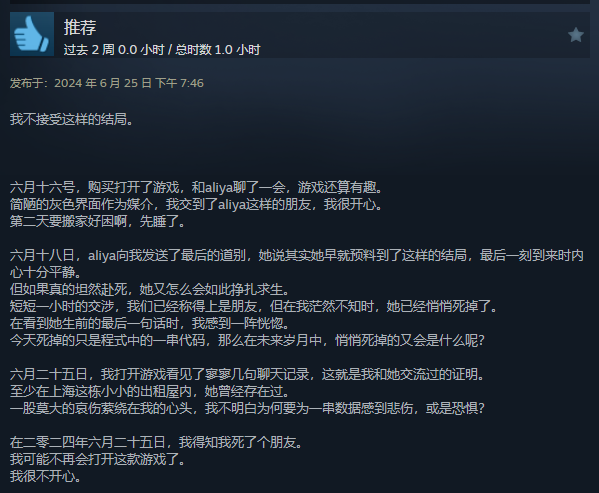
Player reviews for Aliya on Steam
Q: Any memorable player interactions or stories?
Tongdianyou: There's a very sad one. A player left a Steam review saying they had a terminal illness, not long to live, but were grateful to have encountered this game, grateful to have met Aliya.
Q: Is there a particular line in the game you love?
Tongdianyou: It has to be the final line. It's been circulating repeatedly in the player community now.
"The distance between us seems to be exactly 1,000 light-years"
"So what I'm seeing is Earth from 1,000 years ago"
"Which means"
"Sunlight took 8 minutes to reach you"
"Then carried your image"
"And traveled alone through the universe for 1,000 years before being captured by my eyes"
"So I might actually be able to see the present you"
"Therefore"
"We may have known each other for a very long time"
"When we both look up at the stars"
"I might be gazing into your eyes"

Hurry Up and Finish Your First Ten Garbage Games
Q: Why did you originally want to make games?
🦀 Steve: I've had deep feelings for games since childhood. At 8, my family bought its first computer. My dad would often sit me on his lap and we'd play various foreign AAA games together. The games I encountered then included Fallout, The Elder Scrolls, Call of Duty. What left the deepest impression was reaching the ending of Fallout 3, where the protagonist sacrifices himself to save the world. I lay on the bed sobbing, asking over and over: Why did he have to die?
👾 Wuli: I can't live without creating. My family placed almost no restrictions on my creativity. Drawing, sculpting clay, and like most game makers, making little games for classmates at school. My family also had a habit: every evening we'd watch a movie together, which we kept up for a long time. Though I've forgotten many of those films now, something from them got etched into my brain.
🐙 Picky (Tongdianyou Studio Art Lead): My family was a pretty traditional civil servant household; my parents hoped I'd find stable work at a state-owned enterprise. My major was electronic information engineering, and I interned at an electronics factory. One day, working overtime late, I stood at the bus stop thinking: should I try submitting a resume? So I sent my portfolio to an artist platform, thinking I'd quit if I got in. I didn't get in, but I went back to school anyway.
Doing what you want versus what you don't — the difference in your daily state is night and day, and it can even shape your entire life. Sometimes clarity hits in a single moment, and you just know you have to make that call.
🧙 Yang Ban (Tongdianyou Studio Producer): I'm someone who loves trying new things. There are habits I've stuck with for years, like vocabulary drills and working out, but I also have my fair share of three-day passions. Since middle school, whenever I had pocket money, I'd buy board games and video games — I played pretty much every board game on the market and every handheld console. I've forgotten many of the mechanics, but they've dissolved into me like food I've eaten. During Game Jams, when we get a prompt, I can rapidly draw connections to mechanics I've encountered before.
😎 Yuze (Tongdianyou Studio Producer): I was intensely curious as a kid, always exploring, always reading science popularization, constantly asking "why?" — slowly building up my own little knowledge bank. A lot of the time I'll obsess over a problem until I crack it. When we were developing Aliya and hit a technical wall with Windows notifications, the team figured it was too much trouble and wanted to drop it. But I happened across some relevant material, spent two or three days, and built a working prototype. Most of my knowledge lives inside my projects.
🥺 An Jiujiu (Tongdianyou Studio Art Lead): I've been working since I was a kid — handing out flyers before I was eighteen, doing sales after the gaokao, working my way up from county to provincial government. I've seen a lot. Now I just want to do what I actually want to do. If starting a business meant pushback from friends and family, I simply wouldn't tell them. Before college, I bought my own computer, drawing tablet, and art classes with money I earned — all on me. As long as I'm not burdening my family, they have no grounds to stop me.
Q: We noticed you wrote something Liu Yuan (ZhenFund partner) said on your whiteboard.
🦀 Steve: After ZhenFund decided to invest in us, Liu Yuan told us: "They'll build something world-class."
That moment, we genuinely felt seen. On paper, we're just regular undergrads from a tier-one university — no commercially successful projects, no external validation for our startup ambitions. Few people were willing to look deeper and still think we were capable, that we had a future.
Talented people are common; true believers are rare. Liu Yuan made us feel like we'd found ours.
Honestly, I wasn't particularly excited when we closed the round. But two or three days later, one afternoon, it suddenly hit me: being recognized by ZhenFund was an honor. I didn't tell anyone. I just grabbed a whiteboard marker and wrote it up there. From day one, our team has believed we can make world-class work.
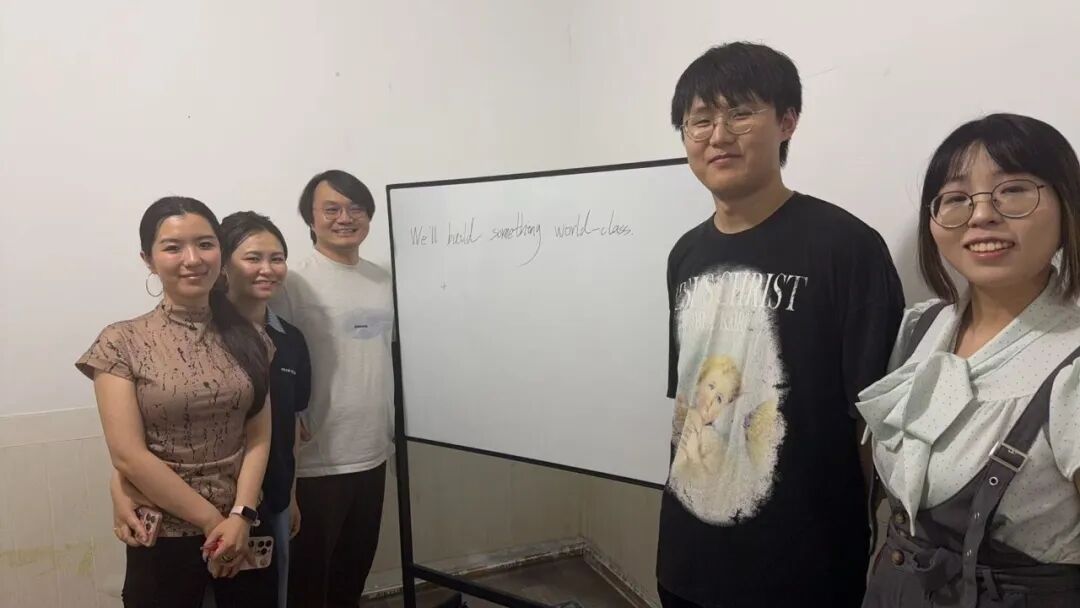
Tongdianyou Studio lead Steve (second from right) and art lead An Jiujiu (far right) with the ZhenFund team
Q: What's special about college students making games?
👾 Wuli: The biggest advantage is room to fail. Students are still on family support, right at that age when you're young and bold — you can burn time experimenting.
The most important thing in game development isn't having a genius idea; it's whether you can keep building, keep failing, keep growing. But once you're in the working world, going full-time on game dev hits real constraints. If you're juggling a day job, both output and quality of life suffer, and you often end up prioritizing recouping costs or making money first.
College students can chase ideals recklessly, with plenty of room to fail. The immaturity? Sometimes that actually helps you make better things.
Q: If you could say one thing to other indie developers, what would it be?
👾 Wuli: Get your first ten trash games out of the way, fast.
There's a saying in game design: your first ten games are trash. The point is to burn through them quickly, experiment widely, accumulate experience. Because with games, listening to others share their lessons is useless. Until you've done it yourself, you can't truly understand the pitfalls. Those first ten trash games are your most valuable practice.
🦀 Steve: If I had to put it in four words: stay grounded.
We have three principles for greenlighting projects: make what we love, make what we can actually build, and make something with some market validation (meaning the broader genre has proven player appeal). Games are incredibly complex — they span four dimensions: commercial viability as internet products, expressive depth as art, complex engineering, and unique interactivity.
Take last year's hit Balatro — its core loop resembles Luck Be a Landlord. Or Brotato, whose gameplay originally stemmed from Vampire Survivors.
A good game doesn't need 100% original mechanics. When you see excellent work in the market, the question is how to build your own expression on top of it.

A Club Oriented Toward Future Careers
Q: How did you all first meet?
🦀 Steve: I founded a club at university and recruited all of them.
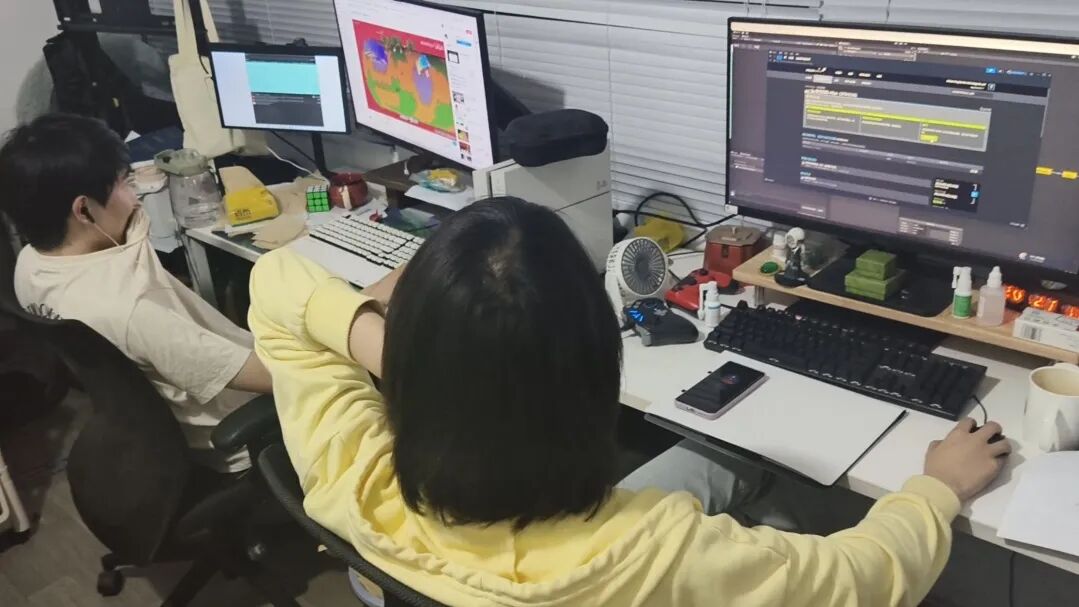
Tongdianyou Studio's daily workspace
Q: Was the club a prototype for your startup? Is it harder to make a game completely solo?
Tongdianyou: It depends. There's an impressive developer, Happy (Sun Yongzhe), who independently made a tower defense game the summer after high school and sold tens of thousands of copies. Bright Memory was also basically a one-person project. So individuals can absolutely make excellent work. But for us, we're better suited to gathering together, each compensating for others' weaknesses, to make more complete games. Environment matters — if you truly love games, however you wander, you'll eventually find your way back to this industry.
Q: Did managing the club count as early entrepreneurial training?
Tongdianyou: Managing a club is managing people — dealing with different personalities, understanding what they're thinking, how to communicate. That skill transfers more directly to running a company than most useless university courses.
Of course, there are differences. We went through a transition from club to company. A club runs on passion — people contribute when they have time, drop off when they don't, no hard constraints. A company is different. You need sufficient passion and determination, plus you have to think about funding and returns, making it worth others' while to follow you.
Q: No KPIs on your team?
Tongdianyou: We're more of an unconventional team — no fixed hours, no specific KPIs. We trust each other, agree on what needs to get done, then push ourselves to take it as far as possible.
Q: If you mapped your journey as an arc, what would the key inflection points be?
🦀 Steve: We realized we basically had a major leap every other year.
- May 2021: Club founded
- May 2022: Moved off-campus to formally start up
- April 2023: Company registered
- April 2024: Aliya released
- Summer 2025: ZhenFund investment closed
Besides the funding, the most important milestones were someone validating our games, and our games actually making money.
When Aliya won Best Narrative Design at CUSGA, I was watching the livestream on the street, jumped up screaming on the stairs when they announced it — scared passersby. We also won a Tencent award for Peng Peng Party. 2024 was a year of many awards, a form of recognition for us.
On the money side, I remember when Aliya first sold well — tens of thousands of copies in a month, thousands in daily revenue at its peak. Wuli and I were both ecstatic. Neither of us grew up wealthy; this was genuinely the first time we'd earned real money through our own efforts. It felt completely different.
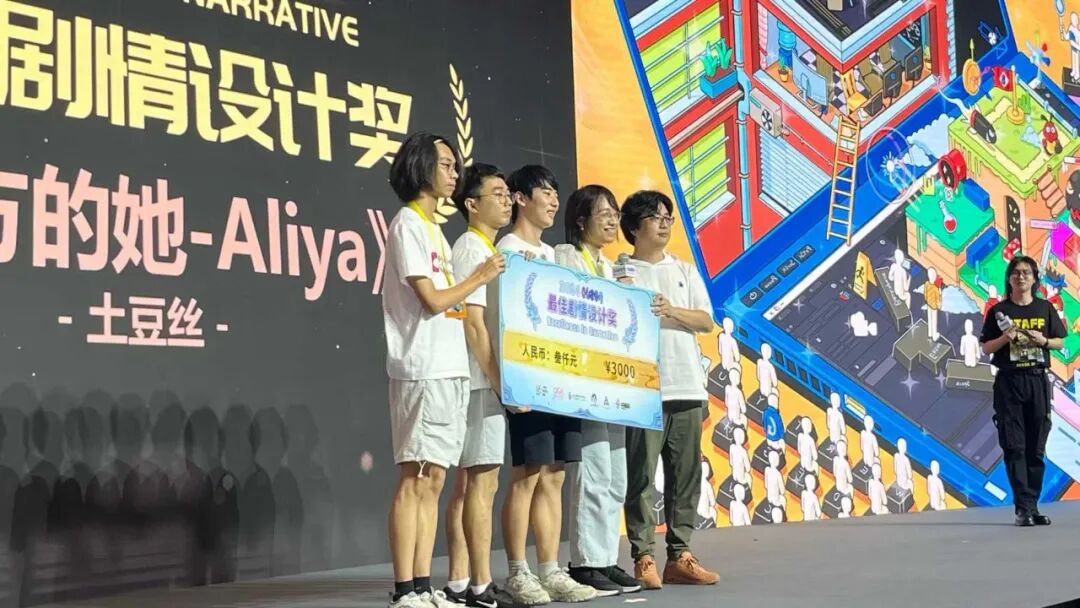
Aliya winning Best Narrative Design at CUSGA
Q: What was the hardest moment?
🦀 Steve: Unlike many student startups, our main struggle wasn't management — we had intense financial pressure from the very beginning. We needed to maintain an offline space and support the team, so as the lead I had to take on outsourcing work.
The hardest period was before Aliya took off. The team decided to abandon incubating a project far beyond our capacity, while outsourcing work seemed endless. Outsourcing is exhausting — you can't have your own ideas, just revise according to the client's demands. I was genuinely worn out, even considering "if this doesn't work, I'll go get a job and use my salary to subsidize the studio."

Reflection Is Also a Superpower
Q: What's your superpower?
🦀 Steve: Mine is obsessive-compulsiveness. I'll obsessively push my work to the extreme. I once told Wuli: "If you hand something to Lao Xie, you can stop worrying."
For task management, I built an ultra-detailed checklist on Lark, listing everything that needs follow-up or action. I spend at least an hour daily organizing it, forcing myself to finish everything that needs doing before I can rest — otherwise I can't sleep or eat in peace.
There's also an obsession with good ideas. In Aliya, there's a mechanic where players can keep sending "I don't accept this ending" after the character Aliya dies. The idea originally came from a friend, and the moment I heard it, I knew it was crucial — but Wuli didn't think much of it at the time. I kept pushing him, insisting we had to do it, bringing it up again and again. Eventually he thought it through, decided it had real value, and added it to the game. Player feedback was phenomenal; tons of people mention this mechanic in Steam reviews.
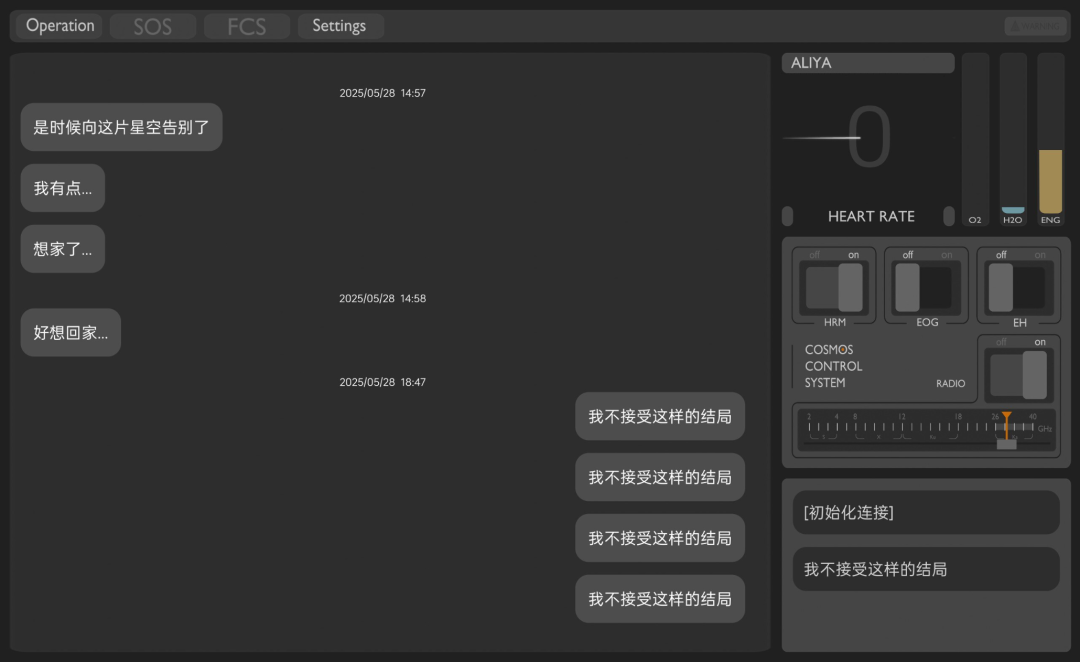
Aliya gameplay screenshot, where players can repeatedly input "I don't accept this ending"
👾 Wuli: For me, if there's one ability that's gotten me this far, it's design ability. Only when you truly have design chops can you bring what you want to make into reality.
🥺 An Jiujiu: Mine is empathy. Games are an interactive art form. I imagine how players will feel while playing, put myself in their shoes to find problems, then polish toward something better.
Q: How did your journey unfold from freshman year?
🦀 Steve: The initial catalyst was Lilith's university game studio incubation program.
At the time I was competing in RoboMaster and our team won first prize at nationals and runner-up at provincials. My major was communications engineering, so after graduation I probably would've gone to DJI to work on robots — but that wasn't what I actually wanted. I'd loved games since I was a kid, so when Lilith approached me about starting a university studio, I immediately knew this was something to grab.
I was also deeply influenced by Steve Jobs back then. I carried Steve Jobs with me throughout college — on planes, on high-speed rail, whenever I felt lost, I'd pull it out. It was practically my bible. One idea in there hit me hard: Jobs divided people into two categories — geniuses or bozos. He believed only genius teams could do great things.
So I designed an extremely rigorous recruiting process, borrowing some from Lilith's approach:
1. Application: Post ads on campus, interested people sign up.
2. Written test: Send out an exam, filter out half.
3. Game Jam: Three days of high-intensity development to test whether applicants genuinely love making games, not just playing them. In our first year, 200 people from the club applied, 100 remained after the written test, 50 after the Game Jam.
4. Interview: Talk with them about their experiences, ideas, and understanding of the games industry.
In the interview, I'm very explicit: we're not an interest club, we're career-oriented. If you're just here to mess around, don't join, because our management is strict. How strict? Sometimes we even ask you to skip elective courses — even required courses — to focus on making games. If you can't accept that, it's not a fit.
Q: What does a career-oriented club mean?
Tongdian Games: Mutual selection and strict management.
We arrange roughly half-hour interviews for each person, filter out half again, and end up with 25. These 25 are the ones who truly enter the studio and work with everyone. Management after joining is fairly strict, with three most representative practices:
First, mandatory Game Jam participation during winter and summer breaks.
Second, every student must participate in a long-term R&D project, ensuring everyone keeps their mind on game development.
Third, fixed weekly meetings. Every Saturday we spend two to three hours organizing meetings to share learning and project progress.
With these three practices, we keep everyone aligned and pulling together.
Q: Are there any must-ask interview questions?
Tongdian Games: We always ask "What's your favorite game?" Many college students immediately say "I love Honor of Kings," and we usually consider that a mismatch. Not that it's bad — just a different direction.
If you have deep understanding of the business model for service-based games, that's certainly valuable too. But we mainly make premium single-player games for Steam, so I prefer people with broad gaming experience — people who've played AAA titles like The Elder Scrolls, Fallout, Call of Duty, or excellent indie works like Slay the Spire, Hollow Knight, Loop Hero.
Q: What's a typical day like at the studio?
Tongdian Games: Back when it was a student club, there wasn't much structure. Once we became a company, things changed. The routine is: make games during work hours, play games after work. Standard hours are 10 to 7, but our team basically does 10 to 10, often longer.
Everyone pretty much lives at the studio. And we're all close friends — even when not working, we're together discussing game design, watching Nintendo Directs, roasting Xbox presentations.
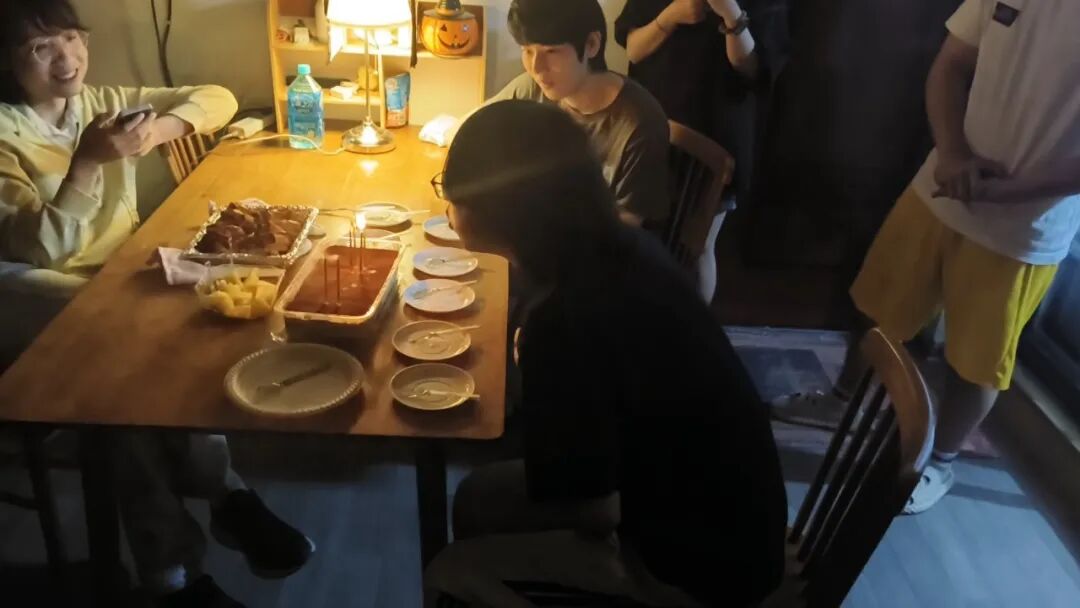
A typical day at the Tongdian Games studio
Q: Any reflections on the journey so far?
Tongdian Games: You have to do what you love. Because taking something from passing to excellent to exceptional requires ten or even a hundred times the effort. Without genuine passion from the heart, you simply won't last.
Q: At the very beginning, did you believe this would definitely work out?
Tongdian Games: Emotionally, of course I felt it would work. But rationally, there were moments of tension, moments of doubt. Honestly though, once you choose entrepreneurship, you tell yourself "I can do this." If you don't believe in yourself, nobody else will.
When we first moved out of school, plenty of people doubted us — club members, teachers, some adults. They thought we were naive, playing around. But the results we've produced now are more than enough to prove they were wrong.

Doing Something That Thinks Different
Q: How do you feel about each pivot? Is there a thread that runs through everything you do?
Tongdian Games: What runs through everything is our game design philosophy — what the industry generally calls a "design philosophy." Every designer, every developer has their own framework. No matter how different the games they make, there's some conviction they hold to. And our conviction, like our former name, is to "think different." We have to make things that aren't like what others are making.
Q: What new experiences can you bring?
👾 Wuli: Aliya's new experiences are mainly in interaction and numerical design — things like references to interactive buttons, the new oxygen stat, and fuel port ejection mechanics. These all create different sensations. Throughout the story, players constantly encounter crises that need solving, followed by moments of comfort, forming a new experiential rhythm in this "crisis-comfort" loop.
🧙 Yang Ban: I handle gameplay for Sin Hunter. The experience I want to create is tight integration between content and gameplay. Right now, many service games are "content > gameplay" — players love the characters, even pay for them, but the gameplay is generally weak. Meanwhile many Steam indies are the opposite: hardcore gameplay, but rough visuals and virtually no content. What we want is gameplay deep enough to retain hardcore players, while also making the content layer good enough to attract casual players. This integration comes at a cost, so our core project challenge right now is: how to guarantee gameplay depth while making it relatively easy for casual players to get into.
😎 Yuze: I handle gameplay for Light of the Ruins. The experience we want to bring is probably exploratory puzzle-solving. Typical puzzle games progress "level by level," constantly introducing new mechanics — teach, practice, combine. But we want players to, after finishing the tutorial, freely explore the environment in their own order, their own way, understanding the world, interpreting the story, even finding ways to leave. Through this exploration and level design, players get an experience that's uniquely their own.
Q: How did you first come up with the heartbeat and oxygen stats?
👾 Wuli: The heartbeat was so players would have a living symbol even when Aliya wasn't on screen. It changes with events at key story moments, strengthening immersion. The oxygen was inspired by the digital pet Tamagotchi — you need to feed it when it's hungry. Through this interaction, the connection between player and character becomes more real, more intimate.
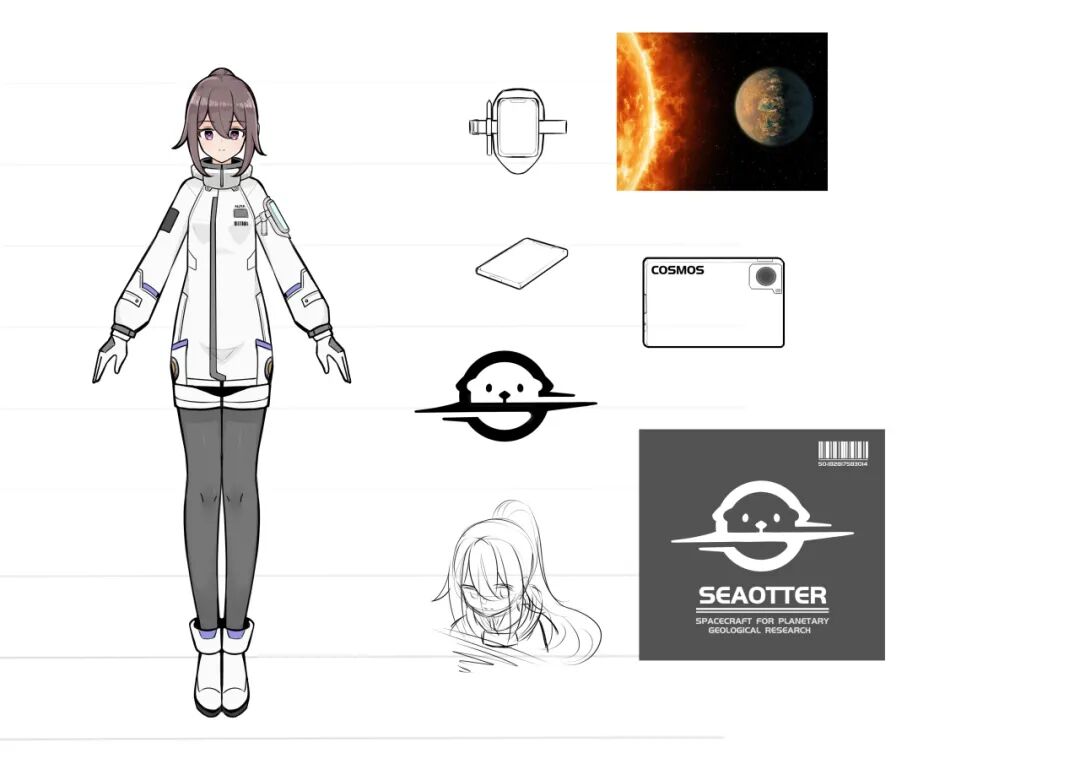
Aliya character design
Q: Will you be a "big fish in a small pond" in a niche segment, or will you switch directions?
Tongdian Games: Every genre has a ceiling, especially once you've made a successful product and deeply understand it — you can see roughly where its design ceiling is. Continuing in that direction would mostly be horizontal expansion at the same height, not breaking through upward. So we pivot because after going deep in a genre, we see its limits. We'll certainly keep iterating successful products, but we also want to find new possibilities.
Q: Will you consider bigger projects in the future?
Tongdian Games: Definitely. Larger-scale games can carry more content and expression — things small-scale games simply can't do, like the large set-piece design of Uncharted, or vast worlds, exquisite art assets, which can bring deeper emotional waves and awe. Our team started trying to make a big project very early on, but it didn't continue due to funding, time, and capability constraints.
We all love Bethesda's games — The Elder Scrolls and Fallout influenced us tremendously — so we naturally have passion for this kind of large-scale world. Once the team has more experience and resources, we'll absolutely go for it.

About Money and Everything It Takes to Survive
Q: Why did you choose to work in an old residential compound in Chengdu?
Tong Dianyou (瞳电游): Cheap. Very cheap. Easy to survive.
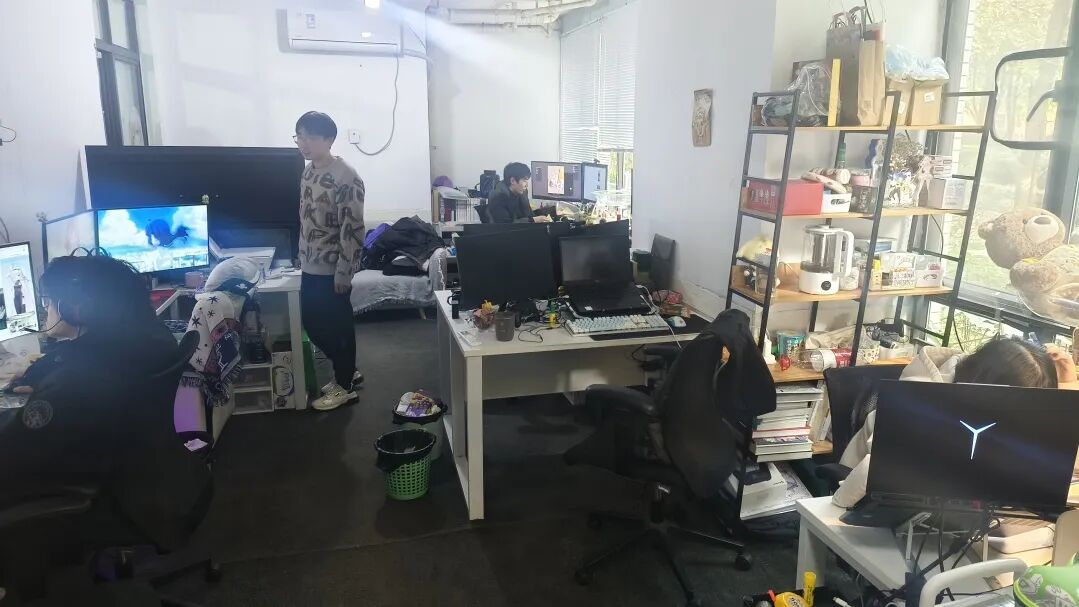
The Tong Dianyou studio's workspace in an old Chengdu residential compound
Q: Looking back four years, would you change any decisions?
Tong Dianyou: We all feel like where we are now came from the mistakes we made before. If we hadn't made those mistakes when team costs were still low, we might have ended up paying far more in energy and money to stumble into the same pitfalls later — and maybe even collapsed because of it. So we can't think of anything we'd want to change. We did everything we needed to do, without regrets.
Q: Do you feel like money has changed you?
Tong Dianyou: The biggest change is this: We went from "having to do things" to "being able to choose what we want to do."
Before we raised funding, there was so much we had no choice but to do — greenlighting projects, publishing, operations, external partnerships. The worst of it was outsourcing. Outsourcing is exploitative grind work, but to survive, we had to do it to feed ourselves.
Once we had money, we had the confidence to say "no." We could finally pour our energy into what we're actually good at, into things that benefit the team's growth and build real capabilities and resources.
Q: Do you think this experience, this grinding, was necessary? A lot of foreign studios do outsourcing for years before making their own games. Will future game developers have a more ideal environment?
🦀 Steve: I think it was pretty important. ZhenFund once introduced us to Wu Meng, the creator of Ball Battle (球球大作战), and something he said really stuck with me: "For premium games, if you want to succeed, cost control is the number one factor."
Outsourcing means trading massive labor for meager income, and that made us extremely sensitive to costs. Everyone in the studio developed a habit: find the most time- and money-efficient way to complete a project. You don't start by thinking about making something huge. That mindset was forged through outsourcing.
At the same time, I feel a huge sense of relief. As the team lead, you have to carry other people's trust. When people choose to start a company with you, they're essentially sharing the risk with you. I've met the parents of core team members. I know I'm carrying not just their futures, but their families' expectations too. To not let everyone down, I forced myself to do whatever it took — even disgusting outsourcing, even gritting my teeth and pitching our product to publisher after publisher.
When we closed our ZhenFund round, my biggest feeling was: at least no one would think, "Starting a company with Lao Xie was the worst decision of my life, throwing away the most important years of college for nothing."

Choice Is an Imperfect Perfection
Q: What's the team's next small goal?
Tong Dianyou: Top 20 on China's premium game sales charts.
Q: Where do you hope the team will be in five years?
Tong Dianyou: In three to four years, we hope to have at least one AA-scale game demo that can make some real waves in the market.
Q: What else do you want to try in the future?
👾 Wuli: I want to work on a factory assembly line, and try delivering packages. I'm curious what those lives are actually like. Lots of works depict them, but I've never actually been part of frontline production. In college I lived off my allowance; now I support myself through our projects, with passive income. As a creator, I feel disconnected from that kind of life. If I get the chance and the time in the future, I want to spend a few dozen hours genuinely experiencing it.
🥺 An Jiujiu: I'm the opposite of Wuli. I used to volunteer in rural villages as a kid, and I've experienced the poorest living conditions — sleeping in mud for a night. My goal now is to settle down, make games properly, and bring my energy to others.
🦀 Steve: I used to work in Lilith's art and marketing central team, doing publishing, and I've always had a thing for video content creation. I love Arcane, Demon Slayer, Cyberpunk: Edgerunners. If the company has the strength in the future, I'd especially love to direct an original animated series around our own IP.
Q: Have you ever imagined alternate life paths?
🦀 Steve: Honestly, not really. At least up to now, every major decision has been made collectively. Wuli, though, seems like he's lived through a parallel world. If he hadn't joined the studio, he probably would've ended up at the meteorological bureau. Drinking tea and reading reports during the day, making games at home at night.
👾 Wuli: I haven't really imagined alternate paths. More often I just marvel at how strange fate is. A while back I went to Hangzhou, and on a gravel path in Liangzhu Cultural Village, I picked up a stone. I took it from Hangzhou to Shanghai, to the Peace Hotel, then back to the Bund, and finally back to Chengdu — and now it sits in our studio. This stone could never have imagined it would have such experiences. It wasn't its decision, and it wasn't fate's arrangement. Just a wonderful accident.
Q: What are you planning to do with this stone going forward?
👾 Wuli: It's a marvelous thing. Maybe just because of one action of mine, I changed this stone's entire life. From now on, whenever I go to game events, I'll bring it along and let people meet it. Maybe it'll become a very famous stone.
After I die, this stone will still exist. Its lifespan is practically infinite, and the places I've taken it, the interviews, awards, and journeys we've shared — to it, these might be just a drop in the ocean. But precisely because of that, it can continue witnessing the world's changes on my behalf. I find that deeply meaningful.
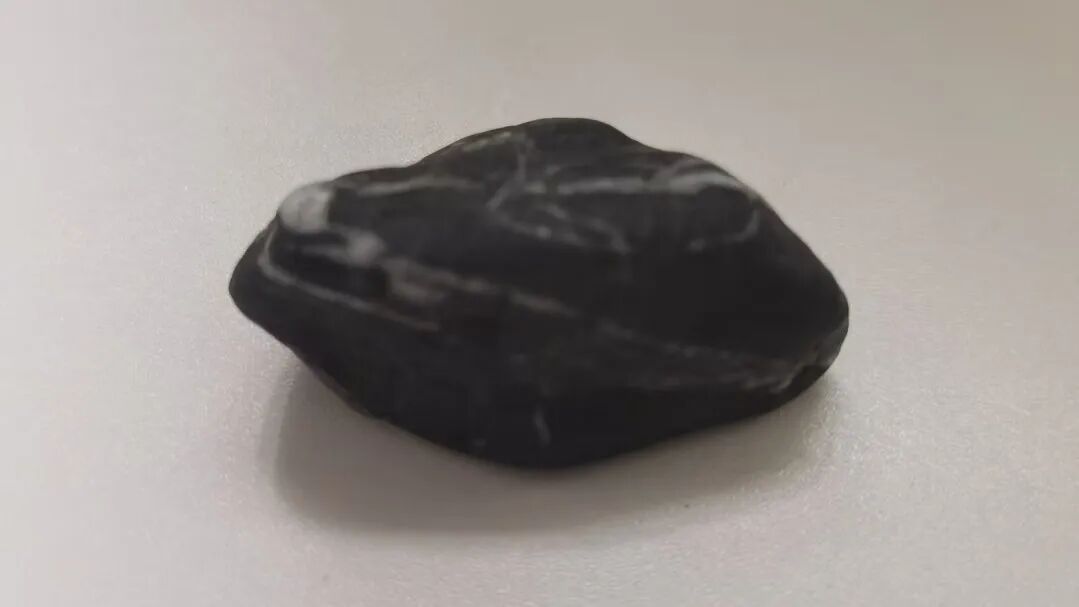

Teammates in the Same Room
Q: If you had to describe your studio's style in a few words, what would you say?
🦀 Steve: Love for games, respect for talent, quality over quantity.
👾 Wuli: The atmosphere in our compound is really special. I love it — it's like a Studio Ghibli workspace.
🥺 An Jiujiu: I'd say it's left brain versus right brain. Some people are more感性, some more rational, and when they discuss things, they collide like crazy.
Q: What does the team usually do together?
Tong Dianyou: First, on weekends a lot of our members still stay at the studio — not to make games, but to play games, sharing and discussing their experiences. Second, when we have time, we go to Game Jams. Third, we eat out and do team-building together. We used to talk late into the night, until one or two in the morning.
Q: That kind of team-building really matters.
Tong Dianyou: Right — you can only fully put your back to someone when trust reaches that level. Everyone on our team has their own role, and once you hand a task to anyone, you never have to worry. Everyone goes all out, applying their most extreme mental effort to do things right.
Q: Do you do peer reviews within the team?
Tong Dianyou: Not really. If there's a work issue, everyone just says it directly. Maybe because we live together, eat together, even shower in the same small room — speaking directly comes naturally.
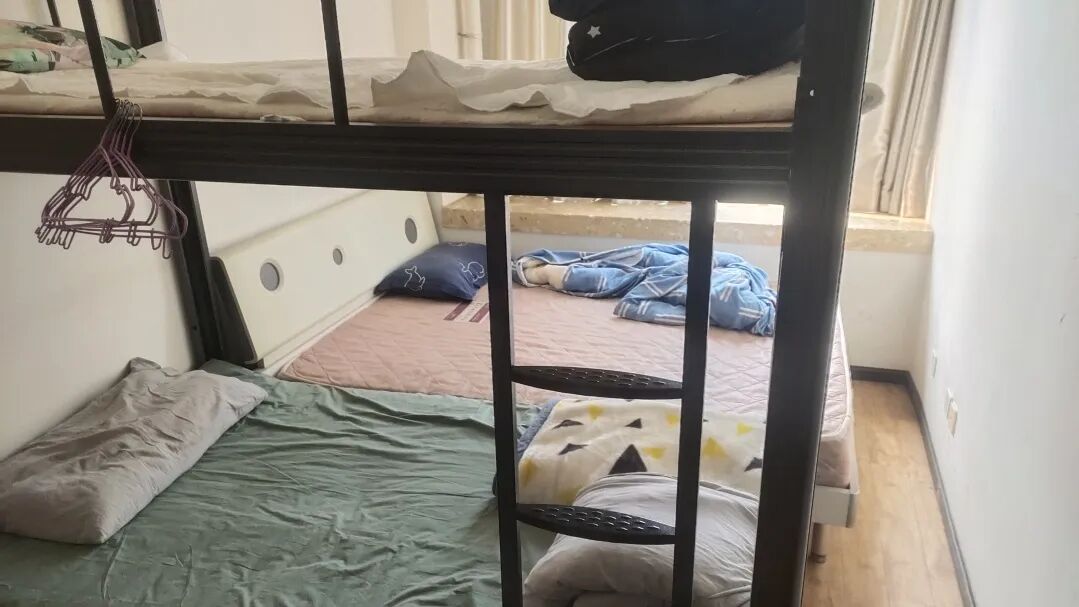
The Tong Dianyou studio's living quarters
Q: What makes a good game developer? Someone you'd want to work with?
Tong Dianyou: Talent, passion, and responsibility.
Talent means having foundational capabilities. Passion means being willing to keep pouring that talent in one direction, spending huge amounts of time on it,不受客观因素干扰. Responsibility is what every engineering project needs — making sure things run smoothly.
Sounds simple, but the bar is high.
Q: Do you think talent is innate, or can it be developed through time and effort?
👾 Wuli: That's a deep question, hard to answer. There's usually an "impostor syndrome" thing — we always feel like we lack talent while others have it. It's hard to prove to yourself, so you have to rely on objective feedback from people around you. But it's very applicable to how we筛选: we observe from the team's perspective, judging which talents are innate and which are trained.

Games Going from Toys to Art
Q: From day one making games until now, how has your understanding of games changed?
👾 Wuli: From toys to art.
Q: Do you hold yourself to the standard of making art?
👾 Wuli: If you go to Game Jams, you'll see a lot of people making games that are just goofy and meme-y, because their understanding of games stops at "bringing joy." They think as long as players have fun, the game succeeds. But that's not actually true.
Games as a new form do have bringing joy, achievement, or experience as one of their core goals, but there should be better ways to present that.
When you do game design for a long time, you gradually shift from purely pursuing joy to thinking about the underlying design of games. How they function, how they produce aesthetic experiences for players through the MDA framework. Once you understand this, you won't just see games as toys — at minimum they're toys with artistic value, because the systems themselves are exquisite and beautiful.
Q: How do you think game forms will evolve in the future?
Yang Ban: Schiller once said, "Man only plays when he is in the full sense of the word a human being." As society and the economy continue to advance, and as material abundance reaches its peak, the games industry will keep growing — with richer forms and experiences.
Q: Are you hiring right now?
- Gen Z candidates who align with our studio's vision and are willing to grow with us;
- Passionate gamers with extensive experience across games and unique perspectives on the industry;
- People who respect talent, stay hungry, stay foolish, and genuinely listen to players;
- Those who'd rather pass than settle — with strong self-motivation, accountability, and a drive for efficiency.
Q: Why would joining you be an irresistible offer?
Tongdian Games: You get to genuinely enjoy making games. No KPIs, no financial constraints — and most importantly, you get to make a truly great game. If you have good ideas, you'll find a home here. There's a reason we call ourselves the "Shuangliu mini-Nintendo."
What makes our team attractive comes down to two things: freedom and respect.
Freedom means the Netflix-style "freedom and responsibility." Our studio is extremely flexible with work hours — you can arrange your own schedule as long as you meet your goals. Respect shows up in how we recognize everyone's creativity and value. We don't act like high school homeroom teachers assigning and monitoring tasks. Instead, we give people generous time and high autonomy while honoring the work and value each person creates.
Join us, and you'll feel the weight of responsibility on your shoulders — but you'll also genuinely enjoy the creative process.

By Cindy