A Group of Gen Z Kids Used Flyers, All-Nighters, and Scholarships to Get This Bird Game to ChinaJoy

Writing code to build a world is a kind of magic, something that defies all reason.
What birds would you hear if you stayed awake all night?
In 2021, Liupincun arrived in New York alone, dragging his luggage behind him. Everything was unfamiliar, and the nights stretched endlessly. He started drawing birds in his class notebooks, one after another. At the time, he didn't know these little sketches would accompany him through his entire life as a student abroad.
He studied game design at New York University. Many of his classes were on Jay Street — "Jay" meaning a type of bird in English. Every day on his commute, he'd pass that street, where the traffic lights at the corner were always crowded with birds, packed shoulder to shoulder, chattering away.
Each time he looked up, he'd linger a moment longer. He began to wonder: Why do they gather here? Who's directing them? What are they saying? Over time, he came to feel that he was the NPC passing through their world, while the birds — with their languages, personalities, and secrets — were the real protagonists.
Because of the birds, he was no longer lonely.
Many things that followed began on that street: meeting his first co-founder, assembling a team, founding SilverJay Studio. To find more kindred spirits, Liupincun put up hundreds of flyers around campus. Those who responded had read thousands of pages of Tolkien, or logged thousands of hours in design. But what Liupincun valued most was passion. If you loved birds, he'd say: "Then come spend the night with us."
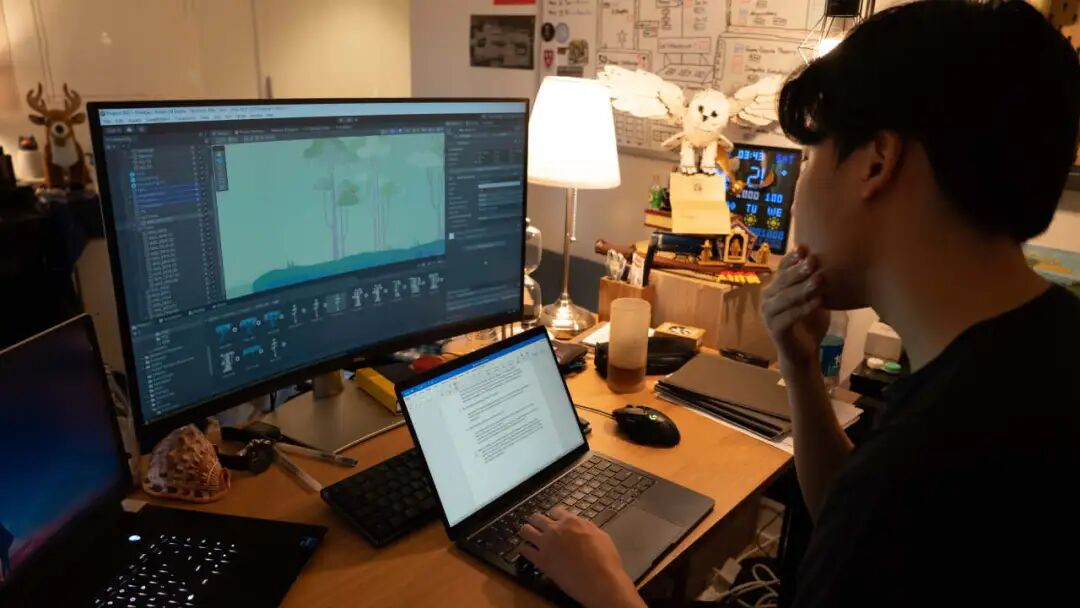
He meant it literally. Whenever a new idea struck, Liupincun would work straight through for ten-plus hours, translating the images in his mind into scenes in the game. The habit persists to this day. The team still meets offline every Saturday, working together to make the game "more bird-like." It's exhausting, but building a parallel world through code, text, and brushwork is its own kind of magic.
That's how The Ballad of Maca was born — an adventure puzzle game centered on birds, where song is the medium of interaction.
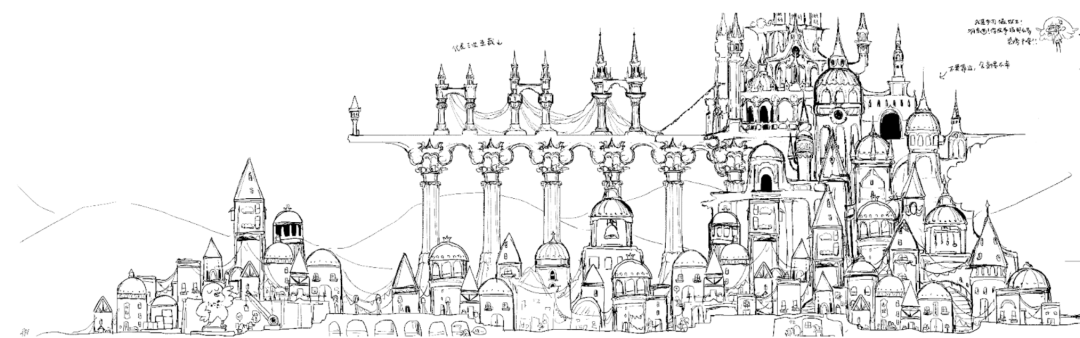
In Maca's world, there's no thrill of leveling up through combat. Instead, it's a journey that unfolds slowly. The game is best experienced late at night, wearing headphones, letting the birds' songs carry you through the entire kingdom. Each bird has its own personality and story, and all you need to do is become a bird and walk the path.
This is the charm of slow games. You spend hours in a world that's strange yet wondrous, and the logic of the human world seems to fall away. It wraps you inside an unfamiliar realm, turns you into a small bird, and lets you spend time living another kind of life, thinking to yourself: So this, too, is a way I could exist.
The first game Liupincun played as a child was Pac-Man on the 3DS, and he lost countless nights to it. Even then, he was like a tiny game designer. From third to sixth grade, he filled ten notebooks from the corner store with a complete planet, letting his classmates role-play in the world he'd built. What made him happy wasn't playing himself — it was seeing others find joy in another world. He decided then: "When I grow up, I'll make a game. If I can let others experience this happiness, wouldn't that be enough?"
Everything about the game came from love. But when this group of students decided to make it their livelihood, they faced a reality: How do they survive?
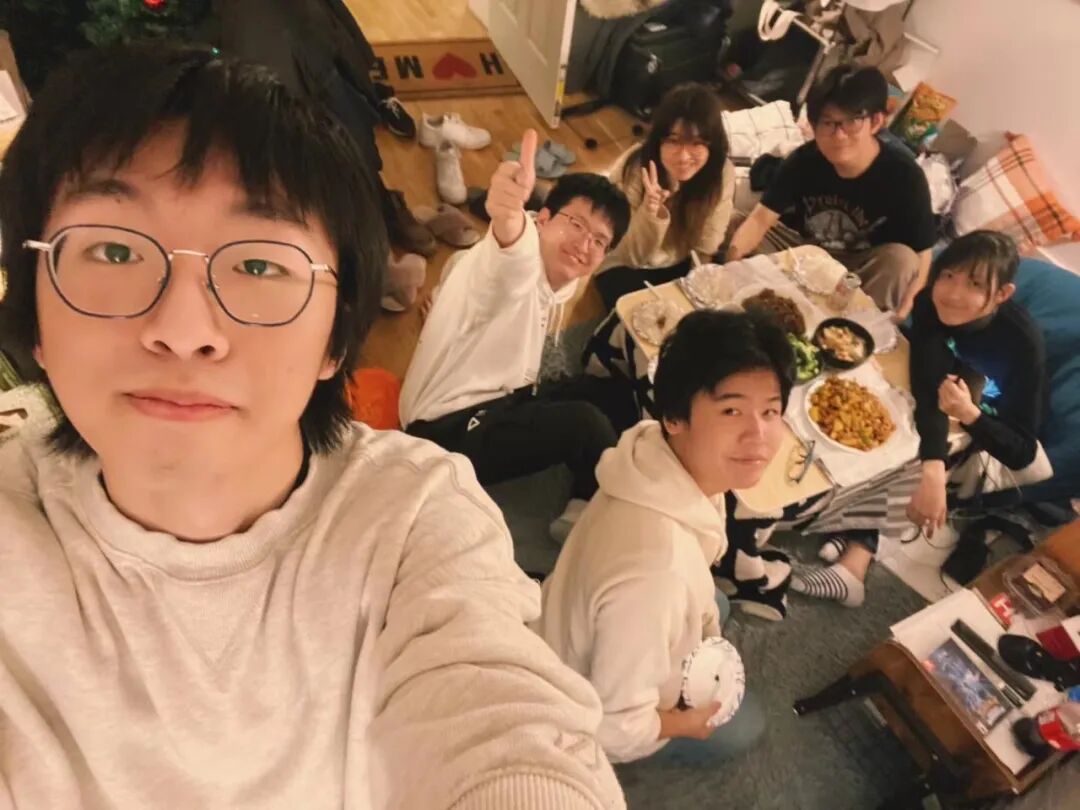
In 2023, SilverJay Studio went through a major overhaul. A combat system they'd spent 700-plus days and over 100 meetings refining was scrapped. After that, everything became uncertain; they didn't even know if they could continue. Until one rainy night, around a round table, they finally voiced emotions they'd long suppressed, and asked each other again: What kind of game do we actually want to make? That conversation was like a reset button.
By May 2025, many in the team were approaching graduation. At that juncture where they might scatter to the winds, they met ZhenFund. A startup scholarship pulled the young studio back together. Starting over was never easy, but their original intention hadn't changed: make a game that belongs to the birds.
Liupincun says that making a game about birds should carry a bit of childishness.
When you open the game, you're greeted by Maca the bard. He wears a red cap and a flowing robe, and he'll accompany you through the entire Bird Kingdom with his songs, telling its stories and secrets. This opening is Liupincun's favorite. He says that every time he hears Maca begin to sing, he's enveloped by a mysterious stillness, and just wants to stop and listen. The entire game is one long song that Maca sings.
From August 1 to 4, SilverJay Studio will bring the indie game The Ballad of Maca to ChinaJoy 2025. Come find us at the show — you might just meet your bird.

We Want to Make a Game That Truly Belongs to Birds
Yini Wang (VP, ZhenFund): Today we've invited Alex Liupincun, founder of SilverJay Studio. Their indie game The Ballad of Maca will appear at ChinaJoy 2025 this August — welcome everyone to come experience it firsthand.
Wei Kuang (Investment Director, ZhenFund): Let's start with a brief introduction of yourself and what your team is working on.
Liupincun: I'm Alex Liupincun. Our team is SilverJay Studio — "silver bird" — from NYU and nearby schools. We currently have about ten people developing our flagship project, The Ballad of Maca, an adventure puzzle game launching first on Steam.
The game stars birds as protagonists, building a fantasy Bird Kingdom. Players take the role of a small bird, using unique abilities like singing and flying to explore different regions, interact with other birds, and gradually uncover the stories and secrets of this land.
Kuang: I first discovered your work on Xiaohongshu, and I was immediately drawn in by the music. Can you talk about why you chose birds as your game's protagonists?
Liupincun: Several of us founders are bird lovers — our game designer keeps three or four parrots at home, for instance. We all love birds, but looking around the market, we found almost no games with birds as main characters. We thought: why not make a bird-themed game? It's niche, but it should resonate with players who love birds, who love small animals.
And if you think about it, birds are one of the few creatures in nature that walk upright on two legs, similar to human posture, so people more easily empathize with them.
Wang: Your team often hangs out and travels together. Has that brought any creative inspiration?
Liupincun: One moment really stuck with me. I was visiting Gloucester, a small town near Boston, standing by the dock feeling the wind, when I saw a flock of seagulls. I sat down to watch, and noticed one big brown gull kept chasing a white one, as if saying: "Look at me, look at me!" It was calling out in bird-speak, "Oh oh oh," really like it was talking.
The white bird ignored it, so it kept pestering, then suddenly flew off. Ten minutes later it came back and started chasing another bird. I recorded it all, thinking: Do birds have their own emotions? Are they expressing something?
That moment it became crystal clear to me — birds aren't the NPCs we assume them to be. They have their own world, their own emotions, their own families. From the human perspective they might seem aimless, but from their perspective, we're the background. So when we later designed The Ballad of Maca, we established one principle: every bird must be a being with personality, conflict, and emotion — not just something that waddles around amiably.
Kuang: So birdwatching also helped you design conflict in the game?
Liupincun: Yes, some birds are genuinely mysterious. In New York, I noticed certain traffic light intersections are always packed with birds, dense with them, yet another intersection just 50 meters away has none. Why? Who's directing them? Who leads them to occupy this particular traffic light? I really believe birds have their own world.
Kuang: Besides birds, will other animals appear in the game?
Liupincun: There will be some natural world animals, like snakes. In reality, snakes steal bird eggs, so we designed an entire chapter around snake narrative, where they appear as the birds' natural predator. Players must confront a giant serpent as a small bird.
But no human characters appear in the entire game. We want to present a pure natural timespace, a Bird Kingdom in a parallel world.
Kuang: I remember you mentioned wanting players to feel a worldview that belongs to small birds.
Liupincun: Yes, that's one of our higher aspirations.
In building this world, we consider many fine details: Why does this bird live in the forest? Why does it appear in the mountains? What tone should it have when speaking? What are its usual movements and postures?
For example, with living environments — humans generally drink from kettles, but birds don't. We designed birds standing on wooden perches, drinking from troughs below. We pay special attention to details that are distinctly bird-like.
Kuang: When I watched your trailer with headphones on, I really had this feeling of "I've become a small bird." The healing quality of the music and visuals was so strong — my mood immediately settled.
Liupincun: That's exactly the effect we hope players experience.
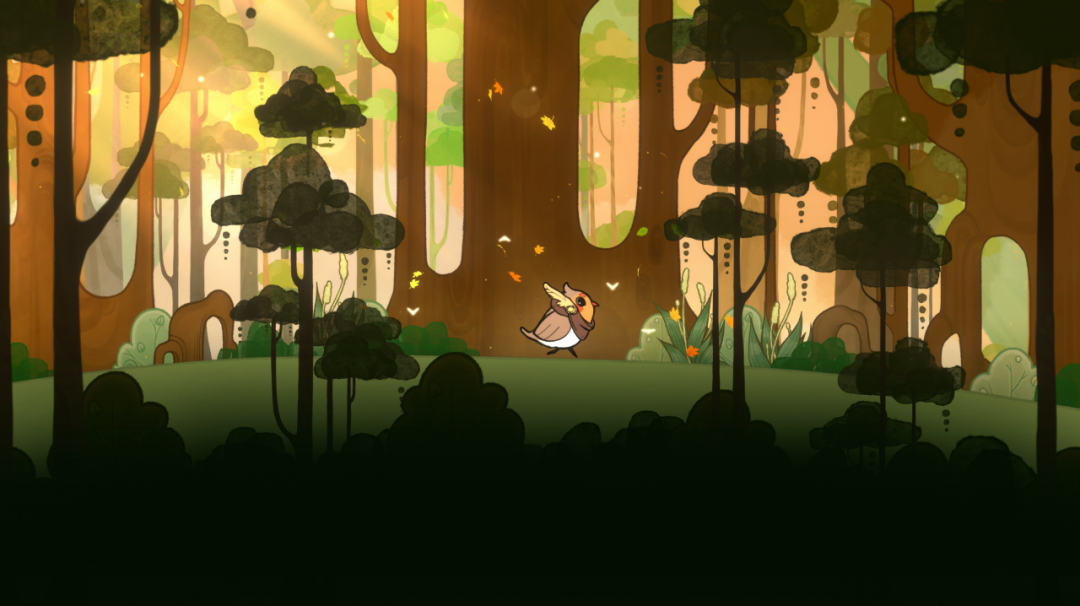
Kuang: How do you view the appeal of slow games?
Liupincun: In recent years, slow-paced games have increasingly earned players' empathy. Titles like Animal Crossing, Stardew Valley, and Spiritfarer all require players to quiet down and spend time playing, experiencing.
Compared to traditional games that deliver positive feedback through combat, slow games better respond to players' current need for emotional value. The pace is slower, the visuals more beautiful, the immersion deeper. Players are no longer controlling the world from a "god's-eye view," but truly placing themselves inside the game.
I think the charm of slow games lies in providing a protective space like an "eggshell," wrapping people inside an alternate world. Players can temporarily detach from reality and immerse themselves in a fresh, free, breathing environment. Rather than controlling the world, it's about entering a role and experiencing another possible life. Players might think: "Oh, so in another parallel timeline, I could still live this way."

This Game Is One Long Song That Maca Sings
Yini Wang: Why did you name your studio SilverJay?
Pincun Liu: The game school we were in was called the Game Center, and the street it was on happened to be Jay Street — which translates to "Bird Street." Our whole group had just come together there, so we thought, why not commemorate that? So we went with SilverJay.
Yini Wang: And how did Song of Marka get its name?
Pincun Liu: That's a bit of a story. Our original project name was actually Dual Mirror Traveler — meaning a traveler shuttling between two realms. Back then we'd designed a structure with upper and lower worlds, and players would move between them experiencing different stories.
But during that major overhaul in 2023, we cut the entire combat system and rebuilt everything from scratch. I figured, since the gameplay was changing anyway, why not rename it too? We came up with tons of alternatives. We almost went with Echoes of Wind and Rain — wind because birds ride the wind, rain... well, feathers are tools of flight. It sounded nice, but it just didn't stick. You'd tell someone and they'd forget. You'd say "Wind and Rain Return," and they'd ask which "wind" you meant.
Then I suggested Song of Marka. At the time Marka was just a minor character in the game, but the name just rolled off the tongue. It had a bit of that "Makka Pakka" energy, you know? Playful. I told everyone: this name is memorable, it's got rhythm, maybe we can even ride some online buzz with it — why not try?
I got shot down by everyone. They all thought Echoes of Wind and Rain sounded better. But I fought hard for Song of Marka: "Think about it — how easy is this to remember? One mention and it sticks." We decided to test it out, see how people responded.
Turns out it was a good call. The English name Song of Marka is clean and concise too. At all the Chinese and international shows we've done, we know exactly how to pitch it.
So we went ahead and redesigned Marka into one of the game's central figures: a bard in a red hat and lavish clothing. In every scene, he sings to tell you the world's story, and the entire game becomes this one long song that he sings.
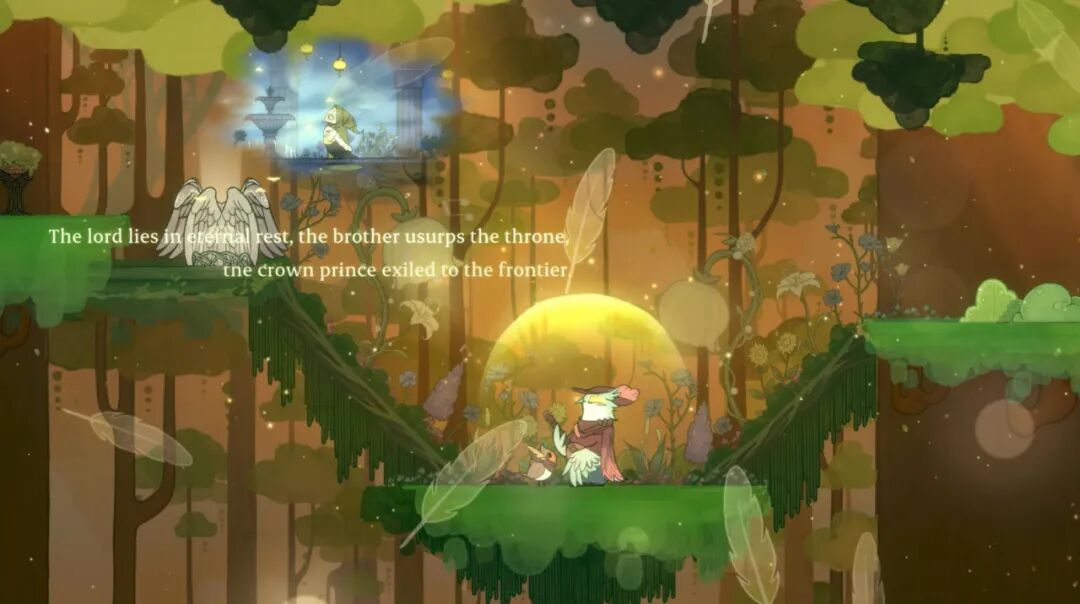
Yini Wang: So players can actually interact with Marka in the game?
Pincun Liu: Absolutely. Marka appears right from the very start. He's not just a storyteller — he's an important guide on your journey. The red hat, the classical ornate outfit — you recognize him instantly.
Wei Kuang: You use singing as the way birds communicate in your game?
Pincun Liu: Bird calls are their language, to me. If you're really building a world that belongs to birds, they can't communicate like humans do. So let them sing.

How birds walk, fly, and sing
Wei Kuang: You mentioned some players might be students trying a game for the first time. What special considerations do you build in for these newcomers?
Pincun Liu: We spent a lot of time on this. As developers, we often overestimate how quickly players adapt — we think certain operations are intuitive, but at shows we constantly discover that what feels obvious to us actually needs to be learned. Things like how to sing, how to move your character — you have to guide people through it gradually.
So in that first half hour to hour, we really slow things down for newcomers, teaching them how birds walk, how they fly, how to use song to communicate with other birds. We've built a pretty thorough tutorial system so they know where to go next, what button to press. Based on recent show feedback, whether you're a gaming veteran or not, most people can pick it up pretty easily.
Wei Kuang: What kind of players are you hoping to attract most?
Pincun Liu: It's actually pretty broad. From elementary school kids to adults — if you like birds or small animals, you're welcome. Players who enjoy cute aesthetics, who need something healing, who like puzzle-solving, even those who want to challenge themselves — we want to see if we can reach all of them.
Wei Kuang: What did you do to prepare for making this game?
Pincun Liu: I didn't know much about birds at first. To learn about them, I went to a used bookstore near school and dug up two incredibly comprehensive birding guides, each as thick as a dictionary. They covered birds from all over the world: what they look like, their habits, their names — everything.
Coincidentally, when we later recruited team members, we happened to find two classmates who really knew their birds. Once we were in a cab going somewhere and played that animal naming game — at first everyone could name a few, but then we all got stuck, and this one guy just kept rattling off bird names, one after another, almost none of which we'd ever heard. I thought: okay, this is the right person to have on board.
He later drew lots of birds with distinctive features and personalities in the game, and gave them fitting names based on the field guides. Through that process, we gradually got familiar with many species ourselves.
Wei Kuang: Do you think this hardcore bird knowledge actually matters for creating the game?
Pincun Liu: I think it's the icing on the cake. If you're willing to do the research, it really does attract a certain segment of bird enthusiasts. Like they'll be playing and suddenly go: wait, that bird I see all the time — it's been turned into a character here? Those players love that.
We're also working on a system where you can hatch and raise your own birds, slowly filling out the whole bird encyclopedia. We want bird lovers to be able to raise a bird that's truly their own, and enjoy that process.
Wei Kuang: What emotion do you hope players carry with them after finishing the game?
Pincun Liu: I want it to feel like you've just come back from a trip to the Bird Kingdom. You've spent several hours in a strange, wondrous world where human logic briefly stops applying.
In that world, everyone communicates through song — something hard to imagine in real life. After playing for a few hours and stepping back out, players should feel disoriented, thinking "what exactly did I just experience?" That's the sense of wonder we've been trying to deliver.
Wei Kuang: How long does a full playthrough take?
Pincun Liu: About 10-12 hours. Perfect for putting on headphones and immersing yourself over a weekend. Or if you can't sleep one night, staying up all night with it works great too.

Starting from weekly Saturday meetups,
we made the game more "bird"
Wei Kuang: We're all students, essentially doing this for love. But I remember you mentioning that your team actually has a pretty strict attendance system — fixed offline check-ins every Saturday to align on progress. How do you motivate everyone to keep showing up?
Pincun Liu: I think the key thing is that we're not colleagues — we're friends. We know each other well, we trust each other, we can say anything. That atmosphere matters so much.
So within the team I try to come across as relaxed, not emphasizing any management dynamic. More like a fellow creator. Since freshman year, we've kept up this Saturday offline gathering every single week — four years running now. Each time we just look at what everyone did this week, what they're planning next week, how the game is shaping up overall.
These sessions generate a lot of creative friction. Like an artist draws something, and someone else feels it could be "more bird" — they just say it, and we adjust on the spot. Online collaboration just can't replicate that.
Yini Wang: Are there any beautiful moments in the game that you're especially fond of?
Pincun Liu: Yes. My favorite is at the start of each area, when Marka appears. He's a bard, and he tells the history and story of that region through this incredibly beautiful song.
The music, the visuals, the emotional atmosphere of that sequence — it gets me every time. Every time I see it, I feel this calm, and this curiosity about what's coming next.
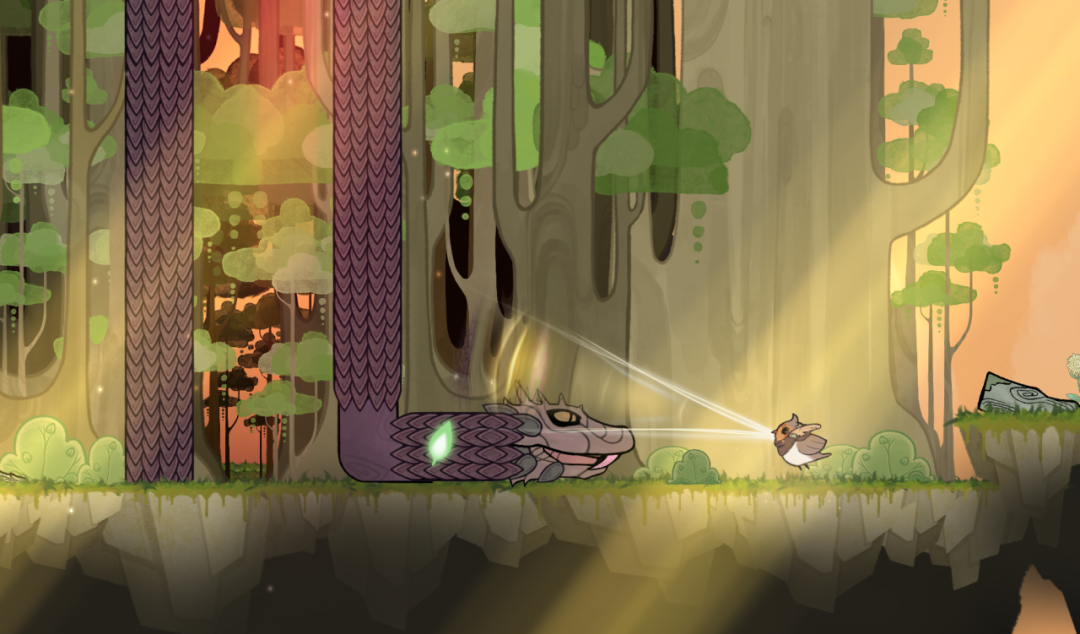
Another mechanic I love is the "airflow score." Players can emit different notes like singing, and when you sing those notes into a score, they become streams of colored light — it's like you've generated your own rainbow. And these notes actually get played back, interacting with objects throughout the world.
Yini Wang: Where did the inspiration for interacting through song come from?
Pincun Liu: We considered lots of interaction methods. We landed on song mainly because music is something games often overlook, but it's incredibly powerful for carrying emotion.
Also, birds sing. Different birds have different calls, which makes it easy for us to give different birds distinct personalities. The protagonist's ability is to sing out various magical sound waves that create chemical reactions with the world.
Yini Wang: Can you share a bit about your music creation process?
Pincun Liu: We've always wanted consistency between visuals and music.
Like forests, mountain peaks — they have different moods, but we try to keep everything nature-oriented. The background has bird calls, bird-like singing woven into the BGM, so when players hear it they think: yeah, this really is a world where birds live.
Yini Wang: Why did you ultimately choose this warm, healing direction instead of the combat system you originally designed?
Pincun Liu: Part of it's that I'm not particularly good at fighting games (laughs). But more importantly, I increasingly wanted to make something that could resonate with players on a deeper, emotional level.
I think defeating an enemy delivers a pretty straightforward dopamine hit, but sometimes more complex emotions — like feeling genuinely moved, or sensing a flicker of melancholy or tenderness — create something that lingers. You might still remember a particular moment or experience long after you've closed the game.
Yini Wang: Have you personally played any game that gave you that kind of complex, long-resonating feeling?
Pincun Liu: Yes, Spiritfarer for example. It's a slow-paced game about drifting at sea, with a very aesthetic style. When I played it, I never felt rushed to do anything. Instead, I'd find myself thinking about what I was experiencing right now.
Also Octopath Traveler. Even though it's a combat game, the soundtrack is incredible. Every time I fought a monster, I couldn't help but listen to the music and wonder about that character's backstory. I'd think, what happened to the person who wrote this piece? What have they been through?

We scrapped 700-plus days of work and more than 100 meetings' worth of decisions
Yini Wang: How many people are working on Song of Maca?
Pincun Liu: Right now we have ten team members on this project.
Yini Wang: How did this ten-person team come together?
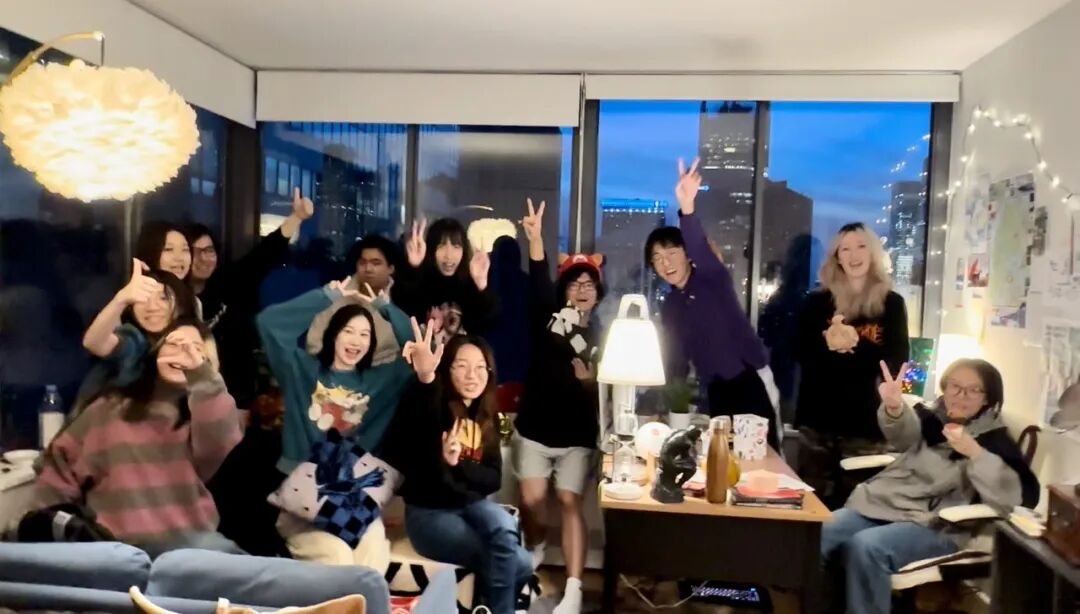
Pincun Liu: It started back in freshman year, 2021. Another lead designer and I began conceptualizing the project. At first it was just the two of us, but we quickly realized that making a game is absolutely not a two-person job.
So we designed a recruitment poster and plastered it all over campus. We also started actively reaching out to interesting classmates, gradually selecting talented, ambitious people to join us. The whole team-building process actually took nearly two years. People came and went throughout, but our core members have stabilized now.
Yini Wang: With such a long timeline, how did you maintain stability as a student team?
Pincun Liu: I think it really came down to passion. When recruiting, the thing I cared about most was whether someone genuinely wanted to do this. Do they have interest, drive, the willingness to proactively create something? If so, people naturally find their roles and keep contributing to the game's details.
Yini Wang: What was the biggest difficulty you experienced throughout development?
Pincun Liu: We encountered quite a few setbacks. The biggest one was in 2023.
At that point we were fairly confident about our old version — it leaned toward fighting gameplay, the predecessor to Song of Maca. We submitted it to lots of competitions and exhibitions, thinking we were ready for our moment in the spotlight. But the results weren't great. Judges and players alike said it wasn't innovative, and some even felt the protagonist bird beating things up was fundamentally inappropriate.
That sparked internal controversy, and we eventually decided to scrap the entire design and start over.
Our lead artist also left for personal reasons around then, which was a pretty big blow to morale. After that we started reflecting: what kind of gameplay should this bird character actually have? What are its core abilities? That's how we gradually established "flight" and "song" as our main mechanics, rebuilding the game into the song-centered puzzle experience it is now.
Yini Wang: You said that redo meant throwing out 700-plus days of work and over 100 meetings' worth of decisions. How did you shoulder that decision? And how did you convince the team?
Pincun Liu: I remember it vividly. It was our first team meeting after the semester started, and the same day one of our core members decided to leave.
It was overcast, even drizzling — very fitting. We sat around the living room in a circle, talking for a long time about whether to keep going. And if we did, what should this game become?
Honestly, everyone was pretty down. You couldn't help thinking, in another timeline, we might already be swimming in success, our names known to everyone. But reality wasn't like that. For the first time, we truly saw things as they were.
After that, we laid out all the game details — what's this bird's core mechanic? What does the player control with the mouse? We listed everything out, re-examining each point item by item. In the end we realized most of the design was actually wrong. So we gradually polished the newer, better, more bird-world-appropriate gameplay we have now. The whole process took a long time.
Yini Wang: You later realized a lot of the design was wrong — why hadn't you noticed earlier while you were making it?
Pincun Liu: A big part of it was that this was our first time assembling a team to make a game at this scale.
We were pretty naive back then, thinking: oh, someone else made this gameplay, we'll just reskin it with a different theme. But it's completely not like that. There's a deep logical relationship between every gameplay mechanic and its theme. If the theme and mechanics don't fit, players won't buy in.
We hadn't done much public playtesting then. We thought it played fine ourselves. But once we put it out there, player feedback told us directly: this gameplay doesn't feel "like a bird," you can't sink into it, the bird's distinctive qualities weren't coming through.
And "bird" is our biggest selling point — we couldn't compromise on that. That's exactly why we decided to scrap everything and start fresh.
Yini Wang: Why did you ultimately choose to make a 2D side-scrolling adventure? What do you see as the biggest difference from a 3D open world?
Pincun Liu: 2D gives us more artistic freedom of expression. Like if I want to add some light here, a shadow there, 2D offers much more flexibility, and it's easier to resonate with classmates who love hand-drawn styles. 3D has stronger expressiveness, but the technical and time costs are extremely high — too much pressure on our art team.
Yini Wang: Looking back, what was determined from the very beginning throughout the game's development?
Pincun Liu: We established two things from the start.
One, this is a game with a bird as protagonist. Two, we wanted to make something that truly immerses you, like stepping into "the world of birds" for the first time. No matter how the gameplay evolved, this goal never changed.
Kuang Wei: Song of Maca is now at about 80% completion. What's the plan for the coming year?
Pincun Liu: We'll definitely keep refining the game. We hope to present a more complete, more authentic bird kingdom — things like bird ecology and behavior, we're still polishing. Second, if people like this game, we'll make a sequel. Maybe with bird-raising as the theme, letting players experience the joy of raising a flock of birds, making birds the brand direction for our studio.
Q: If you wanted to further enrich the gameplay experience, what directions would you consider breaking through in?
Pincun Liu: Probably player freedom. Right now the experience is fairly linear, all pre-designed flows. If we could add things like light raising, simulation management, or creative workshop modules in the future — letting players build some content themselves — then everyone could have a different play experience.

I just want more people to feel the magic of games
Kuang Wei: I saw you've posted quite a few game development videos on Bilibili. For you, what's the most essential thing about games?
Pincun Liu: Still passion. I uploaded those technical videos on Bilibili because I genuinely love game development. I think writing code to build a world is something truly magical, almost beyond explanation. I also hoped to let more classmates experience that magic and create their own games. So I made dozens of tutorial episodes, wanting to share that process. I've always believed that if you truly love something, no matter how difficult or time-consuming, you can stick with it.
Kuang Wei: You previously said you wanted to become a full-stack game developer. How far do you feel from that goal now?
Pincun Liu: That goal has gradually drifted. Because once you have a team, you realize you can't do without them anymore. If I actually had to make a complete game independently, I'd probably be missing something in my heart. So now I hope to refine myself into a truly reliable technical person, a good manager, and someone who can lead a team.
Kuang Wei: Do you feel like you're becoming more and more like a startup CEO?
Pincun Liu: It does feel a bit like that. And I've found it's much harder than I imagined. Past experience has basically all been trial and error, no standard answers. These past few years I've just been constantly stepping in pits, making mistakes, gradually grinding out my own management philosophy. That's something I need to keep working on in the coming years.
Kuang Wei: What's your underlying belief in making games?
Pincun Liu: My belief is providing players with emotional value. When players are feeling down, want to relax, want to be healed — this game can help pull them out of that state, give some positive feedback. Just helping people enjoy life a little better.
Kuang Wei: "Healing" is such a good word. I heard a podcast the other day talking about how in the AI era, people need more of an existential feeling. Although people often say Gen Z is Buddhist, lying flat, rebellious — in our past year-plus at ZhenFund, we've seen many Gen Z founders with ideas and the courage to innovate. Do you see yourself as one of them? How do you view this era?
Pincun Liu: I think behind the Buddhist or lying-flat attitude, there's actually our longing for freedom. Gen Z would rather spend time on things we truly love than be arranged for, be defined. I think this very freedom drives our creativity. Because to innovate, you must have freedom.
So-called lying flat might actually be a good thing — it tells everyone, we don't want to follow tracks others have drawn for us anymore. We want to do something bigger, something that belongs to us. I quite like where this momentum is heading.
Kuang Wei: You've been in contact with and creating games since elementary school — games themselves have probably been a source of joy throughout your growth. I think your generation's creativity also comes, to some extent, from this "rebellious" spirit and persistence in freedom.
Pincun Liu: I totally agree. A lot of classmates I've talked to have interned or worked at big tech companies, but they generally felt it wasn't the life they wanted. Just imagine — if the next forty or fifty years were that same routine day after day, how boring would that be? Better to go out and build something of your own. Even if it's risky, at least you'll feel a whole lot better mentally and emotionally.
Kuang Wei: Your school has produced quite a few outstanding game creators and entrepreneurs, right?
Pincun Liu: Their work really captures that independent spirit and artistic sensibility our school is known for. Under the arts college, everyone tends to be pretty artsy — they like making weird, quirky stuff. I think that's a good thing. Look at the hit games now, they're all highly creative. Those abstract, less formulaic-looking games are actually what the market truly needs. For decades, games were often products built within fixed frameworks, but now we're finally starting to see the possibilities of games as the "ninth art" — accepted by more people, capable of conveying something deeper.

10 RPG Universes in a Convenience Store Notebook
Kuang Wei: Let's talk about your childhood. Do you remember the first game you ever played? How did you get into gaming?
Pincun Liu: In first grade, my uncle came back from Japan and brought me a 3DS, one of those old clamshell handhelds. He only gave me two cartridges — one was a 3D Pac-Man adventure game, pretty niche, and the other was even more niche: an English vocabulary learning app, probably at my mom's request (laughs). Not much choice, but both were way more fun than class, so I poured countless hours into them.
Playing Pac-Man made me so happy that I started thinking: If I could make a game like this myself, and let other people experience this joy, wouldn't that be an amazing thing? That's when I first thought about making my own game.
Kuang Wei: You told me before that as a kid you also drew games for your classmates to play. What was that like?
Pincun Liu: There were three or four friends in my class I was close with. I went to the school convenience store and bought a notebook, then started drawing all kinds of planets and building an interstellar map. Classmates would come to me for role-playing — they'd play as heroes from these planets, buy equipment, fight monsters. I'd play the monsters and battle them. I absolutely loved that feeling of "other people having fun inside the story I wrote," so I just kept drawing and drawing, from third grade through sixth grade. I filled ten notebooks, eventually gluing them all together and stacking them in my desk cubby. Even the teachers knew about it.
Kuang Wei: Did this game have a currency system?
Pincun Liu: I'm a bit embarrassed to say — a few times I did collect 20 yuan, like a top-up payment.
Kuang Wei: What types of games do you like most?
Pincun Liu: I like three kinds: ones that let players exercise their creativity, like city-builder sims such as Cities: Skylines; ones with exceptionally crafted worlds, like the dark settings of Dark Souls or the laid-back daily life of Animal Crossing; and ones with outstanding art or music — I absolutely love Octopath Traveler, purely because its music is just that good.
Kuang Wei: What was the first actual video game you made?
Pincun Liu: After elementary school, I got tired of hand-drawing maps and manually updating prices — too much hassle — so I learned to code. In eighth grade I took a summer class on game development. Back then I made a very simple spaceship game where the player flew from left to right, dodging obstacles. I only knew the most basic if-else logic at the time, but I still spent two months on it. Every day I'd add new features, and with each new feature, I felt like I was creating something. That feeling was like drawing — pure joy.
Kuang Wei: Later, how did you decide to turn this childhood interest into something real at NYU?
Pincun Liu: When I was making games on my own in middle and high school, I deeply felt the limitations of working alone. I couldn't draw, I couldn't write music — there was so much I couldn't do. So I thought collaborating with others might be a great option. On my very first day of college, I brought this up with another co-founder. He agreed readily, and we started planning to set up a studio.
Kuang Wei: How did you two meet?
Pincun Liu: Before the semester started, I did a 24-hour game challenge at a Game Jam and posted about it on Moments. He saw it through the incoming students' group chat, thought it looked interesting, and DM'd me asking if I wanted to chat about our views on games. That's how we met.
Kuang Wei: From following an interest to actually assembling a team, what do you think was the biggest change in that process?
Pincun Liu: The biggest challenge was definitely teamwork — the relationships between people. Because making games by myself is actually easy to control: as long as I'm writing the code and designing the game myself, I can get it done one way or another. But communicating with people is different — you need to convey things effectively, communicate with genuine kindness, and not argue. This is something our studio has consistently tried to do. Without it, this project absolutely wouldn't work out.
Kuang Wei: Does your team have its own culture?
Pincun Liu: When I'm recruiting, I particularly value a few things: sincerity, genuine passion for the subject matter, and whether they're doing this from the heart. Once someone truly loves games, they'll basically be willing to throw themselves into it. Most people on our team are pretty adorable and still have a childlike spirit — people who make this kind of stuff need to have a bit of a kid's mindset.
We later noticed at exhibitions that a lot of kids would play at our booth and not want to leave, with their parents having to practically drag them away. Those moments make us incredibly happy.

100 Flyers Printed, the First Game Crew Assembled
Yini Wang: You mentioned making a major overhaul a few years back, cutting a lot of content. What led to that decision?
Pincun Liu: A string of things weren't going well around that time. In 2023 we applied to about five major game expos, domestic and international, and didn't get into a single one. The opportunities we cared about most all fell through. That year was basically a total wash.
On top of that, I had just broken up with my girlfriend at the time, so it felt like both my career and my love life had gone down the drain. I was in a really bad place emotionally — truly didn't want to go through anything like that again.
I kind of wanted to just give up, thought maybe I should quit. But the team members kept persuading me, saying I'd come this far, don't leave, if I left they couldn't keep going either. Around then we also started reflecting on what had gone wrong — did we not understand each other well enough? Would things improve if we just hung out more?
So we started doing weekly team bonding — rotating who brought board games, going to Central Park together for walks, trying to get back to that feeling of a group of friends making games together rather than a hierarchy.
That period was incredibly important. Gradually our trust deepened, and we could talk about things we'd normally only share with close friends. It was this kind of relationship that let us communicate directly on project matters without beating around the bush, and gave us the courage to voice problems, to revise, to polish. Let's make the game good first, then worry about growth.
Yini Wang: How many people are at Silverbird Studio now?
Pincun Liu: Currently the team has 15 people. Ten are working on Song of Maca, and we're also quietly developing an unannounced 3D game project — possibly releasing a demo this year or next, so stay tuned.
Yini Wang: How did you first assemble this team?
Pincun Liu: The process was pretty interesting. In 2021 I'd just started college, didn't know anyone, and felt incredibly lonely — but I desperately wanted to make games. That future co-founder was the only person I knew who also loved games. We went to the Met together; I had zero intention of actually looking at the exhibitions, I was solely focused on recruiting him.
After we ate at the café, I told him: "I can tell you have real insight into games, want to do this together?" He agreed readily. The two of us talked until four in the morning that night.
Later we'd stay up making games every weekend, figuring out gameplay while realizing the two of us alone weren't nearly enough. So we printed about 100 flyers and plastered them across every corner of campus. The response was surprisingly enthusiastic — lots of classmates saw the flyers and said, "I love birds too!" and showed up.
From these people we slowly filtered down to about a dozen, gradually forming the childlike, wonderfully naive team we have now. This is the foundation of our game-making.
Yini Wang: How did you select these people?
Pincun Liu: There were various ways. The poster had my WeChat on it; some people added me, and I'd send them the game intro. If the conversation went well, we'd meet up for a deeper chat. Some people were exceptional at writing — they'd read thousands of pages of Tolkien and produced wonderfully fantastical worldbuilding. Others had thousands of hours in a particular game and knew design inside out. As long as someone genuinely loved making games, we'd talk seriously with them.
If it felt like a fit, we'd say: come stay up with us next week. If we clicked, they stayed. We probably talked to over a hundred people throughout this process before slowly arriving at our current team.
Yini Wang: As a team-leading game developer, how do you typically allocate your day?
Pincun Liu: Every day is different. Sometimes inspiration strikes suddenly and we'll immediately hold a meeting to discuss it. I genuinely get too excited to sleep over an idea, and will furiously work for ten-plus straight hours because I desperately want to see the image in my head actually running in the game.
More often, I'm tracking everyone's progress. Asking art, "How far along is that piece?" Asking design, "Does this gameplay feel smooth?" Then pulling everyone together to align on workflow and design.
This is also when I'm most mentally exhausted. Games require intensive collaboration — every segment has to connect seamlessly. I need to constantly communicate and coordinate, fitting these pieces into an actual game world.

Everyone Is a Little Bird in the Game
Yini Wang: Could you introduce a few of your team's core members?
Pincun Liu: Our lead designer is someone particularly skilled at discovering small beauties in everyday life. Every time we have a design meeting, he brings wonderfully imaginative yet warm ideas. Many details in our current game come from this "starting from life" sensibility — taking a small scene you once resonated with, an emotion, and writing it into the world of birds.
We also have an incredibly talented game designer named Hank — a deeply hardcore player who's played pretty much every genre out there. He has high standards for design and plenty of his own ideas, and he's put enormous effort into scene-building.
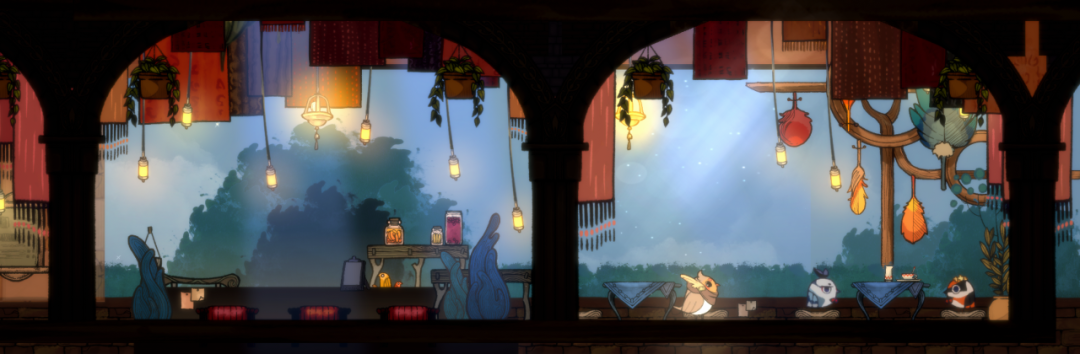
And we have many other teammates who love games and love life just as much. Everyone is genuine and wonderful. We actually have this idea of turning every team member into an NPC in the game. Everyone would be a little bird, so we could truly live on in the world of Maca.
Kuang Wei: Could I also choose a bird I like to be my NPC?
Pincun Liu: Absolutely. Each region has certain limited-edition bird eggs you can collect and hatch, and eventually different little birds will appear.
Kuang Wei: Are you also exploring bird-related IP?
Pincun Liu: Yes. For example, this bird here in my hand is called Melody — she's the protagonist of Song of Maca. We'd love to turn her and her friends into plush toys, standees, merchandise, and build a bird IP aimed at young people. When I go to shopping malls now, I basically never see bird-themed stores, so this might be a great opportunity.
Kuang Wei: You graduated this May, and many on your team are entering new phases too — some continuing their studies, others starting internships. It's quite a coincidence that we first saw your work around that time, and it immediately moved us, so we decided to award you an entrepreneurship scholarship. Do you remember how you felt then? Now that you've graduated, what are your plans going forward?
Pincun Liu: I was pretty anxious at the time. Everyone was about to go their separate ways, each with their own plans, and I was worried the studio might fall apart.
The ZhenFund scholarship really came at the perfect moment. It wasn't just the financial support — more than that, it was recognition, encouragement, a feeling that we had to see this through, had to finish it, couldn't give up halfway. That momentum kept everyone together.
More practically, it also let us create more content. We started seriously thinking about how to promote the game, how to make cute merchandise, how to shoot videos to get more people to know about it. ZhenFund also helped us a lot with resources and connections, introducing me to some fantastic founders and mentors whose experience I'd be hard-pressed to access anywhere else.
Kuang Wei: I'm really looking forward to experiencing your game firsthand at your booth at ChinaJoy in August. Could you give a preview — if other visitors come, what kind of booth will they find, and what kind of experience awaits them?
Pincun Liu: You should be able to spot our booth from pretty far away, because we've prepared a small mountain of adorable bird plushies, plus all kinds of merchandise — it'll really catch your eye at first glance.
Once you get closer, we'll enthusiastically invite you to try the game. The current build is actually quite mature now. In the first half hour, you can experience most of the core gameplay — how to sing, how to fly, plus some light puzzle-solving, the egg-hatching system, and you can even start raising your own bird.
If you're someone who loves birds, who loves little animals, this game will really be your thing. We'd especially love for you to keep playing. If you manage to beat the first boss, we've prepared a little Easter egg — a mysterious reward waiting for you to claim.
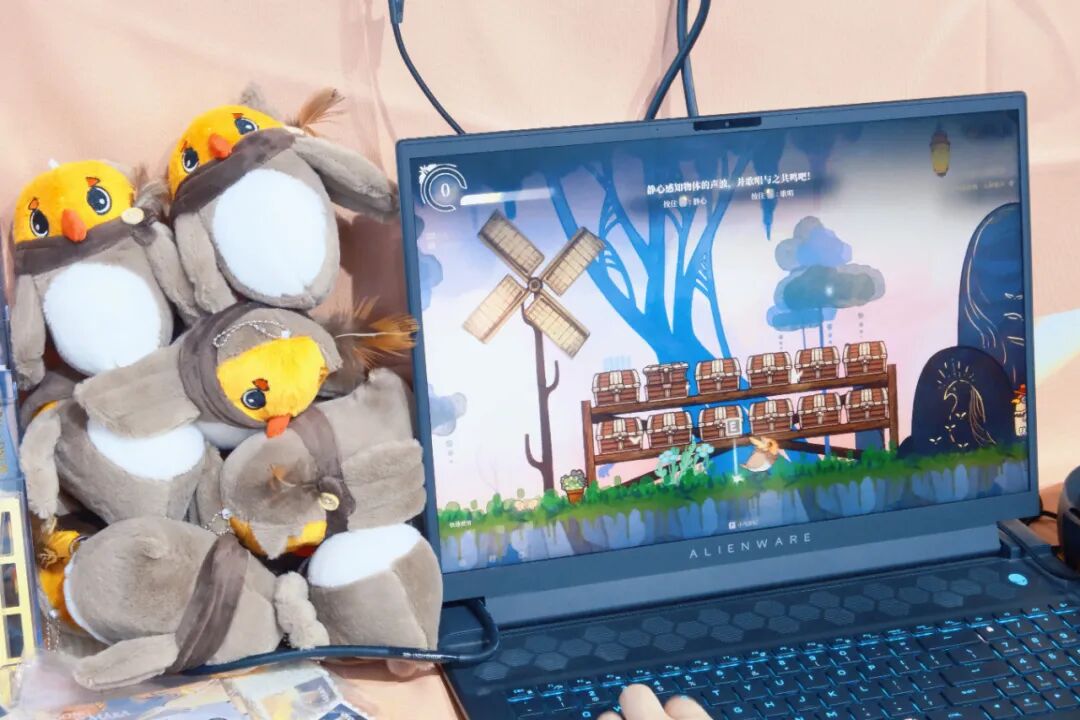
Silverbird Studio at their ChinaJoy booth

Rapid Fire
Yini Wang: What do you think your superpower is?
Pincun Liu: I'm pretty good at reading people — their personality, how they carry themselves, I can usually tell at a glance.
Yini Wang: What are your three favorite games?
Pincun Liu: Cities: Skylines II, Octopath Traveler, and Dark Souls.
Yini Wang: If a college freshman interested in entrepreneurship came to you for advice, what would you say?
Pincun Liu: You absolutely have to start from passion. If you're doing something you don't genuinely love, it's going to be miserable.
Yini Wang: If you could say one thing to all young people who want to make games, what would it be?
Pincun Liu: Come check out the little birds. You can search for Song of Maca or Silverbird Studio to find us. If you like what you see, you're welcome to join us and help bring these little birds to life. Please, come!

The audio version of this episode is also available on the ZhenFund podcast "True That" — welcome to listen in!

Text | Cindy
Video Production | Dylan & Neya & Cindy
Podcast | Xin