Zero Zero Technology's Wang Mengqiu: An Atypical 11-Year Survival Story of a Flying Camera Company | Z Talk

Choosing the right direction matters more than zero-to-one innovation.

Z Talk is ZhenFund's column for sharing ideas and perspectives.
In China, the average lifespan of a large enterprise is 7 to 8 years; for small and medium-sized private businesses, it's less than 3. Yet Zero Zero Robotics, a hard-tech company redefining the flying camera through computer vision, has reached its eleventh year.
Its way of surviving has never been about "fast" or "stable." At the start, with no resources, no connections, and no beaten path, Wang Mengqiu chose a "monumentally difficult" road: doing what others wouldn't or couldn't do, building a moat through extreme difficulty. A flying camera had to be small enough to fit in a bag and smart enough to recognize subjects autonomously — challenges demanding ultra-high integration of hardware and software, extreme power consumption control, and multi-dimensional coordination of algorithms and engineering. A decade ago, few dared touch this direction.
Wang Mengqiu, founder of Zero Zero Robotics, attributes the company's survival to "finding the right zero point" — choosing the correct direction matters more than innovation from zero to one. "Like in mathematics, if a vector's direction is wrong, pushing to 100 is meaningless." Zero Zero's selection criteria: sufficiently difficult, able to sustain intellectual pressure, showing visible progress, and requiring long-term commitment. Such problems are the "right problems."
This sense of direction comes from Wang's long-term judgment of computer vision, perception hardware, and AI trends, and from an exploration of the camera's essential nature: "A camera that flies is a means, not an end — a way for the product to interact with the physical world. Users should simply enjoy the experience of automatic filming and recording." Their first product's tagline: "Turn your camera into a cameraman."
Facing the immense challenge of miniaturizing flying cameras — power consumption, heat dissipation, propulsion, integration — Zero Zero chose a fully closed, self-developed system. They pushed robotic "intelligence density" (onboard computing power divided by weight) to the extreme, achieving a position with "no competitors" in their niche. For eleven years, Zero Zero has held to its original judgment, prioritizing R&D above all, even at the hardest moments: "No matter how bitter, exhausting, or broke we were, we were pouring resources into R&D like crazy," Wang recalls. At one point, when the company had just over 100 people, more than 80 were in R&D.
Eleven years is a long journey for a Chinese tech company. Zero Zero's story may offer entrepreneurs still feeling their way through innovation a different kind of survival template.
This article is republished from Z Potentials, edited and arranged by ZhenFund. Here is the full text:

-
Everyone talks about how important zero-to-one is today, but no one explains how to get from zero to one. Actually, finding the right "zero" matters more than the journey from "zero to one" — because if you pick the wrong zero, you may never reach one.
-
Competition driving technological democratization is a good thing. All I really want is "May the best product win." If a competitor truly makes something higher quality and cheaper, that's the better product. I have no problem with that — we'll just keep working hard ourselves.
-
The flying camera track has high enough barriers that competitors haven't flooded in. If we can survive by some stroke of luck, the potential market is enormous. I believe flying cameras could very likely become the second home robot category, after robot vacuums, to ship over ten million units annually.
-
"We are the best of what we are." We may not make the world's best product, but we can't not try our hardest — because you'll regret it. Too many expectations create unnecessary pressure. We have no expectations; I just hope to give our best every day.
-
Sometimes we're too self-assured, too attached to so-called patterns. But the "statistical data" you rely on to derive patterns all happened in the past — yet it's actually infinite possibility unfolding at a specific point in time.

Finding the Right "Zero" Matters More Than Blind Innovation
Q: Welcome, Mengqiu. Please briefly introduce yourself and share key choices and turning points from high school and university through your entrepreneurial journey — how did these experiences shape who you are today?
Wang Mengqiu: Hello everyone, I'm Wang Mengqiu, founder of Zero Zero Robotics. I founded this company in 2014 upon returning to China; this is our 11th year. Our co-founder and CTO, Dr. Zhang Tong, leans toward hardware, while I'm mainly responsible for the software side.
I grew up in a relatively free environment and studied abroad from an early age. I received my PhD from Stanford University's Computer Science AI Lab, where I focused on NLP and machine learning.
Over these 11 years, we've essentially been doing one thing, viewed from two dimensions. First, looking at smartphone development trends from the 2014 vantage point: improvements in computing power, power consumption, and form factor were all matters of time. We had the opportunity to apply both CV (computer vision) and higher-level control functions on hardware platforms comparable to smartphones — allowing us to create devices similar in size, power consumption, and price to phones.
Second, from an applications perspective, I've always believed cameras hold universal value and broad demand, but they contain an inherent irrationality. They operate in two modes: either recording the external world like aerial drones, or pointing inward to document one's own life. This strikes me as unreasonable, because our intention is to capture the present moment, yet we constantly have to "step out" of it — set up a tripod, prepare, then pose.
So we wanted our first product's slogan to be "turn your camera into a cameraman" — transforming your camera into a photographer through AI or robotics technology, making it an automatically filming robot that frees your hands. One memorable example: a user and his wife took our little flying camera on their honeymoon to New Zealand, with no one else along — enjoying the moment while recording it.
"Flying" is actually a second-order capability of our product. To record life from a third-person perspective requires free movement in 3D space; flight is the most efficient form to achieve this. So our product is first an automatically filming camera, then given the ability to "fly" for free movement.
Q: From founding Zero Zero Robotics to now, eleven years — what key choices along the way have kept the company going?
Wang Mengqiu: Ten years ago, just back in China, we had no connections, no channels, no resources — just brains full of knowledge. So we decided to pick the hardest thing, what others were unwilling or unable to do, building some barriers along the way. Otherwise how do you compete? So if you ask what choices we made in the early days, the only choice was to do something monumentally difficult — otherwise there was no chance. At that time, countless Chinese companies had better operational efficiency and supply chain resources than us. So if what you're doing has high enough barriers, with deep enough integration of hardware and software, with each niche being difficult in its own way, completing it creates a window for the company to develop. That's the brutality of the business environment.
Over the past eleven years, we've survived without our actions becoming distorted. No matter how bitter, exhausting, or broke, we kept pouring resources into R&D like crazy. Even when we had just over 100 people, more than 80 were in R&D. Our direction and ideals never changed; we went through some hard times, but those don't matter. Looking back from this point, we haven't actually made many big decisions. What's more important is adaptation — standing on the shoulders of giants to make incremental innovations, based on major technology trends and the judgments we made in our early entrepreneurial days.
We're in the consumer market, so we have to consider not just computing power but cost, energy consumption, form factor, and so on. I think consumer products are particularly well-suited for new technology research and incubation, because there are no client demands to satisfy. B2B is basically applied procedural technology; it's hard to work in isolation. I use "working in isolation" as a compliment here, because sometimes we need long periods of uninterrupted focus to tackle problems.
Today everyone says zero-to-one is important, but no one explains how to get from zero to one. Actually, finding the right "zero" matters more than the "zero to one" journey, because picking the wrong "zero" means you may never reach "one." For example, imagine a zero point with 360 degrees of possible directions, each one unit long — which direction to choose becomes crucial. The wrong direction means death even at 100; the right direction makes reaching the ideal state of "one" possible.
Another example: apply intellectual pressure at an existing "zero point," concentrating smart people to push together. If the problem breaks quickly, it wasn't that significant to begin with. But if you can sustain heavy intellectual pressure at a "zero point" and it still doesn't break, then once it finally does break, enormous energy and value may be released. From our perspective, we chose a problem difficult enough, where we could make progress — so it's genuinely the right problem, but one requiring sufficient time.
We also regularly give ourselves阶段性 rewards — making a product we wanted, overcoming a technical hurdle, or simply seeing through something clearly — all worth a pat on our own backs, not necessarily needing external validation.
The electronic products or smart hardware we make now are just the first step of a long journey. We have much bigger goals, and achieving them requires commercialization to provide a solid foundation and sustainable cash flow, making many subsequent things much more manageable.
Q: How is Zero Zero Robotics different from traditional drone companies?
Wang Mengqiu: We're not a pure aircraft company; unlike traditional drone companies, for us, "flying" is just one way our product interacts with the physical world — ideally one users don't even perceive. Users shouldn't have to think about "flying" or learn how to "fly"; they should simply enjoy the experience.
When I returned in 2014 and media asked what we did, I said we were an Embedded AI company. Now there's a wave of strange terminology — must "robotics" mean humanoid robots? But as people from a technical research background, we don't buy into these terms.
Looking back at today's LLMs, human history has never seen a company like OpenAI: raising so much money, buying massive compute (GPUs), all to train an ultra-large-scale language model — and actually producing "intelligence emergence." Yet we have no opportunity to go back and verify these steps one by one. Now the industry broadly "worships" Transformer as the most efficient model architecture. But starting from technical first principles, we're constantly thinking: how much of this is unverified "doctrine," and how much is genuine technical conviction? Our way of thinking is to break down technical problems more finely, probing their essence.
Q: Why did you initially choose the flying camera direction? Did you see some unmet market demand, or a breakthrough point in technological progress?
Wang Mengqiu: We're not a business-logic-driven company, but a technology-judgment-plus-imagination-driven company. There are some excellent companies in the market, like Anker, that are driven by business analysis — focused on expanding market size, making performance differentiations, cost optimizations, and more efficient marketing in maturing markets. But we're not that kind of company. For eleven years, we've still been enjoying the dividends of that correct early judgment.
Q: In which areas do you think flying camera adoption will create the greatest transformation, and how will it reshape work and entertainment?
Wang Mengqiu: We believe imaging or life-recording is a fundamental human need, because everyone in this world belongs to themselves, and people are actually poor at long-term memory — that's why an old photo holds such value. I think people often underestimate the value of entertainment; not everything needs to be utilitarian, like carrying people or cargo. Simply providing users with entertainment and emotional value is equally important.

A Camera That "Flies" Is a Means; Extreme Engineering Drives Innovation
Q: "2024 is the inaugural year of flying cameras" — what fundamental changes do you think this signifies in the industry? What technological and market trends are driving it?
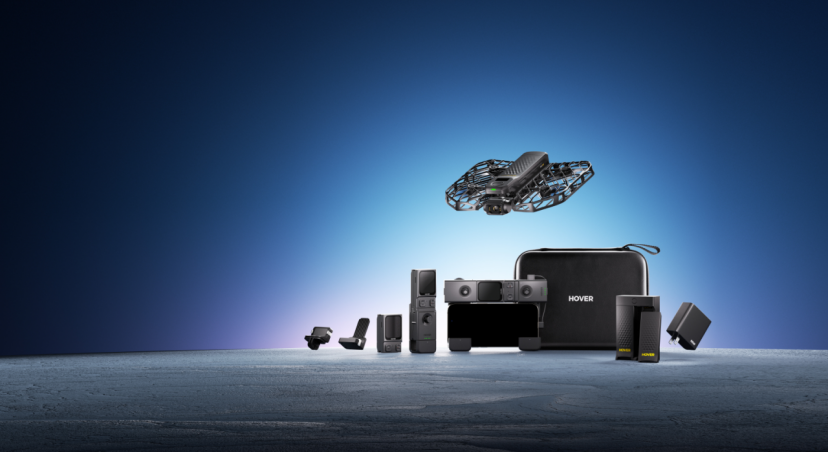
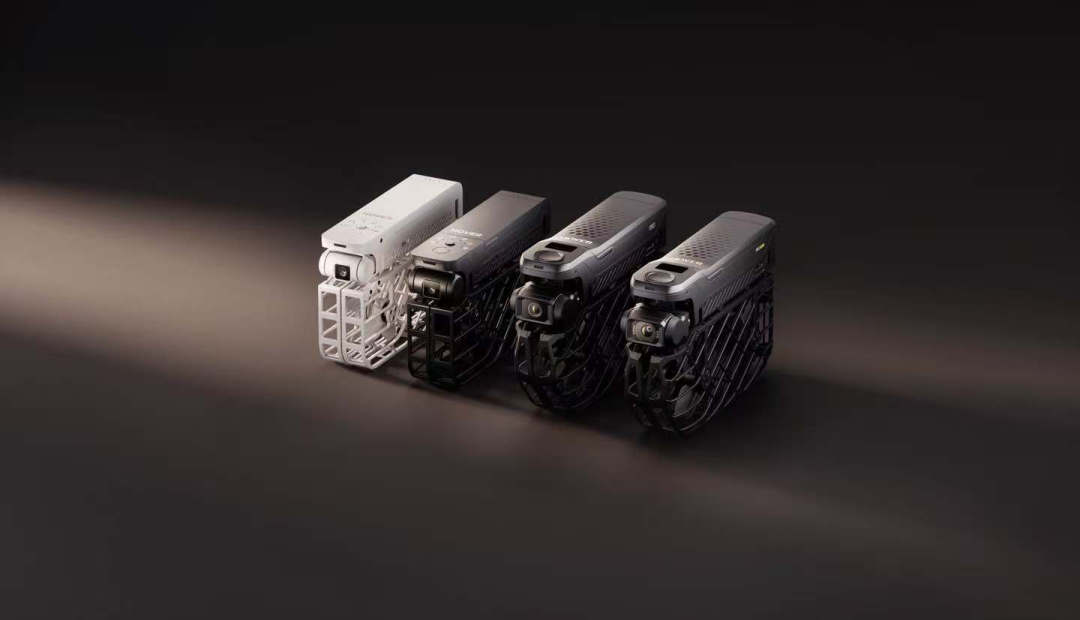
Wang Mengqiu: I can show you our products from 2016, 2023, and 2024 — each generation has roughly five times the computing power of the previous, with increasing intelligence, while imaging technology follows smartphone improvements and gets better too. You can understand our product as a "flying phone" or aerial robot.
We were the first company to turn a smartphone chip into a robotic solution. In 2016, our product used pure computer vision technology, no GPS, purely visual interaction, enabling palm takeoff.

We have a concept called a robot's "intelligence density" — onboard computing power divided by self-weight. This is the hardest part of making aerial robots. Take robot vacuums: roughly two kilograms, adding a 500g chip and heatsink is no big deal. But we have a product weighing just 99g total, needing to achieve autonomous flight and environmental perception — that's the hardest part, with extreme hardware requirements, because once a product must fight gravity, everything must be highly concentrated. So in a sense, our company has no competitors.
With our current generation product, it's a semi-autonomous flying robot; the next step will certainly iterate toward full autonomy. But the problem is, we'll always be constrained by computing power, always need to push engineering to the extreme. Even if a company today had unlimited resources and funding, converting them into technology and products would take at least two or three years. So we basically use a fully closed system, completing every link ourselves — from structural design, hardware design, to the entire upper-level software architecture — achieving high integration with interlocking components. This demands extremely high standards at every technical level. The machine's volume is fixed; making the "board" this narrow is already hard, while also achieving high integration and high performance ratio.
Q: How have technological developments in recent years helped you?
Wang Mengqiu: The most direct factor is smartphone development driving chip optimization — we're indirect beneficiaries.
Q: What's Zero Zero Robotics's brand positioning? How do you communicate the company's core values and differentiated competitiveness to the outside world?
Wang Mengqiu: In one sentence, our product positioning is: aerial robots that provide users with entertainment and image recording. For users, product usability comes first, so we don't need to spend enormous effort on market education. And in today's era of social media democratization, our growth curve is differentiable — unlike before when only big brands had more resources. Beyond influencers using our products organically to drive traffic, we also have offline experience stores (airport stores, trend boutiques, etc.).
Q: Beyond satisfying people's daily entertainment filming, what other possible application scenarios exist for our products?
Wang Mengqiu: Aerial filming has very broad applications; I won't enumerate them all. Going further, we'd rather be the green leaves to others' flowers — they make the flowers, we handle the hardware, open-source the underlying software for their secondary development. We don't want to monopolize or rule some commercial empire; we just want to do the dirty, hard, tiring work others won't do and can't do well, requiring much accumulation and investment — playing our role on an effective, reliable hardware platform.
Q: What's our current user profile? Is the product open to user customization?
Wang Mengqiu: Over 60% are female users; age-wise, many are between 40 and 80 years old. It's not aimed at a narrow demographic — essentially, anyone who would use a digital camera could potentially use our product. We make flying cameras.
In product tiers, from ordinary users to professional users, our positioning runs from "flying camera" to "sports flying camera" to "professional cinematic sports flying camera." The X1 PRO can do tracking at roughly 40 km/h; the X1 PROMAX has stronger performance, mainly targeting creator demographics. We're the only aircraft under 10,000 RMB achieving 8K30fps.
Q: What are the technical difficulties?
Wang Mengqiu: Given the flying camera's small size and frequent high-speed operation, main difficulties lie in several areas: flight plus filming consumes significant power, requiring good heat dissipation; the camera must maintain resolving power when capturing images; handling high-definition video with large volume and information density; sufficiently powerful propulsion systems to ensure flight speed and stability.
In the future, we hope to create small flying machines that fully understand the world.
Q: What was the Day One product definition inspiration for the flying camera? From your perspective, has Zero Zero Robotics pioneered some product innovation trend in the industry?
Wang Mengqiu: I think industrial design itself is something interesting. I rather like what "schizophrenic" people create — because on one hand, you must balance extremely rational things like functionality, battery life, portability, and technical specifications, where fighting physics allows no uncertainty; on the other hand, you must put yourself in ordinary consumers' shoes, considering whether the product's aesthetics and design are worth buying. So product design involves many different layers, making aesthetic alignment with engineers crucial — our team has been working together for over a decade.
What worries me most are two types of things: one is pure make-work, not just in industry but in some private enterprise cultures too — someone appears to do much but actually never solves the core problem, providing neither functional value nor aesthetic or emotional value. The other is purely industrialized products, reasonable in every aspect but simply ugly. I personally prefer the "surprise" that product design brings, yet something that's also reasonable.
Q: You actually have strong artistic sensibility inside, while simultaneously possessing powerful rational and logical thinking.
Wang Mengqiu: Science and art don't conflict; logic can also be expressed through art.
Everyone has their innate way of thinking, and studying computer science made me happy — because its logic is so clear.
People generally misunderstand art — in my definition, art is the individual's expression of freedom. I think art is full of logic; within rigorous logical thinking, light and shadow and lines become valuable. A completely disorderly thing has no artistry.
The world itself is fascinating; science including mathematics is already nearly a kind of faith, its essence being humanity's highly abstract observation and understanding of this world — that someone can approximate or express the entire world with tiny symbols, with a few formulas, how miraculous is that.
But sometimes we're too self-assured, too attached to so-called patterns. Yet the "statistical data" you rely on to derive patterns all happened in the past — while it's actually infinite possibility unfolding at a specific point in time. Certainty itself is actually uncertainty, so treating past events as so-called truth means never approaching real truth.
Q: I can tell you're someone who really loves reading.
Wang Mengqiu: Not particularly fond of reading, just fond of observing the world. "Try to make sense out of this world" — trying to understand this world and people.
Philosophy studies the relationship between humans, nature, and the world. What's recently excited me is collaborations with universities where I've seen some of the most concise, elegant, and feasible work in over a decade. Perhaps even the authors don't realize how beautiful this is. I believe nature rewards simplicity and elegance, and for something to possess both simultaneously is extremely difficult.
Nature is truly amazing — think about it, such a tiny fruit fly, flying freely in such complex three-dimensional space, its input maybe just 12 by 12, basically no computing power, what a miraculous mechanism. I think this current "brute force" approach of throwing massive compute at problems is definitely not nature, not the truest form of this world, because it's too inefficient.

Flying Cameras Will Become the Next Ten-Million-Unit Home Robot Hit After Robot Vacuums
Q: Why hasn't the flying camera market seen many companies flood in like with phones?
Wang Mengqiu: The input-output ratio isn't high. DJI's consumer drone sales over all these years peaked at perhaps 20 billion RMB annually. Tech giants like Huawei, vivo, and Xiaomi aren't satisfied with this market's input-output ratio, because it takes at least three years of time and capital investment to produce a competitive product. Our peer companies are also making drones; some have been at it four years without a product launch. This isn't so simple.
I think this kind of track is excellent — barriers high enough that competitors haven't flooded in, and if we can survive by some stroke of luck, the potential market is enormous. I believe flying cameras could very likely become the second home robot category, after robot vacuums, to ship over ten million units annually.
Q: How big is the market now?
Wang Mengqiu: Annual shipments in the hundreds of thousands.
An American robot vacuum company founded in 1992 didn't reach ten million units until 2019. Dyson, making vacuums, worked on their product for nearly 20 years — now Britain's richest person. Many markets need time to grow. But I also think flying cameras reaching ten million annual shipments won't take that long; maybe just 5 years.
Q: Beyond market education, does this also accompany technological changes? When you say ten million annual shipments, is this linear growth, or explosive growth at certain points?
Wang Mengqiu: Basically once large numbers of Chinese manufacturers flood in, the market grows rapidly.
Q: If competitors increase, how will you respond?
Wang Mengqiu: We have limited resources, no extra funds for commercial warfare — we just accumulate slowly, like a popcorn machine that can turn a grain into popcorn, but we only have that small spoonful of rice. I often joke that besides money, we lack nothing. I think this is a good state, because for consumer electronics companies, once scaled, cash won't be a scarce resource.
Last year our crowdfunding received excellent market response, because we did something crowdfunding campaigns don't usually do — we started shipping on day five of crowdfunding, treating it as a commercial preview run.
So sales were only $1 million in the first 30 days, then $800,000 in the final 15 days. Because people received their products, loved the experience, and generated great word-of-mouth. When the product launched, iterating to the X1 PROMAX, we already knew what users wanted — they wanted more powerful performance, better specs, so you satisfy that demand. When it went live, over $1 million in two-plus hours, $2.1 million the first day, and we stopped all advertising.
Q: So you think full competition is good for the industry?
Wang Mengqiu: Yes, competition driving technological democratization is a good thing. All I really want is "May the best product win." If a competitor truly makes something higher quality and cheaper, that's the better product. I have no problem with that; we'll just keep working hard ourselves. We've fought many wars against ourselves, so in our view, so-called commercial warfare is nothing to fear.
Our view is: "We are the best of what we are." We may not make the world's best product, but we can't not try our hardest — because you'll regret it. Too many expectations create unnecessary pressure. We have no expectations; I just hope to give our best every day.
Q: DJI has significant personnel, funding, and technical accumulation in related fields — does that pressure you? Have you considered differentiated positioning?
Wang Mengqiu: We're already differentiated enough. And regarding innovation, I remember Elon Musk said something I strongly agree with: "In technology, what matters isn't the technology now, but the rate of technological progress." We've "survived" all these years, and can finally keep focusing on our specific track without distraction.
Q: What do you think your market will look like in the future?
Wang Mengqiu: I think within three years there may be only a few players in the market. After three years, I hope major manufacturers like OPPO, vivo, Huawei, Xiaomi, Samsung, and Apple all enter this market.
Q: You like the feeling of full competition?
Wang Mengqiu: You only live once — do you want to comfortably do something you'll never accomplish every day, or feel like you can only survive until midnight each day but have a real chance to do something important? The latter is my choice.
Q: What are your expectations for technological progress?
Wang Mengqiu: Nothing particularly specific; we can continuously see breakthroughs from universities. Our team has an innate aesthetic and judgment about technology, looking deep enough to see a technology's essence and underlying nature. Some technologies have already become superficial, reduced to gimmicks.
Q: Long-term, what kind of company do you want to become?
Wang Mengqiu: We want to become a company close to consumers. Our team is sincere and full of imagination, putting much thought and heart into making products. To use an analogy, like Hayao Miyazaki — cute, harmless yet exquisitely crafted, building worlds with imagination, expressing in forms people love to see. We also enjoy this wonderful feeling in interacting with users.
There's a story: when our X1 launched overseas in 2023, by Christmas a user sent us a thank-you message on Facebook. He said: "When everyone is dropping bombs with drones, you guys are spreading love." Receiving this kind of feedback is deeply moving.
Q: Ten years ago when you started this company, what expectations did you have for yourself ten years later?
Wang Mengqiu: Nothing particularly special. Entrepreneurship itself is a lifestyle choice for me — I found people I like, formed a team, and we do things together.
So what I value most is our team. The core people have been with me for ten years, or six or seven, having been through much hardship together. Everyone values "loyalty."
I was born in a military family in Hangzhou; my grandparents were Red Army soldiers who came south. They were truly people I admired and worshipped from childhood — that era, that group of people. Back then, for revolution, for communism, for the beautiful vision of new China, they truly had no regrets.
We've now become something of a utopia ourselves — as long as we're together doing things, it doesn't matter what we do.
Q: Has much changed between now and ten years ago?
Wang Mengqiu: Now we can increasingly see the possibilities brought by what I mentioned earlier as "technology acceleration" — the combined force of market sales and technological innovation, two flywheels spinning up. I can feel the accelerating combined force of these two things, unable to stop even if I wanted to, like being swept into the era's "great carriage."

Rapid-Fire Q&A
Q: Do you still watch movies?
Wang Mengqiu: Not anymore. Sports too, stopped.
Q: Roughly how many people on the team now?
Wang Mengqiu: Around 360, in Beijing, Hangzhou, and Shenzhen.
Q: Why Hangzhou?
Wang Mengqiu: Various historical reasons; we just stumbled along this way, no room for perfect planning. Our spirit is "learning to coexist with imperfection and uncertainty" — that's the core of our strong vitality.
Q: Any people, products, or companies that particularly influenced your entrepreneurial path?
Wang Mengqiu: The sportswear company Patagonia. Very idealistic, early on dedicating a few percent of profits annually to environmental causes, rather low-key.
Q: You prefer low-key, sustained effort.
Wang Mengqiu: Yes, it's a process of self-satisfaction and self-actualization, not doing things for others.