Ten Thousand-Word Interview with Duolingo Co-Founder: From 12 Years for 100 Courses to 148 Courses in One Year — How AI Drives Super App Growth

When a major technological shift hits, you have to be willing to challenge every company's underlying assumptions.
If Duolingo didn't exist, what would you use?
Ask users that today, and virtually no one names another language-learning product.
Duolingo has been a technology-first company from day one, committed to using tech to democratize education and make university-level learning accessible. The emergence of AI — and ChatGPT's iPhone moment — pushed Duolingo to redefine language learning, though it also nearly became the first company abandoned by users for being AI-first.
On April 28, CEO Luis von Ahn posted an internal memo on LinkedIn announcing a full pivot to AI-first, with plans to gradually replace contractors with AI. Previously, developing the first 100 courses took roughly 12 years; now, 148 new courses were added in just one year. This looked like a textbook case of AI-driven efficiency gains, but it was followed by a wave of cancellations — users took to social media to post screenshots of canceled subscriptions, some even deleting the app after streaks of over 1,000 days.
Duolingo began as a research project at Carnegie Mellon University. Outsiders widely dismissed it as a product built by a professor and his PhD student — something that could never make money. For its first five years, the company generated zero revenue.
But Duolingo cared more about its mission than profitability: bringing the best education to everyone. If costs could be reduced by 10x or even 100x, all users could receive the same quality of service — everyone would benefit.
Because of this, Duolingo — once seen as a loser in the AI wave — ultimately reversed course and became a winner. It didn't build a homework-cheating tool. It built language learning and general education, teaching you something new. AI can give you answers and walk you through solutions, but it can't tell you why to learn, or why learning matters.
Inside Duolingo, there's a concept called the "Green Machine": keep running experiments, then double down once something works. Its success can't be attributed to any single feature. Streaks, for example, originated from one experiment, but users' lasting love for it came from over 300 subsequent iterations and optimizations. Behind Duolingo's growth lie thousands upon thousands of A/B tests.
The difference between a good app and a great one comes down to details.
Duolingo functions like a global school. Unlike educational research that relies on samples of a few dozen, it has hundreds of millions of learning records from around the world, offering clear insight into user learning paths. With AI, courses and features that once took years can now be built in months — and all of it circles back to the original mission: bringing the best education to everyone.
In the future, when you open Duolingo, every sentence and every exercise will be tailored specifically for you.
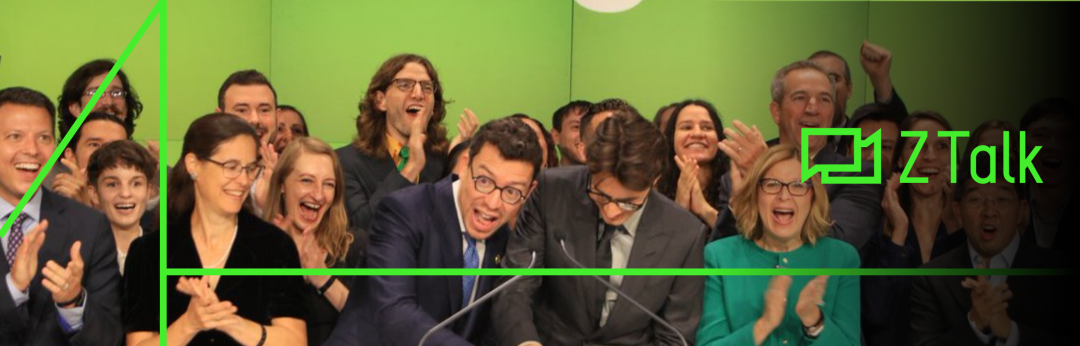
Returning to the day the AI-first announcement was made, co-founder and CTO Severin Hacker analyzed why the company has consistently sparked social media attention and created viral features — covering A/B testing, team hiring and management, and how to bet on future technology and Gen Z talent. He also took us back to where the story began: a boy growing up in a small Swiss town who came to the US for a PhD, founded a company in his first job, and journeyed from unicorn to decacorn to IPO. Ringing the Nasdaq bell was the highlight of his career.
This content comes from 20VC; the following is a full translation by ZhenFund.

- AI is driving the rise of the "product-engineer-designer": AI is lowering the barrier to entry and cost of software development, accelerating the convergence of product, engineering, and design roles. Going forward, more people will participate in creation with this hybrid identity.
- AI's iPhone moment: AI can handle 80% of development from 0 to 1, assist in building 148 courses in one year, ship new features in 9 months, and process 70-80% of tickets. If costs can drop to one-tenth or even one-hundredth, education has a real shot at becoming truly accessible.
- Day-one retention is the North Star: For consumer products, retention is everything. Day-two retention directly determines day-7 and day-30 retention. No matter how much you spend to acquire users, it's like fetching water with a leaky bucket — they'll eventually drain away.
- Duolingo wins through thousands of A/B tests: Duolingo's internal "Green Machine" concept means constantly running experiments, validating what works, and rapidly scaling investment. Its high-velocity growth comes from this system of continuous iteration and data-driven decision-making, not any single feature or strategy.

Technology-First From Day One
Harry Stebbings: Duolingo announced it's going AI-first a few days ago. I want to start with what that means, and what it doesn't mean.
Severin Hacker: It goes back to why we started Duolingo and what our mission is. Duolingo's mission is to provide the best education and make it available to everyone. That's what Luis and I set out to do when we founded the company.
In the past, the best education was only available to the wealthiest. Kings would hire private tutors for their children — that was the most effective way to learn at the time. And it's still true today. If you want to become a top tennis player, you need one-on-one coaching.
Harry Stebbings: Right. I remember one US Open final where both players were daughters of billionaires.
Severin Hacker: Exactly. They had one-on-one tutors. We saw that technology could achieve the same thing, but for everyone. Not everyone can afford a private tutor — it's too expensive. But we believed technology could give everyone a learning experience close to one-on-one tutoring.
Duolingo was technology-first from the very beginning. We used to say software; now we say AI. In a way, nothing has really changed — the AI technology is just much more powerful now.
Harry Stebbings: I see. Can you walk me through the moment of that decision? You, Luis, and the board, sitting in a room together — how did you commit to fundamentally reshaping the organization and restructuring Duolingo as an AI-driven company?
Severin Hacker: This transition has actually been two and a half years in the making. We were one of OpenAI's first partners when GPT-4 launched. We immediately recognized that this technology had the potential to truly help us fulfill our mission.
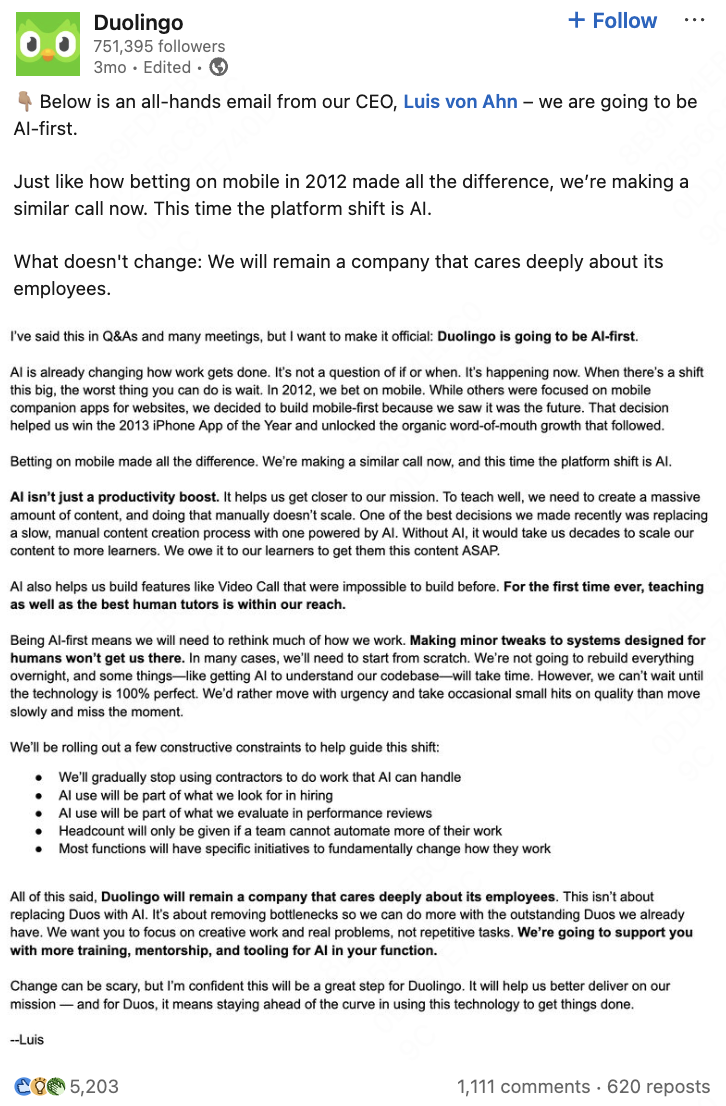
Duolingo CEO Luis von Ahn sent an all-hands memo announcing the company's full pivot to AI-first
Harry Stebbings: What gave you that confidence?
Severin Hacker: We got early access. The first time using it was mind-blowing — like the moment the iPhone appeared. You immediately knew: this is the future, and it's going to enter every field.
That was my personal initial reaction. The next question was: how does this land at Duolingo? The first thing we saw was that it could dramatically improve content production efficiency. Previously, developing a new course took a lot of time and a lot of people for content creation. But with AI, you could generate large volumes of content in bulk. Our first 100 courses took 12 years to complete; now we've added 148 courses in just one year. Without AI, that would have taken another decade or more.
Harry Stebbings: How did you do it? How did you use AI to increase content production efficiency by twelvefold?
Severin Hacker: Of course, there's still substantial human involvement throughout the process. Things like course structure, how to sequence content — people still do that. But a huge number of short sentences in courses are now generated by AI.
We also have a concept called "usability" in design. Say you want to gradually introduce a few new words. You can give the AI constraints: only use these new words, only use specified grammar, don't use anything else — and it generates sentences that fit. That's the magic of AI, and how we achieve bulk generation.
Harry Stebbings: On course design, if you already have data on student completion rates, success rates, satisfaction, NPS, and so on over a six-month period, could you just have AI design the courses? It could autonomously build the entire curriculum, right?
Severin Hacker: That's a great question. I think the industry is definitely moving in that direction. What's unique about Duolingo is our massive user base. We're the world's largest learning platform — the scale gap between us and others is truly orders of magnitude.
We can see how users learn. It's like we have a giant school. Typical educational research might have a sample of a few dozen students; we have hundreds of millions of learning records. This lets us genuinely validate whether course designs work, which designs are better. We use this data to continuously optimize content.
And it's not just optimization going forward. Right now we still offer fixed courses — you and I use the same content. But that will change. Say you like football and you're planning a trip to France — we could customize a course for you, teaching vocabulary you'll actually need in France. So why batch-produce courses at all? Why not generate content in real time, personalized for each individual?
But it goes further than that. Right now we still offer fixed courses — you and I use the same content. But I think that will change dramatically. Say you're into football and you're planning a trip to France — we could build a course just for you, laser-focused on vocabulary you'll actually need in France. So why are we still batch-designing courses in the back end? Why not generate content in real time, based on what each user needs?
The moment you open the app, every sentence, every exercise will be made just for you.
Harry Stebbings: So you believe personalization is the future of education?
Severin Hacker: I do. That's also why one-on-one tutors are so effective. They know your level, they know how to assess you. Going back to the tennis coach — they know what you need to improve, they give you precise feedback in the moment, and they know your interests and how you differ from other students.
Harry Stebbings: I completely agree. I was watching an interview with Zuckerberg last night, and he was saying content in the future won't be this passive video-watching experience we have today — it'll be interactive. Like your fitness trainer suddenly talking to you: "No, you should be getting 12 grams of protein, not 8." That kind of interactivity is going to drive everything.
How do you think about the balance between personalization and interactivity in the future of education? Especially the multimodal piece. One thing I love about Duolingo is that it's kind of weird: I'll be walking down the street in London and sometimes say out loud, "Bruno es americano." There's voice, there's text input — it's multimodal.
Severin Hacker: Yes, I think the future is definitely multimodal. We already have a feature in the app called "Video Call with Lily" — you can call Lily, who's a character we designed, a girl with purple hair. She's not a teacher in the traditional sense, more like a friend. She remembers your preferences, like knowing I like cooking, knowing where I live, and she brings that into the conversation while still completing a full exchange. It's like learning by chatting with an AI friend. I think that approach is going to matter a lot. Though obviously not every scenario works for voice — sometimes you're on the subway and don't want to talk out loud.
Harry Stebbings: How has development at Duolingo changed since you started using AI? What tools are you using? Has the pace and process shifted?
Severin Hacker: We use AI in three ways right now. First is content generation — that's been our biggest success so far, completely transforming how we produce content, mainly learning content.
Second is feature development. We can now build things that weren't possible before, like "Video Call with Lily," this AI chat functionality. Two or three years ago we couldn't have done this, and it's exactly the piece that was missing from our product. If you asked our users what Duolingo was lacking, many would mention speaking practice. Now we can do it, and adoption has been incredibly high. I think there's a lot more room in that direction.
Third is overall company productivity. Our software engineers use Cursor, our customer support team uses AI to help handle requests.
Harry Stebbings: Do you require everyone to use Cursor? Or do you say "we prefer you use this"?
Severin Hacker: We don't mandate it. Duolingo's culture is very egalitarian, bottom-up. We just say: if it makes you more productive, we'll pay for it. You can use Cursor, you can use ChatGPT, you can use Copilot — we look at what people actually end up using.
Product, Engineering, and Design Will Converge
Harry Stebbings: You said LLMs are stunning at language. Where is AI better than people think? And where is it less ideal, where there's still room for improvement?
Severin Hacker: Early on, AI hallucinated a lot — it would make things up. That's much less common now. For us, even when it does hallucinate occasionally, it's fine. We're teaching language, so as long as the language and grammar are correct, it doesn't matter if it invents a historical fact. We're not teaching history. So in our context, hallucination isn't a major issue.
Harry Stebbings: I bet your users correct it though — "No, it was 1914, not 1916." Right? When you have enough users, someone will always catch those.
Severin Hacker: Yes, but overall it doesn't matter much, we don't get hung up on it. What I am skeptical about is some of the hype in Silicon Valley, claims that software engineering will soon be replaced by AI. I've tried all these tools myself, and I think there are still many things they don't do well.
Harry Stebbings: Like what?
Severin Hacker: In software engineering, AI is very good at getting a simple app from zero to 80%, like with Replit or Lovable. But as the codebase grows, even if it was AI-generated initially, model performance degrades. Finishing that last 10% takes almost as long as the first 80%, and AI creates technical debt that it can't resolve itself — though this may improve.
On the other hand, it's quite good at single-point transformations — adding comments to files, changing function parameters, things like that. But adding a new feature to a large codebase, even a simple one, they're not good enough yet.
Harry Stebbings: Do you think Duolingo will have more or fewer software engineers in five years?
Severin Hacker: Good question. If you'd asked me a year ago, I would have said definitely more. Now I'm less sure. I think two things will happen.
First, these AI tools lower the barrier to entry for software engineering. Like, your mom could probably build an app with Lovable.
Second, AI lowers the cost of writing code and building software. It's like Jevons Paradox — as price drops, demand actually increases. I think that will happen to some degree, more people will build apps. Though whether they'll actually write underlying code, I'm not sure.
Another change is whether we'll even keep calling them "software engineers." At Duolingo right now, product, engineering, and design roles combined make up 70-80% of the company. But with AI, a new hybrid role will emerge — you could call it "product-engineering designer." Someone who can build prototypes, do some engineering and some design, then hand off to dedicated engineers or designers to polish.
So I think there will definitely be more software, and more people creating it. It's just whether those people will still be called "software engineers" that's uncertain. Product, engineering, and design — those three roles will increasingly blend together.
Harry Stebbings: For someone just graduating or choosing a major, if people are saying "CS degrees won't be worth anything in five years," what's your take? Are CS principles and ways of thinking still valuable? If I were your 18-year-old brother asking whether to study CS, what would you say?
Severin Hacker: I studied CS myself, a long time ago. Actually, university doesn't teach you how to code. Many people think CS is programming, but it's much more about fundamentals — not just software engineering, but how computers actually work. Computer science is essentially applied math, really. Logical thinking is important, and that's what the best CS courses teach you.
So universities won't teach you Java or Python, and they shouldn't. Specific languages become obsolete quickly, but the underlying problem-solving thinking and ability remain valuable.
Harry Stebbings: So you'd recommend it?
Severin Hacker: I think CS remains a good investment for the next five years. You can imagine a world where we achieve AGI, nobody has to work, there's UBI — a utopian picture.
Harry Stebbings: Do you really believe that will happen?
Severin Hacker: I believe it will happen, it's just a question of when. Maybe not five years, but ten, twenty years. But in that world, what becomes valuable?
Today in America, if you meet a stranger at a conference, the first question is usually "What do you do?" In the future it might become "What are your hobbies?" Because nobody's working, life revolves around things outside of work.
Harry Stebbings: I'm somewhat skeptical. People always get overexcited. During the agricultural revolution, seeing a combine harvester replace a hundred farmworkers, they thought unemployment was coming. When computers and calculators appeared, people worried about accountants being replaced. But we always find new directions. I don't think society will just rely on UBI and spiral into idleness.
Severin Hacker: I'm not sure what the future holds either. But what's interesting is there's a philosophical question here: if you ask people whether they love their jobs, most will say yes. I assume you do too, right? You'd do it for less money.
Harry Stebbings: I've been doing this job unpaid for years. Of course I would — getting to hang out with all these amazing people and getting paid for it.
Severin Hacker: For us, work isn't just income, it's about meaning. But for many people, work is just a means to survive, it has no meaning.
I think the people who derive purpose from their work — in tech, investors, people involved in the AI revolution — are actually more afraid of change, because they fear losing that sense of purpose. That's why we're sometimes less optimistic about the future.
Harry Stebbings: Interesting. I was talking to SaaS investor Jason Lemkin recently, and he said it's becoming obvious that many young people simply don't want to work, and AI is already as good as them in sales and marketing. Whether you're an SDR or a content creator. Will we see mass unemployment in junior tech roles in the next 12 months?
Severin Hacker: I'm not sure. But there's a prevailing view now that AI tools help senior engineers the most — they're well-trained enough to use AI to become 10x engineers. And AI is good enough to replace junior engineers and interns, so some think you can just hire senior engineers and skip new grads. I think that's wrong. At Duolingo we still hire new graduates. Because people who grew up using AI tools from a young age will be better at using them.
Harry Stebbings: Why? Because younger people adapt to new tools more easily?
Severin Hacker: Right. Someone who's spent a thousand hours with ChatGPT will definitely be more skilled with it than I am. That's today's new graduates. And without Gen Z employees, Duolingo's social media presence wouldn't be nearly as big. You have to understand your target users. Zaria Parvez, Duolingo's Global Senior Social Media Manager, who was on your show recently — she's Gen Z.
Harry Stebbings: She connects with audiences in ways that non-Gen Z people like us completely don't get.
Severin Hacker: Exactly. Sometimes I scroll TikTok and see Duolingo content, and I have no idea why it's funny or why anyone watches it, but it just blows up.
Harry Stebbings: We just talked about AI's impact on engineering, product, and design. Another critical area is customer support. How has AI changed Duolingo's support workflows and staffing?
Severin Hacker: We're already using AI in customer support. It's another early AI success story — it works really well in this domain, to the point where it could transform the entire industry.
We've found AI can handle 70%-80% of tickets. Some people say, "So you don't need human agents anymore?" Not true. We still need them, because that remaining 30% still requires human handling.
More importantly, with virtually unlimited AI support capacity, we can serve far more users. Right now we only offer customer support to paid users, but if we can reduce costs by 10x or even 100x, we can give everyone access to support.
This is classic Jevons paradox: costs fall, demand rises.
Harry Stebbings: Which vendor do you use for support?
Severin Hacker: Decagon.
Harry Stebbings: I need to get their CEO on the show. That 70%-80% resolution rate is remarkable. I want to ask — expanding service to more users, deploying AI across your product, all of this costs money. Many features require paying OpenAI. Won't margins compress? You haven't raised prices, but costs have gone up.
Severin Hacker: That's an interesting question. Of Duolingo's three AI use cases, the first is content generation, which actually helps margins quite a bit.
Harry Stebbings: And the results are stunning.
Severin Hacker: Right, content generation is a one-time cost. You generate it and you're done.
The second is features like "Video Call with Lily," which has a per-use cost. Every LLM interaction, every API call costs money. So we tiered our subscriptions into three levels: Free, Super, and Max — this feature is only in Max. We'd love to make it available to everyone eventually, but right now AI features have specific costs, so they have to live in the premium tier first.
We believe these costs will come down. Batch processing costs are already declining, competition is fierce here. Real-time models, multimodal models — there will be more competition there too, and costs will naturally fall. Eventually, we can make these features available to more people, or even everyone.
Gamification Is the Engine of Motivation
Harry Stebbings: On model partnerships, you mentioned your early collaboration with OpenAI. How do you think about flexibility in switching between different generations and specializations of AI models? Will you work with five providers simultaneously in the future, or are you basically bound to OpenAI?
Severin Hacker: I think this space will get intensely competitive very quickly. But in more vertical domains — vision models, audio models, multimodal models — there's less competition, and some companies may lead for a long time. For voice technology, we work with ElevenLabs. Their models and voice quality are excellent, and I think this category is less easily replaceable.
Harry Stebbings: You mentioned ElevenLabs, Decagon, and Duolingo itself, and it immediately made me think — OpenAI will probably enter these spaces soon. I remember Duolingo's stock dropped once because the market worried OpenAI and ChatGPT would move deeper into language learning. Did you internally have those "oh god, is OpenAI going to eat our lunch?" conversations?
Severin Hacker: When ChatGPT launched, its first "killer app" was actually homework cheating. If you're a company built on doing people's homework, that's devastating. We have some so-called peers who claim to be in education but are really in homework completion.
Harry Stebbings: "Homework cheating" — that's an interesting framing, I didn't even know that was an industry.
Severin Hacker: Yeah, those companies took a big hit. And outsiders said, Duolingo's an education company, so ChatGPT will disrupt you too. But the opposite happened. We're not in homework completion. We're in language learning — actually in general education, helping people learn new things. That's completely different.
In capital markets, companies get labeled as "AI winners" or "AI losers." We were initially mislabeled as an "AI loser," then became an "AI winner." AI actually became a tailwind for us.
Harry Stebbings: You really weren't worried at all internally? When you and Luis met, you never thought, "Is Sam Altman going to build language learning too?"
Severin Hacker: I don't think anyone can stop them. I guess what you're asking is: could OpenAI or ChatGPT build a really good language learning tool?
Harry Stebbings: Exactly. I was thinking, could they steal a huge chunk of your casual users with something simple, like "chat with a friend in your target language"?
Severin Hacker: That's something we do think about, and there's a lot to unpack here. First, what's the hardest part of learning a language?
Harry Stebbings: I'd say discipline.
Severin Hacker: Right, it's motivation. This is one of Duolingo's core insights. We've been telling the world this for ten years, and somehow no one ever seems to truly believe it. The hardest thing about learning a language is staying motivated.
Duolingo works because of gamification. It's like a "motivation engine" that gets you coming back every day. If you consistently engage with relatively difficult content, you'll learn a language. That's Duolingo's power. But people consistently underestimate the importance of motivation.
So to build something as good as Duolingo, you have to solve motivation first. And if you ask our users, "What would you use without Duolingo?" they almost never mention other language learning products — they say they'd just scroll more social media. Casual users love Duolingo because it makes them want to keep learning.
Also, if I were Sam Altman, I'd be eyeing trillion-dollar markets. When you could do search or social media, why do language learning?
Harry Stebbings: If I were Sam, I'd think: there are a few core domains that become winner-take-most. Chat (they're already strong), customer service (I think they'll acquire someone soon), coding (they just acquired someone), and fourth is language learning. And LLM literally has an L for Language — the use case aligns perfectly with their technology.
Severin Hacker: Well, we'll see.
Harry Stebbings: We'll see.
Severin Hacker: One more thing — Luis always emphasizes the difference between core features and side features.
Duolingo works because we have a gamification system: Streaks, XP, and other motivational mechanics. Sure, others can copy these, but if they're just tucked away in a corner as side features, the stickiness is completely different from an app where they're the main event.
Harry Stebbings: At Duolingo, which features do you feel are currently side features that you'd love to make central?
Severin Hacker: Maybe one: Duolingo has "Stories" — sometimes you encounter short stories. AI is making these increasingly good and entertaining. Maybe we could elevate them more, integrate more reading content, including reading in users' native languages, or even create dedicated reading content for kids. But we haven't done that yet. The quality of these stories certainly doesn't match Harry Potter.
Harry Stebbings: When I use Duolingo daily, I do notice the details you mentioned — it's these small designs that make the experience more enjoyable. It reminds me of what Spotify co-president Gustav Söderström said: "Details are not details. They make the product."
With Duolingo, these small touches are everywhere. When entrepreneurs ask your advice, do you tell them to focus on details from the start? Or early on, don't worry about popup styling, just ship the product?
Severin Hacker: It's about balance. I think product quality comes from details. And my co-founder Luis is incredibly picky about details — he can spot a misaligned pixel in half a second.
Details really matter. User retention is our most important metric, and details affect not just retention but whether you'll recommend it to friends. You might not say "the details are great," you'd say "it's a great app, it's fun."
All of that comes from details. The difference between a good app and a great app is in the details.

Building the Super App for Future Education
Harry Stebbings: Were there things you spent a lot of time on that, in hindsight, weren't worth it?
Severin Hacker: I can think of one example. We started out focused on language learning, but the mission has always been to cover all of education. So for a while, we wanted to develop new subjects, and someone suggested math. After all, math is a foundational skill that isn't going away for the next hundred years, and I personally agreed with that direction. So we decided to add math content to our product. The initial idea was to build a completely new math app, and we actually did it.
Harry Stebbings: A completely standalone app?
Severin Hacker: Yes, completely standalone. At the time we had the main Duolingo app, and we built a brand new math app, listed in the app store as Duolingo Math.
Harry Stebbings: Pretty creative.
Severin Hacker: But then we found that this math app was becoming more and more like the main Duolingo app. We even wanted to add leaderboards, leagues, streak features. So we started asking ourselves, why are we reinventing the wheel?
The second problem was the user experience wasn't ideal. Users had to know this math app existed, then go to the store, find it, download it, install it, turn on push notifications, and then they'd be confused: is this streak the same as my streak in the main Duolingo app?
The overall experience was similar to Duolingo, but it wasn't the same thing. So we decided that from then on, all educational content would be integrated into the main app. We internally called this the "Super App strategy." Building this standalone app took about two years. Fortunately, the content and data could be migrated, so the work wasn't wasted.
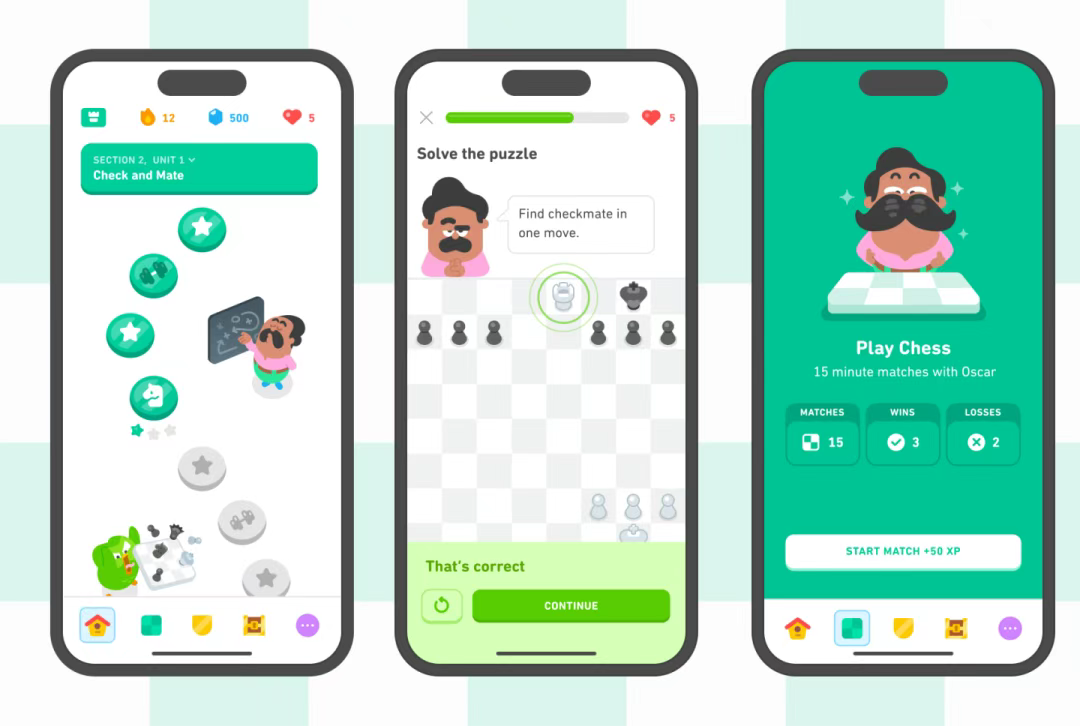
Harry Stebbings: How did the chess course come about?
Severin Hacker: This was a very interesting project. Does it count as educational content? I think so. It exercises your mind.
We had discussed before whether computer science counts as essential content? Chess is somewhat similar — it develops logical thinking skills, so we felt it aligned with Duolingo's mission.
Also, we had two colleagues who are chess fanatics, and they directly proposed: "Want to try making a chess course?" Initially we weren't so sure either.
Harry Stebbings: Why the hesitation?
Severin Hacker: Because chess is fundamentally a game, and we didn't want to make just a pure game — it had to have educational value. This has always been a balancing act: Is it a game? An educational game? Or a dry textbook experience?
But chess is different from racing games — it genuinely exercises your thinking ability, so it was worth trying. The question was how to integrate it into the existing learning path? What form would it take in Duolingo? Would it fit with our existing product design?
What's more interesting is that one PM and one designer involved in the development directly used AI to build a prototype. That PM had an engineering background, strong logic skills, but had barely written any code during his time at Duolingo. This time, he used Cursor and AI tools to build the first version.
It was this prototype that convinced us. If we only had a Figma mockup, we might still have hesitated. But it was really well done — so well that everyone was impressed, and the project immediately moved forward.
Harry Stebbings: What was good about this prototype? Was it fun, or did it have layered progression?
Severin Hacker: When you played it, you felt like it belonged in Duolingo. If you just looked at static screens, you'd have to imagine it yourself. But with this prototype, you could directly feel that the experience was "very Duolingo."
And because of AI, we completed the entire course development in just nine months. This was our fastest new course project ever.
Harry Stebbings: How long does it usually take?
Severin Hacker: Usually several years.
Harry Stebbings: You've already added multiple languages, math, and music. What's the next feature you're most excited to add?
Severin Hacker: What I'm most interested in now is the social aspect of the app. We have leaderboards, a massive user base, and brand identity, but I feel the potential to connect users hasn't been tapped yet. Exactly how to do it is still undecided.
Harry Stebbings: DuoSocial? DuoDate? Doesn't sound too bad.
Severin Hacker: Might be something like that, or maybe a new model for learning together. Anyway, the opportunity in this space is huge.
Harry Stebbings: Would you consider opening physical schools? Like a brand experience store in New York where users can meet the owl, interact offline with friends from the leaderboard? That's real community experience.
Severin Hacker: I'm not sure we'd go that route directly. When people talk about education, they often only understand it as teaching itself — like "I mastered a skill, advanced from A to B." That is indeed part of education, but higher education is far more than that. It actually contains three layers:
First is actual teaching — knowledge transmission and skill learning.
Second is degrees and credentialing. Universities give you a degree, like "Harry, you earned this degree." You complete the courses, and you can put it on your resume or LinkedIn. Employers see it and confirm you actually studied computer science, so they can hire you as an engineer. Credentialing is extremely important — otherwise you're constantly having to prove you have this ability.
Third is the social layer. Many people find partners at university, build social circles.
Most edtech companies only solve the first point. But if you want to challenge Harvard, you have to do all three well.
Harry Stebbings: Do you want to challenge Harvard?
Severin Hacker: No, we just want to fulfill our mission. That's why we started the company.
Harry Stebbings: But in the process of fulfilling your mission, wouldn't you indirectly change Harvard too?
Severin Hacker: That's right, we will (laughs).
But we haven't solved the social layer yet — that's what higher education can do that we haven't achieved. Though returning to the second point, credentialing, we're very passionate about Duolingo scores. You may not have noticed, but Duolingo now gives users a score assessing your proficiency in a language.
We want this score to become the universal metric people use when talking about language ability. For example, "My French Duolingo score is 61" — and others immediately know what level of conversation you can handle. We're entering credentialing through this scoring system.
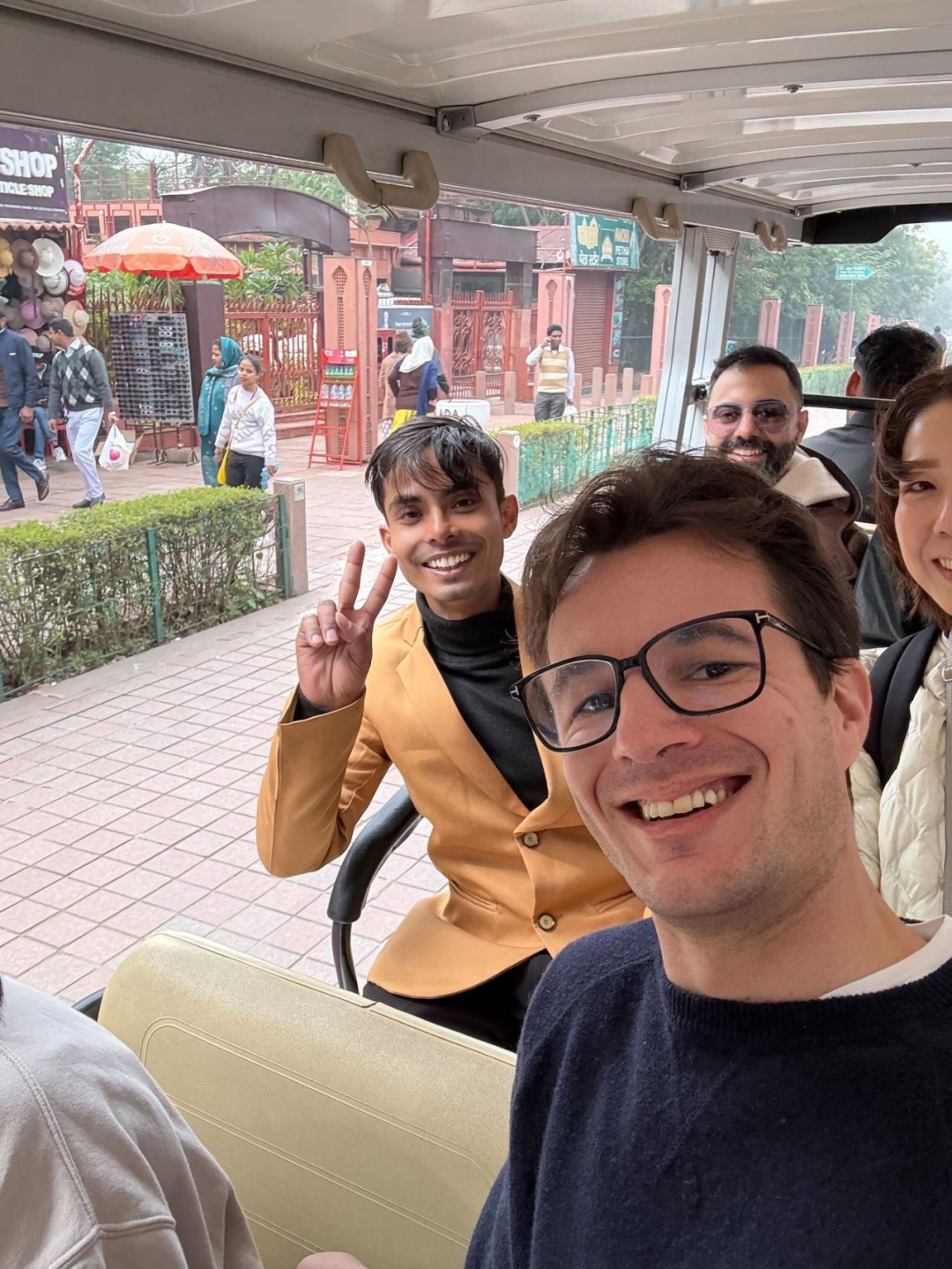
Severin speaking with a tour guide at the Taj Mahal about how the Duolingo English Test helps him guide more tourists
Harry Stebbings: That would be very helpful. Every time someone asks "Do you speak French?" you can only say "a little." But if you could say "I'm actually a 40," they'd immediately understand, "Oh, probably not great then." It makes quantifying language proficiency much more convenient.
You mentioned push notifications earlier — do they still work? Given how flooded people are with pushes now, do you feel like this tactic has lost effectiveness?
Severin Hacker: Super effective. Every time our push service goes down, the data drops immediately and noticeably.
Harry Stebbings: Really that obvious?
Severin Hacker: One hundred percent.
Returning to those three aspects of higher education I mentioned. In K-12, many people say kids go to school to learn knowledge. But actually, school serves more than just learning — K-12 largely also functions as childcare. So even if you develop an excellent AI tutor, you still have to solve the childcare problem.
Nobody would let their child attend a school with no people, no teachers, just learning via app and going home. Schools also aren't likely to have something like Tesla's Optimus robot take full responsibility. I think many things still require humans.
Though I should add, I do believe AI tutors will become extremely, extremely good. In the future, the way most people learn most things will be through them. I'm deeply convinced of this.
Harry Stebbings: What will schools of the future look like? Ten kids with an AI tutor in class together?
Severin Hacker: I think there will still be human involvement — like helping you determine what to learn, why to learn it, how to learn it. AI can teach you knowledge, but it won't tell you why you should learn something, or why it matters.
Harry Stebbings: Have you studied loss aversion mechanisms? Like deducting £100 from you every day you don't check in?
Severin Hacker: You'd actually do that?
Harry Stebbings: One hundred percent I would.
Severin Hacker: This is actually the psychological foundation of streaks. People would rather do all sorts of things than break their record. We sometimes get emails like this too — someone saying: "I'm climbing Mount Everest, no signal, can't maintain my streak, can you help restore it?" Another time, when Portugal and Spain had a power outage, we restored users' streaks for them.

Management Principles: Streamline, Automate, Delegate
Harry Stebbings: I'm curious about your working style, because yours is pretty unusual. I saw in some of your posts that you said you're not great at finishing projects or work — closing out that last 20%. That sounds like a problem. How do you think about it?
Severin Hacker: If I were the only person on the team, or if everyone were like me, that would definitely be an issue. At the end of the day, founders need complementary skills, and the same goes for the entire executive team and the company as a whole.
If nobody were good at finishing things, at nailing that last 20% of details, that wouldn't work. We need people who are obsessed with details. At Duolingo, Luis is that person. From the very beginning, he's been extremely detail-oriented. I care about details too, but he's on another level compared to me.
Harry Stebbings: Has his obsession with detail ever slowed the team down?
Severin Hacker: He mainly works with product managers and the product team. We now have a strict product review process where any change needs approval, and Luis is involved in almost all of them.
Harry Stebbings: He still participates personally like this?
Severin Hacker: Yes, he still maintains this "Founder Mode," participating in most product reviews. For a company at our scale, it's pretty rare to have a CEO still doing this.
Harry Stebbings: So do you think there are times when he focuses too much on details, and you'd rather delegate decisions to the product team? You mentioned "Founder Mode," which has sparked a lot of discussion. How would you describe your own management style?
Severin Hacker: My role changes almost every year. It's been that way since we started the company.
Harry Stebbings: Tanzeen Syed, Managing Director at General Atlantic, told me your role has changed dramatically.
Severin Hacker: That's true. In the early days, I was hands-on execution, building the Duolingo product. Then I shifted to programming, system architecture, backend design. After that, more toward management and recruiting. I think I'm pretty good at recruiting, especially engineers.
As CTO, I've done some things people wouldn't expect. For example, I pushed for us to hire our first product manager. At the time, Luis's attitude was "We don't need product managers."
His previous company was acquired by Google, and he'd worked with product managers there. He felt they didn't add much value and we didn't need to hire any — we could just lead the design team ourselves. But I insisted that we had to hire product managers. Companies at our scale all had them; maybe we were the ones with the wrong idea, so why not try it? It turned out to be the right decision.
Harry Stebbings: What do you think makes you special at recruiting?
Severin Hacker: We have an incredibly strong consumer brand. I'd say almost everyone in the world knows Duolingo at this point.
Harry Stebbings: Speaking of brand power, do you think Duolingo is undervalued? I feel like we generally underestimate brand value. Look at Manchester United — kids all over the world wear their jerseys, and the market cap is only $5 billion?
Severin Hacker: Duolingo is a heavyweight brand. At one point our influence on TikTok surpassed Nike's — and don't forget, Nike is a decades-old global brand. So Duolingo's brand strength is massive. I often mention that we run the most efficient marketing team in the world. People usually assume brand marketing means burning money, but our marketing team is extremely efficient and very small.
Harry Stebbings: How small?
Severin Hacker: About 40 people. For a long time we had zero marketing budget — not a single dollar in advertising — because the company wasn't profitable, we had no revenue. That constraint forced us to come up with creative solutions, which was actually a good thing.
We always say Duolingo marketing isn't about money, it's about good ideas. Look at our TikTok: the green owl in various costumes, being self-deprecating and playful — that's what makes the content interesting and effective.
Harry Stebbings: I love that creativity born from constraints. You mentioned the company originally had no product managers, then figured maybe there's a reason big companies all have this role. That makes me think — many conventions exist for good reason. Which conventional practices do you think are genuinely sensible? Which are outdated and should be dropped?
Severin Hacker: When facing major technological shifts, you need to question every assumption about how companies should operate.
For example, the conventional wisdom was that starting a company required hiring lots of people. But now, you can build a company with perhaps one-tenth the headcount. Large employee bases have been disrupted — that's the big trend.
There's also this idea that companies can be completely flat: no managers, no hierarchy, no levels. I think that's completely unrealistic. Once a company reaches a certain scale, you need management layers, you need hierarchy, you need career paths. Even the Catholic Church, one of the world's oldest organizations, has a very rigid hierarchy. I think that says something.
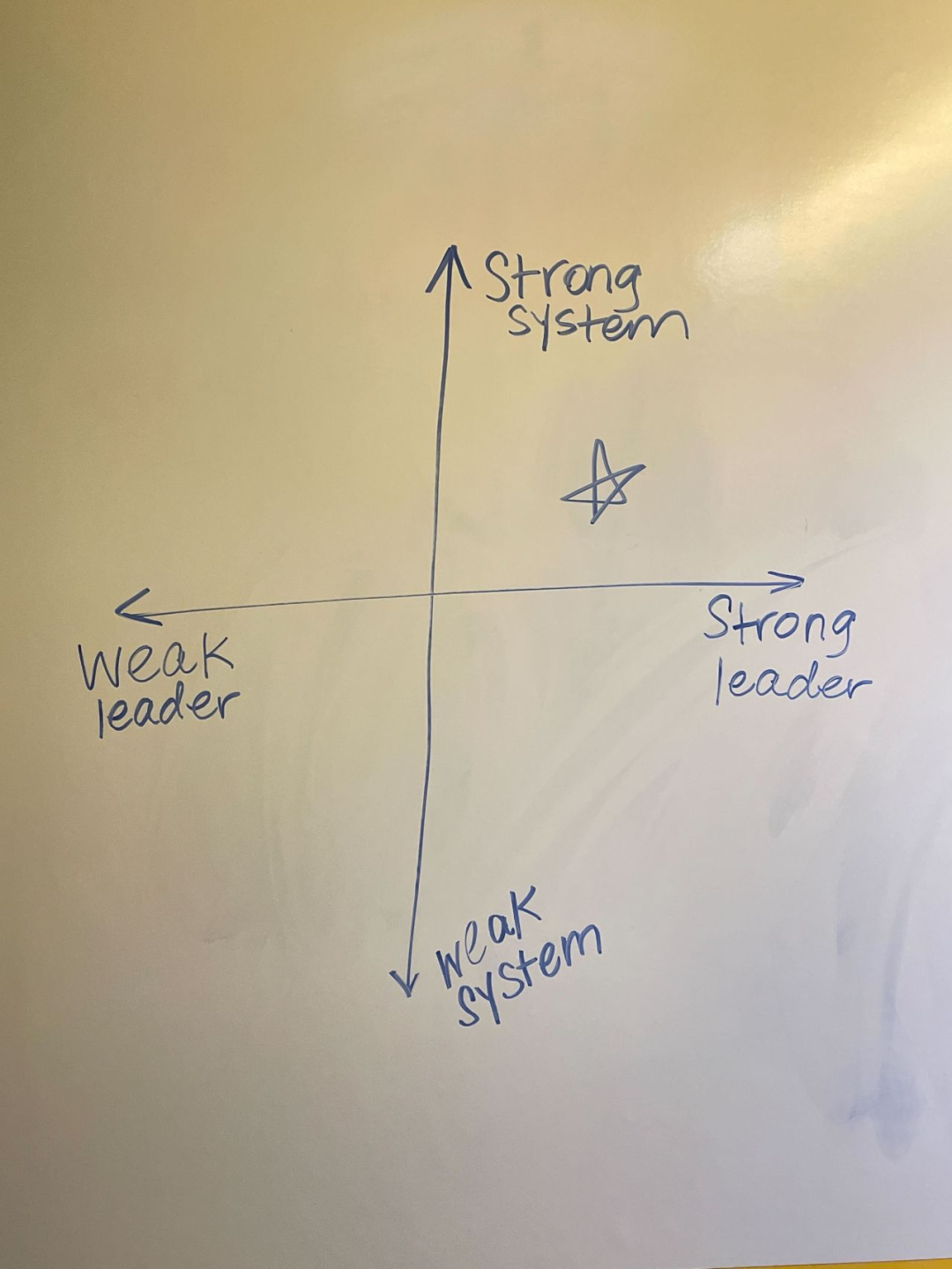
Severin once shared on LinkedIn that he believes successful organizations depend on two core elements: talent and systems
Harry Stebbings: But doesn't Luis participating in product reviews contradict that? When you think about multi-layered management structures and the distribution of knowledge and power, isn't that the opposite of "Founder Mode"?
Severin Hacker: Yes, the key is finding the balance between the two.
Harry Stebbings: Are there things you do now that you feel you shouldn't be doing? For me, I've been doing this show for ten years, and I listen to every episode myself. Because it's my product — I won't put out something imperfect.
Severin Hacker: I'm actually pretty good at delegating. I know my strengths and weaknesses, what I like and don't like doing, what's useful for the company and what isn't. That's one reason my role keeps changing. I have a principle: Reduce, Automate, Delegate.
Harry Stebbings: Walk me through how that works.
Severin Hacker: The core is to think carefully every month or quarter: Does this need to be done? What happens if we don't do it? Will something go seriously wrong? That's step one — especially thinking through the consequences of not doing it.
Step two, try to reduce. Of what must be done, can it be automated? That's easier in the AI era. Can you use ChatGPT to write reports or answer questions? In software engineering, building tools to handle problems is common.
Finally, what can't be automated, give to someone else. I've handed off a lot of day-to-day engineering matters to our head of engineering — she's excellent. I don't get bogged down in details, and spend more time thinking about two things:
First, what does the future look like with AI? What does it mean for our field? What does it mean for Duolingo? How should we act? That's 80% of my time right now.
Second, M&A, which also ties into our AI strategy. Who should we acquire? What should we invest in? That's basically my entire job now.

Retention Is Everything in Language Learning
Harry Stebbings: Any lessons or experiences from the M&A side?
Severin Hacker: There's an interesting point that seems obvious in hindsight but is still worth mentioning: What's the best indicator of whether two founders can work together smoothly without conflict?
The most critical factor is whether they worked together before founding the company. Luis and I worked on research together for two years before starting Duolingo. That's different from friendship — you might know someone for a long time, but your working dynamic could be completely different.
So prior working experience is number one. I think the same applies to M&A. The key is: have you worked with that company before? That's my top piece of advice. The collaboration doesn't have to be a client-vendor relationship; it could be an investment relationship.
Harry Stebbings: This is a very competitive space — I've seen plenty of competitors. I remember you almost participated in a funding round for Praktika, an AI language learning app. How do you view the current competitive landscape and value distribution in the industry? Is it like Uber and Lyft, where Uber has 90% and others fight for 10%, or more fragmented?
Severin Hacker: Winner-takes-all dynamics are more pronounced in consumer.
We've been at this for 12 years. Every year, one or two companies in language learning grow rapidly, but they always decline eventually. They use VC or other funding for paid user acquisition — buying ads on Facebook, Google.
But the essence is, language learning depends on user retention. No amount of spending helps if it's a leaky bucket — users will still churn. So when we see competitors like this, we're not worried, because we've seen this pattern many times before. What I actually worry about is a company with higher retention than Duolingo.
Harry Stebbings: Which retention metric matters most to you?
Severin Hacker: Day-one retention — the percentage of new users who come back the day after signing up. This correlates strongly with day-seven and day-thirty retention. If day-one retention is high, the rest follows.
Harry Stebbings: That's interesting — reminds me of Meta's Chief Growth Officer Alex Schultz always emphasizing "retention, retention, retention." I strongly agree.
I also wanted to ask: as a European, you now live in New York. Sitting here today, I genuinely feel Europe is slowly becoming irrelevant. As a European in America, how do you see this?
Severin Hacker: I'm torn. I obviously don't want Europe to become irrelevant. But if a young European founder came to me and said, "I have an AI idea, what should I do next?" I'd tell them to go to Silicon Valley one hundred percent. That's where your odds are highest.
Harry Stebbings: Why?
Severin Hacker: Because the startup environment there is so much better. I can say this with authority because Duolingo was founded in Pittsburgh. We're not a Silicon Valley company. We don't have an office there. And we still succeeded. There are benefits to not being in Silicon Valley, of course. But I guarantee you, Duolingo would never have raised money in Europe. We had zero revenue for the first five years. No European investor would have touched us.
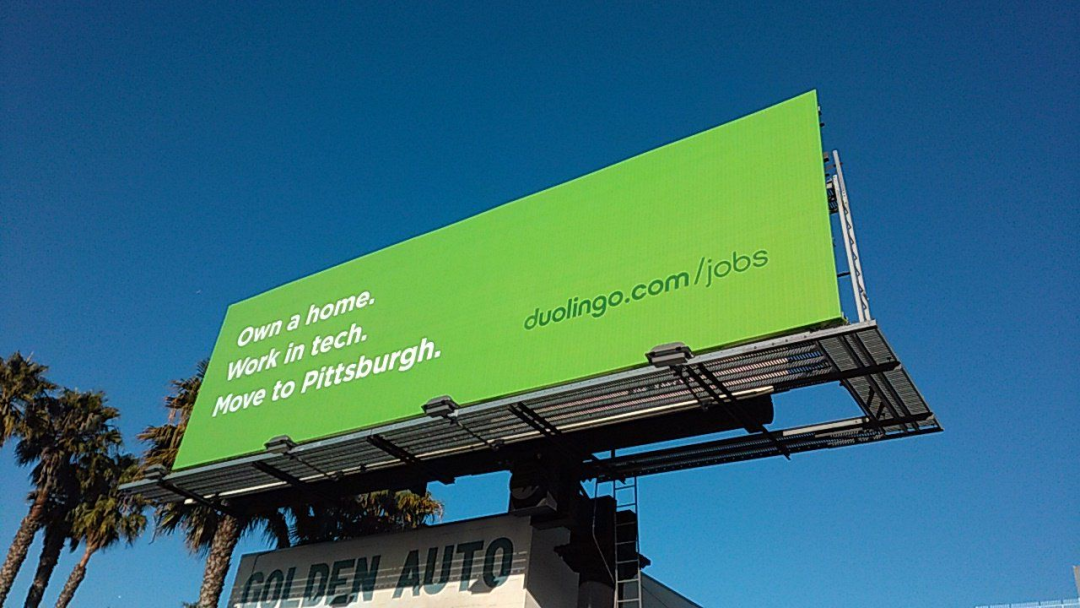
In 2018, Duolingo had just 100 employees. On a whim, Severin bought a billboard on a San Francisco highway inviting people to "Move to Pittsburgh"
Harry Stebbings: Do you think it's still like that? I'm not trying to be contrarian, but you and Luis are both brilliant, both from top schools. There's more capital in Europe now. If you came to me today, I'd write you a term sheet right now.
Severin Hacker: I think it's gotten better. But the most ambitious founders still go to Silicon Valley.
That makes me a little sad. I've met plenty of European founders in New York, and I often wonder: if they had stayed in Europe, how successful could they have become? Most would have achieved maybe half as much. Some would have failed entirely. I really wish I could change that.
Harry Stebbings: So what do you make of companies like Synthesia or ElevenLabs — born in Sweden, and very popular?
Severin Hacker: Those are great. They deserve everyone's support.
In Silicon Valley, tech founders are generally seen as impressive people doing something worth pursuing. In Europe, a lot of people ask, "Why are you doing this?" They assume you're just in it for the money. There's this suspicion: you shouldn't be too successful, you shouldn't be too ambitious. That's really bad for the European startup ecosystem.
Harry Stebbings: You mentioned to me before the problem of non-San Francisco headquarters companies opening San Francisco offices. Why did you ultimately decide not to open one?
Severin Hacker: Duolingo has no office in Silicon Valley or anywhere in California. We did seriously consider opening a Silicon Valley office. Every single investor pushed us hard to do it. We looked at spaces. We almost pulled the trigger.
But before making the final decision, we went and asked founders — people whose companies were headquartered elsewhere but had opened Silicon Valley offices. Almost all of them said it was the worst decision they'd ever made.
Because your best employees move to Silicon Valley, and then they get poached by Airbnb, Uber, or now OpenAI and Anthropic. You accidentally create a talent pipeline feeding straight into Silicon Valley, and your own team gets hollowed out. I decided right then not to do it.
Harry Stebbings: That's such a brilliant point, I'd never thought of it that way. Do you think I'd be more successful if I were in San Francisco? A lot of people tell me I have to be in Silicon Valley. Why do I still stay in London?
Severin Hacker: As a founder, I'd say 100% you'd be more successful.
Harry Stebbings: Let me give you my reasoning, and you tell me if it's right or just push back. In San Francisco I'd be competing with Peter Fenton, Marc Andreessen, Vinod Khosla, Eli Gill, the Collison brothers, Daniel Gross, Nat Friedman. I'm confident in myself, I believe in the product, but the competition is brutal. Marc might invite you over for breakfast at his house on a Saturday morning to talk about working together. But in Europe? There are maybe two decent VCs.
Severin Hacker: When I first started angel investing in Pittsburgh, I thought similarly. Besides me and Luis, almost no one was doing it. A lot of companies ended up moving to Silicon Valley. From the investor angle, it's hard to say. You're doing a show. There's less competition in Europe. You could become the top investor that every European founder wants to work with.
But as a founder, if you want to build an AI company and you have a great idea, would you stay? I'd move. That's the problem. How do we change this?
One less obvious issue is that moving to Silicon Valley is too easy. If you have decent credentials and you can raise money, the U.S. has done a really good job attracting that talent to Silicon Valley. In some ways, the best thing for Europe might be if the U.S. made startup immigration more difficult.
If immigration policy tightened and people like me couldn't move, I'd stay and build in Europe. And the first thing you'd need to do is change the environment here to make it easier for startups to succeed. Because right now no one is pushing for regulatory reform to make starting a company easier. Everyone just leaves.
Harry Stebbings: What do you think Europe should change most? Regulation? Capital scale? Or the mindset of young people? Obviously all of it, but what's the single most critical thing?
Severin Hacker: Regulation is definitely the most damaging.
Harry Stebbings: But I feel like the very best founders aren't stopped by regulation. Travis Kalanick built Uber, Elon Musk built SpaceX — regulation didn't stop them. Regulation doesn't stop brilliant people. What do you think?
Severin Hacker: I think it depends on whether you have alternatives. As a founder, I might think, I can comply with the EU AI Act, but I think it's one of the stupidest pieces of legislation ever written.
To use an analogy, the Ottoman Empire invented the printing press, and the reaction was that this wasn't good, it wasn't beneficial for society, we shouldn't use it. I think the EU AI Act is a bit like that — it's basically saying don't do AI, we're afraid of the negative consequences. It's absurd. If there were no alternative, I might agree with you.
But even Uber and Airbnb faced massive local regulation, and they had plenty of alternatives. Even if one city didn't work — say New York had regulatory restrictions — you had over 200 other cities in the U.S. to go to.

The signal from top-tier VCs matters enormously
Harry Stebbings: If you could go back to the very beginning of Duolingo, what would you do differently?
Severin Hacker: I think Duolingo made two mistakes that weren't fatal, but were pretty serious.
First, we waited too long to start monetizing. In the beginning, we didn't take commercialization seriously at all. The business model was basically to keep raising funding. When people asked about our business model, we'd say venture capital. But eventually we got serious about monetization, and now we do it very well.
We have an internal concept called the "Green Machine," which means we constantly experiment, and when we find something that works, we double down. That's what we did with monetization, and it works incredibly well now. But we definitely started too late.
Harry Stebbings: Was that due to lack of experience? Or were you more focused on user growth and engagement?
Severin Hacker: Both. What's counterintuitive is that our investors weren't pushing us to monetize either. Why weren't they?
Harry Stebbings: If it were me, I wouldn't rush you to monetize either. I'd focus on user activity, building habits, definitely don't put up a paywall too early.
Severin Hacker: Right. Our investors at the time had also invested in Twitter (now X). For those kinds of platforms, it made sense to prioritize user growth and scale first, and we followed that playbook.
First, we knew we could grow users first. Second, we knew we could keep raising money. Third, it was our mission.
Our mission is to provide the best education and make it accessible to everyone. For a long time, we didn't know how to reconcile that mission with a business model. We thought everything had to be free. But eventually we realized what really mattered wasn't being free — it was not excluding anyone. Even if you don't have a bank account, you can still learn on Duolingo.
That hasn't changed to this day. Most users don't pay; they use the free version. I'm especially proud: we're not just a successful business, we're a business with a great mission.
The second mistake was that we also waited too long to hire senior management. Until we hit about 30 people, management was flat. We had lots of new graduates. It was pretty chaotic.
Harry Stebbings: That's the complete opposite of what almost every other guest on my show has said. Nearly everyone says don't hire senior managers. Even if they have experience, that experience doesn't directly transfer. You want young people you can grow from the ground up, who are more willing to get their hands dirty. You have to be really careful with managers.
Severin Hacker: You have to find a balance. A company of a thousand people can't be all new hires. You need both. We're still a relatively young organization — we hire a lot of people straight out of university.
Harry Stebbings: You said you knew you could keep raising money. Of all your funding rounds, which was the hardest?
Severin Hacker: The Series A. We started as a research project at Carnegie Mellon. The outside perception was that this was just something from academia. Luis was a professor, I was his PhD student, and people thought what we were building wasn't going to make money — we'd end up selling to Google. That perception lasted until we became profitable.
For the first five years, people basically saw it as two researchers' project that would eventually get acquired and never go public. That was one reason. In 2011, when we raised, we had just built the website prototype.
Harry Stebbings: Was that built specifically for the Series A?
Severin Hacker: Yes. The reason we could raise was that my co-founder had already had two successful exits — his track record was solid. Some people felt like investing in this was basically betting on Luis's next company. They didn't really believe this project could become a big company.
Harry Stebbings: What was the size of the Series A?
Severin Hacker: $3 million, at roughly a $15 million valuation.
Harry Stebbings: That counted as your Series A? By today's standards, that would barely qualify as "pre-pre-seed" — basically friends-and-family money sent over PayPal.
Severin Hacker: We never did a seed or pre-seed round. We had NSF [National Science Foundation] funding and were incubated at the university. The Series A was our first institutional round.
Harry Stebbings: Which firm invested? Do you remember the moment you signed the term sheet?
Severin Hacker: Union Square Ventures. We only had one term sheet on the table. Either we took their money, or we went back to our research at school.
Harry Stebbings: But isn't that remarkable? Union Square is one of the top VCs globally — the data backs that up. Having only one term sheet isn't controversial at all; if anything, it shows distinctive judgment.
Severin Hacker: Completely agree. They're genuinely exceptional investors.
Harry Stebbings: What do you think they saw that others didn't?
Severin Hacker: When we pitched in Silicon Valley, plenty of VCs were interested, but all of them had one precondition: we had to move there.
They kept asking, "When are you moving to San Francisco or the Bay Area?" They acted very interested, but the moment they heard we weren't relocating, they lost interest. Some of them invested in later rounds, but nobody wanted to be the first to back a non-Silicon Valley company.
Union Square was different. They didn't care about that at all. They said they were the only investors who didn't mind that we were in Pittsburgh — though that's changed now.
Harry Stebbings: Do you think the best founders need to add value for their investors?
Severin Hacker: No, but having investors in your corner matters. You should always try to raise from the very best VCs, even if the terms are slightly worse.
Harry Stebbings: Why do you say that?
Severin Hacker: Because signaling matters. The Series A is the hardest round to raise, but once Union Square invested, other investors started paying attention. The power of that influence is enormous — it makes every subsequent round dramatically easier. We didn't expect that raising $3 million would be harder than raising $100 million.
Harry Stebbings: Totally agree. Which round was the easiest?
Severin Hacker: The recent ones have all been relatively easy. Pretty much everyone wanted in.
Harry Stebbings: Did you and Luis ever think a $5 billion valuation was too high? With such strong market demand, how did you think about the risk of overvaluation?
Severin Hacker: We were more worried about a down round. We didn't do layoffs, we kept growing fast, but we didn't hire aggressively either, and we didn't want to go through a down round [where a new round's pre-money valuation falls below the previous round's post-money valuation].
The problem with extremely high valuations and large funding rounds is that external expectations become massive. Obviously you're not worth that much at the time — investors are betting you'll be worth that much in the future. If you valued the company based on current ARR, the multiple would essentially be infinite.
Harry Stebbings: There is that advantage to raising when you have no revenue.
Severin Hacker: You're not actually worth that much then — they're just betting you will be in a few years. What we most wanted to avoid was a down round and unrealistic investors. I also learned that fundraising really only has three outcomes: one, you don't raise anything; two, you get a standard deal; three, you get an extreme outlier — the kind of deal that happens maybe once a generation, like Facebook or Uber.
Harry Stebbings: More and more companies are getting that third outcome now — huge rounds with minimal dilution. For example, some companies raise $100 million at a $2 billion valuation but only dilute 5%, with fantastic terms. Did you ever get the third outcome?
Severin Hacker: We never got the third outcome. It was always standard deals. In later rounds there was more competition, so we could have gotten higher valuations and more capital, but we didn't do that.
Harry Stebbings: Who was your most helpful investor?
Severin Hacker: Union Square was fantastic. Bing Gordon was also incredibly helpful. He's a rare product-oriented investor who actually uses the product himself and gives extensive feedback. His obsession with the product is almost fanatical. Most investors focus on business metrics, ROI, EBITDA. He's a completely different type.
Harry Stebbings: Let me ask something sensitive — do you like being public? I have a new theory: consumer brands have absolutely no need to go public. Neither do companies like Stripe, Databricks, or SpaceX. If private markets are mature enough, there's no need to list. If Duolingo weren't already public, would you choose to go public?
Severin Hacker: Yes, I support going public. I think it's better for the overall ecosystem, and I'd like to see more European companies go public.
Harry Stebbings: List in the US?
Severin Hacker: It doesn't matter where, as long as capital flows back into the European ecosystem. But that's my personal view, not Duolingo's. Going public was a great experience for us.
Ringing the Nasdaq bell was the highlight of my career. I grew up in a small town in Switzerland, made my way to the US, got my PhD, and started this company — my first job ever. Now the company has become massively successful, with a huge user base and millions of people who love our product. The company has also found a strong sense of purpose, going from unicorn to decacorn to public company.
You feel a sense of accomplishment, like winning a major tournament. It's not the finish line, but it is a significant achievement.
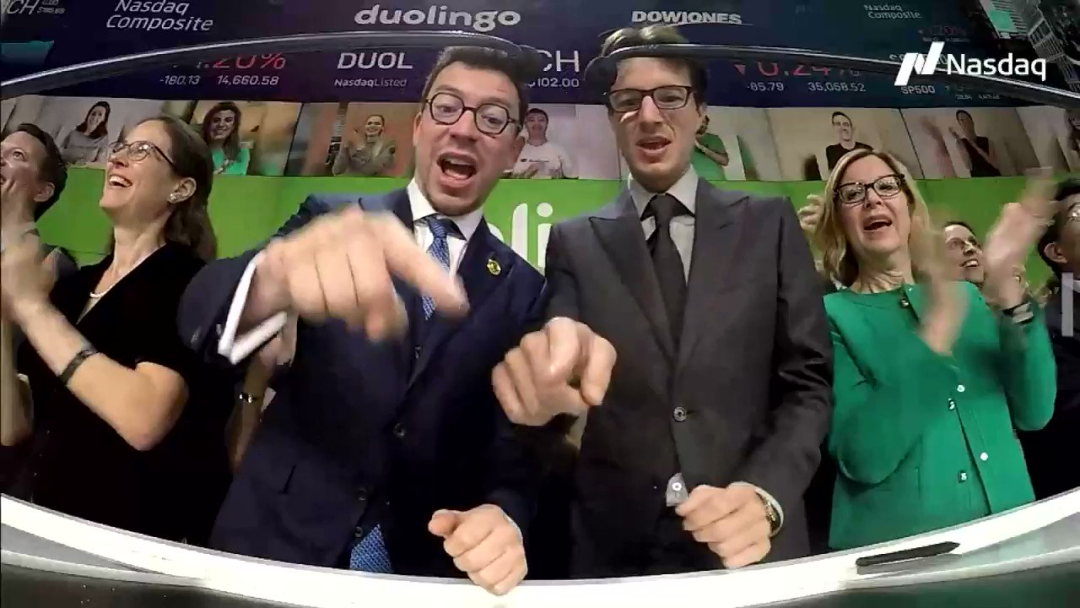
July 28, 2021: Duolingo listed on the Nasdaq in the US
Harry Stebbings: A milestone.
Severin Hacker: Exactly, and more importantly, it didn't end. I'm still at the company. Many founders leave after their shares vest, or after an acquisition or IPO, but I didn't.
Back to going public — private markets are indeed massive, and there's real advantage to staying private. For example, before our IPO we had a finance team of 2 people; now we have 25, and management costs have increased substantially. Also, financial markets care enormously about predictability — something I didn't fully appreciate before. They care about it even more than profit or growth. Their view is, if you can't manage your business drivers, you're not a good operator.
Harry Stebbings: Don't you see that as a drawback? We're in an era of massive uncertainty, where models can shift dramatically at any moment. DeepSeek's emergence completely changed how we think about Chinese open-source AI technology. When you're doing M&A, making investments, thinking about AI's future, this emphasis on predictability could actually be harmful.
Severin Hacker: Markets are certainly uncertain now. For private companies, the case for staying private is stronger than ever. But for a mature company like Stripe, I think going public still makes sense because it creates liquidity for employees. Though you could achieve that through other means, like secondary market transactions.
What makes me proud is that we've recruited tremendous talent and made a lot of people millionaires. That money flows back into the ecosystem. Right now, it's flowing back into Pittsburgh's startup ecosystem, and probably some to New York too. If more European companies went public — like Spotify — employees could make money, then start their own companies. That's what Europe really needs.
Harry Stebbings: I agree with your point, but I'm not sure the IPO is the best mechanism for creating that cycle.
I think consumer brands could keep raising in private markets indefinitely. But if you're an unsexy B2B company doing something nobody pays attention to, you probably still need to go public. Because in the late-stage private market, investors aren't that interested in those kinds of companies.
A company like Duolingo could easily have stayed private for the long term. There are plenty of ways to do buybacks now, and lots of investors want late-stage secondary opportunities, so it's totally viable. This is going to be an important topic in the coming years.
Another example worth watching is Deliveroo. The company was ultimately acquired by DoorDash for £2.9 billion, but it was trading on the London Stock Exchange at a £1.5 billion valuation. That's a £1.4 billion gap in how two markets valued the same company — a staggering difference.

Rapid Fire
Harry Stebbings: Did Duolingo ever have a near-death moment? Was there a day when you thought, "God, this is the worst day ever"?
Severin Hacker: Not a single day — more like the first five years.
Harry Stebbings: I heard "five" and thought you meant five days. Turns out it's five years.
Severin Hacker: We just couldn't find a business model that aligned with our mission. It was genuinely brutal.
Harry Stebbings: What's the most successful angel investment you've made? Why?
Severin Hacker: I'm not particularly good at angel investing.
Harry Stebbings: Why?
Severin Hacker: I think there's overlap between great founders and great investors, but they're fundamentally different things.
Severin Hacker: The investment cycle is usually ten years, but as a founder — especially in the early stages — you get feedback every single day. Data comes fast; you learn and adjust quickly. Compared to that ten-year investment horizon, I'm much more comfortable with this rapid feedback loop. That said, I have had a few investments that returned 10x.
Harry Stebbings: That's genuinely rare. A handful of 10x returns in a lifetime counts as lucky. What's a question investors have asked you that made you think, "Are you serious?"
Severin Hacker: There's one thing — and it's not just investors, it's everyone — "What's your secret? Why is Duolingo so successful?" They always want the answer in a single word.
When you tell them the real answer, they're usually disappointed. They want something like, "The secret is streaks." That's it. Or leaderboards. Or that we really understand Brazil. Everyone wants a simple, blunt attribution.
But Luis always tells them: the real reason is thousands of A/B tests. Adding streaks was just one experiment, and then we ran roughly 300 more to optimize it. It's this continuous iteration that drove massive retention improvements and fueled Duolingo's rapid growth. It's still like an efficient green machine.
Same with marketing. Not strictly A/B testing, but the same logic. We try content on TikTok, then Instagram, and double down on what works. That's our secret — a systematic process, not a single feature.
Harry Stebbings: But I think the challenge in all this is that the payoff cycle often gets compressed. Content is a perfect example — you have to wait to know if it's actually working. You have to do things with no short-term payoff that compound into long-term advantage. Like working out: day one, day two, no muscles. Week one, you might think, "Harry, stop, this test isn't working." But three months in, you see results.
Severin Hacker: I agree. One A/B testing trap is only running tiny experiments — tweaking page copy details. But you need portfolio-style changes: small tweaks alongside big moves. Adding a chess course, or a math course — those are major shifts. Otherwise you get stuck in local optima and can't break out.
Harry Stebbings: What's the single idea you've changed your mind on most in the past 12 months?
Severin Hacker: AI and its implications. I've been going back and forth: will AI really change the world? Will we need more engineers or fewer?
I think one underappreciated point is: if AI genuinely boosts productivity, and each of us becomes 20-30% more efficient — is that actually good or bad?
Harry Stebbings: Obviously good.
Severin Hacker: Right, the big problem we face is demographics. Not enough babies being born; we have to increase productivity. How do you maintain welfare systems, government spending? Every bit of productivity matters. The US has massive fiscal deficits, debt everywhere — but if economic growth goes from 1% to 10% or higher, many problems solve themselves. That would be a true age of abundance.
Harry Stebbings: Will we have more AI friends than real friends in the future?
Severin Hacker: I don't think so. Actually, I think human-to-human interaction will become more valuable.
Harry Stebbings: Why?
Severin Hacker: I believe there will be a counter-movement. Certified, purely human-created things will be more precious. In art, for example, pre-2022 artworks will appreciate because they're definitively human-made. A Picasso — we know Picasso painted it.
Harry Stebbings: Who's the most underrated founder in AI?
Severin Hacker: Decagon, which we discussed earlier. Great company.
Harry Stebbings: Who do you privately admire? Why?
Severin Hacker: I want to quote Naval Ravikant: "The measure of intelligence is whether you can actually get what you want out of life." By that standard, I'd say I'm about 80% successful or intelligent.
Harry Stebbings: What about the remaining 20%?
Severin Hacker: Part of why I agreed to do this podcast is that I feel reduced to being synonymous with Duolingo. Every introduction: "Duolingo co-founder and CTO." But my personality and identity are much broader than that. The remaining 20% is what I haven't fully explored or shared.
Harry Stebbings: I think the hardest part is when your identity gets so tied to the company that the company's performance dictates your happiness. I've only had one job, 20VC. When the fund or content underperforms, I'm miserable.
Severin Hacker: Exactly. I've talked to many founders who've left — about half fall into depression, because their identity is the company.
Harry Stebbings: Will you leave? When identity and work are so tightly bound — you and Duolingo, me and 20VC — I've done 11 years, you've done even longer.
Severin Hacker: The problem is I'm enjoying it. Sometimes I wish I hated it; that would make leaving easier. But I genuinely love it.
Another thing: from the early days until now, every time someone leaves, it feels like getting punched. I wonder: Why are they leaving? What did I do wrong? Do they still believe in the company? It occupies my mind for weeks.
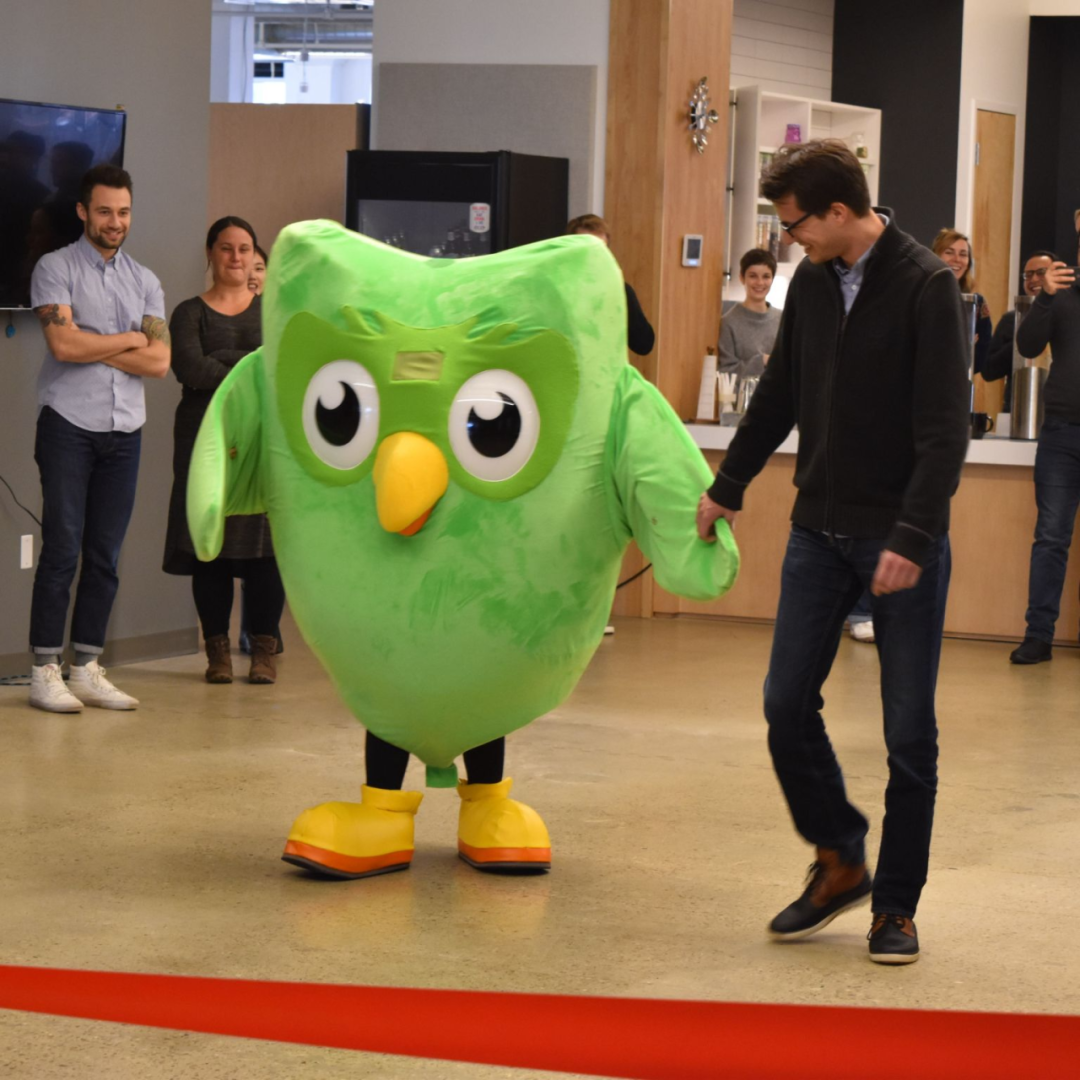
Harry Stebbings: Neil Mehta, founder of Greenoaks Capital, asks employees a brilliant question: "Are your best days ahead of you, or behind you?" Where are Duolingo's best days?
Severin Hacker: Thank you for assuming they're not behind us.
Our mission is to deliver the best education and make university accessible. Now I feel we can actually do it. We can build AI tutors as good as the best teachers, available to everyone — not just the wealthy. This will change the world. I genuinely feel this is the moment. We've spent ten years getting here, and this AI wave makes everything possible.
Harry Stebbings: I don't know your equity structure, but I'm guessing you're a billionaire. Do you think about money often? What's the relationship between money and happiness?
Severin Hacker: I have thought about it, but honestly I wish I spent less time on it — not very meaningful. I often wonder: am I happier now than in grad school? Is it the money? Career success? Knowing myself better? It's hard to disentangle the factors.
But wealth operates in tiers. I remember a study asking successful founders: "How much is enough?" Guess the answer?
Harry Stebbings: $20 million?
Severin Hacker: No, $100 million.
Harry Stebbings: Wow, inflation is real.
Severin Hacker: Right, that was their answer. At that level, you basically stop worrying about money because the number is so large.
Harry Stebbings: Did you set any target number when you started out?
Severin Hacker: No, we're a mission-driven company. I wrote about this on Twitter recently. Counterintuitively, founders who start focused on mission rather than money often end up more successful.
I think of Bill Gates and Mark Zuckerberg. Bill Gates wanted a computer on every desk; he started a company to achieve that. Mark Zuckerberg wanted to connect people. They didn't start companies to get rich — it was the reverse.
You should start with: what do I want to change in the world? What do people need? How can I help them? In ideal capitalism, that's what drives value creation. I believe great companies are born this way.
Harry Stebbings: What impacted your happiness most? I think the phase where you can pay rent, have freedom, and still need to work — that's probably a few million. At ten or twenty million, life is already great. Another eighty million doesn't change much; I have a nice house, I'm doing fine. At a hundred million, you can take private jets whenever.
Severin Hacker: I can't directly answer your question, but I do feel happier now than in my twenties. I was happy then too, but now it's more a sense of accomplishment — and that feeling doesn't go away. Even if Duolingo shut down tomorrow, I'd feel this was an amazing experience. I tried, I succeeded, and even if it doesn't last, the accomplishment remains.
Also, people sharing their Duolingo stories with me. Once on a canal in Venice, I was on a boat and a woman next to me was studying on Duolingo. I watched her thinking, if only she knew who was sitting next to her. But I didn't say anything.
Harry Stebbings: You didn't talk to her?
Severin Hacker: No, I said nothing. Ten minutes, she kept using Duolingo, I kept watching her. It felt incredible.
Harry Stebbings: Does money change marriage?
Severin Hacker: That depends on whether you think money changes people. If money changes people, it changes marriage. I'd say yes, but it still depends on the person.
Harry Stebbings: Did it change yours?
Severin Hacker: A little. My wife and I met before I was successful. She initially earned more than me, then it flipped. But she met the version of me that hadn't made it yet — the guy with crazy ideas.
Meeting new people now is completely different. Every introduction starts with "Duolingo co-founder," then "he's successful." Everyone knows Duolingo. Luis is more famous, but I can't escape these labels either.
Sometimes I wish real life had a browser's "incognito mode" — put on glasses and nobody recognizes you. People always ask what you do. In places where no one knows me, I sometimes deliberately lie. I'll say I'm an Uber driver, a software engineer at some tech company, or an art patron. Because the moment I tell the truth, the conversation immediately becomes "How many languages do you speak? How did you start Duolingo?"
Harry Stebbings: And "Why did it work? Was it because of the Brazilian market?"
Severin Hacker: If they're a user, they might say "I love your product, I've kept my streak going for so many days" — I prefer that.
Harry Stebbings: Last question. Warren Buffett and many others say the most important thing in life is choosing the right partner, who you spend your life with. I've asked your investors, and they all mentioned the special relationship between you and Luis. I'm curious. Whether it's Luis or marriage, what's your biggest piece of advice on choosing a partner?
Severin Hacker: For a cofounder, the answer is simpler. I think the most critical thing is that you've actually worked with this person. Not had drinks at a bar — actually worked together.
Luis and I worked together for two years before starting the company. We knew each other's working styles, strengths and weaknesses, priorities. At first he was my PhD advisor, I was the student, then we became equal cofounders. I worried too — can I trust him? Will he push me out? So I wrote a small two-person contract, which I still have. It clearly spelled out how decisions would be made, division of labor, what he was responsible for, what I was responsible for. We both signed it. That agreement prevented a lot of potential conflicts. Most conflicts happen in the first two years.
Harry Stebbings: What was the biggest conflict?
Severin Hacker: Mostly around product building, also arguments about hiring and firing people. Later it all got sorted out. Now Luis and I meet every two weeks, sometimes it's over in ten minutes.
My internal model can pretty much predict what he'll say, how he'll react to an idea. Because for the first six, seven, eight years, we were under the same roof every day, working 50-60 hours a week. So my understanding of him is probably second only to my understanding of my wife, and vice versa.
Harry Stebbings: Tell me about your wife. What's your biggest piece of advice on choosing a partner?
Severin Hacker: Whether you enjoy talking to this person.
Harry Stebbings: I have a "Tuesday night test" — meaning five years from now, would you still look forward to just sitting down and chatting with this person? Very few people can make you feel, on some Tuesday night in February, cold outside, whether in Pittsburgh, London, or anywhere, that it's genuinely wonderful just to talk to them.
Severin Hacker: Exactly, I think that's important. Mutual support is also crucial — do they support you, or is there competition? I don't think there should be competition in any relationship.
Harry Stebbings: Man, this has been one of the most incredible, wide-ranging conversations I've ever had. It's been an honor to speak with you, thank you for being so open, you're awesome.
Severin Hacker: Thank you.

By Xin
Edited by Cindy