Iterating the Last 1%: A Founder's Guide to Organizational Growth | Z Talk
Closed-Door Talent Salon Recap: How to Control Organizational Growth?
Z Talk is ZhenFund's knowledge-sharing series.
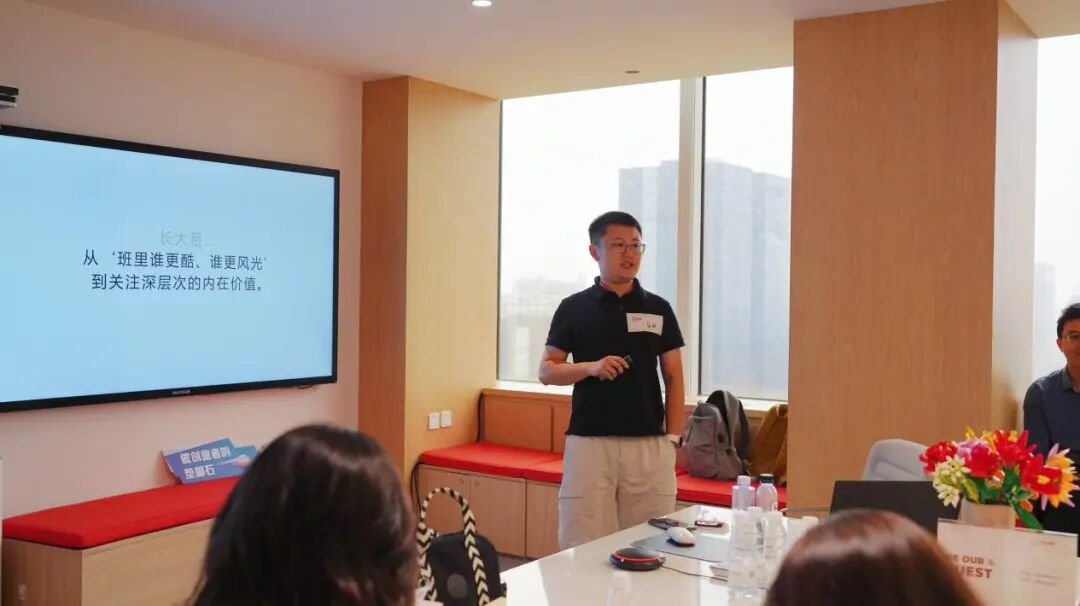
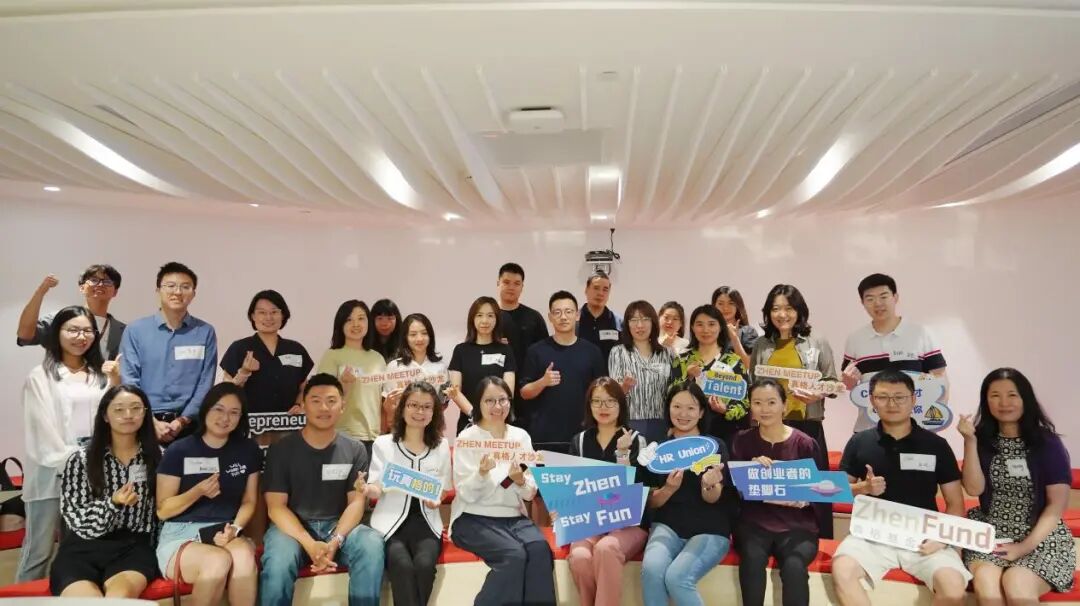
Last month, the Chaoyang Talent Association and ZhenFund co-hosted a private salon in Beijing on organizational growth case studies for startups. We invited Allen Xie, co-founder of Lechun; Wendy Wu, HRVP of UISEE; and Ashley Huang, Regional Recruiting Lead at Canva, to share their perspectives and lead discussions on organizational and talent development systems, flexible work arrangements, and leveraging external resources — exploring the many paths of organizational growth for startups. The event brought together 29 founders and HR leaders from startups for a closed-door session.
We've distilled the highlights from our speakers' sessions. We hope you find them insightful.
01
How to Build a Self-Driving People Organization with Product Thinking?
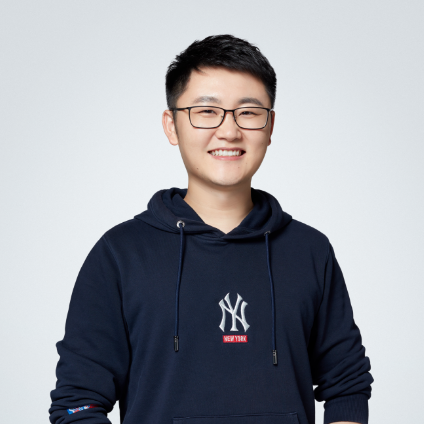
Allen Xie
Co-founder of Lechun
Responsible for Lechun's people organization, strategy, government relations, PR, and user experience. Selected for the National Science and Technology Innovation Youth Talent Program. Recipient of Forbes & Hurun & Zhongguancun U30 honors. Received Beijing municipal talent policy and funding support for four consecutive years (2021-2024). Formerly served as an innovation and entrepreneurship mentor at Tsinghua University's School of Economics and Management.

Lechun Foods
Behind every cup of Lechun Triple-Three Yogurt® lies over 300% raw milk input, triple the beneficial live cultures for fermentation, and German top-tier multi-million-dollar equipment. Combined with Lechun's patented process that removes two-thirds of the whey, it delivers over triple the protein of ordinary milk. Ten years since founding, Lechun has built a reputation across 500+ cities, winning the loyalty of over 10 million users. ZhenFund invested in Lechun Foods across its angel, Series A, Series B, and Series C rounds.
What Lechun Focuses On After 10 Years of Entrepreneurship
While everyone obsesses over funding rounds, star investor arrivals, and financial news disclosures, we choose to stay committed to sustainable operations, supply chain efficiency, refining core products, and putting users first — no cash-burning, no fake orders, no low-efficiency GMV chasing.
A mature BP data model, DPSP system, well-developed price architecture, cost and inventory digital controls, and systematic personnel structure, efficiency management, and value assessment matter far more to us than flashy headlines.
When the tide goes out, you see who's swimming naked. Many peer brands from our era have vanished, while Lechun maintains steady profitable growth. Take the long view. We believe the deeper your horizon, the more you find the "constant certainties" rather than getting caught up in "ever-shifting ripples" — this is where new consumer brands truly begin to rise.
People Organization Is a Long-Term Endeavor
Unlike hitting sales targets, building the underlying people organization may take 2-4 years to develop the methodology and 7-10 years to see results. Lechun's toughest years were spent investing heavily in people organization, job architecture, corporate values, and growth systems.
"Before talking about people organization, many things are universal. We need to understand the company's strategy, products, and data before designing the layout. A company's people organization cannot be built through external consulting or forced implementation — it emerges from the organization's native state discovered through the company's growth."
Building People Organization with Product Thinking, Iterating the "Last 1%"
To design our first product, "Durian Yogurt," we found over 200 of the world's top durian KOLs and co-created with them on product design, packaging, durian content, and more. The 1% core KOLs would reach the 9% around them, eventually diffusing to the 90% mass market.
Copy optimization for "the last 1%" worked the same way. For example, "ice pack, just an ice pack" — optimizing that last 1%, we ended up adding an illustration and message to the ice pack: "I'm just an ice pack, don't eat me." Even a bottle label got the last 1% treatment: "Not sure what to say, so just wishing you a happy Lunar New Year."
Product-building is like this; so is building a people organization system — "polish everything like you would a product."
We Don't Cast a Wide Net — Only Targeted Talent Acquisition
During recruiting season, Lechun's official WeChat account publishes a post where candidates must answer 5 questions about Lechun:
- A paragraph about me
- A document about me
- Five things about me
- My social media
- My resume and life photos
This helps assess candidate-company fit.
For hiring, we care about the present, but even more about the future. We seek partners who share Lechun's values, are self-driven, highly adaptable, and capable — to do meaningful things together. We want to find people better than ourselves, not to be the ceiling of our team.
In Lechun interviews, the talent traits that move us include: communication skills, no boundaries, open mindset, resilience, self-awareness, long-termism, methodology, continuous learning. Similarly, we want candidates to find our interviewers confident and professional.
At Lechun, unique organizational culture shows up in new hires' first-week onboarding tasks. We organize first Mentor conversations, a "catch the CEO" task (15-minute chat with the CEO), and a series of courses on understanding Lechun's growth system to help new colleagues integrate quickly.
We deeply care about everyone's physical and mental health and rich业余生活. Beyond daily breakfast, snacks, coffee, and yogurt, every employee gets two free movie tickets and book reimbursement monthly, plus ten days of meditation/retreat leave annually.
02
How to Build an Organization and Talent Performance System That Survives Cycles?
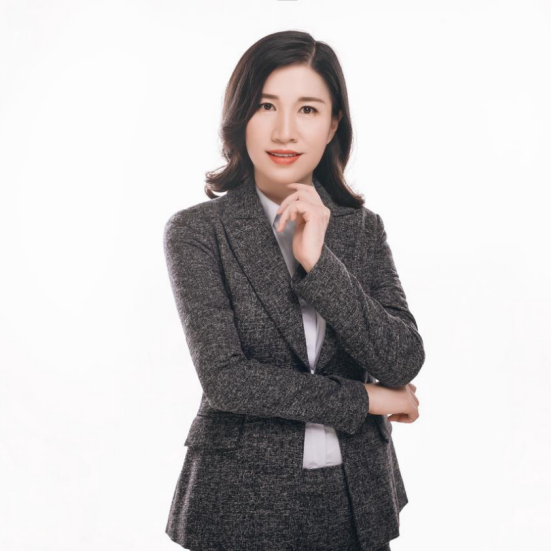
Wendy Wu
HRVP of UISEE
Previously held senior HR management roles at multiple Fortune 500 companies including Dell, PepsiCo, and Shell. Served as head of HR at internet company LeEco Holdings, private enterprise with 100 billion RMB revenue Transfar Zhilian, and built the HR function from scratch at capital platform Gaoji Health.
UISEE
Founded in February 2016, UISEE is a technology company focused on autonomous driving, committed to providing AI driving services for all industries and scenarios — an AI driver empowering mobility and logistics ecosystems. By June 2024, UISEE's cumulative autonomous driving mileage exceeded 3.7 million kilometers. In 2016, ZhenFund invested in UISEE's Pre-A round.
Facing Cycles, the Core Question for Startups Remains: How to Survive?
Facing the external macro environment, when a startup suddenly shifts from student mode to breadwinner mode, pressure pours in from investor expectations, short-term business targets that must be met, and more — resources across all business units become extremely tight.
For a technology company like UISEE, if the company can't develop quickly in a positive direction, it will inevitably face morale decline and talent attrition.
To survive, breakthroughs and performance are essential. For HR, the key focus areas are: strategy, culture, organization, and people. The core is to "know yourself" — conduct organizational self-assessment. You need to evaluate how each module matches the company's current development stage, identifying your strengths, weaknesses, and gaps.
Designing Cycle-Spanning Solutions Is the CEO's Responsibility
Take 2B business in autonomous driving as an example: long sales cycles, highly customized client demands, deal closure and collection speed issues, plus an increasingly treacherous external capital environment — these are all real challenges a company must face to survive cycles. Thus, strategic trade-offs manifest in how to continue securing funding, how to make client and product selections, and how to effectively deploy limited resources.
This severely tests the CEO and entire team, but there are no standard answers — only facing it, exploring, learning, relying on your intuition and luck.
HR Must Guide the CEO and Management Team on Culture
For startups, there's a soul-searching question: at the brink of life and death, should we still talk about culture?
The answer is: yes!
Culture is a company's soul. For companies in startup phase, especially those with immature business models, culture is particularly crucial. From an HR technical standpoint, you need to find a path that guides the CEO and management to reach consensus on organizational issues and form behavioral norms.
Most importantly, culture should be "abstract" in principle but "concrete" in practice: break it down into the management actions the company most wants to change, enhancing team initiative and management capability.
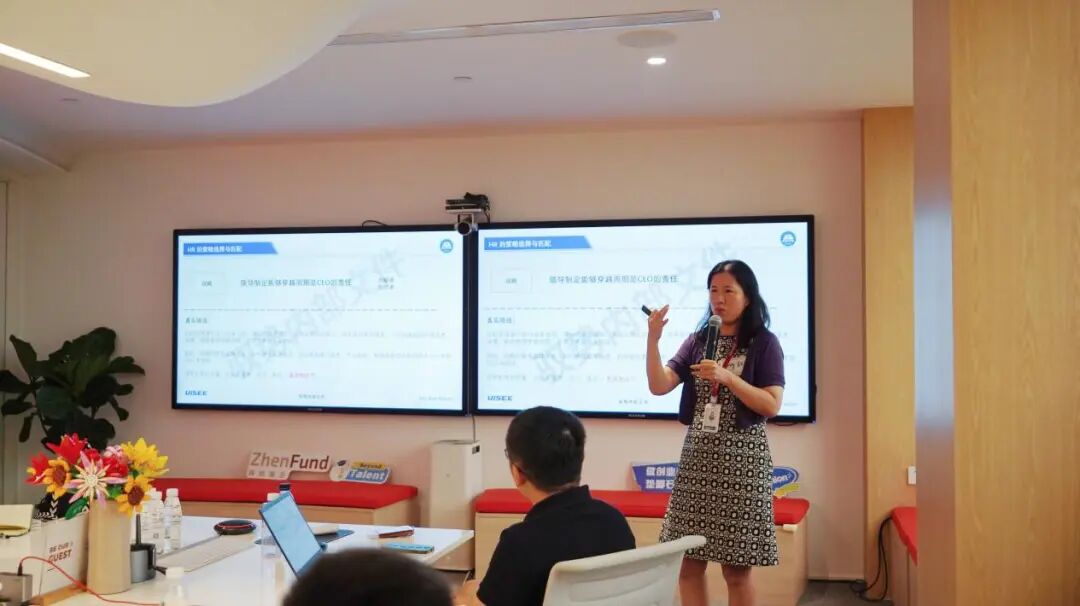
At the Organization and Management Level, HR Is the Leader and Mechanism Designer
Organization-building isn't just completing an org chart — it's forming an organization capable of operating efficiently to achieve goals. This must be done together with culture, testing whether talent selection for critical positions aligns with company values. Because once the organization is set, the human factor matters enormously, especially in startups with very low personnel redundancy.
Organizational capability building needs a system, forming a closed loop of "goal system — evaluation system — incentive system." For HR, the focus is building the framework, doing assessment well, and adapting to local conditions. First, let goals return to essence. Decompose and align them, splitting "routine goals" from "breakthrough goals" — achieving routine goals is a B, achieving breakthrough goals is an A.
Second, design and implement reliable incentive schemes. For 2B business, aligning front and back offices, binding iron triangle goals and member incentives are all important. Be strict, but don't dampen enthusiasm for the sake of strictness. The core of incentive schemes is to embody the kernel of corporate culture and value orientation.
At the talent management level, how does a technical CEO match with commercialized空降 executives? How to manage externally hired high-premium talent? These are real challenges HR faces. HR's core strategy should be to write "rewarding employees" into "values," coordinate well with the CEO, and tilt resources toward core employees.
03
How Can Flexible Work Models Balance Business Efficiency and Human Care?
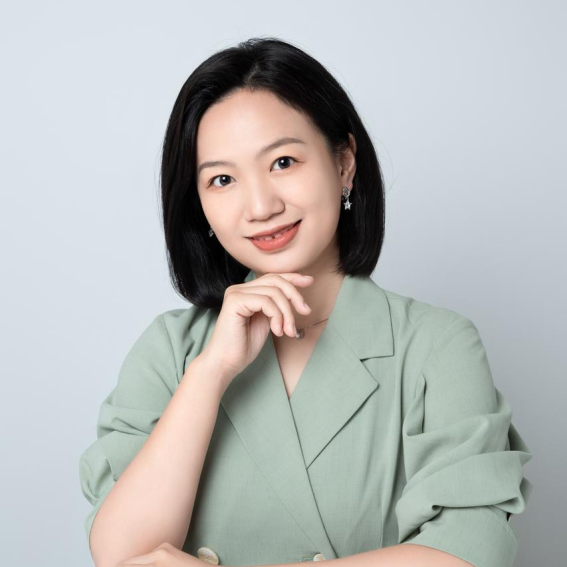
Ashley Huang
Regional (China, Japan, Korea, India) Recruiting Lead at Canva
Previously worked at well-known foreign enterprises including P&G, Mars, and Hulu, with over 10 years of rich experience in talent acquisition and employer branding.
Canva
A visual communications platform founded in 2013, entering the China market in 2018. 4,500+ employees, profitable for 7 consecutive years, with over $2 billion in annualized revenue. Currently has 190 million+ monthly active users, 20 million+ paid subscribers, across 190+ countries, supporting 100+ languages.
Flexible Work Model: "The Anywhere Door" Program
Canva employees can choose hybrid remote work. If they wish, they can work remotely full-time from any first- or second-tier city in China; temporarily work remotely from any city in mainland China, up to 60 working days per year; or even temporarily work remotely from any city abroad, up to 30 working days per year.
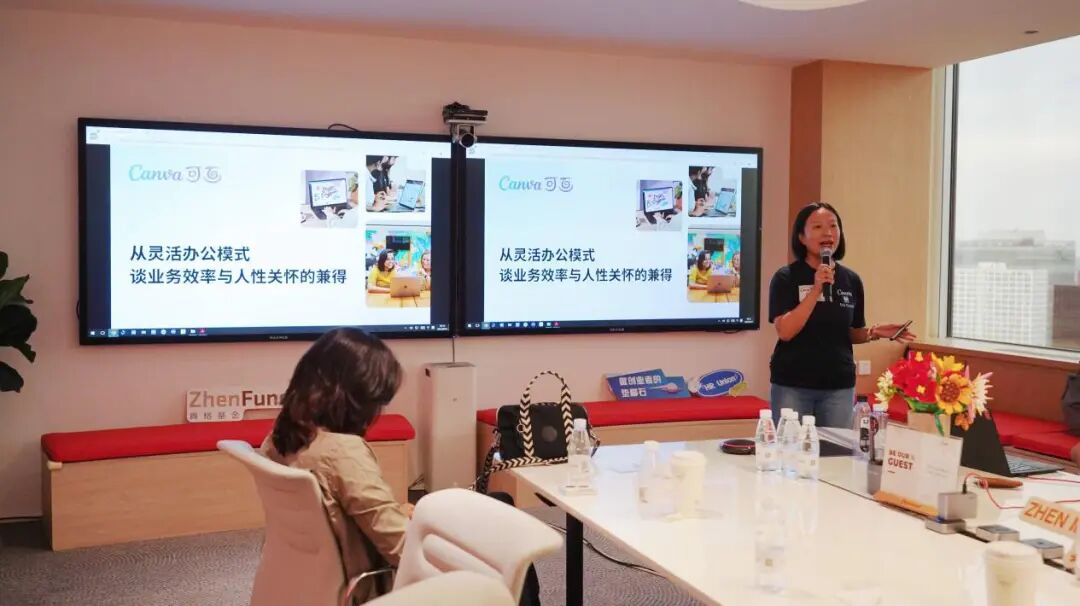
Flexible work better balances employees' work and life, boosting work happiness and motivation — work becomes more meaningful and driven.
From Canva's very first day, the founders wanted to build a "new kind of company." Just as our product aims to empower everyone with design, our organization strives to give people of any background and identity a sense of belonging and the best career phase of their lives.
Canva's values operate on two levels. On the human care level, we want to be good people and help others succeed. On the business growth level, we want to achieve crazy big goals and pursue excellence.
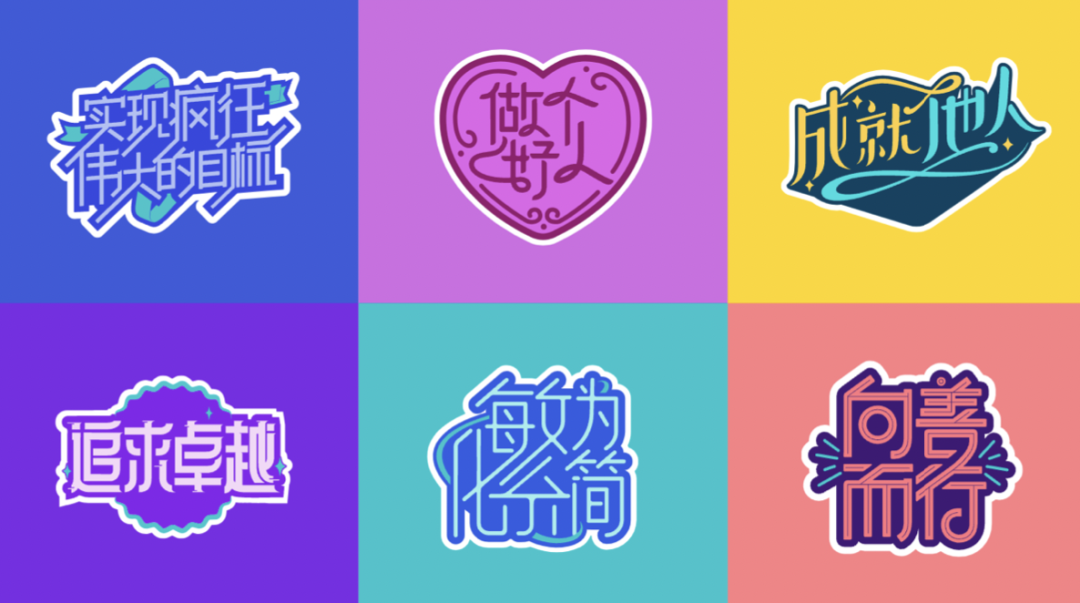
Canva Values
How to maintain high performance, high output, and ensure positive communication and connection within the organization?
To maintain efficient output, we pursue lean, precise hiring — only the most suitable person for each position, letting employees autonomously set goals, track goals, and celebrate goals.
Professional support is essential. We help members prioritize work reasonably, providing the context, information, and training needed to complete their work. We encourage actively seeking feedback and provide clear, helpful feedback.
To ensure the internal communication environment, we follow six guidelines: mutual trust, team first, stay connected, communicate fully, more feedback, self-care. The key is using clear and kind communication, ensuring everyone feels respected and included.
We also work to ensure employees have equal presence whether online or offline. We believe beyond meetings, people can collaborate in more ways: gathering insights through whiteboards, brainstorming, using visual documents to share information, build on each other's ideas, and make quick decisions.
By Julie
Edited by Stone & Wendi
Recommended Reading