2024 Future Science Prize Winners Announced | Z News
Celebrating scientists and honoring the spirit of scientific inquiry.
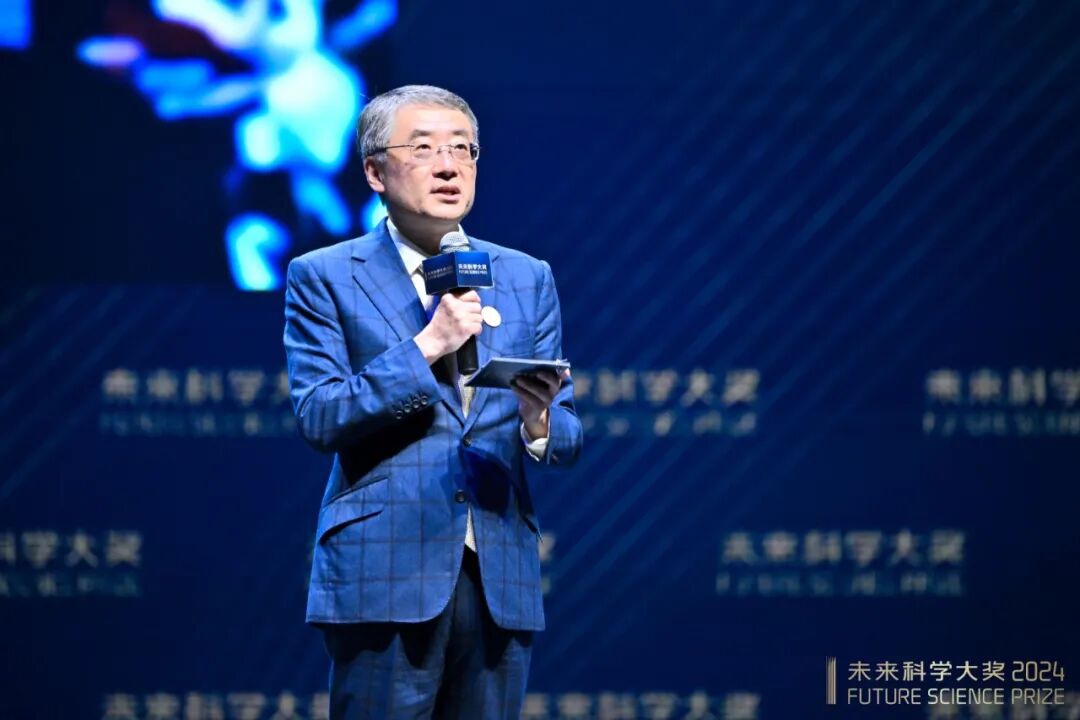
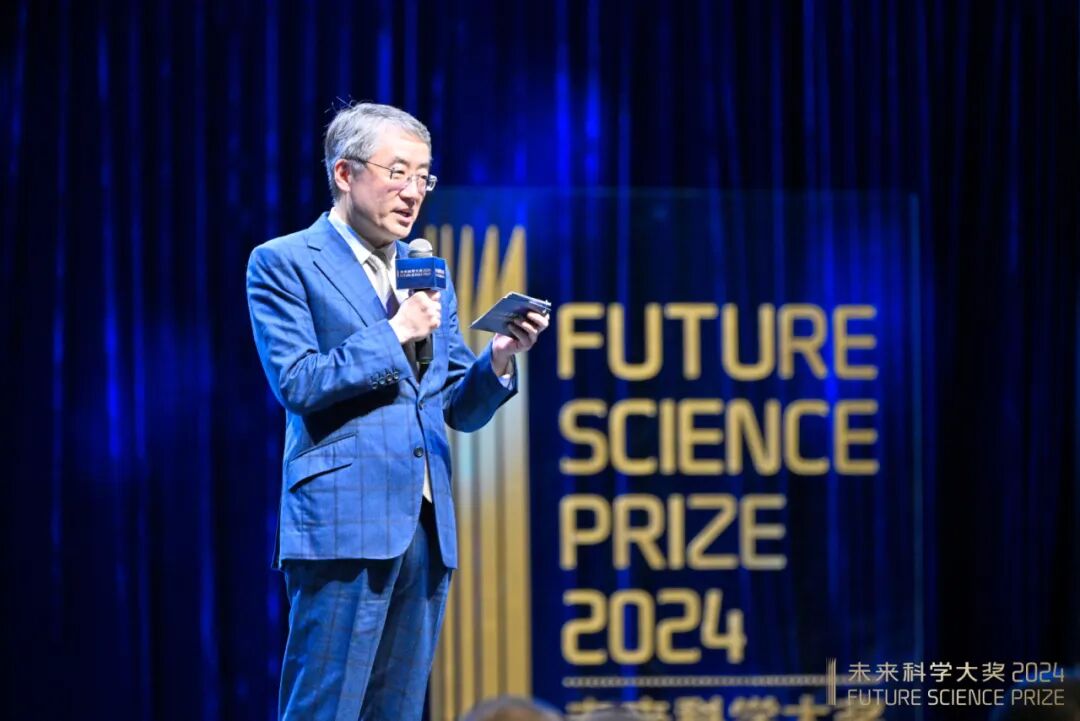
On August 16, 2024, at 10:00 AM, the 2024 Future Science Prize press conference was held in Beijing, officially announcing the winners of the 2024 "Life Science Prize," "Physical Science Prize," and "Mathematics and Computer Science Prize." Wang Qiang, co-founder of ZhenFund, attended as the host.
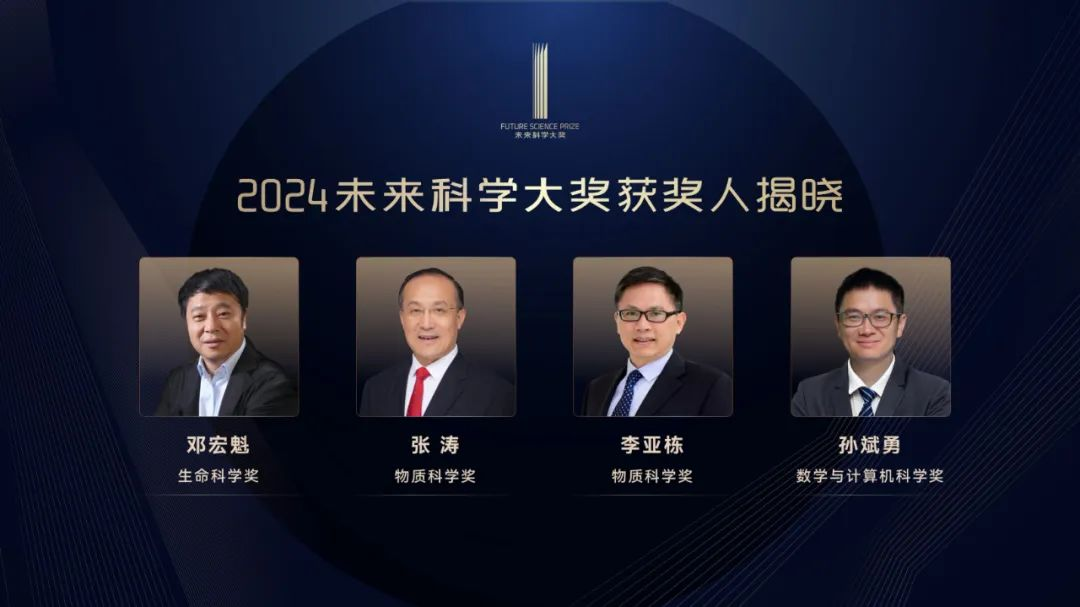
The 2024 Future Science Prize was awarded to four recipients: Deng Hongkui, Zhang Tao, Li Yadong, and Sun Binyong. Deng Hongkui received the "Life Science Prize" for his pioneering work in using chemical methods to reprogram somatic cells into pluripotent stem cells, altering cell fate and state; Zhang Tao and Li Yadong received the "Physical Science Prize" for their groundbreaking contributions to the development and application of "single-atom catalysis"; and Sun Binyong received the "Mathematics and Computer Science Prize" for his outstanding contributions to the representation theory of Lie groups.
This year's "Life Science Prize" winner, Professor Deng Hongkui, is a scientist-entrepreneur whom ZhenFund has invested in twice consecutively. In 2022, ZhenFund invested in Beiqi Biotech, founded by Professor Deng Hongkui, which focuses on developing globally innovative cell therapy drugs based on the chemical small-molecule-induced pluripotent stem cell technology platform (CiPSC).
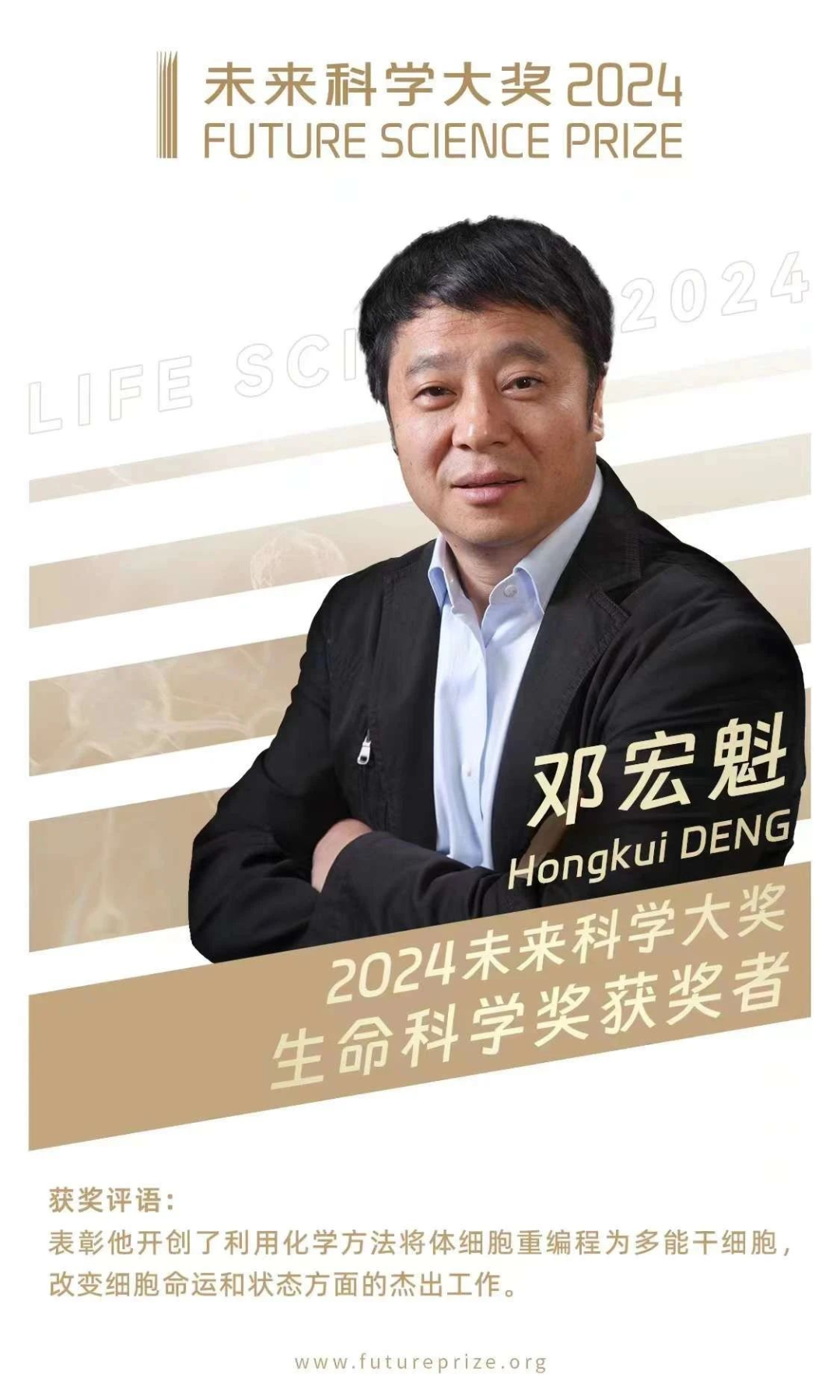
Professor Deng Hongkui is a Boya Chair Professor at Peking University and a lead scientist at Changping Laboratory. He received his PhD from UCLA in 1995 and completed postdoctoral work at New York University.
This "Life Science Prize" was awarded to Professor Deng Hongkui in recognition of his pioneering contributions to the field of cell reprogramming. He led the development of using chemical methods to reprogram somatic cells into pluripotent stem cells, representing outstanding work in altering cell fate and state.
In 2006, Shinya Yamanaka and his colleagues discovered that fibroblasts could be converted into induced pluripotent stem cells (iPSCs) using four transcription factors, marking a new era for regenerative medicine. However, the transcription factor overexpression method is difficult to precisely control, and may lead to random gene integration and potential oncogene expression, limiting its applications.
Professor Deng Hongkui was the first to develop a method using chemical small molecules to convert fibroblasts into iPSCs (chemically induced pluripotent stem cells, or CiPSCs). He demonstrated that CiPSCs could successfully generate fertile mice (2013), and revealed the molecular pathways for generating CiPSCs (2015, 2018). Deng also successfully established human CiPSC induction technology (2022a, 2023), and proved that human CiPSC-derived islets could improve diabetes in non-human primates (2022b), showing the tremendous clinical potential of CiPSCs. Deng's original work has opened new avenues for cell reprogramming and will have broad and far-reaching impacts on stem cell research and regenerative medicine development.
ZhenFund founder Bob Xu and co-founder Wang Qiang have been donors to the Physical Science Prize and Mathematics and Computer Science Prize respectively since the inaugural Future Science Prize in 2016.
Why donate to the Future Science Prize? When the prize was first established, Wang Quiang expressed his original intention and connection to donating the "Mathematics and Computer Science Prize."
Having studied literature at Peking University, then computer science in the United States, and worked at Bell Communications Research before returning to China to co-found New Oriental and later establishing ZhenFund in 2011, Wang said: "More than 20 years ago, I saw an Indian mathematician's acceptance speech for the Wolf Prize on television, which left a particularly deep impression on me. He said that India's contribution to the world of mathematics was '0.' At first I thought he had misspoken, but then I realized the greatness of '0.' It is the introduction of '0' that built the foundation of the entire mathematical world and computer science — within '0' there is nothing, outside '0' there is everything. For angel investors, it's the same: a startup's growth is a process from '0' to '1.' I hope that through establishing this prize, more people can appreciate it, study it, and embrace it, bringing different colors to human imagination."
Science is the driving force of social progress. Entrepreneurs donate money, scientists donate time. In fact, money has a price, but time is priceless. The essence of a scientist is a lasting curiosity and persistent thirst for knowledge about truth and the unknown world. Celebrating scientists, honoring the spirit of science, promoting the development of Chinese science, and making scientists role models for the younger generation — this is the shared original intention of all Future Science Prize donors.
For a long time, ZhenFund has firmly supported scientific research innovation and continuously encouraged scientists with entrepreneurial aspirations to embark on the path of entrepreneurship.
In 2020, we invested in SmartMore, founded by Jia Jiaya, a tenured professor at the Chinese University of Hong Kong and IEEE Fellow, to advance the exploration of industrial intelligent upgrading and digital transformation. Earlier this year, we made an angel-round investment in Yi Sheng Technology, founded by Professor Ma Yi, the inaugural dean of the School of Computing and Data Science at the University of Hong Kong, which is dedicated to building next-generation closed-loop autonomous intelligent AI systems with complete perception and prediction capabilities.
There is also Infinigence AI, initiated by Wang Yu, professor and department chair of Tsinghua University's Department of Electronic Engineering, committed to providing industry-optimal computing power solutions; Xinshijie (ChipVision), founded by Bao Jie, a PhD advisor in Tsinghua's Department of Electronic Engineering, which successfully developed the world's first high-performance chip-based spectrometer; LuxiTech (Colossal-AI), founded by You Yang, a Presidential Young Professor in the Department of Computer Science at the National University of Singapore, dedicated to unleashing AI productivity and building a general deep learning system for the large-model era; and many other outstanding startups led by scientists or professors.
Over the past few years, ZhenFund has invested over 90% of its RMB fund in frontier technology projects, among which more than 50 were entrepreneurial ventures led by research professor teams. We believe that when scientific research results leave the laboratory and are truly translated into practical applications, science will bring tremendous transformation to human production and life — affecting not just one era, but several.
Recommended Reading