Wang Qiang's 2025 Future Science Prize Address: Science Should Be Remembered as Poetry
Look to the future, observe the present, reward the past.
2025 marks the tenth anniversary of the Future Science Prize.
Dubbed "China's Nobel Prize" by Nature, the Future Science Prize is China's first privately initiated science award, honoring researchers whose original work has produced tremendous impact.
On October 26, 2025, the Future Science Prize Award Ceremony was held at the Grand Theatre of the Hong Kong Cultural Centre. Scientists including Qiang Ji, Xing Xu, Zhonghe Zhou, Zhong Fang, Xi Dai, Hong Ding, and Chih-Yuan Lu received the 2025 Future Science Prize.
John Wang, co-founder of ZhenFund and a donor to the Future Science Prize, once described the award this way: "Facing the future, observing the present, rewarding the past."
Ten years ago, he became one of its donors, witnessing firsthand the prize's birth from nothing — watching this seed break through soil, take root, and sprout. Having studied literature at Peking University, pursued computer science in the United States, co-founded New Oriental upon returning to China, and later established ZhenFund, John Wang has always been drawn to the light of human imagination that the Future Science Prize represents.
Today, the Future Science Prize has propelled generation after generation of Chinese researchers to continually expand the boundaries of imagination. As quantum physicist David Bohm put it: "Creativity is essential not only for science but for the whole of life."
In the world of angel investing, a startup's growth is similarly a process of going from zero to one. Scientific breakthroughs lay the groundwork for subsequent technological innovation, while technological advances create possibilities for commercial application. ZhenFund has been fortunate to accompany, from the very beginning, a group of entrepreneurs who harbored dreams of technology — walking with them through that "long, painful, and bewildering exploration" — never ceasing to imagine the world of tomorrow.
This is the best proof of how past, present, and future intertwine.
Over the past decade, 46 scientists have received this honor. Bob Xu, founder of ZhenFund, once remarked: "Perhaps in 100 years, Chinese scientists will want to win the Future Science Prize even more than the Nobel Prize."
ZhenFund will continue walking alongside entrepreneurs, together bearing witness to the light of science.
The following is John Wang's speech at the award ceremony:

Ten Years, A Belief Takes Root
Distinguished guests:
Every time I arrive at the prize ceremony, it feels like stepping into a warm magnetic field, and my heart grows calm. It feels like coming home.
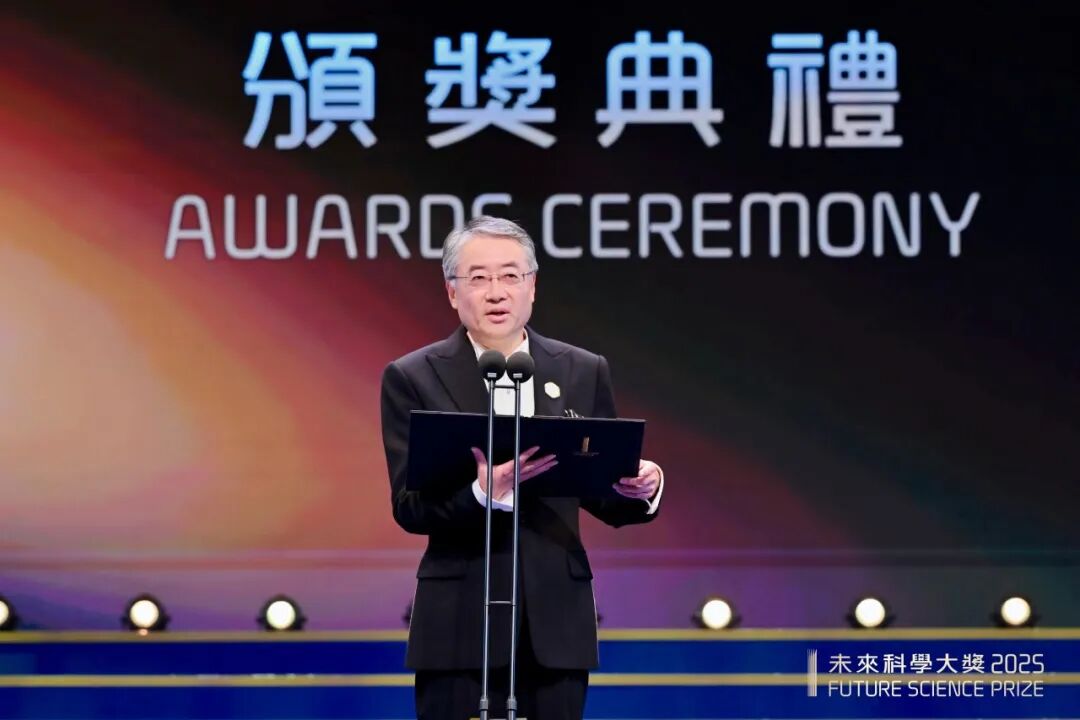
Ten years ago, I chose to join the Future Science Prize as a donor. What drove me then was not some grand narrative, but a simple, sincere conviction: I believe that science should be remembered as poetry — it needs to be seen and embraced with humanistic warmth, in a way that transcends the immediate. What we seek to honor is not merely extraordinary achievement, but that lonely yet beautiful human spirit of exploring the unknown.
These ten years, I have been fortunate to witness the Future Science Prize's journey from zero to one. The seed we have nurtured together has broken through soil, taken root, and sprouted. It has grown from an idea into a force; from the ideal of a small group into something that has touched countless scientists, ignited thousands of young people, and quietly transformed how this land of ours perceives science.
I remember something a teacher on the prize's scientific committee once said that deeply moved me: "From the very day it set out, the prize's vision and dream encompassed both international perspective and Chinese sentiment. We hope it can play an irreplaceable and ever-growing role in advancing science worldwide, especially in China." This is precisely the story of our journey. Today, the Future Science Prize has become a bridge — connecting science and the humanities, connecting our cultural heritage with imagination about the future.
I have always believed that the model we uphold — this guardianship of scientific purity, this commitment to long-termism — will win increasing recognition from all sectors of society. It is not merely about rewarding the past, but about cultivating an ecosystem and culture oriented toward the future.
Looking ahead to the next decade, I hope we can continue to preserve the purity and passion we had at our founding. I would also like to take this opportunity to express my heartfelt gratitude to all scientists, donors, council members, and every friend who has paid attention to and supported us. It is you who have made all this possible, from impossibility to possibility.
Thank you.

2025 Future Science Prize Laureates
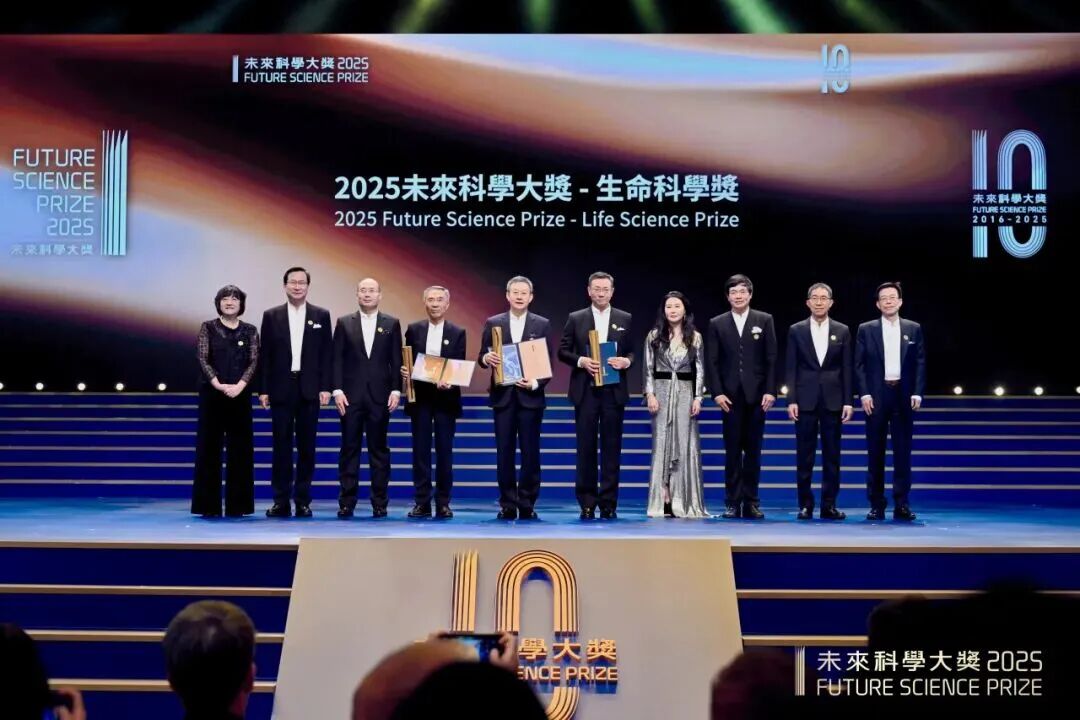
Life Science Prize
This prize was awarded to Qiang Ji, Xing Xu, and Zhonghe Zhou for their discovery of fossil evidence that birds originated from dinosaurs.
Since Thomas Huxley proposed the hypothesis of avian origins from dinosaurs in 1868, this view has long been controversial. In the 1990s, Qiang Ji and Piji Chen (deceased) respectively reported the world's first known non-avian dinosaur fossils with feathers, discovered in the Liaoning region of China. Xing Xu and Zhonghe Zhou went on to discover and study a series of transitional species from dinosaurs to birds, establishing the link between dinosaurs and birds in terms of morphology and function through phylogenetic analysis, anatomical research, and functional inference. Their body of work transformed "birds originated from dinosaurs" from a hypothesis into a widely accepted scientific theory.
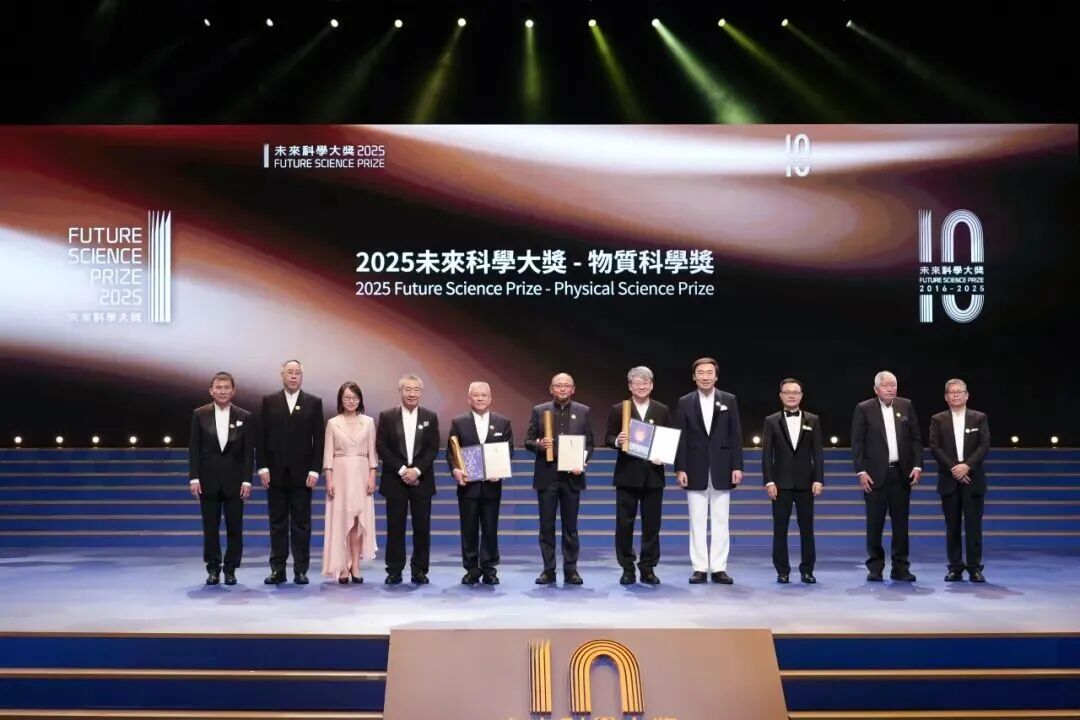
Physical Science Prize
This prize was awarded to Zhong Fang, Xi Dai, and Hong Ding for their contributions to the computational prediction and experimental realization of topological electronic materials.
The discovery of topological electronic materials is considered one of the most breakthrough developments in condensed matter physics in recent years. These materials exhibit non-trivial topological properties in their bulk electronic band structures, giving rise to surface conducting states with exceptional stability. It combines the abstract mathematical beauty of topology with the practical functionality of electronic materials, opening broad prospects for applications in spintronics, quantum computing, and energy technology.
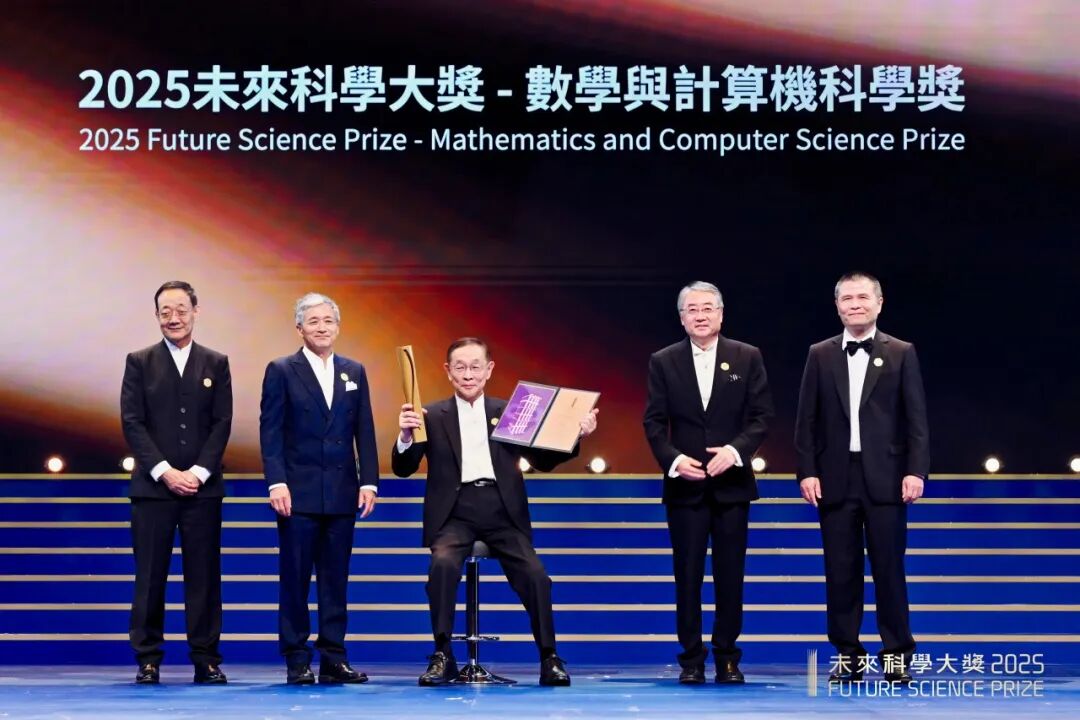
Mathematics and Computer Science Prize
This prize was awarded to Chih-Yuan Lu for his pioneering inventions and leadership in non-volatile semiconductor memory cell density, device integration, and data reliability.
Dr. Lu pioneered the development of next-generation non-volatile memory (NVM) technologies, including high-density 4-bit-per-cell NVM storage, deeply scaled BE-SONOS devices at the nanometer level, three-dimensional single-gate vertical-channel NVM, high-reliability memory with on-chip self-repair functionality, and advanced 3D NOR flash technology. Based on these key inventions, he led his team to successfully develop next-generation NVM storage products and laid the technical foundation for the future of non-volatile memory technology, driving widespread applications in artificial intelligence, mobile communications, cloud computing, and edge computing.

The Next Decade: Let Imagination Know No Bounds
Bob Xu, also a donor to the Future Science Prize, once said: "Science is the most magnificent poetry of our era."
Science is the driving force of social progress. Scientific breakthroughs allow us to witness "impossibility becoming possible" time and again, emboldening us to explore the beauty of the unknown in this vast, boundless world. And this spirit inspires the young generation of today to realize their dreams. From foundational research in laboratories, to breakthroughs in technological innovation, to products and services that enter millions of households — this is a long journey that originates in the scientific community and is then carried forward through the relay efforts of all sectors.
To better inspire the exploratory spirit of young readers and early-career researchers, interview records with the laureates have been compiled into "Future" Scientists: Interviews with Future Science Prize Laureates. This book series collects the growth experiences, struggles, and reflections on science, research, and life from each laureate, attempting to engage readers in a dialogue across time and space to better motivate and enlighten the younger generation.
These conversations reveal that the laureates are not so distant after all. Some enjoy reading Jin Yong's martial arts novels, some are obsessed with science fiction films, some are accomplished violinists. They too have vivid lives, burning passion, and moments of confusion amid setbacks. Through these words, we can truly feel the meaning of scientific pursuit: it is a force that seeks truth, aspires to goodness, and never stops moving forward.
John Wang, editor-in-chief of the "Future Science Prize Laureates Book Series," said: "These vivid conversations construct the colorful intellectual landscapes of these scientists. What emerges from these landscapes is the scientific creativity they have demonstrated in their respective fields. Yet the true significance of 'creativity' for humanity, and its profound meaning, extends far beyond science itself."
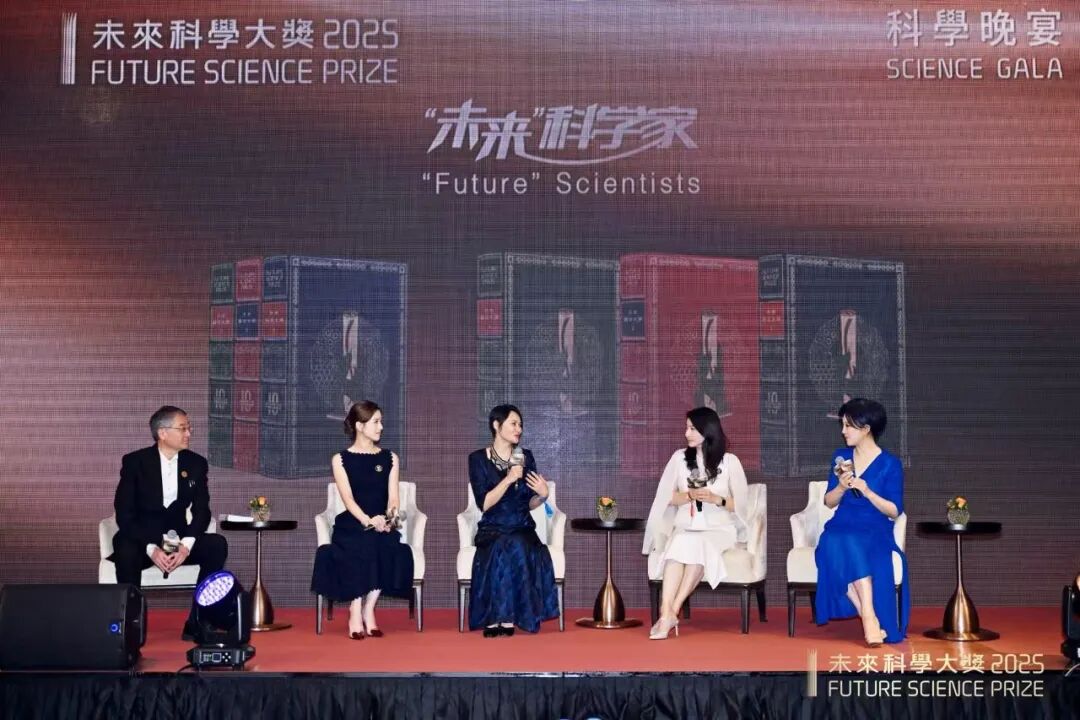
Future Science Prize Forum, from left to right: John Wang, Zetian Zhang, Min Gao, Guojing Guo, Gehui Xu
Creativity is also the driving force that keeps entrepreneurs moving forward.
As John Wang said: "Resilience, courage, the capacity to endure solitude, love, curiosity — only by forging these elements into sustained pursuit can we hope for achievements that transcend ordinary imagination."
Today, the Future Science Prize is a tribute to imagination and creativity. In the decade to come, ZhenFund will continue to guard this passion, accompanying more entrepreneurs in pursuit of unfinished imagination.