When Post-'90s Founders Cluster Into the Unicorn Club: A Look at China's New Unicorns in 2024
Forty-four companies made the list, with hard tech taking center stage.
Z Talk is ZhenFund's column for sharing insights.
In 2024, 145 companies worldwide reached unicorn status. In this issue, ZhenFund conducted comprehensive research, analysis, and review of China's 44 new unicorns. To download the full PDF report, please scroll to the end or click "Read More."
Global New Unicorns at a Glance
In 2024, 145 companies globally became new unicorns. By count, the US ranked first with 72, and China second with 44 [1].
Compared to the 100 new unicorns globally in 2023, 2024 saw a significant rebound in numbers.
The US claimed nearly half the spots, leading the world with 72 new unicorns, one-third of which were generative AI-related companies. Among them were many familiar names, such as Elon Musk's xAI, Fei-Fei Li's World Labs, and Ilya's Safe Superintelligence, all of which surpassed $1 billion in valuation last year.
China ranked second with 44 new unicorns, accounting for 31% of the global total. Semiconductors, new energy, and aerospace—"hard tech" sectors—made up half of China's new unicorns, while 70% of US new unicorns were in software.
Notably, 4 of China's new unicorns were founded by post-90s entrepreneurs: Zhilin Yang of Moonshot AI, Jianyu Tu of MioTech, Xingxing Wang of Unitree, and Zhifeng Hui of Leekr Technology. Among them, Moonshot AI and MioTech were both ZhenFund angel investments.
Born in 1993, Zhilin Yang is the youngest of the new unicorn founders. Moonshot AI also holds the highest valuation among all 2024 startup unicorns at $3.3 billion.
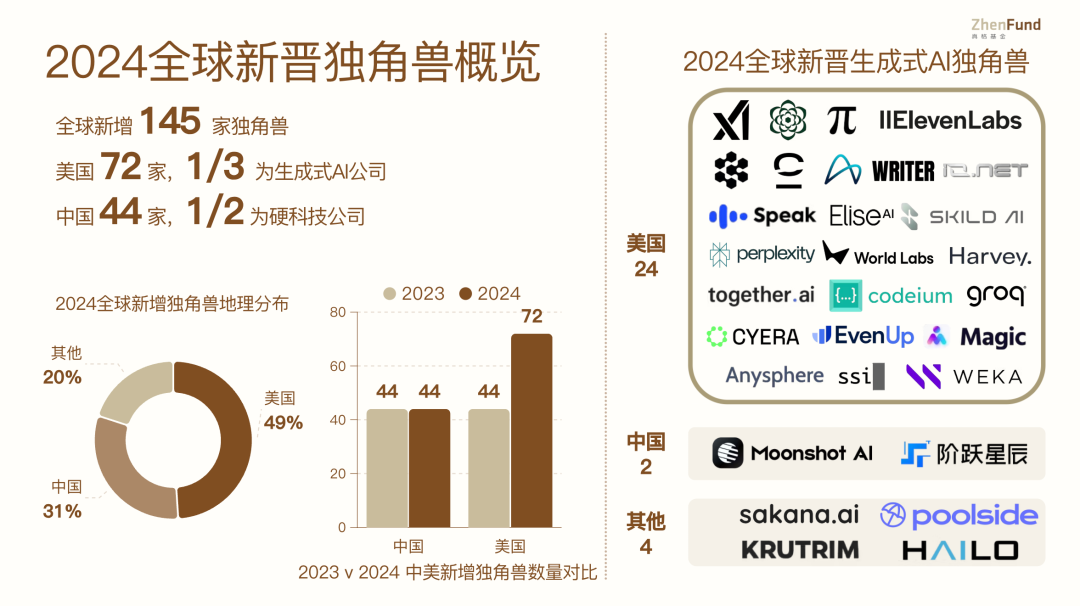
Figure 1 - New Unicorns and Generative AI Unicorns in China and the US
Beyond China and the US, generative AI unicorns are rising strongly worldwide.
In 2023, France's Mistral AI emerged as a dark horse in European AI. In 2024, Japan's Sakana AI and India's Krutrim also became their respective countries' first AI unicorns by leveraging本土 large language models. Meanwhile, French code-assistant company Poolside and Israeli edge-AI chip company Hailo joined the unicorn ranks. The global AI competitive landscape is becoming increasingly diverse.
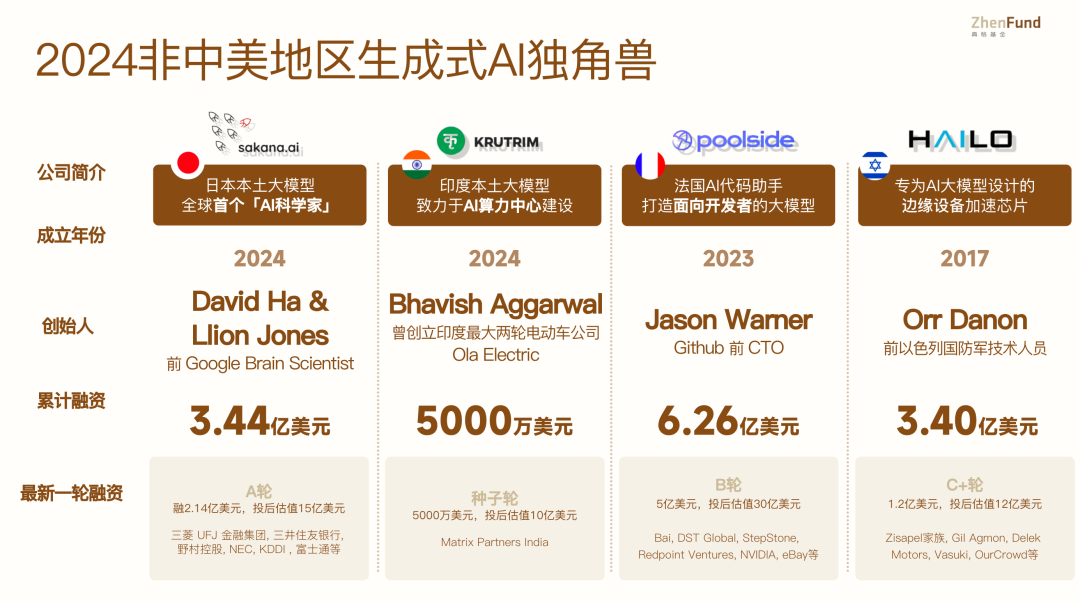
Figure 2 - Generative AI Unicorns by Country
Chinese unicorns also show diversity in corporate structure, with both government and private markets advancing together.
- 10 state-backed unicorns, represented by Kylin Software and CRRC Semiconductor, leading development in chips, new energy, and other "hardcore substitution" domains
- 9 spin-offs from large enterprises, including ByteDance's Dongchedi, Huawei's Yinwang Intelligent, and Sungrow's Sungrow New Energy
- 5 mixed-ownership enterprises, represented by ENN Fusion Energy and Chunhui Technology
- 20 venture-backed startups (hereinafter referred to as "startups")
From founding to unicorn status, US startups average 5.9 years, while Chinese startups take 7.2 years.
This gap stems primarily from early-stage fundraising speed. US startups average just 1.9 years to secure their first funding round, compared to 3.3 years for Chinese startups. A vibrant and open early-stage investment ecosystem is the soil from which unicorns sprout and accelerate.
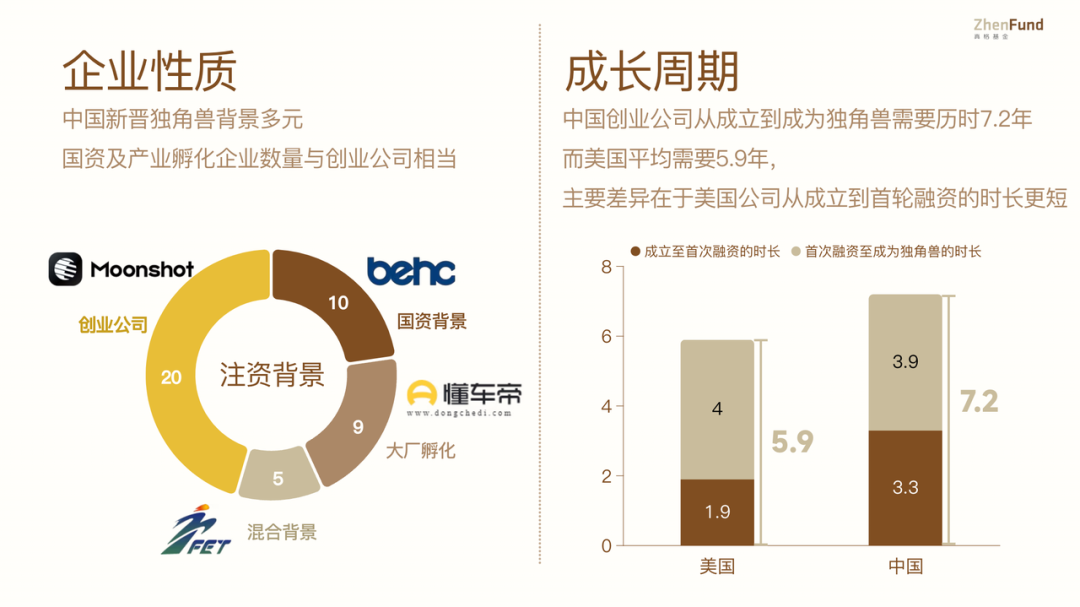
Figure 3 - Unicorn Corporate Structure Distribution and Growth Cycle
The Entrepreneurs Behind China's Unicorns
Committed to its "invest in people" philosophy, ZhenFund has proposed a four-quadrant theory for entrepreneurs—categorizing them as "Technicians," "Veterans," "Operators," and "Prodigies."
In 2024, the founders behind China's 44 new unicorns displayed these shared characteristics [2]:
- 43% are "Technicians." Mostly university researchers, professors, or long-term cutting-edge technology developers, they represent the highest technical standards nationally and globally. For example, Donglin Wang, founder of SiLang Technology (developer of domestically produced processor cores), previously served as director of the Chinese Academy of Sciences' Institute of Automation, and after founding his company successfully developed the high-performance domain-specific microprocessor MaPU.
- 33% are "Veterans." As serial entrepreneurs with extensive experience, they learn by doing and compound their expertise over time. For example, Yu Tian, founder of AutoFlight (eVTOL developer), previously founded consumer drone company Yuneec, which received a $60 million investment from Intel.
- 33% are "Operators." Having held senior executive positions at large enterprises, they previously built key businesses from 0 to 1 before transitioning to entrepreneurship. For example, Wen Han, founder of Windrose Technology (new energy intelligent heavy trucks), previously served as CFO at Plus.ai.
By valuation and growth cycle, "Veterans"—serial entrepreneurs—tend to be most adept at building high-growth companies. These businesses average just 4.7 years to reach unicorn status, with an average valuation of $1.5 billion. First-time founders take 8.5 years on average, with an average valuation of $1.3 billion.
Unicorns also have their young dragon-slayers. In 2024, we witnessed 4 post-90s "Prodigy" founders join the unicorn ranks. In technology waves that favor the young, they built the highest-valued unicorns—the 4 companies averaged $1.68 billion in valuation, above the overall mean of $1.35 billion.
- Moonshot AI's Zhilin Yang is a top domestic AI researcher and first author of heavyweight papers including Transformer-XL and XLNet. Under his leadership, Kimi has maintained a frontier position in large AI models, drawing attention for its distinctive long-context capabilities. Born in 1993, Yang is the youngest new unicorn founder, and Moonshot AI, founded less than two years ago, has rapidly become the highest-valued startup unicorn of 2024.
- MioTech's Jianyu Tu, after working at multiple financial institutions and startups, chose to build in AI+ESG out of confidence in the China market and a commitment to tech for good. MioTech now provides corporate sustainability data for Greater China and Southeast Asia to multiple top global asset managers overseeing more than $15 trillion in combined AUM.
- Unitree's Xingxing Wang began building remote-controlled cars, model boats, RC aircraft, and microscopes by hand in middle school, and in college developed desktop humanoid robots and the fully-degrees-of-freedom high-performance quadruped robot XDog. In 2015, Wang entered a competition with the robot he developed during his master's program, earning several thousand dollars that became Unitree's first seed funding.
- Leekr Technology's Zhifeng Hui, while working at Bosch and an autonomous driving startup, recognized that drive-by-wire chassis technology was essential for autonomous driving. However, this technology had long been controlled by international auto parts giants, so he threw himself into entrepreneurship to advance domestically controllable drive-by-wire chassis development.
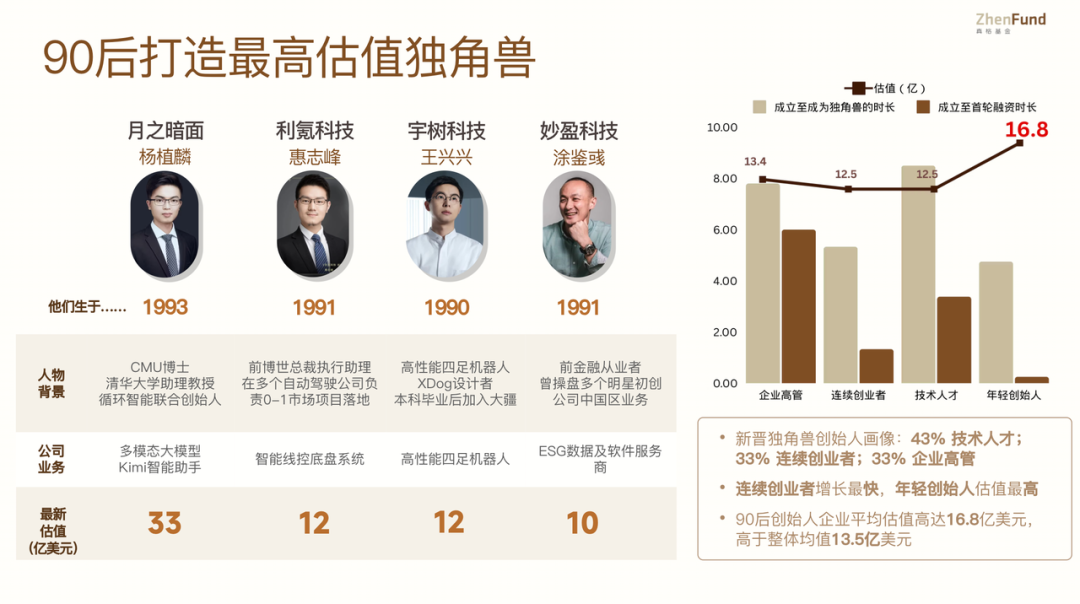
Figure 4 - Background of 2024 New Unicorn Founders
Whether "Veterans" with extensive entrepreneurial leadership experience; "Operators" who quietly toiled for over two decades since the 1990s business wave; "Prodigies" seemingly exploring technology in their dorm rooms; or "Technicians" who set aside their lecture notes and left the lab to apply their expertise to the market—every story embodies the resilience and creativity of Chinese entrepreneurs.
Industry Distribution of China's New Unicorns
By sector, among the 20 venture-backed startups, "hard tech" advanced manufacturing accounted for over half, primarily in semiconductors and next-generation industrial autonomous controllable software.
3 unicorn companies are in the new energy vehicle track. Beyond these 3 companies directly producing NEVs and components, another 2 unicorns have deployed autonomous driving technology in warehousing and low-altitude scenarios.
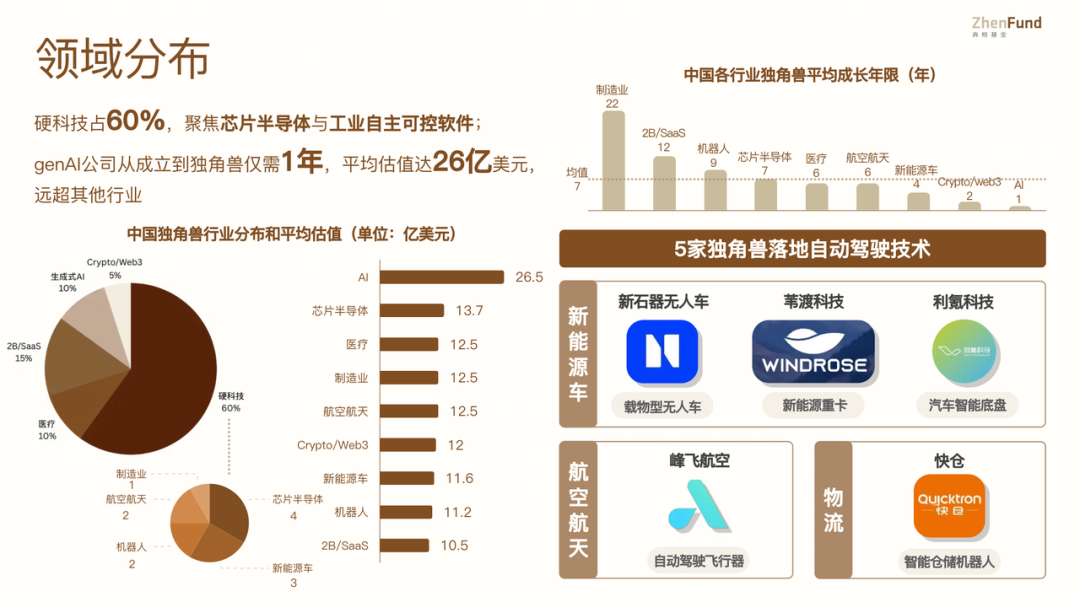
Figure 5 - Sector Distribution and Autonomous Driving Technology-Related Projects Summary
3 unicorns are in enterprise service software, 2 of which focus on industrial design software. By contrast, US enterprise service software unicorns concentrate on cybersecurity, cloud services, and marketing tools—highlighting the structural differences between Chinese and US software ecosystems.
With large model companies Moonshot AI and StepFun joining the unicorn ranks, all six of China's domestic large model "Little Dragons" have now achieved unicorn status.
These two AI large model companies average $2.6 billion in valuation, both reaching unicorn status just one year after founding. By comparison, the 20 startups overall average 7 years from founding to unicorn status, while enterprise service software projects take as long as 12 years.
The rapid valuation and growth lead of AI large model companies also confirms the past year's generative AI fervor. While no Chinese generative AI application companies have yet reached unicorn status, we believe that as AI applications and agents flourish, more unicorns will emerge in programming, education, search, creativity, and other generative AI scenarios.
ZhenFund is fully committed to backing early-stage entrepreneurs with passion and innovative ideas, and looks forward to accompanying more companies on the path to unicorn growth. If you have a great startup idea, we'd love to chat: dream@zhenfund.com
To obtain the full "2024 China New Unicorns Research Report," please download the PDF below or click "Read More."
Data sources: US from PitchBook + TechCrunch, China from PitchBook + IT Juzi, other countries from PitchBook
[1] In China's new unicorn data, DeepWay does not belong to the 2024 ranking cycle, and Dalian New Daming was a capital injection by Wanda Technology to resolve IPO betting issues; therefore, these two companies are excluded from this unicorn analysis
[2] Some founders have composite backgrounds; multiple labels are applied here, so proportions sum to more than 100%. For specific label classifications, please see the full PDF report
Research | Xinyen, Manlu, Yishuai
Report Authors | Leah, Cianna, Bonnie
Editor | Wendi
Recommended Reading