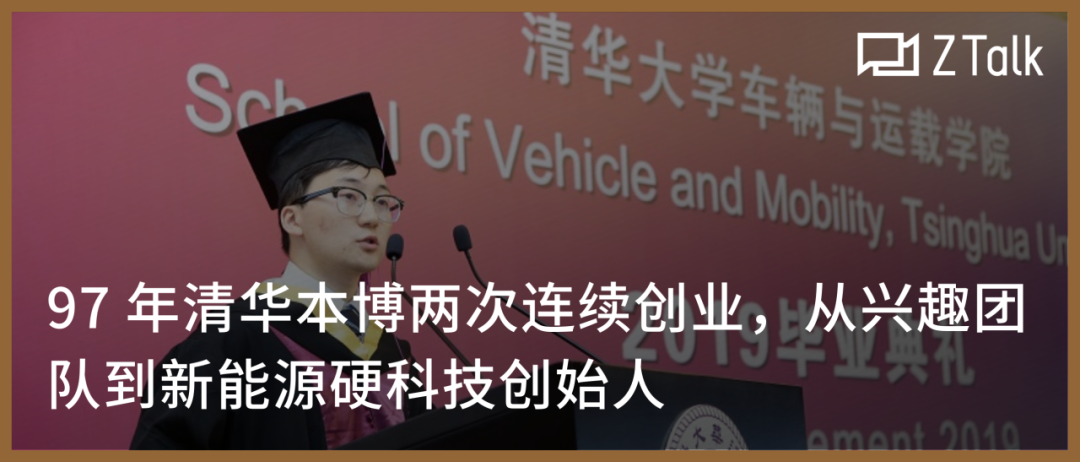
Tsinghua '97 Alumnus Qin Yudi: From Abandoned Garage to AI Energy Management, He's Always Been Flying Close to the Ground
Hardcore tech entrepreneurship can't stand on business-model innovation alone.
"I'm flying. Just for one second. Everything disappears. Sound, fear, all of it gone. That's the moment I keep chasing."
The protagonist of F1 pursues one second of weightlessness, one second of stillness, one second of becoming. A fleeting instant that strips away the external world and plunges you completely into creation. Qin Yudi, born in 1997, a Tsinghua University undergraduate-to-PhD student, and now on his second startup, is chasing exactly that moment.
The light-gray terrazzo base of Tsinghua's First Teaching Building holds most of his memories. Every all-nighter building cars, he'd stay until the entire building emptied out. Once, when a security guard came to close up, he couldn't bear to leave—so he hid in the bathroom, waited for the lights to die and the guard to descend, then snuck back to keep tinkering. It was an obsession that made him forget to eat or sleep, all for the sake of getting one thing right.
In the winter of 2021, as captain of Tsinghua's Future Automobile Interest Team, he had just founded Lianyu. As the youngest founder of an energy company, Qin Yudi and his partners worked out of a small garage on the second floor of an abandoned auto parts market. No heating. Thick cotton-padded jackets all winter. Their first job was building a fast-charging system for an alumnus's electric motorcycle startup—manually modifying the system, building the fast charger, tuning the controller. They even broke the bike the first time. But they kept at it until the system finally worked.
That's the feeling he's been chasing.
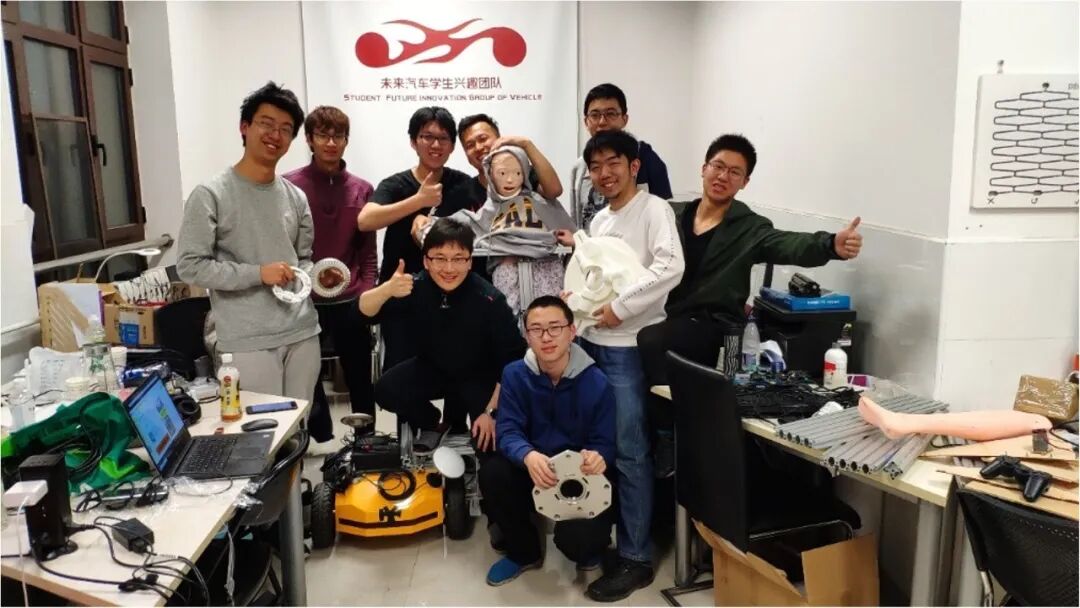
Group photo of Tsinghua University Future Automobile Interest Team members; Qin Yudi served as captain and president
At Tsinghua, Qin Yudi was the archetypal young geek. Soft-spoken, head down—but once he dove into tech, it was like entering uncharted territory, disheveled and crouched in a garage, working hardware, fiddling with parts, writing code. He says if he hadn't started a company, he'd probably still be doing research, pouring all his energy into whatever project had captured his mind.
Once awkward with words, once so nervous before major presentations that he couldn't sleep the whole night, the ups and downs of four years of entrepreneurship have forged an ironclad heart. It's this same obsessiveness that means when he prepares a speech, "getting familiar with it" isn't just running through the script once—it's revising it dozens of times, drilling every sentence, every intonation until it becomes muscle memory.
All of this traces back to the teenage boy who, heads-down building cars, gradually realized: If I push one step further, the ideas in my head might become something much bigger.
That spirit carries into his work today. What Lianyu aims to do is use AI agents to achieve integrated energy management and scheduling, turning energy into "energy assets" that can reliably generate cash flow and returns—like asset management in finance. Currently, Lianyu Technology has taken on more national-level V2G (Vehicle-to-Grid) pilot projects than any other company, developing its "Home-Vehicle-Grid" series of technical products. In 2024, at the China Building Technology Exhibition, this green smart residential solution—developed in partnership with China State Construction Engineering Corporation—made its debut and received a visit and endorsement from Premier Li Qiang. These demonstration projects haven't just pushed V2G technology from the lab into industrialization; they've also made Qin Yudi and his team a core force driving domestic vehicle-grid integration forward.
Qin Yudi's advisor, Academician Ouyang Minggao, was among the earliest in China to throw himself into the new energy wave. He constantly encouraged students to start companies, to let technology and ideas create real change. That legacy has shaped Qin Yudi ever since. To this day, he still frequently discusses with his mentor late into the night. Whenever he faces a choice or a dilemma, he recalls Ouyang's words: "I'm not just a scientist—I'm a technological revolutionary."
Those words have pushed him further, again and again.

The Unstoppable Steps of a '97 Founder
Q: Can you introduce yourself and what your company is doing now?
Qin Yudi: Our company is called Lianyu Technology. We're focused on a track in new energy that's closer to everyday life—what we call "user-side" new energy. Not power plants, not the State Grid, but the new energy equipment in our cities, factories, office buildings, and homes: solar panels, energy storage, charging piles, air conditioning, and so on.
What we do is use AI agents for integrated energy management and scheduling, turning it into "energy assets" that can reliably generate cash flow and returns. It's very similar to finance—we're doing asset management for a lot of energy equipment owners, creating additional returns, so we often call ourselves an "energy asset management company."
Q: It's quite emotional seeing you now, thinking that you've been at this for over four years. We first met in 2020, when you were still preparing things near Wudaokou. Can you share what these years have been like?
Qin Yudi: Yes, in 2020 I had just graduated from undergrad and started my master's. Back then I really hoped to find a valuable, forward-looking track where I could throw myself in completely. I wanted to use my technology, my ideas, to bring about real change.
Looking back over these four years, my original commitment to technology and innovation hasn't changed, but I've definitely learned many things I didn't understand before—especially about business, about how to turn a research technology into a real product, and how to create commercial value for customers. I think this is a transformation that all tech founders like us, especially those coming out of universities like Tsinghua, have to go through.
Q: Why did you want to start a company in the first place?
Qin Yudi: When I was hand-building things in the Future Automobile Interest Team, I realized one person's power is limited. We're often drawn to companies like Tesla, SpaceX—technology-driven companies that can gather technical talent and turn seemingly impossible ideas into reality.
I really had an obsession with these large-scale installations, these big mechanical systems. I kept thinking, if I could build a cool, powerful system with my own hands, it would be incredibly exhilarating.
At school, we were more exploring underlying technologies, building demos—but turning that into a company that actually runs is a completely different proposition. I think the biggest driving force was taking the ideas in my head, the concepts on paper, and making them real bit by bit, watching them become reality.
Q: Can you talk specifically about the memorable milestones between doing research and starting a company?
Qin Yudi: In technical research, we're used to breaking problems down as finely as possible in our PhD work, sometimes even overcomplicating simple problems, being comprehensive in our research. This approach makes sense for academic innovation, but in actual commercialization, we found the simpler the better—the shorter the path, the more directly it reaches customer needs.
That was my biggest growth and lesson. In 2021 and 2022, when we first started building products, we went to customers very confidently—and found they weren't buying it. They cared about things we thought were too simple, too boring, but precisely those were their real needs.
This process really taught us to listen to customers.
Q: I remember the direction we emphasized in the earliest pitch deck was abandoned pretty quickly too, right?
Qin Yudi: Right. Back then we were thinking about products that were cool and complex, thinking customers would be amazed and recognize their value, but the reality was they didn't buy in at all.
Q: Your academic record in school was quite good too. Why still choose the startup path?
Qin Yudi: Actually, around junior year of undergrad, when I was preparing for the master's-PhD recommendation, I really went through an intense internal debate: start a company right after undergrad, or continue down the research path?
I ultimately chose to keep studying because I believed having strong, original technology would make it possible for us to offer differentiated, technically defensible products to customers when we did start a company. You need to have the diamond-cutting tools in hand first.
In our era, doing hardcore tech entrepreneurship purely on business model innovation won't stand. So during my PhD, I published SCI papers while also thinking about how these technologies could really serve customers, how they could reach industry. For example, we participated in serving the 2022 Winter Olympics, building a low-temperature fast-charging system for BAIC's new energy vehicles to ensure they could charge at below-minus-ten-degrees temperatures. That made me realize academic achievements really could enter daily life, and it reaffirmed my ideals once more.
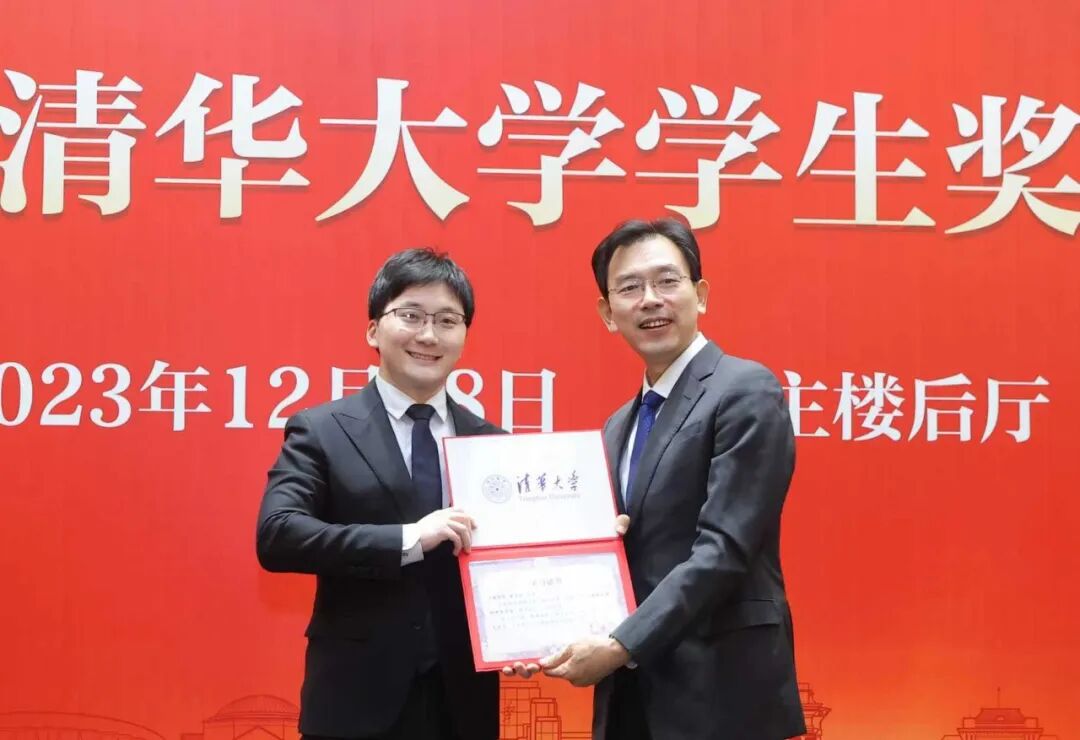
Qin Yudi (left) receiving Tsinghua University's Special Scholarship
Q: Any special memories from your time at school?
Qin Yudi: So many. My first car-building project, making energy-saving race cars and formula cars—I was sketching ideas entirely by hand on scratch paper. At the time I was still far from real engineering, and I did plenty of "unreliable" things, but the process was like a teenager building toys according to his own ideas.
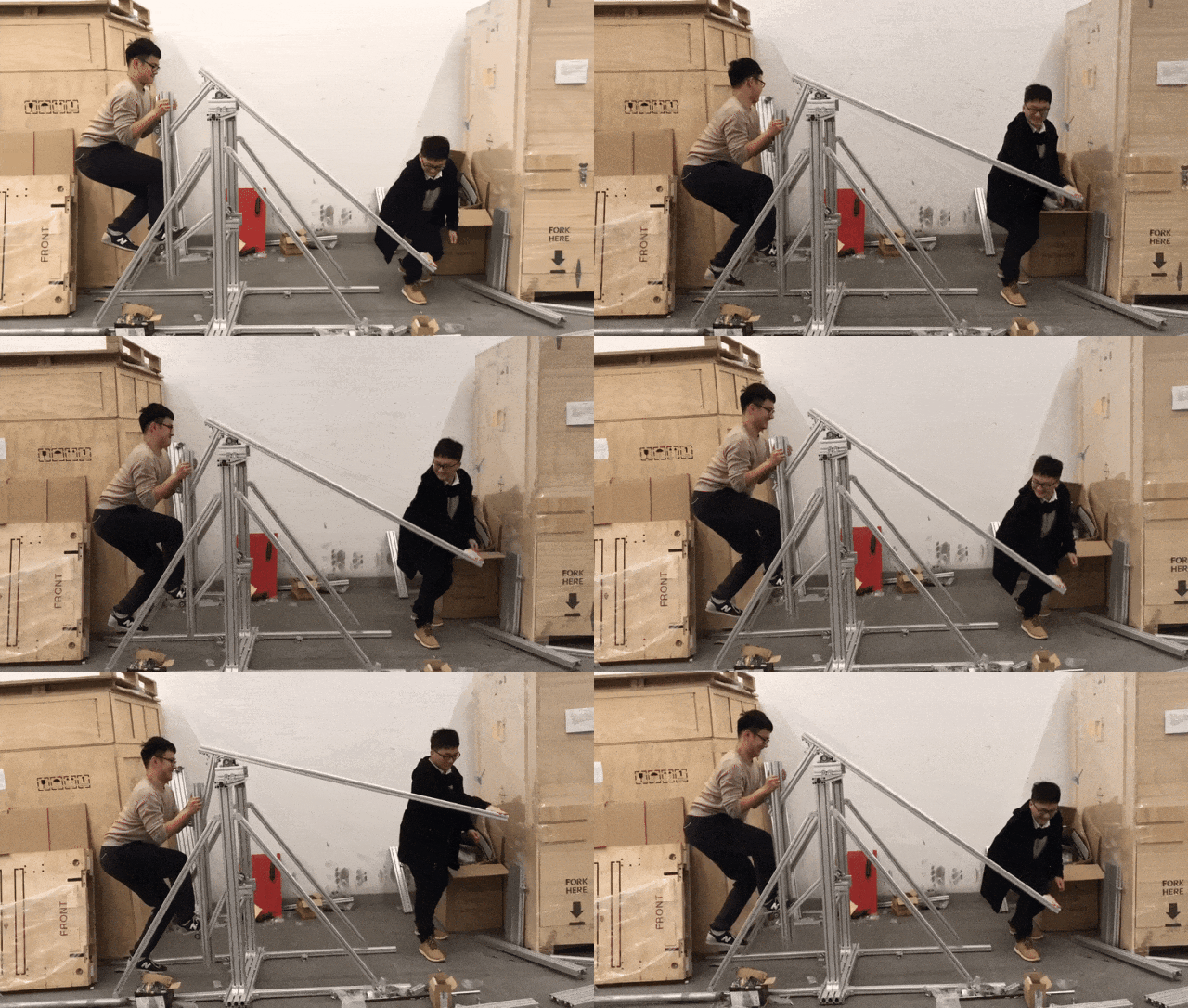
Qin Yudi (right) leading his team to develop creative exhibits for the Beijing Science and Technology Museum
Later, when Lianyu was just founded, in the winter of 2021, we were in that small garage on the second floor of an abandoned auto parts market. No heating. We brought in an electric motorcycle from an alumnus's startup, manually modified the system, built the fast charger, tuned the controller—and broke their bike the first time. They took it to get fixed, sent back a new one, and we kept at it until we finally got the system working.
That feeling was exactly the same as pulling all-nighters building cars in Tsinghua's First Teaching Building. Once we got chased out by a security guard and couldn't bear to leave, so we hid in the bathroom until he went downstairs, waited for the lights to go out, then snuck back to keep tinkering. We just forgot to eat and sleep, all to get one thing done.
Q: You've been leading teams the whole time, from Future Automobile Interest Team captain to starting your company. How is the team atmosphere different between doing innovation at school versus actually starting a company?
Qin Yudi: School innovation is more interest-driven.
With our energy-saving car, you lie inside to drive it, like flying贴着地面—many students joined just because it was cool, because it was fun. Some participated for a while, found that doing electric control, mechanics, electronics was a bit dry, and left. But the ones who actually stayed, their eyes had a light in them. They were willing to pull all-nighters for this, even forget about homework, forget about GPA.
Starting a company is completely different. I think this is something you have to take seriously. Everyone has passion, has enthusiasm—you can start a company with that—but later you realize you suffer from never having worked, never having been inside an enterprise.
Entrepreneurship means reality. It means cash flow, team operations, profit balance. You need complete understanding of customers, markets, finances. At first we really did just apply the school approach directly, and over these years we took a lot of losses—but these are tuition fees you have to pay.
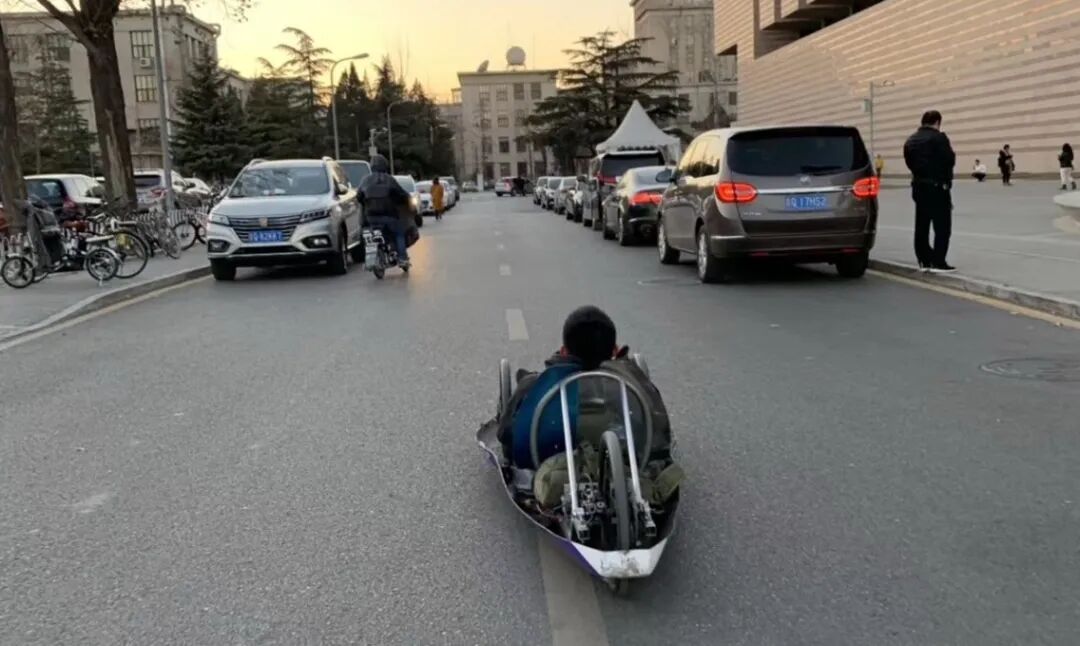
Future Automotive Interest Group experiencing "贴地飞行"

Two Tuition Payments After Graduating Tsinghua
Q: Since we're on this topic, why don't you share with everyone—were there any painfully expensive lessons along the way?
Qin Yudi: The first loss was what I just mentioned—we built some technology we thought was very advanced, but customers wouldn't pay for it. We made demos in the garage, went out in winter to pitch what we thought were impressive products and equipment. But when we took automakers and energy companies to see them, we realized: our eyes were sparkling, theirs were full of question marks.
Put simply, we poured precious information flow and R&D investment into things that weren't actual customer needs. Fortunately, we woke up to this relatively early—within six months. But we still paid tuition, making more pragmatic adjustments to staffing and R&D allocation.
The more serious issue came later with cash flow management. Early-stage startups, even ones in decent fundraising shape, easily overlook the importance of cash flow. You don't really grasp that markets shift from moment to moment—they may quickly become something you never imagined.
We went through exactly this, assuming fundraising would keep going smoothly. Then sudden international policies, domestic economic shifts, or changing winds can force you into aggressively pursuing cash flow stability, pushing the company toward break-even as fast as possible. This may conflict with your planned R&D rhythm and investment schedule, but you have to submit to the market and macro environment, adjusting rapidly.
We were a bit slow to adjust then, always feeling that the market wasn't that critical, that you didn't have to change with the external environment. The result was a severe cash flow crisis—potentially unable to make payroll the next month, with payment collection problems too. Only then did we realize we needed to cut costs and focus more on pragmatic business.
We scraped through, survived some small cycles, ups and downs, and moved to the next stage. That experience taught us painful lessons, exacting both mental and stress costs.
Q: I remember you called me that Spring Festival, saying you absolutely had to keep the company alive.
Qin Yudi: The pressure was indeed intense then. But after the holiday we made many adjustments. Though externally it looked like normal course corrections, for us personally, deciding to kill directions, contract, rapidly adjust business, and chase payments was quite difficult.
The company turned around. When we endured to certain inflection points, whether in market or operating environment, we could enter the next state again. So a company must always stay flexible, constantly making rapid adjustments with the external and business environment.
Q: I know your advisor, Academician Ouyang Minggao, had enormous influence on your entrepreneurship and gave lots of support. Can you specifically describe how he helped you step by step to where you are now?
Qin Yudi: Our whole research group, including Ouyang's students—my senior brothers—has a very strong entrepreneurial atmosphere. From the start, the professor emphasized that our scientific achievements should serve industry and the nation's major strategic directions.
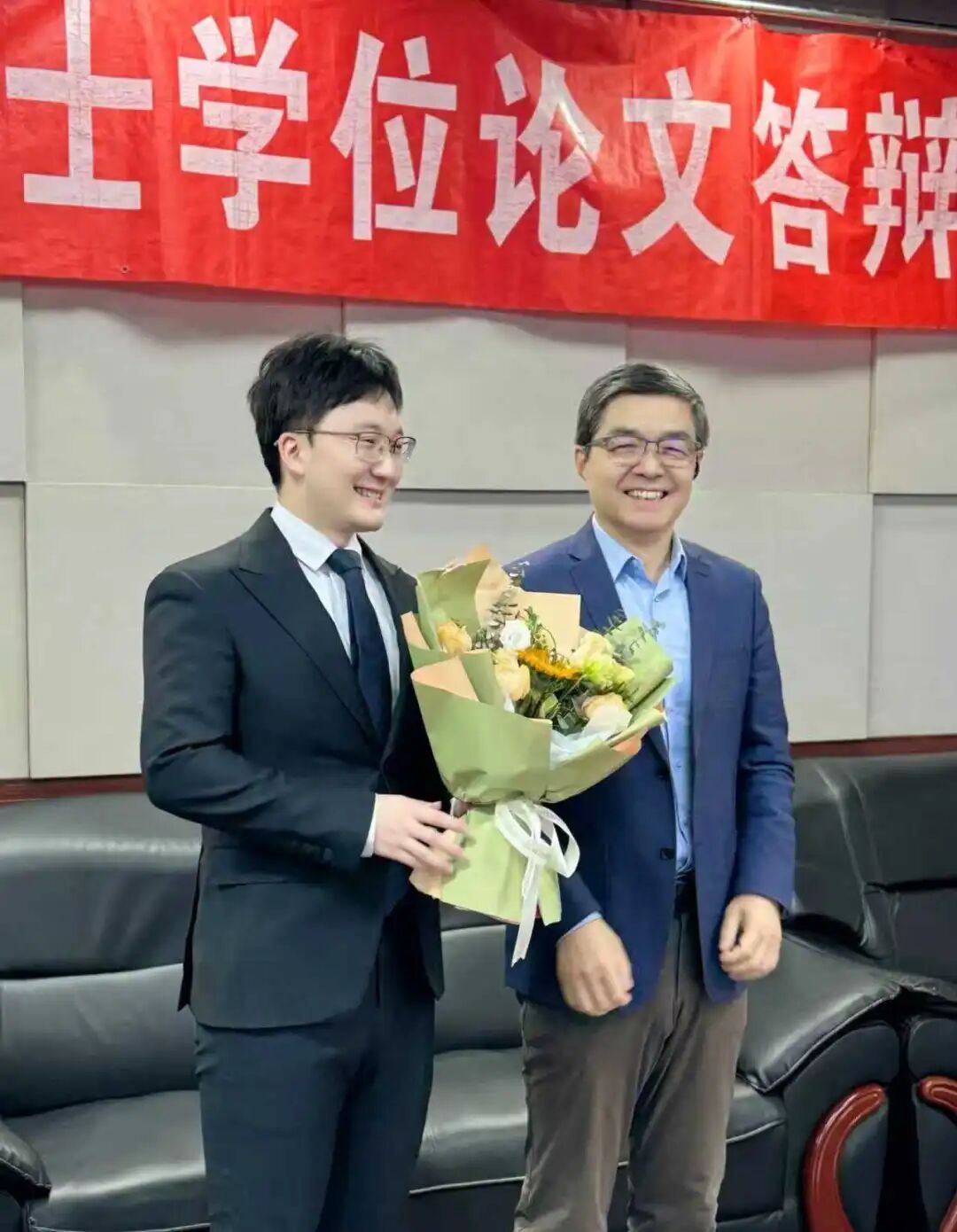
Qin Yudi (left) at his Tsinghua doctoral defense
Our senior brothers, for instance, moved from technology into industry quite early. When I first started graduate school, Professor Ouyang strongly supported me in commercializing core original technologies after getting them right.
The professor gave us a great deal of high-level guidance throughout our business growth, and helped bring in resources—essentially a form of entrepreneurship education.
For the pitfalls I just mentioned, he also gave us much candid advice from an elder's perspective. I kept digesting this myself. Professor Ouyang often mentions that he's not just a scientist, but a technological revolutionary. He wants technology to enter industry, to truly transform society and life. This is the most fundamental driver of our entrepreneurship now.
Q: You just mentioned many senior brothers' startups came out of our lab. They must have passed on some experience. You'll also have many younger students wanting to start companies—how do you view this传承 (transmission)? What's the most important thing in your lab's传承?
Qin Yudi: When I first enrolled, Professor Ouyang particularly emphasized that our whole group has some shared culture, or rather, research group philosophy.
The professor said we should do problem-oriented research, actual technological innovation—that is, truly grasp problems from real demand. This echoes what I mentioned earlier about not doing well at first, not aligning with customer pain points.
Another is interdisciplinary crossover. The automotive school itself is inherently quite eclectic. My undergraduate covered chassis and internal combustion engines, then I went to UC Berkeley for autonomous driving, later moved to new energy—spanning computer science, energy, power, chemical engineering, all strung together.
To summarize, the professor taught us twelve characters: problem-oriented, interdisciplinary crossover, innovation and entrepreneurship.

Four Years of Transformation for the Young Geek
Q: After four-plus years of entrepreneurship, what's your biggest change?
Qin Yudi: Four years ago when we met, I was a very typical engineering guy, self-proclaimed tech geek, little inventor. At Tsinghua, I might not be great at communicating with people, but once immersed in technology, I could lose myself. I didn't care much about appearance either—disheveled, squatting in the garage doing hardware, tinkering with things, writing code. Full of energy, but definitely not detail-oriented, completely the typical young geek state.
Now I rarely have that state anymore. More often I'm negotiating partnerships with enterprises, pushing major projects—transforming from the science-innovation youth into something more like an entrepreneur. My physique, my socializing style, they've all changed.
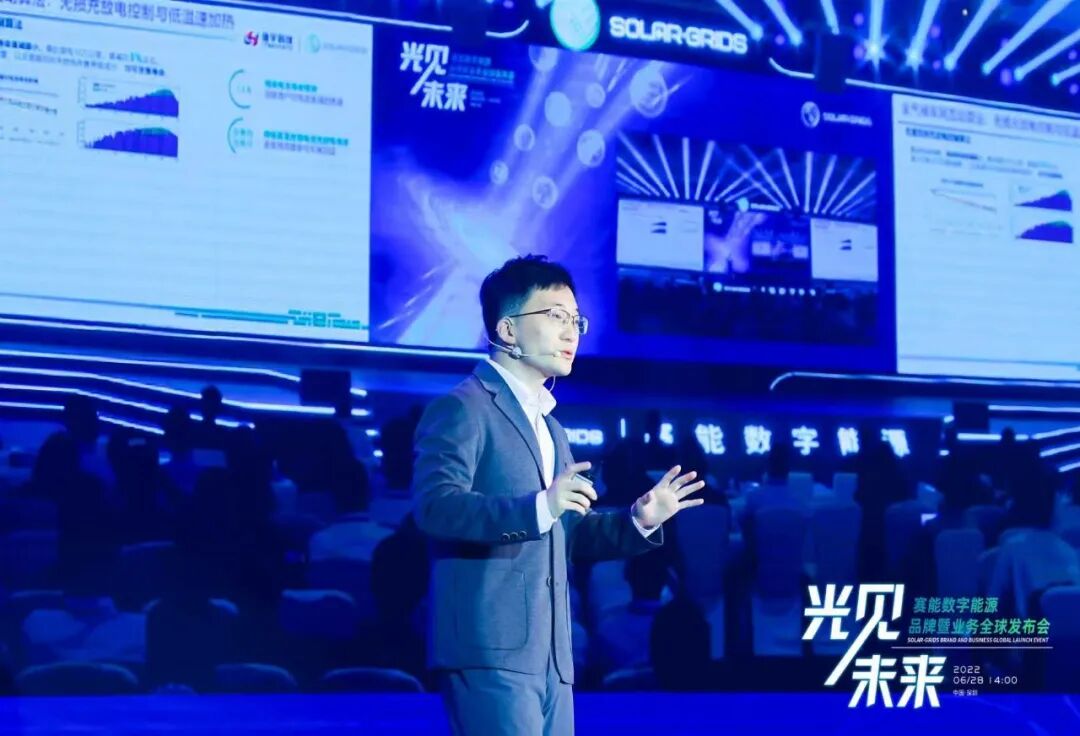
Qin Yudi speaking at a product launch
The professor saw me recently and even complimented me: "Yudi, you're looking more and more like a boss." I asked what about me looks like a boss, and he said: "Bigger belly, rounder face, more composed, haha."
I don't know if that's good or bad, but as long as I can still hold to original intentions, that's fine.
Q: What was it like encountering ZhenFund back then?
Qin Yudi: At the time I was only in my first year of PhD, less than a year after undergraduate graduation. I truly felt ZhenFund gave us enormous support—how could they believe in a team that hadn't even graduated yet? I remember when my senior brother later started his company, ZhenFund also invested quickly. Now more and more classmates are starting companies, and I think everyone can feel this top-tier early-stage firm's trust and support.
Q: As the youngest, how do you lead the whole company forward?
Qin Yudi: Now the company only has two test engineers younger than me; everyone else is older. For the first three years, I was consistently the youngest. This is indeed a team characteristic—the older brothers and sisters all take pretty good care of me.
I think we still share some common ideals and goals. Also, I can communicate on the same wavelength with everyone, understand each person's starting point, and relatively well integrate different teams. My personality is fairly easygoing, my posture quite flexible, so I can integrate decently with our nearly-50-year-old partner, technical experts, brothers and sisters who've worked at big companies, partners who started the company with me from school, and young new graduate hires.
Q: If you could go back four years now, what would you want to change?
Qin Yudi: As we just discussed, some of that tuition could have been avoided. But looking at overall path choices—like holding to original intentions, value principles—nothing has changed. I don't regret any step I chose back then. I hope to keep working in this atmosphere of innovation, doing things that are valuable and meaningful to society.
Q: If you hadn't started a company back then, what do you think you'd be doing now?
Qin Yudi: I estimate I'd be doing research, in that state where I don't want to talk to anyone, would absolutely not schedule lunch if I could eat alone, would avoid greeting colleagues and supervisors if possible—just burying my head in whatever I wanted to do.
Q: You really have changed quite a bit.
Qin Yudi: How to put this—it's the path entrepreneurship requires, and something continuously trained along the way. The threshold keeps rising. Before it was before exams, before big assignments; now it's before delivering to major clients, or before pitching important client projects—the pressure is different too.
Q: Are there any changes you like? As an undergrad you might have been heads-down working alone or with a group, but now the state is quite different—what's the psychological feeling?
Qin Yudi: I think this change has let me break through myself. It really differs from what I was used to, from my comfort zone—psychological and physical pressure are indeed greater. But experiencing a new state, and being able to break through who I was before—that sense of achievement is quite gratifying to me.
Q: Changes you don't like?
Qin Yudi: Some people say I've become more slick, turned into a mature entrepreneur. Sometimes I look back at my original self too—as long as I can still hold to original intentions, I think it's okay.
But indeed now when chatting, I unconsciously bring in an enterprise perspective. Someone talks about something, and I might ask: Why are you doing this? What's the logic? Can it close the loop? Maybe they wanted to share an interest, chat about something, and I start analyzing. I think this is the price of maturity—quite different from the student, the youth state before.
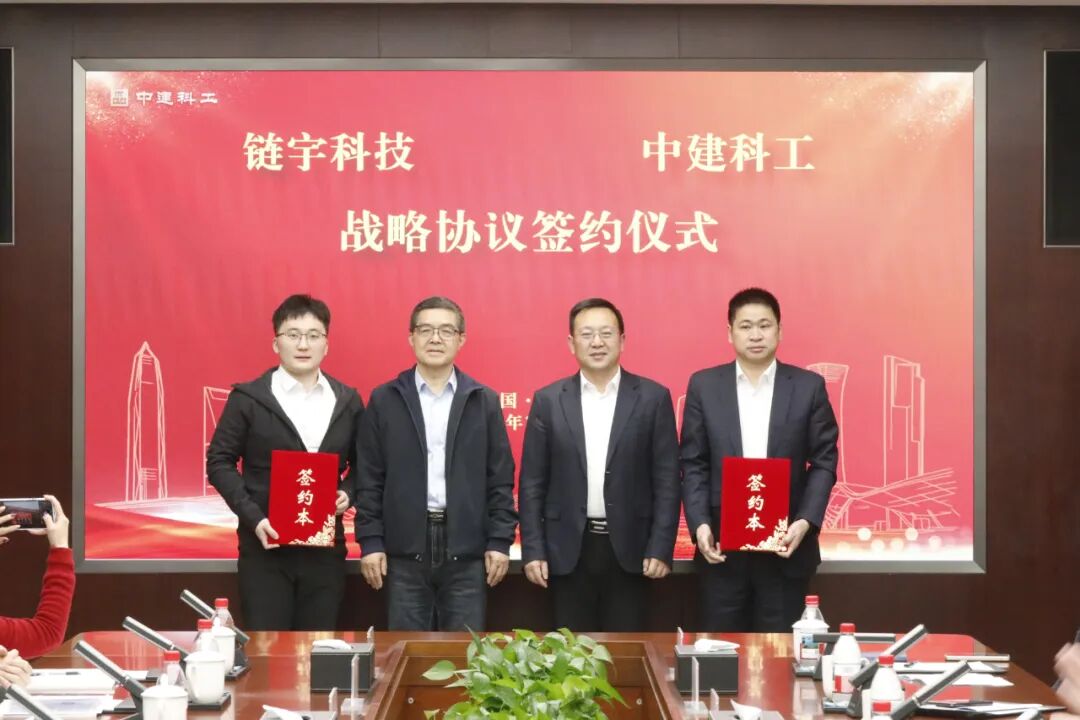
Lianyu Technology Signs Large-Scale Partnership with China Construction Science and Industry

Building a Strong Heart
Q: What qualities do you think are essential for entrepreneurship?
Qin Yudi: One thing I feel strongly about is that physical and mental stamina are genuinely critical. My partners always say I can endure, or maybe endure too much.
Before major business milestones, even though I now have a "strong heart," what matters more is whether my energy and stamina can keep up. There have been weeks where I had important meetings every morning, then rushed between different places at noon and in the afternoon, day after day. I'd leave at sunrise and, after meeting the sun again with no time to nap, have to rush to the next location or attend very early meetings and client visits.
Multitasking depends on high energy, which is probably an essential quality for many entrepreneurs. Of course, I'm also wondering whether this state needs adjustment. Friends and core team members remind me it's unsustainable. Perhaps this is a kind of state management that young entrepreneurs must gradually learn as they transition toward more steady entrepreneurship.
When handling multiple threads now, I still sometimes get flustered, and I'm used to being hands-on, guiding down to the details. But I know I need to slowly build my own systems and more complete management thinking.
Q: Do you usually experience emotional fluctuations?
Qin Yudi: Often, facing enormous pressure — like having to present a proposal to a client the next day with very limited time, maybe just half an hour. The tighter the time constraint, the more nervous I get, because I don't know whether I can win them over in those few minutes or dozens of minutes. In those moments, my heart is uneasy, endlessly revising materials, rehearsing in my mind what to say first, what to say next.
Sometimes I think: What if they challenge me on the spot? What if they reject me? The psychological pressure becomes immense. There have been countless nights like this, usually before important clients and business milestones. Then I repeatedly reinforce my underlying beliefs, giving myself psychological suggestions.
Most of the time, once the client arrives, chatting a bit and finding they approve of us, or aren't so standoffish, my heart settles, and I can start communicating more relaxedly, getting into the flow. But this process still requires constant honing.
Q: Do you share these emotions with your team? Aren't they all older than you?
Qin Yudi: Generally not. Because this tension actually starts building a day or two earlier, or even before. Although it may look like I frequently give presentations, meet clients, and do roadshows externally, a day or two beforehand, I can feel the pressure rising myself. The "strong heart" I've continuously trained also lets me handle this pressure more adeptly.
I'm not particularly expressive. Saying it out loud — people might cheer you on, but they might not truly relate. Though some colleagues actually know. Before large launch events or important client receptions, I often start preparing materials, rehearsing, and adjusting my state a day in advance.
I remember deeply once asking a branding colleague to draft a speech for me early so I could familiarize myself. He later told other colleagues that my version of "familiarizing" was different from what they understood. He thought he was just preparing a draft for me to roughly review. Actually, I revise it dozens of times, practicing every sentence and tone until it becomes muscle memory, until I can recite it and adapt flexibly.
They've also seen me preparing late into the night many times. Fundamentally I'm probably an introvert, not great at drawing energy from public settings, so I resist it somewhat. But there's no choice — I have to adjust. So I confront pressure head-on: do more, invest more, train more, to overcome nervousness and reduce timidity. Since starting my company, this rarely happens anymore.
Q: Is your psychological pressure still heavy now?
Qin Yudi: Psychological pressure fluctuates, depending on some objective factors like business cash flow. Overall, I've remained relatively optimistic. But periodic difficulties and important milestones will definitely bring fluctuations — no matter how mature the entrepreneur. I just hope that through high-intensity, high-pressure training, the fluctuations gradually become smaller.
Like today: we're chatting here in the morning, I have two client receptions this afternoon, and internal team discussions on business expansion tonight. Last night lying in bed, my mind was already running through these things, so I didn't rest well. But now my energy is full — being energetic is one of the basic qualities of an entrepreneur, a leader. Even if I barely slept yesterday, I can still be in good shape today, though after a few days of high energy I might need to catch half a day's sleep.
Q: Why do you think you can endure so much pressure? Have you been this way since childhood?
Qin Yudi: I keep telling myself that if I can endure greater pressure, I can break through one step further, getting closer to building a bigger enterprise and turning the ideas in my head into something larger. Sometimes this might count as self-PUA, constantly reinforcing myself. Thinking that the suffering and experiences now are bringing you one step closer to becoming stronger and more successful. This psychological suggestion does motivate me.
Q: But you've also prepared many times over.
Qin Yudi: I still get nervous. I just keep thinking, over and over, whether something will go wrong, running through it countless times.
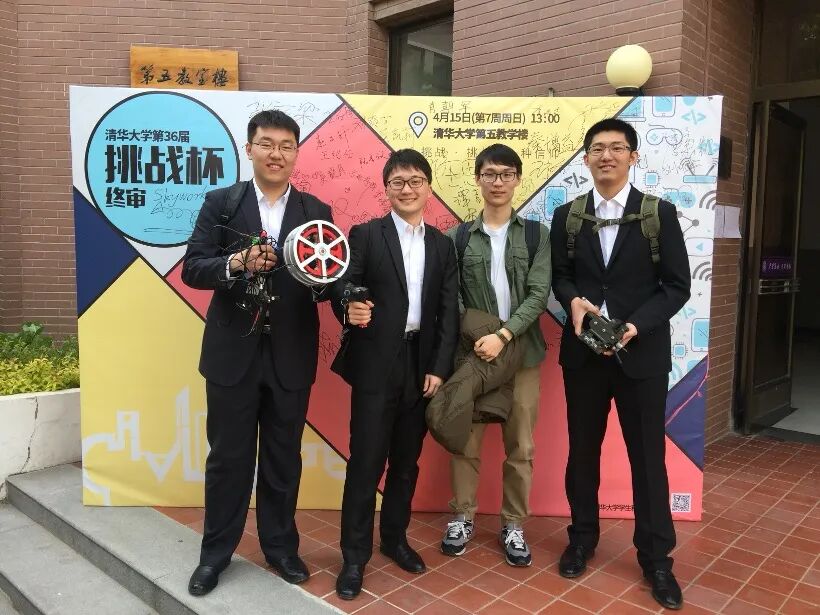
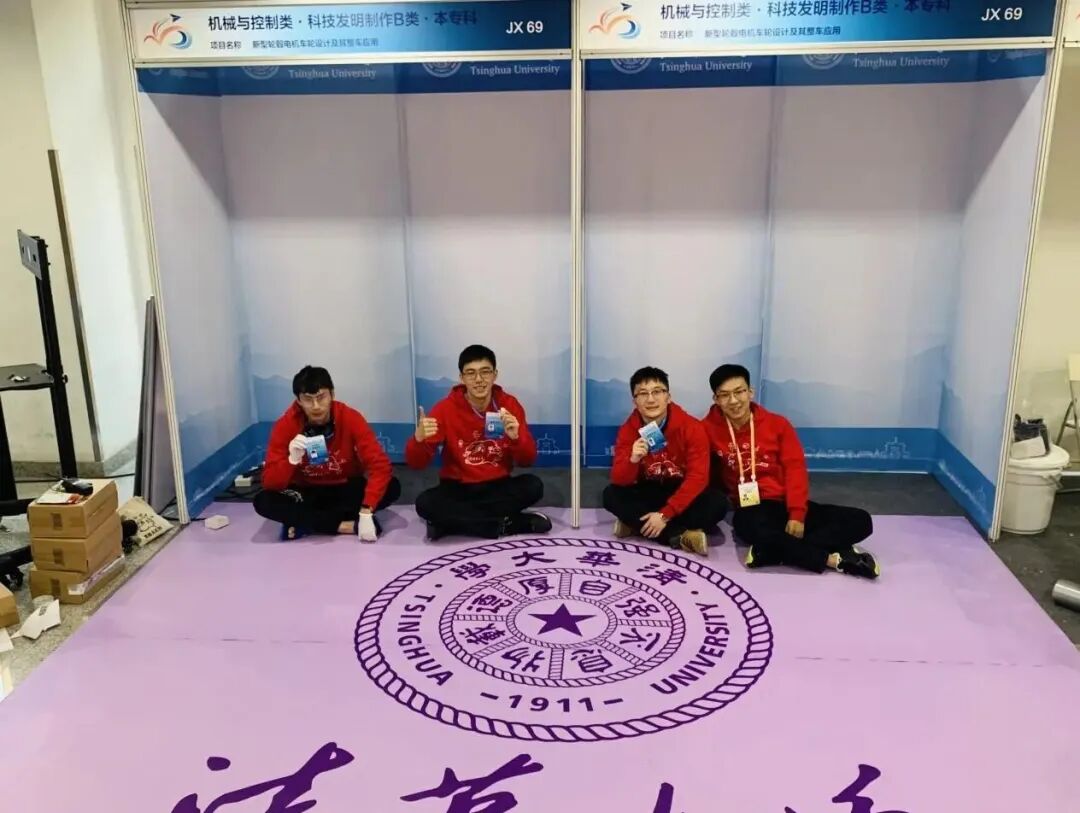
Qin Yudi leading the team to win top prizes at Tsinghua University's Challenge Cup (second from left) and the national Challenge Cup (second from right)

AI-Driven Energy Asset Management
Q: What clients do you have now, and what projects can you share?
Qin Yudi: In energy asset management, this new business model and track we've developed, many clients are central state-owned enterprises, local SOEs, urban investment companies, transportation investment companies, and construction firms that have heavily invested in and built new energy infrastructure over the past two to three years. They are currently our main category of clients. In recent years, driven by dual-carbon goals, large numbers of enterprises have been scrambling for premium, scarce infrastructure scenarios — excellent rooftops, parking lots, prime locations for building photovoltaic and charging facilities.
After many companies completed construction during periods of low capital costs, they found that some projects' returns didn't meet expectations. At this point, they hope to find technology companies like us that use new energy algorithms and data-driven approaches to help revitalize existing assets and improve profits without adding new investment burdens.
Q: What is your core technical advantage?
Qin Yudi: In the past, in the power grid and electricity industry, the emphasis was on energy management. As electricity marketization gradually opens up and power trading models emerge, decisions about when, which entity gives how many kilowatt-hours or how much power to another entity all require efficient, real-time digital decision systems to manage energy circulation and trading.
We started using AI to determine energy flow and management in systems very early. On one hand, through multi-scenario, multi-data accumulation, we continuously raise the technical threshold and barriers of AI. On the other hand, we've also seen the distinctive characteristics on the user side: highly distributed, decentralized, with each scenario being unique. Rural projects differ from urban office buildings, different factory types vary enormously, and electricity policies and pricing systems differ by province. Our projects in Shandong and Guangdong have completely different scenario and data characteristics.
Through early entry and data accumulation, we can achieve higher degrees of refinement in energy management and higher returns in specific scenarios. We also proposed very early to use AI to truly achieve RaaS (Result as a Service). First use AI to deliver actual results, then discuss asset management revenue sharing or service fees with clients.
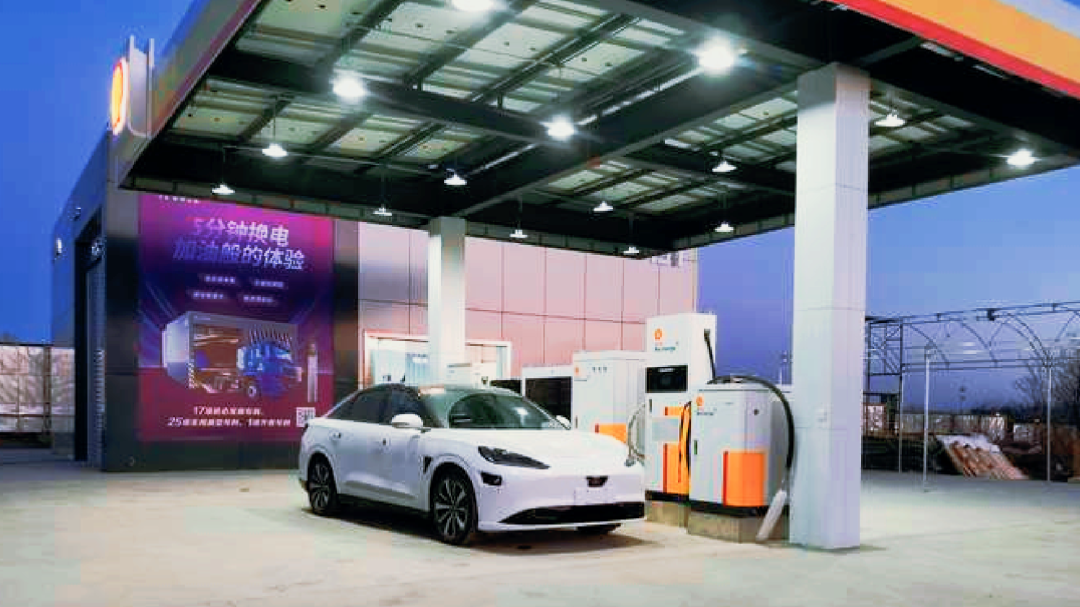
2022 Winter Olympics: Lianyu Technology Zhangjiakou Integrated Energy Demonstration Station
Q: With so many dispersed clients, is the customization degree very high?
Qin Yudi: In 2021 and 2022, when we were doing benchmark demonstrations for power grids and large central SOEs, we indeed invested heavily in upfront design and solution development. But starting last year, on one hand AI technology has matured, and on the other hand we developed our own foundational model. In the pre-sales phase, solution design and return expectation analysis reports can be automatically generated by AI, directly supporting clients' investment decisions, construction selection, and operational return expectations.
During project implementation and management, we combine predictive scheduling with real-time fluctuation correction. In the operations phase, one to two people can simultaneously monitor over a dozen customized projects. This lets us truly use AI to achieve standardization, directly bringing measurable benefits to users.
Q: Lianyu was among the earliest domestic companies to deploy V2G. Can you share how you came to do this?
Qin Yudi: When I was 22 or 23, just graduated from undergraduate and starting my PhD, my advisor, Academician Ouyang Minggao, the nation's chief expert on new energy vehicles, brought me into discussions on integrating electric vehicles with the power grid.
At the time, we noticed that after subsidy phase-outs, China's new energy vehicles were entering a market-driven rapid explosion phase that would impact the power system. For example, in 2021 and 2022, electric vehicle charging load in Beijing, Shanghai, and Shenzhen already accounted for ten to twenty-plus percent of total urban load. This meant that once scheduling failed, the grid would "tremble," potentially causing problems.
We foresaw that electric vehicles needed organic interaction and integration with building grids and urban power grids — achieving mutual power trading. Electric vehicles are essentially large, distributed, decentralized mobile power banks, capable of buying and selling electricity at different nodes, bringing revenue to users and vehicle owners.
After founding Lianyu Technology, we targeted this direction. Leaders at Beijing State Grid and Shenzhen Southern Grid saw the trend early and had us undertake the earliest vehicle-grid interaction demonstration projects in both cities. Last year, after the National Development and Reform Commission and National Energy Administration issued implementation opinions on new energy vehicle-grid integration and interaction, multiple national-level demonstration cities and dozens of demonstration projects emerged nationwide. We ranked among the top nationally in terms of projects participated in.
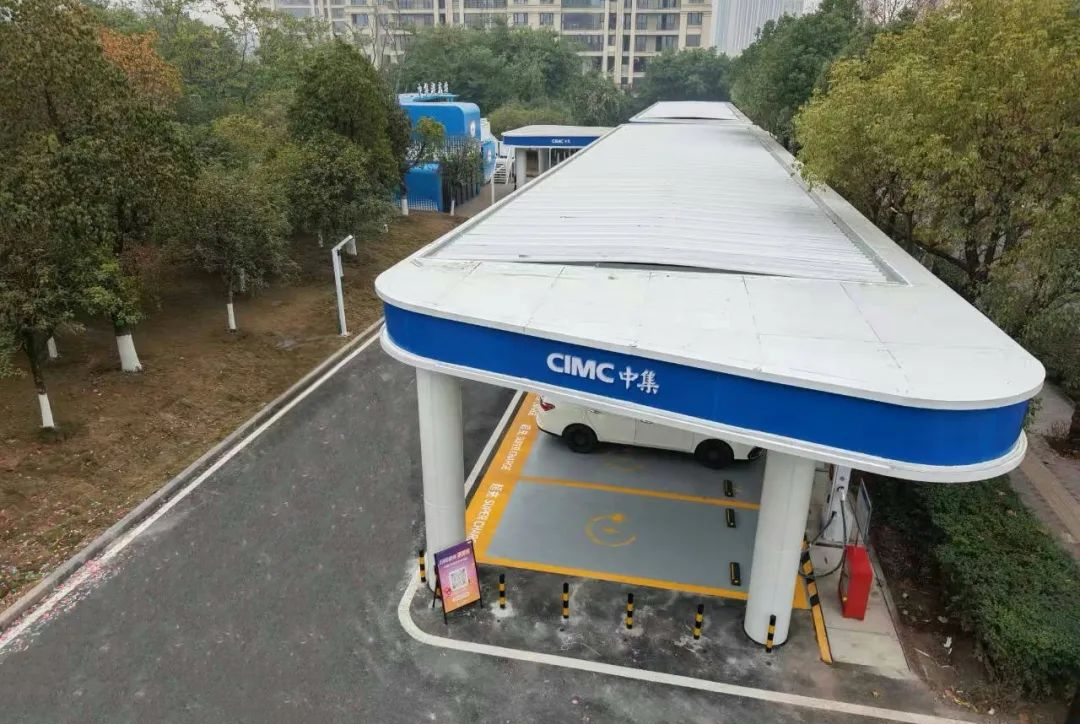
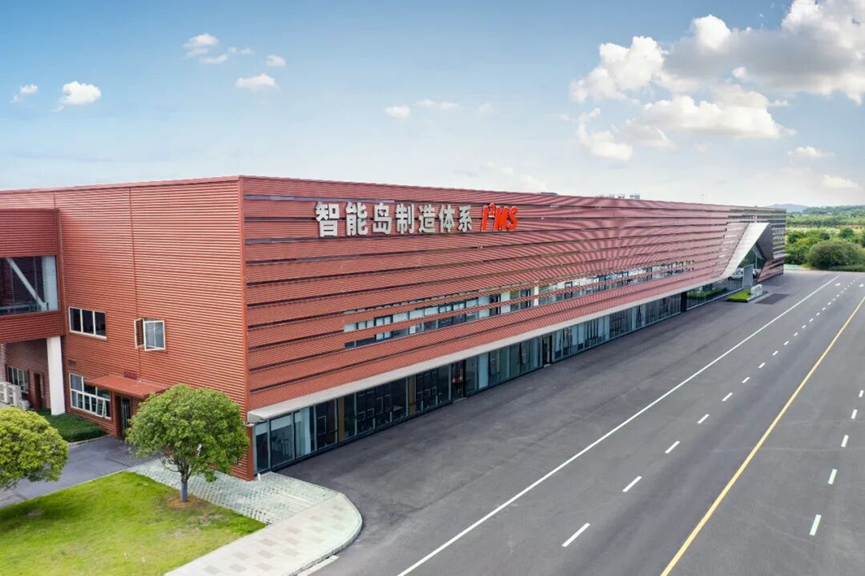
Selected national-level V2G demonstration projects ChainEnergy has participated in
In 2022, Toyota took notice of us. They had already run electricity market pilots in the US, California, and Europe, but in China they wanted to find a partner with similar positioning and greater market potential. So we entered a strategic partnership — they invested in us, and we earned the "Global Top 10 V2G Innovative Companies" designation, the only Chinese company on the list. We believe that as vehicle ownership continues to grow, this will become a major scenario for user-side energy assets. Every EV owner will be able to participate in electricity trading and boost the returns on their energy assets.
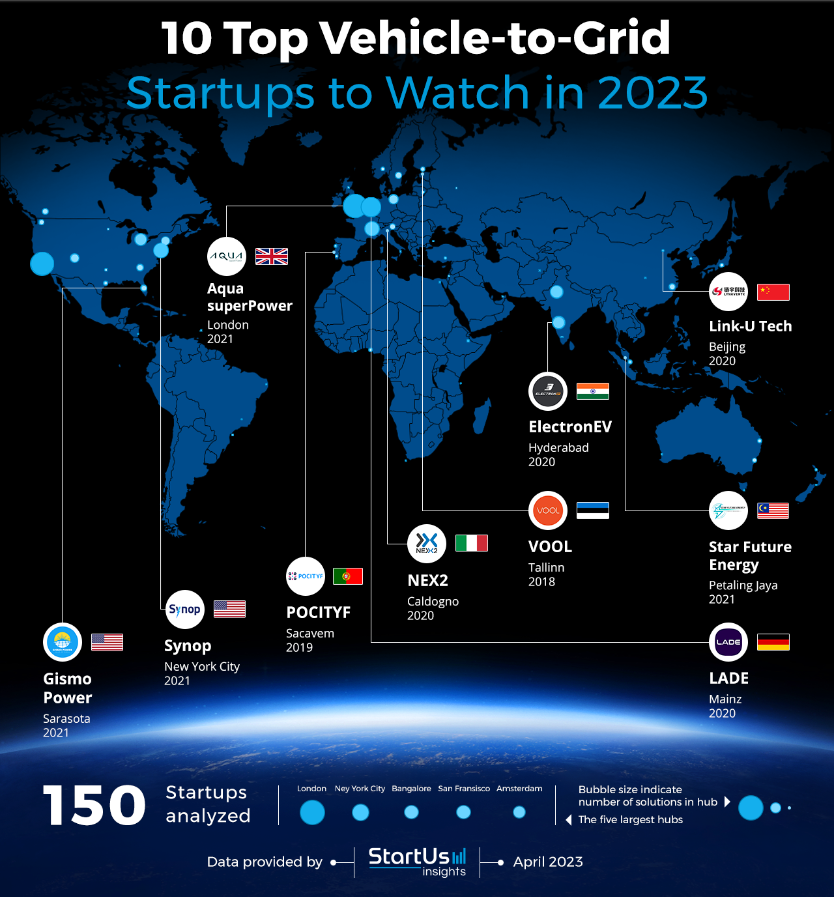
ChainEnergy receives "Global Top 10 V2G Innovative Companies" recognition
Q: Many companies are working on virtual power plants. What's your core differentiation?
Qin Yudi: The virtual power plant track has been hot for years, with plenty of new startups emerging. We actually preferred to position ourselves as an "energy management + AI EMS (Energy Management System)" company from the start, with energy-sharing as our core business model.
Many customers lump us in with "virtual power plant" players, but I'd like to use this opportunity to explain how we're different from most of them.
Today's virtual power plants typically aggregate large amounts of energy assets within a region — say, at the city or regional grid level. Once aggregated, these assets can be dispatched and managed centrally: when to generate, when to consume, with some degree of flexible control. That's the traditional VPP concept — not a real power plant, but managing distributed assets at the grid level.
Most VPP companies serve regional or grid-level needs. Many alumni-founded companies occupy this niche, serving SOEs and state-owned enterprises.
Our biggest difference is that we sit further downstream in the value chain. We're an energy asset management company that faces individual equipment directly. We connect to every air conditioner, heating and cooling unit, every solar panel, every battery storage system and charging pile — bringing them into our system and achieving direct control.
When many customers plan their deployments, they realize they need companies that can aggregate at scale and trade electricity at the upper layer. But even after solving that, they're still missing a player that can drill down to each piece of equipment and truly digitize and directly control it. We're that "first-hand resource" — we digitize the equipment, bring it into the asset pool, and hand it up to the aggregators and traders.
So when pushing projects in the market, we noticed something interesting: what we do is actually scarcer in the ecosystem. Many partners, including SPIC, State Grid, and Southern Grid service providers, compete for our resources. For example, after we connected several buildings' solar and storage assets in Beijing, they wanted those assets in their own virtual power plants, not someone else's. You can think of them as "large fund managers," while we're the ones who gather "retail assets" from each individual holder.
Once assets are aggregated, the upper layer handles power trading, while we manage the underlying solar, charging piles, air conditioners — controlling the energy flows between them. For us, customer scenarios and assets are the scarcest resources. Our mission is to gather these resources and hand them to traditional VPPs to operate.
Q: You've landed some projects overseas. How do foreign energy structures differ from China's?
Qin Yudi: In many overseas markets, what China is just beginning to experience has already happened — namely, the introduction of electricity market mechanisms.
One reason is that China's grid has long been world-leading: extremely stable and robust. This creates a distinctive feature — whatever electricity users demand, power plants can nearly match in real time. So electricity costs are low, dispatch is straightforward, and there's less need for market-based supply-demand balancing mechanisms.
But under the dual-carbon goals, as more solar and wind come online, that changes. These renewables are "at the mercy of the weather." Even with accurate forecasting, generation fluctuates between surplus and shortfall. Meanwhile, whether for factories or households, electricity demand tends to be relatively stable — it doesn't follow generation fluctuations. This creates supply-demand imbalances.
That's when market mechanisms become necessary: part of the electricity remains planned and dispatched, while another portion goes to market, where price fluctuations guide supply and demand. Sell when prices are high, buy when low — automatic balancing.
Overseas, especially in Southeast Asia where grid conditions are weaker, in Europe, and in California, renewables were introduced earlier. These regions also faced grid robustness challenges sooner, so market mechanisms emerged earlier and business models are more mature.
For our overseas business, we mainly collaborate with Fortune 500 energy companies like Toyota and Shell. Overall, overseas projects yield higher returns and gross margins than domestic ones. But the energy business depends heavily on deep penetration of locally scarce scenarios, which requires local resources and relationships. We've already delivered benchmark projects in Southeast Asia, Europe, and the Middle East, and we'll accelerate expansion next year.
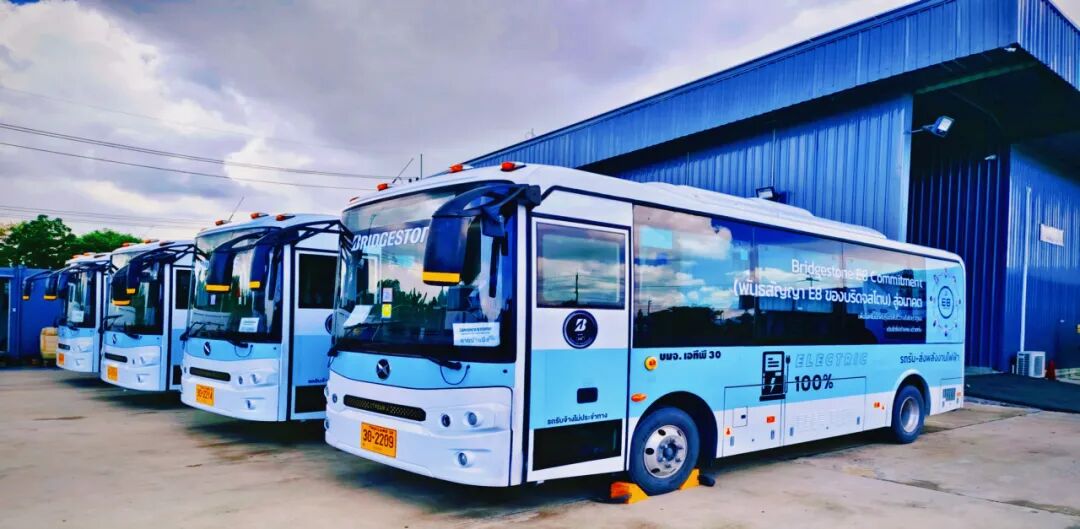
ChainEnergy's Bangkok, Thailand project
Q: You have quite a few business directions. How do you maintain focus?
Qin Yudi: Although it looks like many directions, as a startup tech company we always focus on what we do best: core energy management algorithms, and guaranteeing returns and performance for asset management.
Whether it's V2G, building energy efficiency, or energy asset management coordinating with virtual power plants, we partner with SOEs and state-owned enterprises who take the lead, while we occupy our position in the ecosystem.
Across all businesses, we play two roles. First, as a technology service provider, delivering core software and hardware systems. Second, as an energy asset manager, managing and operating clients' energy assets on their behalf. We don't directly own these assets or make heavy capital investments.
For example, in V2G projects, grid companies or SOEs are the investors and asset owners; we use our self-developed energy management system to help them achieve optimal operations. In building energy efficiency projects, we ensure buildings and residential communities run their energy systems for maximum savings and returns.
We don't do underlying manufacturing — that's the strength of large hardware companies. We focus on asset management, return enhancement, and AI-driven optimization, letting data and experience from different scenarios feed back into our algorithms for universal effectiveness.
Q: Since we have this opportunity today, what would you like to say to potential building energy efficiency clients?
Qin Yudi: I hope all partners with factories, office buildings, hotels, retail spaces, and similar scenarios will consider working with ChainEnergy. We provide AI-powered energy efficiency services with guaranteed returns, requiring no upfront capital or costs, with zero impact on normal operations.
We use AI to help you save energy and boost asset returns, settling on a revenue-sharing basis after the fact — truly "energy savings sharing." As long as you're willing to entrust your valuable energy assets to our management, we'll create more value for you.

A Young Team That's Constantly Putting Out Fires
Q: Three words to describe your team's daily vibe?
Qin Yudi: Relaxed, firefighting, young.
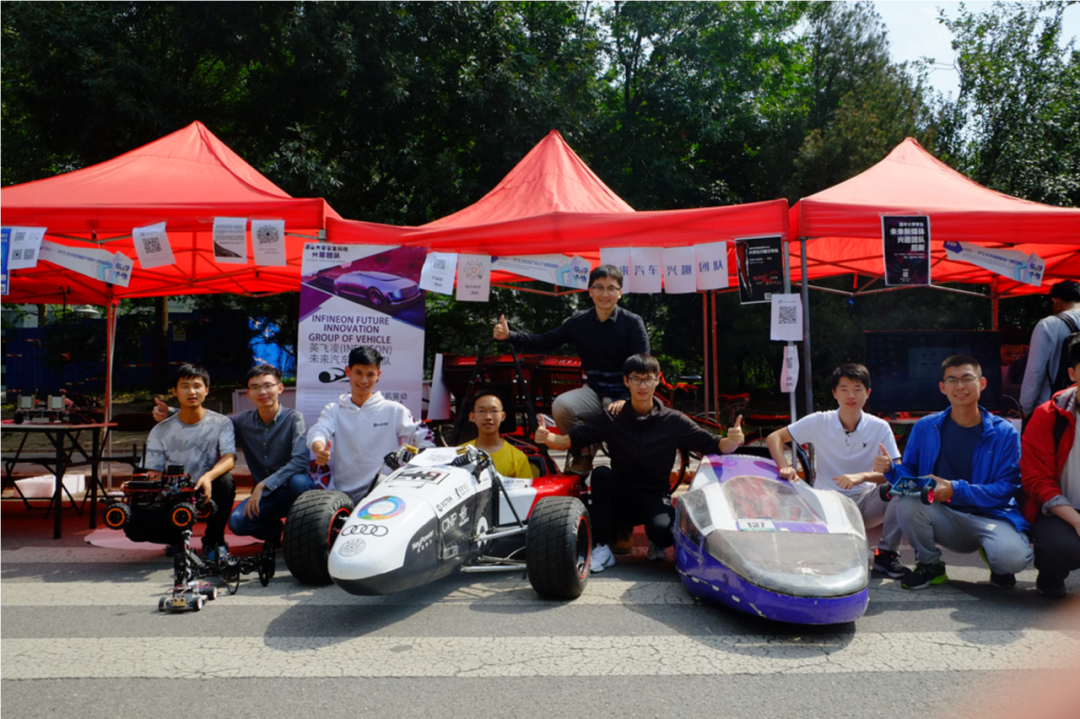
Group photo of Tsinghua Future Automobile Interest Team
Q: What's your superpower?
Qin Yudi: I can build, I can endure, I can execute. From school until now, so many things have been crammed out against deadlines. Hitting deadlines requires one essential skill: at 11 p.m., when a pile of other stuff is finally cleared, that's when the real work begins.
Q: If you could give aspiring young entrepreneurs just one piece of advice, what would it be?
Qin Yudi: Act now.

This episode's audio is also available on ZhenFund's podcast "Seriously Speaking" — tune in!

Text | Cindy Podcast | Neya & Ruitong Video | Dylan & Neya