A Conversation with XPeng Co-founder He Tao: On a 7,000-Meter Snow Mountain, I Decided It Was Time for Halftime to End

Starting a business is addictive.
After "retiring" from XPeng, co-founder He Tao considered many possibilities for what came next. Actually retire? Take a break, invest in other young entrepreneurs, or dive back into founding another company?
He thought a lot, but decided to give himself a "halftime break" first. He started climbing snow-capped mountains, ascending from 5,000 meters to 6,000 meters, each peak higher than the last. Later he realized that life probably doesn't have a so-called finish line. When he reached 7,000 meters, he decided this halftime break should end.
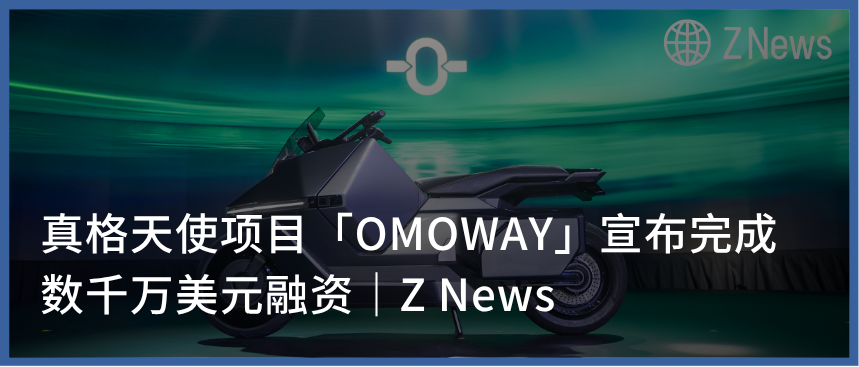
In August 2024, He Tao decided to start another company. He and former XPeng VP Jiao Qingchun founded OMOWAY, a company focused on exporting smart electric motorcycles, with Southeast Asia as the first stop in its global layout. He also bet a substantial portion of his own assets on it.
Ten years ago, He Tao and his GAC colleague Xia Heng co-founded what would become XPeng — then called "Orange Auto." That was the year Tesla had just entered the Chinese market, and He Tao was heading smart vehicle and autonomous driving projects at GAC's research institute. Tesla made him realize that electric vehicles could be mass-produced and commercialized — a "fuzzy but real" market opportunity.
With 10 million yuan in early-stage investment and 8 million in loans, starting a car company at 29 seemed "inconceivable" at the time. But He Xiaopeng told him something: "The moment you get off the bus, you've chosen a different road."
Life isn't like riding a train — no predetermined destination, no fixed stops. It's more like a bus that can stop anytime. Entrepreneurship is simply seeing scenery you like and deciding to get off and walk around. It holds infinite possibilities for us to explore and create.
In June 2025, on the eve of OMOWAY's Indonesia launch, we met with He Tao to talk about this decision to "get off the bus" and the good scenery he's seen. Below is the full interview.

At 7,000 Meters, I Decided Halftime Was Over
Q: Let's start with a brief introduction — who you are and what OMOWAY is doing.
He Tao: I'm He Tao, and this is my second time founding a company. In 2014, I co-founded XPeng, where I spent the most important decade of my life — from age 29 to 39.
Last August, we launched a new project, OMOWAY, with Southeast Asia as the first stop in our global expansion, making smart electric motorcycles.
Q: What fundamentally distinguishes the "smart electric motorcycle" OMOWAY is building from e-bikes, electric bicycles, or traditional motorcycles on the market?
He Tao: They're completely different product categories. Range, load capacity, top speed — everything is on a different magnitude. Compared to ordinary gas motorcycles, it's like the gap between a Santana from 20 years ago and a smart car today. OMOWAY is smarter, safer, and delivers a better experience.
Q: After founding XPeng, the company launched several hit products and went public in 2020. You left to start your own thing. How did you make the decision to start over this time?
He Tao: Honestly, I thought a lot after leaving. I considered whether I could just retire, or go into investing to support young entrepreneurs. But that period was the first time I truly gave myself a "halftime break."
I went to many mountains, climbing from 5,000 meters to 6,000, then to 7,000. Each peak was higher than the last, but I realized life probably has no real endpoint. So standing at 7,000 meters that time, I decided halftime should end. That's how OMOWAY came to be.
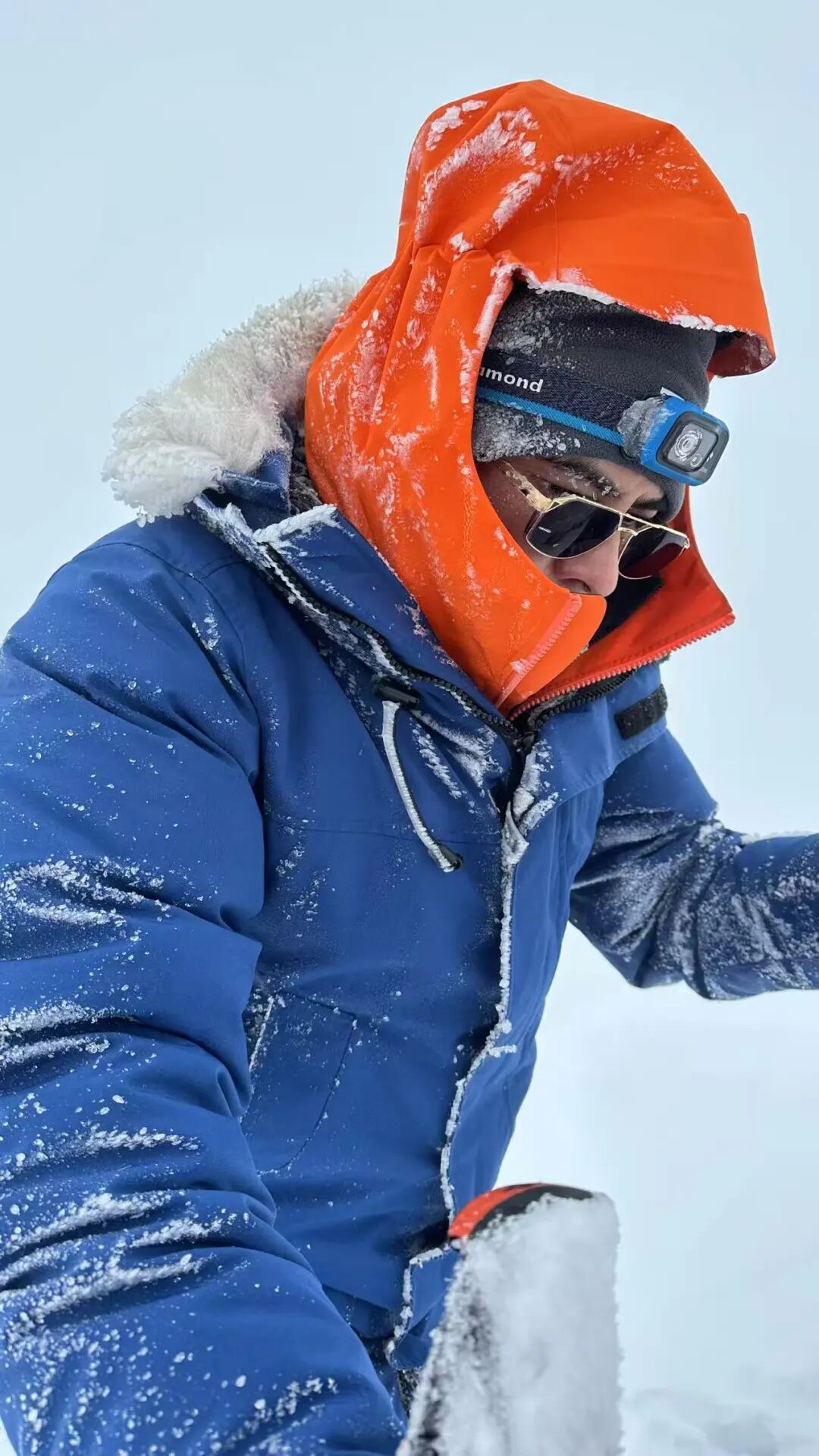

He Tao's mountain climbing photos

Good Looks and Good Function — The First Impression We Want
Q: Before founding OMOWAY, you visited Southeast Asia many times. What were you mainly looking at? And when did you decide this was worth doing, that we should do it?
He Tao: Actually, the first trip to Southeast Asia wasn't for research. But I was surprised to discover that motorcycles are practically everyone's primary daily transportation. The streets are packed with them, congested, loud, and heavily polluting. The transportation situation resembles China in the 1990s. Jakarta, for instance, consistently ranks among the world's top ten most polluted cities.
I started thinking, why can't there be a more environmentally friendly, more economical way to get around? I realized this was both an opportunity and something with social value. But intuition alone isn't enough. I went back ten more times, talking to industry people and consumers. There were already some "early adopters" of electric motorcycles locally, so I observed how they used them and what feedback they had. Only with these assessments did we decide this was genuinely viable — then we started assembling the team, building the company, and raising investment.
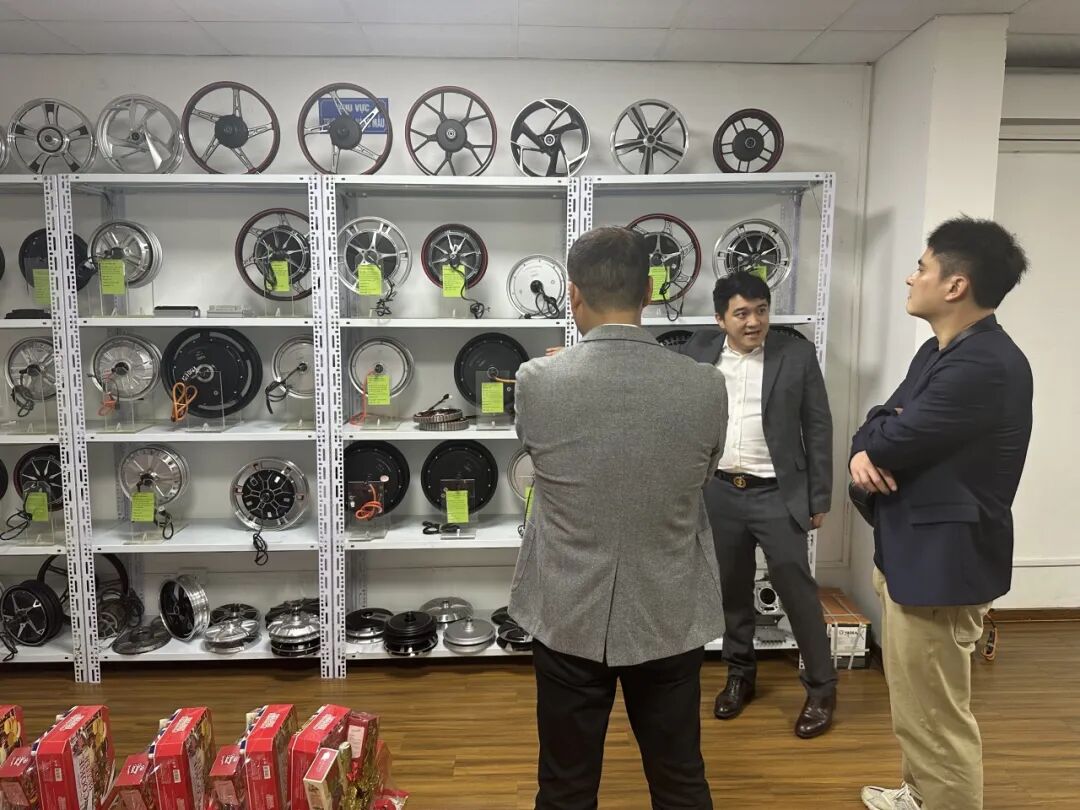
He Tao (far right) and Jiao Qingchun (far left) inspecting a factory in Indonesia
Q: OMOWAY has been around for a year. What's the most important lesson you've learned about exporting motorcycles to Southeast Asia? What does the consumer structure look like there?
He Tao: If I had to summarize just one lesson: going global requires localization.
You can't transplant whatever worked in China wholesale to another market. The consumer structure, income levels, and age distribution are all different. For example, Indonesia's average age is under 28 — the users are very young. Incomes aren't high, but their willingness to spend ahead of earnings exceeds China's.
Especially since Southeast Asia never experienced the PC internet era, leaping straight to mobile internet, young people entered the smart era early and have awareness of and desire for intelligence. Each place has its own character. So from day one we emphasized putting decision-making centers, production, and marketing systems in Indonesia to achieve genuine localization.
Q: From a competitive standpoint, the Southeast Asian motorcycle market is essentially monopolized by Honda and Yamaha. How do you view this competitive landscape?
He Tao: Right now these two companies control over 95% of the market, with the largest holding nearly 80%. This market concentration has pros and cons for us. The upside is you only have one or two rivals. The hard part is they've been rooted in this market for decades. Brand awareness is already established, and prying users away from that won't be easy.
Q: In this kind of market, what's OMOWAY's entry point?
He Tao: We'll make technology our brand core, first building products at both ends of the mainstream price spectrum, then moving into the core mid-range price band.
We're also applying lessons from our experience in China. In 2015-16, electrification started penetrating from both ends of the market. It wasn't until 2019 that the mainstream 100,000-300,000 yuan price band truly opened up.
So we anticipate that around 2027, Southeast Asia's mainstream market will also begin shifting. In phase one, we're establishing our brand and user mindshare in the mainstream market with our products. In phase two, we'll launch core price band products.
Q: For the products at both ends of the mainstream price spectrum, what will each focus on? What are the selling points?
He Tao: Our brand positioning is technology. We want users buying OMOWAY at any price point to feel this product has intelligence and design sensibility. Just like seeing a Model 3 — you don't know if the driver is a white-collar worker or a billionaire, but you know it's a Tesla, a company with technological ambition. Even when Tesla releases lower-priced models, it doesn't compromise that brand positioning.
Q: After this launch, what characteristics do you want consumers to remember about OMOWAY? What would ideal market feedback look like?
He Tao: The moment they first see the bike, consumers should think, "Wow, there's a motorcycle like this."
It has to look good enough to make people want to learn more, to buy it, to own it. Ideally, riding it through streets and alleys draws crowds. That's the traffic that comes from design aesthetics.
The second point is intelligence. It shouldn't just be a novelty — users should feel it's easier, safer, and more worthwhile to ride. So good looks and good function are what we want OMOWAY to leave as a first impression in consumers' minds.
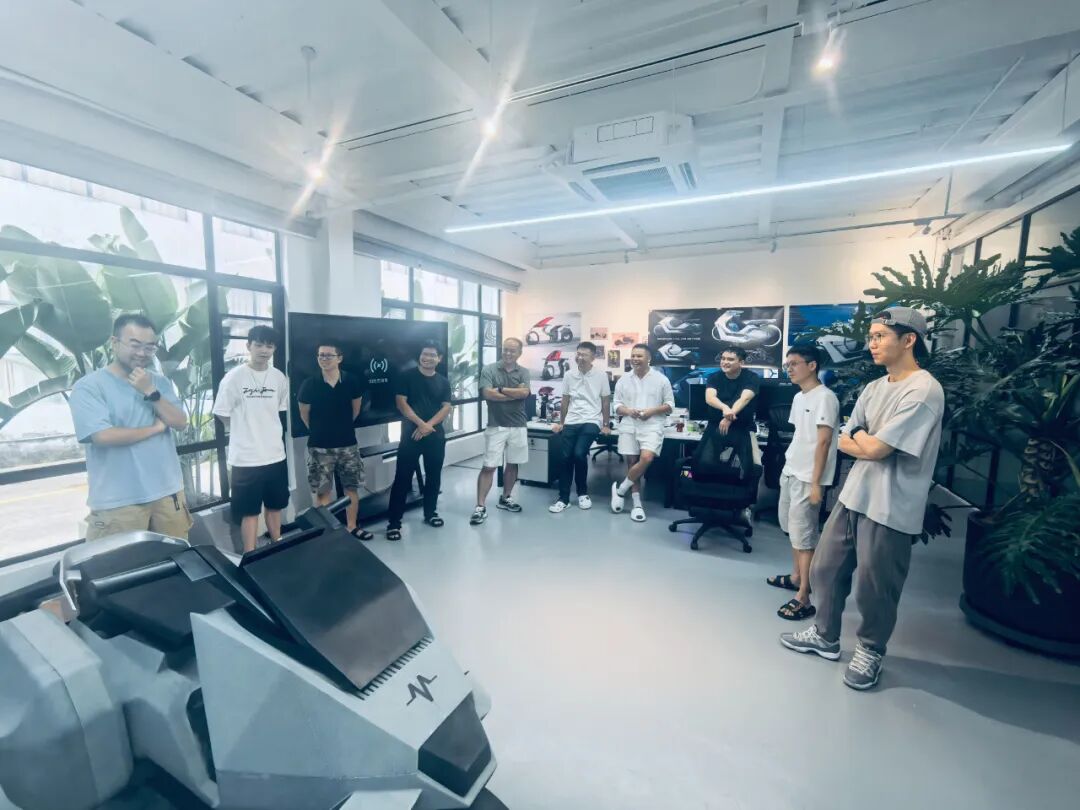
OMOWAY prototype internal review
Q: You just mentioned intelligence as a technology selling point. How does motorcycle intelligence differ from automotive intelligence? Where does intelligence rank in consumers' purchase decisions?
He Tao: Intelligence improves the riding experience and safety more noticeably on motorcycles than in cars. In a car you can drive one-handed, run the AC, listen to music — no problem. But motorcycles have no enclosed cabin. Intelligence features like self-balancing, cornering assist, and blind spot monitoring can free up the rider's attention and substantially improve safety and the riding experience.
In the future when people choose a bike, they probably won't ask "where does intelligence rank" — they'll ask whether the bike "has intelligence or not." Just like today when you buy a car, you wouldn't choose one without interactive intelligence or driver assistance.

Four Wheels Against Two, China Against Overseas
Q: We see the new OMOWAY product has a very cool design today. We'd also like to hear about the design thinking behind this bike.
He Tao: This is a very tech-forward motorcycle. The front face has strong visual impact, with sharp angles and distinct edges.
We've also added many practical functions. For example, the center storage box can detach to become a scooter-style flat footrest, better matching Indonesian user habits. When attached, it has ample space for helmets and rain gear. Side cases can be added on both sides, plus an adjustable rear trunk at the back. It can seat up to three people, converting into a touring motorcycle.
The front has dual cameras for assisted driving. The center console also has a vehicle OS supporting navigation, entertainment, and IoT vehicle connectivity.
Q: For products at both ends of the price spectrum, how will these intelligence features manifest differently? What are the most important functional points?
He Tao: It's hard to rank them. Our research shows that in Southeast Asia, average daily motorcycle riding exceeds two hours, but since both hands must control the bike, users can't operate their phones and have no means of smart interaction. It's this prolonged "intelligence vacuum" that creates demand.
Next is self-balancing and assisted driving. On one hand these features lower the barrier to riding; on the other, they improve safety. Whether traditional gas motorcycles or electric ones, there's substantial room for improvement in these areas. That's precisely our opportunity.
Q: Many electric bicycle companies are also going global now, emphasizing intelligence. What do you see as OMOWAY's team's intelligence advantage?
He Tao: Four wheels against two, China against overseas. Our intelligence team is built from XPeng's core backbone.
Electrification and intelligence have been battle-tested in China for ten years. From perception to interaction, from supply chain to industrialization, it's all mature. A team that fought its way out of that bloodbath has certain advantages in technological understanding.
Q: You mentioned four wheels against two — much four-wheel technology can be transferred down to two wheels. But can you control costs? Could the technology be over-engineered?
He Tao: Four wheels against two doesn't mean standing on a high point looking down, forcing car stuff onto motorcycles. It means first respecting the inherent logic of two wheels, then selecting technologies that can truly penetrate the two-wheel market with strong cost-performance. For example, our multi-link suspension — on Southeast Asia's potholed roads, the experience difference is tangible.
We have years of technology accumulation, including mature supply chains. Bringing some automotive intelligence capabilities to two wheels — I believe this represents an upgrade for the existing industry.
Q: China's smart car teams and entrepreneurs all fought their way out of a bloodbath. How do you view competition in the two-wheel smart mobility track? Will it become another bloodbath?
He Tao: It will definitely get competitive, but globally speaking, few markets reach China's level of competition.
My first venture was in 2014, when there were probably 300 companies doing smart electric vehicles in China. Each time I thought surviving one round meant catching my breath, the next round would intensify, competing to an extreme degree.
Two-wheel intelligence is still early globally. Competition will be fierce, but not as extreme as before. Our goal is simple: become number one among the new generation of two-wheel mobility brands — whether in sales, product, or after-sales reputation.
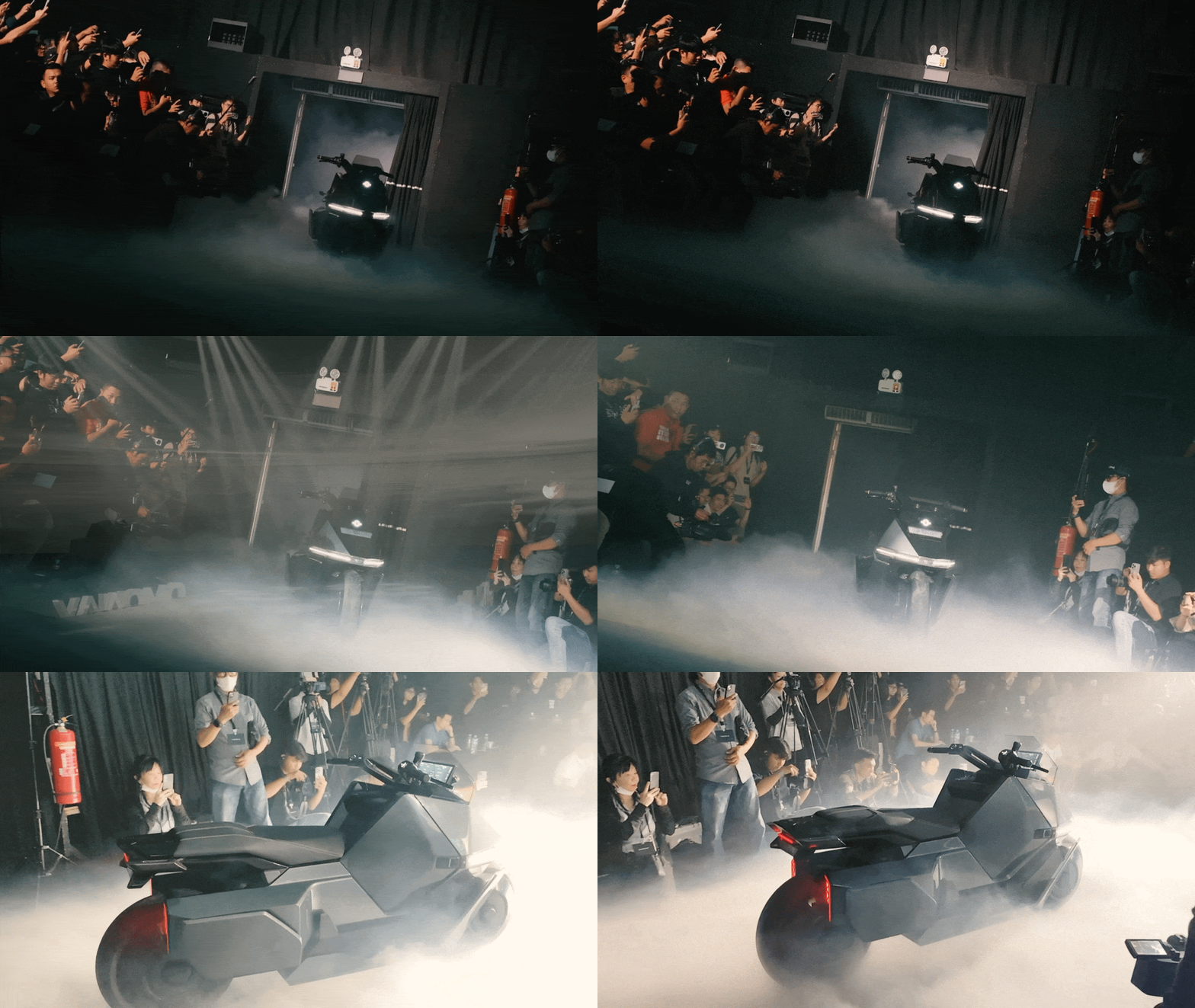
At the Indonesia launch event, an OMOWAY smart motorcycle makes its entrance via autonomous driving

The Moment You Get Off the Bus, You've Chosen a Different Road
Q: Let's talk about your story. In 2014, you left GAC and founded XPeng with Xia Heng. Why did you decide to start a company then?
He Tao: The way you ask that reminds me of something He Xiaopeng once said: "The moment you get off the bus, you've chosen a different road." Life isn't like riding a train — no predetermined destination, no fixed stops. It's more like a bus that can stop anytime. Entrepreneurship, at that time, was simply seeing scenery I liked and wanting to get off and walk around.
Tesla had just entered China, and we realized electric vehicles could be mass-produced and commercialized. Combined with my background in new energy and autonomous driving, I felt this was a fuzzy but real market opportunity. And for a small team, "agility" was itself an opportunity. So my partner and I discussed it — let's do it — and my first venture began.
Q: You were all quite young then, taking considerable risks. I heard XPeng's early funding was just 10 million yuan?
He Tao: Right, 10 million in early investment plus 8 million in loans, 18 million total. I was only 29. By the standards of that time, a twentysomething daring to start a car company was indeed inconceivable. But I stand by what I said — seeing good scenery, get off the bus. It holds infinite possibilities for us to explore and create.
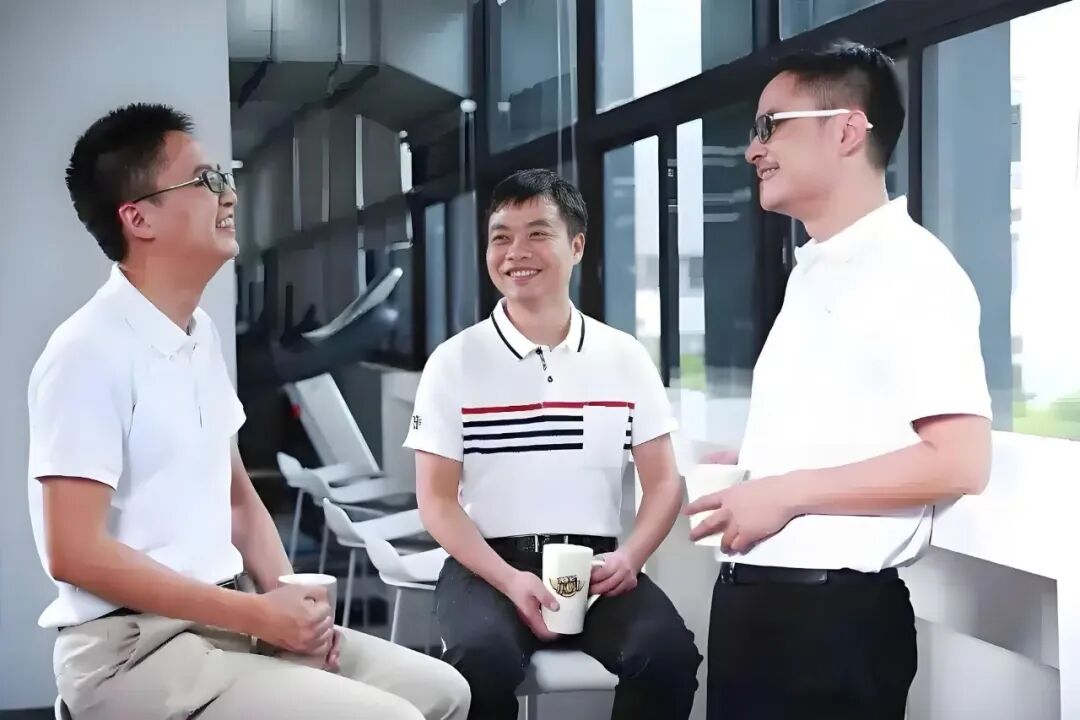
XPeng founding team: Xia Heng (left), He Xiaopeng (center), He Tao (right)
Q: From 0 to 1, then to 10, 100, 1,000 — you experienced XPeng's complete entrepreneurial cycle over this decade. What did these different stages mean to you personally?
He Tao: Before entrepreneurship I was just a car programmer. I was practically a blank slate on how to operate a company or build products. All my skill accumulation and growth came from XPeng, and from He Xiaopeng.
I very clearly remember that when I was in school, textbooks covered carburetors, and having a radio in your car counted as a luxury feature. But in this decade, electrification has exceeded 50%, smart features have become standard, and cars are gradually becoming consumer products. Especially in recent years, cars increasingly resemble AI on wheels. For our generation, these changes enabled our first round of growth, and they're also the wealth I'm bringing to my second venture.
Q: Looking back, what was XPeng's biggest inspiration to you? Were there particular experiences or lessons that directly influence OMOWAY?
He Tao: From the outside, my time at XPeng looked smooth, but I stepped into many pitfalls. Many people think I had career success in my early thirties, but my deepest realization is that crises always hide in calm, sunny times.
Starting another company now, from day one I'm thinking about how we might die, what could defeat us. I have more sense of crisis now. Persisting through adversity isn't easy, but staying clear-headed in good times is harder. That's what I want to tell myself.
Q: You mentioned that when founding XPeng, you'd only worked three or four years, and your understanding of business and company operations was heavily influenced by He Xiaopeng. He was also your mentor. What's the biggest lesson you learned from him?
He Tao: He Xiaopeng is a dreamer who never stops. That influenced me quite a bit. Those dreams seemed fanciful at the time, but he could transform them into reality step by step. The most important thing I learned from him is that people need to have some bold dreams.
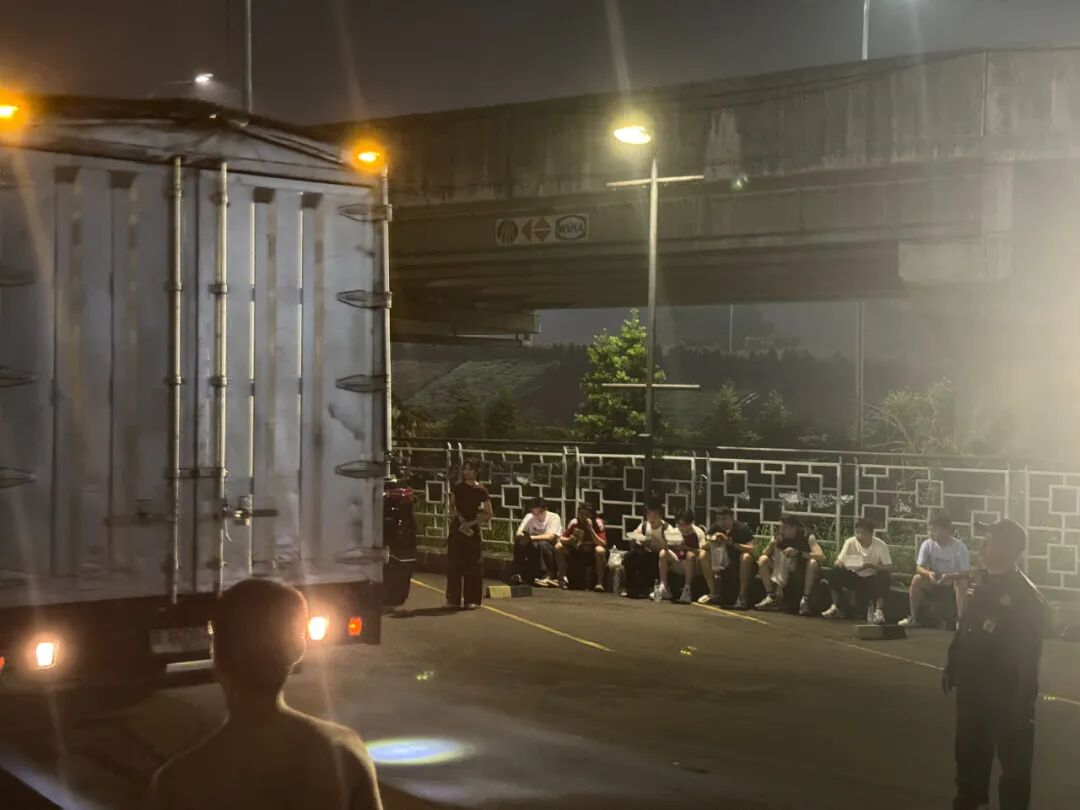
Loading vehicles late night before the Indonesia launch, dinner by the roadside halfway through unloading

A Message to XPeng Before Starting OMOWAY
Q: Before founding OMOWAY, you sent He Xiaopeng a message saying you were starting another company. It's been about a year now — do you still keep in touch? What do you talk about?
He Tao: I sent more than one message. He's always been my most important mentor, like an older brother. At XPeng, I was more in a fighter role, not thinking so much. Now running my own company, the role switches immediately — I have to start thinking about direction, about how to find people, filling gaps where I was previously weak. So I consult him a lot. Of course I hope that through my own effort and determination, I won't disappoint him.
Q: You also said he's someone who dares to dream and can execute. So what's your biggest dream for OMOWAY now? Ten, twenty years from now, how do you want people to remember this name?
He Tao: XPeng brought me my greatest sense of achievement in 2018. One day I saw a G3 drive past me on the road, driven by someone I didn't know. That moment was profoundly moving.
So no matter how many times I start companies, first, I must make ToC products. There must be ordinary people actually using them. I hope they feel joy because of our products, that their lives become a little more convenient.
Second, I hope what the company creates pushes society and technology forward, even if just a little. If ten or twenty years from now, OMOWAY is no longer just making motorcycles, but when people mention it they say, "That's a company that pushed technological progress and brought change to people's lives" — then I'll be very satisfied.
Q: Zooming in closer, over the next one, three, five years, what do we plan to accomplish first?
He Tao: The most important near-term milestone is the product launch early next year, truly reaching consumers.
The upcoming challenge is entering mass production preparation after the launch. That includes factory layout, supply chain integration, and how to roll out distribution channels. Within three years, we'll expand from Indonesia across Southeast Asia. In five years, I hope to establish new product lines — not just two wheels, not just Southeast Asia.
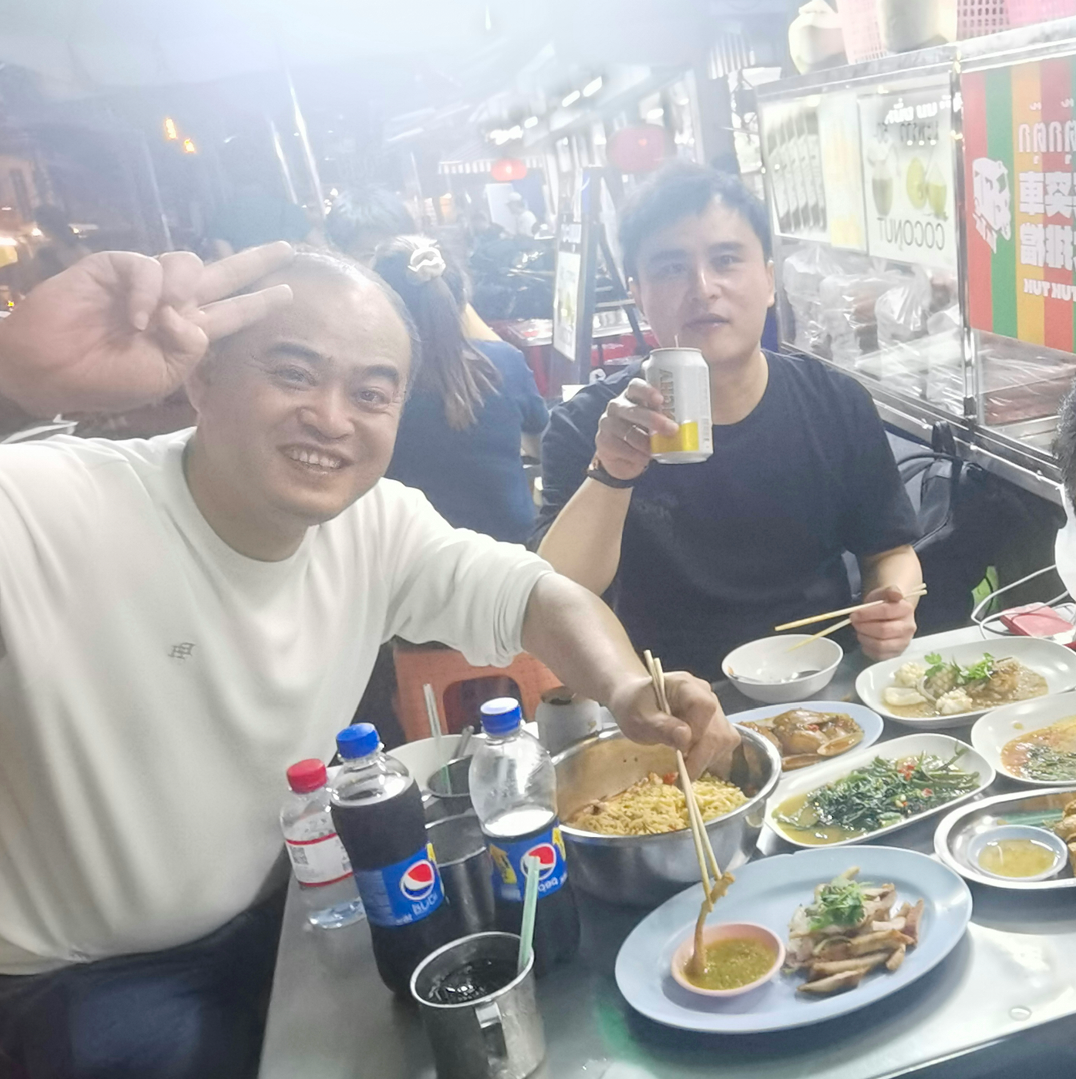
OMOWAY co-founder Jiao Qingchun (left) and He Tao (right) during an Indonesia research trip

The Trait I Value Most Is "Resilience" — Whether You Can Withstand Pressure
Q: You mentioned earlier that at XPeng you were more in a fighter role, but now as number one you're thinking about strategy and also organization. How are you building OMOWAY's organizational culture?
He Tao: Culture is a company's soul. He Xiaopeng told me this many times. I agree — whether it's 50 people, 500, or 5,000, it must run through everything. Where rules and regulations can't reach, culture takes effect. So we established our organizational culture from day one.
Q: What is OMOWAY's organizational culture?
He Tao: Three words. First, openness and freedom. We're a technology company. I want everyone on the team to express themselves freely, explore without limits.
Second, user-driven. Many technology teams easily get trapped focusing only on the technology itself, forgetting that technology is for people to use. We need to turn technology into products and bring products to market.
Third, trust. Early-stage companies don't have many rules and processes. Mutual trust is the foundation for efficient work.
A company's character is the founder's character. Culture isn't just talk — you have to genuinely believe it deep down. Once the founder themselves breaks it, that culture ceases to exist.
Our team is very young, and what we do early on is simple — everyone works hard together, experiments, has fun. All values are embedded in these activities. For example, whenever new technology emerges, everyone studies it together.
Q: Organizational culture ultimately depends on that first wave of people. How did you find your initial co-founders? How is your founding team structured?
He Tao: At the founder level, two things matter most: mutual trust and complementary strengths.
Before deciding to start this project, I went through everyone I knew from before. My eventual co-founder was Jiao Qingchun. He also joined XPeng very early, in 2016. Before leaving, he was a group VP leading a 1,000-plus-person R&D team.
I think entrepreneurship is addictive. Being part of XPeng was also a startup experience for Jiao Qingchun. Later when I shared my idea with him, he agreed on the spot. We've worked together for nearly ten years. I'm more of a blue-sky thinker — direction, recruiting, fundraising — while he's stronger on technology and organization.
Finding people becomes clearer after that. Because you know who the industry experts are, and who you click with.
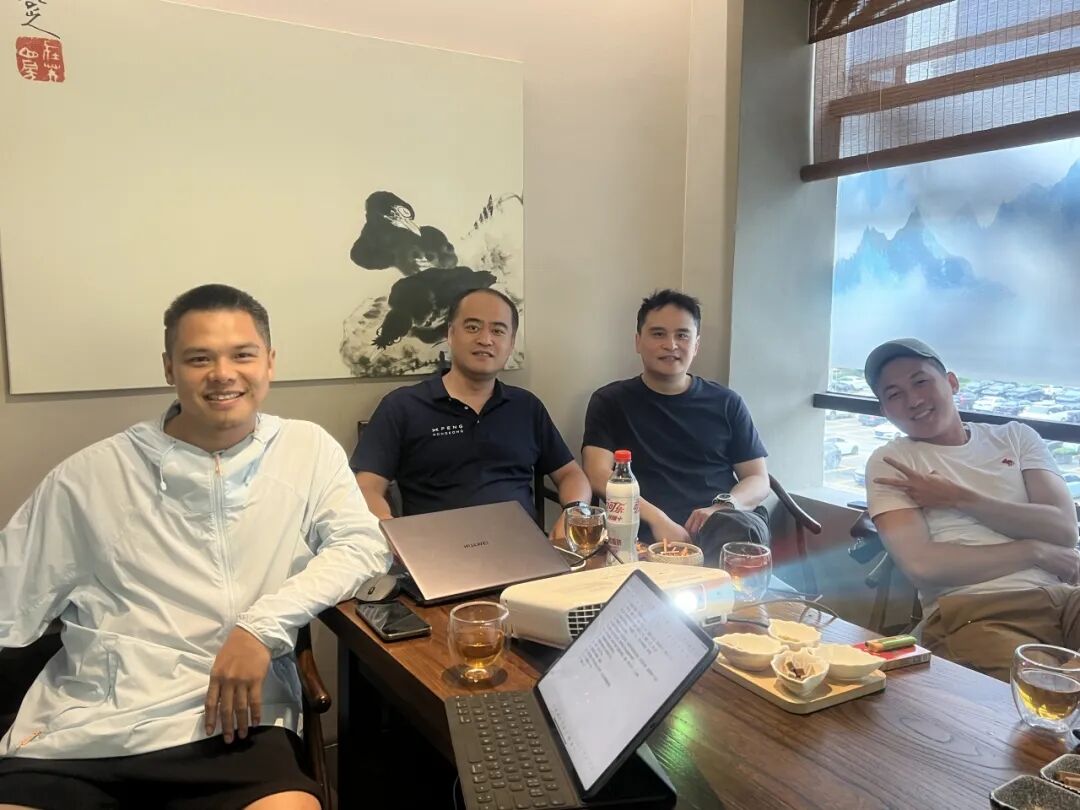
Early OMOWAY team photo, Jiao Qingchun (second from left) and He Tao (second from right)
Q: You mentioned an important point earlier — "localization." For a multinational company like ours, how do you build local teams and organizational culture?
He Tao: The core of culture doesn't change, but localization requires localized operational methods because you need to adapt to local culture. For example, in Indonesia — as you know, it's a religious country with five daily prayer times. Employee schedules and rhythms will certainly differ. These must be respected.
But core company values like freedom, trust, and customer orientation remain unchanged — only their local expression differs.
Q: Do you still get involved in frontline hiring? What traits do you value most in people? What questions do you ask?
He Tao: I'm still doing the final round of interviews for every employee. I've set a goal for myself: I'll personally meet the first 100 people, and if my energy allows, hopefully the first 200 employees.
What I value most is "resilience" — whether they can withstand pressure. Also "sense of identification" and "learning ability." I now prefer to hire smart young people.
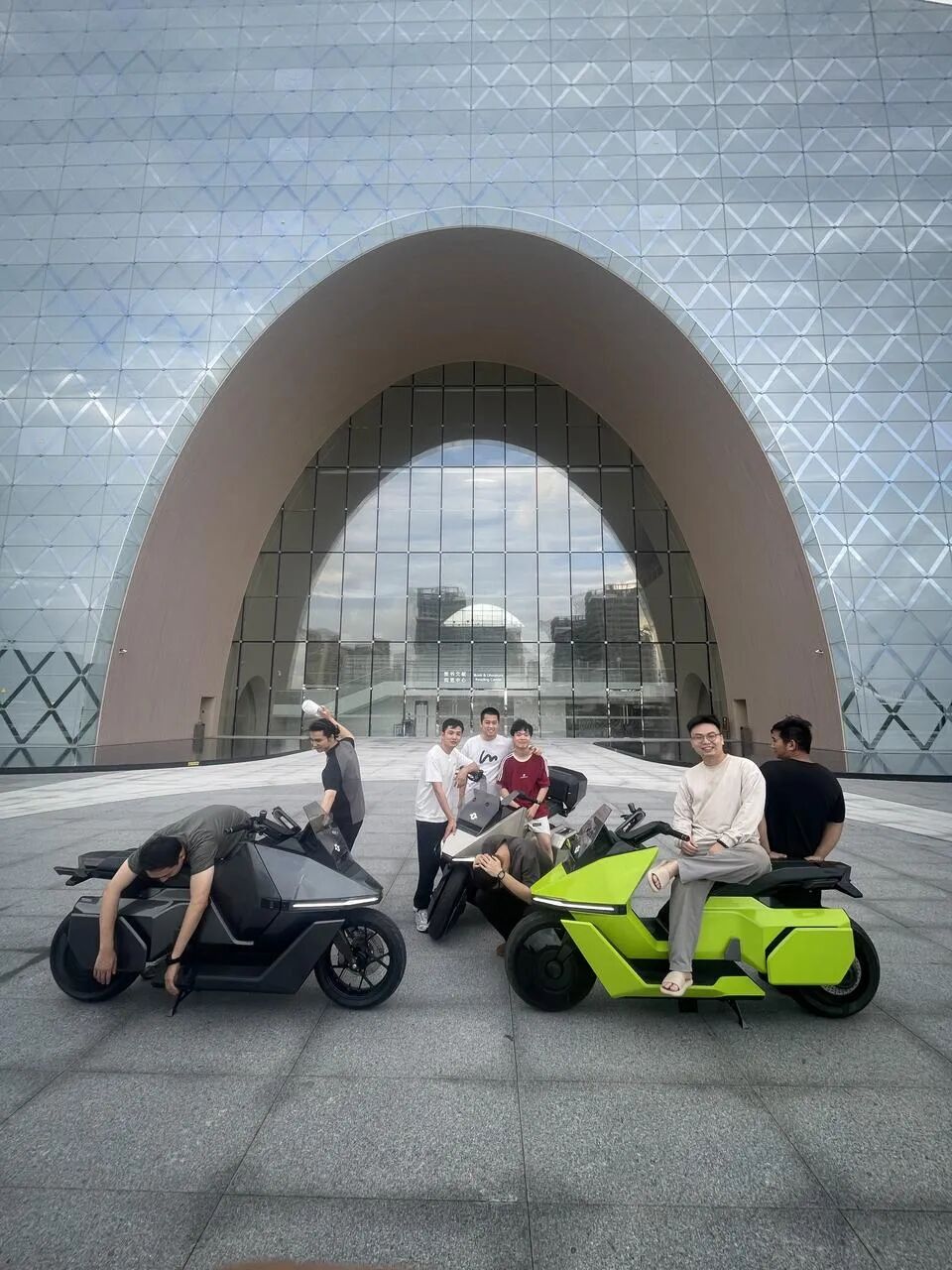
OMOWAY team "portrait" in Zhuhai
Q: How do you define "smart"?
He Tao: Smart is hard to define, but one marker is logical ability. Being able to break down a complex matter step by step, then solve it through a reasonable path.
Q: What's your superpower? What's hard for others but easy for you?
He Tao: Sincerity. You need to know what you want, what you're good at, what you're not good at. Once you figure that out, many things fall into place.
Q: The book that influenced you most?
He Tao: My favorite is Wang Xiaobo. Throughout his life writing, he only cared about two things: wisdom and fun. I also pursue wisdom and fun, just through different means.
Q: I heard the company has raised several million dollars so far, and you personally invested quite a bit. Why?
He Tao: Because I believe. Initially I actually wanted to fund it entirely myself. But then I met ZhenFund. We clicked on finding people and evaluating direction, so we decided to do it together.
Actually, He Xiaopeng also invested substantially in XPeng back then, which deeply influenced me and made me feel this is the best reassurance you can give a team. You have to believe first before others will believe with you. This is also a kind of passing the torch.
Q: If you had one sentence to attract young people to join OMOWAY, what would you say?
He Tao: If you too crave a non-linear life, OMOWAY will take you to leap forward.

This episode's audio content is also available on ZhenFund's podcast "Seriously Speaking" — welcome to listen!

Video production | Cindy & Dylan
Filming direction | Jiamin
Editor | Wendi