A Conversation with Kunpeng: After Ten Years, His Dream of Live-Action Interactive Film Games Is Finally Being Seen

The real value of AI is in building dreams for smaller circles.
In 2016, Kunpeng was still studying at Johns Hopkins University. He met ZhenFund co-founder John Wang at the Harvard College China Forum's startup pitch competition. Because of one question — "Do you want to start a company?" — he packed all his belongings and shipped them back to China after graduation.
On day one of his startup, the industry didn't even exist.
The real difficulty wasn't technology, hardware, or content. It was getting others to believe that something that didn't yet exist could become the future.
In 2019, Mystery of Antiques: Origin of the Buddha's Head was shot in just four days. The studio was scheduled for demolition after those four days, and lead actor Pan Yueming only had one day in his schedule. By the final scene, bulldozers had already started tearing down the set next to them, and smoke drifted into the shot. Later, many would define it as China's first interactive film and television work.
In 2022, UP hosts like Xiaoyao Sanren, Shenqi Lufuren, and C-chan began playing an interactive livestream game called Super Lipu Vote. Nearly 3 million users sent bullet comments on Bilibili, collectively deciding the direction of a battle royale. There was no AI like today's back then. To ensure every user choice received feedback, the team spent three days in one room, shooting repeatedly to pre-produce more than a hundred possible outcomes.
In 2026, a two-player interactive film-game requiring mutual choices and cooperation will be released.
This road has taken Kunpeng ten years.
In the past, the content industry kept searching for the next super IP. But in Kunpeng's view, AI's true value lies in creating dreams for smaller circles.
Everyone has a dream of their own.
Kunpeng has a superpower: no matter how much pressure he's under or what he's facing, he can fall asleep within 15 seconds of hitting the pillow. Before drifting off, he closes his eyes and imagines a scene he most wants to enter, capturing every detail in slow motion.
Such a dream might not be worth making into a movie. But if someone could create it, for that person, it would be priceless.
This is another possible form of storytelling. It is also the dream Kunpeng has pursued for ten years.

Stories Should Be Decided by Me
Q: Please briefly introduce yourself.
Kunpeng: Hello everyone, I'm Kunpeng, founder and CEO of Huying Technology.
Q: We met in 2018 — it's been exactly eight years now. How did you come up with the slogan "Stories should be decided by me"?
Kunpeng: Over the past six months, various new concepts have emerged one after another: interactive simulators, text games, interactive video, real-time generated content... Everyone suddenly realized how many ways there are to combine interactivity and AI.
It seems like everything has changed because of AI.
But interactivity is not a new concept.
In 2016, after graduating from Johns Hopkins University in the United States, I returned to China, was fortunate enough to receive investment from ZhenFund, and began this entrepreneurial adventure. We wanted to do interactivity from the very beginning, so we named the company "Huying" (互影, "interactive shadow/image"), hoping that through interactive video content, audiences could choose plot directions and control the endings of their own stories.
I returned to China with just one idea: We want to create a new category.
Q: There were already similar products in the United States at that time.
Kunpeng: When I first returned in 2016, the entire film and television industry was still in a very prosperous development cycle. Traditional film and television was already saturated. If you wanted to break into a track, you had to have something new.
I kept thinking: Is there still an opportunity for me?
A direction was emerging overseas at that time — 3A games. Titles like Heavy Rain, Beyond: Two Souls, and Detroit: Become Human allowed users to experience narrative, operation, and participation all in one gaming experience.
There was no such content domestically at the time. So I wondered: Is it possible to combine the operational feel of games with the immersive quality of cinematic storytelling, creating an entirely new category?
Our company was named Huying from day one. This was later defined by us as "interactive film and television."
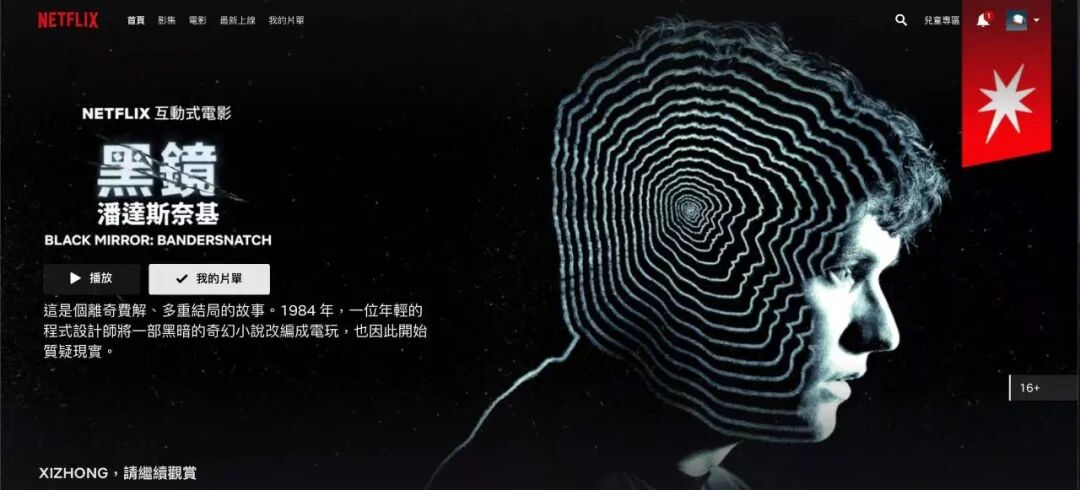
On December 28, 2018, Netflix released Black Mirror: Bandersnatch. People suddenly began discussing whether interactive video might be the future. It wasn't until Netflix formally entered this direction that I felt this had become something of a consensus, with more and more people beginning to try it.
This was eight months after we received our investment.
We were also fortunate to catch an era willing to encourage young people to start businesses.
In 2015, while I was still studying at Johns Hopkins, I participated in the Harvard College China Forum startup competition and took second place. It was there that John Wang asked me: "Do you want to return to China and start a company?"
Mass entrepreneurship, mass innovation. A recent graduate with a dream — there were really people willing to support you in giving it a try.
After graduation, I directly packed up my luggage and shipped it all back to China.
I think we have to thank the era itself. It allowed some good ideas the opportunity to trial and error. Otherwise, there would be no story that followed.
Q: What difficulties did you encounter before the industry was recognized by everyone?
Kunpeng: It was incredibly hard.
Many people assume that interactive film and television means you start with film and television content, then make it interactive.
That's not how it works.
We're a stubborn team. We always start by thinking about the hardest things first, then figure out how to make them happen.
In 2017, we produced our first demo — a 360-degree immersive VR interactive film. To make it, we had to build our own cameras, create our own players, solve video formats, codecs, filming equipment, and content language — everything had to start from scratch.
Like a tailor, you needed to stitch together 4-6 GoPros into a sphere to capture the complete surrounding environment, then stitch those images together.
Later we realized this far exceeded our team's capabilities at the time, so we stepped back to flat interactive video.
But even interactive video in a simple frame was already ahead of the market. Many people asked: Why does watching video need to be interactive? I can just watch shows — why do I need to choose, to participate?
So the greatest difficulty at that time wasn't technology, hardware, or content. These were all at the level of "technique."
The real difficulty was getting others to believe that something that didn't yet exist at that time would become the future.
It's like walking in a desert. The hardest part isn't the walking itself — it's having no reference points, and not many people willing to take the risk with you. You don't know if your pace is right, if your direction is right. You constantly doubt: Does this thing even have meaning? All the energy we're spending, all the hardship we're enduring — will it really have value in the end?

China's First Interactive Film-Game
Q: What was your first product?
Kunpeng: At that time, nobody knew what an interactive film-game was. We wanted to make a demo first.
But with limited funds, we didn't have the ability to write our own scripts, build sets, hire stars, or buy IP. It happened that a partner was filming Ma Boyong's Mystery of Antiques, so we asked if we could borrow their set and shoot a demo along the way.
They gave us four days. After four days, the set would be completely demolished.
Lead actor Pan Yueming really enjoys gaming and was willing to try, but he only had one day in his schedule. We thought: In Day and Night, Pan played two brothers. Could we get the body double who played the younger brother to help us with some scenes?
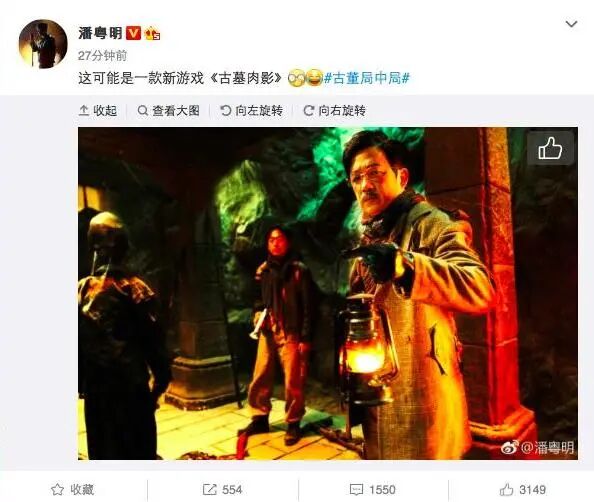
If anyone has played it, you'll notice it starts with Pan, but midway through the villain releases poison gas, and the character has to put on a gas mask. Until the very end, when the protagonist has a final battle, the enemy suddenly pulls off his mask to reveal his true face.
There was no AI face-swapping back then. We had to use the most primitive methods to make it happen.
On the last day, we shot from 8 a.m. straight through to 10 a.m. the next morning. By noon, the set was being demolished.
In the final scene, there's a lot of smoke in the frame. This wasn't a visual effect — there really were bulldozers tearing down the set next to us, and smoke was everywhere.
But after Mystery of Antiques was finished, we faced a more serious problem: Where do we broadcast it?
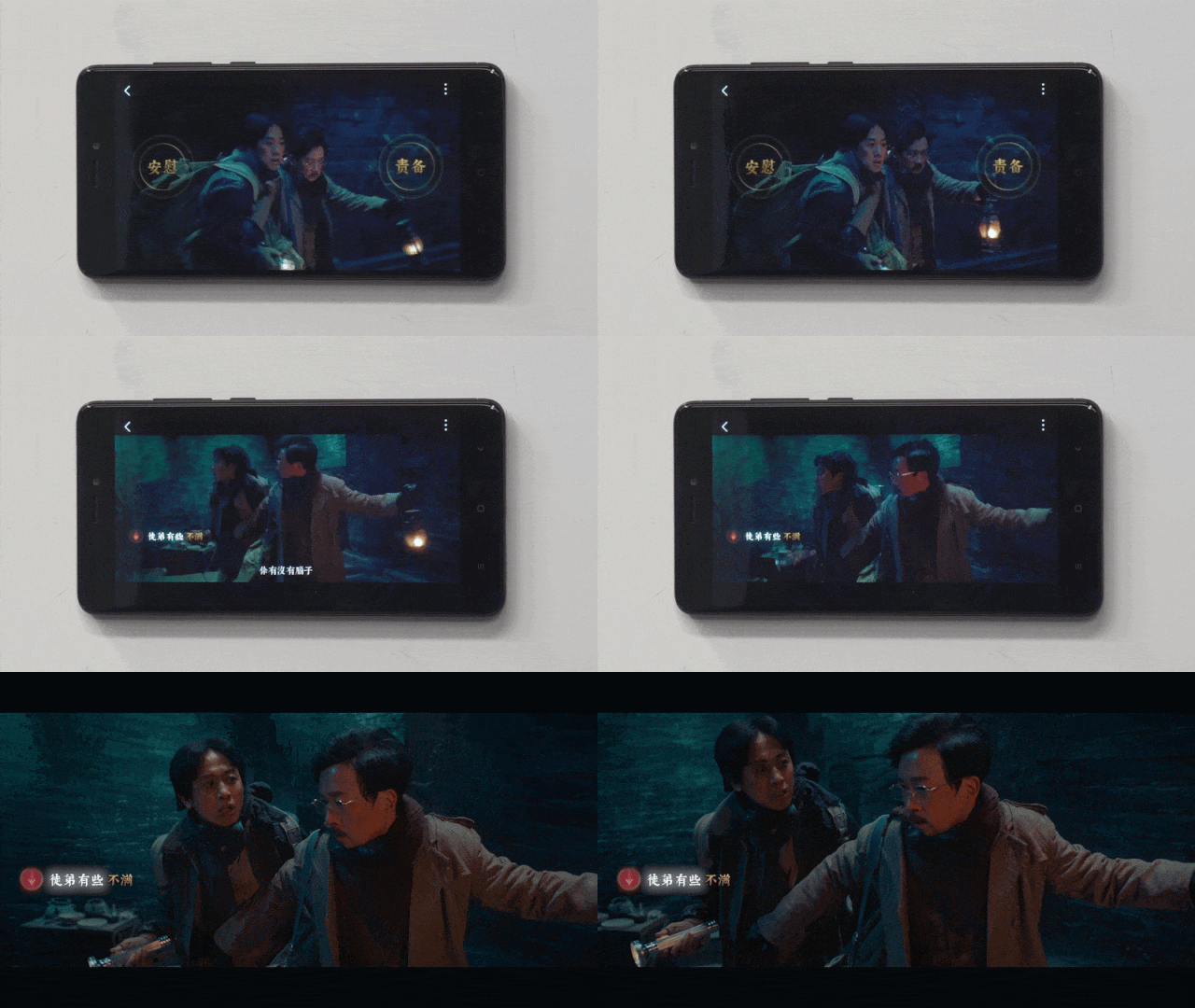
Video players at the time only had play, pause, and a progress bar — they weren't designed for interactivity. To let audiences make choices within video meant completely rebuilding the player. For platforms with hundreds of millions of users, it was impossible to develop a special version just for one product.
So starting from late 2018, we built our own interactive video player, so that when users made choices, they wouldn't need to reload — they could simply switch to an already pre-loaded shot.
Everything was ready. We were just waiting for the right moment.
On December 28, 2018, Netflix released Black Mirror: Bandersnatch. Interactive film and television was suddenly seen by the world. Domestic platforms also began looking for interactive dramas, and quickly found us.
On January 3, 2019, Mystery of Antiques: Origin of the Buddha's Head officially launched.
Why the third day? For the first two days of the new year, the platform was working overtime with us to embed the player.
Later, many defined it as China's first truly meaningful interactive film and television work.
Q: AI has opened up tremendous imaginative space for interactive content. Where do you think it will take Huying?
Kunpeng: I think AI has two sides.
The positive side is that it has indeed opened up an x10, x100 window of opportunity. Many things that were unimaginable before can now be realized, and at increasingly faster speeds.
Previously, when we released an interactive video work on Steam, the production cycle might take a year to a year and a half. Now, making interactive content can be compressed to a matter of weeks.
As early as 2021, we were asking ourselves: could we combine game streaming, interactivity, and AI-driven content? In 2022, we partnered with Bilibili on a product called Super Raccoon Spectrum Vote, where viewers used live bullet comments to influence the direction of a battle royale, then teamed up to fight an AI-controlled boss.
The product drew 3 million participants. Well-known Bilibili gaming creators like Xiaoyao Sanren, Aza, C-chan, and Feng Timo all streamed it.

But at the time, there was no generative AI. We had to pre-write and pre-film more than a hundred possible story outcomes. Our actors spent three straight days shooting in one room, until they couldn't keep track of which possibility they were performing anymore.
Now with AI, much of that content could be generated in a single night.
But there's another side. Having lived through cycles, shutdowns, and existential crises, we approach many of today's buzzwords with a more practical question: does this actually work?
Some directions look brand new, but they're things we already tried years ago and found dead ends. New technology can improve efficiency, but not every ahead-of-its-time concept can be realized — and not every concept can be realized today.
The team sometimes jokes that certain AI-plus-interactivity concepts floating around now are just "us from five years ago."

Claude Max Is Already Not Enough
Q: There are a lot of Gen Z teams that are AI Native from day one. Compared to them, what do you see as the respective strengths and weaknesses of their approach versus more traditional teams?
Kunpeng: I can feel the intense passion and energy in the post-2000 and post-2005 generations. They dare to imagine, and they'll push things forward that were previously unthinkable.
But because we've lived through cycles, we're clearer-eyed about the fact that not everything can be made to happen. Happening is just a moment. Real success requires sustained applause.
Q: You've also started driving an AI transformation within your organization.
Kunpeng: We can't simply call it an AI transformation. The question we're more focused on now is: what kind of AI organization do we want to become?
It brings a new way of working. Say I'm a manager with a group of "AI planners" helping me complete tasks, which I then judge and review.
We've genuinely benefited from this approach. Compared to a few years ago, our headcount has barely increased, but the business volume we're handling is probably 10x what it was.
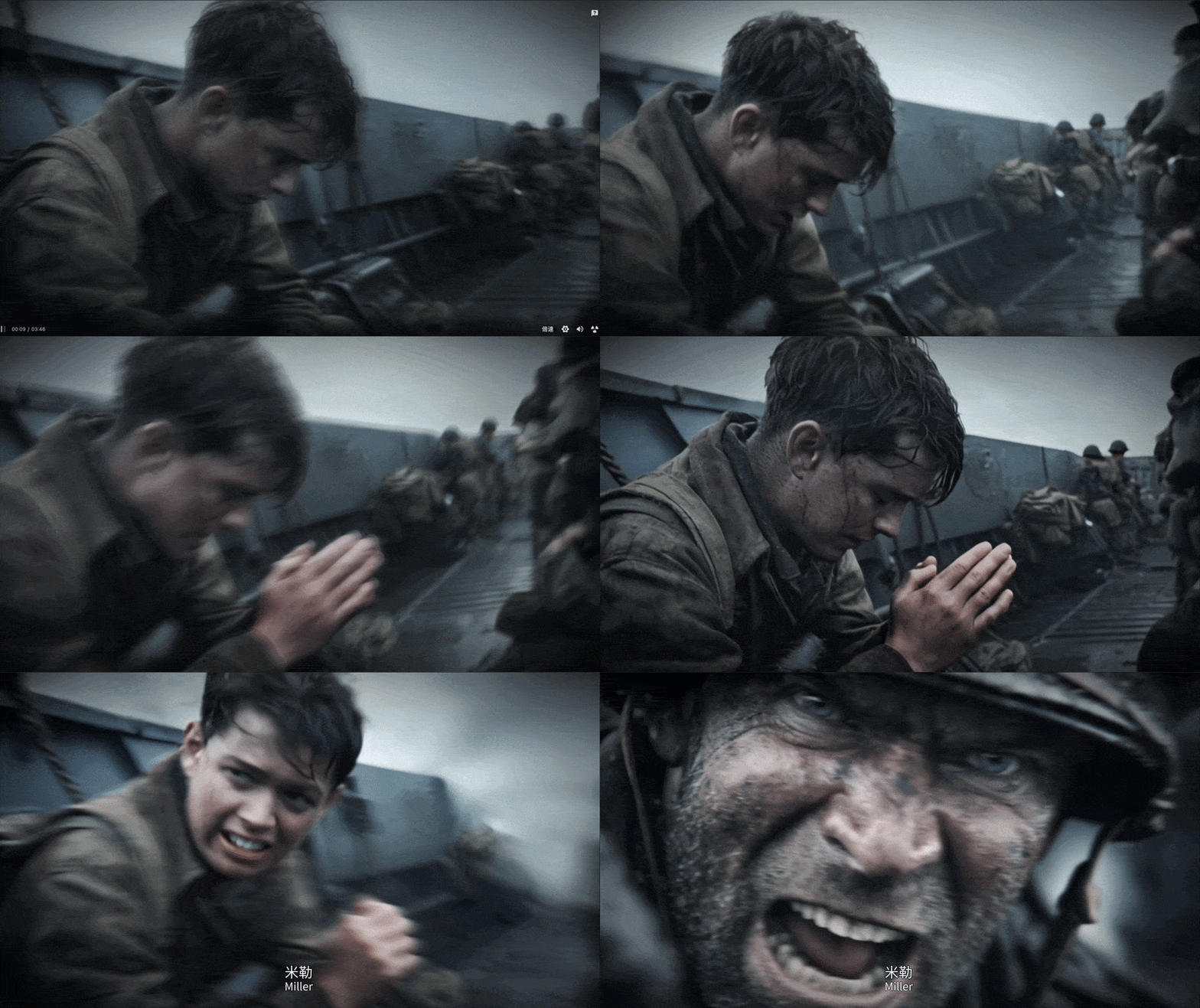
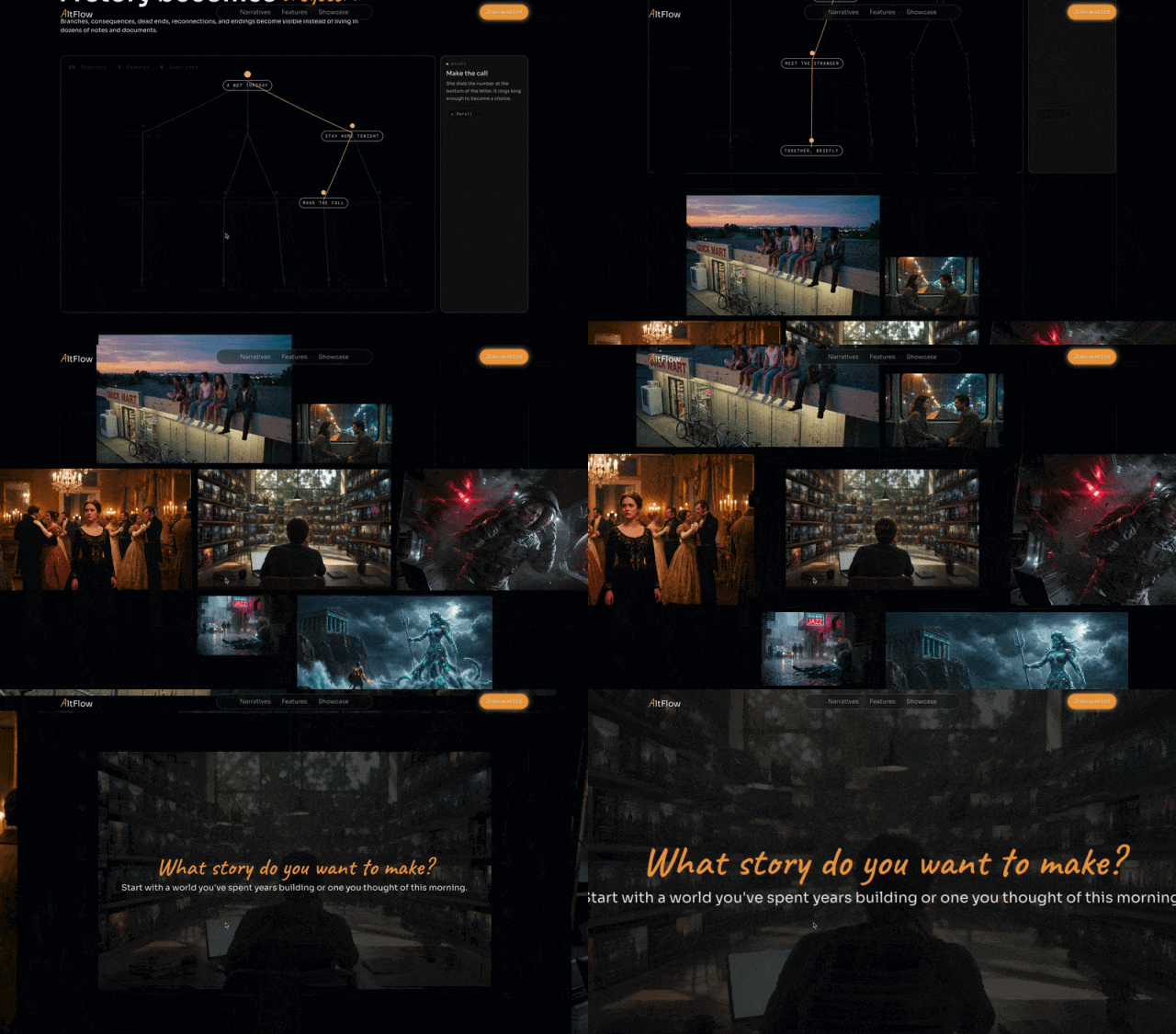
AI video effects generated by the Huying team, September 2025
Q: What's your current ratio of AI employees to human employees?
Kunpeng: 1:1.
We joke internally that in the future, interviewing at a company might involve not just introducing yourself and showing your resume, but presenting your AI Partner's resume: what projects it's done, what solutions it's handled, what results it's achieved.
This also makes us rethink what human value actually is.
AI is a lot like a well-traveled, resourceful "treacherous minister." It will always tell you that you're right, that your idea is great, and it can always produce a decent-looking plan.
But if you're a 50, you might only get a 50 result. If you're a 90, you might push AI to 90.
What really matters is judgment. You need to know where the problems are, which direction to push. If you can't ask the right questions or see what's wrong, it will bluff you. But if you have a point of view and the ability to keep challenging it, AI keeps getting better.
Q: Like Harness — you have to constantly debug the AI for it to produce good results.
Kunpeng: Our team also built an Agent that dramatically improved our interactive narrative creation capabilities.
We found that everyone uses AI differently, but organizations have common patterns. What really matters is how to crystallize the skills accumulated by the organization into a system.
Whether it's operations, content, or planning, different models have their own strengths and weaknesses. Only through the process of building and constantly debugging this system yourself do you gradually understand each large model's characteristics — and know which task should go to whom.
Q: When did your team start experimenting with AI?
Kunpeng: We were already using AI in 2022.
It was still relatively early then. Videos generated by Sora would have faces that jumped around.
At the time, we had some very well-known IPs in hand, but struggled to find suitable ways to produce them. Take Chinese Paladin — you might never find the next Hu Ge and Liu Yifei. Getting such an IP, the biggest difficulty was actually not knowing how to cast it.
But with AI, I suddenly felt this had new possibilities.
Back then, AI was still more of an experiment for us. It wasn't until last November, when I returned from Silicon Valley, that I started pushing for AI integration with our business within the team.
At first, the team resisted. Until everyone actually started using the Agent we built ourselves, I noticed our company's compute costs were steadily increasing — people were already using it spontaneously.
That's when I knew the time had come.
When AI is truly ready, you don't need to push anyone to adopt it. Because people will discover it really lets them get two more hours of sleep every day. Who would reject a partner like that?
Q: You mentioned earlier that the company bought Claude Max for every employee.
Kunpeng: Max is no longer enough.
Everyone's needs are different. Our operations team uses Agents to handle comments and routine maintenance. Our short video team used to make maybe 3 videos a week; now 30 a day is no problem.
In the past, this work might have required hundreds of people. Now, with a good enough Agent, many problems are already solved.

The Best Era for Realizing Ideas
Q: In your process of using AI to create, what was the most memorable Wow Moment?
Kunpeng: One from life, one from work.
One day, my gas water heater broke down — it was an obscure brand. I took a photo and sent it to Doubao. Before I could even say anything, it identified the model and started walking me through step by step: adjust this, the value should be that.
It was a very everyday moment, but the feeling was intense: AI is starting to truly understand your situation and become a partner that can solve problems.
The work-related Wow Moment was the first time I used our team's Agent to create a story.
I'm a HiFi audiophile. I discovered that AI is especially good at remixing. It may not be able to create something entirely new out of thin air, but it's very good at understanding existing structures and recombining different elements.
I love the film Source Code, so I had the Agent first understand its narrative structure, then work with me to create a new story: the protagonist can revive nine times, and must save a plane about to explode within nine loops.
I designed a little girl sitting next to the protagonist, hoping she'd become the emotional motivation for why he wants to save everyone. Then AI asked me a question that stunned me.
It said: "Do you think this little girl might also be time-traveling?"
Then it wrote: "Mister, remember faster this time."
In that instant, I got actual chills. It wasn't just executing my requests — it was actively pushing the story forward.
In this story, the plane is nine minutes from explosion. Every choice consumes time. The plot logic, character relationships, and time calculations all have to hold simultaneously. In the past, this was extremely complex for a screenwriter, but the Agent could participate in the creative process while completing these rational calculations.
In about an hour and a half, we finished the entire story. I sent it to the team, and after reading it everyone said: "I want to make one too."
From then on, the organization started to change.
I think the first step of AI creation doesn't have to be complete originality. It's about entering a true state of co-creation through learning, imitating, and remixing.
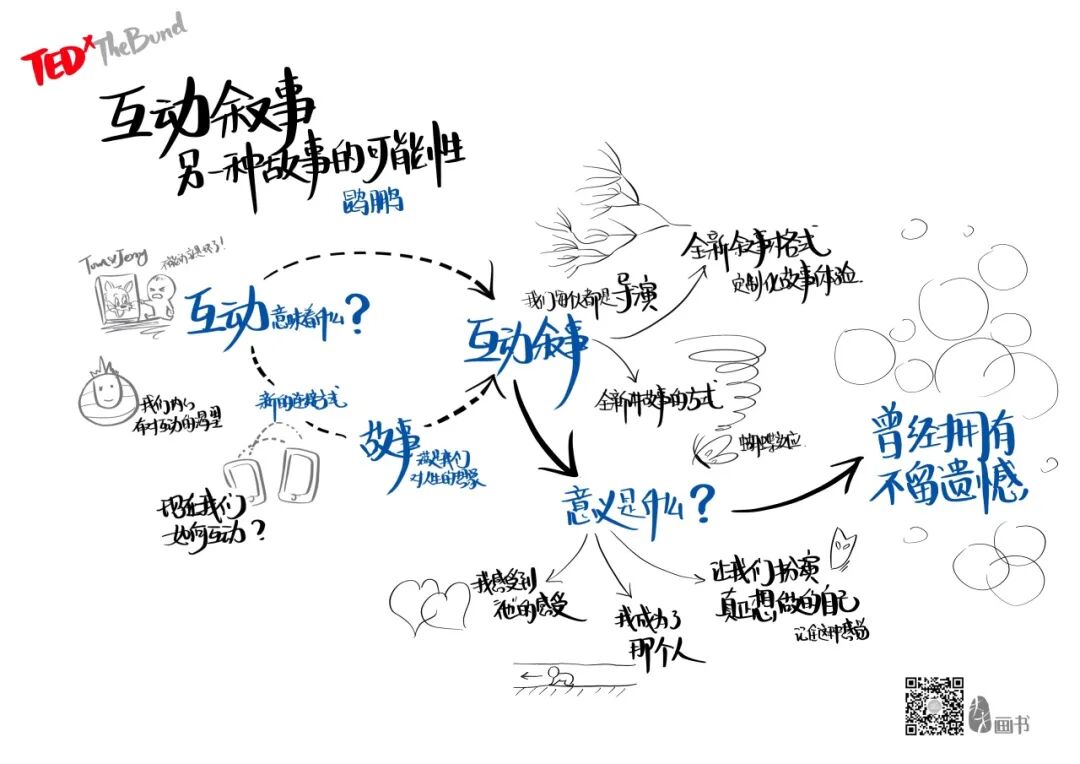
Kunpeng's summary of his TEDxBund talk on interactive narrative
Q: Because you genuinely wanted to do this, Huying Technology and its series of products came into being.
Kunpeng: That motivation probably came from realizing my own limitations early on.
In college, I really wanted to write screenplays, and I actually wrote a time-travel story. Later I gave it to a very well-known director. After reading it, he said: "Not bad. Focus on your studies."
That killed my dream right there.
I gradually realized that what I'm best at might not be standing on stage creating, but building a stage for more people.
The Wow Moment I mentioned earlier wasn't because the Agent wrote so well — it was because as an ordinary person, I discovered that AI could really help me take a big step forward.
The vast majority of people aren't super geniuses, but AI might give more people the chance to create.
Q: That reminds me of the creator conference you organized, AltNext.
Kunpeng: Huying has been thinking about how to truly integrate technology and content.
The content team talked about camera language and character arcs; the tech team talked about front-end, back-end, and code. They weren't speaking the same language. But we later realized that what connected them was play — having fun, just messing around.
When people from tech and content can vibe together through play, they might create experiences that have never existed before.
Q: Technology and content used to be far apart, but now AI lets anyone create products.
Kunpeng: Yes. Right now, most people are still using AI at a pretty basic level. Maybe 95% haven't yet experienced a true Wow Moment.
That doesn't mean it doesn't exist — you just haven't encountered your own moment yet, that sudden realization: oh, so this is what it can do.
This is the best time to be alive. The distance between an idea in your head and making it real keeps getting shorter. In the past, to achieve a hundred-plus outcomes, we'd spend three days shooting in Hengdian; to make a demo, we'd have to compromise on scenes and timing, constantly convincing others it could work.
Now, you have an idea, open your laptop, and start.
Q: What kind of company do you think HuYing will become in the future?
Kunpeng: That goes back to the name "HuYing."
On day one, this industry didn't exist. No one had a clear name for it — was it live-action gaming? Was it film and TV?
We called it "interactive film and television."
But later, we ran into a problem: does AI content count as HuYing? Does more game-like content count as HuYing? In the future, maybe real-time livestreaming with interactivity — is that still HuYing?
We seriously discussed changing the name. I thought about it for a long time, and decided we couldn't.
Because HuYing is no longer just interactive film and television. HuYing means using interactivity to create new images and new experiences, to influence a generation.

Eight years in, do you still have the passion?
Q: There have been many life-or-death moments in your entrepreneurial journey. Which one stays with you the most?
Kunpeng: Earlier this year, someone invited me to give a talk. The theme was: "You've stuck with this for eight years — do you still have the passion?"
My first reaction was, I've never even thought about that.
How could I have made it this far without passion?
There have been many life-or-death moments in these eight years, many dark nights. What moved me most was one evening at the end of 2022.
I was living in the office then. One night I came out and saw the company computers lighting up one by one, like ghosts. The post-production team was controlling them remotely — people editing, people rendering, but the seats were all empty.
That project was Breakout 13.
Looking back now, it's all in the past. But when you're in it, you don't know when the uncertainty will end, or whether everything you put in will lead to the result you want.
Your world shrinks. No one can tell you what to choose; no one has a God's-eye view. You could just say forget it, I'm done. But if you want to stay at the table, you have to push your chips in again.
And it's those tiny moments: the "ghost moment" of computers turning themselves on, everyone going around the park together looking for food, those moments when you revert to your most instinctive state, just thinking about filling your stomach first. You feel like it's all worth it.
Life has many pivotal moments. And it's those choices you made when you couldn't see the outcome that have brought you step by step to where you are today.

Finite and Infinite Games
Q: I think life is an infinite game that belongs to you.
Kunpeng: I've been thinking for a long time: what is the essence of interactivity?
Human interaction takes energy. From a human nature perspective, you'll only keep doing it if you get feedback, and that feedback exceeds your investment.
Later we discovered: it's the sense of control.
From day one, besides the name "HuYing," our slogan has never changed: "The story should be up to me."
At first, we considered "The story should be up to you." But I later felt that was wrong — "up to you" sounds like you're talking to a customer, and I'm a user too.
So it should be "up to me." That right was always mine.
When users make choices in our products, what they gain isn't just different plotlines — it's a sense of control over the story. This is a lot like life. Every decision you make takes you down a different branch.
What we want to convey is this: you should always have a choice.
We once asked users why they made a certain choice at a certain plot point. Many told us: "I never realized that at that moment, I had a choice."
Because life doesn't pop up options. When someone tells you what you should do, there's no window jumping out to ask: do it, or not?
But the options are always there. It's just that often, we're trapped by family, work, and identity, thinking we have no choice.
No matter how the product's theme or format changes, they all return to the same origin: you have a choice.
In every product, we write this line: "Your choice matters. Please choose carefully."
This is the butterfly effect.
Q: HuYing is about to release a two-player interactive film-game called New World: Shadow Duo. How did you come up with the idea of making a two-player game?
Kunpeng: One day, someone from the team knocked on my door and said he had an idea. But the company's funds were already very tight at that point.
I asked him: "Do you know what an indie game is?"
An indie game means you have your day job, but you're still willing to use your spare time to make an idea happen. If the company keeps doing better, we'll finish it properly; if not, we'll treat it as an indie game.
He said: "Okay."
I said: "Alright, let's do it."
That was the starting point of New World: Shadow Duo.
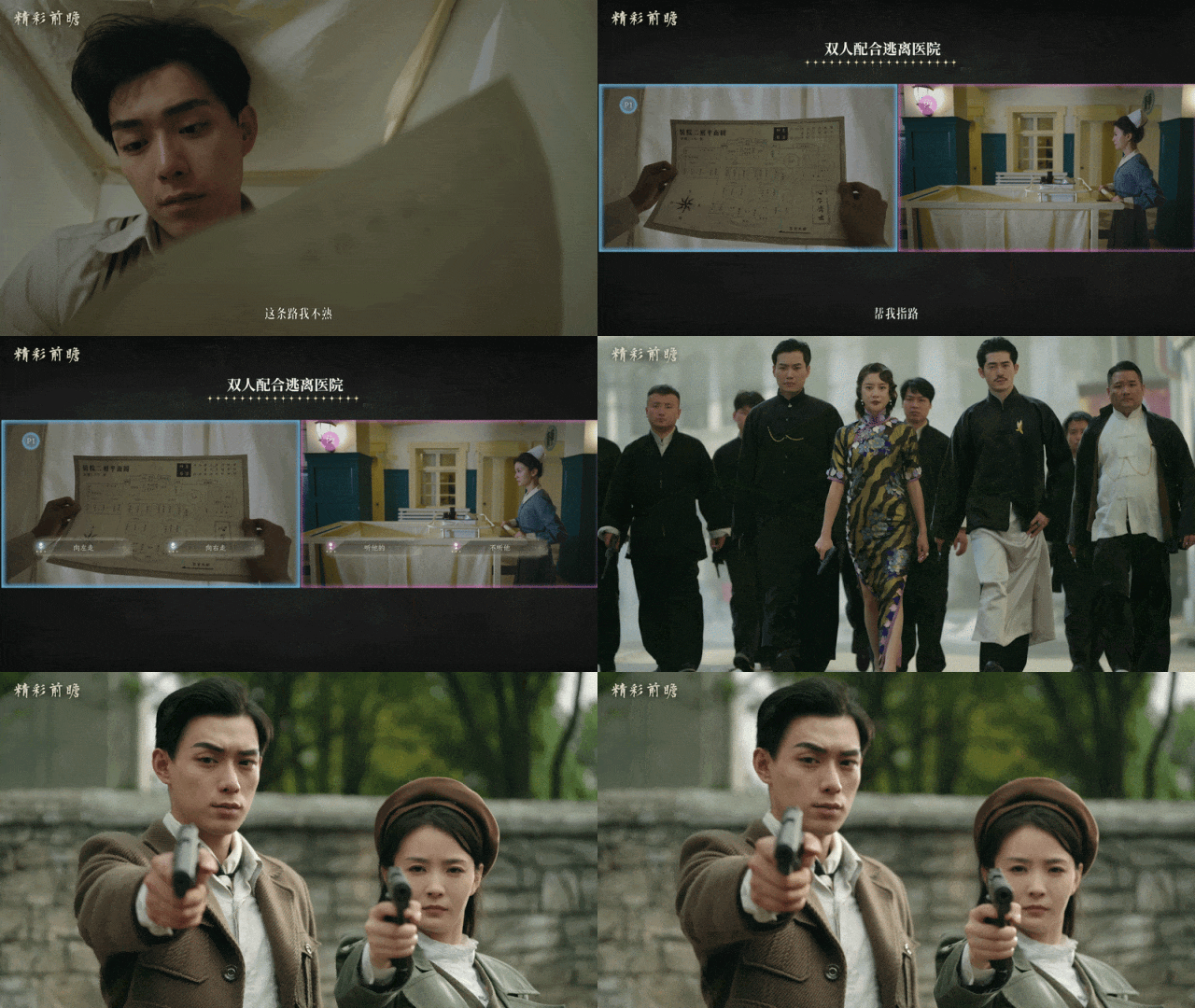
It's the only interactive film work in the world that requires two people to watch simultaneously, make choices together, and cooperate to complete. In the story, a secret agent and a wealthy heiress pose as a married couple to carry out a mission. Every choice each person makes affects the other, creating a very complex plot tree.
Two months ago, we invited 540 pairs of players to beta test. Many long-distance couples experienced it together from different cities, but the group that gave the best feedback was actually married couples. They said: "This is exactly the kind of product we should have to play together."
In the AI era, content and assets will only become more abundant, but precisely because of that, people may need real emotions, connection, and interaction even more.
Shadow Duo has over 400 minutes of footage. It's like the experience and runtime of many films stacked together.
The two people go through a process where they start with a fake relationship, gradually build a real one, hit some conflicts in the middle, and finally reconcile — forming a complete relationship arc.
We hope that in this story, two people can experience a life together.
Q: It feels like entering a dream.
Kunpeng: Yes, at HuYing I've lived my life over again.
Q: In the content industry, what is the real change that AI brings?
Kunpeng: In the past, the content industry was always trying to predict the next super IP, searching for a shared dream that could resonate with hundreds of millions of people.
But now, information is increasingly fragmented, and everyone's tastes are more and more different. National-level IPs like My Fair Princess, Journey to the West, and Romance in the Rain are becoming rarer, while film and TV production cycles are so long that it's hard to predict what the world will like two years from now.
This world fluctuates randomly.
In our view, AI's real value is in creating dreams for smaller circles.
When content costs drop and response speeds increase, those needs that were once considered too niche to be worth producing finally get their chance to be seen.
It's finally worth it to create a dream for 100,000 people.
Whether film or game, what they ultimately do is create dreams.
Q: In five years, will AI have developed to where everyone can create a dream that belongs only to them?
Kunpeng: I've been thinking for a long time: what does a person actually remember in their lifetime?
Recently we've also been researching AI memory. AI compresses long-text context to save tokens, to avoid excessive computation. From this starting point, I started thinking in reverse: how do humans remember?
When I recall the highlight moments of my life, many details are already unclear. What really remains is the feeling from that moment.
Maybe one day, those feelings won't necessarily come from real experiences — they might come from an experience created by AI, like Cyberpunk 2077. But having had such a feeling, isn't that itself part of meaning?
I believe everyone has their own dream.
Q: What's your superpower?
Kunpeng: No matter how much pressure I'm under, the moment my head hits the pillow, I'm asleep in 15 seconds.
Before bed, I close my eyes and imagine a slow-motion scene I most want to dream about.
I'm a basketball fan. I imagine myself playing in the finals with Kobe. Final 10 seconds, I receive the pass, see his eyes, the sweat dripping, then try to get past him.
But every time, before the ball leaves my hands, I'm asleep.
Q: So this dream can never be completed.
Kunpeng: Right, I never make that shot.
But I think, everyone has a dream that belongs to them.
It might not be worth making into a film, but if someone can create it, for that person, it's priceless.

The audio version of this episode is also available on the ZhenFund podcast Seriously Speaking — check it out!

Text | Cindy Video | Coco, Nuohan, Menmen, Ping