A Conversation with the Founders of Yuangu & Tangsuo: The Pursuit of Beauty Is a Lifelong Pursuit

The narrative of a Chinese aesthetic brand.

Founded in 2016, YuanGu started as a Chinese-style dessert shop in a Beijing hutong and gradually deepened its exploration of Chinese aesthetics, evolving into a lifestyle brand centered on twenty-four solar term desserts and integrated with creative Chinese dining and wine. In 2020, ZhenFund led YuanGu's angel round.
Six years after YuanGu's founding, a new Chinese dessert brand emerged from its ethos of "refined, warm, and delicate" — Tang Suo. Tang (瑭), pronounced "tang," originally means jade. The ancients regarded jade as a symbol of trust, virtue, and aesthetic sensibility, infusing it with meanings of warmth, romance, humility, and courtesy.
This time, we invited Gan Yizhe, founder of both Tang Suo and YuanGu, along with Kuang Wei, Investment Director at ZhenFund, for a conversation. What Chinese aesthetics does Tang Suo embody? How do you build a "slow" business in a "fast" era? And what makes a truly "Chinese brand"?

The Pursuit of Ultimate Chinese Aesthetics
Kuang Wei: It's been two years since Tang Suo's launch. From my perspective, it's quite a successful brand. Going back to 2023, when the consumer market was just recovering, what prompted you to create a new brand?
Gan Yizhe: Tang Suo's creation had nothing to do with market conditions. YuanGu had been developing for years and had distilled an aesthetic expression of "Zen, nature, and rustic simplicity."
But by 2022, we discovered there was another indispensable paradigm within Chinese aesthetics that demanded study and expression — one that required an entirely new brand to carry it.
In practice, we started from our own needs. For instance, we'd often struggle to find birthday gifts for friends. It was difficult to find products that were beautiful, high-quality, and delicious, let alone pastries that incorporated Chinese aesthetic expression. Tang Suo was born from this philosophy.
Kuang Wei: What do Tang Suo and YuanGu share in terms of brand and product, and how do they differ?
Gan Yizhe: Tang Suo and YuanGu share only one thing in common: both are Chinese brands that carry expressions of Chinese aesthetics.
But in my heart, they're like two children, each with independent philosophies, values, and different pursuits of life and beauty.
Though they spring from the same root, they manifest differently. When Tang Suo first launched, we only posted one introductory article on YuanGu's platform. We wanted consumers to understand each brand's personality independently, rather than conflating the two.
Kuang Wei: If you had to describe Tang Suo in three words, which would you choose?
Gan Yizhe: Our summary of the Tang Suo brand is — "refined, warm, and delicate." This is precisely the Chinese aesthetic expression Tang Suo pursues.
By contrast, YuanGu's aesthetic expression is "Zen, nature, and rustic simplicity."
If we compare them to Chinese calligraphy, Tang Suo is closer to gongbi fine brush painting or Emperor Huizong of Song's slender gold script, while YuanGu is more like splashed-ink landscapes, cursive script, or running regular script. Tang Suo is more exquisite, refined, and warm, while YuanGu's temperament is more vigorous, natural, even somewhat wild.
Historically, the Song Dynasty had already formed these two aesthetic systems. Tang Suo's philosophical outlook draws from Confucian value systems. YuanGu's underlying philosophy comes from Zen Buddhism and Daoism. This also closely relates to my partner's personality — he practices both Buddhism and Daoism, spending half the year in the mountains living out his values and philosophy.
Confucian thought is engaged with the world, so Tang Suo as a brand is closer to the general public. It can confidently open in shopping malls and grow within real-world environments. YuanGu's Zen aesthetic, meanwhile, is more like a reclusive dwelling amid mountains and waters. This difference stems precisely from their respective values and philosophical systems.
All forms of artistic expression are the concretization of thought, and so too are brands.
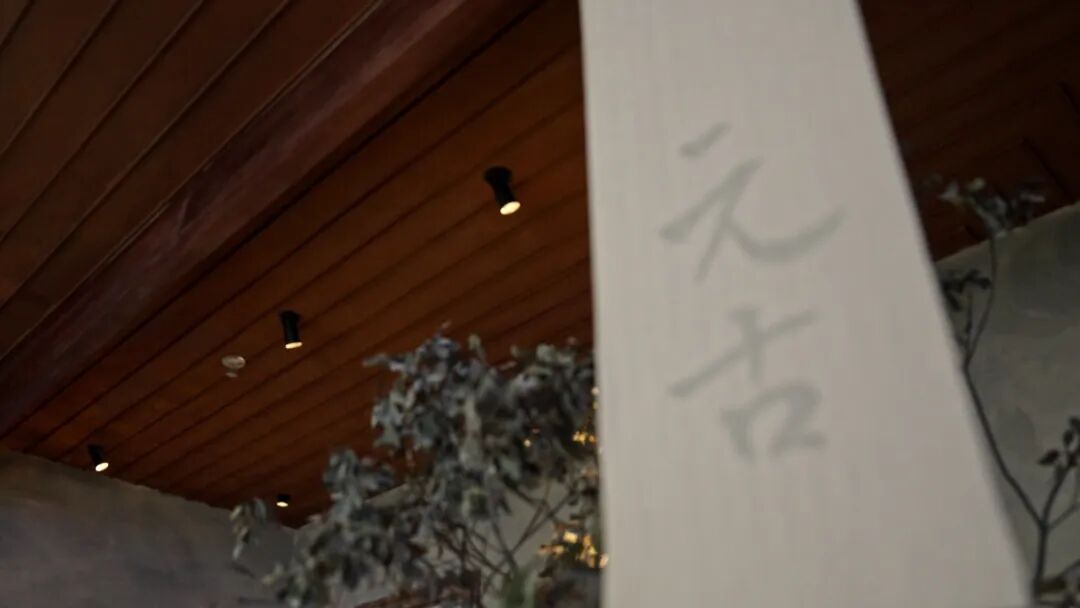
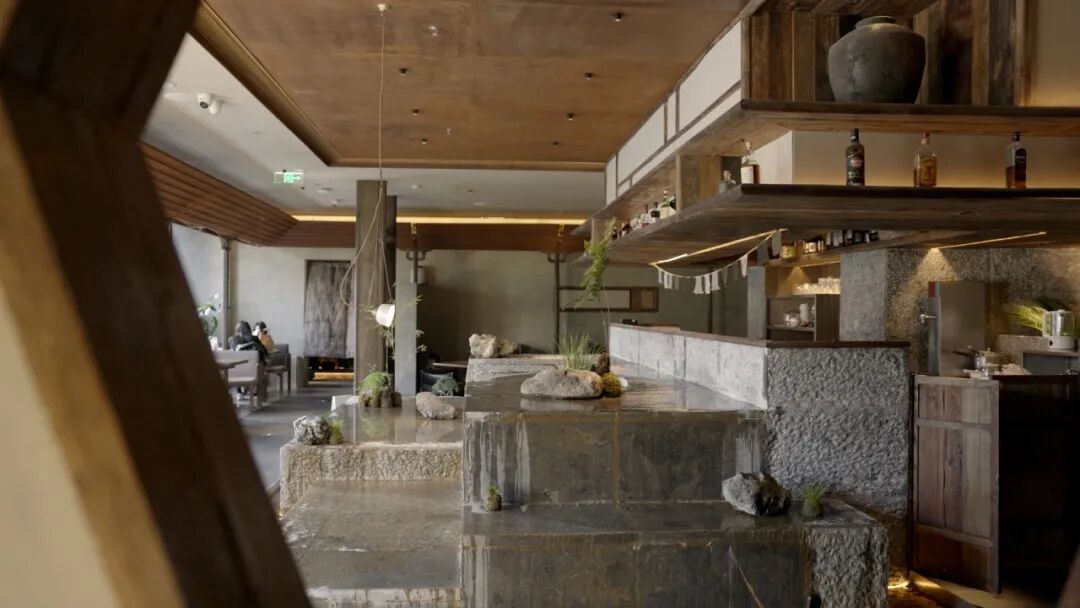
YuanGu Yunjing (Sanlitun location)
Kuang Wei: Is the core of a brand the expression of its philosophy?
Gan Yizhe: Yes. When a brand's philosophy and values are sufficiently clear and recognized by both employees and consumers, it begins to self-purify. In a brand's development, products or decisions will always be right or wrong, and the wrong ones tend to be naturally filtered out by this value system.
We once considered moving our office from a small hutong flat to an office building. The rent would be lower and the space more spacious. But after visiting, the team agreed that YuanGu's brand tone didn't suit such a space — it would be like a Daoist master moving into Shanghai's Lakeville development.
Kuang Wei: From a business perspective, how do Tang Suo and YuanGu differ? What about the consumer behavior behind them?
Gan Yizhe: Tang Suo and YuanGu are fundamentally different business formats.
YuanGu is essentially a Chinese aesthetic experience space. We provide meals, wine, desserts, and some lifestyle extensions related to accommodation. It's more like inviting everyone over to my home.
Tang Suo, meanwhile, tends more toward integrating products into consumers' daily lives. From a business perspective, Tang Suo is essentially a gift shop.
If we can add color to people's anniversaries, birthdays, or gatherings, that's the mission of Tang Suo's products. So its opening method and usage scenarios are completely different from YuanGu's — there's no particularly strong connection between the two.
But in fact, the consumers who come to both brands are the same type of people, or at least very similar. I'm one of them myself. If you're building a brand and neither you nor your employees are willing to use the product, that's a failure.
Our philosophy is: first we have to like it — good; then promote it to employees — employees like it, good; then push it to consumers — consumers like it, good; then through them recommend it to friends, forming natural referrals. About 54% of our consumers come from friend recommendations, which is also one of our core growth drivers.
Kuang Wei: Very interesting. The term "Chinese aesthetics" is something many media outlets talk about now, but at least in my understanding, you were the first person to tell me about it.
True beauty can resonate visually without even needing language. But beauty also has a price. As an entrepreneur, how do you balance the cost of beauty with commercial value?
Gan Yizhe: In our past pricing and R&D processes, we don't prioritize cost — it's the last consideration. All desserts are handmade, and apart from egg beaters, there are virtually no mechanized devices. When production really gets going, there might be over fifty people making desserts together — quite a spectacular scene.
Actually, despite all the talk about consumption downgrading, aesthetic standards and demands for product quality don't decrease.
The key is whether you can truly create sufficiently differentiated, excellent products. If you can, Chinese consumers are willing to pay for them. Chinese consumers' spending power and level are beyond doubt.
Consumers aren't actually the contradictory entity of "wanting both high quality and low prices." There are two distinctly different paths in the market: one is industrialized high cost-performance, the other is craftsman-spirited high quality.
Some brands, to cater to consumers' "want both" mentality, adopt a certain compromise strategy, but this is shortchanging consumers. I believe that part of life can rely on industrialized production — for instance, I also quite like 7-11's ready-to-eat foods. But on the other hand, life also needs products with craftsman spirit. These two can coexist.
Fit-out investment is also a practical issue — we always exceed budget. To solve this, we've tried many methods. For example, when we can't afford high-end finished furniture, our designers design it themselves.
If procurement through public channels is too costly, we'll specifically seek out suitable resources. For instance, we source old wood from mature suppliers — though expensive, we select it ourselves to reduce costs as much as possible. We also frequently search for materials on various secondhand platforms.
Good things are recognizable at a glance. We won't let unsuitable objects enter the spaces we create.
If a brand wants long-term vitality and to maintain brand consistency, it must have a clear underlying philosophy. Once a brand's cultural atmosphere, its "field," takes shape, its employees, consumers, and partners will collectively shape and reinforce this brand philosophy.
Kuang Wei: Sometimes when we consume, we focus on functionality and pursue cost-performance. Other times consumption is more about emotional value — for instance, souvenir gift consumers might pay more attention to brand attributes and quality.
Gan Yizhe: The key is self-consistency. I'm also quite afraid of a life where I "want everything."
There are all kinds of brands on the market now. One category is completely market-driven, like supermarkets and convenience stores. These brands have very rich SKU inventories, so they can rely on digital analytics for refined operations. This is largely a Western industrialized, rationalized model. In this system, you only need to calculate processes for stocking, shelving, and selling to ensure efficiency. The "small steps, fast running, rapid iteration" strategy that the internet industry has advocated can also be used for product testing — constantly launching new products, optimizing, adjusting.
But for brands based on Eastern culture, Chinese culture, what we emphasize is emotional expression and brand philosophy, not pure market driving.
Like Aesop, or even like Apple, they're essentially highly expressive. They need to invest sufficient time and energy in product refinement, deliberating over long periods before finally bringing products to market. In this system, market feedback is important but not the sole factor determining a product's life or death.
In fact, over the past three years, what we most wanted to replace at YuanGu were several of our best-selling dishes.
Kuang Wei: Why?
Gan Yizhe: Because they're not perfect, not quite in line with our overall expectations for the brand.
Of course there's also balance needed, since these dishes do sell very well, so we wouldn't directly remove them. But we'll gradually introduce similar ingredients or themes, weaken their traffic, and eventually let them naturally exit our system.
Though there are also rational and market-oriented considerations — for instance, cost control's key lies in optimizing supply chains, improving procurement efficiency, and reducing waste.
But we prioritize emotional expression and brand philosophy: that is, how to discover beauty and build brand uniqueness.

Three Stages of Building a Product: Hidden Dragon, Dragon in the Field, Dragon in the Sky
Kuang Wei: When it comes to selecting and developing employees, how do you communicate your thinking on Chinese aesthetics and brand philosophy to the team?
Gan Yizhe: Judging whether someone is right for the brand is a very intuitive process. We have some internal "shorthand" in our team. After an interview, people will ask: "Is this person Yuangu enough?" They're asking whether the candidate resonates with our brand ethos.
When someone proposes an idea, a colleague might say: "This idea isn't Yuangu at all. Let's not do it."
This is simply part of how brand culture forms. Once the cultural atmosphere is established, when people enter this environment, their behavior and speech are naturally influenced — and we can tell whether they truly fit the brand.
But what matters most is passion. The fundamental drive behind founding both brands was my love for Chinese culture from a very young age, especially literature and poetry. As a child, I practically read from The Complete Tang Poems and The Complete Song Lyrics every day.
You can't fake passion. When I ask someone whether they love something, I look for light in their eyes. If I can see that genuine enthusiasm, I know we can go a long way together.
Kuang Wei: "New Chinese aesthetics" or "guochao" has more or less become mainstream now. Tang Suo is also finding its way in this industry, but as a new brand, how do you get more people to know about it?
Gan Yizhe: Let me share something interesting first. My partner says building a brand or product can be divided into three stages: the first is "hidden dragon, do not act," the second is "dragon in the field," and the third is "dragon in the sky" — this comes from the I Ching.
Initially, our focus was on constantly refining the product. For a long time, we even felt we weren't doing well enough, perhaps not even passing. In fact, we only launched our first Yuangu Yunjing location with a dining menu on August 20, 2021. At that point, we felt the product was only about 50 points out of 100 — marketing wouldn't make much sense, so we could only accelerate our pace to adjust and optimize.
After several years of effort, the product is now around 70-80 points. Though there's still a gap of 10-20 points from our vision of perfection, we've entered the second stage, "dragon in the field." This state isn't artificially induced — it's natural growth.
This year, Tang Suo gave me the same feeling. Many unexpected things happened. For instance, some luxury brands reached out to us proactively for collaborations. They used to mainly buy Western brands like chocolates as gifts, because traditional Chinese pastries couldn't match their needs in terms of taste, packaging, or even product category. But Tang Suo happened to fill that gap and became their ideal choice.
We'd been focused entirely on offline stores, with zero advertising budget for online sales. But when we officially launched on Xiaohongshu's marketplace at the end of 2024, sales far exceeded expectations.
We've always taken our time opening offline stores. But some commercial landlords have been extending genuine invitations — including a good friend of mine who sent Tang Suo more than a dozen invitations to open in his properties within one year.
These things really move me — when you've settled long enough and finally poke your head out, you get seen. That also means you've entered the "dragon in the field" stage.
Actually, we didn't formally establish a marketing department until the end of 2024, when we started thinking about promotion. But overall we remain relatively restrained. We've gotten used to seeing almost no marketing expenses on our financial statements.
Of course, when we enter the third stage — "dragon in the sky" — there may be clearer signals. But for now, our focus remains on refining the product.
A few days ago, a friend had a birthday, but we hadn't launched large-format cakes yet, so we could only give him three small ones. He joked, "Is your brand specifically designed for people who don't have many friends?"
In 2023, Tang Suo had only 8 products; now we have over 20. Going forward, we'll launch a richer product line. On one hand, we need to keep optimizing the product. On the other, we need to let more consumers experience it, so we can better capture their feedback and provide direction for future improvements.
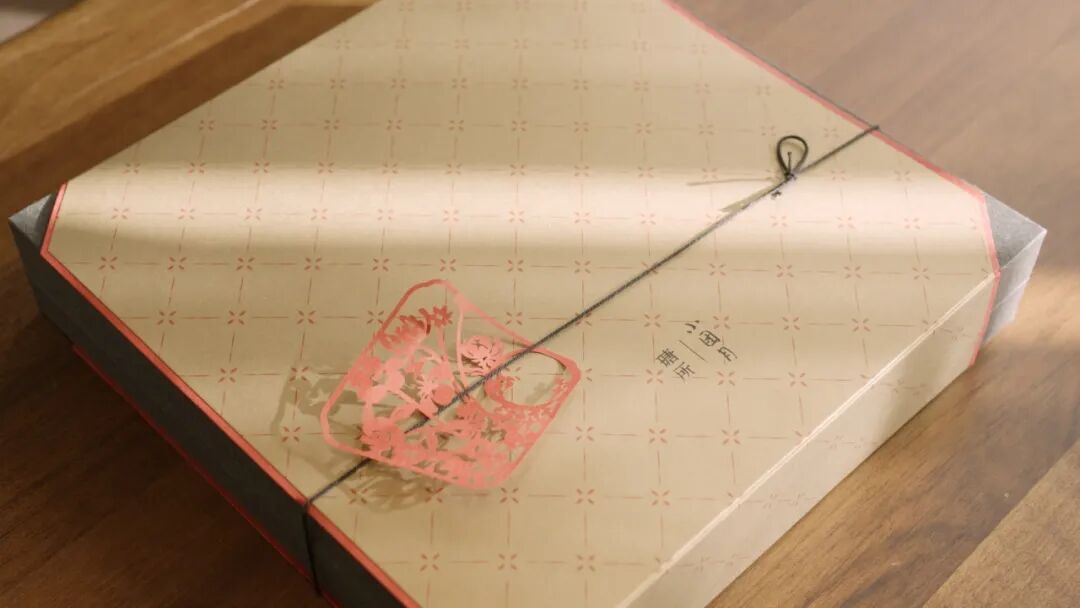
Tang Suo Xiaotuanyue Gift Box
Kuang Wei: I actually see lots of beautifully dressed influencers in Chinese-style clothing on Xiaohongshu, checking in at your stores or buying your products. Does your team regularly monitor online user reviews?
Gan Yizhe: I often tell my team: read more books — read more Xiaohongshu.
Kuang Wei: Xiaohongshu? Haha.
Gan Yizhe: I didn't used to browse Xiaohongshu, but now I basically open it every day, especially to check reviews about us. We also pay attention to how other excellent brands present their content.
Not long ago, I was chatting with my senior Ma Yin (founder of Aranya). He said something that really moved me: "Reading negative reviews is a form of spiritual practice."
Aranya has a "Village Chief Mailbox" — he personally reads all complaints and negative reviews. Now our company also holds a dedicated meeting every Monday afternoon to discuss negative reviews.
Of course, as stores increase, negative reviews increase too, and these meetings get longer and longer. But it's a very meaningful process.
If a brand is a personified being, its relationship with consumers is like friendship. Since it's friendship, you have to listen to both their praise and criticism. Whether positive or negative, all feedback is meaningful.
When a brand develops its own philosophy and values, it gains "personality."
I've always viewed the brand as a living, breathing individual. I even believe the brand has shaped me more than I've shaped it — it's taught me so much.

Peking University Law School Graduate, Starting Up Again
Kuang Wei: I'd also like to talk about your entrepreneurial journey. If I recall, you studied law at Peking University?
Gan Yizhe: Right, not many law students end up starting businesses.
Kuang Wei: What was the catalyst for your decision to become an entrepreneur?
Gan Yizhe: The catalyst actually comes in two phases. The initial motivation was simply to make money. In college, I wanted to achieve financial independence as soon as possible. I knew my parents didn't earn money easily, and I didn't want to keep spending theirs. I started tutoring, taught at TAL Education, then ran a small education company of my own — not many students, but it was a starting point for entrepreneurship.
At the time, the reasoning was simple. Even with a good job, establishing yourself in Beijing would still be difficult. My parents had always lived frugally, trying to save for my down payment, but working in second- and third-tier cities, accumulating that much was grueling. Meanwhile, the fundraising and startup environment was very favorable — I saw it as a chance to change my fate.
I started my first company in 2017. Fortunately, fundraising went smoothly, and the company was acquired in 2019. The pandemic hit in 2020. We officially launched our brand on January 20th; Wuhan was locked down on January 23rd.
For this venture, I set three principles for myself:
First, it must be something I love. Money itself doesn't bring meaning. Only something you truly love can sustain you through cycles.
Second, it must create value for society, for the country, for others. I've always believed that value has hierarchies. Some may disagree, but I hope to contribute higher value. That's why we're committed to building a Chinese brand and advancing Chinese aesthetics.
Third, choose an industry with long-term viability. I didn't want to spend half a lifetime building something, only to have the industry disappear and reset to zero. So we firmly believe that the revival of Chinese culture is an irreversible trend for the next 50, 100 years — at least it won't vanish within my lifetime. That's deeply meaningful.
Now Chinese aesthetics seems to have become "mainstream." But in 2019, 2020, the situation was completely different. Yuangu had already opened a Chinese-style dessert shop back then. I often saw reviews on Dianping saying, "I went to this gorgeous Japanese-style courtyard today." At first I'd argue back; later I stopped.
But by 2022, such comments noticeably decreased, and after 2023 they virtually disappeared. It's consumer support that allows excellent Chinese brands to grow — that's a beautiful thing.
Kuang Wei: What was the hardest moment in your entrepreneurial journey?
Gan Yizhe: This year's annual meeting marked our fifth anniversary. We chose the same venue as our 2020 startup kickoff. Looking back at the deck from then, I realized what we're doing today is completely different from what we envisioned. But one slide particularly moved me — from day one of our entrepreneurship, we established the company vision: "To build Chinese brands that earn the world's respect."
This goal has never changed, and that deeply touches me. It's not just the brand's vision; it's the mission for the rest of my life.
From Huawei's chips last year, to Black Myth: Wukong, then DeepSeek and Nezha 2 — these works fill me with pride. These are Chinese works that make Chinese people proud. Confidence is more precious than gold. Seeing these excellent Chinese works, I'm more convinced than ever that we have every reason to take pride in our culture and our brands.
Kuang Wei: I deeply relate to that. We're indeed seeing more and more Chinese brands that command the world's respect.
Gan Yizhe: I'm also glad to leave this record here, because I want to see whether in five or ten years, I'm still persisting in my endeavor.
I believe the pursuit of "beauty" is a lifelong course everyone must study. For me, it's a lifelong journey. Many people think "beauty" is purely visual, but beauty isn't limited to sight — it's a synesthetic experience.
For example, when we eat delicious food, we call it "delicious" (meiwei — literally "beautiful flavor"). DeepSeek is beautiful because it demonstrates an elegance of logic and beauty of thinking. The beauty of Nezha lies in visual impact, special effects, and the emotional resonance of its story.
Sound, too, can be beautiful. Yesterday I was walking near Baita Temple and suddenly heard birdsong I'd never heard before. I stopped and listened for a long time — it was extraordinarily beautiful. During New Year at home, I woke up at 10 a.m. one morning and lay in bed listening to my mother prepare breakfast, the rhythmic chopping on the cutting board — I felt a particular beauty in that as well.
Chinese literature is also full of beauty. I often read Su Shi. If I have a true idol, it's probably him.
I used to think making money was the goal of life. Later, due to the pandemic and other reasons, I partially achieved that and partially didn't. I started wondering: what is the meaning of life? In the end, I concluded that life has no inherent meaning. The only thing we can do is capture the beauty of every present moment.
Kuang Wei: I've actually observed that many successful entrepreneurs possess a distinctive talent, and they're able to dig deep into that talent, combine it with passion, and ultimately carry it to its extreme.
Gan Yizhe: Returning to ourselves, I feel there's still a long road ahead. If you believe in the power of accumulated depth, you need to keep building that foundation continuously before it can generate real force.
I found my philosophical footing right at age 30. The ancients said, "At twenty, one is capped as an adult; at thirty, one stands firm." At twenty, I thought my worldview was already mature. Now, do I agree with "At forty, one is free from confusion; at fifty, one knows the mandate of heaven"? I don't know.
But at thirty, I did firmly establish my philosophy and values. I ultimately came to believe there's a transition between "when successful, contribute to the world" and "when unsuccessful, cultivate oneself." If you can't contribute to the world, at least you can be your best self.
The ancients spoke of "shen du" — vigilance in solitude — maintaining one's true heart even when alone.
Even a little progress can influence more people. The company now has several hundred employees, and I hope through them, through our products, to reach more consumers and make people's lives better. If in the future we have the opportunity and sufficient ability to stand on a larger stage, we won't fear the challenge. This is what I mean by "when successful, contribute to the world; when unsuccessful, cultivate oneself."
The older I get, the more I find that the best truths are often the simplest. As children, textbooks, parents, teachers all told us many truths, but we couldn't truly understand them at the time.
Kuang Wei: Actually, Chinese culture flows in each of our blood. From our features to our ways of expression, we're steeped in its imprint.
Gan Yizhe: This reminds me of something a philosophy critic once said: even if many people haven't read the classics, every sentence we speak, every thought we have, carries the cultural background constructed by these thinkers.
Especially Chan Buddhism after Buddhism's Sinicization. Chan completed its intellectual synthesis during the time of the Fifth and Sixth Patriarchs, and this philosophical system profoundly influenced Chinese ways of thinking today.
If you look at the history of philosophy, you'll find that Daoism and Confucianism both emerged around 500 BCE, right in the Axial Age, which was also when Buddhism and ancient Greek civilization originated.
Buddhism entered China in the late Eastern Han dynasty, achieved complete localization by the Tang dynasty, and after the Song dynasty absorbed Confucian and Daoist thought to form a more balanced philosophical system. This is also why Song dynasty aesthetic expression could develop so fully.
The reason Su Shi is the most typical literati-official is that he both harbored ambitions to serve his country and knew how to enjoy life. His thought embodies the fusion of Confucianism, Buddhism, and Daoism. Over the past century, we've adopted Western logical systems, but simultaneously, new fusion has occurred with our native culture, forming contemporary Chinese thought.
We're not unfamiliar with cultural expression. Everyone who grows on this land can intuitively judge whether a Chinese brand is "good." The next 10-20 years are the optimal period for building brands. Economic challenges won't stop truly good products — as long as a product is good enough, consumers will recognize it. The Chinese market is large enough; every region, every ethnic group, deserves to be better expressed.
Kuang Wei: This is quite interesting. I do feel that Táng Suǒ is like a mature and complete work. This maturity largely stems from accumulation over the past few years. Though the process was difficult, it's precisely because we handled everything personally that we could lay down such a solid foundation.
Gan Yizhe: This year Táng Suǒ will see many beautiful changes. We plan to launch some entirely new concept stores to express our brand philosophy more clearly.
Building a brand has given me one important realization — I never thought I would so desperately want to nurture and incubate a life. People say parents raise children, and as a company CEO, we're also helping a brand grow. But from another angle, the brand is in turn giving us the power to grow.
For me, this is a very beautiful thing. In 2020, 2021, you could even say my brand saved me in a certain sense — it gave my life new meaning. So now I often tell everyone, I'm "dancing to work," hahaha.
Of course, Táng Suǒ is still young, still has many problems, and we're growing together with it.
Kuang Wei: I've seen many people on Xiaohongshu discussing how Táng Suǒ's cake designs are clever, but the sugar shards are hard to break.
Gan Yizhe: We are indeed gradually improving this.
Kuang Wei: The reason I mention this is that many people have turned it into a short video meme. At first it might have been confusion, but later it became a kind of fun challenge. Some analyzed that it might be because the cake was stored in the refrigerator too long, making the sugar shards too hard; others specifically filmed videos challenging themselves to break the shards, which even brought traffic and made more people willing to try.
Gan Yizhe: We didn't anticipate this at first. Later we also adjusted the thickness of the sugar shards, but because it involves last-mile delivery, if the shards are too thin, it might affect whether consumers receive the product intact. But regardless, we always put the presentation of beauty first.

What is a Beautiful "Chinese Brand"?
Gan Yizhe: When we first founded Táng Suǒ, it was also difficult to determine what our first product series should be. We wanted to find an element with Chinese imagery that was also close to daily life, rather than a concept too remote.
One March or April, we went to the Humble Administrator's Garden in Suzhou for creative inspiration, also to shoot spring materials for the Yuangu series. Our product lead was wandering in the garden and happened to see a fan-shaped empty window, with blooming camellia flowers right outside, accompanied by a faint floral fragrance.
This image deeply moved us, so "window" became Táng Suǒ's first series. The fan-shaped empty window, like a viewfinder, frames the scenery of the four seasons and those beautiful moments in life. Thus, we launched the product series represented by "Window."
Subsequently, we extended to "Huǎn Guī" (Slow Return) and "Tóng Yáo" (Children's Rhyme). The inspiration for "Huǎn Guī" came from one evening when I was heading home from work, passing through a hutong, about to hurry away, when the slanting western sunlight fell on a big tree — that moment of light and shadow made one unconsciously slow down and quietly feel that romance.
"Tóng Yáo" relates to my memories at Peking University. On May Fourth Avenue, every autumn the ground would be covered with ginkgo leaves, elderly professors would stroll hand in hand, children would play in the fallen leaves. We wanted to capture this moment, so we created "Tóng Yáo" — signifying the fleeting beauty of ginkgo leaves tossed into the air.
Our products all originate from such inspirations. But in the pursuit of beauty, we inevitably encountered technical challenges. For some products, we initially used a jelly technique, but the texture of the jelly layer easily reminded people of gelatin, giving consumers an "industrial" impression. At that time, we prioritized aesthetic presentation and compromised on texture. But with continuous optimization, these issues are gradually improving.
Later we also decided to solve problems through technical improvements. For example, the earliest concept for "Jīng Wù" (Crystal Mist) still came from windows. Traditional Chinese architecture has many windows of varying forms — fan-shaped windows, begonia windows, etc. — and we wanted to use these to express beauty.
In winter, windows frost over with mist and ice flowers, so we hoped to recreate this scene on cakes. As a child reading Xi Murong's poetry, I always liked writing the name of someone I liked on the ice flowers on the window.
This kind of childlike moment is exactly what we wanted to capture. So we decided to use sugar shards to present the texture of ice flowers.
Later, some consumers asked if we deliberately designed an "interactive cake." Actually, we didn't initially consider interactivity; we just wanted to present the visual effect of ice flowers on windows. But cakes need candles, and the sugar shards prevented candles from being inserted directly.
Thus the ritual of "breaking the window flowers" naturally formed. This concept eventually became part of the brand, and consumer feedback and participation further evolved and enriched it. Some even gave it new meaning, like "break the window flowers, may you be safe and sound in every moment" [a play on words: "碎碎平安" echoing "岁岁平安"].
Kuang Wei: It's also the concept of "breaking out of the shell."
Gan Yizhe: I've always felt the most interesting aspect of Chinese culture lies in its "conception of artistic mood" [意境化]. Compared to Western culture's concrete expression, Chinese culture tends more toward leaving blank space, allowing each person to interpret according to their own understanding.
In science and logic, we can learn from the West, but in artistic mood and philosophy, we need to return to the profound depths of our own culture.
Kuang Wei: Because I've bought Táng Suǒ's cakes, I initially wondered whether you deliberately designed the ritual of "breaking" — after all, birthdays symbolize rebirth, and rebirth often carries the imagery of breaking out of a shell.
Gan Yizhe: That wasn't how we thought about it at all. Including later when we made "Liúlí Yè" (Glazed Night), the team sat together discussing: what beautiful moments in life are worth recording? One of the most stunning moments in my personal life was watching fireworks. So we wondered, could we incorporate fireworks into a cake? That's how the concept of glazed glass came about.
Kuang Wei: Every excellent brand entrepreneur's work is itself a reflection of their personal character and life insights. Only when the work and the entrepreneur become one can they create something new that surprises the world. As an investor who has long followed the consumer industry, I've always had a dream: to let Chinese beauty — whether in products or cultural expression — ultimately become part of the world.
Gan Yizhe: Chinese culture is a topic the world cannot avoid, because it's the only cultural system that has continued for thousands of years without interruption. From the perspective of intellectual history, since the Enlightenment, Western intellectual circles have been in profound reflection over the past hundred-plus years. For example, Heidegger, who wrote Being and Time, revered Laozi as his intellectual mentor; reportedly, his office hung a couplet by Laozi.
Western culture focuses on how humans relate to the world, while Eastern culture focuses more on how humans relate to themselves. When exploration of the world encounters barriers, one must ultimately return inward and make peace with oneself.
The continuation of Chinese culture lies in its great inclusivity. A sufficiently inclusive cultural system can absorb all kinds of thought. For instance, although Buddhism spread throughout the world, only in China did it complete "Sinicization."
Confucian thought similarly underwent tremendous changes in this process. For example, by the mid-to-late Tang dynasty, the scholar-official class generally believed in Buddhism and paid little attention to Confucianism. Therefore, the "Song-Ming Neo-Confucianism" debates only emerged after the Song dynasty — essentially a process of Confucian self-adjustment. Zhu Xi and Wang Yangming respectively developed the School of Principle and the School of Mind, absorbing ideas from many sources.
Returning to the proposition of "inclusivity," I believe we must deeply study all cultures, because Western culture is likewise an unavoidable topic in the present. Modern science and industrial systems have already shaped our world. As we learn its technology and advanced production experience, the key lies in how to express ourselves in a "Chinese way."
I often ask, what is a truly "Chinese brand"? It doesn't merely mean the brand's founder is Chinese, or that it opens stores in China, but rather that it carries the creative expression of Chinese people's life emotions.
At the level of tools and craft, we always maintain an open attitude — both inheriting traditional intangible cultural heritage and Chinese techniques, and drawing on Western craft. This is not contradictory. Just as if Chinese culture wants to go global, we must not only understand English, but master English expression like a native speaker, familiar with its idioms and slang. Only then can we accurately convey Chinese people's thoughts and emotions, and let Chinese culture truly influence the world.
Our role is more like that of a bridge, or a translator. We haven't created beauty; we've trained ourselves to discover it. The essence of beauty is shaped by history and culture — we simply learn it and carry it forward. Our task is to build a bridge connecting past and present, weaving beauty into daily life, serving as cultural translators. When it comes to expressing Chinese culture and aesthetics, I've always been deeply confident.

The Slow Business in a Fast Era
Kuang Wei: What have you learned about managing your team?
Gan Yizhe: Besides scrolling Xiaohongshu, you really need to read more — especially foundational subjects like philosophy, physics, psychology. They help us understand the essence of Eastern and Western culture from longer time horizons and deeper analytical perspectives.
Your earlier question also touches on approaches to business management. I've read my share of Western management books, and many of their methods lean toward systematic frameworks. But the four characters "jing tian ai ren" — "revere heaven and love people" — proposed by the Japanese entrepreneur Kazuo Inamori, have been deeply meaningful to me.
From a business management standpoint, setting aside the specifics of brand-building and product development, I'm more inclined to trust this philosophy than to rely purely on market feedback, consumer research, and data analytics.
In recent years, many new brands have emerged in China. Last year's most famous example was Pang Donglai. He often said he wanted his employees to treat each other like family, with wages and happiness levels far exceeding what people in equivalent positions would earn in Shanghai. This management approach doesn't emphasize efficiency maximization — it's more aligned with Confucian management philosophy. In China's cultural environment, this approach may prove more sustainable.
There's a Daoist wisdom: "The movement of the Dao is reversal." This concept applies remarkably well to our current social condition. Take Yuangu, for instance — its philosophy stands in deliberate contrast to our fast-paced lives. We commute to work, rush through our days, immersed in bustling commercial environments. Yet the moment we step into a Yuangu space, we unconsciously slow down.
As society's pace accelerates, as algorithms and AI sweep us along, counter-demand inevitably emerges — people increasingly crave these brief interludes of slowness. This isn't simply about "slowing down" or "quieting down." It's about balance. The wisdom of Laozi and Zhuangzi lies in recognizing that anything pushed to extremes will generate its own backlash, ultimately returning to equilibrium.
In current consumer trends, the "slow business" has its market space — the key is designing it well. Yuangu reveres slow living and humanistic care, so our food and beverage business model never measures table turnover rate.
The metric we care about is "guest dwell time." At one of our Shanghai locations on Wuyuan Road, housed in a century-old colonial villa, the average guest stay reaches 120 minutes. This means a single meal can't possibly support high turnover — and we're perfectly happy with that.
The critical question becomes: if we can't profit from turnover, what then? We adjusted our product mix — adding desserts, alcoholic beverages — so that the natural extension of time spent in the same space helps balance average ticket size and revenue.
Yuangu's brand philosophy is inherently about slow living. If we pivoted to delivery, increased seating density, or rushed guests through their meals, we might boost short-term profits — but the brand's core value would collapse. As long as the philosophy remains unchanged and the direction stays firm, we'll find a suitable path forward.
Future consumer trends will certainly see the rise of businesses that emphasize slow living, leisure, and introspection. The previous consumption model was "outward exploration"; now it's gradually shifting toward "inward experience." From pursuing speed to embracing slowness, this equilibrium point will create many new opportunities.
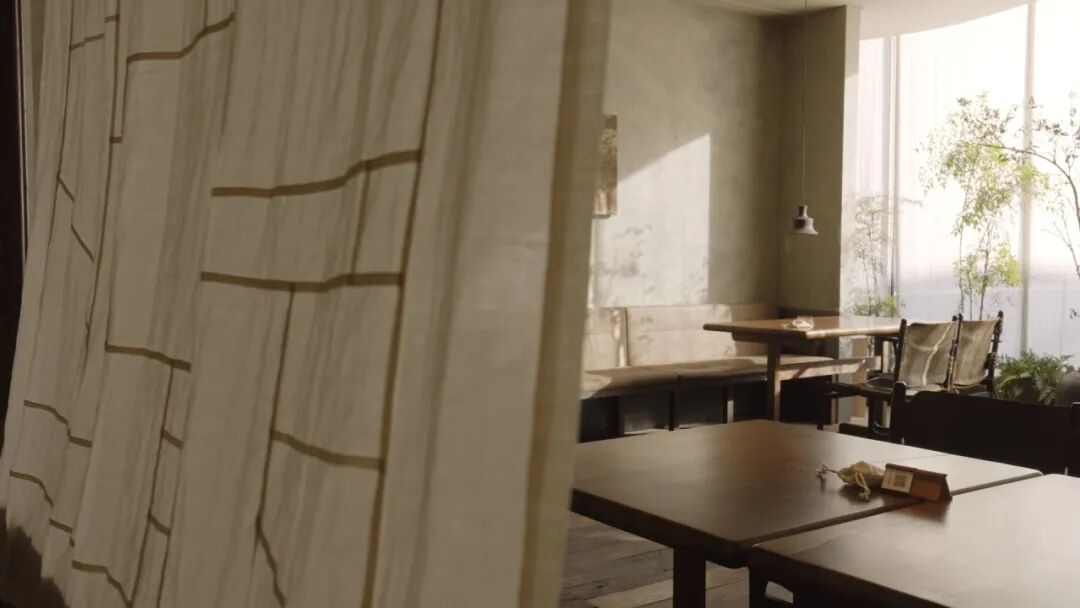
Light and shadow at Yuangu Yunjing (Sanlitun location)

Favorable and Adverse Circumstances, Both Met by One Who Looks Back
Kuang Wei: We often ask entrepreneurs: who has influenced you most deeply? Usually we expect some business leader or industry figure. But today I learned it's actually Su Shi. Why him?
Gan Yizhe: My lifelong idol has always been Su Dongpo — we all memorized his works in high school. Looking back, they seem impossibly beautiful: "Red flowers fade, small green apricots appear. When swallows fly past, green waters surround the homes. Willow floss on the branches blows away, yet spring grass grows everywhere beneath the sky."
The texture of that language, the emotional expression, the rhythmic cadence — all of it lets me feel the ultimate beauty of Chinese literature. The beauty of Chinese imagery, its expressive power, is unparalleled.
Looking back at Su Shi's life: he achieved fame young, passing the imperial examination at twenty, placing first in the palace examination at twenty-four. Everyone considered him destined to become a future prime minister. His official career began smoothly with local posts, but later he was exiled to Huangzhou. Despite this sudden reversal, he accepted it with equanimity, even living with contentment and self-consistency.
It sounds effortless, but achieving this is extraordinarily difficult. We often say "from luxury to frugality is hard." Yet Su Shi spent four or five years in Huangzhou — precisely his most prolific creative period. Many of his most celebrated poems, like Ding Feng Bo and Nian Nu Jiao, were born there.
When I was young, I hadn't truly experienced setbacks. Elders used to say I lacked seasoning. Back then I'd argue back with minor frustrations from daily life. It wasn't until 2021 that I encountered genuine major adversity. The pandemic trapped me at home; all paths I'd dreamed of pursuing were blocked by the era and by fate. I began to recognize my own smallness, and started asking: what is the meaning of my life?
Previously, my sense of worth was built on external validation. But Su Shi was different. He could keep company with flowers and plants in adversity, exchange letters with friends, live peacefully with family.
In Huangzhou, his life stabilized — the local prefect even allocated him a plot of wasteland, an abandoned military camp. He farmed with his family, and after the harvest, sitting on a hillside gazing at the golden wheat fields, he was moved to take the name "Dongpo" — an identity given to him by Huangzhou.
Yet political fortunes shifted; when the court recalled him, he returned immediately, and excelled at every post. Later, as prefect of Huzhou, he reached his highest office — tutor to the young Emperor Zhezong, teacher to the Son of Heaven. But then he was exiled again. This time, more severely than Huangzhou: "Ask about my life's achievements: Huangzhou, Huizhou, Danzhou."
Lingnan then was no economically developed region — it was harsh frontier territory for banished officials. Even so, he could settle into himself and live well.
But his talent couldn't be suppressed. While in Huizhou, his poems circulated back to the capital, arousing jealousy among petty men. Seeing him still content in distant Huizhou, they banished him further to Danzhou on Hainan Island. I once read an account of Su Shi crossing the sea — I wept. He dismissed his family, taking only one son and an empty coffin, journeying to Hainan. Arriving, he found no one spoke Mandarin; he taught Meizhou dialect through gestures and body language. To this day, some Hainan villages still speak Meizhou dialect.
In Hainan, he not only cultivated farmland but also practiced medicine — tasting herbs, treating illnesses, teaching locals agricultural techniques. His life was severed from the Central Plains, yet he found contentment. He opened a lecture hall in Hainan — no desks, no chairs, no textbooks, teaching entirely from memory. His reputation gradually spread, attracting students from the mainland.
What moves me most: historical records show that the first zhuangyuan (top scholar) in Hainan's history was Su Shi's student — though this came after his death. He endured so much suffering, was treated so unjustly by the court, and died while being recalled to the capital. Yet facing setbacks, hardship, the injustice of fate — he always remained composed, living with his own integrity.
He didn't merely understand life; he even mastered cooking. His life philosophy, his values, ultimately crystallized into a moral character — a quality rarely seen today. Sometimes I wonder if I myself possess such backbone. But precisely because I may not, I hold him as my model — the person I look back to, whether in favorable or adverse circumstances.

The audio version of this interview is also available on the ZhenFund podcast "Ci Hua Dang Zhen" — welcome to listen in!

Text | Cindy
Editor | Wendi
Video & Podcast Producer | Jiamin