A24 Partner, Vercel CEO, a16z All Pre-Ordered This AI Bookmark

Create something truly compelling.
On May 1, Mark officially launched. To date, it has surpassed ten million views. Scott Belsky, partner at A24; Dua Lipa; the editor-in-chief of Bloomberg; partners at a16z; and Stripe Press — now one of the most influential publishers in tech — all came to the event to experience it firsthand.
The product they experienced is Mark, an AI bookmark made of, well, a bookmark and a highlighter. You use it to mark words and passages on paper, and to record your thoughts in the moment. Later, Mark remembers every book you've read, connecting your highlights, themes, and ideas into written reflections that you revisit regularly.
This comes exactly one year after Mark released its first video.
What happened in that year? We spoke with Zhenyi Tang, 21.
First, he bought a one-way ticket from California to Shenzhen. Before that, his memories of China were frozen in childhood — living in Wuhan, going to school, eating breakfast. Last summer, for the first time, he walked into factories, negotiated with bosses, attended dinners, and shared hundred-yuan-a-night hotel rooms with his co-founder. This, he said, is what makes entrepreneurship feel real.
We also talked about taste.
The first impression of Mark's product and launch video is a rare sense of breathing room. In the crush of information feeds, it makes you pause briefly. Film rolls, postage stamps, ink, paper — these elements make it feel unlike a typical AI product, more like a cultural object you can hold in your hand.
It resembles Leica's manual focus, minimal buttons, and unhurried operation. Every turn of the focusing ring, every stroke of highlight on paper — none of it is for speed, but for leaving something behind with certainty.
To Tang, taste isn't simply about looking good. It's history, authenticity, depth — layers upon layers beyond the product itself.
We also discussed his evolution.
Starting in high school, Tang spent 7,000 hours on 3D design. From taking freelance commissions to joining production houses and doing concept design for teams like H&M, Travis Scott, and SpaceX, he gradually figured out what he actually wanted to make through this process of trial.
He didn't want to just create for others. He wanted to build his own brand and participate in its growth.
AI today stands at a moment not unlike what photography and painting once experienced together — entangled, interdependent, competing. On one side, masses of AI-summarized, AI-generated text; on the other, words written and preserved by human hands.
In the eighties and nineties, while Sony, Canon, and other camera brands pursued smarter shutters and higher resolution, Leica chose mechanical shutters and manual focus. Every instant you captured was intentional. You were actively choosing which frames, which images, were worth keeping.
Mark wants to do something similar.
Every highlight, every preserved thought — these are things you yourself believe are worth keeping.

Returning to China, Making a Product for the First Time
Q: Please briefly introduce yourself and the product you're currently working on.
Zhenyi Tang: The product I'm working on now is called Mark. It's an AI bookmark that helps you capture ideas while reading.
Its form is simply a bookmark. It has two parts: half bookmark, half highlighter. You use the highlighter to mark any text, any passage, and it also has a recording function to capture your thoughts in the moment while reading.
Later, we summarize these recorded ideas and quotes into a digest that you can also easily share with friends.
To briefly introduce myself: I attend the USC Jimmy Iovine and Andre Young Academy at the University of Southern California. This interdisciplinary college was founded by Beats co-founder Jimmy Iovine and Dr. Dre, focused on art, technology, and business innovation, with a very strong entrepreneurial atmosphere.
Before Mark, I mainly worked in visual arts, collaborating with artists, rappers, and performers on stage design.
Q: Why did you decide to return to China to start a business a year ago?
Zhenyi Tang: In February 2025, we released our first video.
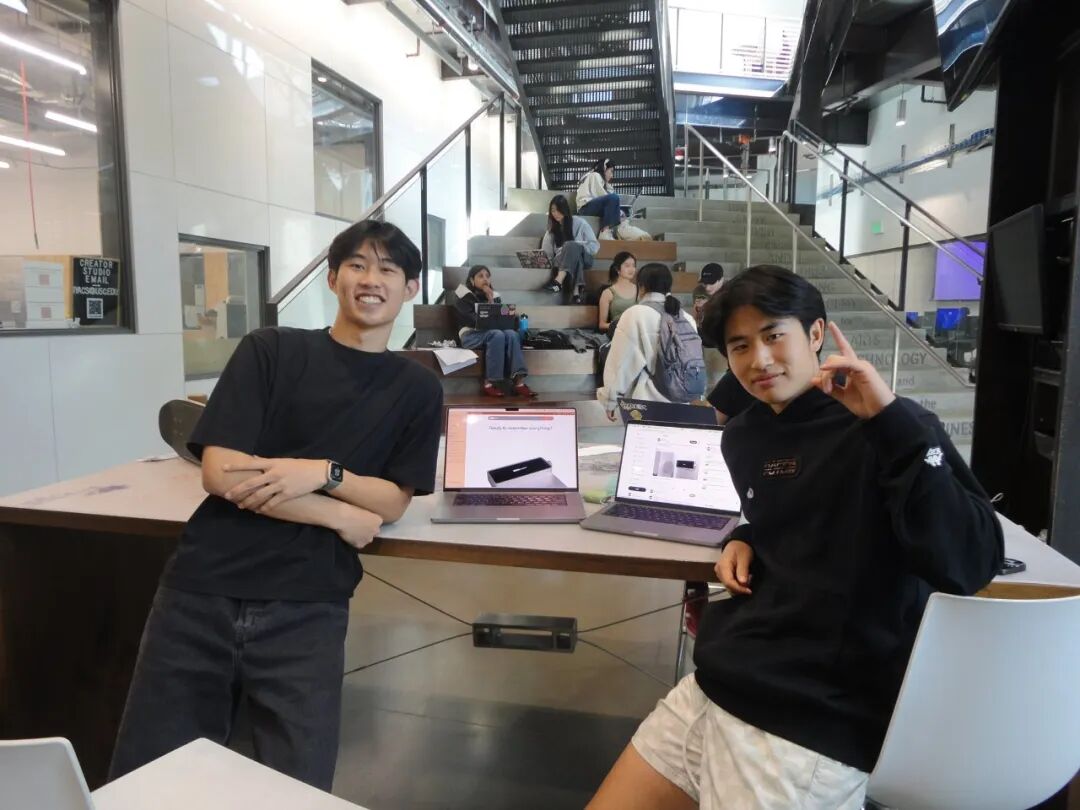
The response was huge at first, very hot. But quickly, all activity dropped to zero overnight. That period made me realize that, no matter what, we had no more heat left.
For someone making a product for the first time, that落差 was huge. It also happened to coincide with my co-founder leaving, which made me start thinking about how to actually make this product happen from here.
We had already come this far, the product was released — why not try it myself? Compared to doing an internship in New York, I felt returning to China to actually try making this thing would be more fulfilling.
After returning, many people were willing to help me, allowing me to connect with more founders and get close to factory floors. I gradually began to understand what it really means to start a company, to actually make a hardware product.
On one hand, I was cramming Chinese; on the other, I was more systematically learning how to make a hardware product and how to launch.
Q: You mentioned feeling that "starting a business in China feels more real." Why?
Zhenyi Tang: The first time going to a factory was a completely new experience.
At the time we went to a packaging factory in Shenzhen. Upon entering, the first thing the boss did was pull out a pack of cigarettes from his pocket and offer me one. But I had never smoked in my life.
I was too embarrassed to refuse, and I don't know what I was thinking, but I took it. Then I held that cigarette and sat down to chat. After the boss lit his own cigarette, he passed me the lighter.
I had never smoked before and didn't know what to do, so I pretended to naturally light the cigarette. After one try, he told me: "You didn't light it."
That moment was a bit awkward. I said: "Let me try again." Finally got it lit, he started smoking, and I still didn't smoke, just kept holding that cigarette. About five minutes later, the cigarette had burned halfway on its own.
He looked at me, I was too embarrassed, and tried to take a puff. Then he said: "You didn't even inhale."
Going to factories, understanding a different culture — this experience taught me a lot.
Q: Had you ever dealt with factory people before?
Zhenyi Tang: Not before July 2025. My previous impression of China was frozen in childhood memories of life in Wuhan, going to elementary school, eating breakfast. But this time returning, I was dealing with people in actual work contexts, which was very eye-opening for me.
Q: What did you learn from this?
Zhenyi Tang: You have to know how to present yourself, including what your background is, who you know, how much potential your product has. You need to make factory bosses feel that you're either an interesting product or a product with huge potential. Dealing with these factories inevitably involves meals and drinking. My CTO helped block a lot of drinks for me.
Q: Did these experiences spark new thinking about the product?
Zhenyi Tang: A major takeaway was that at each stage, we need to be clear about what type of company to work with.
At the start, we needed to find a service provider specialized in industrial design. When it came to actual hardware development, we should look for companies specialized in PCB design and R&D. For final assembly and mass production, then we'd go to factories specialized in molds, assembly, and volume manufacturing.
When talking cooperation with these factories, we also need to think from their economic interests. Not just from the product angle, but from their business logic. Every quote they give has its own unit economics behind it.
Suppose we partner with a hardware manufacturer — they might charge us 200,000 RMB in R&D fees first, then take 10% of each product sold. When negotiating price, you need to break down how much manpower they've invested in the product, what each person's monthly salary is, what the total team cost is for our product.
Then you can calculate whether the fee is reasonable.
What's happening here is finding a balance point: what they charge needs to cover their team and cost investment, but also needs to be less than what it would cost us to build an internal team to do this. Based on this balance point, we then negotiate price and cooperation.
This was a very practical lesson. It's very common, exactly the kind of thing you'll inevitably encounter starting a business in the real world. You have to learn to negotiate, and you have to learn to understand things from the other party's economic ledger.

2025, The First Launch Video
Q: After Mark's launch video, many users actively pre-ordered, but some said it's essentially "highlighter + bookmark + AI," and that a phone is enough. How did you feel seeing these comments at the time?
Zhenyi Tang: I was quite troubled by comments during the first launch last year. These voices made me reconsider: is this a product that should really exist? Is it a fake need?
But with this launch, we saw a very clear trajectory of spread. The video first circulated among our early adopters. Many people posted screenshots of their pre-orders — among the first 300 comments, 50 to 60 were just people posting screenshots.
What surprised me more was that many people we never expected bought the product. Like A24 partner Scott Belsky, Vercel CEO, Bloomberg editor-in-chief, a16z partners, Silicon Valley investor Sahil Bloom, and almost the entire team at Stripe Press, now one of the most influential publishers in tech.
Like the first launch, when influence begins to expand and enter public view, negative comments increase. I find this interesting because it reflects something happening in the world right now.
Most people don't have a particularly deep concept of AI. In the US, many people's understanding of AI is either a smarter Google or something that will steal jobs. Their overall attitude toward anything AI-related tends to be very negative.
In these comments, many people aren't seriously looking at what the product actually is — it's more of an emotional reaction.
We knew this would happen from the start. The first video confirmed it: when you say this is an AI bookmark, and an expensive one at that, many people's first reaction is that it makes no sense at all.
Q: In March 2026, Mark released its second video and the product officially launched. How do you want people to understand Mark now?
Tang Zhenyi: In the context of X, we'd describe it as an AI bookmark for the AI era.
But in our broader brand positioning, we don't want it to feel like a very "AI" product. We want it as far from that typical AI product sensibility as possible. It's more of an idea collection tool — something that helps you collect and save ideas.
From a branding perspective, I think our positioning is a lot like Leica cameras.
Around 1980, Leica chose to make mechanical shutters and manual focus. Compared to brands like Sony and Canon, it didn't emphasize especially intelligent shutter speeds or especially high image quality. Instead, it went in a more manual direction.
Leica carved out a very distinctive position: every moment you capture is intentional. You're actively choosing which frames, which images, you want to keep.
I think AI is at a very similar moment right now. On one side, you have massive amounts of AI-summarized, AI-generated text. On the other, you have words written and preserved by people themselves.
We believe Mark should become a cultural object with emotional warmth. Every highlight, every idea you leave behind, should be something you yourself believe is worth keeping.
What we want users to feel with Mark is that they're not simply saving a passage of text — they're preserving ideas they believe are worth preserving. They can revisit them later, or continue building on those notes.
Q: What have you been reading with Mark during testing?
Tang Zhenyi: I recently tested it while reading a book called Made by MSCHF. It's a collection of all MSCHF's past works.
MSCHF is a mysterious art collective based in Brooklyn, New York. They were behind the viral "Astro Boy red boots" and a lot of internet marketing campaigns.
While they come across as a crazy company, they've accumulated a lot of deep thinking behind the scenes. They study what spreads, what has influence, what people are most interested in right now.
MSCHF maintains intense output. Founder Gabriel Whaley said he pretty much works from 7 a.m. to late night every day. They spend enormous time conceptualizing campaigns — figuring out how to get massive global attention and active participation.
They don't feel like a pure marketing or product company. I think they're more like a company running social experiments, using products and events to understand people.
MSCHF is very good at understanding human psychology, and very good at grasping what people are genuinely interested in.
Taste Is the Many Layers of a Product
Q: You first applied to ZhenFund's Summer Grant entrepreneurship fellowship, and the design passion you showed from high school left a deep impression. Of these experiences, what influenced you most?
Tang Zhenyi: I've always been interested in design.
It started in middle school. There was a wave of sneaker reselling, everyone was selling shoes. Beyond that, there was a very niche circle of playing card reselling.
There was an overseas group called cardistry — doing juggling-like moves with playing cards, lots of flashy tricks. There were also teams designing different decks that people collected and traded.
I was really into this, collected two or three hundred decks myself. In middle school I really wanted to design my own deck of cards, and I had a tiny eBay reselling business. What first got me interested in design was how it connected to business.
I seriously started designing in 2020 during COVID lockdown. One day I randomly came across a Blender 3D software tutorial on YouTube, teaching how to make a donut. I found it incredibly interesting, got completely obsessed, spent five or six hours a day learning.
Over the following years, I spent about 7,000 hours on 3D design, trying many different directions. From there, I started getting commercial commissions, doing visual design for some artists and musicians.
By freshman year of college, I joined a production company and started doing more commercial projects. I was lucky to do interesting concept design for teams like H&M, Travis Scott, and SpaceX.
What these experiences taught me most was that I didn't want to keep creating for other people's ideas.
I discovered what I didn't like doing, and started wanting an opportunity to create something truly my own. It didn't have to be a brand from day one, but at least something where I could participate in deciding how it grows and evolves.
That's where Mark started.
Q: How do you understand Taste?
Tang Zhenyi: Taste determines how a brand positions itself and expresses itself in public spaces.
The way it ultimately presents itself is how people perceive it. If lots of people like something, think it's good, it might become good Taste.
The difficulty for many AI products and hardware products right now is whether they can stay true to their brand vision and carry that through every medium, every platform. Just being able to do that is a huge step, and it's good Taste.
I've seen many products lately that immediately chase whatever trend is hot. But what's more important is knowing who your audience is, what atmosphere you want to create, and having the willpower to stick with it.
For this launch, we're doing some offline activities that might not look like they have much short-term ROI. But from another angle, they're helping us establish brand voice, establish the brand's uniqueness in the market.
These things all help a brand build its Taste.
I think if you connect it to business, an important point is whether you're willing to spend money on things that might not directly generate revenue in the short term.
From a visual perspective, there are also many purely beautiful designs.
But truly good design is never just grabbing inspiration from Pinterest or Xiaohongshu. You need to reference real-world materials that already exist, reference historical objects, including things from the 1930s and 1940s, to understand how what you're making evolved in the past, to see how its brand feeling formed step by step.
Designing a brand and product based on these things, what you make will have more depth. Compared to just finding inspiration on Pinterest or Xiaohongshu, it will have many more layers.
I think these layers are a brand's Taste.
Q: Mark had a launch event in New York recently — what happened?
Tang Zhenyi: We did two offline events in the past two weeks, one in Los Angeles and one in New York, from the West Coast to the East Coast.
The Los Angeles one we invested quite heavily in. The original intention was to hold a relatively intimate event, inviting friends, publishers, writers, potential users to see our product, experience it, and get an early viewing of our launch video.
This was also Mark's first official appearance. We prepared for over a month.
I imagined it as many people's first impression of Mark: what is Mark, what's our vision, what do we actually want to do. We specifically found a scenographer, rented a large banquet hall and lots of furniture, built out a complete product demo environment.
This set the tone for all our future events.
We found the Los Angeles event got pretty good feedback, lots of people messaged us asking when we'd come to New York. So we thought, let's just go to New York.
In New York, someone introduced us to COLLINS. COLLINS is one of my favorite design firms — they designed Robinhood, Cash App, Mailchimp, and many major brands you see today. I discovered them in middle school and have followed them ever since.
They were generous enough to let us hold the event in a library inside their office. This hugely saved us cost and time, we didn't need to put energy into setting up another space from scratch.
Originally we thought the New York event would happen a day or two after we officially launched online. People would see the product online and could immediately come experience it offline. It would also prove that our product wasn't like Humane or Rabbit — something that might look cool but hadn't actually materialized.
That was a beautiful vision at the time.
But reality was completely different. We launched on Tuesday, the offline event was Friday night. The launch completely failed, basically no clicks, no attention.
I completely broke down.
I had thought there would at least be a few hundred builders following, or at least a few million views.
For the next two days, we tried three or four different launch approaches on X. Finally on Thursday, the video we posted suddenly blew up. To date, that video has about 11 million plus views.
And it was because of that video that many people discovered our product, and knew we were holding an offline event in New York on Friday.
After experiencing it, quite a few bought our product directly. One person even flew in from Seattle specifically for the event. Seattle to New York is five hours. He made the trip specially — we were amazed.
For participants, they could directly feel the brand's tone.
If you really calculate the actual ROI of each event — like exactly how many people ordered after attending — it's definitely hard to say. But from a long-term perspective, from a more feeling-based, design and brand-oriented angle, the results from these two events were very satisfying.
Q: What feedback from users after experiencing Mark offline impressed you most?
Tang Zhenyi: I completely didn't expect that many people would ask us whether this product would open its API in the future, letting people build on top of it themselves.
There really are people who really like our product, and they don't just want to use it — they want to build on top of it.
I think that's very cool. It made me realize we've already started having Power Users, these strong supporters who help you give feedback, help you think of new directions.
Also during one offline event, halfway through a user came and talked with us a lot about his own reading workflow. He's an independent researcher who spent over a decade studying what the best way to learn is, what learning methods are most effective, and what you should do after highlighting. He did ten years of research on this. We talked a lot about what he thinks Mark should become.
Another feedback that made us very happy: one user said, "If the final delivered product is really like what's in the video, I'm 100% buying."
Q: What do you think is Mark's most irreplaceable, un-copyable aspect?
Tang Zhenyi: I think ultimately there are two things.
First, Mark ends up not being a hardware company, but a knowledge company.
What we're actually doing is becoming the company best at helping you store knowledge. We'll have enough context to help you sort through what you're thinking about, what interests you, and how your knowledge and ideas are organized.
Second, ten years from now, we want Mark to become a cultural symbol.
When people want to read, learn, or record knowledge, they might not say "go buy some device" — they'll naturally say, "go grab a Mark."
We want this brand to eventually become a category. When people think of learning, knowledge, reading, and preserving ideas, they'll think of Mark.
An Era of Care and Authenticity
Q: In an era of paperless trends, why choose to build a product that emphasizes physical book interaction and offline experience?
Tang Zhenyi: There's a major trend right now where people are getting tired of AI and craving more offline activities.
This isn't just about physical books — it's about offline experiences more broadly, like dinners with friends, face-to-face events, real in-person meetings. All of these are becoming more popular.
From a longer-term perspective, every time there's a technological advance, there's some kind of counter-movement that follows.
Go back to the forties and fifties — it was the space race era, everyone was discussing who would land on the moon. But at the same time, there was this interesting neo-futurist movement. There was a very popular home design called the Conversation Pit. The core idea was that people could sit together in a circle, face to face, and let gathering happen naturally.
That idea is coming back now. As AI-generated content proliferates, more people will start preferring things actually made by humans, products and films and content created with real intention.
Mark offline event Polaroid photo wall
Abroad, these third-space public communities are becoming more important. There's a team in New York called Verci specifically building offline spaces where lots of designers and creators can gather for face-to-face events.
Lots of people are also starting to host offline dinners, inviting 10–15 good friends to gather. Mail clubs have been getting popular recently too — usually designers prepare some nice illustrations each month and mail them to all subscribers.
In China, I've recently seen similar things happening. A Letter to Grandma is a great example. When you do something with genuine care and intention, people get interested and give it high regard.
It's a really interesting time right now, well-suited for building things that truly carry care and are thought through with authentic offline experience.
Q: Was there a specific moment when you felt you needed to return to the offline world?
Tang Zhenyi: Once I checked my screen time and found it was averaging nearly 12 hours a day.
I suddenly realized that whether I was at home or out with friends, I was always on my phone. Either scrolling through what was happening or consuming various content.
But when it actually came time to do things, I found what you could get from Xiaohongshu or those design inspiration sites was pretty limited.
More importantly, you need to find a brand's purpose. AI and online inspiration banks can't give you that.
This is something you have to return to the real world for — chatting with people, reading enough books — before you can find it. What you're looking for is why you're building this brand in this particular way.
I felt like I'd hit a plateau. I wanted to find a better way to solve this.
Q: Why are sharing among friends and community feedback so important?
Tang Zhenyi: Reading can easily become an isolated, passive process.
But what we're seeing now is that people have a strong desire to share, and they're looking for ways to create more connection between people. This is a trend that's already happening.
Recently there's a company that's reached seven-figure ARR. What they do is help women find friends. You pay them to help you find good friends.
More and more people feel lonely and disconnected from others.
Community matters. But what we want to build probably isn't that broad social platform type — it's community that can maintain intimate relationships.
It doesn't need to be large. Maybe just three to five good friends, or a small group where you can regularly share what you're thinking about, what's on your mind. I think this is the kind of community many people truly crave, and it's the direction we want to optimize toward.
Q: What aspects of Mark most easily move users and make them want to share proactively?
Tang Zhenyi: This is something we need to continue testing and doing user interviews on, to see what people ultimately find most compelling.
But what we've seen so far is that beyond sharing, many early readers have a very simple need: they want to digitize content from physical books and form a searchable database for easy lookup.
Almost no one is seriously doing this right now. Just this core function alone can already bring many benefits and improvements to the reading experience.
Longer term, we've also heard lots of offline user feedback about Goodreads. Goodreads is a household-name product overseas, but its user experience feels indirect and old-fashioned — the way you share your bookshelf, for example.
I think that's something we can break and reshape.
Q: In your Manifesto, you mention that Mark began from a few friends exchanging thoughts about books. When users actually start using this product, what does your ideal state look like? And how does it help people return to offline connection?
Tang Zhenyi: I think this will take some time.
For our earliest target users, they're already interested in the physical book medium and have developed consistent reading habits.
We have an offline user in New York who told us he's getting married soon and will have a child. He really doesn't want his kid exposed to too many electronic devices, so he wants to make many things in his home more ink-like. He also wants his child to read more, while having some technological support to look back, organize, and review later.
For our first batch of target users, they already have a dependence on physical books. What we need to do first is enhance their existing experience and acquire this group of super users.
There's a lot of cultural-level work involved here. Not just collaborating with different brands, but also working with writers and building a strong author network.
That is, when you use our product, you can access a series of people you'd otherwise have difficulty reaching, and see these people's thinking. We hope to use these elements to drive more users and gradually shift their relationship with reading and knowledge.

From Designer to Founder
Q: Over the past year, you've made the transition from designer to CEO. Personally, what kind of mindset shift has this role change brought? How do you now redefine what it means to be a CEO?
Tang Zhenyi: I previously watched an interview with Airbnb CEO Brian Chesky. He also came from a design background, and he's still a designer — just not designing art, but designing systems.
He's designing how people approach the market, how employees should be organized, how people do things at the company.
Over the past year, I've also tried to shift more focus to the organization. I'm no longer just concerned with daily execution, but thinking about what stage the company is at, what kind of people need to join, and designing higher-level goals around this to move forward together.
On the marketing side, I found it hard to let go at first. Because from the very beginning, much of the design and video was done by me. But at some point I realized I no longer had the bandwidth — I couldn't spend four or five hours making a poster anymore. It was no longer the best use of my time.
I understood that I needed to start handing these things off to others.
But you also have to accept that when you hand things to others, sometimes the result won't be as good as if you did it yourself. That's a trade-off.
Q: Brian Chesky once said Airbnb sells a new kind of experience. What new experience do you think Mark brings?
Tang Zhenyi: In terms of usage, we don't want to create a completely new experience.
Lots of actual research shows that highlighting isn't the best way to learn. Underlining doesn't equal learning. But we've been taught since childhood that important things should be marked. It's a habit that's existed from childhood. We're mostly following this already-existing habit.
What we want to improve in this process is more intentional idea capture. Especially from brand and cultural reference, we want you to feel that when you mark a passage or jot a note, you're completing part of your digital self.
We're focused on what comes after reading.
Beyond active recommendations, you can see contradictions, conflicts, and resonances between past ideas in your note analysis, and even start a conversation. You can also generate an article based on these ideas.
Among friends, reading can also become a deeper form of sharing.
It's not just simply, precisely sharing a particular sentence. I think that's rather one-dimensional. We want to elevate it to another level, where you can sense what I've been thinking about, what I've been reading.
Similarly, you can see what a well-known writer has been reading and thinking about. In the future when you're reading, you can also read alongside these writers in real time, as if they're keeping you company.
Q: The interaction on Mark's website where you highlight a passage is stunning. Why did you design it that way?
Tang Zhenyi: At first we considered many flashier designs. Like when you scroll down, a bunch of books might appear and then a Mark suddenly pops out. Or doing some scroll animations where zooming in shows product details. But later we simplified as much as possible from a development perspective. What you see now is a Mark recording your ideas.

Creating Attractive Things
Q: What's your MBTI?
Tang Zhenyi: Last time I tested it was INTJ.
Q: What's your superpower?
Tang Zhenyi: Creating attractive things. Creating things that draw people in and that people like.
Q: Do you have a founder you really admire?
Tang Zhenyi: Steph Ango, the CEO of Obsidian. Obsidian still has a pretty small team — around 20 people — but they do several million dollars in revenue each year. He posts really interesting threads on X that have helped expand my perspective. I've learned from him how to think about knowledge and how to take notes.
Q: Have you come across any work you really like recently?
Tang Zhenyi: A New York design studio recently did branding for my friend's company, Halo. Halo is a healthcare company — they make a software solution for doctors, kind of like a Plot for physicians. The design drew inspiration from a radiologist from the 1950s and 60s. In her free time, this doctor would use X-rays to photograph flowers. Her most famous works are these X-ray images of flowers.
Q: Share one sentence with other founders.
Tang Zhenyi: Entrepreneurship can feel incredibly lonely a lot of the time.
But I've come to believe more and more in this: slow is fast, fast is slow, and slow is steady.
I've also just started trying to find a balance between work and real life. I want to eat three proper meals, work out, and write my experiences into my actual life.
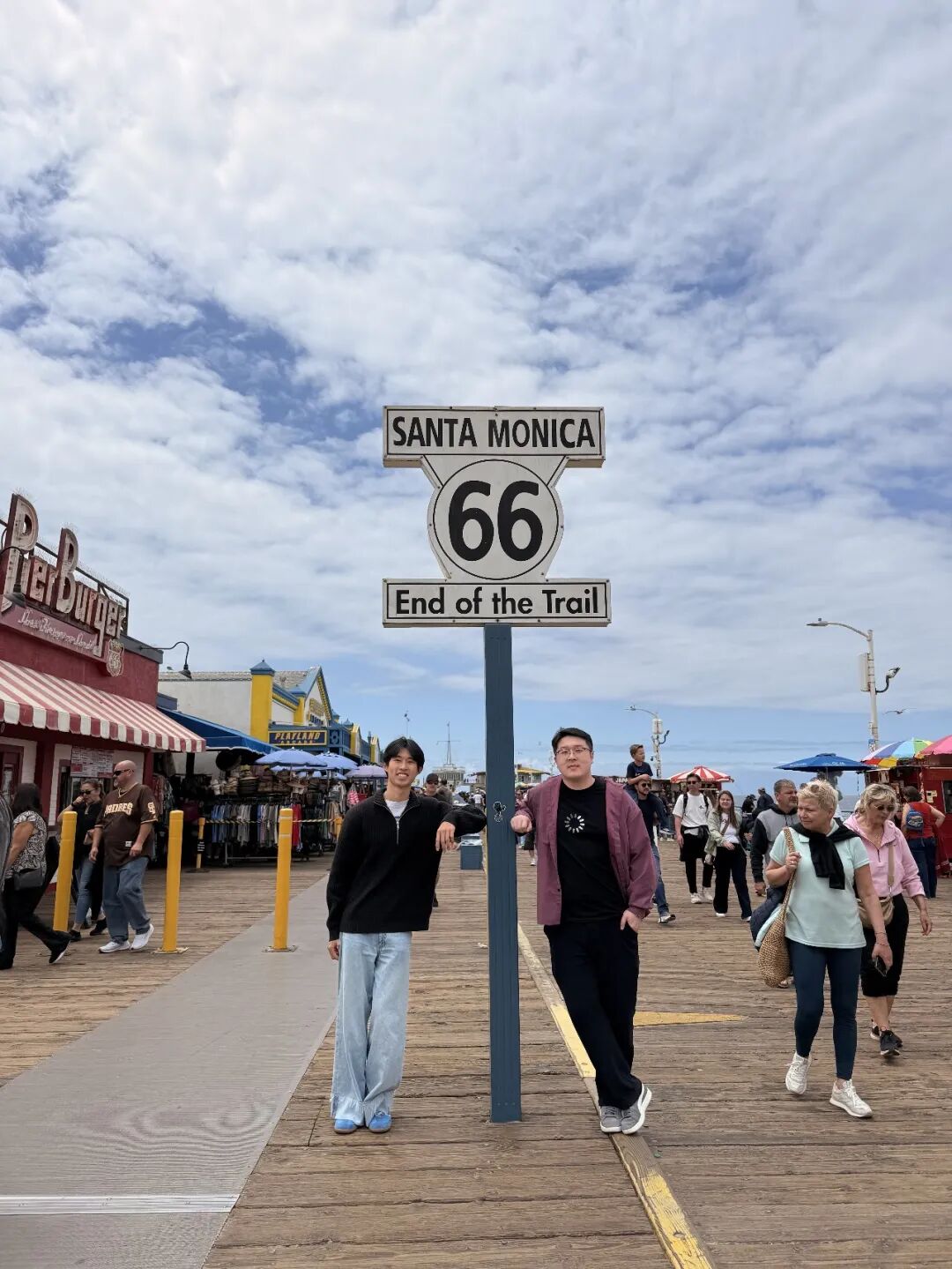
Tang Zhenyi (left) with co-founder Yufang
Because building a company is a long game, not a month-by-month sprint. You can't just pull a few all-nighters and expect to keep that up indefinitely.
That's something worth keeping in mind.
Q: Have you thought about where you and Mark will be in three to five years?
Tang Zhenyi: For Mark, there are a few brands I'd especially love to collaborate with someday — Stripe, Miu Miu, and Penguin Random House.
Working with these brands and gradually becoming a cultural symbol within that context — that would be my biggest goal for Mark. And maybe by then we'll have new products too, who knows?
For myself, I hope to find a better way to balance entrepreneurship and real life.
Maybe in a few years I'll have developed a hobby, and won't have the same thing consuming me seven days a week, twenty-four hours a day. I hope by then I can build a healthier relationship with the company, with building the company, and with life outside of it.
Q: Any hobby you want to try?
Tang Zhenyi: I've been really into F1 lately.
Q: If you did get to collaborate with those brands, what form do you think it would take?
Tang Zhenyi: I've been thinking a lot about the Miu Miu Literary Club recently. We could do custom bookmarks, or leverage the Miu Miu brand to create a really cool offline activation.
I recently saw a format that Jil Sander did that would work well. We could invite 100 great designers, creators, and thinkers into an open space, and have each of them pick one book that influenced them most. Each book would have its own small area, and people could wander around, browse, and see what the important creators of this era are actually paying attention to.
And maybe, like Humane's AI Pin, we could show up at Paris Fashion Week someday. That would be pretty cool.
Q: What's the book that's influenced you most over the years?
Tang Zhenyi: I just finished a book on negotiation called Getting to Yes. It's about how to negotiate in different situations — understanding negotiation like playing poker.
Q: What's the profile of someone you'd want to invite to join the team?
Tang Zhenyi: We've opened pre-orders and have good momentum, so we've entered a phase where we need to accelerate quickly.
We're currently looking for people in content and growth. If you're skilled at content, social media operations, or growth engineering, we'd love to have you join.
We need more people to help us build the brand together.
Q: Looking back on this past year, if you could speak to yourself just starting out a year ago, or to younger students who are still in school and want to try something — what would you say?
Tang Zhenyi: Don't rush to save money.
In the beginning, you still need to spend where it matters. Looking back, there were many places where trying to save a little money kept us from making what we thought were the best decisions.
For industrial design, we could have hired three or four designers at once and had each of them deliver a first-round concept. That might have only cost a few thousand dollars more. When we actually made the hardware, we could have had two manufacturers produce the same product simultaneously and seen which turned out better.
At critical junctures, we need to be more willing to spend to actually get things done.
I would definitely tell my past self: saving money early on is not the top priority.
Second, people often say you overestimate what you can do in one year, five years, ten years. But in reality, many people also underestimate what they can accomplish in a single year.
A year ago today, I never would have imagined I'd actually make a hardware product, or that I'd be able to raise money to make a hardware product.
A year later, we've completed our fundraising, launched our product, had a video viewed over 11 million times, and generated hundreds of thousands of dollars in sales.
You have to believe in yourself. Believe that you actually have the ability to make something happen.

Written by Cindy