AI Knows How Long You Slept, But Not What You Ate: NUVELL's New Answer
The Next-Generation Smart Kitchen
We've been thinking about a question: What changes will the AI era bring to consumer hardware?
For decades, innovation in consumer hardware has centered on performance and efficiency. We've relentlessly pushed devices to become faster, smarter, more automated.
Today, smartwatches track our workouts and sleep, phones sense our daily routines — yet we still struggle to accurately answer a simple question: What did we actually eat today?
If a device could directly participate in food preparation, could it naturally log ingredients, quantities, and processing steps while completing its task, gradually allowing AI to understand a person's dietary habits?
This was one of the key considerations behind founding NUVELL and choosing to start with plant protein.
This year, at IFA Berlin, we unveiled the NUVELL Home Plant Protein System to global consumers for the first time. The system automates the production of various plant-protein foods such as plant milk and tofu, while recording corresponding protein output and intake.
Our goal is to first master plant protein production and consumption, then leverage the real dietary data accumulated through the device to move AI from mere recording toward understanding — gradually learning each person's eating habits and nutritional needs, ultimately delivering more personalized nutrition recommendations.
— Dingling Luo, Founder, NUVELL

The Value of Hardware in the AI Era
Historically, consumer electronics innovation has revolved around functionality, with product upgrades typically manifesting as expanded features and interactions.
Consumers increasingly want devices that naturally integrate into daily life, continuously delivering valuable information and services without adding to their cognitive load.
Take Oura: the smart ring captures sleep, activity, and select physiological signals through everyday wear, translating that data into relatively intuitive health insights.
Meaningful intelligence should enable devices to continuously serve users with minimal disruption, reducing rather than adding interactions.
Feature count does not automatically equal realized value. Even products with rich analytical capabilities can see long-term adoption hindered by the daily burden of logging and organizing data.
Intelligent services only stand a chance of becoming woven into life when data emerges naturally from everyday behavior and transforms into useful information at the right moment.
As sensing capabilities and AI models advance, devices may simultaneously assume roles in data acquisition, need interpretation, and physical execution. The value of hardware is shifting from completing a function toward understanding user needs and delivering ongoing service.
Wearables have already cracked the code for body data. Can dietary data also be generated naturally through everyday use?
NUVELL turned its attention to the kitchen.

Data Acquisition: The Unsolved Puzzle of Nutrition Management
AI is lowering the barrier to nutritional analysis.
Through photo recognition, food databases, and personalized recommendations, nutrition management software already helps users understand food composition and offers dietary advice tailored to different goals.
But compared to the continuous streams of sleep, heart rate, and exercise data captured by wearables, dietary data acquisition still faces a fundamental problem: users typically must actively record what they ate.
Whether through manual entry or photo logging, users need to perform an additional step outside their normal eating behavior. Even when AI streamlines the workflow, sustained recording demands ongoing investment of time and attention.
The challenge of nutrition management also lies in how to acquire data continuously at lower cost.
Ideal nutrition management should allow data to emerge as naturally as possible from daily life, enabling users to complete logging by simply continuing their existing routines.
Food preparation devices are inherently involved in food production. Ingredient quantities, processing methods, and final output — originally serving the purpose of preparation — are also intimately tied to nutritional composition.
With advances in sensors, food process modeling, and AI, devices have the opportunity to leverage this data to estimate nutritional content. A plant protein system can estimate the protein content of the final food product based on ingredient weight, bean-to-water ratio, filtration, and coagulation processes.
Of course, preparation data doesn't directly equate to actual intake data. Nutritional output still requires model estimation and validation, and actual consumption needs further confirmation through portion size and other information.
When users prepare food using the device as usual, the data naturally generated through this process can be used for nutrition management, reducing extra operations performed solely for the sake of recording.
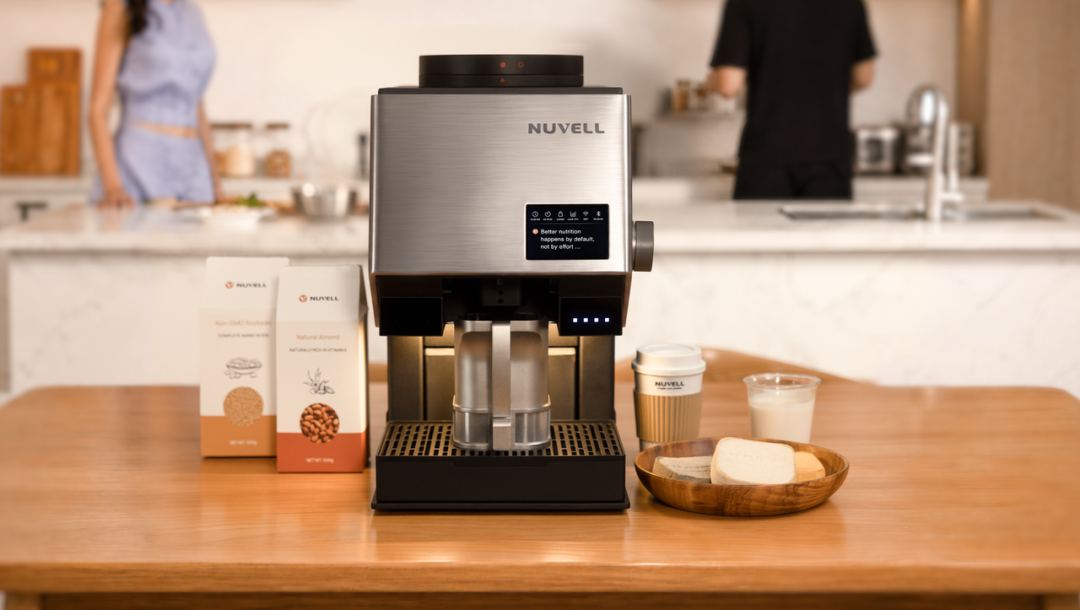
NUVELL's home plant protein system Plantein, with nutrition management guidance

The Kitchen May Be the Missing Link in AI Nutrition Management
Currently, most nutrition management products focus on logging, analysis, and recommendations.
But between knowing what you need and actually eating food that matches those needs, a gap remains.
For example, when a nutrition management system alerts a user to increase protein intake, the user still needs to independently decide on food types, prepare ingredients, and complete the cooking.
Smart kitchen devices can translate recipes and preparation parameters into actual food, creating an opportunity to participate in the execution of dietary recommendations.
In NUVELL's envisioned system, the combination of AI and smart kitchen equipment could extend nutrition management from pure information services into actual food production.
This process can be understood as five stages: Record → Understand → Recommend → Make → Learn
The device captures ingredient, recipe, and processing data through normal food preparation.
The system combines nutritional models with user-provided dietary goals to generate recipe recommendations, which the kitchen device then executes. Preparation data and user feedback can in turn optimize future recommendations.
When a user wants to increase plant protein intake, a future system could recommend suitable plant protein foods based on their dietary goals, available ingredients, and taste preferences. Once confirmed by the user, the device completes preparation according to the corresponding recipe.
Where past nutrition management primarily helped users understand what they ate, future smart kitchens could further help users decide on and prepare food that truly matches their needs.
Kitchen devices possess both data acquisition and physical execution capabilities, forming the foundation for translating nutritional recommendations into daily meals.
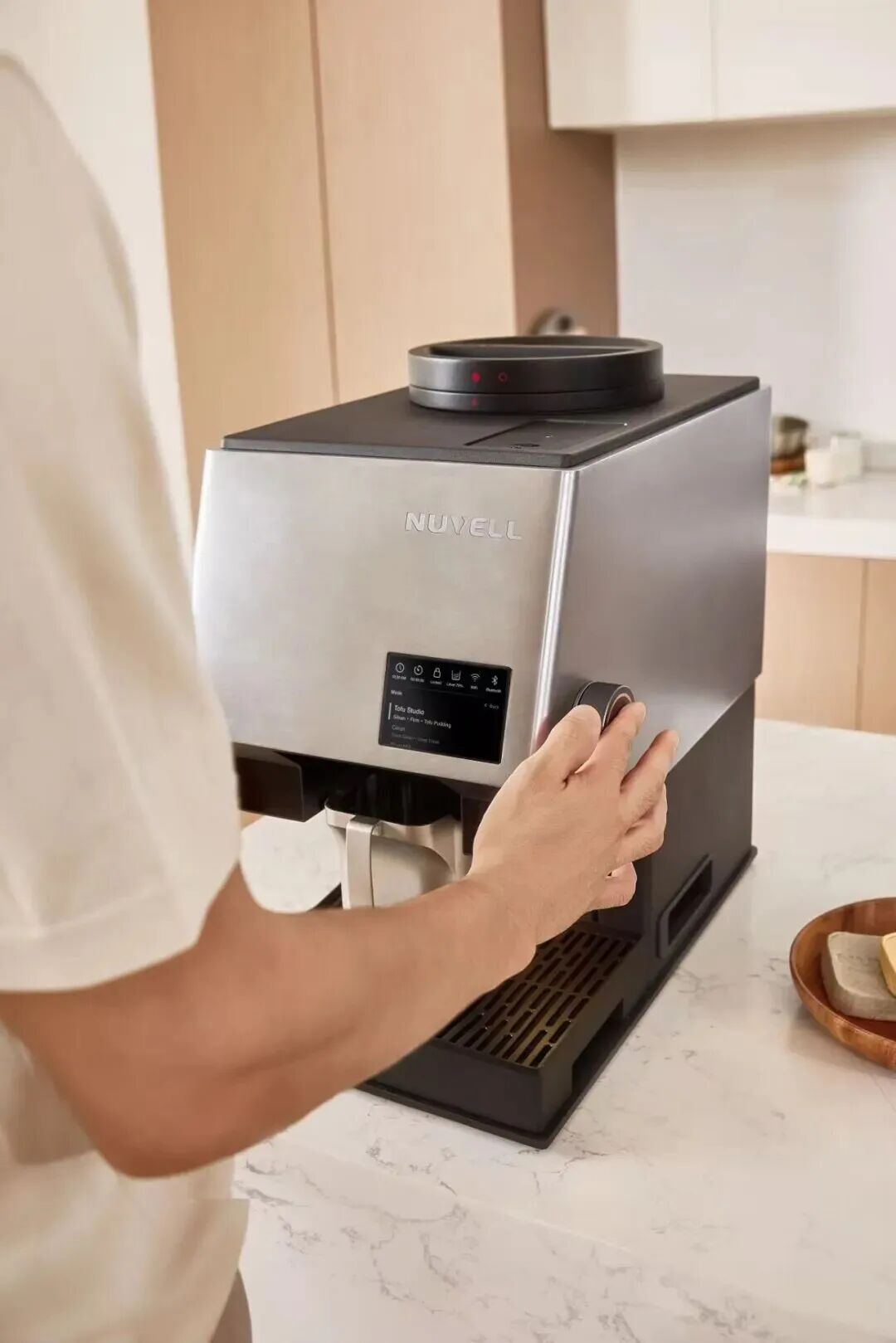
As the starting point of food preparation, kitchen devices can provide the most authoritative and authentic source of data

Why Start with Plant Protein?
For an early-stage hardware startup, the challenge remains finding a viable product entry point.
NUVELL chose plant protein.
In the United States, for example, GFI's 2025 market data shows that 38% of households purchase plant milk, with 91% of those also buying conventional milk. Plant-based foods coexist with traditional diets; the consumer base has long since expanded beyond strict vegans.
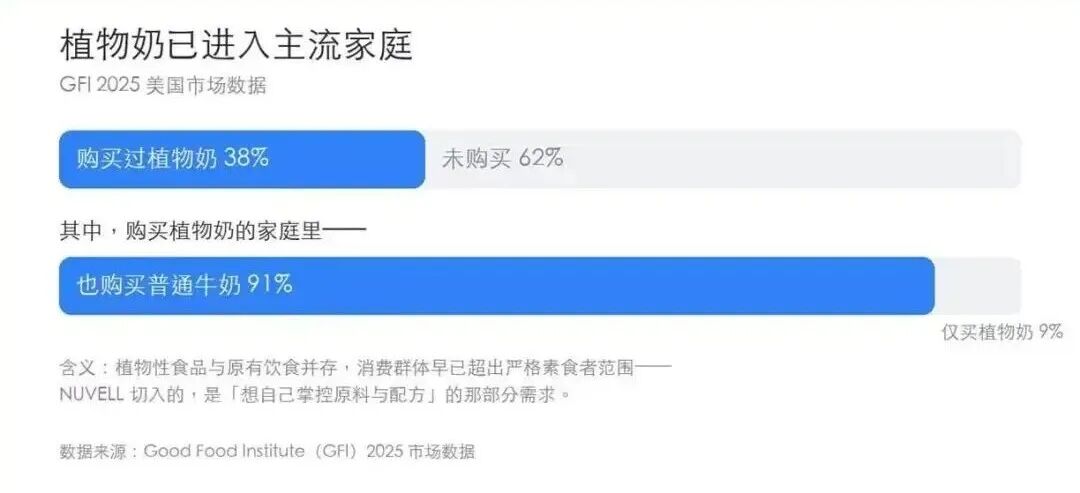
Plant milk penetration in US households (Source: Good Food Institute 2025 market data)
Compared to categories like coffee and bread that already have mature home devices, some plant protein foods still present relatively high barriers to home preparation.
Tofu requires multiple steps from soaking to coagulation to pressing, demanding both time and operational experience. Consumers also want control over ingredients and recipes beyond freshness, adjusting tofu firmness and texture to personal preference.
NUVELL consolidates the ability to produce different plant protein foods into a single Home Plant Protein System.
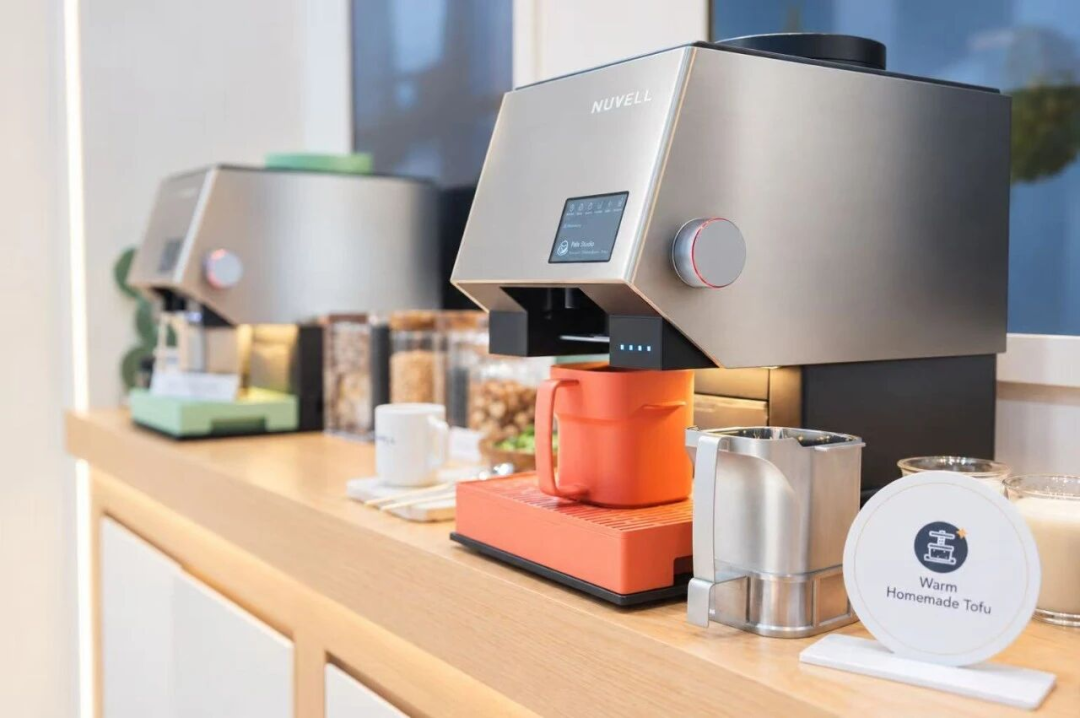
Plantein product display at IFA 2026 booth
Plant protein production involves numerous quantifiable and controllable process parameters.
Ingredient weight and bean-to-water ratio, combined with heating, filtration, and coagulation conditions, collectively influence final output. These controllable parameters also provide the foundation for building food process models and nutritional estimation models.
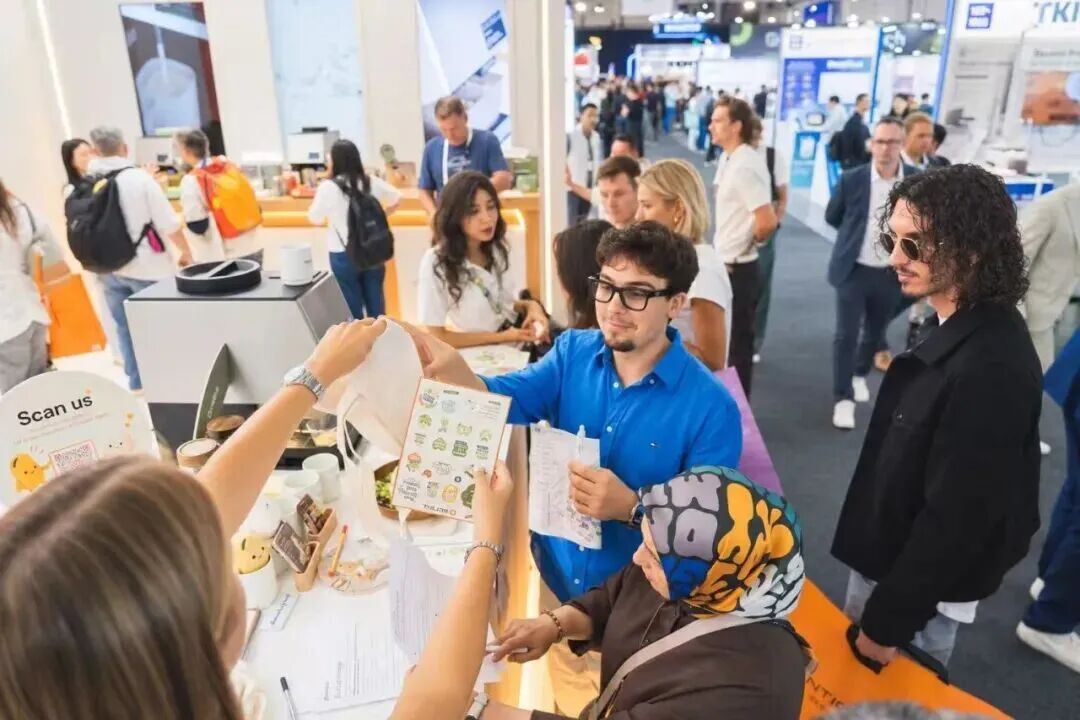
Visitors gather at the NUVELL booth during IFA 2026 Berlin
At the IFA 2026 exhibition, visitors streamed continuously past the NUVELL booth.
Interestingly, on-site conversations often revolved around compatible ingredients, plant protein intake, and daily meal prep time.
Visitors asked for recipe tutorials and wanted clearer understanding of what they ate each day. The appeal of self-made food extended into planning daily meals.
In early experience records published on NUVELL's website, Berlin lifestyle community member Sophie Wagner was particularly struck by selecting ingredients and producing different finished products, feeling this brought preparation closer to personal preference.
Lara Kühnel, who had previously made tofu by hand, noted that the traditional process consumed too much time and energy, and automation made preparing fresh tofu at home far easier.
Yanko Design reporter Sarang Sheth's on-site coverage captured another kind of shift.
He had never seriously considered how tofu was made before; after hearing the introduction, he found himself wondering about the taste of matcha tofu with toast. Tofu had thus connected to his familiar breakfast routine, and an open preparation tool gained the possibility of adapting to different dietary habits.
During IFA, NUVELL also drew attention from European media and programs including BFM TV, Sat.1 Frühstücksfernsehen, and ARD Morgenmagazin (ARD MOMA).
Tech media discussed product form factors, while general news and morning programs introduced the category to a broader family audience.
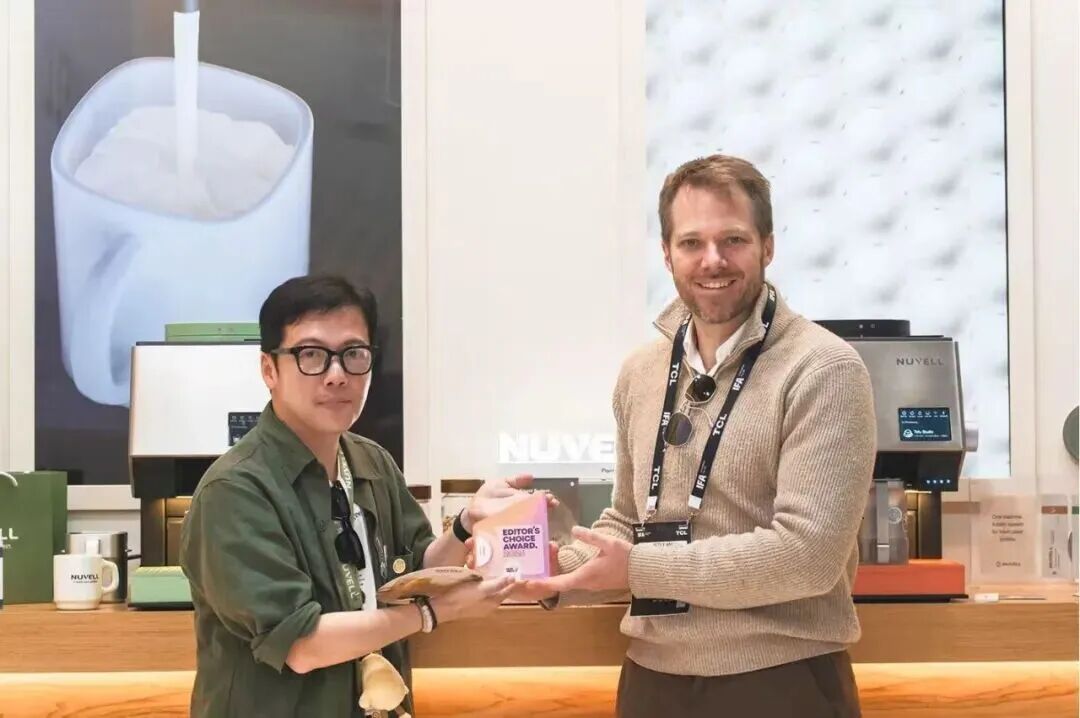
At IFA 2026, NUVELL receives the inside digital Editor's Choice Award
The product consolidates previously dispersed steps in plant protein food preparation into an automated system. Users can utilize plant-based ingredients such as soybeans to produce plant milk, tofu pudding, and tofu of varying textures.
Additionally, users can adjust ingredient ratios and preparation processes to modify recipes and textures.
These capabilities first serve food preparation, while also providing the foundation for more refined nutritional models. The longer-term goal is to explore how to make home food production more standardized, customizable, and data-driven.
Only when devices can relatively accurately control the preparation process and continuously accumulate validated process and nutritional data can the system further provide more personalized food preparation plans based on user needs.
Plant protein is NUVELL's first product entry point for exploring the smart kitchen ecosystem.

Plant protein foods have become an indispensable part of everyday dining tables

Building an Ecosystem of Nutrition Nodes
A single device can hardly cover all household dietary needs.
In NUVELL's long-term vision, different food preparation devices will together form a system connecting nutritional data with user needs. Each device type will focus on its area of preparation expertise, providing data acquisition and execution capabilities.
Coffee equipment could explore caffeine content estimation through the preparation process for drinking habit management. Smart stand mixers could provide carbohydrate and other nutritional information through grain, dough, and staple food ingredient ratios. Fruit and vegetable processing devices could also contribute other data types.
These devices need not strictly correspond to specific nutrients. Their true commonality lies in participating in food preparation and capturing nutrition-related information during that process.
In this system, every kitchen device has the potential to become an intelligent node in the household nutrition network.
And connections between different nodes could gradually form a data network covering more household dietary scenarios. This is NUVELL's fundamental vision for the future smart kitchen ecosystem.

Flavor-diverse plant milk can serve as a daily dietary protein supplement
In traditional smart home systems, connections between different devices center on remote control, automated scenes, and device management.
What NUVELL hopes to explore is another form of system connectivity: centering on user dietary needs, allowing different devices to collaborate around nutritional goals.
The system can combine user-defined nutritional goals with preparation data from various devices and confirmed dietary records to provide more personalized dietary recommendations.
It then translates these recommendations into preparation plans executable by corresponding devices, feeding post-preparation data back into a unified nutrition management system to optimize subsequent recommendations.
In this process, the value of different devices extends beyond simple addition. As covered food preparation scenarios expand, the system gains access to richer dietary information and gradually improves its understanding of household nutritional needs.
This also means NUVELL's future product expansion should not merely add more kitchen appliances. More importantly, it should gradually expand the dietary scenarios that the intelligent system can understand and participate in through data and capability collaboration across devices.
Of course, this ecosystem remains a long-term development direction for NUVELL.
Data standards between devices, nutritional models, user authorization mechanisms, and cross-category product experiences all require gradual validation through subsequent R&D and actual usage.
At this stage, NUVELL's priority remains refining its first home plant protein system into a consumer product that can truly enter households and continuously create value.
But in the long term, the company clearly hopes to use this product as a starting point to gradually explore the possibility of evolving from a single food preparation device toward a smart kitchen ecosystem.

The Next-Generation Kitchen for the AI Era
Looking back at kitchen appliance history, technological innovation has always revolved around one crucial goal: making food preparation simpler.
When devices can capture data from the food preparation process and gradually understand the relationship between that data and nutritional needs, the kitchen gains the potential to become a vital scene connecting household eating with personalized nutrition management.
But the core of this change lies not in having users purchase more devices or learn more complex operations.
Rather, the value of the next-generation smart kitchen may come from further reducing the cost for users to manage their diets.
Users should be able to maintain existing habits without acquiring additional devices for nutrition management or learning more complex operations.
Users can still prepare food according to their preferences. While completing these tasks, devices gradually assume work related to data acquisition, nutritional estimation, and personalized recommendations.
When users genuinely need assistance, the system transforms relevant information into valuable advice and participates in actual preparation through kitchen devices.
Of course, moving from a single home plant protein system to a complete smart kitchen ecosystem still requires long-term product development, technical accumulation, and market validation.
NUVELL's long-term roadmap begins with the concrete product at hand.
Make a cup of plant milk, a block of tofu, well. Let users control ingredients while keeping preparation and cleanup burdens low enough that the device can steadily remain in daily kitchen use. Only by first making food well does understanding food gain a realistic foundation.
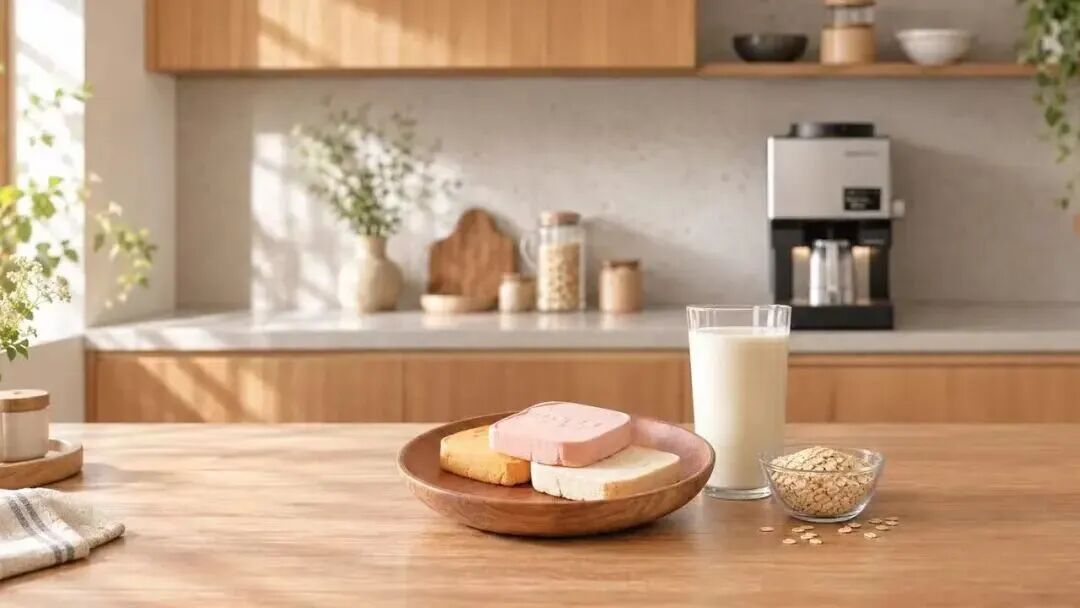
With sufficiently transparent food processing, users can modify plant protein flavor and texture through Plantein
Beyond the product, NUVELL is beginning to contemplate a longer-term question:
As AI gradually understands human needs, can kitchen devices also evolve from passively executing commands toward understanding dietary needs, providing nutritional advice, and participating in actual food preparation?
Starting from plant protein, NUVELL is attempting to find the answer to this question.
Perhaps the core competitiveness of the next-generation smart kitchen will no longer be simply how many foods it can prepare, but rather whether it can more naturally integrate food preparation into personal and family nutrition management.