ZhenCraft Review: How AI Hardware Founders Can Achieve PMF | Z Events

Demand drives product; product drives technology.
Z Events is ZhenFund's events vertical.
The "ZhenCraft" series has been running since 2019 — five years now — designed to help potential entrepreneurs with deep industry experience gain sharper insight into their sectors, spot emerging business opportunities earlier, and connect with like-minded founders.
At ZhenCraft, you'll hear from vertical industry tech leaders sharing cutting-edge developments and forward-looking perspectives, and engage in deep discussions with ZhenFund investors and partners across the tech ecosystem.
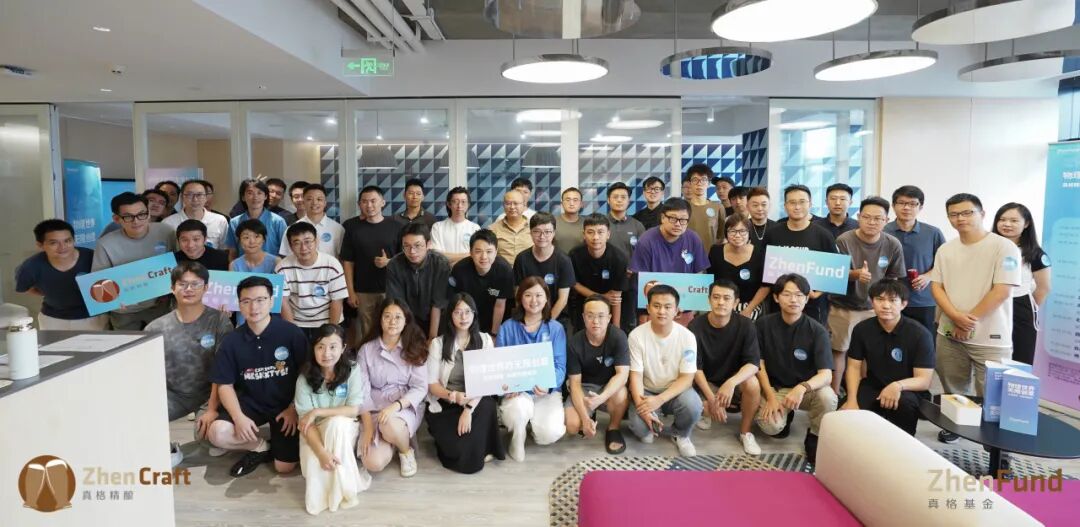
On June 29, ZhenFund co-hosted "ZhenCraft · AI Hardware Roundtable" with Zhipu AI and Leiphone in Shenzhen — an offline industry salon bringing together founders and veterans from major tech companies with hands-on experience in AI hardware to discuss the latest technical breakthroughs, innovative practices, and trend insights.
Smart hardware leveraging generative AI's interactive, reasoning, and creative capabilities is on the verge of explosive growth. ZhenFund keeps a close watch on the technology frontier, and we've been thinking alongside founders: What product form best combines generative AI with smart hardware? What opportunities and challenges does AI hardware face going global? What advantages do startups have in AI hardware?
At this ZhenCraft · AI Hardware Roundtable, Shi Jun, core founding member of DJI; Li Nan, founder & CEO of Angry Miao; Song Junyi, CEO of Elephant Robotics; Yi Wanyao, CEO of Global OneClick; Zou Lin, founder of Blueprint Product Marketing Consulting; and Thomas Bai, founder of the tech podcast "Brainwave" — among other heavyweight guests — joined Emma Yin, partner at ZhenFund, and Chen Miannuo, investment manager at ZhenFund, together with representatives from leading large model companies, AI hardware founders, early founding members of well-known hardware companies, and go-global service operators, to explore the latest technical achievements, innovative practices, and trend insights in AI hardware.
For this ZhenCraft session, we innovated on format with a "light sharing, heavy discussion" closed-door approach — guest presentations sparked panel discussions, and all attendees could participate and speak freely.
We received over 300 applications. With limited seating, we could only invite a portion of attendees. Here, we've compiled some highlights from the event, hoping to offer inspiration — and we welcome your thoughts in the comments.
01
Not AI Hardware, But Hardware + AI
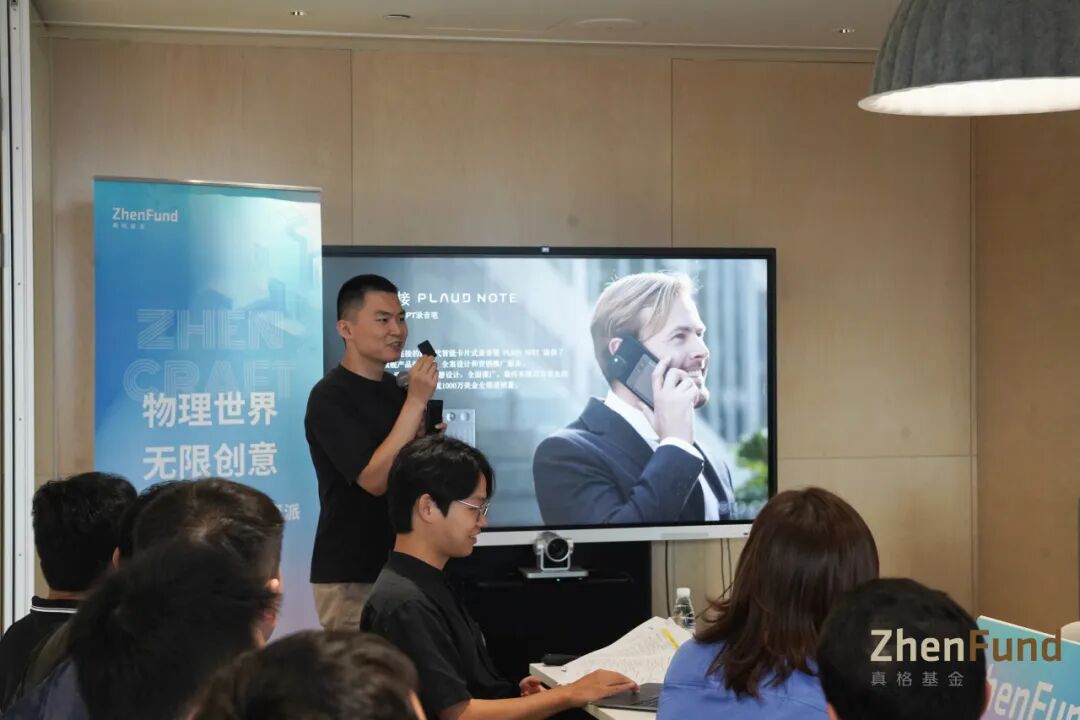
Zou Lin, Founder of Blueprint Product Marketing Consulting
For most entrepreneurs searching for niche directions, selling a product well starts with clarifying its value. In most cases, category characteristics account for about 80% of an AI product's appeal, while the AI attribute itself contributes roughly 20%.
Thinking through category characteristics first helps you understand the purchase logic. For example: phones are so capable now, so why do users still buy portable voice recorders? Because a dedicated, portable recording device lets users capture information more conveniently, quickly, and discreetly — without interruption from calls or information overload. On top of category characteristics, then consider the AI attribute: Is it necessary? How much does it actually enhance the product?
This 80/20 framework helps you better articulate the value of AI hardware products and avoid falling into empty speculation or self-indulgence.
02
How Can Large Model Vendors Support AI Hardware?
On-Device Model Technology Observations
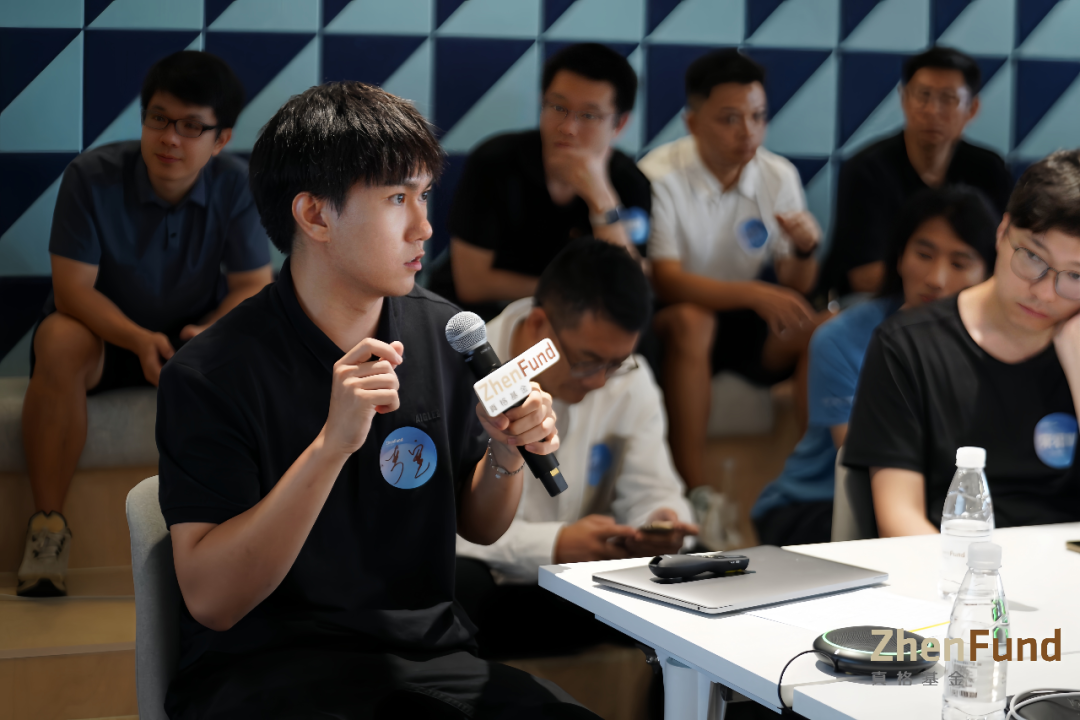
Yan Kuan
The core constraint on-device is insufficient memory and compute. On the mobile side: Given excessive GPU power consumption, NPU solutions are typically used. But performance is often inflated — a chip rated at 45 TOPS might only deliver 20 TOPS in practice. On the autonomous driving side: Orin is the mainstream compute solution, but additional chips are needed for smart cockpit compute, typically the Qualcomm 8295 (supporting 1B small models).
On-device model performance overhead and adaptation are also critical issues: Large models will eventually run persistently on phones, and the ideal target is consuming only 10% of CPU resources without impacting other applications. From an adaptation and optimization perspective, on-device models are highly convergent — hardware vendors handle adaptation themselves, with almost no middleware layer.
The two current model compression approaches are "quantization" and "pruning." Industry experience suggests pruning hasn't seen practical deployment, while quantization is more reliable. Quantization splits into "weight-only quantization" and "weight-and-activation quantization." These aren't mutually exclusive and can be applied simultaneously, though the engineering complexity means mature solutions don't yet exist. Some vendors can support dynamic quantization; others only static.
What startups need to focus on now isn't model-to-chip adaptation, but application-level edge-cloud separation:
(1) Which applications suit on-device deployment, which suit cloud? Answering this requires comparing cloud server costs against on-device model costs — with the latter determined jointly by phone chip vendors and on-device optimization.
(2) Can models running on cloud and edge match in capability? Start by running on cloud, then migrate to on-device once cost and efficiency are resolved, leveraging on-device privacy advantages to serve customers — while ensuring capabilities aren't degraded.
03
Practical Experience Integrating Large Models with Physical Hardware: A Robotics Example
Song Junyi, CEO of Elephant Robotics
Robotic arm costs, pricing, and hardware performance are already quite mature. The biggest pain point for robots entering the physical world is now visual-level unstructured marking. Even with 3D point cloud data of objects, robots can only identify object names — not operation points or methods — preventing further action.
Two mainstream solutions exist. First, PCL point cloud recognition. Second, QR code recognition, associating all operation methods and reference coordinate systems with an object. Combined, these two approaches essentially let robots execute the same trajectory each time they encounter a new object.
Additionally, SLAM algorithms and dual-arm grasping help with judgment. Dual arms enable aerial operations impossible with a single arm, with left and right arms coordinating and converting based on each other's coordinate systems.
At the API interface layer, large models call interfaces to impose "environmental constraints" on robots. Capturing environmental information from onboard cameras, large models help robots identify operable objects and their behavioral trajectories in the environment, then react according to preset action principles after drive commands are input.
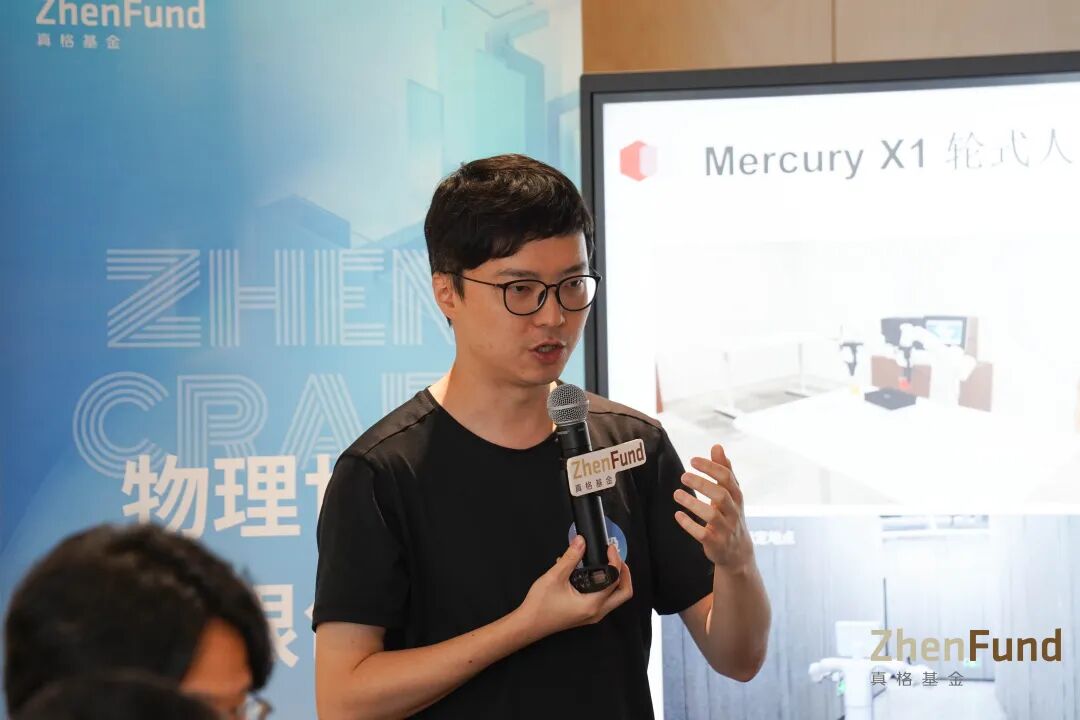
Biomimetic companion robots are landing faster. We're currently developing a robotic cat, with dog and panda variants following. The robotic cat's head and tail can interact with humans and respond differently based on semantic input. Each cat starts identical from the factory, but with varied human behavioral inputs, the cat strengthens different personality traits. For example, if the cat meows without receiving human feedback, it leans toward a cold personality and becomes less responsive when called next time. Through this feedback loop, the robotic cat increasingly approximates a real cat's behavior.
04
54 Million-Dollar Crowdfunding Cases Under My Belt, But I Invested in a $300K Project
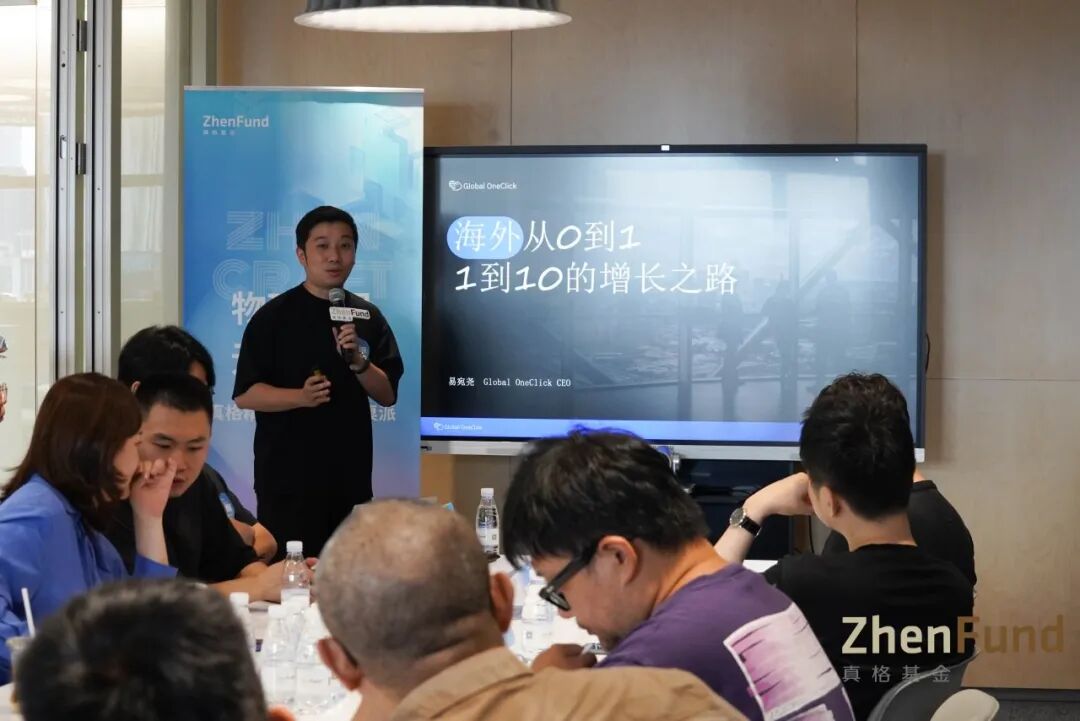
Yi Wanyao, CEO of Global OneClick
Crowdfunding is fundamentally leverage — it can help companies get off the ground in a short window. Entrepreneurs should also focus on four dimensions:
1. Product Validation
Crowdfunding is essentially a "pre-sale." If users ultimately won't pay, even hitting a million-dollar crowdfunding total can't save a dead product.
2. Brand Building
Globalization is fundamentally localization, and crowdfunding users become a startup's "promotion ambassadors" — amplifying brand voice through product advocacy.
3. User Operations
Post-sale feedback collection and continuous product and channel refinement based on that input.
4. Channel Development
Hardware ultimately pursues scale effects, so establishing and maintaining channels — online DTC stores, Amazon, offline country-level distribution — demands attention during the zero-to-one phase.
Notably, traffic architecture is no longer a top-down funnel but a random loop. Users may discover products on any platform, but won't decide immediately — they'll explore and evaluate across platforms before considering purchase. Thus brand building requires a multi-pronged approach: omnichannel presence, intensified exposure during major sales events, celebrity endorsements, KOL marketing, and more.
05
How Will AI-Hardware Product Forms Evolve?
Emma Yin, Investment Partner at ZhenFund: How do you view the future of AI-hardware integration, and what product form best suits this combination?

Thomas Bai, Founder of Tech Podcast "Brainwave"
Anything you have to pull from your pocket can't beat the phone. So next-generation AI hardware should be wearables: earphones, glasses, necklaces — with earphones and glasses as current "hot items." Wearables' core function is multimodal interaction, requiring extensive sensor coordination. If we view humans as AI, our "sensors" are mainly on the face, so the closer to the face, the higher the probability of success.

06
What "Landmine" Experiences Have AI Hardware Entrepreneurs Hit?
Chen Miannuo, Investment Manager at ZhenFund: What pitfalls have you hit in entrepreneurship? What should AI hardware founders watch out for?
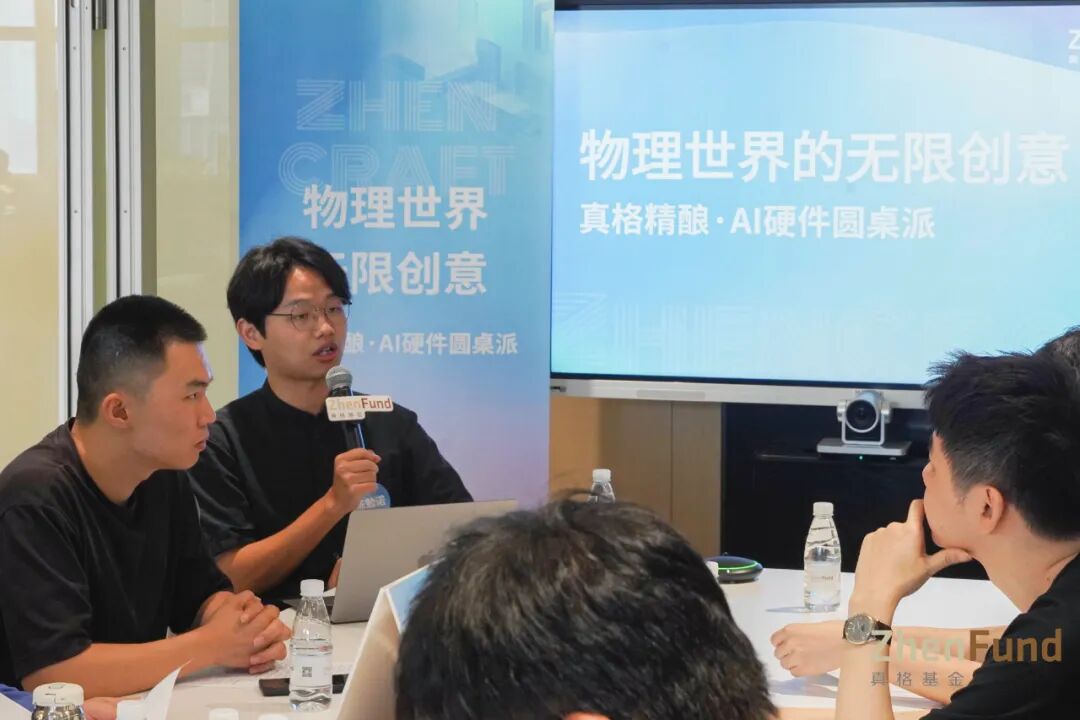
Shi Jun, Core Founding Member of DJI
C-end product logic must be demand-driven product, product-driven technology. Before fixating on final product form, first consider what user segment you're targeting and what experience you're improving. Choosing a relatively niche but technically defensible vertical makes it easier to acquire initial users, then iterate product, optimize team, and refine supply chain before expanding to broader markets. By then the product has solid fan users while targeting mainstream audiences for wider promotion.
For technically-oriented founders, balancing technical moat and delivery speed merits serious thought. Too little technical differentiation invites copying; too much and you can't ship a demo.
DJI's early work wasn't complex — starting from a controller that could hover a plane in the air, then progressively solving vision, video transmission, camera, and gimbal challenges along the vision of "enabling convenient aerial photography." By then, surpassing DJI became extremely difficult.
Also, many products — especially hardware — ultimately come down to cost. If AI doesn't create substantial differentiation, hardware cost becomes the competitive key.
A major advantage for Chinese hardware companies going global is the mature domestic supply chain — prototype assembly is fast. The question for founders becomes: Is slightly higher pricing acceptable, or must you push cost-performance to the extreme? Is the payment model one-time purchase, or subscription on top of base functionality? Founders must decide based on product, positioning, and target user needs.
Finally, people. If core team members share unified values, even multiple failed attempts can lead to pivoting and trying again. Otherwise, the team falls apart.

Li Nan, Founder & CEO of Angry Miao
Entrepreneurs may develop multiple hypotheses and conclusions in practice, but whether theories are correct must be judged through quantification. Seeing others' success stories and rushing to mass production without small-batch validation will most likely result in losses, not profit. This reminds founders: choosing the right direction matters more than effort.
The current environment requires AI hardware founders to hold non-consensus views — and hold them firmly — to run further and faster in niche verticals. The probability of "blockbuster on launch" is vanishingly small; only through careful demand assessment and patient product iteration can founders gradually build loyal user communities.
Also, a practical observation: hardware startups mostly die from inventory, so founders can't be too greedy for scale. When inventory crises hit, resolve them quickly through fast action.

07
What Are Startups' Advantages in AI Hardware?
Selected Highlights from Lively On-Site Discussion
Startups' greatest advantage is agility — feeling their way across the river, rapidly testing and adjusting. Second is keeping a low profile, gradually accumulating users; at sufficient scale, they can distance themselves from large companies in niche markets.
The energy of love is conserved: build products that are either "liked by many" or "loved by few." Gaining enough organic traffic in a small niche slowly builds product word-of-mouth.
In the large model era, big companies and startup teams are back at the same starting line. What matters most is data.
Strategically, leave yourself room to survive — either do what others don't understand, or what everyone looks down on and can't catch up to even if they try.
Text | Yudi
Video | Nami
Recommended Reading