miHoYo Leads Funding Round for Indie Developer’s Third Venture to Make Games for Life

Treat making games as the only way to live.
There's an unspoken consensus in the gaming industry: for 95% of premium single-player games, "live operations" isn't a truly viable concept. Limited by scale and commercial returns, it's already impressive if a development team can push out a few updates or even release DLC. Fewer than 1% manage sustained updates for three years or more.
Within that 1%, Night of Full Moon is an exception.
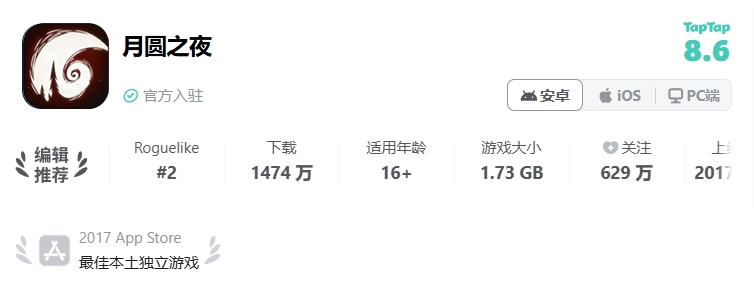
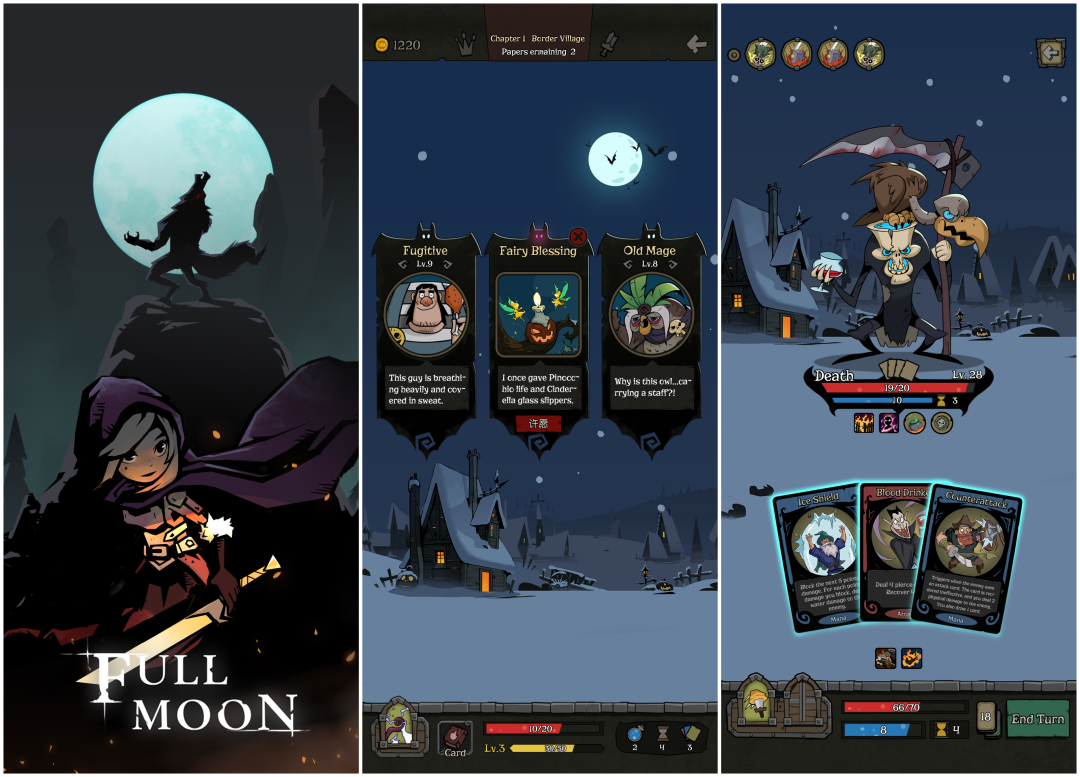
Since its launch in 2017, this dark fairy tale-themed card-based roguelike has accumulated over 30 million downloads worldwide. Over eight years, Night of Full Moon has maintained exceptionally strong word-of-mouth, becoming one of the very few long-running single-player IP successes in China.
Walking alongside it through these eight years was its lead producer, Xiaomujiang (Little Carpenter).
In October 2025, Xiaomujiang left Giant Network after eight years to embark on his third entrepreneurial venture. ZhenFund supported the team from its earliest days, playtesting product demos, and followed on with additional investment in August 2026.
Over eight years, through countless updates to one game, the creator has continually faced the same question: how do you keep making things you genuinely believe in?
Xiaomujiang's answer is simple: return to life itself — "draw inspiration from experiencing life, from experiencing great works."
Since his time at Giant, the team has maintained one consistent habit: Movie Wednesday. They set aside two or three hours to watch a highly rated film together, or discuss a well-received game. In Xiaomujiang's view, truly great films can reveal truths about the world, even predict the future.
These routines form part of their creative process. As Xiaomujiang puts it: "The expression in great works ultimately becomes philosophy — an expression of the laws underlying the world."
In this conversation, Xiaomujiang discusses why he left a major studio after eight years to start over, how an early-stage team navigates choices between creative ideals, organizational growth, and commercial sustainability, and his fundamental understanding of what game expression truly means.
Below is the edited transcript:

Freedom from Constraints
Q: When did you leave Giant, and what were you thinking at the time?
Xiaomujiang: We started our company at the end of October 2025. We wanted a freer experience — to spend the rest of our lives making games we love with like-minded partners. That might sound like corporate speak, but it's the genuine truth.
Those eight years at Giant felt like living in a university that provided long-term support — full of growth and memories. When we wanted to start a new project, I began asking myself: should I work at a big company my whole life, or build a dream company with my teammates?
If I were making a large-scale online game — an MMO or something similarly massive — I might have stayed at a big company to leverage accumulated R&D resources. But we wanted to continue with small, refined products. Since we didn't need enormous resources, going independent would be freer.
Q: Sounds like your former employer treated you pretty well?
Xiaomujiang: It really was. Beyond Night of Full Moon, look at projects like Pascal's Wager, Super Sus, Battle of Balls, and Supernatural Squad — all made by young people. It's a great stage. Boss Shi (Shi Yuzhu) was also quite willing to share returns with R&D.
It wasn't just revenue sharing — the company was very hands-off with greenlighting too. When we first pitched the Night of Full Moon demo, there was nothing like Slay the Spire on the market yet. And our planned first release had no monetization, no ads, didn't even require an internet connection — purely free to download.
This approach of zero revenue, purely exploring the market and building reputation — that usually faces significant resistance when pitching inside a major studio.
But the circumstances were special. In 2016, Mario (Wu Meng, former co-CEO of Giant Network) brought us into the company while we were still entrepreneurs ourselves, and Lao Zhu (Zhu Yongming, head of the incubation platform) also supported us making a single-player game. The company gave us a lot of freedom.
We set some milestone goals together — accumulating over a million downloads purely through word-of-mouth with zero marketing spend, becoming the company's first product to get featured by both Apple and Google, reaching a TapTap score above 8, and so on.
Once we hit all these reputation and target milestones, the company trusted us more and more, gradually nurturing the project into what it became.
Q: If the company was this accommodating, why did you still feel constrained?
Xiaomujiang: Because at a big company, projects reset to zero every year — you have to restart the entire approval, review, and decision-making process for annual planning. This pulls in stakeholders from different domains, making the chain to confirm a project's direction quite long.
To be freer, you need sufficient equity (decision-making power) and savings (provisions). Look at successful single-player games — whether AI LIMIT, Sultan's Game, or Tale of Immortal — the money they earn can be allocated more freely to subsequent R&D funding, without going through such lengthy organizational decision chains.
I believe most entrepreneurs who go independent, especially craft-oriented creators like us, ultimately pursue love and freedom. For us, love and freedom means spending our whole lives freely making games we love with like-minded partners.
Q: Fundamentally, there's some conflict between big-company commercial logic and free creative models?
Xiaomujiang: Say a single-player game sells 2 million copies, generating over 100 million RMB in cumulative revenue. That's already excellent for an entrepreneurial team — enough to properly make the next product. But for most large companies, this barely registers, because they're expected to earn tens of billions annually.
After all, the larger the company or group, the greater the expectation for rapid growth returns. That's normal, and reasonable.
But artistic creation usually doesn't work like that. It requires inspiration, time, patience — sometimes seven or eight years of work. Only when we're the entrepreneurs running the company, having stored sufficient provisions for the team, can you decide whether to persist that long.
Q: So this departure was genuinely amicable on both sides?
Xiaomujiang: We parted on good terms with mutual well-wishes. During our tenure, Night of Full Moon created both reputation and revenue for the company. When we left, the company was in a phase of rapid growth — we chose to depart during its upswing rather than a difficult period, so our impact was limited.
The company also understood our dream of achieving freedom. It was very dignified on both sides, and we're deeply grateful for the platform Giant provided over these eight years.
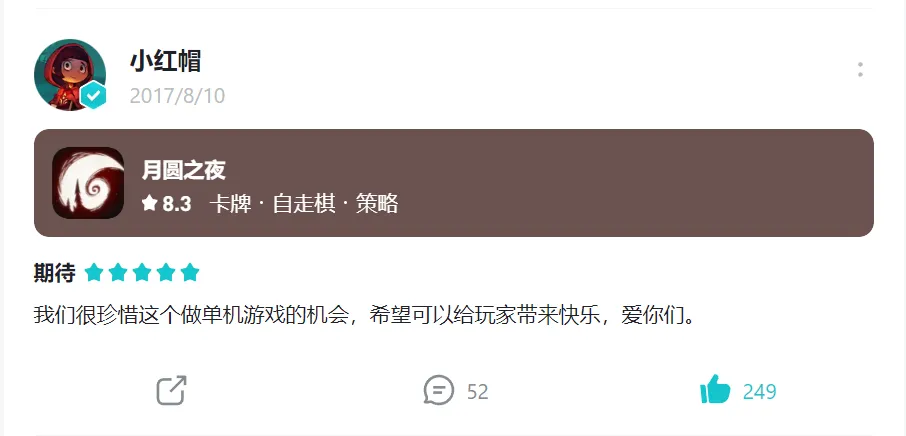
Night of Full Moon's first TapTap review in 2017

Small-Team Entrepreneurship: No Need to "Suffer for Suffering's Sake"
Q: Starting out on your own again after eight years — how has it felt?
Xiaomujiang: The most immediate feeling is that no one has your back anymore. You have to face every detail yourself, and the moment you open your eyes, survival pressure hits. Back at the company, legal matters, publishing licenses, external partnerships — someone handled all of that. And as long as you hit milestone targets, the company kept replenishing you — like fighting monsters with an endless supply of healing potions.
Now we have to confront whether our provisions are adequate ourselves. We even dared not take salaries, thinking every day about how to save money. Because you can't be certain players will like a new mechanic. If they don't, you still have to grit your teeth and persist, making your team's health bar incredibly precious.
Q: That rough? Did you raise funding?
Xiaomujiang: We closed our first angel round before year-end, then did a second funding round this past August.
Q: That's not easy for a small team.
Xiaomujiang: We're deeply grateful to players and investors for their recognition of Night of Full Moon as a work, and of what our team built over eight years. It proves that our decision to build an IP independently also makes commercial sense.
Q: If you wanted to stay free and were prepared to endure hardship, why did you ultimately take investment?
Xiaomujiang: When we first started out, our thinking was honestly overconfident: we figured we could just make single-player games, several of us not taking salaries, fighting hard and grinding it out. But thinking deeper, blind optimism is genuinely dangerous for entrepreneurs:
First, startup success rates are below 1% — funding better suits a long war;
Second, funding isn't just about extending your health bar; more importantly, it's about choosing mentors and partners for the entrepreneurial journey;
If you never take funding, then when your product is finished but you have no money for marketing, won't you still need to find a publisher? Won't you still need promotional budget? In some ways, how is that different from taking funding?
Appropriate funding can serve as a life preserver in worst-case scenarios. When your gameplay prototype is validated and you need to add content, improve quality — adequate provisions ensure your execution doesn't get distorted.
I'm also grateful that investors were willing to put real money behind supporting our shared dream. Before committing, our investors were playing Night of Full Moon; after investing, they played our demo.
We'd even discuss gameplay in great detail. When I faced important decisions in running the company, I'd also consult investors to exchange perspectives. Good investors are both strength and warmth for entrepreneurs.
Q: Did you have a completed game demo when fundraising?
Xiaomujiang: Not at that point. After starting out, we had several directional concepts we wanted to validate — currently exploring them.
Our first project has been in development for several months now. It's something we're quite familiar with and good at: a gameplay-focused roguelike. We've already conducted two rounds of small-scale testing. We want to validate the gameplay through several more iterations before presenting it to more players.
Q: The roguelike market keeps getting more competitive, with new releases flooding in. How do you view this direction?
Xiaomujiang: Roguelike has become an increasingly broad concept. But one thing hasn't changed: the barrier to entry is genuinely low, while the barrier to excellence is extremely high.
You don't need to spend five or six years building an enormous map from start to finish like a Metroidvania. It constructs itself through replayable content, with relatively lower development costs. But making it genuinely fun severely tests developers' refinement of the build system.
Q: In your view, what does a roguelike need to break out?
Xiaomujiang: Ultimately, it's about having sufficiently deep understanding of the richness of random options, and the satisfaction brought by synergies and combos.
Take a game we deeply admire, Slay the Spire — its balance, its difficulty curve, were clearly refined with extreme precision. It gives players sufficiently hardcore, maximally interesting build choices. Once players have experienced this caliber of benchmark, their tastes and expectations are raised very high.
At that point, if your experience and numerical tuning fall short, players won't pay. This requires developers to iterate through several products before finding that just-right feeling.
Q: What happens when you hit design ceilings or creative blocks? I recall during Night of Full Moon's long-term development, you once faced difficulties and stagnation.
Xiaomujiang: No single core mechanic can generate new designs endlessly. It has a ceiling. That's why after eight years of classic mode in Night of Full Moon, we experimented with new build experiences and combat forms.
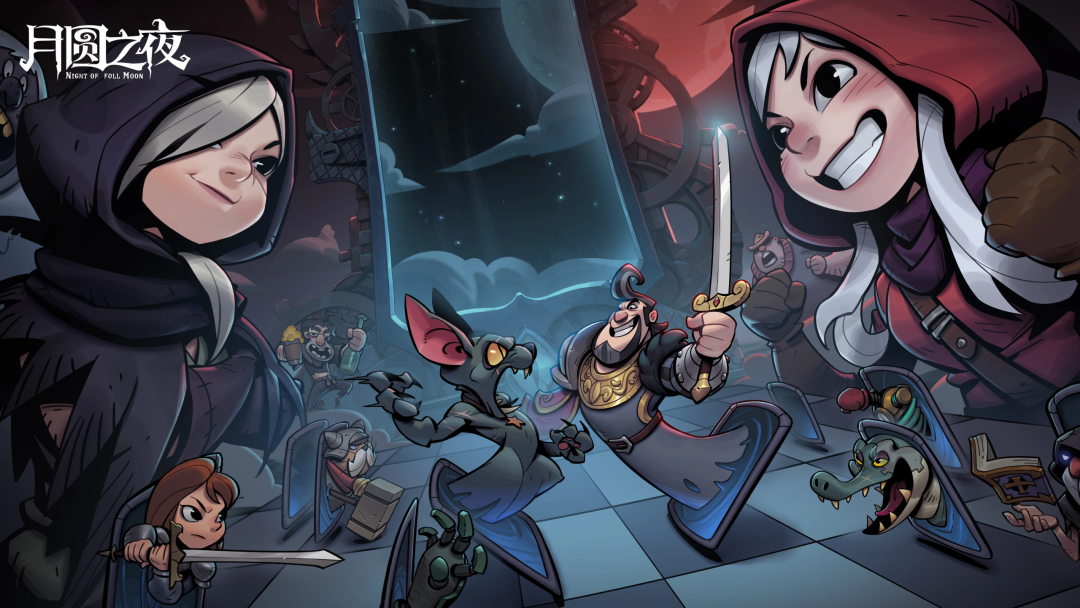
As for combating creative blocks, it's actually quite simple — you have to draw inspiration from experiencing life, from experiencing great works. This can't be forced. If we don't love life, don't immerse ourselves in great games on the market, if we're too功利-driven or too anxious, inspiration easily dries up.

Only When Moved Can You Know What You Want to Express
Q: How are you yourselves doing — do you love life enough?
Xiaomujiang: Since our time at Giant, our team has maintained one consistent habit: Movie Wednesday.
We set aside two or three hours for everyone to gather and watch a highly rated film, or discuss some well-received game.
Each week someone different recommends, and everyone seriously discusses which plot designs work well, what they're trying to express.
Q: That's quite unusual — I assumed as a gameplay-focused team, you wouldn't delve so deeply into literature and narrative.
Xiaomujiang: Whether building worlds or designing mechanics, you definitely have something you want to express. Before expressing it, you must absorb great works and spark inspiration.
Unless you're a genius — but we're not.
These works have genuinely been important sources of inspiration. For example, when making Night of Full Moon, the three-choice branching ending mechanism was inspired by watching Run Lola Run and its repeated choice sequences. Early art and atmosphere design were also influenced by works like Corpse Bride and Hotel Transylvania.
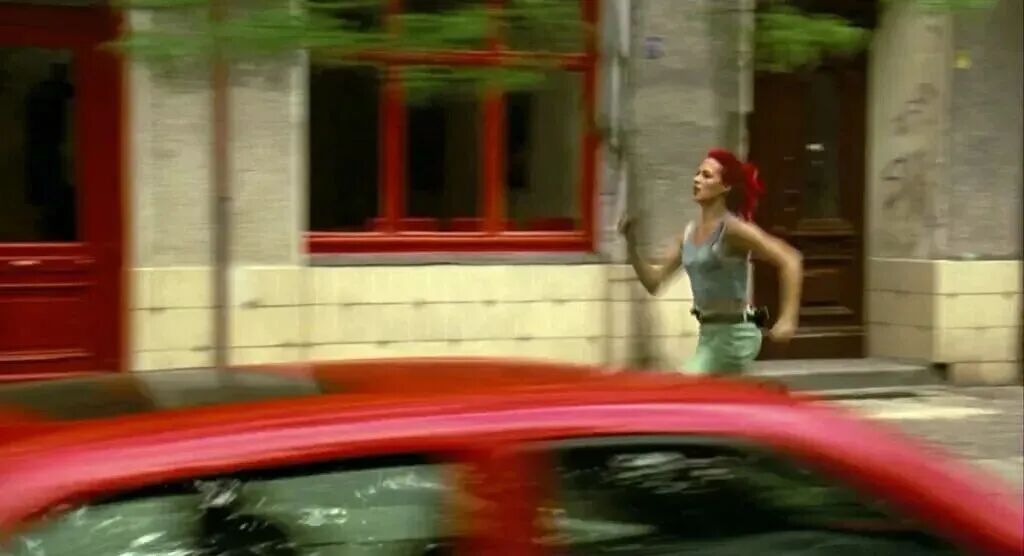
Still from Run Lola Run — the film's narrative structure itself resembles a game
Q: What criteria do you generally use when selecting films?
Xiaomujiang: Recommending a film to the team represents that person's taste. Since you're taking up everyone's time, each person chooses very carefully.
In our view, truly great films must satisfy two criteria: first, they can't be forgettable popcorn films where the story goes exactly as expected — they must spark creative inspiration and discussion; second, and most importantly, truly great films can reveal truths about the world, even predict the future.
Q: Predict the future?
Xiaomujiang: With AI developing as it has, we sometimes genuinely can't tell whether there's an AI or a real person on the other side of the screen. We even wonder if we ourselves are living in a virtual world. The Matrix and Her predicted this future long ago — that's the power of great works.
What's remarkable about such works is how they pierce the boundary between commerce and art.
They meet commercial film standards, satisfying audiences who want thrills, while simultaneously posing philosophical questions — do you want virtual happiness or real pain? This sparked extensive discussion for us.
Q: For the gaming industry, Nolan really is a model for combining commerce and art... We've heard other founders praise his stylistic approach before.
Xiaomujiang: Yes, Nolan's films most震撼 us by expressing the most extreme philosophy and emotion through commercial film form. After watching Tenet, you feel the震撼 of time inversion.
What moved me most deeply was Interstellar.
Beneath its hard sci-fi exterior, it expresses one core idea: love can transcend time and space. I genuinely felt this. Every year when I returned to my hometown, I'd always wanted to visit my grandmother's house because she'd been so kind to me since childhood. I knew there was someone in this world who loved me deeply, waiting for me every day.
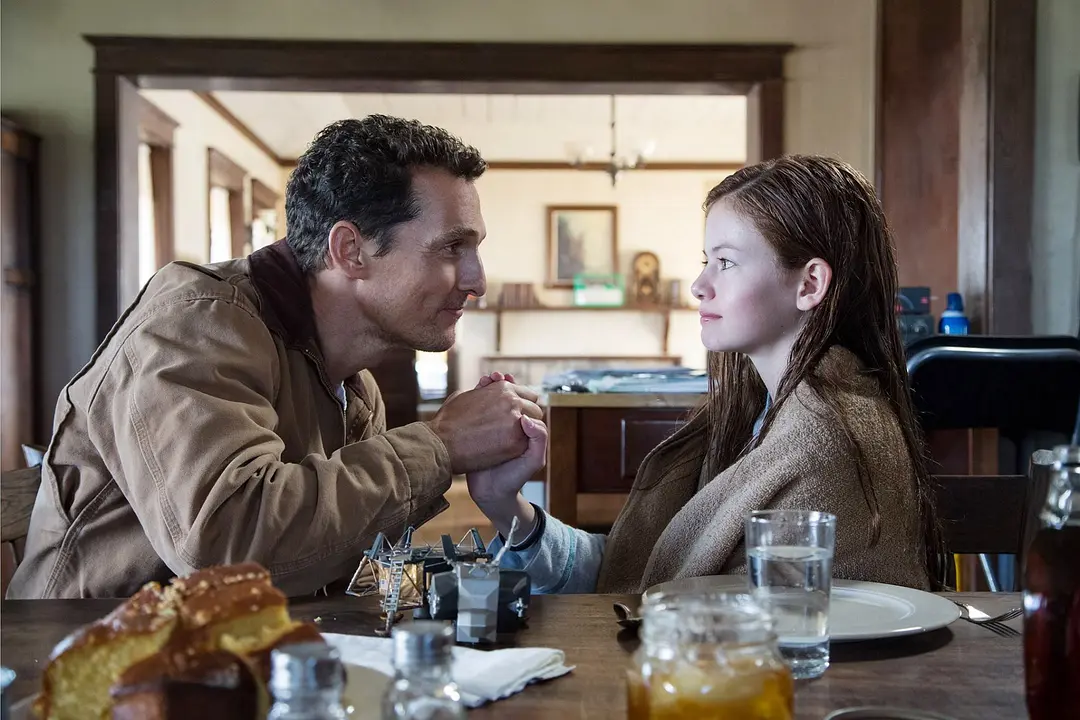
Still from Interstellar
But after she passed away, when I'd pass that intersection... I'd feel profound grief. That house, in that moment, held no anticipation whatsoever. When the people and things you love are gone, nothing has meaning.
Films that can express this philosophy of love — I consider them incredibly valuable. Our Movie Wednesday slogan is a quote from Edward Yang: "Film has tripled the length of my life."
Q: So all that time spent watching films is fundamentally about hoping to achieve this kind of expression in games?
Xiaomujiang: The expression in great works ultimately becomes philosophy — an expression of the laws underlying the world. All literary creation represents an author's viewpoint; making games is no different.
For example, playing Sultan's Game — even though it's a game that permits evil, I deeply feel the author is actually encouraging human goodness.
If you choose to care for homeless children and beggars, even when you see no returns early on, even when you're constantly losing gold, at the very end the game suddenly gives you an option: you can build a school and find teachers for them.
At that moment, players who chose goodness feel their persistence was meaningful — they received positive feedback for their kindness.
To make fun games, to build an IP you can treat as a lifelong career, you must engage with these classic works. Only when you've been infected and moved by great works can you know what you ultimately want to express in your games.
Q: These past couple years, the overall gaming industry environment has been quite anxious. Leaving a major studio to make single-player games at this moment — do you feel this is a good era?
Xiaomujiang: There's a saying: "Pessimists are always right; optimists are always wise."
Whether times are good or bad isn't within our control. The macro environment is indeed changing. Many large companies are laying off staff, which improves financial reports and raises stock prices — that may be the story capital prefers, but most industry practitioners don't like it. Practitioners prefer the story of Pangdonglai.
I very much want to build a company that practitioners love, giving creative teams more freedom, health, and sharing. But as long as your own state is good, this is your good era.
Because content creation requires inspiration, freedom, and your natural acceptance of uncertainty in outcomes. As long as this product can move ourselves, resonate with players — it's worth doing.
Q: This is your team's third entrepreneurial venture. Compared to the previous two, how is your mindset different now?
Xiaomujiang: Though the first two didn't make it to the finish line, they built complementary, trusting partnerships.
This time out, everyone is extraordinarily resolute. We've made spending our lives making games we love with like-minded people our lifestyle for the rest of our days.
Finally, I'd like to say to our beloved card masters: "Thank you so much for playing Night of Full Moon. We hope our new game will be loved by you all too. Love you."