CellX Founder Ziliang Yang: Starting from Mycelium, Let 10% of People Eat the Future First
As humanity keeps moving forward, more and more people will seek out new alternatives.
In 2020, Ziliang Yang left BCG, gave up his Wharton MBA, and returned to China to found CellX. Back then, CellX was a niche, distinctive project — and it still is, defined by an imagination for what the future could hold.
This March, CellX launched a new brand in the United States called Mourish (Mushrooms that Nourish). Using mycelium-fermented protein derived from wild edible fungi native to China, they created their first product: a high-protein plant-based beef jerky. Each mycelium strain offers a different texture — some silky, some crisp, some packed with chew.
Many entrepreneurial ideas don't emerge from thin air. The founder lives in the future first, sees what's missing, and tries to make it real. Many people say Mourish is exactly the new protein snack they've been searching for.
In middle school, Yang wrote an essay titled "The Real Me." During crab season in September and October, watching live crabs dropped into the pot, struggling in the steam, then pressed down by the lid — he felt, for the first time, an intense reluctance to witness their suffering. He wrote:
"Perhaps true equality among all things never existed. Crabs cannot possess intelligence or abilities comparable to humans; their fate seems to be consumption by humans. But humans are not entirely worthless animals. We think, reflect, and learn. Perhaps that is humanity's greatest strength."
After becoming an entrepreneur, this reluctance found new expression.
On one hand, it meant a break from his former self — the one who followed the conventional path, chasing traditional markers of success. On the other, the more immediate pressure came from prolonged R&D investment, as the commercialization of cultivated meat proved far more difficult than imagined.
During a period of confusion, a senior Buddhist practitioner asked him two questions that still echo in his mind: What is your purpose? In the past week, how have you brought empathy and joy to those around you? In that moment, he realized that his pursuit of something "bigger" had sometimes come at the cost of the most basic human connections.
Eating, he came to see, has always been sacred. It is the process by which we take the external world into our bodies and make it part of ourselves. The Chinese saying warns that "disease enters through the mouth"; the English equivalent says "You are what you eat." What we are depends, to a large extent, on what we eat.
The Way exists in ants, in weeds. When we pause, we see that our connection to food is everywhere and profoundly intimate.
For millennia, humanity has depended on animal agriculture. But over the past century or two, our bond with food has grown distant. We no longer grow our own food, or even cook our own meals. Modern animal agriculture severed that relationship.
Yet in Yang's eyes, connections between living things still flicker everywhere.
In nature, trees and plants transmit signals and exchange nutrients through mycelium. Mycelium is nature's Superconnector — continuously, wondrously, linking everything together.
Yang himself has gradually become a Superconnector of sorts. Through CellX and Mourish, he spreads plant-forward ideals and builds new connections with people — or reconnects with old friends he hasn't seen in years. Mourish's first five-star review came from a college student, a young man he happened to meet at an effective altruism conference.
As a child, eating was about getting full — functional. Studying abroad, eating was about longing — the taste of home. After becoming an entrepreneur, eating became creation: a gift of the land, a snapshot of culture, the persistence of a community.
His love of food, his sensitivity and reluctance toward life, his empathy for the world — all of these led Yang, the moment he tasted mycelium for the first time, to understand his direction and recognize that this was a path worth committing to for many years.
Every great startup exists to build a future that is destined to arrive.

Nature's Superconnector
Q: Let's start with a brief introduction — who you are, and what CellX is working on.
Yang Ziliang: Hi everyone, I'm Ziliang. I returned to China in 2020 to start CellX, so it's been five years now. Our R&D cycle was quite long, and we officially launched our products in the US starting this year.
I began experimenting with plant-based eating in 2015. At the time, I was struck by the impact of conventional animal agriculture on animals, the environment, and our health, and wanted to reduce my meat consumption. But it's not easy — willpower alone isn't enough. I tried to stick with it for a long time but still craved meat, so I maintained a flexitarian diet, eating meat once or twice a week. That lasted seven years, until I went fully vegan two years ago.
The original motivation for starting the company was to find a healthier, tastier plant-based protein option. We initially worked on cultivated meat — growing animal cells outside the animal to produce meat through a biotech process that doesn't harm animals. There were breakthroughs along the way, and obstacles too.
Three years ago, we got lucky and stumbled upon mycelium. At first, we were using it as a scaffold for cell alignment, but our team has always been adventurous. We tried eating the mycelium and were amazed by its flavor and texture, so we started a small mycelium project.
By last year, we began transitioning, focusing our main efforts on commercializing mycelium products in the US. This March, we officially launched a new brand there called Mourish (Mushrooms that Nourish). We work with wild edible fungi native to China, using mycelium fermentation to produce protein ingredients and then turning them into products. Our first product is a high-protein plant-based beef jerky — a popular savory snack in the US. We'll be rolling out more products in the future.
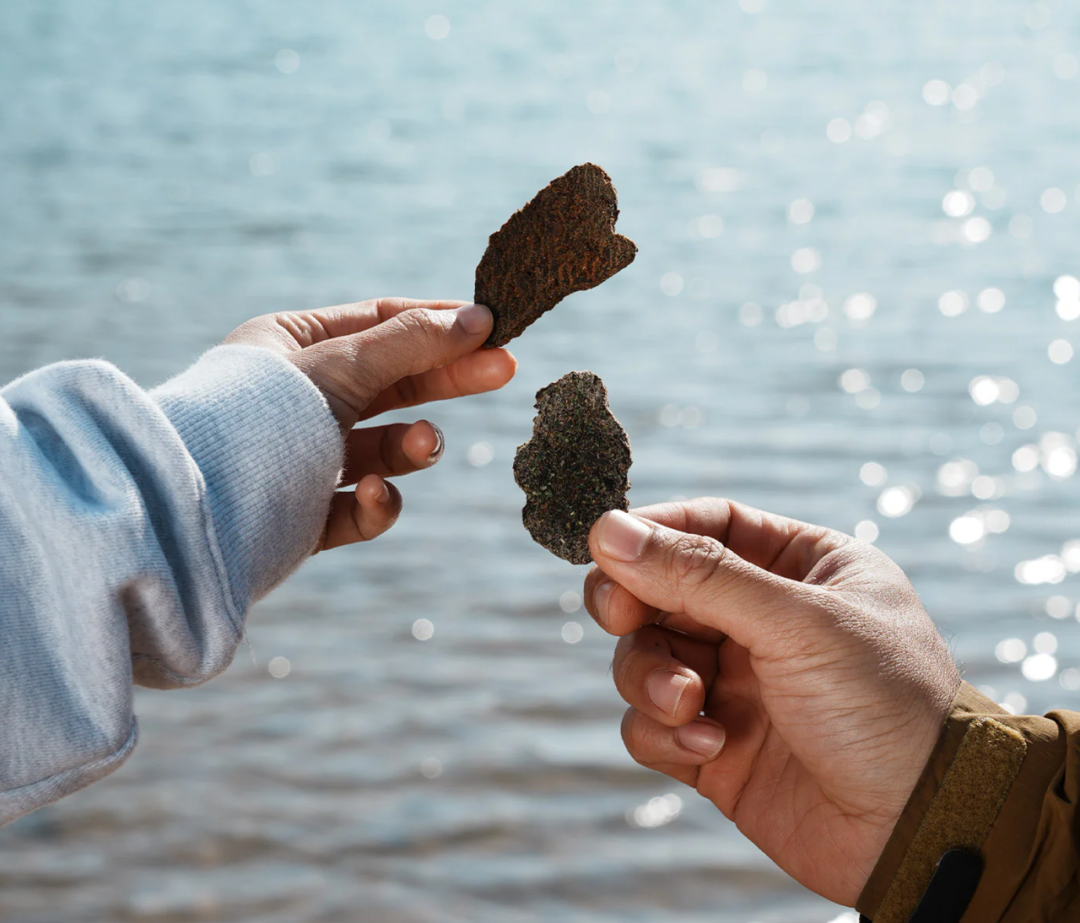
Jerky plant-based beef jerky
Q: The first phase was cultivated meat, then you pivoted to mycelium protein and launched the brand Mourish in the US. Can you briefly explain — what exactly is this delicious thing called Mourish?
Yang Ziliang: We've all eaten mushrooms, right? The part that grows above ground is called the "fruiting body," but underneath there's a vast root-like network — that's the "mycelium." This root network doesn't just connect mushrooms to other plants; it's also how mushrooms obtain nutrients.
More and more research is finding that in nature, across entire ecosystems, all trees and plants are actually interconnected through mycelium. They can transmit signals and transport nutrients to each other through it. So mycelium is essentially nature's Superconnector — it links everything in the natural world together. It's sustainable and has many remarkable properties.
The mycelium we use was isolated from Shangri-La in Yunnan, China. After isolation, it's placed in a five-story fermentation tank for cultivation. In the tank, its cells multiply rapidly — one becomes two, two become four, four become eight. This process is very similar to how we made cultivated meat, except we've shifted from animal cells to microbial cells — mushroom cells.
This new ingredient has been our focus for the past three years. Compared to traditional mushroom "fruiting bodies," its core advantage is extremely high protein content. Our mycelium ingredient is 50% protein, 30% dietary fiber, and rich in various minerals, vitamins, and trace elements.
So it's genuinely a new protein source. It's efficient and environmentally friendly, and it doesn't harm life — you could call it a new "net protein" solution. Based on this ingredient, we've developed a range of products. The first is the high-protein plant-based beef jerky you may have already tried. It has a strong, chewy texture with rich umami mushroom flavor — the first impression we hope to convey through the Mourish brand.

Freeing Consumers from Compromise
Q: What's the eating experience like?
Yang Ziliang: It's fibrous and strand-like, with a jerky-like chew that I personally love. It also has a very fresh, savory mushroom flavor. We currently have three flavors: Sichuan Mala, Japanese Teriyaki, and a popular Lemon Black Pepper.
Q: How did you land on these three flavors initially?
Yang Ziliang: We did some market data analysis to see what flavors sell well. Overall, we wanted three directions: something mainstream and familiar in American supermarkets — teriyaki is a flavor everyone knows; something bolder and more intense with Chinese or Asian cultural ties, so we chose mala. The two people on our team leading development are both from Sichuan. And something innovative and interesting, so we tried the lemon-black pepper combination paired with mushroom flavor.
Our new flavors in development will continue these three directions: one traditional, one bold, one innovative.
Q: Can you tell us the story of how Mourish was discovered? Mycelium as a scaffold — and you can eat it?
Yang Ziliang: Yes, it's pretty amazing. To make cultivated meat into a solid piece — the steak or chicken cutlet you might imagine — it needs structure, fiber. To achieve that structure, you need what's called a "scaffold" in regenerative engineering. Think of it like scaffolding; cells grow along its directions to form a stable meat shape.
We initially used mushroom mycelium for exactly this structural purpose. I've always loved eating mushrooms. When I went to the US for school and work in 2016, then returned to China and frequently visited Yunnan, I developed a strong interest in eating mushrooms. So we were curious about what mycelium actually tasted like, especially since it would serve as a scaffold — whether it would match well with meat.
We cultivated dozens of scaffolds across twenty to thirty mushroom species, including morels, porcini, king oyster mushrooms, shiitake, and others. Then we tasted them one by one. That experience really overturned my understanding.
Each mycelium had dramatically different textures — some silky, some crisp, some hard, some intensely chewy. Flavor-wise, some were sweet and fragrant, others savory and umami-rich. Although we're currently commercializing with morel mycelium, I really hope we can bring other strains to market in the future.
I've always found the concept behind mycelium beautiful. Mushrooms have their roots, and their root systems connect to everything around them, providing nourishment. I think we humans have our own roots too — places and people we need to connect with and be nourished by. These root systems can help us build genuine connections with others and with nature.
So mycelium feels like a beautiful symbol to me. It can help us return to our roots and find true connection between people and between humanity and nature. For me, that's what we need most.
Our brand name Mourish actually comes from this idea. Mushrooms that Nourish — we replaced the "n" in nourish with "m," because I believe the core meaning of food is nourishment, both for the body and for the mind. The body needs nutrition; the mind needs connection. That's what we want this brand to express.
Q: I'm curious — you said it started as a scaffold for cultivated meat. So did you set out from the beginning to commercialize this, top-down, looking for a plant-based alternative? Or did you just happen to see it in the lab, get curious, and take a bite?
Yang Ziliang: Actually, we really did start out wanting to make cultivated meat. I'd been flexitarian for many years but still craved meat, still really wanted to eat it. So it was hard to reconcile.
I thought, if I could make a product that frees consumers from having to compromise — give you the same meat, just produced differently — that would be amazing. At the time I thought, OK, that's it, that's what we'll do.
We tried many scaffold options, including mushroom mycelium, plant-based scaffolds, even celery — we ate that too (laughs). We explored all kinds of directions.
Q: What's the strangest thing you've eaten?
Yang Ziliang: There are actually many mycelium-based products on the market now, but they don't use mushroom mycelium — they use what's called Filamentous Fungi, mold mycelium. Many American companies are doing this, including with Fusarium and similar strains.
I personally have some psychological resistance to that. Eating mold mycelium just feels weird to me. That's why we chose edible fungi — the connection to consumers is stronger, and there's less psychological barrier.

Imagining the Future While Walking in the Present
Q: I first heard about CellX at ZhenFund in 2021. My impression was of something very special, full of imagination, but relatively niche. From that original CellX concept through to your pivot, what were the key milestones in the company's development? Why did you pivot?
Yang Ziliang: I feel this deeply. CellX was a relatively niche, somewhat unconventional project from the start, and honestly it still is — not much has changed. But it really is something with tremendous imagination.
Looking across thousands of years of human development, the one thing we've never been able to do without is animal agriculture. In the past, humans had a deeper connection with food — we grew it ourselves, ate it ourselves. But over the past century or two, that relationship has grown increasingly distant. Few people grow their own food anymore, and many barely cook.
Eating has always been profoundly sacred. It's the only process by which we take something external into our bodies and make it part of ourselves. The Chinese saying "disease enters through the mouth" and the English "You are what you eat" both point to this. What we are is deeply connected to what we eat.
But modern animal agriculture severed our relationship with food. Much of the meat, protein, and even fruits and vegetables we eat today conceal truths that are hard to accept. Every year, tens or even hundreds of billions of animals are raised in unimaginable conditions to satisfy human dietary demands, then slaughtered. Animal agriculture accounts for 14-18% of global carbon emissions, with severe impacts on water and land resources too.
These problems remind us that we need a new solution. And I believe that as humanity continues to move forward, more and more people will seek new choices. Whether it's the cultivated meat we worked on early on, or the microbial protein we're now shifting toward, the goal is to find a healthier, more sustainable way and give consumers more options.
This is essentially an attempt to change lifestyles from the ground up. Because I believe that future human diets will become increasingly non-animal-agriculture-based, increasingly plant-forward. What we're doing is helping consumers by giving them more choices, allowing them to pursue the lifestyles they believe in with greater peace of mind. That's why we pivoted.
Of course, I remain very bullish on the cultivated meat industry long-term. It's an incredibly imaginative, high-potential emerging industry that could transform society and how we live in the future. But three to four years of exploration have made it increasingly clear that the industry still faces fundamental technical challenges that require time and resources to solve one by one.
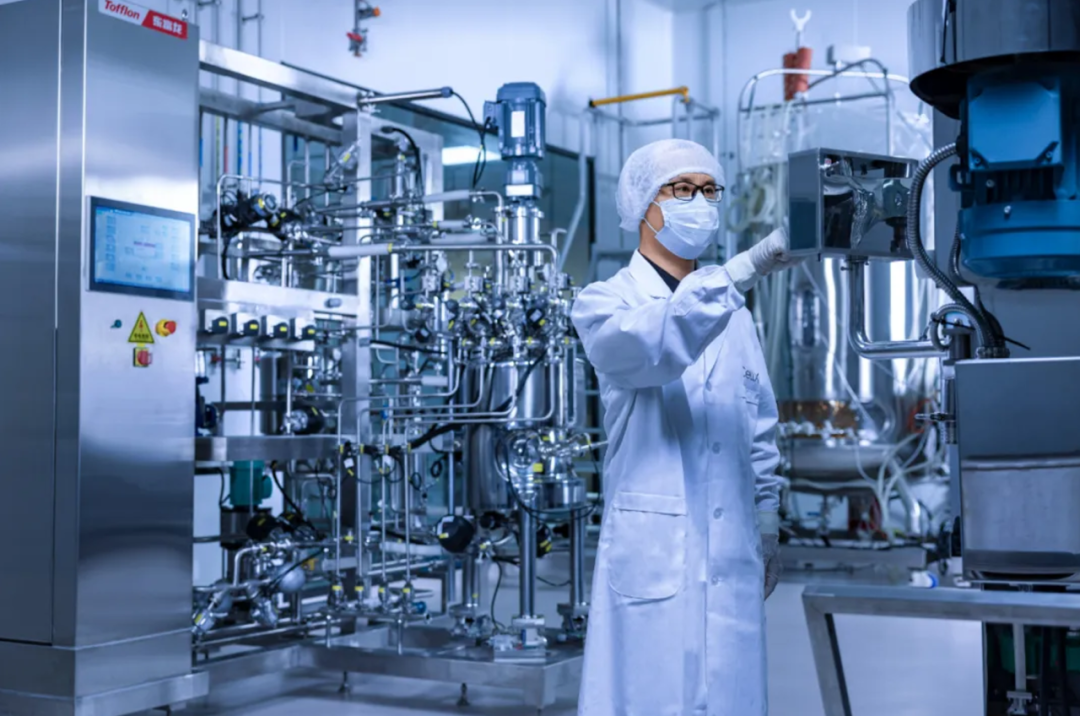
CellX cultivated meat facility
So last year, we decided to set this aside for now. We'll transfer our existing technology out, supporting industry partners through licensing arrangements, which also brings in some revenue. At the same time, this lets us concentrate resources on directions that can commercialize more quickly.
Q: When you made the pivot decision, what early signals did you see?
Yang Ziliang: Actually, starting in 2023, funding across the entire industry began stagnating, and many leading companies ran into challenges. Our own R&D made significant progress, but it was indeed slower than our initial expectations. These signals told me that this probably couldn't commercialize as quickly as I'd originally hoped.
Q: For a startup, how do you balance between two directions — holding onto the long-term value of cultivated meat while making a realistic commercial pivot? How do you strike that balance?
Yang Ziliang: There's no standard answer. Looking back now, pivoting to fermented protein was a very good choice, but honestly, no one can be 100% certain. If we look back in five years, perhaps persisting with cultivated meat would have been the better path.
The real trouble is hesitation — trying to do both directions at once often means doing neither well. We found that running both in parallel simply didn't give us enough resources or energy; we really needed to make a trade-off and choose.

The Moment 10% Understands You, All the Push Becomes Worth It
Q: Mourish went from a promising idea to an actual product on the market. What was the biggest difficulty in that process?
Yang Ziliang: We actually started mycelium development in 2023, and the ingredient R&D took quite a while. By the second half of 2024, we launched our first product, Mourish Jerky. From idea to R&D, production, packaging, and market launch took six months total — quite fast.
But there were two major challenges along the way:
The first was product selection. What we faced wasn't "we can't make anything" but "we can make too many things." We could have done protein powder, functional snacks, even more meal-oriented protein products like burgers, nuggets, sausages. There are already many such products on the market — frozen nuggets, burgers, sausages are already quite well-developed, and we didn't want to simply copy those. So we instead looked for a category that didn't really exist in the market — high-protein savory snacks, which are actually quite scarce. In China you might have dried tofu, but in the US there are very few vegan jerky options, so we chose this direction.
The second challenge was timeline. I'm someone who pushes myself and my team quite hard, but I've also learned that sometimes you shouldn't push too hard — everything has its own rhythm. Although we got this product from zero to one in six months, the pressure behind that was intense. Every step was interlocked, and our team came from biotech — transitioning to consumer products, then to the food industry, was a massive leap, so there were plenty of challenges.
Q: Why set such an aggressive six-month target?
Yang Ziliang: On one hand, I wanted to launch the product sooner. It's been nearly five years since I started the company in 2020, and I was eager to create value and actually get the product to market.
On the other hand, there was real pressure: the company had been in R&D phase with heavy investment and significant cash burn, and we really hoped to achieve commercialization and break even as soon as possible.
Q: Jerky launched in March this year, so it's been selling for nearly three months now. Any feedback?
Yang Ziliang: It does feel quite different. I'd been doing technical development before, and facing user feedback directly after the product launched was a very immediate experience. I personally love this process. Many people say they've been looking for a plant-based high-protein snack, and our product happens to meet that need. Our ingredient list is very clean, all natural ingredients, with 16 grams of protein per pack — 30% by weight. Many people say: "This is exactly what I was looking for."
About a third of users also gave very constructive feedback: some said too dry, some too moist; some too salty, some not salty enough. I think that's all fine — you can't please everyone — but this feedback has been genuinely helpful for improvement. For example, someone mentioned some hard chunks, and we identified that as insufficient rehydration during production, which we definitely need to fix. Others wanted the Sichuan flavor more intense, which we understand — people's tolerance for salt and spice varies greatly. So our new product line will have six flavors, ranging from mild to intense, to cover more preference levels.
What moved me most was that when our product went live on Amazon in May, the first review was five stars. That user said he'd tried all plant-based jerkies, and ours was the best. He also didn't like soy protein and had been looking for a mushroom protein alternative — this was exactly what he wanted. That moment of being truly understood and supported made everyone incredibly happy.
Q: Mourish Jerky is an entirely new category. How did you do the cold start?
Yang Ziliang: Our product really is the first "mycelium protein" beef jerky on the market. There are plenty of mushroom products and high-protein products, but we're the first to use mycelium fermentation technology to infuse protein into mushrooms.
Initially we thought a lot about how to tell this story to consumers. Actually, if you look at our packaging front, we don't mention "mycelium" at all — we found that too much backstory or science education doesn't necessarily resonate with consumers. So we only emphasize two keywords: Mushroom + High Protein. People who are truly interested will flip to the back of the package, where we go into more detail.
Right now we're actually not doing much marketing, which is somewhat my hot take. The plant-based market in the US is still relatively niche. It may become mainstream in the future, but it's not now. So I believe our target isn't the 90% mainstream, but the 10% plant-forward population — the broader vegetarian-leaning demographic.
This group is defined as people who may not be fully vegetarian but are actively trying to incorporate more plant-based foods. This includes vegetarians, flexitarians, and people interested in plant protein. In the US this might be under 10%; in China it's even smaller. But I think we should first serve this 10% well and establish ourselves firmly among them.
All our current marketing is targeted at reaching this group — they have high product acceptance and good conversion rates. This is our core customer base.

Beyond Product: Ideals and Connection
Q: If I'm someone in the plant-friendly demographic and I come across Mourish online, what would actually move me to place that first order and keep coming back?
Yang Ziliang: This is something I'm still exploring, and I don't have a definitive answer yet, but I have two hypotheses. The first is straightforward need fulfillment — I'm looking for a high-protein savory snack, and Mourish Jerky happens to solve that pain point.
The second is that many consumers aren't just buying the product; they're buying into the ideals and values behind it. Whether vegan or flexitarian, everyone has their own story in their relationship with food. Many people are exploring physical and mental growth, lifestyle changes — these topics add value and appeal to the brand.
I also hope that through the brand, I can directly reach and influence more consumers, making the brand part of their lifestyle.
Q: Many healthy food brands have a very loyal, energetic user base drawn in by brand story or community culture. Is building a brand what you most want to do right now?
Yang Ziliang: Actually, what I most want to do is bring a good product to consumers and help them support what they want to do. I used to be someone who wanted to eat vegetarian but couldn't find suitable products, and I know many people around me exploring plant-based diets and trying to reduce meat consumption. I hope that through Mourish, I can genuinely support these consumers in achieving their lifestyle choices.
Q: Any unexpected feedback, or preliminary sales data you can share?
Yang Ziliang: Looking at our Amazon backend conversion data, it's been maintained above 10% for the past several weeks, with one week even exceeding 20%. I think this conversion rate is quite high, especially compared to other industries — it's a strong performance. This is probably because our target audience is precise: customers already actively searching for this type of product.
Another thing that moved me, which I shared on Moments before: our first customer was a white guy from South Africa whom I met at an event this year. It was an "effective altruism" community gathering. He's very inspiring — a college senior, involved in many club activities, wants to start a business, dedicated to making the world better. In him, I saw a kind of primal vitality: brave, resilient, fearless.

Giving Up the MBA to Start a Company, Embracing the Inner Self
Q: I'd like to return to your entrepreneurial story and personal journey. Why were you willing to give up the MBA opportunity to return to China and start a company? What was the mental journey behind that?
Yang Ziliang: I divide my life into three phases: before 2020, 2020 to 2023, and 2023 to now — with many more phases to come, I'm sure.
Before 2020, I was fairly conventional, the stereotypical good student in both academics and work, pursuing traditional markers of success. I wasn't really enjoying life back then; I always felt something was missing.
The MBA at the time seemed like a path to greater value and meaning through career choice and entrepreneurship after graduation. My understanding of "value" and "impact" was completely different then — I thought giving consumers a better product without requiring them to change anything created value, more from a utilitarian and efficiency perspective. But now I see it completely differently: true change comes from inner transformation within each person.
In 2023, I was fortunate to encounter two groups of people. The first was coaches in the US. We discussed balancing career success with personal life success, and found that for many people, the first step is to be in a state of abundance and relaxation, not tightness — approaching things with curiosity and a learning mindset, bringing positive energy and joy to those around you. This really overturned my understanding.
The second group was Buddhist practitioners. One asked me a question that shook me: "What is your meaning?" I said it was to create great value, to make the world more empathetic and sustainable.
Then he asked: "In the past week, how have you brought empathy and joy to those around you?" I realized I hadn't really done that, because my pursuit of bigger goals had come at the expense of relationships with people around me.
These past two to three years, my thinking has shifted significantly. I've come to feel that my own state matters greatly. When you're in an abundant state, you can lead by example and help your team and those around you also be in abundant states. When we're abundant, our efficiency and effectiveness are completely different, and many choices align more closely with our true inner voice rather than false voices driven by fear and anxiety.
Q: What have you gained from entrepreneurship that you knew you would get?
Yang Ziliang: I've discovered that there are so many opportunities, so many things I want to do — products and services waiting to be created. It's opened my understanding of the world and given me more confidence in myself. Once you've started a company, you want to keep doing it, whether in work or in the future.
Q: Do you personally interview every full-time employee?
Yang Ziliang: Definitely.
Q: How do you tell if someone is right for the company? What do you observe?
Yang Ziliang: First, kindness — a fundamentally good character, optimistic, willing to believe in things. Because our company isn't large; everyone is an entrepreneur. I hope they're adaptable, have an ownership mentality, and take initiative.
Q: What's your biggest learning?
Yang Ziliang: Many things. One is: don't avoid conflict. What needs to happen will happen; delaying it only makes it worse. If conflict is truly necessary, let it happen naturally.
Q: What's your superpower?
Yang Ziliang: One is that I can quickly see connections and the essence behind things — rapid learning and insight. Another is that I can quickly build close connections with people, especially when I'm being myself — comfortably creating connection and mutual influence.
Q: Very much like mycelium. If you could swap lives with any CEO for a week, who would you choose? Why?
Yang Ziliang: Patagonia — I've always loved that brand, love the outdoors, and identify with their sustainability philosophy. Building a brand is something I've always wanted to do.
Q: If everything goes well, what will CellX be as a brand in 20 years?
Yang Ziliang: I hope that in 20 years, 20% of the world's population eats plant-based. I hope we can continuously lead new protein choices, help people who truly want to achieve plant-based diets do what they want to do, and inspire more people to embark on this path.

The audio version of this episode is also available on ZhenFund's podcast "此话当真" (This Is Serious) — welcome to listen!

Text | Cindy
Video Planning | Wendi & Dylan & Neya
Podcast | Xin