Looking at China's Three Competitive Advantages in Gaming Through *Genshin Impact*, *Black Myth: Wukong*, and *Archero*

Build a global company from Day 1.
If you look at China's highest-grossing films over the past decade, a clear structural shift emerges: ten years ago, more than half of box office revenue came from Western imports; today, domestic films dominate. The gaming industry may follow a similar trajectory.
China has never lacked standout games. In 2003, the early MMO Fantasy Westward Journey, built around online social experiences, launched its open beta. In 2020, Genshin Impact brought 3A console-quality graphics to mobile, popularizing gacha mechanics among Western core players and becoming a genuinely global hit IP. In 2024, the release of Black Myth: Wukong proved that Chinese games had officially entered the 3A era.
Chinese gaming skipped the entire console generation, like a country leapfrogging landlines straight to mobile communications. Precisely because it wasn't constrained by the $60 boxed retail model, China quickly grew into one of the world's most important mobile gaming markets, leading in F2P by at least five years. Meanwhile, Chinese game companies have been globally ambitious from day one, continuously exporting new genres and gameplay innovations that have genuinely won over players worldwide.
In 2025, Capybara Go! was selected for Apple's App Store Game of the Year list. Its creator, Habby, has built a portfolio of RPGs beloved at home and abroad, including Archero, Survivor.io, and PunBall — with Archero described by gaming industry veteran Mitch Lasky as "my favorite mobile game of all time." Its controls are extraordinarily simple: just slide your finger. Yet every session is crafted to be thoroughly engaging, the experience dialed to maximum. ZhenFund invested in Habby at the angel round in 2019 and has been there ever since.

2025 App Store Awards shortlist for iPhone Game of the Year, with Capybara Go! on the left
Gamecraft is a podcast about the history of video games. In its latest episode, Benchmark managing partner Mitch Lasky and Hidden managing partner Blake Robbins discussed where Chinese gaming stands on the global stage today. Before joining Benchmark, Lasky served as EVP of Mobile and Online at Electronic Arts; his early investments in Riot Games (League of Legends), thatgamecompany (Sky: Children of the Light), Discord, and Snapchat have returned billions. His mobile gaming company JAMDAT also went public in 2004.
How did China develop its current competitive advantages? What made it a global superpower in gaming? And what new changes await Chinese gaming in the AI era?
Below is the full translation by ZhenFund.

Skipping the Console Era, F2P Hardwired Into Chinese Gaming DNA
Mitch Lasky: This episode is going to be really interesting because we're talking about China's position in the global gaming industry right now. Throughout the 21st century, China has been an impossible-to-ignore force in global gaming. And now is a particularly good moment to ask: where exactly does China sit as these major new industry trends emerge?
Blake Robbins: Right, China's a key player. We've always defaulted to assuming America is number one, but some shifts are happening now — China may have already become the country with the highest number of games going global.
Mitch Lasky: What's interesting is that initially, Western publishers looked at China primarily as a market for distributing Western games.
Because the American media industry's past experience had always been: global consumers naturally love American content. So the logic at the time was, if we bring the "John Wayne movie" of video games to China, of course it'll outperform本土 Chinese games.
But what we're seeing now is completely different. Just like in film, China has built out a mature domestic market through very clever strategy and natural competitive advantages. This market looks nothing like what America imagined back then — something that needed Western products to sustain it.
In today's gaming industry, China isn't just developing independently; it's rapidly growing into a major global player, whether through overseas M&A or the global expansion of content IPs.
Blake Robbins: From the Western perspective, China has always been a market you "want to enter but can't." But now we're seeing the trend reverse — China is looking West and saying, "We'll go attract players there too." And that's actually happening, with real breakthroughs.
Mitch Lasky: Let's start from the beginning: why does China have its current competitive advantages? What makes it a global superpower in gaming?
Blake Robbins: It's several major advantages strung together that constitute their dominant position today.
Mitch Lasky: The first is obviously the massive, deep, well-trained talent pool. China has a natural advantage in human resources, and for a long time has had a cost advantage. The cost of living is lower, and equivalently skilled labor costs far less than in the West. This isn't unique to gaming — it's the same in manufacturing and other sectors.
Blake Robbins: Right, and another important point is the cultural mindset. Everyone knows about so-called "996" — long hours, fast pace, and an emphasis on "making the business work" rather than "polishing the work into art."
Mitch Lasky: Yes, though I don't think these are necessarily long-term advantages. Because we've seen similar patterns in Japan and South Korea, and this kind of intense work culture often changes across generations. Take postwar Japan — that generation had America very nervous in the sixties and seventies, worried about "Japan Inc," worried about "the rising sun," thinking Japan's work ethic would undermine American capitalism.
But it didn't happen, and one reason was that the next generation of Japanese young people said: "I'm not doing this backbreaking work, I'm going to play video games instead."
When a country becomes wealthy, a certain kind of "hedonism" naturally emerges. We've seen this in Japan, South Korea, India. I wouldn't be surprised at all if China goes through this generational shift. Prosperity brings more comfortable lifestyles, and people's willingness to grind naturally declines.
Blake Robbins: Right, that's an important angle.
Mitch Lasky: The second competitive advantage is a fascinating historical factor: China's entry point into gaming meant they didn't have to carry the heavy baggage of physical games. They went straight into PC, Free-to-Play (F2P), and mobile from the very beginning.
Just like in telecommunications, they didn't go through the transition from copper-wire phones to wireless — they went straight to wireless. Chinese gaming is the same: they didn't have to abandon old models and start over like American giants, but could pour everything into new models from day one. There are unique factors in their market structure that made it easier and faster to embrace these innovations.
Blake Robbins: A very typical example is monetization design. In the East, acceptance of gacha and similar payment mechanics is far higher than in the West. The West remains stuck in the $60 boxed retail logic, while the East doesn't carry that heavy historical baggage.
Mitch Lasky: The third competitive advantage is that Chinese game companies don't have the "not invented here" mentality you see in Western studios. While today Tencent and NetEase are more focused on domestic content, they're very willing to look overseas for benchmarks, third-party products, and IP. Tencent and NetEase have invested in some of the biggest, most important Western gaming companies — Activision, Riot, Epic Games — and have reaped enormous returns from these positions.
Blake Robbins: Yes, and Tencent and NetEase have stakes in many major domestic hits too — that's the foundation that lets them keep expanding.
Mitch Lasky: Tencent holds roughly 20% of Garena's parent company, and Garena basically dominates the entire Southeast Asian market. These positions have been remarkably prescient — betting on the right horses, letting them benefit both domestically and globally.
Blake Robbins: Completely agree. We need to pull the timeline back further, to see how these competitive advantages first formed. We've mentioned before that piracy played an absolutely critical role in early China. It was piracy that gave birth to Free-to-Play, making it the mainstream distribution method and business model for Chinese games.
Mitch Lasky: Let's dial back to early-2000s China. Releasing games there was nearly impossible — piracy was virtually guaranteed. Western publishers generally viewed it as a "100% piracy market." That wasn't entirely wrong, especially given the lack of mobile distribution mechanisms at the time. Traditional boxed games were basically pirated instantly, with piracy rates of 95-98%.
I was at Disney then, and I remember Disney's general counsel personally flying to China hoping to negotiate some agreement to protect American IP. But it felt like trying to empty the ocean with a spoon — impossible. Cultural differences and pricing made pushing this extraordinarily difficult. You couldn't maintain Western pricing in China because consumer purchasing power was limited.
And any attempt to adjust prices for the local market would create gray markets: goods bought cheaply in China and re-exported to America for profit. For boxed game publishers, this was essentially an unsolvable problem. But for Chinese domestic publishers, they started out in an environment where boxed games basically couldn't exist — and that became a huge advantage.
Blake Robbins: Free-to-Play basically became "hardwired" into Chinese gaming DNA. This also let them move earlier and faster on gacha and similar monetization. They were essentially forced to refine transaction systems and the F2P model to perfection.
Mitch Lasky: Yes, they were forced to innovate, while the West wasn't. So China ended up leading by at least five years.
Blake Robbins: It's remarkable how these seemingly unrelated macro and structural factors together shaped the underlying logic of the Chinese gaming market. They remain ahead in Free-to-Play to this day.
They skipped the entire console era entirely, like a country leapfrogging landlines straight to mobile. That generation of gaming architecture never touched them; they barely even have a deep conceptual grasp of it.
Mitch Lasky: They had another huge advantage on mobile: local publishers held more market power than Apple, rather than the Western duopoly of Google and Apple. In China, you always had an open Android environment with various local Android systems running parallel to Google. You had direct distribution channels. Tencent could bypass many of Apple's restrictions on distribution and marketing, so they didn't face those thorny control problems that constrain the Western mobile gaming industry.
Another thing: every game officially distributed in China must have a license number.
Blake Robbins: Right, I actually looked up the data before we recorded. 2017 was the peak, with over 10,000 licenses issued that year. But in recent years it's been around 1,000 annually.
Mitch Lasky: Roughly 6% of Steam's annual game releases. This fostered a very robust domestic industry because it prevented foreign games from dominating the domestic market.
It gave greater commercial benefit to games that obtained licenses and could be officially distributed. Games without licenses, forced to find alternative routes through Steam, naturally faced significant distribution constraints. In a sense, this mechanism created a kind of inverse "content curation" — with a very interesting positive effect on China's domestic gaming industry.
Blake Robbins: The incentive structure becomes obvious. If you're Tencent or NetEase, the Western games you're willing to import have to be absolute blockbusters. Because by comparison, you could always just make games yourself. In an environment with fewer overall releases, the probability of success for your own products actually becomes higher.
Your profit margins are higher too, because you fully control the IP. So the industry trajectory becomes natural: these giants either focus on developing their own domestic products, or they only import the very best Western games.

Different Investment Strategies for Overseas Games
Mitch Lasky: I agree, and you can see this strategy in the success stories of several Chinese publishing giants.
They typically choose to partner with the strongest, most successful Western brands, and Tencent started doing this very early. They demonstrated exceptional investment foresight before companies like Riot, Supercell, and Epic were clearly labeled as "blockbusters" or "giants." They took stakes in these companies early, rather than waiting until prices were inflated. These investments ultimately yielded enormous returns for them in both domestic and international markets.
Blake Robbins: Right, and now more and more Chinese developers are actively promoting games in Western countries. That drive has always been there; for a long time everyone thought "Chinese games breaking into the West" was virtually impossible. But then it actually happened.
Mitch Lasky: Let's start with Tencent, since they've always been the "top player" in the Chinese market. My earliest game publishing work in China was with JAMDAT in 2003 — Tencent was publishing mobile games for me, shortly before their 2004 IPO. We went public that year too, with rather different results (laughs).
I maintained good communication with Tencent's management from very early on. These relationships later facilitated partnerships between Tencent and several companies I invested in.
Blake Robbins: We've discussed Tencent before. They have WeChat, WeGame (China's largest PC gaming platform), and have built formidable publishing capabilities on top of these platforms, backed by massive distribution advantages from China's dominant instant messaging tools.
They understand extremely well how to leverage this distribution moat to bring Western content to Chinese users. To my knowledge, they were earlier and more systematic than any Chinese company in "importing content" from the West.
Mitch Lasky: Interestingly, Shanda was actually the earlier explorer of Western licensing, though they're barely heard from now. They tried importing many Western games during a more permissive period, but didn't achieve good results. Many of those products later flowed to other publishers.
Another crucial point you just mentioned: Tencent's position in China is more like Microsoft's in the West. It's a highly diversified company. Games are certainly important and a core profit driver, but its core business is the massive communications network — not single-threaded reliance on gaming.
By contrast, NetEase's business model is more like Activision's: a "purer" game publisher that grew up in the domestic market from early on. So there's a key difference between Tencent and NetEase: Tencent is far less dependent on its gaming business.
Blake Robbins: Right, if you look at Tencent's financial reports, even though it's a Chinese company, you can almost never tell what proportion of revenue Riot actually contributes. When Valorant launched, for instance, there was no way to judge from Tencent's earnings how much money it was making — it's just a very small piece of Tencent's enormous revenue system.
Mitch Lasky: We mentioned overseas investments earlier, and I want to run through some key figures because they're truly staggering. They show very clearly how Tencent strategically established positions in the West's most important companies.
They now hold 100% of Riot. We initially sold them 51%, with a buyback agreement that let Riot sell the remaining shares to Tencent over several years. The massive success of League of Legends later sent the value of those final shares soaring, which was hugely significant for Riot's founders.
Interestingly, Riot's founders were hesitant about making a League of Legends mobile game because they felt they hadn't fully captured the essence of LoL yet. But Tencent's China team saw that as a massive loss — every month of delay was lost revenue. Once Tencent acquired full ownership and became the 100% controlling shareholder, Honor of Kings launched within months.
Blake Robbins: Right, and Honor of Kings remains the highest-grossing mobile game globally to this day. It was number one worldwide again last year.
Mitch Lasky: So Tencent currently holds:
- Riot 100% (League of Legends, Valorant)
- Supercell 84.3% (Clash of Clans, Hay Day, Boom Beach)
- Grinding Gear 80% (Path of Exile)
- Epic Games 40% (Fortnite, Gears of War)
- Pocket Gems 38% (Episode, War Dragons)
- SEA Ltd (Garena's parent company) nearly 20%
- Krafton 13.8% (PUBG, Lost Ark)
- Ubisoft 10% (Assassin's Creed)
Through a series of complex maneuvers, they acquire core IP on one hand, and inject capital to keep operations running when publishers falter on the other. That's how Tencent builds its positions.
Blake Robbins: Right, we discussed this before we started recording too. Tencent's strategy is to first establish equity stakes in these companies, positioning themselves at the very front of the starting line. If there's ever an opportunity to acquire the entire company, they naturally become the most advantaged bidder. Would you say that's accurate?
Mitch Lasky: I experienced something similar myself. When I invested in Snapchat, Tencent came to me very early and was willing to participate in the Series B I led without much questioning. So they obtained a substantial stake in Snapchat, and later realized gains when it went public. They never felt they had to buy the entire company.
Something similar happened when we pivoted Hammer & Chisel into Discord. Fates Forever had a decent publishing deal with Tencent, and I later negotiated a debt-to-equity conversion with them, so they obtained a small early stake in Discord and have continued to add to it.
They participated in the Series B and have kept buying in the secondary market; they're now a significant Discord shareholder. They could have been one of the potential acquirers of Discord, and that's part of their strategy: laying groundwork early to reduce costs when a real acquisition opportunity arises.
When they negotiated to acquire Riot, they already held 10% of the company. That naturally gave them advantages over other bidders. Others had to pay 100% of the price; they only had to pay 90%, since that remaining 10% was already theirs.
Blake Robbins: Why was Riot willing to let Tencent take that initial 10%? Can you walk through the thinking at the time?
Mitch Lasky: The core consideration was strategic access to the Chinese market. We believed that if Tencent held Riot equity, they would naturally give us better positioning and resources in China, because Riot's success would benefit them too. It was an incentive mechanism to ensure the publisher had skin in the game and would push harder for us.
Blake Robbins: That's also where Tencent's sophistication lies. They're acutely aware that they're one of the most critical pathways into the Chinese market, so their logic becomes: we can publish for you, but first let us invest in you and actually take equity in your company.
Mitch Lasky: Right, it's a completely different gaming ecosystem from the US or Europe, and you have to adapt to different rules. Riot adapted well, and Tencent played those rules very successfully in its own way.
Blake Robbins: You were deeply involved with Riot at the time. Clearly Tencent played a very important role in Riot's long-term success, since China later became a mega-market for them. Riot's success story also made it easier for Tencent to push through all those subsequent acquisitions and investments.
Mitch Lasky: So discussing NetEase next will be quite interesting, because they took a completely different path, though with somewhat similar goals. Do you want to start?
Blake Robbins: NetEase was more of a pure domestic game developer. One of their earliest blockbuster titles was Fantasy Westward Journey, arguably one of China's first true MMOs. They later became increasingly sophisticated with free-to-play games and monetization design.
Then in 2008, they landed a destiny-changing opportunity. I'm sure they fiercely competed with Tencent for it, but NetEase ultimately became Blizzard's exclusive publishing partner in China.
Mitch Lasky: And World of Warcraft was absolutely phenomenon-level hot in China at the time. This was no small thing.
Blake Robbins: Right, they essentially hitched a ride on WoW's explosive growth. I never had in-depth conversations with NetEase management, but I imagine they must have thought: wow, we successfully brought one of the world's most important games into China — of course we should keep going.
This path was quite different from Tencent's early diversification play. NetEase grew more from a genuine love of games, driven by passion all the way.
Mitch Lasky: Yes, and for the next 15 years, they executed Blizzard's publishing extremely well — it became a major pillar of their domestic business. Meanwhile they always maintained their original IP, with Fantasy Westward Journey establishing a high bar from the start. Later they went multi-pronged on mobile, launching mega-hits like Eggy Party. They built a very solid foundation domestically. On overseas investments, they've also put in over a billion dollars across numerous studios.
Blake Robbins: Yes, and their reputation in the industry has always been strong. Compared to other publishers, NetEase gives the impression that they genuinely "have taste" — often investing because they truly love a game and want it to survive.
You can trace this back to their partnership with Blizzard, that pure "we love games, and we want players to love games" ethos. They invested in Second Dinner, developer of Marvel Snap, from Day 0.
Mitch Lasky: They also came in after me with a Series B in thatgamecompany, developer of Sky: Children of the Light.
Blake Robbins: Right, you can see they genuinely understand games. Their strategy leans more "taste-driven."
Mitch Lasky: At the same time, for domestic publishing, they similarly tied overseas investments to China publishing, creating win-wins — just like Tencent. For example, they became a very strong publisher for thatgamecompany in China.
Blake Robbins: Yes, though you and I have both noticed they seem to be pulling back internationally lately. Losing the Blizzard publishing rights was definitely a massive blow to NetEase.
Mitch Lasky: Next we can talk about the rising new game companies in China. I think there's been very interesting grassroots growth there in recent years — not just mobile, but increasingly on PC and AAA titles. I see this as a crucial shift, signaling we're entering the next phase: Chinese game companies no longer relying solely on the domestic market, but beginning to export to the West at scale.
Blake Robbins: Right, and it all started with mobile. China quickly became one of the world's most important mobile gaming markets, possibly even the largest soon.
Several — even more than half — of the top ten grossing games in the US come from Chinese studios. This stems from Chinese developers having global ambition from Day 1, rather than just thinking about East Asian markets. They're also far stronger than Western developers at free-to-play and monetization. You see studios in Eastern Europe, Israel, Turkey, even Vietnam making mobile games, but China remains out front.
The most worth discussing is of course miHoYo. Founded in 2012 — think how early that was. They made various domestic products in their early years, with the Honkai series established before 2020. But what truly brought them to global center stage was Genshin Impact, launched in 2020.
Genshin Impact was very much like The Legend of Zelda: Breath of the Wild, bringing AAA console-quality graphics to mobile. But what was most distinctive: it brought pure gacha mechanics and monetization to the West — and completely succeeded.
Almost no one believed this could happen at the time. Genshin Impact did billions of dollars in revenue in the West alone. Months after launch, or even longer, they rolled out the PC version and achieved full cross-platform play. But they accomplished something crucial: they truly popularized gacha in mainstream Western core gamer titles.
This was among the first Chinese games to genuinely break big in the West. To this day, many Western players are still playing.
Mitch Lasky: Really fascinating. The game has generated billions in revenue, and was arguably the first product to truly make a "Chinese-style MMO work in America" on PC. Almost nobody thought that would happen.
If you look back at early Chinese MMOs, they typically leaned very heavily into local culture, with complex interfaces, extremely high information density, and fairly "hardcore" gameplay. Somewhat like the previous generation of Japanese RPGs — the kind of style that required slowly adapting to, cultivating an acquired taste to truly love. But miHoYo really found the right approach with Genshin Impact, breaking through on many levels. They now also have an AI-first game in testing, built natively for AI platforms, which I think is very much worth watching.
Blake Robbins: Right, and at miHoYo's current growth rate, by end of 2025 they'll exceed $10 billion in global revenue, with China accounting for $5 billion. In other words, half their revenue comes from outside China. For a truly "Chinese-developed game," this is extremely rare.
Mitch Lasky: And from style and art direction, it's a very "Asian" game.
Blake Robbins: Exactly, it's fully anime-style, with complete gacha mechanics.
It wasn't a product customized for Western markets, nor a culturally neutralized version — it's a very pure game carrying Chinese aesthetics and cultural background. So this really is a remarkable success story, possibly even a "canary in the coal mine" signaling some future trend.

The Ultimate Mobile Experience
Blake Robbins: Next I think we should highlight one particular developer: Habby. The founder was a gaming executive from Cheetah Mobile. Cheetah Mobile was known for games like the Piano Tiles series — if you've played them, you know their style.
In 2019, Habby launched a game called Archero, one of my favorite mobile games ever — even above Clash Royale. It essentially created an entirely new genre: Hybrid-Casual.
Hybrid-Casual means lightweight, accessible gameplay with broad ad reach and mass-market targeting, yet simultaneously achieving mid-core monetization at the highest level. The result is extremely simple controls, but surprisingly deep game loops.
As we always ask: "What are you actually doing in this game?" In Archero, you're literally just moving your finger on the screen — nothing else. Yet they managed to create an incredibly polished experience.
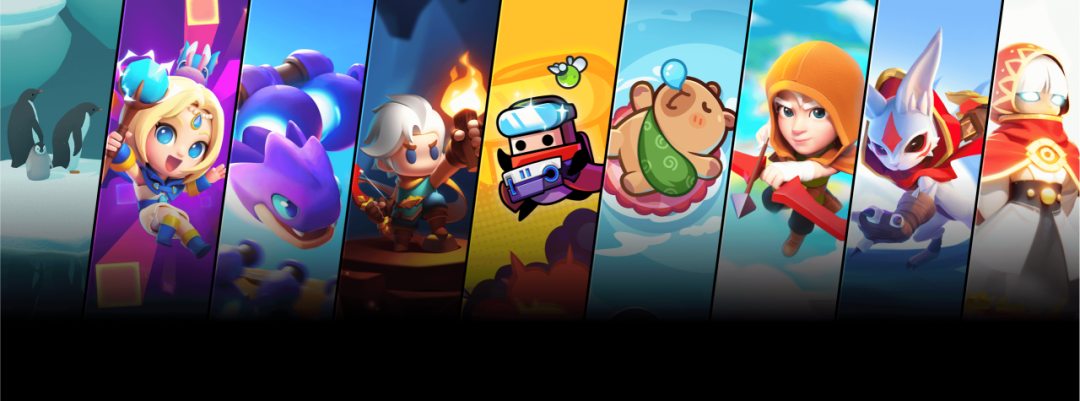
Habby's Classic Games
What's even more impressive is their user acquisition capability — arguably the best in the industry. They were essentially pioneers of fake ads, those bait-style creative ads that "hook" you into the game. Strong UA, strong retention too, because fundamentally the gameplay still leans mid-core.
Mitch Lasky: Yes, very similar to the model we discussed in our mobile gaming episode — use fake ads to pull users in, then funnel them toward game monetization.
Chinese developers have been the main driving force behind this strategy. Look at a game like Last War — I think everyone listening has seen it on Instagram, Twitter, or elsewhere. Massive hordes of monsters rushing down, one lone gunner holding the front — the classic "bait ad" formula. And they've executed it extremely successfully.
Blake Robbins: Financially, yes. Last War is from FUNFLY, while Whiteout Survival is from Century Games. You've definitely seen those "run forward, +10, -10" obstacle-course number ads.
They essentially pioneered this paradigm, which later became the "gold standard" for mobile game advertising. It's still fake ads at core — the interactive snippets in the ads look fun, but you can't actually play them in the real game.
These companies are also particularly skilled at funneling players from lightweight ad scenarios into actual 4X games, which have extremely strong monetization. This resembles Gabe Leydon's strategy with Machine Zone, except they've added fake ads for traffic arbitrage.
Note: 4X is a strategy game subgenre centered on four core elements: Explore, Expand, Exploit, and Exterminate.
Mitch Lasky: Right, there are a few more mobile examples worth mentioning. Tencent has been particularly adept at porting PC blockbusters into equally high-quality mobile versions. They did this with PUBG and Call of Duty.
Blake Robbins: Yes, Call of Duty Mobile really is an excellent game.
Mitch Lasky: To the point where, commercially, it was briefly "reverse-driving the main series."
Blake Robbins: Right, and it was developed entirely by Tencent's TiMi Studios in China. You and I have talked so many times about "how do you take a big Western premium game and turn it into free-to-play." They managed to take a franchise that was traditionally seen as a "premium blockbuster" — Call of Duty — and completely reimagine it as F2P. Commercially, it may have even outperformed the main series. It's really remarkable.

China Enters the AAA Era
Mitch Lasky: Let's turn to one of the biggest stories of 2024 — Black Myth: Wukong — and look at China's real, forceful entry into AAA.
Blake Robbins: Black Myth comes from a studio called Game Science. The founding team are all former Tencent developers. Like miHoYo, they started with a lot of smaller projects before betting everything on Black Myth. They wanted to make a narrative-driven AAA game that had to be rooted in Chinese culture.
Black Myth itself is a cultural symbol. It draws on mythology that every Chinese person grows up hearing. The closest American parallel would be some fairy tale or folk legend you've known since childhood.
They built it with a tiny team — only 30 people in the early days, and just 140 credited members at launch. They also chose to release it as a $60 premium game, which few Chinese teams have done, let alone while competing on the same track as PC heavyweights like Zelda, Spider-Man, and Hogwarts Legacy. And it actually worked — over 25 million copies sold, and it showed up on virtually every outlet's Game of the Year list.
The visuals in Black Myth look like they're from another era. They genuinely produced a AAA blockbuster that can stand on the global main stage.
Mitch Lasky: I think this is absolutely critical. It's like the film industry. If you look at China's top-grossing movies over the past decade, more than half the box office came from Western imports ten years ago. But by 2024, imports were underperforming.
I think you could see the exact same structural shift in games. And the Trump-era trade war may accelerate it. If the US and China impose reciprocal tariffs, or if China starts restricting Western game releases, that would only push China's AAA sector further.
This is a watershed moment for the Chinese game industry.
Blake Robbins: As someone who loves film and studies Hollywood, that parallel is spot on. Local cultural stories always resonate most strongly in their home market.
And in many ways, games are more complex and harder to localize than film. But China is now proving they can do it, and the signal is getting louder. If even a global blockbuster like Hogwarts Legacy starts underperforming in China, that sends massive ripple effects through the Western industry.
Mitch Lasky: Especially dangerous for Western publishers. As we discussed earlier, many Western publishers are betting their future growth on markets outside the US — particularly China, Southeast Asia, the Middle East, and North Africa. But if China replaces Western products with domestic ones of comparable quality and even stronger cultural fit, that's a devastating blow to those publishers.
Blake Robbins: And the craziest part is the pricing. We always say China is the heartland of free-to-play, but AAA narrative games are more like film — they're built on the $60 "box logic."
Now they're selling $60 AAA games in China, and it's working incredibly well. It's like opening a market that was assumed not to exist for decades.
Mitch Lasky: Let's look ahead at the Chinese game market and overseas expansion over the next few years. I think we both agree we'll see more AAA games like Black Myth coming to the West — and succeeding there.
Blake Robbins: Right. Since it's no longer just a handful of Chinese studios that can make it work in the West, Chinese studios — and really all of East Asia — should be thinking globally from the start, not just satisfying themselves with the domestic market.
There's also a subtler trend: more and more Chinese or East Asian game studios are choosing to base their headquarters in Singapore or nearby, building as a global company from Day 1.
Blake Robbins: Right, right now everyone's focused on Supercell, Riot, and those big studios where Tencent or other Chinese companies hold major stakes.
Mitch Lasky: Another trend I find particularly fascinating — we saw this just weeks ago with the DeepSeek release. China has been largely shut out of the next-generation GPU market, and GPUs are the foundation of AI R&D. So they pivoted to open source, optimizing for lower-performance GPUs through various innovations, and ended up building an AI platform that can compete with OpenAI and the American giants.
This suddenly thrust China to the forefront of AI. And I think this will deeply feed back into the domestic game industry. Long-term, Chinese game companies have always been more willing to experiment than their American counterparts. It wouldn't surprise me at all. miHoYo was an early example; there will be more.
Blake Robbins: Right, you see Tencent, Alibaba, and other big companies open-sourcing their own models. That barely exists in the West — maybe only Microsoft is doing something similar. You won't see Sony or Activision building their own models.
Mitch Lasky: Exactly. The story of the Chinese game industry over the past 25 years, and especially the last decade, has been truly remarkable. Whether it was Chinese companies seizing opportunities during explosive growth phases, or American companies entering the China market through local publishing partners, it's been an extraordinary journey.
Blake Robbins: What we're seeing is more and more Chinese developers going global, successfully publishing directly overseas and capturing market share. The next few years will be absolutely critical for the entire industry.
Mitch Lasky: Next few months.
Blake Robbins: Weeks, maybe days. Either way, China is now very clearly the most dominant force in the industry — pretty much sitting in the "top player" seat.
Mitch Lasky: Alright, thank you, Blake.
Blake Robbins: Thank you.