Duolingo Talks to Early-Stage Founders: How to Build a Fun Product in the AI Era?

Because it's weird, because it's fun, because it's one of a kind.
Today, Duolingo is a company valued at nearly $100 billion with over 100 million monthly active users. Yet after 14 years, 80% of its users still come from organic growth — word of mouth. What keeps it so distinct is a certain "weird" energy.
The word quirky almost tells the whole Duolingo story.
In 2016, when Chief Business Officer Bob Meese first joined, Duolingo had zero revenue. The website simply read: "Learn a language. Free. Forever." He assumed it was just a tagline, but co-founder and CEO Luis von Ahn meant it literally. For the first five years, the company made no money. And to this day, anyone can still learn and practice on Duolingo for free, forever. Born from a research project at CMU, Duolingo's mission is to help one billion people learn a language.
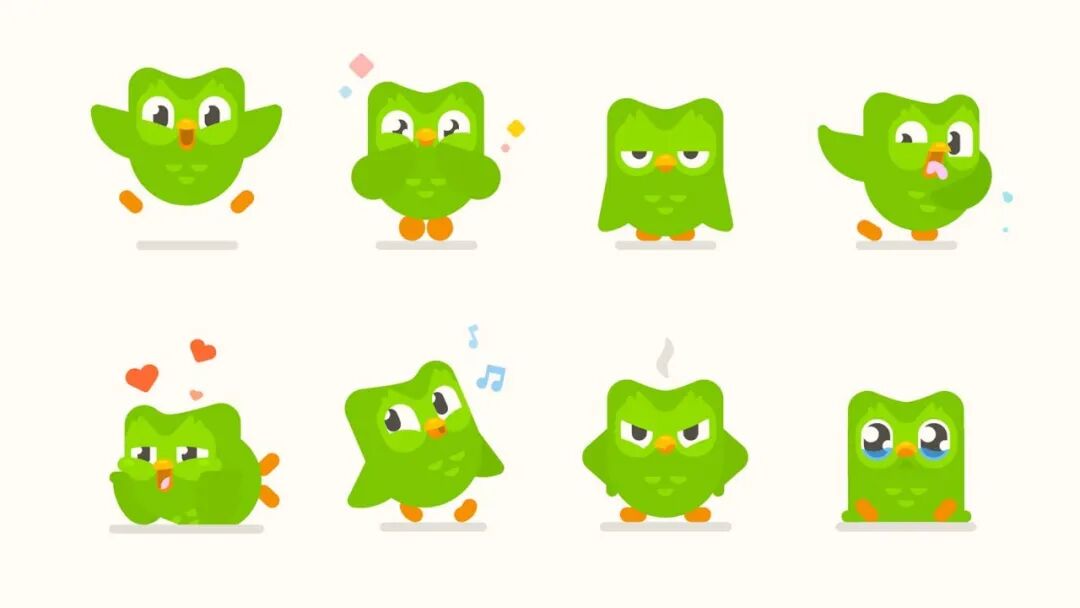
In 2019, Duolingo underwent a brand refresh. While most Silicon Valley tech companies were trending toward neutral, restrained, uniform visual design, Duolingo brought its little green bird to life. It developed personality, story, emotion. Sometimes the bird encourages and praises you; other times it nudges you to practice like a mischievous friend. Those small, vivid interactions gradually became what kept users coming back. And what makes a character a catalyst for learning is having a soul that's actually interesting.
In 2025, after the "green bird died waiting for its user" went viral on social media once again, Duolingo published The Duolingo Handbook, reflecting on 14 years of ups and downs while unpacking the core of its brand culture and IP growth. Among the five principles in the handbook, one the team returns to again and again: Take the Long View.
Duolingo has already traveled a long road. But when its team sat down with early-stage founders from Habby, Manus, Hyperknow, Jiaojiao, and others to discuss "growth," the conversation wasn't about tactics — it was about making a product good enough, interesting enough, that users genuinely want to love it.
Why would an education company make games? Why is the green bird so beloved? Why does streak-keeping become addictive? Why do adults and kids alike find it captivating?
Because it's weird. Because it's fun. Because it's distinct.


How to Define Duolingo
Bob Meese (Chief Business Officer, Duolingo): We ask ourselves this constantly: How should we even define ourselves? Are we a learning app?
We categorize ourselves as an education company, though people often say "I'm playing Duolingo." Depending on who you ask and from what angle, we're understood as different things. Definitions can be useful, but sometimes you don't need to force yourself into a fixed box.
I remember when we were preparing to go public in 2021 — mention EdTech and many investors would think "bad business." Even though we were performing well, that bias is common in the US. Whether you're selling to public school systems or corporate training, you face many gatekeepers.
But Duolingo is fundamentally more like a consumer internet company. So from a business perspective, positioning ourselves as a "consumer education product" became crucial, and that was validated after our IPO.
Zhao Yilin & Jiang Ruohan (Founders, Hyperknow): We've noticed a significant gap in learning mindsets between China and abroad. How do you think these differences shape product logic? Can one product simultaneously serve two different learning cultures?
Bob Meese: Learning habits do vary across markets, like China and the US. But whether in design or experience, the core principle we've pursued is simplicity. This largely comes from Luis's philosophy: "Don't fork the app."
People discuss where to localize versus where to stay consistent. But even where differentiation is possible, Luis prefers global uniformity. That's how we've achieved significant scale with a relatively lean team.
We have about 900 employees serving 130 million monthly active users. One key to this leverage is simplicity.
Early on, we did have different local strategies for different markets. But later we strictly unified everything — new versions across all markets follow the same app specifications and development process. The core principle remains: keep it simple.
I believe the best user experiences tend to have some personalization. If you can customize for specific users in a highly scalable way, that's great. But if that customization makes the product bloated, it slows iteration.
This means trade-offs are necessary. We try to keep our paid conversion flow consistent globally, but in China this is a challenge. Our default path is a 7-day free trial that converts to paid, and domestic users generally aren't accustomed to post-trial payments.
We've discussed this internally many times, but for now we keep the 7-day trial. Our business forecasts, growth models, and measurement frameworks for retention and conversion are all built on this premise. This setup matters to us.
As different markets mature, we leave room for flexible adjustments. But the precondition is protecting the overall product rhythm and business model — even gradual, small-step changes require caution.
Stefan (Founder, Habby): Duolingo's gamification is one of its most appealing aspects. Do you recruit talent from the gaming industry?
Bob Meese: We do hire some gaming talent.
Luis often tells this story: when he and Severin Hacker (co-founder and CTO) first started Duolingo, they each built a course. Severin made German, Luis made Spanish, then they tried learning each other's. The result? Boring — they couldn't even stick with it themselves. So they realized something: if you want people to keep learning long-term, the product first has to be fun, has to bring joy.
This has always been Duolingo's underlying logic. For our product, we encourage PMs and designers to read game design books. We attend GDC (Game Developers Conference) annually and learn from many gaming companies. Team members are gamers themselves — genuinely heavy gamers. They bring that shared way of thinking back into the product.
There's a famous book called A Theory of Fun for Game Design. Its core argument: fun is essentially pattern recognition.
From that lens, every Duolingo exercise is seeing a pattern, making a choice, getting immediate feedback. This creates a continuous "challenge-response" loop, and that loop itself is fun — implicit learning. Traditional lessons are typically 2-3 minutes with about 17 exercises, giving you 17 of these micro-experiences.
Stories and DuoRadio offer another kind of fun — they create something like a game scenario. These lessons might have only four or five exercises. For some, the fun density drops; for others, it's a welcome break from intensive practice.
My personal rhythm: three traditional lessons in a row, then one Story or DuoRadio to apply what I just learned differently. Both are equally effective pedagogically; they just deliver fun in different forms.
Many of our exercises were designed 8-10 years ago and keep improving. In the past year, we've launched new question types, new courses, and made the experience lighter and more fun through animation and randomness. These are ongoing efforts.
Yudi Sun (Head of Growth Design, Duolingo HQ): From a design perspective, starting with simple exercises also makes onboarding easier. You could have a little character walking around a scene. But if we'd built Duolingo as an adventure mode from day one — running around every lesson — it would be too "heavy." It would become something like Pokémon Go, not a daily sustainable learning product.
So we chose to start simple, iterate gradually, expand content, let users adapt step by step. Our earliest users wanted just 3-15 minutes of fragmented language learning daily. They were used to a certain rhythm, and when we add features, we must neither break that rhythm nor compromise feature completeness.
Kevin Yang (Head of Growth Product, Duolingo HQ): If you open our company Slack, you'll see we share plenty of gaming references — and quite a few are about Habby. We genuinely love Habby's games.
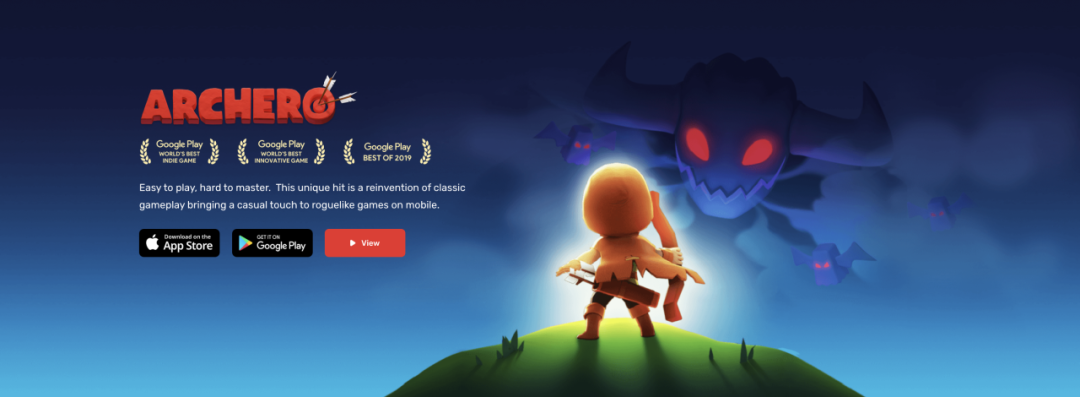
Habby's representative title, Archero
Q: Language learning courses follow a relatively simple model, but you've now launched Math, Music, and Chess courses with different interfaces and interactions. How does Duolingo think about teaching different subjects?
Bob Meese: Our language and chess courses are two good examples. In language, we focus on short-form lessons with a gamified experience. Ideally, we'd have only one lesson type and keep refining it.
Chess is our most recently launched course, but it's already more popular than Math and Music. A big reason is that chess's main lesson type centers on chess puzzles. Though content varies at different nodes, the structure is unified, so the user experience feels coherent.
Language courses succeeded because they had one dominant, mature core lesson type. Chess is growing along the same path. Music hasn't achieved this yet. We tried four or five different lesson types; each was decent, but none truly stood out. Recently we acquired a music game company to focus on refining one fixed lesson type and rebuild the music course. We believe the path to success isn't doing many things — it's finding the one right thing.
This can be scary for teams. What if we don't find it? But if we truly don't, we'd rather shut down and restart. Once we find that core, then we can layer more experiences on top.
So everything starts simple. Five or ten years from now, people might find the initial experience somewhat monotonous, not rich enough — then we can add more interactions. For Duolingo, if you want scale, the simpler the starting point, the more it helps expansion.
Yuan Liu (Partner, ZhenFund): The little green bird is also a huge part of Duolingo. Can you tell us its story?
Yudi: We have a team member named Greg who's been at Duolingo for many years. His team handles the green bird and other character design. By his account, the bird really was just a "bird" at first — a symbol to help you learn.
Then one time, we sent an in-app notification that essentially said: "If you don't want to continue right now, we'll pause and won't bother you." Our intent was genuinely considerate and straightforward, but users interpreted it completely differently online. They felt the green bird was being "passive-aggressive," like saying: "Fine, you don't want to learn? I'm out."
From there, the bird's personality grew organically. Greg says you can't just "assign" a character its personality. You first observe what users find interesting, fun, meme-worthy, then develop in that direction. In other words, you can't force a personality onto a character. You have to understand how users see it — only then does the character truly come alive.
This somewhat weird charm later became Duolingo's soul. The green bird was no longer just a symbol of a learning tool, but a companion with a bit of temper, a bit of cuteness, sticking with you through it all.
Yudi: When I joined in 2019, there was already a principle inside the company that deeply impressed me: Be Quirky. Meaning, don't be too serious — bring some humor, some oddness.

Subscribe to a Language, Not Buy a Product
Bob Meese: We've also been thinking about what Premium should truly deliver.
We were in a relatively fortunate position when we started building membership: Luis's previous ventures, CAPTCHA and reCAPTCHA, had been acquired by Yahoo and Google respectively. He was already a successful entrepreneur, so the company could get funded without needing to monetize from Day 1.
Of course, convincing investors "we're not rushing to monetize" wasn't easy. But Luis had more runway than most founders, and his belief in "education for all" was exceptionally strong.
Our mission is "to develop the best education in the world and make it universally available." If you've seen Luis's TED talk, you know this isn't a slogan — it's his genuine internal drive. He truly wants as many people as possible to learn.
When I joined in 2016, the company still had zero revenue, and the website had just one line I still remember: "Learn a language. Free. Forever." I thought it was just a slogan, but after talking deeply with Luis, I realized he genuinely believed this — and was equally serious about building a large company.
Now we have about 130 million monthly active users, and Luis's next goal is one billion people learning on Duolingo. For us, reach has always mattered most. We tried ad monetization, but that wasn't the direction we wanted; we didn't want to charge directly for learning content.
So the balance we ultimately found: monetize through subscription membership, but without affecting the free experience. You may know our "hearts" or "energy" mechanics, but for us, the core habit is the Streak. We deeply care about everyone coming to Duolingo for 5-15 minutes every day, so this must be free, forever free.
But if someone wants to spend a lot of time on Duolingo daily, then they need to watch ads or pay for subscription.
Before I joined, the company already had about 3 million DAU — a decent user base. We'd built an A/B testing system and used data to measure how each change impacted key metrics. This method was previously used to boost DAU; later we applied the same approach to monetization.
So we added a monetization team on top of the existing user growth foundation, with both operating independently and without interference: user growth improves DAU without affecting revenue; monetization increases revenue without harming DAU.
For users, they feel they're "subscribing to a language," not "buying a product." This matters enormously for our brand perception.
Anna (Founding Partner & CEO, ZhenFund): Many AI products are starting to charge by results. Does this affect Duolingo?
Bob Meese: We've now launched AI-based subscription services, including video call experiences. This increases costs, but we try to avoid users using it intensively all the time. We still want people to use Duolingo for free, even if some costs we have to absorb ourselves.
Model costs have dropped significantly in the past two years, but they're still not cheap. A few weeks ago at OpenAI DevDay 2025, they showcased their platform's Top 100+ token customers, and we were among those "trillion token" companies.

OpenAI's 1T+ Tokens high-consumption user list; Isaac Andersen is a Senior Software Engineer at Duolingo
Our AI usage falls roughly into three categories:
First, typical productivity enhancement. Many engineers now use AI tools like Cursor and Cloud Code to write code.
Second, offline content generation. In the past two to three years, our total course content volume has doubled, largely through AI generation. This is where we consume the most tokens.
Third, interactive features — real-time inference. This is currently our highest expenditure area. We've spent tens of millions of dollars on OpenAI, but fortunately we can sustain these experiments.
Sometimes it does feel like walking a tightrope. But we dare to do this because we genuinely have the scenarios and use cases: we're using AI to teach.
We've asked ourselves many times: should we bring human tutors into Duolingo? From the start, we've taught through technology, not teachers. We know a good teacher is always the most effective way to learn. But today's technology can simulate many key qualities of a teacher: feedback, guidance, companionship — it has "above-average teacher" capability.
Some companies use AI to cut costs and improve efficiency, but for us, that may be less interesting. What interests us more is whether AI can help us create an entirely new learning experience to drive growth.

Who Are Duolingo's Users?
Bob Meese: Duolingo's UI might look like it's for kids, and sometimes older users say: "Isn't this just a children's app?" But it works for all ages. Just like Disney in the US — it's a brand for all ages. The animation looks child-oriented, but college students love it too.
So while Duolingo's interface is cute, it reaches a very broad audience. We once made an early literacy app called Duolingo ABC for ages 3-8, but we discontinued that line. Because even when we say we aim wide, our core is designed for adults. You need to read, operate a device, make your own choices. Young children can't read; their interaction patterns are completely different, and the real decision-maker is the parent.
Another crucial point: Streak is Duolingo's core mechanic. You're at 165 days — impressive, congratulations. But for a 3-year-old, streak-keeping is meaningless. Then our strongest motivation fails.
Also, we rely mainly on organic growth, word of mouth. This is still 80% of our growth to this day. But 3-year-olds don't recommend apps, and don't know who to recommend to.
Yudi: Regarding how we design for a global, mass-market user base, we've borrowed many patterns from game design that other consumer apps don't typically use.
I usually explain it to designer candidates this way: there's a design spectrum. One end is Apple, Airbnb — minimalist, clean, graphic-design-led. The other end is exaggerated mobile games where effects explode every second.
But if your user range is extremely broad — from young children to retirees — you need to find a middle ground: simple and accessible, yet able to deliver surprise, even a bit of "madness" at key moments. We want designers and PMs we hire to think about which moments lean toward which end.
We also have a very strong animation and motion team. We study various games, identify what parts are genuinely fun, then determine which mechanics are simple enough to migrate to Duolingo, and have the team re-express them in our style.
I think this is a core differentiator for Duolingo: it's simple enough, yet incorporates the most interesting parts of gaming. The intersection of these two worlds is what we keep striving for.
Anna: What happened with Duolingo Math? Was it initially aimed at a different audience?
Bob Meese: In October 2022, right around the tenth anniversary of our language product launch, we released Math as a standalone app.
Back then, App Store competition was far less intense. In 2013, we were directly named Apple's App of the Year based on course content alone, and organic growth was enough. But Math's DAU peaked at only 70,000. Compared to language's current 50 million DAU, that's essentially nobody. So a year later, we integrated Math into the main app, and that's when it truly started growing.
When we put Math into the main app, logically it should follow the main course's linear Path. But Luis cares deeply about Math; he wanted it to feel like a real education product, not a game. So we're redesigning Math's interface — no longer forcing linear path progression, but allowing free navigation by topic.
The Math story shows that we also break our own universal rules when necessary.

Sharing Because of Joy, and Because of Distinctiveness
Carrie Wang (Global Growth Lead, Duolingo English Test): Duolingo still has 80% of users coming from organic traffic rather than paid acquisition. We're curious — for many smaller, earlier-stage companies, you may also be looking for growth that doesn't fully rely on ads. Could you share user growth mechanisms you find effective?
Parker Lyman (Chief of Staff, Manus): We launched this March. In our first week, the waitlist had roughly 2 million people. Initially due to cost constraints, we had to use an invitation system for over a month. Later we worked hard to open Manus to everyone as quickly as possible, and currently have millions of users.
One interesting thing we built into the product was a Share Replay feature. Watching Manus call various tools on a computer is already cool, and with one click on "Share Replay," that clip goes straight to friends. So when we first launched this year, we saw users spontaneously sharing this replay function.
Stefan (Founder, Habby): My career spans several stages. In earlier years, I felt not buying ads was the right approach — rely on content and word of mouth. But now the market is so competitive that it's nearly impossible to survive without buying ads; even Fall Guys buys ads.
However, one experience of mine is that you can drive organic growth through core players' cross-platform word of mouth, like China's TapTap and global Steam. What impressed me most was Good Pizza, Great Pizza. It started as a mobile game with decent but not outstanding performance, but because the gameplay was fun, players suggested they launch on Steam. When it hit Steam, it exploded, which in turn drove organic growth for the mobile version in certain countries — it frequently charted during updates. This is a classic case of using core player community influence to leverage broader distribution.
Kevin: I recall a Korean company's word game, Legend of Slime, that was hot its first year but quickly declined across metrics. After talking with many developers, they felt the game lacked true core gameplay — every level was the same, players eventually got bored. By contrast, Habby's Capybara Go! has better long-term retention. What do you think is its biggest difference from other games?
Stefan: Capybara Go!'s long-term retention isn't particularly outstanding either, but the industry considers it successful because it fused a new gameplay structure: Roguelike + text adventure + RPG progression.
Its longevity mainly comes from RPG growth mechanics. As long as we keep iterating content lines, players will keep adventuring for growth goals. And these adventure stories are AI-written. Honestly though, the stories still have room for improvement — if the plot had more tension, retention would be longer.
Now the game has two issues: first, the narrative isn't strong enough, purely AI-written parts still feel flat; second, the monetization is too aggressive, with high early payment pressure.
But overall, it retains players because each round is fun enough. High randomness, rich choices, fresh experiences every time. So it's not that the global mechanics are well-done, but that the single-round experience is satisfying enough.
Carrie: Duolingo users mostly share screenshots. Have you built any mechanisms to make players more willing to share?
Stefan: Sharing shouldn't be forcibly designed. For us, what's more important is making the product itself distinctive enough that players want to share proactively. Some games build specific sharing mechanisms, like rewards for sharing to Facebook. But we prefer core players to feel that sharing this game represents themselves — that they have good taste, unique vision, that they're impressive.
Q: Why would players want to share?
Stefan: We use simple Roguelike design. These games are inherently highly replayable. Many designers are influenced by complex games on Steam and make systems hard to understand. But we go the opposite direction, insisting on keeping it simple enough that players understand how to play just by looking at the icon.
We also pay special attention to content validity. Every skill, every monster design must serve a purpose. Every element needs to serve the experience. Inefficient, unchosen content we directly cut, like those meats that keep appearing but nobody picks.
Another lesson from Supercell: "Luck is everywhere."
Q: Which platforms do players typically share to?
Stefan: For players coming from Steam, besides being active in Steam communities, they also share on Discord and YouTube. The focus of sharing tends to be how the gameplay is different.
One word runs through our game design: cool. "Cool" means new and good.
Kevin: For UGC content, do ordinary player shares matter more, or creator shares?
Stefan: We don't deliberately build mechanisms to encourage sharing. Because the core of our game design is making players feel: the fact that "I'm playing well" is itself an achievement worth sharing.
Like when I made Piano Tiles — that game had zero visual appeal, just black tiles falling, not pretty at all. Yet one song's video hit 20 million views. I really didn't get it, thinking "what's so interesting about this?" But it went viral.
Later I understood: what attracted players wasn't the visuals, but the surprise of "I didn't know a song I knew could be played like this." That song later broke a world record, at an impossibly fast speed.
Carrie: One principle we all want to emphasize is: Making it fun. It sounds simple, but it's quite counterintuitive. In Asia, we tend to take work too seriously, wanting to appear professional.
But what struck me most at Duolingo is: people make things because they genuinely think they're fun, genuinely enjoy the process. And that joy gets perceived by users. Users share because they too feel that fun and delight.
Happiness is the most important thing.