Gen Z Is Building the World
There's always someone young.
Friends gather over drinks, guests trade ideas — the moment for connection is now.
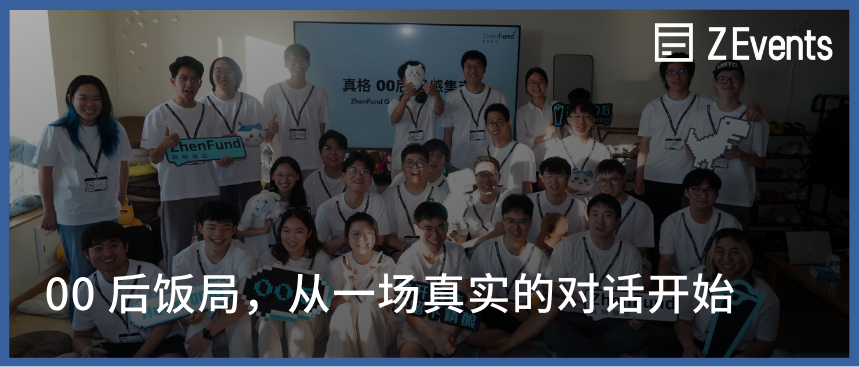
As 2026 begins, we invited a group of young people to meet in Beijing. Over the past year, ZhenFund has hosted 15 events for Gen Z across Beijing, Shanghai, Shenzhen, Hangzhou, Wuhan, and other cities.
We've been trying to connect with the most exceptional young people of this era as early as possible.
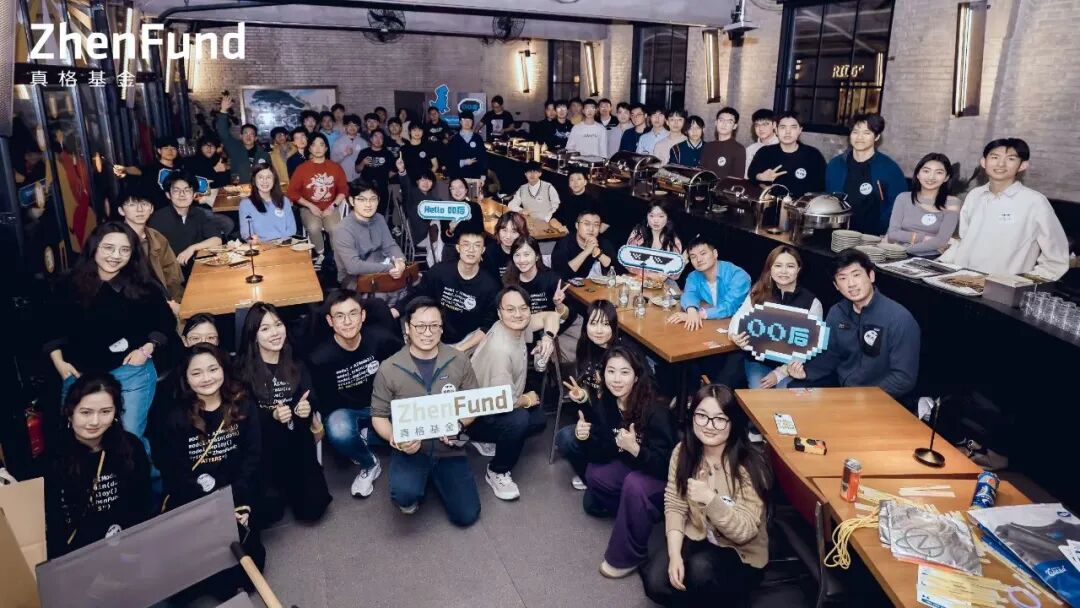
First, who did we invite?
Their average age is 23.84.
They're willing to grind at something for a long time. Top 1%, million-subscriber creators, ten years of songwriting, a billion web novels read, building from scratch in three days, growing a YouTube channel to 200,000 in four days — they use verifiable, extreme numbers to prove one thing: I actually did this, and I did it with real intensity.
What matters here isn't becoming someone. These young people simply use identity as a way to explore the world, to test which paths yield feedback. In an open system, they verify and calibrate repeatedly, confirming whether they can keep generating value.
They're a generation that treats the world like a demo.
They're also a mix of intense executors and people driven by sheer possibility.
From an MBTI perspective, Intuitive types make up 75%. Traditional organizations tend to be dominated by SJs, but here NF + NT becomes the majority. High idealism (INFJ, INFP, ENFJ), high divergence (ENFP, ENTP, INTP), and high structure (ESTJ, ISTJ, INTJ) all coexist. This combination typically appears in the early stages of startups, at the intersection of product, content, and technology, before new paradigms and industries fully take shape.
They're young people sensitive to meaning, excited by possibility, and impatient to make things happen. They may not share the same personalities — no single MBTI type can fully capture them — but one thing is clear: none of them aim to maintain an existing system. They want to build the future with their own hands.
Meeting when you're young is always a good thing.
At the event, ZhenFund managing partner Yusen Dai also recalled fragments from over the years: "In 2010, I started my own company at 22, and Teacher Xu invested in me; in 2016 when I invested in Red, he was only 22; the first time I invested in Ji Yichao, he wasn't even 18 yet; in 2018, when ZhenFund invested in Zhilin Yang, he was just 25. ZhenFund has always insisted on investing in the youngest young people."
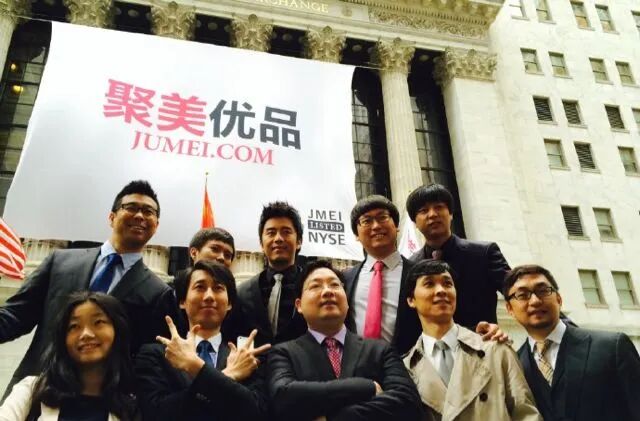
In 2014, Yusen Dai (second from right, back row), as one of the youngest co-founders, led Jumei International to its NYSE listing
In 2025, we also interviewed several Gen Z founders that ZhenFund has supported.
In May 2021, several university students formed a club centered on game development. A year later, they moved the club into an old residential complex, resolving to make games for life. They lived and ate together, working day and night, even sharing a single shower. To sustain themselves, the team relied on outsourcing for a long time, exchanging massive labor for meager income. Fortunately, university students making games are young and bold enough to experiment — the belief in creating world-class work carried them through. Later, before even graduating, Pupil Games' narrative game Aliya sold 100,000 copies.
Also in 2021, Liu Pincun arrived in New York alone with his luggage. Unfamiliar with the place, the nights felt especially long. He studied game design at NYU, and every day on his commute he'd pass a street where birds always crowded the traffic light at the corner. To him, these birds were protagonists with their own languages, personalities, and secrets. Because of these birds, he met his first co-founder, established a studio, and used code, text, and brushstrokes to build a parallel world. The adventure puzzle game Song of Maca was born this way.
In 2025, two students who had just set foot on Columbia University's campus decided to take a leave of absence. As learners, Zhao Yilin and Jiang Ruohan weren't satisfied with ChatGPT's answers delivered in seconds — such understanding came too fast, and didn't suit them. By day, they attended classes at Columbia; by night, they built their startup. Their first greeting to each other was never "How was your day?" but "What problem are you running into?" Back in middle school, they had imagined whether there could be a presence that truly understood their thinking, tracked their learning progress, and knew all their background to guide them. Later, they built Hyperknow, a general learning agent.
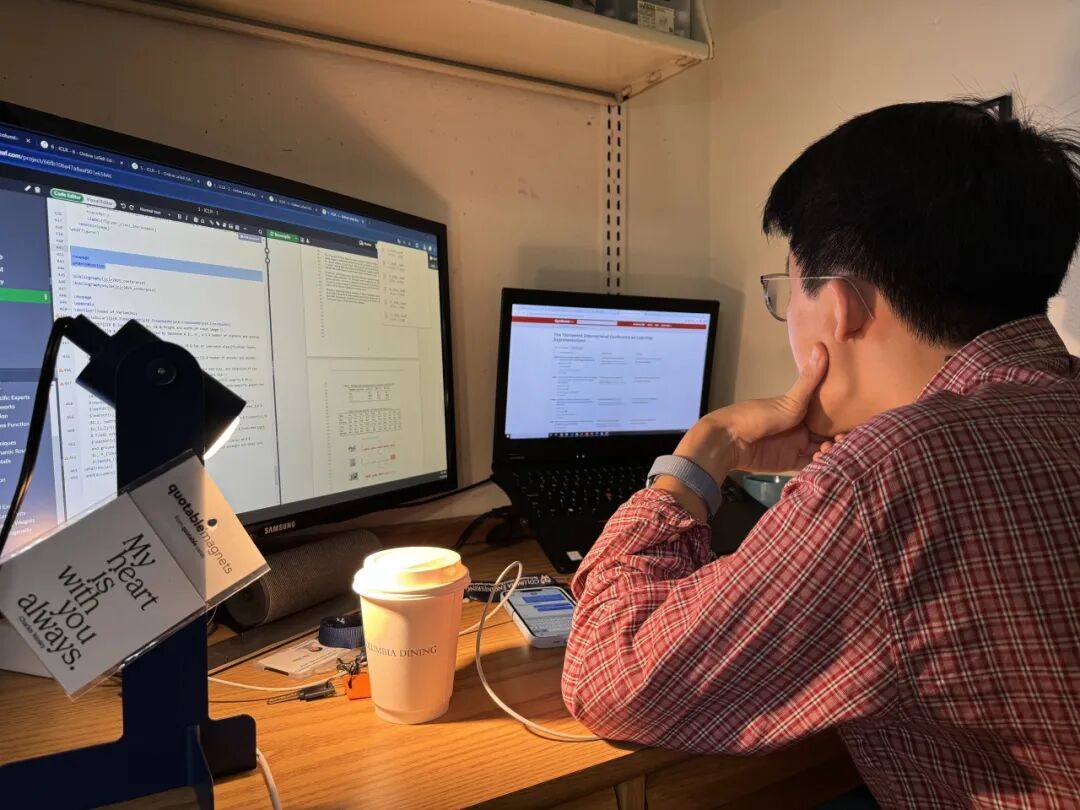
Photos from Zhao Yilin's journey founding Hyperknow
Fifteen years on, someone is always young.
ZhenFund partner Liu Yuan also recalled at the event: "When we were in our early twenties, we were all still young. We met at an event, no one knew what the future would look like, but everyone carried ideals and expectations for what lay ahead."
Many stories begin with a conversation that goes deep.
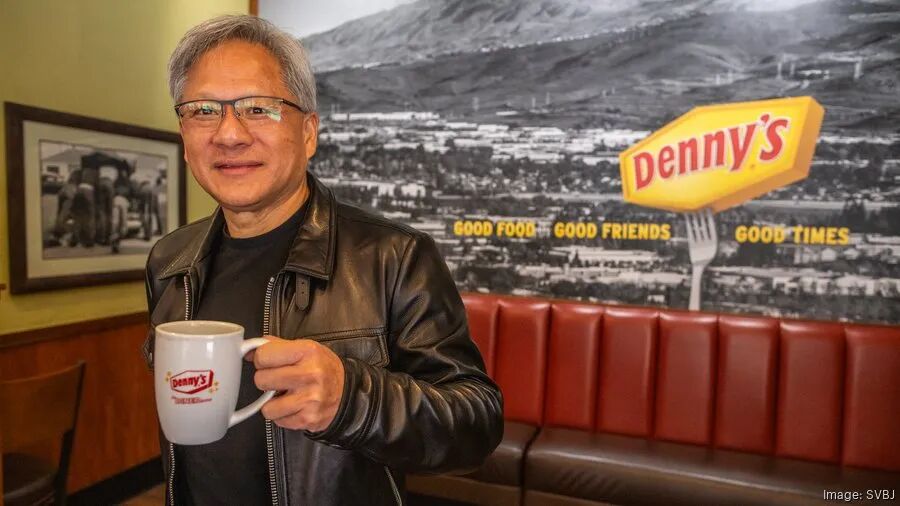
At 15, Jensen Huang worked at a Denny's in Portland.
In 1993, Huang met two friends, Chris Malachowsky and Curtis Priem, at Denny's to discuss an idea: could they build a chip that let personal computers render realistic 3D graphics? In this 24-hour chain restaurant off Silicon Valley's main highway, famous for its Grand Slam breakfast, NVIDIA was born.
Huang's first burger, his first milkshake — they were all at Denny's. Years later, recalling that day to Valade, he said: "The coffee was bottomless, and nobody would kick you out."
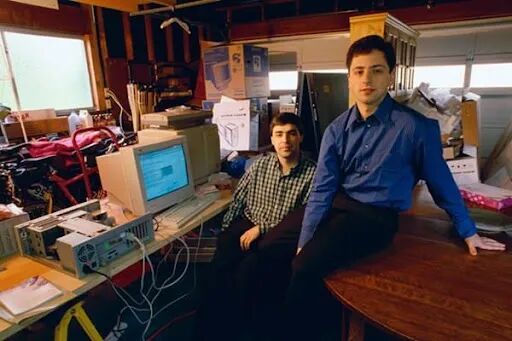
In the summer of 1995, Sergey Brin was a second-year computer science graduate student at Stanford. Outgoing and extroverted, he volunteered as an orientation guide, leading a group of newly admitted students still deciding whether to enroll on tours of campus and San Francisco. Larry Page, an engineering student from the University of Michigan, happened to be in this group.
This wasn't love at first sight. That day, as they walked San Francisco's rolling streets, they argued nonstop about urban planning to viewpoints. Page later recalled: "I found him pretty obnoxious. He had very strong opinions about a lot of things, and I suppose I did too." Conflict after conflict, yet drawn to each other — like two swords sharpening through clash.
A few months later, Page officially arrived at Stanford. He considered a dozen interesting dissertation directions, but was ultimately drawn to something growing furiously: the World Wide Web. Every computer a node, every link a connection between nodes, vast undiscovered value hidden within.
Soon, he and Brin collaborated on BackRub, crawling and analyzing web pages by examining backlinks. Page's homepage read: "BackRub is a web crawler that can freely roam the web." This seemingly simple assumption later evolved into PageRank, Google's original core algorithm.
In August 1996, just one year after their first meeting, Google was first released on Stanford University's website.
Those nights may have seemed like ordinary encounters, but looking back years later, they became the beginning of many remarkable stories.
When we asked the Gen Z participants to summarize their outlook for 2026 in one word, they first gave us a cluster of "doing" words: create, build, pioneer, get the model trained.
Not "I have an opinion" — "I made the thing." Not adapting, not following — making it, running it, spreading it yourself.
Young people no longer just want to participate in the world. They want to generate it.
Then a cluster about "boundaries": curiosity, exploration, breaking out of circles, possibility, going global. They all point to the same thing: not accepting boundaries.
Young people don't much care whether you're from this industry, whether you're fully prepared, whether you fit the mainstream narrative. What they care about is: can this thing in front of them keep extending? Can it be pushed into a larger world?
The world isn't explained — it's constructed.
Then there's a cluster most easily underestimated but also most honest: hope, returns, building impactful products.
The real thought young people have is: can I work on something worth dedicating many years to, something that actually changes things, and also brings returns? Value, meaning, returns — all on the same table.
Gen Z doesn't much believe in waiting for opportunities, being arranged for, or single standard answers. They believe more in action itself, in products and works, and that the world will be reshaped by people who actually do things — and at high speed.
That very night, young people from Beijing, Shanghai, Shenzhen, Hangzhou, Suzhou, Hong Kong, the US, and elsewhere gathered together.
ZhenFund managing partner Yusen Dai shared at the event: "When I started my company at 22, I was always the youngest person at every gathering and event. Now I've become the oldest. This time I actually met an infrastructure engineer at a large model company born in 2009. With AI's support, the golden age of China's younger generation is just beginning."
ZhenFund always insists on supporting young people through action, striving to be the first check for China's best founders. We believe that in another ten years, the next even more remarkable person will emerge from here. This night may be the starting point of many wonderful stories.
If you also believe technology changes the world, and love practice and creation, welcome to spend 5 minutes and share your story with us.

Text | Cindy