HeyGen Founder Interview: How an AI Video Startup Hit $35M ARR Without Building Its Own Foundation Model | Z Circle

Finding the balance between user needs and technical capabilities.
Z Circle is a column about people.
At the end of 2023, HeyGen went viral for a clip it made of Taylor Swift speaking Mandarin. A year later, HeyGen closed a $60 million Series A at a valuation of nearly $500 million. During that year, its ARR grew from $1 million to over $35 million, making it one of the hottest AI video generation companies right now.
In 2021, ZhenFund invested in HeyGen at the angel round and doubled down at the Pre-A round. Cofounder Joshua Xu was among Snapchat's first 100 employees, serving as an engineering lead and working on everything from ad tech and recommendation systems to AI cameras. We first met Xu at a ZhenFund Craft event, and he later participated in ZhenFund's EIR (Entrepreneur In Residence) program.
The following article is adapted from two conversations between HeyGen founder Joshua Xu and Silicon Valley investor Sarah Guo, covering HeyGen's founding story, technical path, and secrets to success.
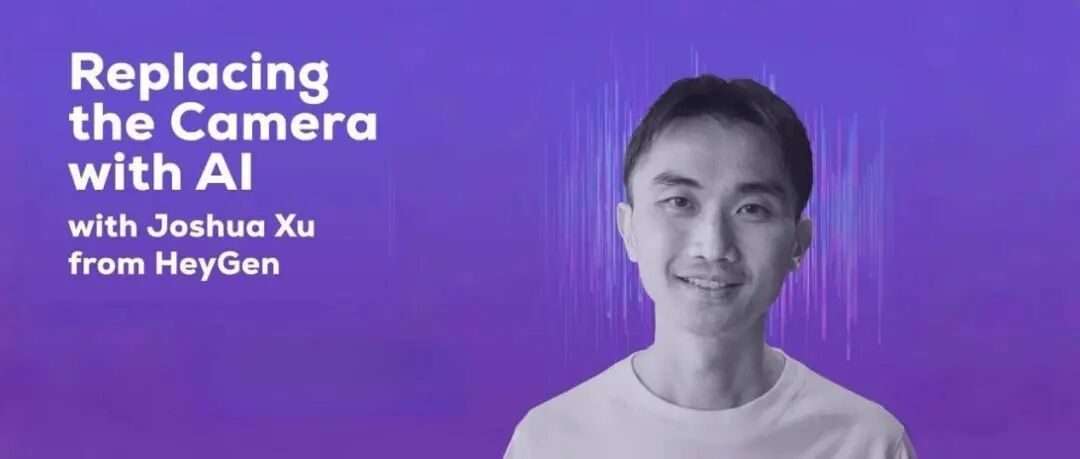
AI video generation company HeyGen recently completed a $60 million Series A at a $500 million valuation. The round was led by Benchmark, with participation from Conviction, Thrive Capital, and Bond Capital. To date, HeyGen has raised a total of $74 million.
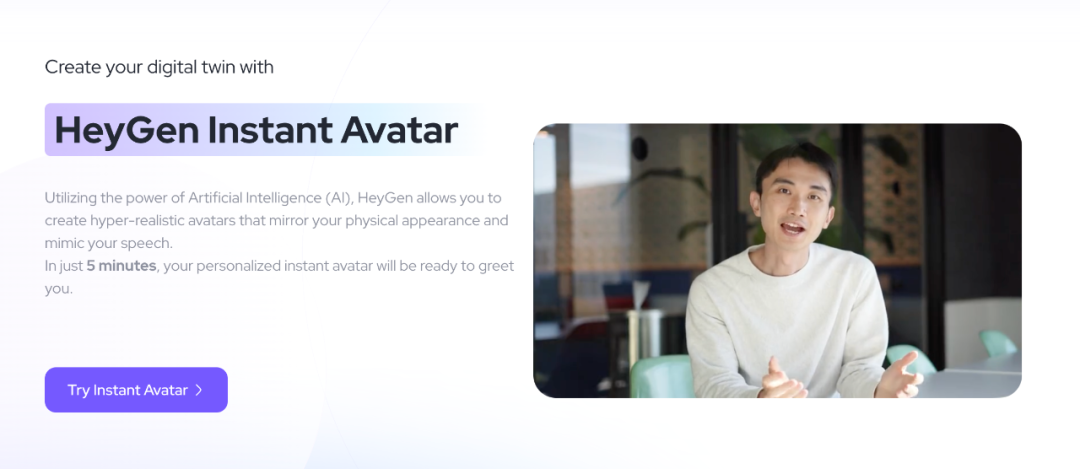
At HeyGen, users can quickly create virtual figures called Avatars that can speak in the user's own voice and translate speech into 175 languages or dialects on the fly.
Last April, HeyGen officially shared their journey from zero to $1 million ARR in 178 days. Over the past year-plus, their ARR has grown from $1 million to over $35 million, and they've been profitable since Q2 2023. HeyGen now has more than 40,000 paying customers, including McDonald's, Salesforce, and various political figures.
This article is adapted from two conversations with HeyGen founder Joshua Xu, published on Sarah Guo's podcast No Priors and the website of financial services company Pilot.

Joshua Xu founded HeyGen in 2020. For the six years prior, he was an engineering lead at Snapchat, working on everything from ad tech and recommendation systems to AI cameras.
In the two conversations, Joshua discussed HeyGen's technology and models, shared unexpected commercial use cases for existing models, walked through HeyGen's product and go-to-market strategy and his thinking on PMF, emphasizing rapid iteration and customer feedback. They also discussed AI video abuse and deepfakes, the future of visual generative AI, and potential application scenarios.
01
The Origin of HeyGen:
HeyGen Wants to Be the New Camera
Q: You founded HeyGen, which has now been used by millions of people. Can you tell us the founding story?
Joshua Xu: We started the company about three and a half years ago. Before that, I worked at Snapchat for roughly six and a half years. I studied robotics at Carnegie Mellon, joined Snapchat in 2014, and initially worked on Snapchat's ad ranking and recommendations. In my final two years, I worked on Snapchat's AI camera, which used a lot of AI to enhance the camera experience. In 2018, Snapchat released the baby filter and Disney-style filters. That was the first time I saw a computer generate something that didn't exist in reality. I was completely fascinated by the technology and felt it could change how people create content. Snapchat is a camera company — everyone produces content through their phone camera. But we wanted to replace the camera, because we believe AI can create content, can become the new camera. HeyGen's goal is to let everyone easily tell their own visual story.
Q: I actually still use my camera a lot. What does replacing the camera mean to you? Why do we need to do this?
Joshua Xu: I've been working in mobile cameras, developing a lot of software and technology to make it easier and more convenient for people to take photos with their phone cameras. But there are still a lot of people today who don't know how to use a camera to create something good. If HeyGen can replace the camera, it means we can eliminate the barriers to telling visual stories and producing visual content, which would be a huge step forward for the entire content production field.
Waseem Daher: I know you started with virtual Avatars — users could film themselves and turn it into a text-input Avatar that could speak in your voice and do lots of interesting things. How did you decide to start with Avatars?
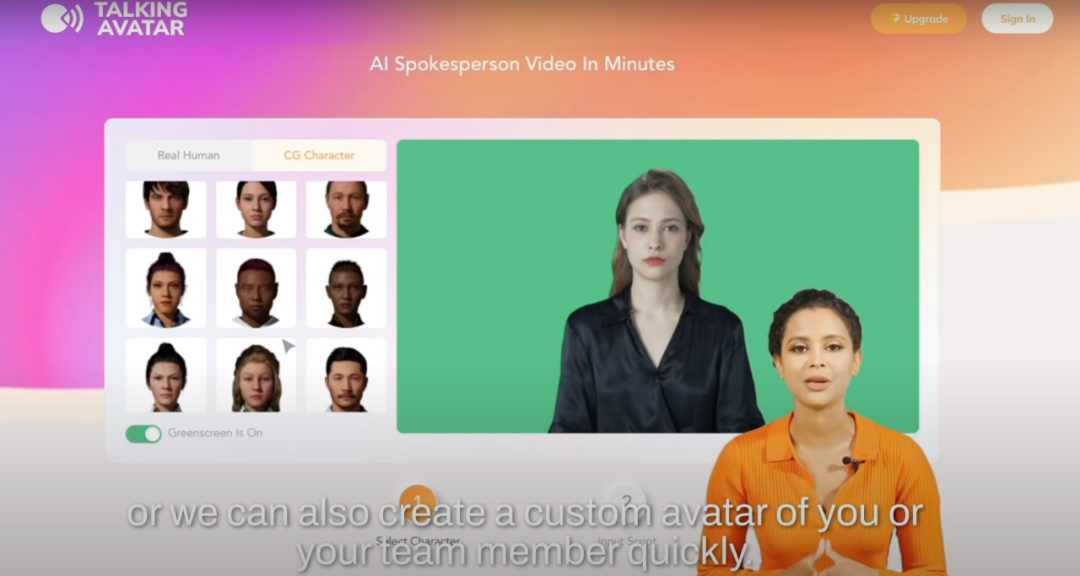
HeyGen Avatar from two years ago
Joshua Xu: At the start, we tried to deconstruct the entire video production process. Video production mainly breaks down into "camera" and "editing." The "camera" is more about raw footage — it's about human spokespersons, Avatars. Editing is more about B-roll, adding different background music, transitions, animations, and so on. Through customer feedback, we learned that editing isn't actually very expensive because it's a fairly standardized service, but camera work is costly.
Imagine if a company's CEO wants to record some content — they might need to schedule two weeks in advance, find a production crew, find a studio. A two-minute video might take twenty minutes to record because they need time to memorize the script. This is the key bottleneck preventing many companies from producing new content. So we started by replacing this part of the process, creating Avatars to substitute for the filming portion of video production.
Sarah Guo: How do you judge whether Avatar quality is good enough? What do you think of the quality of HeyGen's generated content now? I've always considered it the quality benchmark.
Joshua Xu: Quality has always been at the core of our product, business, and technology. I have an invisible quality line — say the threshold is 90. Anything below 90 is basically unusable for customers because it can't truly replace their existing production workflow. We focus on getting video generation quality above this threshold. I think Avatar technology has now reached this level, so we can genuinely help people replace the physical camera, unlock a lot of the creative process, and help people scale content production. Of course, there's still lots of room for improvement — generating full-body virtual figures, putting all the effects and animations into videos, and so on.
Sarah Guo: Of the upcoming features, what are you most excited about?
Joshua Xu: We have many exciting things on our technology and product roadmap. I'm particularly looking forward to full-body Avatars. Previous technology has all focused on the upper body — generating hand gestures and body movements is very difficult. But a lot of academic research has already proven this is feasible; we just need to go the last mile. Another feature that really excites me is real-time video Avatar, especially after GPT-4o came out — it dramatically improved real-time interaction performance with text and voice. HeyGen's Avatars can become the visual layer for these applications.
Sarah Guo: Do customers have demand for full-body movement now?
Joshua Xu: We feel different use cases have different quality requirements. For example, educational and learning content is more like one person lecturing to many people — in this case, quality requirements are relatively lower because a static virtual Avatar appears very professional. But for high-end marketing content, like creative advertising, you need very dynamic effects because that's more engaging and has higher ROI. I think achieving full-body rendering technology will improve the interactivity and realism of Avatars and videos, opening up more marketing and sales application scenarios.
Waseem Daher: Like news programs and such — they usually have shots of hosts walking around. These standard shots, if you had full-body rendering technology, could be applied across all kinds of fields.
02
Video Is Still Asynchronous Generation,
Real-Time Generation Possible Within Five Years
Waseem Daher: There are already a lot of people using HeyGen in different scenarios — marketing and sales, some use it for internal seminars or training. Where do you think this goes? What's the end state of this technology? Will everyone have a "digital twin" that can take video calls for them? Or is it just for entertainment? How do you see this technology evolving?
Joshua Xu: I think there are many possibilities. What we're currently solving is the entry point for content creation. All content starts with a camera, and then people do a lot of editing. We can clearly see a path where people combine all the generated assets and use AI editing to produce the final video version. Going further, it's possible to push the technology forward — we could potentially create better real-time experiences for generated video, which might replace a lot of our current real-time conversations, especially when combined with GPT-4 and multimodal real-time streaming technology.
Sarah Guo: We're still in the asynchronous video creation phase of 2024. How are people using HeyGen now? What are your favorite use cases?**
*Note: Asynchronous video creation refers to video recording and playback not occurring at the same time.
Joshua Xu: I categorize HeyGen use cases into three types: creation, localization, and personalization. Users can choose characters from our Avatar library or create their own digital twin, then select a template or input a script to generate video. This approach works well for product introductions, tutorial videos, sales training, and similar content. We can also convert existing video content into more than 175 different languages, including dialects. Users can also use HeyGen to personalize video messages at scale. There are now many very creative use cases for HeyGen.
We're a very open platform. One of my favorite use cases is a recent collaboration with McDonald's. They launched a sweet campaign where people could send messages to family members in different languages. I just want to emphasize one thing: AI is for everyone, whether it's grandma or grandson.
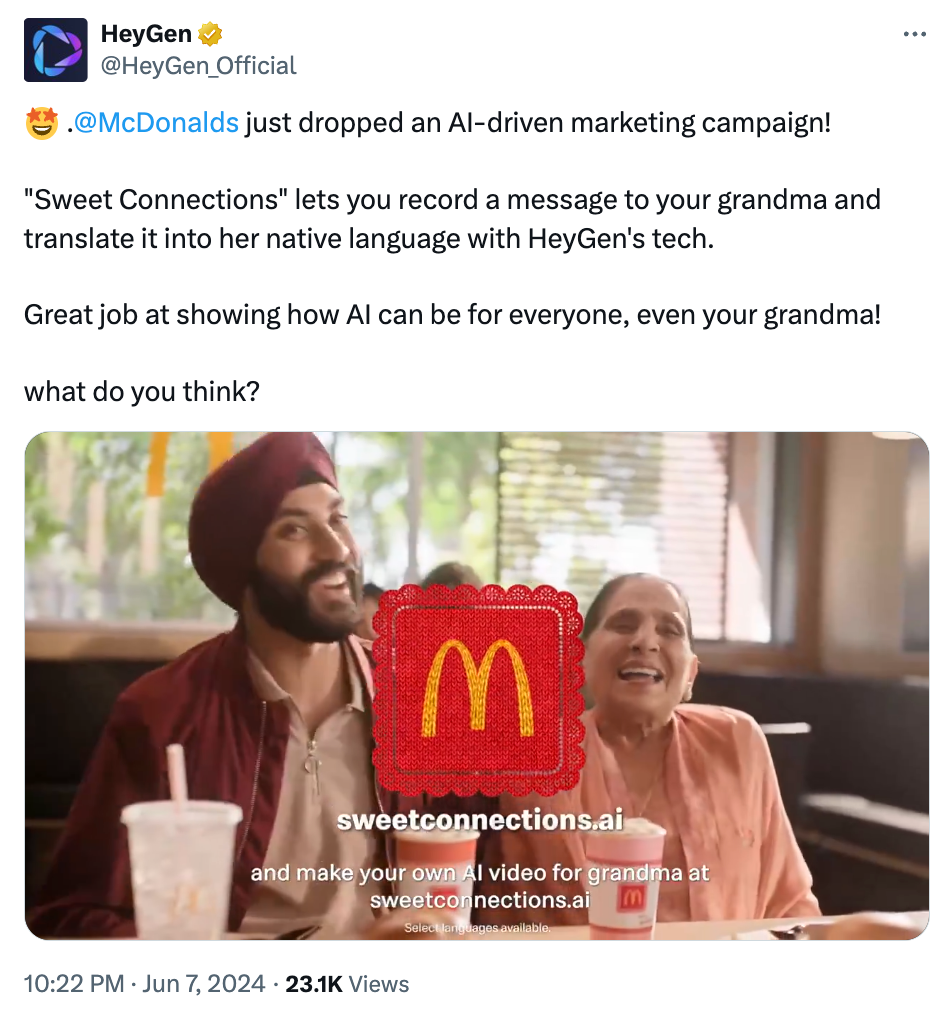
McDonald's recently launched an AI-driven marketing campaign called Sweet Connections, where you can record a message for your grandma and have HeyGen translate it into her native language.
Waseem Daher: How will this ability to generate massive amounts of personalized content change how people produce and consume video?
Joshua Xu: I think this will fundamentally change how people think about growing their business, communicating, and doing marketing and sales. We live in a video-first world. Every business wants to do more video, but right now the bottleneck is cost — it takes weeks or even months. If people can generate engaging and authentic video content, they'll do more video and use it to expand their business.
I believe we can generate highly personalized video, especially through avatars to deliver very dynamic and high-quality content. Let me give you an example. A lot of AI generation technology isn't just about saving cost and time — more importantly, it can unlock new use cases and enable people to do things they couldn't do before. I think this is a critical point for many businesses today.
Waseem Daher: How do you see real-time and asynchronous video technology developing? Right now a lot of technology focuses on asynchronous applications — for example, voice models that first generate text and then convert it to speech. When will we achieve real-time or near-real-time video? What scenarios will these technologies be used in?
Joshua Xu: I look at this from two angles. First, real-time avatar conversations are already possible and can be experienced directly on HeyGen. We're preparing an update to make it faster. It can become your virtual AI assistant, helping you answer calls or do other things. I think technology has been moving in this direction.
In two years, we may see many asynchronously generated avatars capable of real-time streaming. I also believe that within five years we'll be able to generate entire videos in real time. At that point, the generated video won't be in traditional video format — it will be a new format.
For example, right now we all browse Instagram. We might see different ads recommended by the same brand, but these ads are actually pre-prepared MP4 files. In the future, these files may not be needed. If I like avocados, I'll see a Coca-Cola ad with avocados; you might see something else. This is impossible today because producing video is so expensive. But in the future we can generate ads in real time based on user characteristics. This will become a new paradigm — future video players will be able to generate content in real time based on user profiles, delivering it in the optimal way.
Sarah Guo: An interesting analogy is that YouTube may be one of the largest learning platforms today, but the videos people watch on it are uniform and unchanging. Personalized learning and education would definitely work better, but right now the cost of producing personalized video is too high. What you're describing feels like a very different opportunity for the future of education.
Joshua Xu: Yes, we have a typical case here. Publicis Groupe generated over 100,000 thank-you videos to send to their global employees. The videos were localized into different languages and personalized with employees' names and reasons for joining the company, thanking them for their efforts over the past year. Before this, they could only send one identical video, perhaps recorded by the CEO or executive team. Now they can personalize at scale.
HeyGen's Technical Path: A Two-Step Approach to Video Generation
Waseem Daher: You mentioned technologies like GPT-4, but you've also developed your own models. What technology are you currently using? How do you view your tech stack? How has it evolved to achieve full-body rendering or other new features?
Joshua Xu: We have three models: text, voice, and video.
For text generation, we work with OpenAI's ChatGPT, which serves as the "brain" of our internal orchestration engine.
On the voice engine side, we collaborate with OpenAI and EventLab. But the entire video technology stack is developed in-house, including avatar creation, video rendering, and visual generation. I think over time, the technology trend is moving toward multimodal, multimedia models. One challenge of full-body video generation is how to combine voice with gestures — this requires training voice models and video models together so that connections can be established at the model's foundation. Previously this was difficult because we had to train TTS models unilaterally, then feed their output into the video model. But through multimodal training, this becomes entirely achievable.
Sarah Guo: Sora isn't open to developers or users yet, but world-class text-to-video models already exist, and they don't generate virtual avatars. How is your technology different from Sora?
Joshua Xu: Our original intention in founding HeyGen was to help businesses solve video production problems. What are businesses looking for? They need high quality, controllability, and consistency. So how do we achieve these goals? What's the technical path? There are probably two approaches. One is like Sora: generate video directly from text, producing the entire video in one go.
What we've consistently pursued at HeyGen is the second approach: breaking down the entire video into different parts, mostly A-roll and B-roll*, representing different elements such as voiceover, music, transitions, and so on. We solve each of these parts individually, then use an orchestration engine to assemble them into the final video.
*Translator's note: In video production, A-roll is the main content such as primary footage; B-roll is supplementary footage used to complement and enrich the video.
We feel this technical path better ensures quality while giving us more flexibility and capability to build the system. Especially in business environments, some things are better left not AI-generated, such as logos and fonts, which require extreme precision. Actually, we view Sora as a partner, precisely because we can integrate it as a component to generate content, then feed that content into our orchestration engine.
Waseem Daher: From a research perspective, what difficulties or challenges are there in building models?
Joshua Xu: Unlike other models, building video models and incorporating aesthetics into AI models is difficult. Video generation isn't just about solving math problems — it's about creating things users like and appreciate. A model optimized well on performance metrics doesn't necessarily generate better visual effects. This makes evaluation very difficult, but also very important. We generally can't judge results through traditional evaluation methods. We have to rely on product signals to determine which model is better, such as A/B testing, because only customers can make that judgment. This process is mathematically non-differentiable, so we must build a system to collect, analyze, and feed back data, feeding this data back into model training for continuous improvement.
Waseem Daher: Is this an approach you used at Snapchat, or did it develop in the HeyGen context?
Joshua Xu: I think the two are very similar, especially when we were developing camera software. How do you know which parameters work better? You can propose some objective metrics, like brightness and resolution. But often we found that higher resolution doesn't mean better image quality. For example, iPhone's resolution isn't always the highest, but the photos it takes are what most people prefer. Lessons learned early at Snapchat apply at HeyGen as well.
Sarah Guo: When researching new features like video technology, do you reference academic research more, or do you decide based on customer problems?
Joshua Xu: I think it's a combination. Additionally, I'd like to add one more point: deeply understand model limitations and try to find the balance between user needs and technical capabilities. All AI models have certain limitations. The key is to consider how to design products that avoid these limitations while amplifying the model's strengths, to deliver excellent product experiences for customers. This is very important for discovering new domains of creative experiences.
Take video translation technology, for example. Unlike traditional dubbing, it preserves the user's natural voice and facial expressions — an entirely new way of translating content. What actually powers the video rendering is a lip-sync model. We found a way to combine these technologies with speech and ChatGPT translation to create a completely new video and content localization experience.
Sarah Guo: Many people have pointed out that the abuse of others' virtual likenesses and voices for deepfakes is terrifying. How do you think about safety and misuse?
Joshua Xu: First, any politically related content is strictly prohibited on our platform. HeyGen's policy explicitly bans the creation of unauthorized content, and we take platform abuse very seriously.
Our security measures include advanced user verification, such as real-time video confirmation, one-time passwords, and rapid human review — all new content goes through moderation. Trust and safety are critical to our business, and we're collaborating with industry partners to develop tools and explore best practices to combat misinformation and AI safety issues. We treat safety as part of the content creation process, with security considerations built into every step of creation on HeyGen.
Waseem Daher: You're talking about preventing negative uses, but looking at the positive side — say, running for office. Maybe you could send every voter a personalized video message about issues they care about, delivered straight to their inbox. You can imagine this technology being used in hyper-personalized political campaigns down the road, as long as the negative deepfake risks are mitigated. That's genuinely valuable.
The Secret to Success: 80/20 Rapid Iteration
Waseem Daher: I want to ask Joshua — was choosing to use AI, and choosing to build HeyGen in public rather than in secret, an obvious decision for you?
Joshua Xu: I think this goes back to the early days. First, this was our first startup. We'd previously been in academic research and didn't know much about go-to-market. I believed that from the start, we should learn from the public community, and also give back to it. So early on, we shared our story from zero to one million: How We Reached $1M in Revenue in 7 Months as an AI Startup. And we genuinely learned a lot from the community — from other founders and developers.
Especially in today's AI explosion, there's so much to build, so much changing. Not just how you interact with customers, but software businesses and markets themselves are shifting. So sharing our progress with users and the community gives us a lot of energy and inspiration. Finding PMF early on is hard, and we also wanted to give back.
Waseem Daher: Sarah, was this appealing to you? I remember you invested quite early.
Sarah Guo: This was after the company had found initial PMF. I did read Joshua's post about going from zero to one million. Meeting a founder once is great, but 50 minutes isn't enough to really know someone, so having longitudinal data about how people behave is also very useful. I think it's good for employer brand too. If people have seen your journey, learned from you or been inspired by you, they're more likely to want to join you.
Waseem Daher: Joshua, you mentioned that moving fast is critical, and it's clearly something this team does well. What's your secret? What are the tactics? How do you build a team and culture that operates efficiently and iterates at high speed?
Joshua Xu: First, we iterate every week. I think we've been doing this since launching the product 18 months ago. Weekly iteration and shipping is genuinely challenging, but we strictly adhere to this release schedule. Generally, our philosophy is to keep the team lean and focused on what matters most. We're only 40-something people, so we really have to concentrate on the most important parts of the business. Also, as you mentioned, we've built a culture that encourages rapid action — everyone on the team should be oriented toward solving problems.
What we emphasize at HeyGen is building products iteratively. We have an 80/20 principle. Usually, when we face a problem, we ask ourselves: Is there a solution that can quickly solve 80% of the problem? The answer is usually yes. So we ship that 80% solution first — maybe it only takes a day or two. Then we look back: is the remaining 20% still a priority? If so, we apply the 80% principle again, which gets us another 16%.
At first we worried whether this could deliver the highest quality results. But I found that iteration is actually the best way to achieve high quality. Because if you apply this principle three or four times in a row, you eventually reach 99% resolution. We use this principle for everything — quarterly planning, feature testing — and it applies equally to hiring, marketing strategy, and fundamental research.
One final point that's also important: focus on what matters most. Startups typically have limited resources and small teams. You can't handle everything, so identify the three things that matter most to customers and push them with everything you've got.
Sarah Guo: Can you share HeyGen's current scale?
Joshua Xu: We're currently 40-something people, but we've already served over 40,000 paying customers. What's interesting is that these aren't early AI-adopter tech companies — they include traditional industries ranging from European manufacturers, small businesses, and global nonprofits to Fortune 500 companies. And we're solving their problems.
Waseem Daher: That's roughly 1,000 customers per employee — an impressive metric. Are you hiring right now?
Joshua Xu: Absolutely, across all our teams. We're mainly hiring for product design, engineering, AI research, and marketing.
Waseem Daher: How did you know you'd achieved PMF? Was there a specific moment, or was it a gradual process?
Joshua Xu: Once you find PMF, customers tell you. You feel intense market demand. At the very beginning, we didn't build the product first — we validated the concept of AI video generation. We posted some videos on Fiverr without telling viewers they were AI-generated, and found that it actually worked. Only then did we start building the product. We also tried many other things that didn't work. PMF is more art than science.
We developed a framework of trying to prove something unworkable rather than proving it workable. Thinking from this angle changes many of your actions. Every test is designed to prove something unworkable, which optimizes your testing process.
05
Don't Obsess Over Wrappers — What Matters Is Customer Stickiness
Waseem Daher: How do you think about competition? I know HeyGen mainly targets some marketing use cases. There are other companies potentially going after similar or adjacent markets, including some backed by top-tier investors. Do you feel the market is large enough for everyone to get a piece? Or how do you see it?
Joshua Xu: First, competition is exciting. I think it's good for the entire industry — everyone can learn from each other, push each other, and improve together. From my perspective, the key question in competition is who ultimately benefits. Actually, the final beneficiaries aren't ourselves or our investors — it's the users. So we focus on how to satisfy customers, because they're the ones who determine who wins.
AI is obviously developing rapidly right now. I believe speed is startups' only advantage. You'll see that big companies in the industry are all trying hard to catch up, attempting to do AI applications and large models. We have to stay one step ahead before these big companies figure out how to innovate.
For startups, we're also thinking about what the long-term value and business model moat is. Is it network effects? Is it from go-to-market strategy? Or is it achieved through continuously improving AI models? Different businesses may have different answers. For us, we need to build a platform that covers many use cases, attracts a large user base, and establishes a brand hub for them.
Waseem Daher: I think many people might assume differentiation comes from having better underlying technology — like some models producing better results. But you're right, the key is how to make it stickier, how to truly embed into customers' workflows so that even when other models get better, customers still want to use the solution we provide. Sarah, from an investor's perspective, how do you view differentiation? For example, some people say "something is just a ChatGPT wrapper."
Sarah Guo: I'm a very early-stage focused investor. Most investors might tell you they invest based on team, good market, or specific investment thesis, and at later stages some care about momentum. But for me, the most important thing is team. I believe team is everything. Markets and technology can change, but great founders can reshape the market itself.
Joshua is that rare founder who understands research, can innovate in machine learning, while also being product-oriented, user-oriented, executing at high velocity, and thinking long-term strategically. These qualities are hard to find simultaneously in a founding team.
I've actually been following this space for some time, so I'm familiar with the competitors. From the perspective of core company characteristics, I believe HeyGen is the only company in this space whose product experience has truly reached consumer-grade quality. If you only have 60 seconds to capture someone's attention, the product experience has to be great. Unlike top-down sales products that may have excellent business models but not necessarily high experience quality — different markets have different go-to-market strategies — I believe bottom-up user love is a hard-to-replicate advantage.
When we invested last summer, we saw HeyGen at an early inflection point. Compared to other teams, we believed in HeyGen's team, strategic vision, and momentum.
Waseem Daher: Sarah, how do you think about MVP and early go-to-market strategy for AI companies? I think this is also an interesting distinction between AI companies and traditional SaaS companies.
Sarah Guo: Early-stage AI companies may need to hit a certain quality bar before customers will use them at all. Different customer segments and users have different quality thresholds. Strong product teams can adjust parts of the product beyond the model itself to meet user expectations, at least to some degree.
Is the product good enough? Does it handle failure gracefully? As the product improves, can it attract more users? Many companies face a chicken-and-egg problem early on. They know how to improve the product, but they need data first. It takes creativity to get sample data efficiently.
People often dismiss things as just a ChatGPT wrapper. I think building a software company is still hard in many ways. Core technology is never the only hard part — it's one of many.
Being honest about quality requirements across different users is really important. HeyGen users now use avatars for earnings calls and video translation. I didn't think that would happen in 2024. When I started paying attention to this tech two or three years ago, my reaction was: this is weird, I don't believe people will use this. I was genuinely confused when people were willing to pay for it — I wouldn't want an AI version of Sarah out in the world. But I realized that if it replaces expensive video production, then the sensitivity to using this technology drops for individual creators, for internal and external communications at SMBs.
So sometimes you have to start somewhere and watch the technology improve. Even if it looks terrible today, it might be much better tomorrow. If your team can make smart bets on technological progress and push it beyond what certain customers expect, that's a massive advantage.
06
Whether to Raise Funding Depends on Company Goals, Not Revenue
Waseem Daher: HeyGen had revenue from the start. I previously read that ARR was around $1 million in March 2022, roughly 10x by October 2022, and around $18–20 million by 2023. How did having revenue affect business strategy? Obviously it didn't stop you from fundraising, but Joshua, did you ever consider bootstrapping? How did you decide to make HeyGen a venture-backed company?
Sarah Guo: Can I jump in — Joshua wasn't fundraising when we met, so I'm grateful he let me participate, because I think he was more focused on the business at that point.
Waseem Daher: Right, that's exactly my point. You built something that generates revenue, that can stay profitable and grow organically, but you chose a different path. I think it was the right decision. But I'm curious what drove that decision and how you thought about it.
Joshua Xu: We didn't really frame it as bootstrapping versus venture capital. I think we mainly focused on what the next milestone for the business was, what we wanted to do, and then figuring out what it would take to achieve it.
Companies at different stages are very different. When improving PMF, we focused on customers, understanding their most important needs, and staying lean. Later, when we reached initial PMF — say, a few million in ARR — we were working to figure out the overall go-to-market strategy, thinking about how to scale. I remember when we met Sarah, we were less than 10% of our current scale. Investors can provide different resources. Capital is one thing, but help and advice matter too. So we chose Sarah because she could support us a lot on go-to-market strategy.
Later on, we needed to go deeper, improving the model and user experience, which required more resources, more GPU compute. We never saw revenue as the primary milestone. We've always wanted to achieve our vision for visual storytelling. I think we're only 5% into that journey. There's so much innovation in video creation that new AI technology can enable, and we need to invest more resources in these new technologies. So ultimately, it comes down to what milestones we want to achieve and what it takes to get there.
Waseem Daher: Sarah, what do you think about companies that already have revenue? Should they bootstrap or raise? What options do you see?
Sarah Guo: First, I think HeyGen will become a very promising, VC-fundable company. But seriously, my parents' company was a bootstrapped network infrastructure company that eventually went public. I mention this because they didn't raise venture capital — we tried, but failed. The company was all engineers, no marketing people, no storytelling capability. They eventually raised growth equity when they hit $30 million in revenue and were profitable. That's very different from early-stage startups.
I think there are many different ways to build a company, but this definitely shaped my perspective as an investor. I think the team has to do all the work, but having high-quality relationships can significantly impact decision-making. Joshua mentioned earlier: think about what you want to achieve, then decide if you need capital. I'm also community-oriented — I think building a company requires many great people, and it's hard to do alone.
I think a fundamental question when considering bootstrapping is: if your decision framework is whether you have money or not, your decisions will be limited to things that don't require investment. From a product perspective, some things can be very expensive — developing more features, serving customers. So I don't think money is the right framing. As an early-stage investor, I'm aligned with common shareholders — we all want to avoid further dilution. Maintaining independence is important. So revenue and profitability are good, but what matters most is the net impact and absolute impact of the company. You should make decisions based on what you want to achieve, not based on whether to raise funding.
*Interview and reference materials:
https://www.youtube.com/watch?v=0rHaV3mkUG4
https://pilot.com/webinar/founders-and-funders-building-with-ai?
https://www.heygen.com/article/announcing-our-series-a
Recommended Reading