KernelCAT Lin Zhihang: Building AI That Truly Controls Your Computer

Let AI charge ahead without being constrained by human interaction frameworks.
The day after OpenClaw went viral, we sat down in the office of Kernel Intelligence to hear co-founder Zhihang Lin share their new product, KernelCAT.
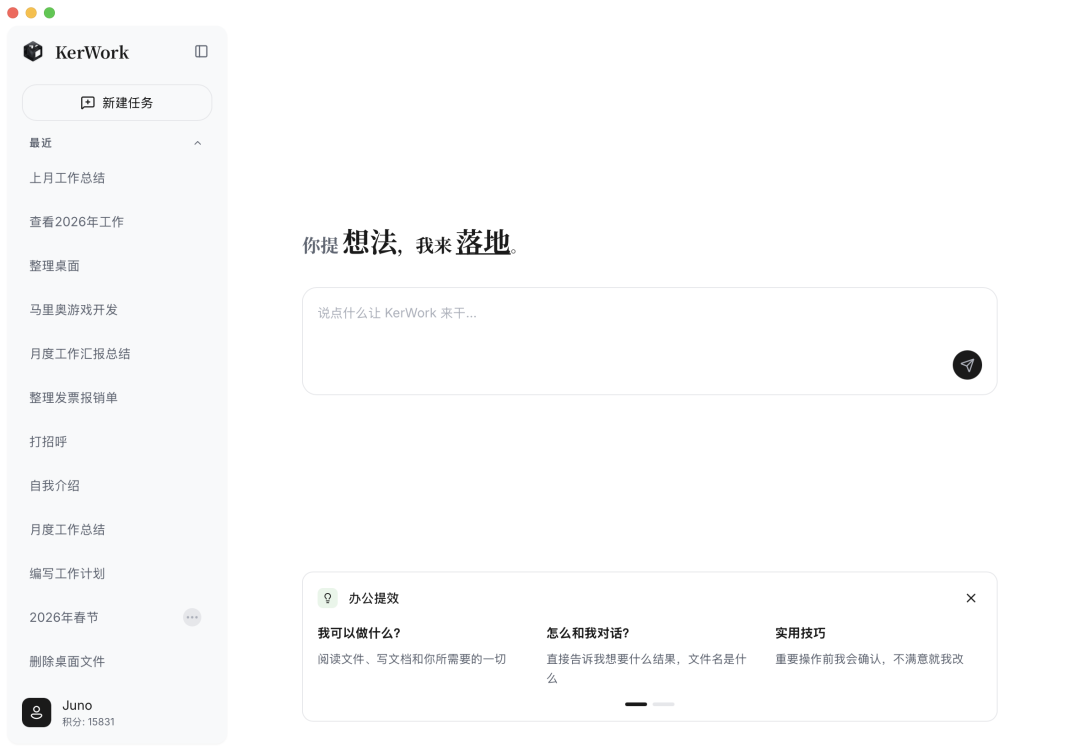
KernelCAT is a locally-run AI Agent.
In Zhihang's view, most AI products today still interact through interfaces designed for humans. GUIs, buttons, menus — these were all invented to make computers easier for people to operate. But computers weren't born with these interfaces. In the beginning, there was only the terminal. In that world, people spoke directly to machines through lines of commands.
"When a system can already be fully controlled through the terminal," he said, "why build a GUI for it?"
This is where KernelCAT began: not embedding AI into a product, but making it an agent that can take control of the computer itself.
When materials exist only on your machine, when files, code, and environments all live locally, even the most powerful model can't truly understand your world. Only intelligence running on that same machine can enter that context.
So KernelCAT attempts something more radical: letting AI operate the computer directly.
Many top programmers still work in the terminal because it's more direct, closer to the machine itself. Zhihang believes AI should have its own way of working too.
Kernel Intelligence has been using AI for computational acceleration. On the flight to Shanghai to meet ZhenFund, Zhihang was reading The Decisive Moments in History. In it, he read about Scott's expedition to the South Pole — leaving his warm home and newborn child to venture toward Earth's last unknown.
They made meticulous plans, yet were still broken by storms, bitter cold, and endless polar nights. Scott finally reached the South Pole, only to find another nation's flag already planted. On the return journey, his strength exhausted, the world reduced to blank white.
He didn't complain. In his final letter to his wife, he wrote only: "How can I tell you about this expedition?"
It was infinitely better than sitting comfortably at home.
That same day, Zhihang wrote in his notes: "Our goal is operators beyond human reach."
Perhaps this road will bring sleepless nights. Perhaps at the end, we'll find someone else's flag already planted. But every moment of this exploration itself is precious.
Continue pushing toward the unknown.

KernelCAT
Q: Where did the inspiration for KernelCAT come from?
Zhihang Lin: KernelCAT was originally designed for computational acceleration. In that process, we were mainly giving AI capabilities in operations research and optimization. We realized that if these capabilities were truly unleashed, they would have enormous potential in other domains too.
Many features didn't come from brainstorming — they evolved from real user needs. When I code, I often modify three different sections simultaneously, each handling different tasks. That directly led to a feature we gave KernelCAT: the ability to work across multiple workspaces at the same time.
A lot of the time, we start by observing ourselves. After all, we're developers and also the first heavy users. We reflect on our own usage patterns and gradually systematize them. Slowly, a core goal of KernelCAT became seeing how non-technical colleagues would use the product.
Q: Any interesting use cases you've discovered?
Zhihang Lin: I was surprised to find how strong people's need is to organize folders.
I've always believed in AI's fundamental capabilities. If an AI product's first step asks you to select a workspace, it's essentially assuming: you've already prepared a folder with all task materials ready, then you let AI execute. But the reality is, if I actually had such a folder, my work probably wouldn't be that painful anymore.
Like this week, I had to reimburse travel expenses. If I had already organized all invoices from Lark, email, and WeChat into one folder, I wouldn't need AI for what comes next.
It's like cooking. The exhausting part is prep — maybe three hours. Actual cooking takes one. AI should solve those three hours.
KernelCAT has an unexpected capability: it can handle messily named, inconsistently formatted invoices. Theoretically, if all invoices were clearly named in natural language, that would be easy. But reality is usually a string of random numbers. KernelCAT automatically pulls materials from your computer as reference and handles various formats.
Q: What's a different perspective in designing KernelCAT?
Zhihang Lin: To what degree should AI and humans be integrated?
10% is integration. 100% is also integration. In computational acceleration, many people are doing similar things. The difference is, we may be more extreme. We want to go past 90%.
We released a result with Huawei's official team, adapting the DeepSeek OCR 2 model. We took 38 minutes to adapt it from one machine to another. Throughout the entire process, we only input one sentence: "Adapt this project to this machine."
Then pressed Enter.
Then waited.
Every team is automating different slices. When we design, we prefer to think about "how to completely hand over control."
When I build a new team now, the bar for this conviction has gotten higher. Three years ago, finding someone who "believed in AI" was hard. Now it's easier to find people who claim to "believe in AI," but finding someone who truly believes is still hard. It's like asking you to get in a car with a driver you've never met, without a seatbelt, and completely trust them. About that difficult.
AI's transformation of production methods is so massive that even people like us who think we understand AI can't keep up. Many products say "every line of code is written by AI." We're more extreme — the first version of KernelCAT was designed by AI, and the UI was almost entirely completed by AI.
Q: Was this discovery unexpected?
Zhihang Lin: More precisely, it was outside the expected situation.
Yesterday we were discussing KernelCAT's next iteration. A colleague raised an issue: some commands inherently need more than 10 minutes to execute, but our current single-execution timeout for AI is 10 minutes. It times out. What to do?
With traditional product thinking, I'd probably extend the timeout. But in the AI era, we approached it completely differently.
We gave it two capabilities: first, permission to create background tasks; second, permission to read background task output.
Say it's a download task. If a human waits 10 minutes with no progress, they might interrupt it. Simply extending timeout to 30 minutes doesn't solve the fundamental problem. Instead, if you put it in the background and have it periodically check progress every 3 minutes — if it's stagnant several times in a row, it actively terminates; if it's 80% downloaded, even past 30 minutes, it judges it's worth continuing.
Our solution to "not enough time" had nothing to do with time itself. We just gave two capabilities, and it naturally solved it.
This afternoon we were also discussing concurrent exploration. It can launch three tasks simultaneously in the background, achieving concurrency by reading three streams of output. Our logic has always been simple: give it sufficiently native capabilities, and it usually performs better than we expect.
We rarely restrict AI's behavior. We prefer to give it full authority within controllable boundaries. It will strive to do better.
I'm an AI Doomer in the positive sense. Dairu Li, founder of Noitom, once posted: "If one day AI rules humanity, on top of the mass grave, sitting north-facing in the sun, will definitely be us who contributed to AI."

A Radical Believer
Q: Why a believer?
Zhihang Lin: I'm someone who firmly believes AI will surpass human intelligence.
My programming ability isn't bad. If I say AI already programs better than me, no one would be surprised now. I said this a year ago. Back then, humans and AI were like runners in a race — if it ran faster, we'd start emphasizing other abilities, like route planning, strategic decision-making, redefining the rules away from physical stamina.
But that doesn't mean humans are smarter. It's just that the existing work environment was designed for humans.
Often, humans only appear stronger because they're placed in an environment more suited to themselves. The environment was designed by humans. The tools were designed by humans. The processes were designed by humans. If in such an environment you think AI isn't good enough, that doesn't prove you're smarter.
Change the environment and it might be different. Like if we were dropped into a world designed entirely for the blind, we might not live better than AI.
I even think that many efficiency problems in current engineering software and systems fundamentally stem from humans not being smart enough, including myself. I often feel exhausted by my own stupidity, but AI doesn't.
Q: When do you have this realization?
Zhihang Lin: Often when writing code.
If one day, all cars in the world instantly became AI self-driving, with no human participation at all — would you believe it?
If it could really be replaced all at once with autonomous driving, and it was already L4, L5 level, I believe it would be sufficient. The reason autonomous driving now handles so many complex scenarios is because it's driving alongside humans. It needs to predict human errors, defend against human hesitation, hedge against human instability. In a pure AI system, the rules would be much simpler.
My first job was at TAL Education Group. That year I received the company's only top performance rating. Because I built a new technical framework. In many large companies, advancement often depends on creating new rules. So this world ended up with many strange frameworks.
I benefited from it, but I don't like this system.
Like FPGA — it's essentially using software to define hardware, theoretically capable of becoming any structure, very cool. But it never sold well. One reason is, humans can't write good enough code. Without sufficiently good programming languages to help us, it's like being given a map too complex to comprehend.
An F1 car is the fastest car on the road, but it's hard to drive. If autonomous driving can eventually handle an F1 car, why would the world still need family sedans? The shape of today's cars exists fundamentally to protect unreliable humans. The vehicles in many sci-fi films aren't designed to put people at ease. In the future, maybe every street will be filled with F1-style machines.
Q: So you want to build a work environment better suited for AI.
Lin Zhihang: Yes — that's almost the only thing that matters. Everything else is peripheral. What we're doing is operations research optimization. More precisely, we're creating a more native work environment for AI.
Q: Why did you decide to shift to this form over the past seven months?
Lin Zhihang: We've been using AI to accelerate computing. We want hardware to be unconstrained by software, designed from first principles, with all software written by AI. It's like cars — if you don't have to account for human drivers, wheel design, steering mechanisms, everything can be completely different. So much of today's design is fundamentally a compromise for human capabilities.
Q: How do you judge what's valuable?
Lin Zhihang: By whether humans need it, and to what degree.
In my view, value comes in two forms: optimizing value and disruptive value.
Don't do things that merely add a little extra. But don't be too disruptive either. Do it like Zuo Hui did with Lianjia — he wanted to build a big platform from day one, but couldn't pull it off, so he first dominated offline, then came back to build the platform.
We're doing the same with computing acceleration. The problem is that the people using chips aren't smart enough, myself included. We can't write good enough code, so chip capabilities go unrealized. It's not that we're doing anything wrong — our intelligence is just capped at this level.
We're thinking: what if we used AI to replace us in writing computing acceleration software?
I believe that would be an entirely different scene.

If Doubao Went Open Source, What Would You Do?
Q: How do you ensure alignment on technical values during interviews?
Lin Zhihang: The first question is: suppose Doubao goes open source tomorrow and you can do anything with it — what would you make it do?
You can substitute any mainstream AI name here. If the answer is just "make another similar product," that's too boring. I haven't heard an answer that truly satisfies me yet.
The second part is technical validation. We do algorithm acceleration, so we give candidates a problem: write an operator using our tools. Same frontend and backend, every technical role has to write it. We look at their operation history.
First layer: capability. Second layer, we ask: what do you think of our product? With AI at today's level of intelligence, what can humans still do for AI?
Final question: what do you think is the strongest AI?
Q: If Doubao really did go open source, what would you do?
Lin Zhihang: I've realized I can't even answer this well anymore. Because the answer in my mind is already what I'm doing.
Q: Why do you define yourself as extreme?
Lin Zhihang: "If you're not absolutely supportive, you're absolutely not supportive."
I think that applies here too. If you want to do something great and you're not extremely committed, you probably won't succeed. Of course, extreme thinking doesn't mean extreme behavior.
Like when our Russian partner taught us to play mahjong — he was an IMO gold medalist, incredibly calculating, and almost always the first to win each round. But he never went for big hands. His biggest was just a self-drawn concealed hand.
I asked why he didn't chase bigger hands. He said those plays had too much variance, too much competition. His strategy: eliminate extreme options to reduce computational complexity, guaranteeing steady-state optimality.
I'm the exact opposite. I abandon balanced, safe, seemingly reasonable choices and compress the space down to extreme paths.
His action space becomes simpler through "subtraction." Mine becomes purer through "cutting out the middle states."
If you want to build something great and your conviction isn't strong enough, it's hard to see it through to the end.

Behind the Product Is a Little Cat Controlling It
Q: What experiences influenced today's product form?
Lin Zhihang: One moment shaped our decisions for the next five years.
I was eating with ZhenFund's Zhong Tianjie in Shanghai, discussing why we shouldn't design a GUI operating system for AI.
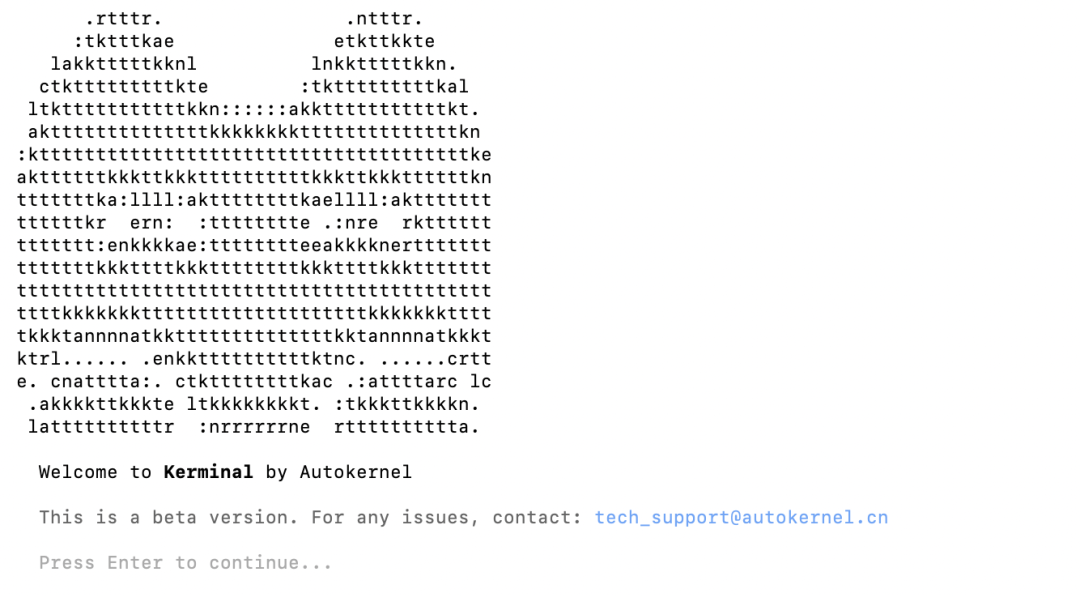
I said computers were born without GUIs — only consoles. If that's the case, the floor for an AI using a terminal should be everything humans of that era could do in a terminal.
If it can already be fully controlled through a terminal, why build it a GUI?
GUIs are fundamentally designed for humans. Many top programmers don't even use GUIs — they still work in terminals, and they're incredibly productive. I don't encourage such an extreme approach, but the fact itself shows: PCs are designed for humans, not for AI.
AI should have its own way of being used. From that day on, we started pushing in one direction: let AI run truly unhindered forward, no longer constrained by human interaction frameworks.
Many products you'll see in the future will tend toward "usable," "easy to use," "good-looking" on the surface, because they face humans. But the real underlying intelligence might just be a little cat controlling it all.
Q: If we talk again in five years, what scenario do you envision?
Lin Zhihang: I think human thought gets shaped by interaction methods.
When you sit at a computer, you naturally enter a productivity mode. When you open AI on your phone, it's more casual. If you're using it within Douyin, it's even more entertainment-oriented. People don't treat many AI products as real productivity tools — they treat them as entertainment, or very limited productivity aids. This isn't a capability problem, it's an interaction problem.
Different interaction forms change human expectations of AI.
We've observed that the same product receives completely different queries on desktop versus mobile. Messages sent from phones are more exploratory, more casual. On desktop, you think more, organize more. Even for the same task, the prompts you give AI are completely different.
One reason OpenClaw took off is that it gave AI an opportunity — text input through instant messaging. What people send in IM tends to be very natural, very real. This gives AI huge room to operate.
Conversely, if you give it boxed-in, highly normalized input, don't expect much from AI.
Current tutorials all teach people to write prompts more clearly, more standardized. But truly creative input doesn't emerge from being constrained.
Q: Like how people now love Typeless for voice input — also a new interaction method.
Lin Zhihang: Let me tell you a story.
I previously worked on a medical LLM called "Huatuo." The year I graduated, I developed severe tenosynovitis. A friend I hadn't contacted in a while suddenly asked: "Better?" I said: "Thanks to AI." He thought the medical model had treated me. I said no — it helped me write code.
Then a few days ago, my tenosynovitis flared up again. Because now I'm writing code with three AIs simultaneously. Though they help me write, I'm in conversation with three of them at once, so I'm actually typing more. Switching to AI made my tenosynovitis come back.
Tianjie recommended Typeless to me. I tried it — genuinely good. But the problem is, I also have chronic pharyngitis. Next I'll probably have to look into brain-computer interface projects.
This story maps to three stages:
Stage one: AI helps humans.
Stage two: AI gets faster, humans are forced to keep up.
Stage three: humans start expanding their own interfaces.
I think the reason I can't work faster isn't that I can't think fast enough — it's that my IO is too slow. Slow to type, slow to read, limited input and output. Any faster and I start making typos. It's a bit like AI is now whipping humans to upgrade themselves.
Q: Why do you think Anthropic is the best?
Lin Zhihang: Anthropic has a certain feeling — you sense that whatever they want to achieve, they will achieve it. I don't yet know how they do it.
Someone asked me why I don't go build large models. I said building large models is boring. To train a top-tier model, with enough resources and money, it's not necessarily impossible. But what I couldn't do is build a team that can sustain leadership without copying others.
Q: Have you had a wow moment with Anthropic?
Lin Zhihang: No. But if a company holds such weight in your mind yet never delivers a single wow moment, that means it's not one flash of brilliance — it's sustained excellence.

Life May Fall Short of Expectations, But It's More Exciting
Q: Talking about the pain of transformation — have you had similar experiences?
Lin Zhihang: My undergraduate degree is from Chongqing University of Technology, a non-211/non-985 school. In entrepreneurship, especially in AI circles, almost everyone I know has stronger credentials than me.
Back then I gave up my autonomous admission slot at Beihang University to go to this school. Because the slot I earned through competitions only allowed me to choose civil aircraft design, and it locked me into a path from undergraduate straight through PhD. That was the cost.
But I started writing code in middle school. Being a programmer was my dream early on, so I gave up that path.
From a non-prestigious undergraduate to TAL Education, right when the "double reduction" policy hit. Later I had breakthroughs in entrepreneurship, but also fell short of expectations. Many investors ask me: "Your path seems pretty smooth — what if one day you hit a setback and can't recover?"
I say, seeming smooth is the outcome.
Q: What opportunity let you start programming in middle school?
Lin Zhihang: How does a TV emit light? How does it display images? It sounds complicated, but break it down and it ultimately comes down to combinations of three primary colors. Same with lamps — they look complex, but the essence is just heat and light, electrical excitation. Heavy machinery too — hundred-ton equipment seems outrageous, but at the bottom it's just internal combustion engines, pistons, and gears scaled up.
You can talk about materials science details, engineering optimization, but the principles are simple. Stronger materials, larger structures, but no qualitative leap in logic.
Only with computers — I can't explain why they work.
1 + 1 = 2, how does a computer do it? Can any of you fully explain it right now? Even I have to look things up.
It was something I couldn't deconstruct. I studied it because I wanted to understand it. No grand narrative, just wanted to figure it out.
Then AI came along. Kids today can already feel like "computers are no big deal," but they completely can't understand why AI has intelligence. Every generation encounters something they can't deconstruct.
If you ask me, why should there be artificial intelligence? I've recently liked using one concept to explain it: lossless compression.
You use Python to generate a 100-million-digit random number. How do you take it with you? The simplest way is to take the code that generated that random string. If the string is long enough, what's truly valuable isn't those 100 million digits, but the program that generated them. The program is shorter than the number, but contains all the structure.
Compress to the extreme, and what remains is pattern.
So some say intelligence is essentially a compression capability. When you can use a shorter structure to represent a more complex phenomenon, you are approaching intelligence. This is one of the most elegant explanations I've seen.
Q: If you actually met a kid, how would you explain AI to them?
Lin Zhihang: I couldn't explain it clearly.
Google has a famous interview question: "How would you explain a search engine to your grandmother?"
Once I actually tried explaining it to my grandmother. Couldn't get through. Later I looked at those so-called excellent answers and realized they have a floor — the other person needs at least middle school math. "Explaining clearly" has prerequisites.
Q: How did you get your startup idea?
Lin Zhihang: Every generation has its mission. I think using AI for compute acceleration is one of our generation's missions.
Suppose one day we actually succeed at this. The next generation will probably think we're trash. They'll say, look at this company still using AI to write software for compute hardware, this thinking is so backward. In their view, what we're doing now might just be a transitional phase, "too old too slow."
What we're finding now in conversations is that the more senior kernel engineers are, the less they believe in the logic of what we're doing. It's actually some CEOs or people with a more macro perspective who more readily accept it.
This is normal. Imagine you invented the automatic spinning machine, then went to demonstrate it to the fastest hand weaver. He might think you're trash. He'd say, I'm already fast enough, how much can you help me? If you went to explain this machine to a national intangible cultural heritage inheritor, he'd be doing well not to hit you. But if you went to the factory owner, it'd be different.
Probably the same in the future. When stronger intelligence emerges, people will think our current path is fundamentally wrong. Maybe they'll say, why still have software scheduling hardware? Why not embed AI directly on the chip and let the chip handle its own scheduling?
At that point, we'll be behind again.
One generation will eventually be eliminated. My thinking ability can probably only reach the current stage. The next generation will jump further.
I read a book early on called The Top of the Tidal Wave. It said: "Retire before you become senile."
Q: In art there's a term called unlearn, meaning you need to forget what you've learned. So does doing this now require forgetting some things? Or can you just not forget?
Lin Zhihang: LLM unlearning happens to be a direction I've researched.
You'll find that unlearning and forgetting are two different things. Suppose a model was trained in 1990, when the Soviet Union hadn't collapsed. By 1993, reality has changed — how do you make the model "forget" its original worldview?
Overwriting data isn't enough. Because certain narratives occupied a large proportion of its training. The more I worked on it, the more I felt this problem was extremely difficult. Maybe true unlearning is something humans fundamentally can't do.
Rather than forcing yourself to forget, better to stay open while you still remember these things.
Q: You mentioned earlier that opening an AI product comes with expectations. What expectations should we have for KernelCAT?
Lin Zhihang: Our current starting point is kernel-based, combining AI and programmatic capabilities into a product. But when one day we discover this product has greater intelligence space, we may need to redefine it.
We have a draft definition now: it is an intelligence that can truly control your computer.
We don't really want to define it by "what it can do," but by "how it exists." Its form is an agent that can operate your computer. As for what it can do, that's for users to imagine. The materials only exist on your computer — even a writer far more skilled than us, without access permissions, can't reconstruct that content.
So we emphasize that it is an intelligence running on your computer.

Life Grows from Chaos
Q: How do you hope people will describe your team in the future?
Lin Zhihang: Before coming to Shanghai to meet ZhenFund, I read The Decisive Moments in History on the plane. One chapter was "The Race to the South Pole," about British explorer Scott.
When he set out for the South Pole, his child had just been born. He still chose to expedition, to go to the last unoccupied region on Earth. That meant extreme cold, storms, polar night. Later they did reach the South Pole, but died on the return journey.
In a blank, primal world, fuel exhausted, with only freezing or starving to death as options, he chose to face death with dignity. In his farewell letter to his wife, he wrote how much he missed the fireplace at home and his child, but then said: "What shall I say of this expedition? It is much better than sitting comfortably at home!"
I think entrepreneurship is the same. If it's just for money, there's no need to start a company.
The most beautiful thing about this story is that Scott's starting point was to be the first to conquer the South Pole. But he wasn't the first. The first was Norwegian Amundsen.
Throughout human history, numerous advanced plans died on the road. Like RISC-V, which is hot again now. RISC-V didn't fail back then because it wasn't advanced — it lost in market competition. Later circumstances changed, and it was brought up again.
Zhi Zi Xin Yuan might also die. I don't care about this. If someone beats us at compute acceleration, I'll be happy too. The joy isn't in being first to arrive. Success doesn't have to be mine.
You ask how I hope to be described?
"Pioneer of compute acceleration" is good. "Unfinished pioneer" is also fine.
Zhi Zi Xin Yuan might also fail, but if someone beats us at using AI for compute acceleration, I'll be happy. What I truly fear is if we fall on the road, and those behind see it and never walk this path again.
Q: This entrepreneurial feeling is like the adventures written in many books. What questions do you still not understand?
Lin Zhihang: Not understanding something isn't necessarily my fault. I believe there are always people smarter than me in the world. Someone asked Elon Musk what's hardest about entrepreneurship. He said the hardest thing is building, in a complex system, a mechanism that continuously gives correct feedback or reward. You need a system that can continuously correct you.
Q: Do you prefer to find people who have had entrepreneurial experience before?
Lin Zhihang: Depends on their motivation. If they started a company for a great cause, then we need to see if what we're doing counts as great to them. If not great, then it's not a match. If they started a company for happiness, then can we give them happiness. From this perspective, unsuitable people far outnumber suitable ones.
Q: Finding suitable people is hard.
Lin Zhihang: It's long-term and painful.
Q: Then what are you starting a company for?
Lin Zhihang: A great cause. But how long can greatness last? AI democratization is certainly great. But maybe some people are only interested in a certain stage, and find it boring after solving one problem. I'm the same — training large models was interesting at first, later it became an assembly line to me.
Q: If you used three words to describe your current team, which three? Which three?
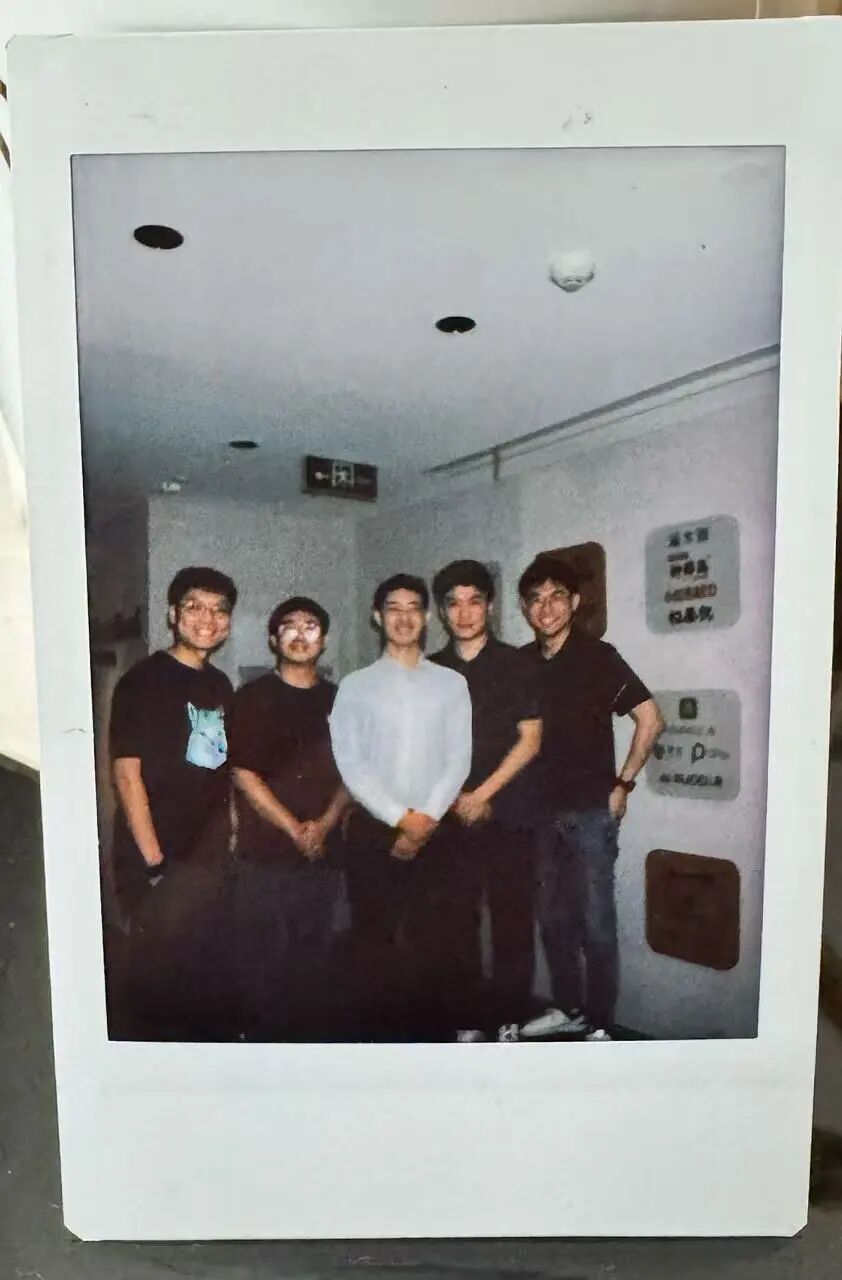
Lin Zhihang: Young, chaotic, diverse.
Q: The word chaotic is interesting.
Lin Zhihang: To fight entropy reduction, you first need entropy. Without chaos, what are you fighting with?
We spent a month discussing how to interact with agents. Traditional design thinking is fields, structure, parsing JSON. But now that's not needed. Whatever AI says, render it. No need to define field formats, no need to obsess over structure. Just accept its output.
This caused massive chaos inside the company. A backend engineer asked on day one: "Why build such a heavy product on Day 1?" It looks like it can do everything, the structure seems complex.
But actually no. The underlying intelligence level is the same, output is synchronous, just the form is different.
Many colleagues aren't used to this mode, find it weird. I'll say, I know you're uncomfortable, but bear with it.
Exploration might fail. But the word exploration itself has nothing to do with success or failure.

By Cindy