Former Neuralink President Under Elon Musk: Brain-Computer Interfaces Are Not a "Moonshot"

The smallest combination needed to drive a major transformation in medicine.
Brain-computer interfaces (BCI) are often described as a distant future: typing with your mind, talking to AI, even uploading consciousness. But Max Hodak chose to start with a much more concrete problem: helping blind patients see the world again.
Max Hodak is the founder and CEO of Science Corporation, and previously the co-founder and president of Neuralink. From Neuralink to Science, he has been part of the two most-watched startup ventures in the BCI field over the past decade.
In Hodak's view, the brain is the most important thing humans have. Signals for sight, hearing, balance, and movement pass through tiny neural connections, letting us perceive and change the world.
He sees the brain — and indeed the entire universe — as a computer.
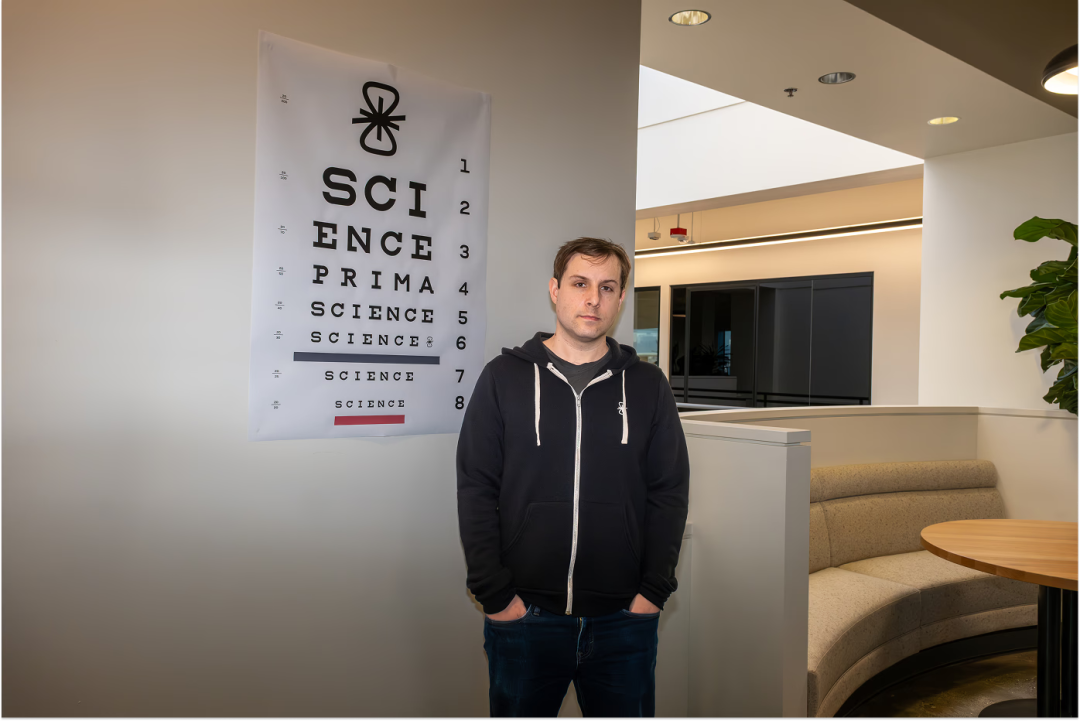
In this interview, Hodak explains how Science is turning the grand BCI vision into products, step by step. Prima can't fully restore sight yet — it's still black-and-white, with a narrow field of view — but it has already proven one thing: if you treat the brain as a computer, long-unsolved problems may yield to a different kind of solution.
BCI is always seen as a "moonshot." But as Hodak sees it, humanity has already been to the moon, and left footprints. Many things that seem far away aren't nearly as distant as we imagine.
Restore vision first, then understand the brain; build products that genuinely help people first, then talk about upgrading the body and extending human experience.
The value of this conversation goes beyond a retinal chip. It offers a way of thinking about entrepreneurship: the long-term vision should be big enough, but the first step must solve a real problem.
ZhenFund is also looking for and supporting founders who hold a long-term vision while starting from concrete problems. If you're working on such a problem, we'd love to talk.
This episode comes from No Priors. Below is the full transcript, translated and edited by ZhenFund:

The mission is to improve the human condition
Q: For people unfamiliar with Science, can you start by explaining why you left Neuralink to found this company? What is Science's mission?
Max Hodak: We're a medical device company. If lowercase "science" is about using a unique understanding of the universe to improve the human condition, then uppercase "Science" shares that same mission.
More specifically, we use our understanding of how the brain works to build interventions that are rare in medicine — ones with immediately visible effects. Our lead product is the Prima retinal prosthesis.
You can think of it as a "cochlear implant for the eye."
Cochlear implants are among the most impactful technologies in medical history. If you've ever seen videos of a baby's cochlear implant being switched on for the first time, the impact is overwhelming. Our goal is to build something like that.
Q: It's a chip, right? And it works together with a pair of glasses?
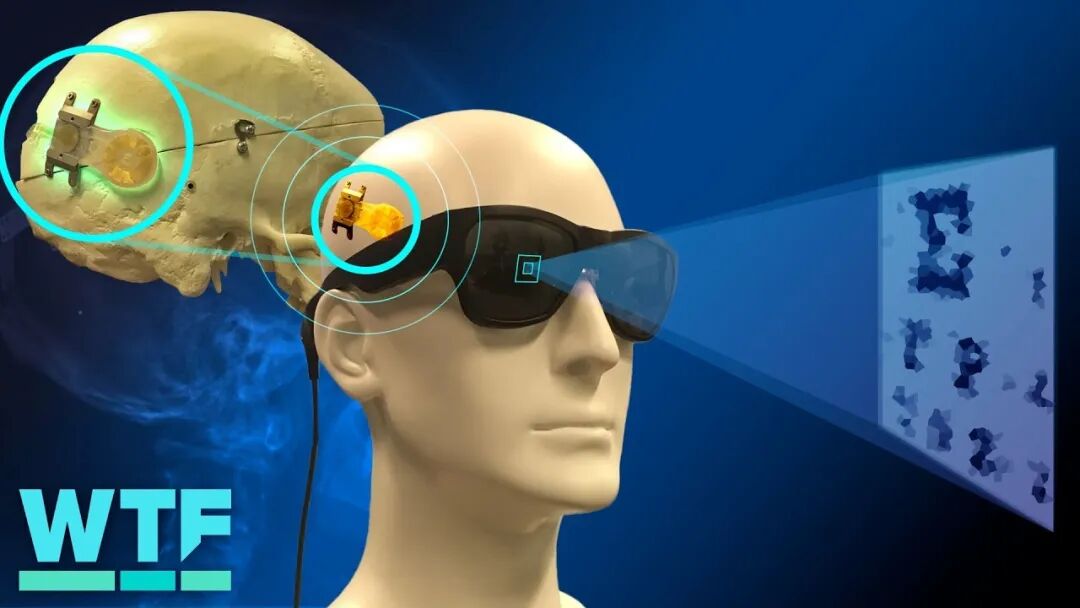
Max Hodak: Yes. It's a very small chip implanted beneath the retina, mainly for patients who have gone blind due to the loss of photoreceptor cells.
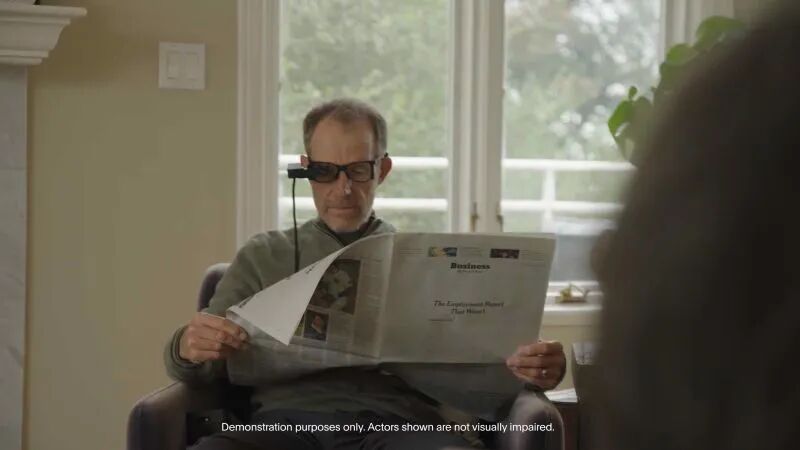
The patient wears glasses with a laser projector. The glasses capture images, then project them onto the chip under the retina. The chip converts light into electrical signals that stimulate the still-healthy nerve cells in the retina, bypassing the failed rods and cones and sending visual information back to the brain.
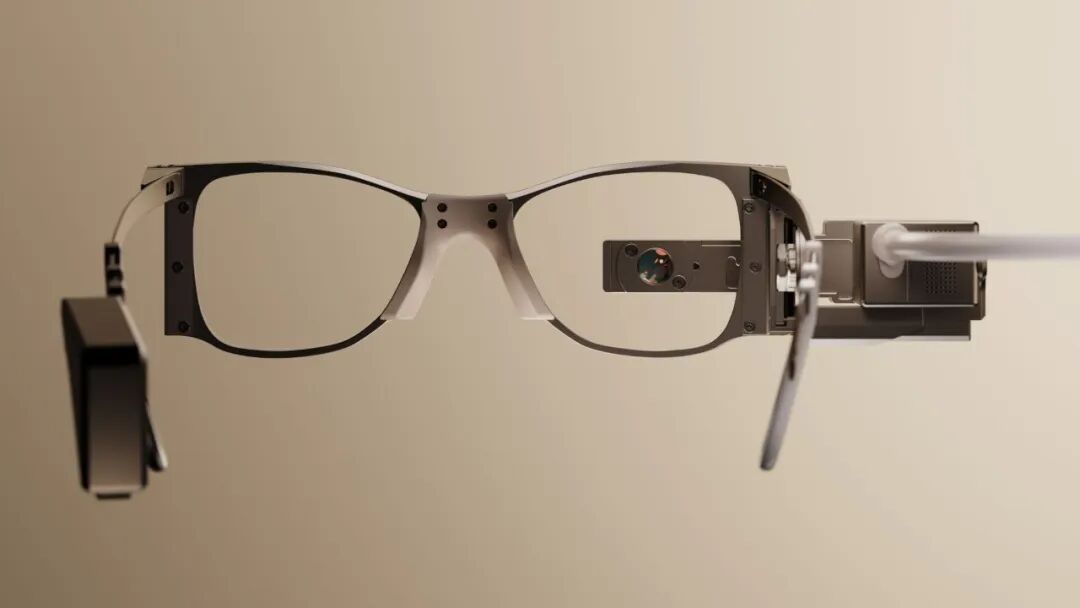
Our current clinical trials target geographic atrophy caused by advanced dry age-related macular degeneration (AMD). Next, we'll also run studies in other retinal diseases such as retinitis pigmentosa and Stargardt disease.

The retina became the first bet
Q: You originally wanted to build an invasive brain chip. Why did your first step land on this product form instead?
Max Hodak: When we founded the company, we had several directions, one of which was biohybrid neural interfaces. Instead of inserting metal electrodes into the brain, or directly genetically modifying the brain, the idea is to transplant living neurons so they form new biological connections inside the brain.
It's a big research program, and very exciting, but the timeline is long, and the company also needed a product line closer to commercialization.
So we asked ourselves: given our resources and the state of the field in early 2021, what's the most valuable thing we can build?
Our answer was: help blind people restore their vision.
To restore vision, you first have to understand how visual signals enter the brain.
What is vision, exactly, inside the brain? You can start at the retina, since that's where visual signals enter the nervous system. You could also consider stimulating the lateral geniculate nucleus in the thalamus, the key relay station after the optic nerve enters the brain. Further downstream is the primary visual cortex (V1) at the back of the brain, which contains roughly 500 million cells.
So if you want to restore vision, there are three possible routes: go in through the retina, through the thalamus, or through V1. If the patient still has an intact optic nerve, we prefer to start at the retina.
Then you also have to choose which cells to stimulate, and how.
Early on we explored every possibility, including gene therapy, electrical stimulators, and ultrasound approaches. In the end, we developed our own advanced retinal gene therapy, which we expect to enter human trials next year.
We also searched globally for the most advanced technology in retinal electrical stimulation. In late 2022, we found a French company called Pixium Vision that was far ahead in this direction. Its technology was originally developed by Daniel Palanker's team at Stanford, then licensed to this French company, which was running clinical trials at the time.
We spent a couple of years getting to know the company and decided to acquire it. We saw something others hadn't seen yet.
The deal turned out extremely well.

BCI is not a "moonshot"
Q: Can you talk about the CE mark and regulatory approval you recently received?
Max Hodak: After the acquisition, we spent about two years bringing Prima to market. This July, Prima received marketing authorization in Europe. That's a hugely important milestone, and first sales will begin in the coming weeks.
Q: That's remarkable. When most people think of brain-computer interfaces, they think of it as a "moonshot" — maybe you won't know for ten years whether it works.
Max Hodak: People forget that the moonshot actually succeeded.
We went to the moon, and we left footprints. But in Silicon Valley, the word "moonshot" is often used to describe things with extremely low odds of success — as if that makes it okay to burn through a huge pile of investors' money.
But the actual moon landing really happened. I think the success rate of "moonshots" throughout history is higher than people assume.
The most important thing is that we're building a real business, and Prima is the starting point.
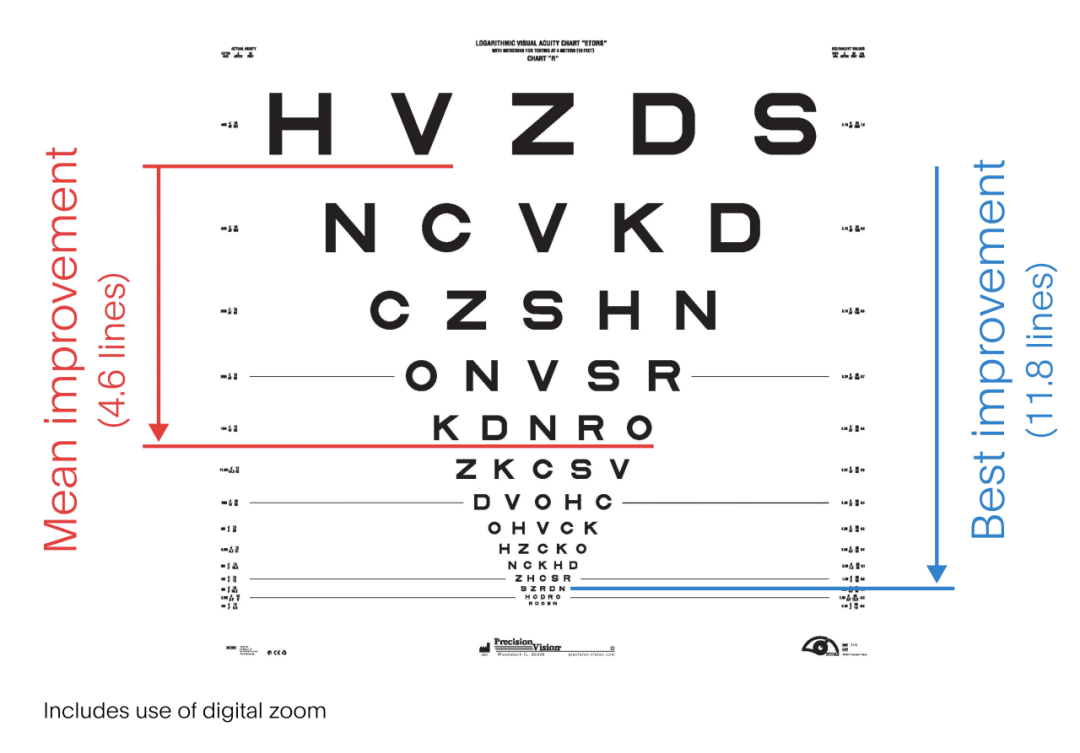
Patients using Prima show markedly improved letter recognition

The minimal set that could transform medicine
Q: When you chose the signal pathway, the product form, and the indication, how did you weigh timelines, engineering cost, and risk? Were you looking for something big enough and useful enough, yet achievable within a certain timeframe?
Max Hodak: Our pipeline has three parts. The first is vision restoration, the second is biohybrid neural interfaces, and the third is our perfusion program, Vessel.
If these three things can succeed over a 10–15 year horizon, they're the minimal set we believe is sufficient to drive major change in medicine.
In the past, people spent enormous amounts of time and money searching for drugs — hoping to restore vision or hearing, halt the progression of Parkinson's disease, or help paralyzed patients move again. But it's extremely hard to first understand the biological and molecular details and then develop drugs on that basis.
Frankly, humans aren't good at this.
By contrast, if you think of the brain as a computer, many problems become much more tractable through engineering. In medicine, few treatments are like cochlear implants or deep brain stimulation — you switch them on, and the change in the patient appears immediately.
You can implant electrodes in the motor cortex of a patient with tetraplegia, and an hour later they might be playing video games. That rarely happens with most drug therapies.
Q: Small-molecule drugs are more like a random walk — screening through nature.
Max Hodak: Small-molecule drugs are especially hard. You can also do highly engineered, patient-specific CAR-T therapies, but the outcome might be a violent immune reaction. By comparison, if you put electrodes into the primary motor cortex, there's a good chance the patient is using a computer an hour later.
Drug development can take a decade. You wait until the clinical trial ends, and only then do you flip the card over and see what it says — and sometimes it says "No." Once it fails, it's very hard to keep pushing the project forward.
But with neural devices, we have a clear sense of what to change next and how to make the product better.
The current retinal prosthesis is a great proof of concept for us. No one had previously restored formed vision in a blind patient's mind this way.
Of course, the field of view is still very small right now — like looking through a straw — and it's black and white only. Next, we'll add grayscale and shading so patients can distinguish red and green. Blue will be harder.
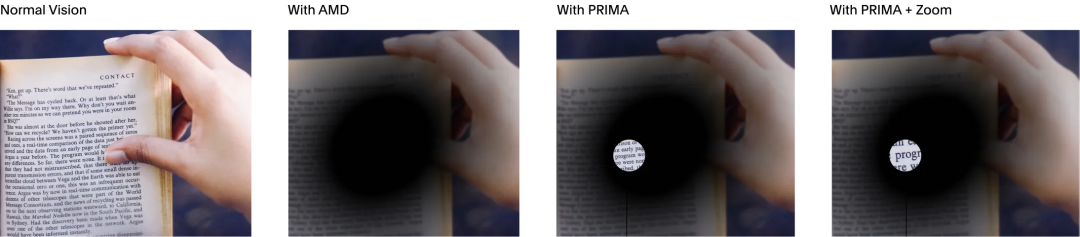
This is a path where you can iterate through engineering, and the product gets better with each generation.
Q: Can you talk about what's happening in the clinical trials? How much variation is there between patients? Where's the ceiling right now?
Max Hodak: The most important thing in a clinical trial is proving that this kind of success can happen at all.
We have patients filling in Sudoku puzzles and doing crosswords. Some are reading books. I've talked with both the patients and the surgeons. When you watch these videos, it almost feels too good to be real.
Q: How do clinicians react when they see these results? Did the people who first started working with you agree with your claim that "the brain is a computer"? Did they think this path had a higher probability of success?
Max Hodak: If you want to make people angry, go on the internet and say "the brain is a computer." The moment you say it, you're already on the defensive.

The brain is a computer
Q: Why do people dislike the phrase "the brain is a computer"?
Max Hodak: I don't really know. Based on how I understand the world, the brain very clearly and literally is a computer. I even see the entire universe as a computer. You can arrange matter in a certain way and let it evolve over time to solve some computational problem. The brain works the same way.
Q: That's a much broader definition of a computer than the one I had.
Max Hodak: Right. There's nothing special about transistors. We usually understand computers in an idealized way — like the Turing machine, which is an abstract model of computation.
I understand computation as a system moving from one state to another according to certain rules, where those state transitions are meaningful.
This view is counterintuitive on a couple of levels. First, brain-computer interfaces aren't just about decoding motor intentions from the brain to control a cursor, a keyboard, or a robotic arm. Second, does a retinal prosthesis count as a BCI? That's a definitional question too.
If you think it does, it opens up a new way of seeing things: many medical problems could potentially be solved through brain-computer interfaces — people just haven't thought about them that way before.
It's not that no one was interested in this direction. It's that our approach is different, and our culture differs from a lot of traditional biotech companies. Biotech in the United States has always had an East Coast–West Coast cultural divide. We're much more like a Silicon Valley tech company: we treat many traditionally biological problems as ones that can be solved with devices and engineering.
That's also why we mostly raise money from tech investors. During our Series A, the only biotech investor I actively sought out was Bob Nelsen (co-founder of ARCH Venture Partners and one of the top investors in biotech).
Q: When you present BCI products, you often place them along a spectrum. Can you talk about what kinds of devices and approaches people in the BCI field are working on right now?
Max Hodak: I think of BCI as a category, the same way pharmaceuticals is a category. Sometimes when I'm talking with investors, they'll say they've already invested in a BCI company. I push back: "Would you say you've covered the entire pharmaceutical industry just because you invested in one drug company?"
Of course not. Pharma includes small molecules, gene therapies, CAR-T, and entirely different disease areas. BCI is the same — there are many different paths, and you can't lump them together. Even within neurodegenerative disease, people can have completely different technical hypotheses: some work on protein degraders, others on gene therapy, and there may be other routes.
At one end of the spectrum are silent speech devices. Whether they count as BCIs is debatable. Some record neural signals via EEG; others might use radar-like methods to capture tiny movements of the face.
What they do is replace your hands as an input device.
But the problem is, hands work really well already. And many operations can't be completed with a vague thought alone — you still need an explicit confirmation action.
People say: if you want to call a car, you don't need to open Uber — just think it, and the car shows up. Convenient. But you'd definitely want your communication with Uber to be unambiguous. Otherwise, a fleeting thought during a meeting gets misread as a ride request, and a car shows up for you. That's annoying.
So this kind of interaction is best kept explicit. As long as it's an action you deliberately want to perform, you don't need sophisticated technology — your hands can already do it.
Sure, it would be valuable if people had a few extra "hands," and more convenient human-computer interaction could be useful. But these hand-replacement products aren't what I mainly think about. Because if you can get vision, hearing, balance, plus a thousand bits per second of motor control, you've already built half of The Matrix.
At that point, many medical problems get reframed. The focus shifts from repairing an organ to rebuilding the brain's connection to the outside world. That's what we really want to do. Some companies build products around speech-to-text or communicating directly with AI, but that's not Science's focus.
At some point, you're no longer just communicating with a thing — you're redrawing the boundary of the brain itself. We don't know exactly where that turning point is, but it should exist.
Using the two hemispheres of your own brain as a whole is different from talking to another person. All communication, at its core, creates some kind of correlation between two brains. When we speak, a strong correlation forms between our two brains.
Communication is built on pre-shared structure. If we didn't share a language, a common educational background, a mutual understanding of certain mathematical concepts, we couldn't communicate at all. A concept gets activated in my brain, I serialize it into language and send it to you, and the pre-shared conceptual space in your brain gets activated in turn.
One model is that two brains share some structure in advance — whether the other side is an AI model or a biological brain — and then communicate through some channel. The other model is that you directly add new structure and capability to the system.
Figuring out where the boundary between these two lies is a research direction we're very interested in.
Q: On this boundary question, what do you personally most want to explore?
Max Hodak: That pulls out a core question: what exactly is "you"?
Q: I'm actually not that interested in the philosophical question of what makes me "me." What if I just want to turn my brain into a rich computer, to better understand other people's experiences?
Max Hodak: There's still an important question here. If I simply scanned your brain into a computer and got a software-simulated version of you, would that still be you?
Say you have lung cancer. We scan your brain into a computer, and the process doesn't destroy the original you. Now you can start talking with this copy. After the conversation, you say: "All right, I'm going into hospice care now, but this digital copy will keep making investments on my behalf."
Would that really make you more at peace with death?
Q: That's an interesting question. Have you ever been under general anesthesia?
Max Hodak: Yes. General anesthesia does create a kind of discontinuity, so you have to explain: why is that discontinuity different from copying you?
They're clearly different. People might have misgivings about anesthesia, but they wake up, find they're still there, and accept it.
But if I make a copy of you, you could even talk to that copy, and then tell yourself: "Okay, I can disappear now." I don't think most people would genuinely believe that copy is them.
In physics, some operations change a system — creating something, or making something disappear. Life has similar situations: you can create a new life, a new mind, and there are moments when they get annihilated.
It's also possible that it was neither created nor destroyed, but slowly changed while maintaining continuity.
Q: Is Science approaching consciousness step by step, or are you studying consciousness directly? For instance, the mechanisms behind changes in consciousness that you mentioned — are they research subjects for you today?
Max Hodak: A lot happens simultaneously in a single moment of consciousness. You're seeing, hearing, smelling, feeling — these experiences arise at the same time. They're different elements within experience, but what we want to understand is how the brain constructs each of these experiences separately, and how it makes them perceived as one unified whole, distinct from other experiences.
You have your vision and your hearing. You'll never get my vision plus your hearing. You might think that's obvious — it's in my brain, not yours. But we need a more fundamental explanation of how this separation actually happens.
Q: So you consider this a very foundational question?
Max Hodak: Yes. I think continuity matters enormously. As long as continuity exists, people can accept their identity changing quite dramatically over time.
But if you only preserve identity — say, by making a digital copy that answers questions exactly the way you would now, yet has no experiential continuity with you — that's not nearly as satisfying.
Q: That's an interesting trade-off. If the experience is continuous, I can accept even very drastic changes. But if my IQ dropped significantly, I don't know.
Max Hodak: A living state with "provable characteristics" is something we've never seen before. That state might be temporary — say, your IQ drops for a while and recovers a few weeks later — and maybe you'd accept that.
Once you get to Substrate Independence, where consciousness is no longer confined to one particular body, you can go in almost any direction.
That's what makes it interesting. A big missing piece here is Connectomics — mapping and understanding the brain's neural wiring diagram. I think the field is close to being able to complete some key projects. We're still far from a complete human connectome, but a mouse connectome, in my view, is not far off.
Q: Do you think it makes sense that, as AI model research advances, investors, founders, and engineers are becoming more interested in brain-computer interfaces — because there seems to be some shared structure between representations in AI models and in the brain?
Max Hodak: Yes, that's what's called the Platonic Representation Hypothesis (PRH). It's a really interesting idea, and it's controversial in academic circles.
When you look inside large AI models, you find mathematical structures that look a lot like what you see in neuroscience. If you look at how AI models represent concepts, and then at how brains represent concepts, you find similar geometric structures in their representation spaces.
For me, that was one of the earliest clues. We actually used this at Science. We know there's a real relationship here, because we can find correspondences between neural recordings from animal brains and the internal representations of AI models.
That's what made me realize AI is headed in the right direction. It's not a gimmick, and it's not about to hit a wall. There's something deeper going on.
There seems to be a fact about the universe: when different systems learn, they all gradually latch onto some underlying structure of the real world. It feels like a law of physics. Apply enough computation to matter, and you get something that looks like intelligence.
Q: Why do you think this is controversial?
Max Hodak: Some people just seem not to want it to be true, and I'm not sure why.
But it's true that we don't fully understand what's happening here yet.
For instance, is this structure global or local? You can recover the relational structure between concepts, but the correspondence might only hold locally. As for where things that are unrelated to each other should be placed — that question gets very technical very quickly.
In short, there's still a lot we don't know. And that gives people room to question whether it really is as fundamental a clue as it appears to be.
I think the answer is yes.
Q: If your beliefs are right, what's the most promising way to do neuroscience today?
Max Hodak: Ironically, it might be to go work on AI.
I have a few neuroscience friends at OpenAI and Anthropic. We joke: "You left neuroscience." But they didn't, really. It's just much easier to do "neuroscience" on models.
To what extent that genuinely counts as neuroscience is itself a fascinating question.

Making vision restoration a business
Q: I want to talk about Science's near- and medium-term future. How will your first project be commercialized? You've said this field needs a business generating $100 million in annualized revenue — how do you get there?
Max Hodak: We take profitability very seriously — or at least making sure the company has the capacity to keep going for the long term. If you can genuinely restore vision to blind patients, that's a good business.
Q: Especially since it's a problem almost everyone may face as they age.
Max Hodak: Yes. Age-related macular degeneration is extremely common. By age 80, about half of people have some degree of AMD; by 85, one in ten has the disease.
We haven't set a price for Prima yet, but vision therapies have always been expensive. About a decade ago, a company called Second Sight also made a retinal prosthesis. It worked on a different principle from ours and didn't achieve Prima's level of results, but it was still approved at the time.
Because these patients have almost no other options. As long as anything might help them, demand will be extremely strong.
Second Sight's product didn't deliver what we call formed vision. Patients couldn't see coherent faces, or paragraphs of text they could scan with their eyes. What they saw were flashes of light, and they had to work hard to figure out what those flashes might represent.
Second Sight's vision restoration results
Even so, in the mid-to-late 2010s, products like this were reimbursed in the United States at roughly $150,000 per patient.
There are also gene therapies for rare inherited retinal diseases, which apply to only about 5% of those patients and don't work very well. They improve visual acuity by about 0.1 lines and slow degeneration slightly — but they cost close to $500,000 per eye.
These therapies are expensive to develop, and historically the failure rate has been high. But vision is such an important sense for humans. Losing it has an enormous impact on your life, so even restoring part of it is extremely valuable.
That means the potential market (TAM) keeps expanding as the technology improves. The first-generation Prima addresses hundreds of thousands of patients in the United States and Europe. Our next-generation product is in animal studies, and we hope to enter human trials next year — at which point the eligible population could expand to millions.
Q: And how do things like cancer or other diseases fit into your future roadmap?
Max Hodak: What makes you "you" is the brain.
The brain is the only organ that can't, even in principle, be transplanted. As for the heart, pancreas, liver, and lungs — to me, they're all supporting actors. They exist to keep the brain running, to keep our experience going.
Biology is just too hard. Cells, proteins, the immune system — these things are as intricate as some kind of "alien nanotechnology." We depend on it completely, yet we still understand very little of it.
Instead of having to solve all of biology's hardest problems first, could we use tools that humans are better at to achieve the same goals?
If I end up being killed by my own pancreas, I'll be pretty disappointed.
That's my worldview: the brain is what matters.
The brain is the computer that generates all of this experience. People talk about a "brain in a vat" — well, our skull is that vat.
The brain connects to the outside world through just a few sets of nerves — the cranial nerves and the spinal nerves. The optic nerve is the second cranial nerve; the vestibulocochlear nerve, which handles hearing and balance, is the eighth. Your interaction with the world happens through these little "cables."
The world we experience is constructed by the brain. If you can get vision, hearing, balance, somatosensation, and motor signals in and out of the brain, that in itself is an endpoint.
Through a series of brain-computer interface technologies that change what the brain can connect to and interact with — combined with our perfusion medicine program — we believe there's an opportunity to significantly extend human lifespans and improve patients' quality of life.
Rather than following the existing path and tackling those old problems one by one, it goes around them from the side.
Q: For people who want to join or invest in Science — if you succeed, how will the human experience change in 20 years?
Max Hodak: As humans, we've always lived under a certain fragility and sense of peril. If we succeed, that sense of danger will slowly fade.
We'll become less fragile, and we'll have the ability to upgrade and replace parts of our own bodies.
Neurodegenerative disease is still very hard to solve — it needs massive investment. But cardiovascular disease and cancer, the leading causes of death, could both become much more tractable through this kind of work, I think.
Then look at the other extreme. If we ever seriously consider exploring the universe, we'll have to adapt ourselves to that environment. We can't bring the entire Earth with us wherever we go.
Our bodies are good, but they're designed for this planet. In the long run, if we're going into space, we'll ultimately have to adapt ourselves to that environment too.
Preserving ourselves, and transforming ourselves.
Q: If you were founding a brain-computer interface company today, the most intuitive premise might be: invasive or non-invasive, let people communicate with AI models at higher bandwidth. But that's not your focus. Why?
Max Hodak: First, I think speaking and writing are thinking. There's an idea that a fully formed thought already exists in your brain, and a BCI could just read it out directly, making communication faster. I think that's probably wrong.
Q: You don't think there's some special latent state that hasn't yet become language?
Max Hodak: No. You might feel like an idea is fully formed, but until you actually sit down and try to write it out, it isn't. That feeling is misleading.
There's a fascinating "10-bit bottleneck" here. Studies estimate that the human sensory system takes in about a billion bits per second, but the information throughput that ultimately shows up in behavior and cognition is only about 10 bits per second.
Many different approaches converge on a similar result. Look at memory, reading, typing — the amount of information humans can effectively process and output all falls within the same order of magnitude.
That suggests there may be a very deep cognitive bottleneck, shaped by long evolution, and language is constrained by that bottleneck too. Now, if you could walk down the street wearing a cap and ask AI questions through inner speech, that would certainly be nice. Some combination of EEG and MEG might get there someday.
But that's a different product category. It's not what we're doing.
A "brain keyboard" might have value, but it could end up like AR glasses: our attention is already fully occupied, and strapping a device to your face doesn't create more attention or more time out of thin air.
At the other end of the spectrum is generated vision, generated hearing, and ultimately Substrate Independence. That's the direction we're focused on.
Both ends can be called brain-computer interfaces, and both could become very big products — but they'll ultimately be built by very different companies.

If you're working on this problem too, we'd love to hear from you: tina@zhenfund.com