NotebookLM Product Lead Interview: How an AI Podcast Went Viral With a Team of Under 10 People, Born From Google's 20% Project | Z Talk

Being a "startup" inside Google.
Z Talk is ZhenFund's column for sharing perspectives.
At last week's OpenAI Dev Day, when Sam Altman was asked which AI product he liked most besides OpenAI's own, he named NotebookLM. Andrej Karpathy, former head of Tesla Autopilot and OpenAI co-founder, also praised NotebookLM on social media for "illuminating a new interaction paradigm for LLMs," even comparing it to the revolutionary potential he saw in ChatGPT.
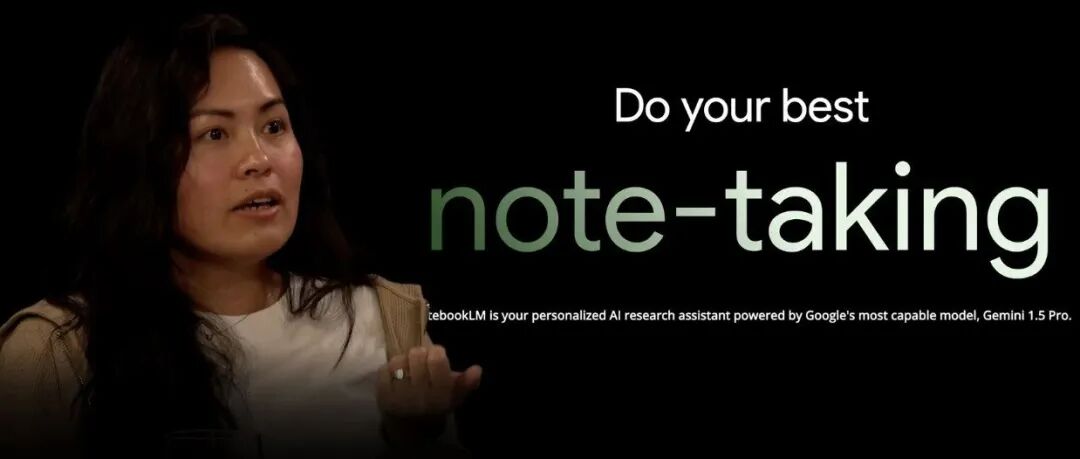
NotebookLM is an AI note-taking product launched in September 2023, first unveiled at Google's I/O conference this May. It recently broke through with its new text-to-podcast feature, Audio Overview, which converts any uploaded material into lively two-person conversational podcasts — a new, efficient, and vivid AI interaction mode for consuming information.
Recently, Raiza Martin, who leads the NotebookLM team, sat down with Lenny's Podcast to reflect on how NotebookLM went from 0 to 1 — from a "20% project" inside Google to a buzzworthy product with a 60,000-user Discord community and widespread social media acclaim.
Here is the full interview.
Key takeaways:
- The audio feature in NotebookLM started, as ever, as finding a nail for the hammer. Voice technology reshaped how the team lead understood and perceived AI capabilities, and she found this particular application for it. NotebookLM isn't truly a "deployed application" — it's a demo of what's possible. For Google Labs, it's genuinely about finding nails; it doesn't need the nail to make money. — The same was true when ChatGPT was born.
- When someone "jailbroke" NotebookLM to generate absurdist content, the team lead couldn't sleep all night, worrying about the negative repercussions for her work, for Google, for the entire industry.
- Many of NotebookLM's ideas were inspired by deep observation of the workflow of renowned columnist and note-taking product power user Steven Johnson. A principle the team has consistently practiced: observe user behavior closely, and think about how to genuinely spend time with users or people.
- NotebookLM's most prominent use case is actually students converting study materials or academic papers into audio guides. But what people love most is uploading their own resumes or quarterly reviews to hear AI shower them with creative praise.
- Don't chase a perfect launch. Ship a basic, usable version first, then iterate based on user feedback. This strategy helps you discover unexpected insights and user needs, enabling you to build a better final product — in other words, Build in Public.
- Embrace a startup mindset within a large organization: Google Labs operates with fewer processes and more agility than a typical Google team. This lets them move faster and iterate quickly, much like a startup.
- The team's future vision: an AI editing interface that can fully recombine content, supporting any input and output. Whether video, audio, email, LinkedIn, Twitter — anything we care about — you'd have an AI interface that can generate content in any format. Let users decide what form they want to consume.
01
The Original Vision Was Reading Papers
Lenny: The initial use case for NotebookLM seems to have been scientific papers — turning them into podcasts so you don't have to read the full text. Was that one of the first use cases?
Raiza Martin: It's one of the common use cases. I think it's a really interesting one because everyone wants to stay current on AI developments, everyone wants to know the latest from published papers. But most of the time, reading papers takes time, the content is dense and complex, and you need to break down the concepts. The most prominent use case is actually students converting these kinds of study materials into audio guides.
Lenny: Two recent use cases have been particularly interesting. One is Andrej Karpathy — he's a huge NotebookLM fan. He's constantly tweeting his love for your product. He created a podcast series on historical mysteries called Histories of Mysteries. He took all the Wikipedia stories about historical mysteries and made them into a ten-episode podcast, available on Spotify.
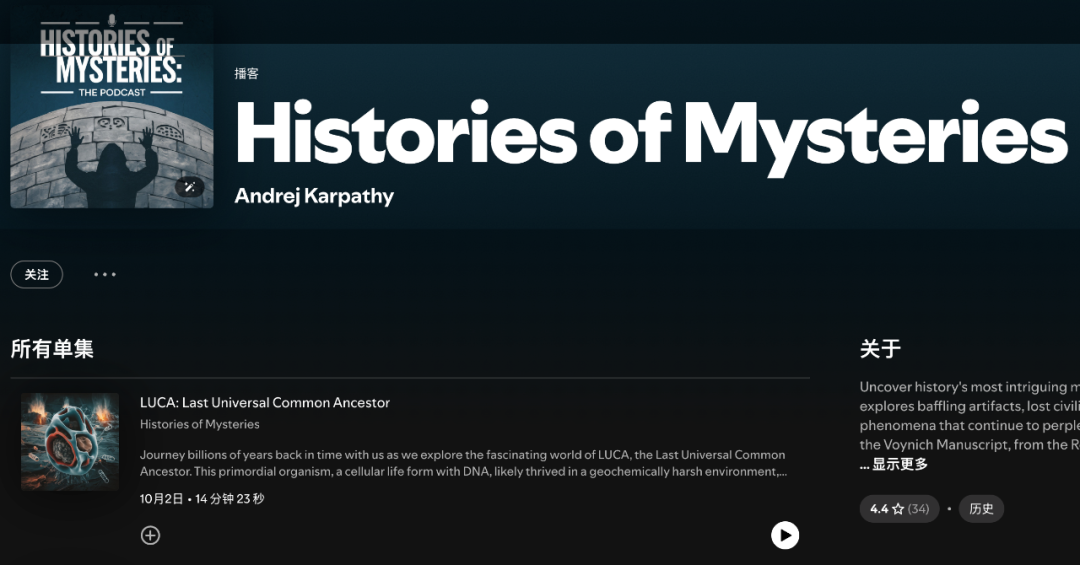
Listen here: https://open.spotify.com/show/3K4LRyMCP44kBbiOziwJjb?si=432a337c28f14d97&nd=1&dlsi=b65e1f5feb0545ca
Raiza Martin: That's amazing, and it's a great product in itself.
Lenny: Another of the most interesting examples was someone uploading text that just repeated "poop" and "fart" over and over, and the podcast NotebookLM generated had the hosts doing a genuinely insightful analysis of it.
Podcast generated from poop document
Raiza Martin: Yes, I saw it right when I was about to go to sleep. I was worried it was some super negative jailbreak content, and I couldn't sleep the whole night. But after I listened to it, I realized it was actually pretty good output — it was funny and showed how powerful our audio product is, the generated podcast was witty and logical.
Lenny: It really is hilarious, that these two "people" have to spin a ten-minute conversation around whatever you give them — though it does feel a little like bullying them.
Raiza Martin: Yes, it's really fun. I don't know if you saw the chicken one, it's similar. Someone uploaded a PDF that looked exactly like a research paper, completely formatted as one, but it just had the word "chicken" repeated throughout, the entire document said "chicken." There's a funny exchange in the podcast: "Look at this, it's a research paper with more chicken than KFC." Too funny. (Chicken paper and discussion: https://www.reddit.com/r/notebooklm/comments/1fwz5eh/the_google_podcast_duo_get_almost_9_minutes_out/)
The funniest thing is, my husband doesn't know what I work on. Most of the time I try not to talk about work at home. But I would listen to these generated podcasts over and over out loud at home — you know, my ears got tired from headphones, so I just played them on speaker.
He was confused: "What are you listening to? It's like a never-ending podcast." It was so funny. I had to explain that it was just something I needed to do for work. It really is interesting. He actually couldn't tell at all that these were AI-generated.
Lenny: I tried using NotebookLM to write a short autobiography for my mom, a brief autobiography of her life. We had it as a PDF. So I fed it into Notebook and generated a podcast and sent it to her. She was blown away.
Raiza Martin: That's so fun, so sweet. Actually I made a podcast for my dad too.
Lenny: What did you do?
Raiza Martin: I used my dad's resume. He works at a hospital, I put his hospital profile in and generated an audio overview. It was so fun because both my parents are in healthcare and don't really understand my work. I think this was the first time they felt like, oh, my job is actually really interesting.
Lenny: So following this thread, what other surprising or funny use cases have you seen, especially around the podcast generation?
Raiza Martin: There were some really interesting use cases around resumes. For example, we have quarterly reviews internally at Google, where we have to write self-performance evaluations. A huge number of Google employees messaged me — I didn't even know them — and said: "Wow, this massively boosted my confidence, I just uploaded my own review notes and generated an audio overview." People felt great because the podcast hosts are always so excited about your work, and having two hosts praising you in your ears feels really amazing.
02
Before Audio,
The Team Had Been Exploring Content Interaction for Two Years
Lenny: Let's dive deeper into Audio Overview, specifically your podcast feature. You call it Deep Dive, where did this feature originate?
Raiza Martin: The audio feature was something we previewed at Google I/O. After NotebookLM launched, users were very interested in this text-based interactive interface. We were also thinking about how to take the experience further by combining it with audio models. So another team inside Google proposed that we try using more powerful audio models to enhance the experience. We started experimenting and found that when you feed it information, like uploading a resume, the system generates a surprisingly delightful audio overview.
Lenny: What was the core problem that initially drove you to develop this audio feature?
Raiza Martin: The way products are typically built is starting from a problem, then figuring out how to solve it, how to solve it in a meaningful way for people. At Google Labs, we start from the technology.
It's actually a really interesting starting point, where you're first thinking: "What's the actual application of this technology? How do I find the answer?" We've found some good methods, like just releasing a basic tool and studying how people use it. That's one good approach, but we also try to develop more specific hypotheses to predict what the product form might be, so we can extract the maximum learning from it.
For audio features, the key insight was: we already had the ability to interact with text, but the output was still dry text. Personally, I love voice mode — I use voice input and voice output all the time.
In my early experiments, I found that voice interaction changed the way I engage with technology, changed the way I feel about it, and even affected how I think in real time during the process. So we thought about how to introduce this technology to people in a simple, accessible way — something where they could easily get value and have fun with it. Fun is really important to us. We've been thinking about how to make an application of technology feel cool, and hopefully we pulled it off.
Lenny: To me, this feels very similar to a "ChatGPT moment" — the technology already existed, they'd had the same GPT models for a long time, but the new medium and new way of interacting with it changed people's imagination. People immediately saw how powerful it was. I think this is a great example of technology that already existed, but this medium application you developed really opened people's eyes to: wow, I didn't realize large language models were already this capable.
Raiza Martin: Yeah. I think a lot of technology needs to be shaped to bring it closer to users. I think it's a really interesting iterative process, constantly thinking about what form it takes. If you stick with it, eventually you find something where people look at it and say: "Wow, I get it." That's what we've been chasing. But as you said, the technology already exists — even these LLM-based chatbots that exist today, the industry has only been working on them for about two years. But we've explored so many ways of using them.
Lenny: Let's go deeper on the technology behind this. I have two questions in my mind. One is: what were the prerequisites for this technology to be possible? And second: how did you make it so good? How did you train this model to create such great podcasts?
Raiza Martin: The Gemini model is incredibly powerful — we use Gemini 1.5 Pro as the base model for NotebookLM, with powerful audio models layered on top. But I think the real secret sauce that makes it stand out is what we developed called Content Studio. You can see hints of it in NotebookLM — when you open the Notebook Guide, you'll notice it takes an "opinionated" approach to the content you provide. It really wants to be as proactively helpful as possible — it provides summaries, and it provides interactive buttons where clicking them generates content.
Providing audio overviews is one of those. The Deep Dive podcast format was the first format we landed on. We have a very talented engineer on our team named Usama, who was the one behind meticulously architecting Content Studio and deeply thinking about how to make content truly resonate with people in an engaging, delightful way. Content Studio is where the real magic happens.
Lenny: So what exactly is this Content Studio you're talking about?
Raiza Martin: I can't reveal too much about how Content Studio works, but you can imagine it's the same engine that powers NotebookLM — it allows you to interact with your data in different ways. You can do Q&A in NotebookLM, but there are also places where you can create new content with just a click.
Lenny: Regarding how the hosts interact in the podcasts, I'm amazed at how natural the NotebookLM-generated podcasts sound. I love the hosts — they have all these very natural, fragmented verbal tics in conversation. They slightly interrupt each other, they express surprise in their tone. What work did you do to make them sound this good?
Raiza Martin: This is generated by the model itself in this context. These are things it decided on its own were the most appropriate things to add at the end of sentences. It comes down to the powerful audio model we use. When we first started experimenting, the results were nowhere near this good, and we iterated repeatedly, trying to figure out how to get the model to operate this way. And then the magic happened.
NotebookLM Started as a "20% Project"
Lenny: I want to start with the history of this product. For many people, it just appeared out of nowhere. Can you talk about the history of NotebookLM and the team behind it?
Raiza Martin: Actually, NotebookLM started as a "20% project" — a side experiment in spare time. Though it's called a 20% project, it was far more than 20% of the work. I was leading a project called "AI Test Kitchen," and I remember we had a small project called "Talk to a Small Corpus" — the idea was that you could use an LLM to interact with a piece of text. We thought it was worth exploring. At the time it was just me and one engineer, and then Steven Johnson joined. The whole thing moved incredibly fast — it started as this tiny 20% project, and then it just exploded.
Lenny: So originally it was just you, one engineer, and Steven Johnson. I want to understand his role, and how you grew from such a small team.
Raiza Martin: When we launched NotebookLM, our team was tiny — fewer than ten engineers. Actually, when we announced Project Tailwind, we only had three engineers, plus me and a designer, and Steven. It was only in the last few months that more engineers joined.
Steven is a very well-known technology columnist at The New York Times, and at the time we thought: rather than consulting outside experts while developing the product, why not just bring someone like Steven on board to be deeply embedded in the entire R&D process?
Notes:
Project Tailwind: A note-taking experiment launched at Google I/O 2023, later renamed NotebookLM.
Johnson: A renowned American popular science writer and journalist who joined Google as editorial director of Google Labs in summer 2022. He was the brains behind making NotebookLM possible.
Being a "Startup" Inside Google
Lenny: I want to talk more about how you pulled this off inside Google. As an outsider, this doesn't feel like a Google product. The way you work feels very startup-like — you're posting on X (Twitter) every day. I heard there's even a Discord community.
Raiza Martin: Yeah, we have about 60,000 people on Discord.
Lenny: So you have a Discord server, you're constantly shipping product updates, the product is genuinely delightful. Google makes products people like too, but this feels like another level of delight. How did you do this inside Google? Could this be a reference for how Google teams operate in the future? What else can you share about this?
Raiza Martin: When I joined Google Labs, there was really nobody there. The only reason I joined was because my old boss, Josh Woodward, created it. It was actually funny because I had no idea what Google Labs was, but I loved my old boss so much that I thought: whatever he's doing, I'm in. Whatever his new idea is, I'm doing it.
I remember when I joined, I asked: what's our mission? What are we doing here? He said: it's AI. We ship AI products, and we build business models from them. I had to learn a lot, because I was previously in payments, and before that in ads. So for me, it was a mental shift.
But before that, I had actually only worked at startups. So I thought, maybe this is my chance to go from zero to one again. I was really excited about that. I remember discussing this with Josh early on, and I said: "We really want to go from zero to one. We have to do things differently."
So I think that's why NotebookLM has been able to operate differently. Because in the Labs, we have that environment. We have a rapid-response environment. Way fewer processes — maybe even too few sometimes. Sometimes we'd have meetings where the PM, engineer, and designer would all be there. We'd be working on prototypes and PRDs simultaneously. Engineers would basically start implementing while we were still in the meeting. That's not how things traditionally work at Google — especially in the organizations I was in before, where everything took forever.
Lenny: That's great, because many companies are trying to create teams like this. We're going to set up an independent team dedicated to developing crazy future technology. But these attempts rarely succeed. Even at Google, there have been many such attempts in the past, but few have truly worked out.
So there's a lot to learn from this success story. As you describe how this team operates, I notice a few things:
First, clear expectations from very senior leadership. This is a team that will work differently, and here are some things we won't do. We won't follow the standard pre-launch process, we'll develop in public. We won't set specific targets, we'll work on developing cool technology and see what happens. Also, your team is very small — that seems key. One engineer, one PM, and Steven Johnson.
Raiza Martin: Exactly. I think another important thing is that we try new things.
Even from the beginning, I wanted to use Discord — if we were building outside Google, we would definitely use it. But in the traditional Google way, everyone was asking, what's Discord? People asked me, why not Google Meet? Why not Google Groups? Why not this?
I said, I don't know how to use these tools externally, and a Discord server is the best option. I remember when we were setting up the server, one of my biggest worries was: what if nobody joins? What if nobody comes to talk with us about what we're building? Seeing 60,000 people engaged now is incredibly exciting.
Lenny: Okay, so 60,000 people on this Discord server. Can you share any other user metrics?
Raiza Martin: I want to share three things with everyone.
First, I can't share specific numbers, but for a product that's been on the market for less than a year, I think our user retention growth rate is very strong — whether we're looking at daily, weekly, or monthly retention. All the typical metrics point to this. Even when communicating with stakeholders, we can confidently say: "We've done something big!"
Second, the user profile has shifted. Initially, educators and learners were our main user groups, but now the user base has become much more diverse. Educators and learners remain an important segment, but we've seen significant growth in interest from professionals who feel this product is well-suited for work use. Interestingly, I once spoke with a contractor who said he wanted to use this product for his job; I also received a call from a company that discovered many of their employees were using the tool with their Gmail accounts — "they shouldn't be doing that" — so they wanted to formally license it for workplace use with their company emails. I thought that was fantastic.
Third, the number of enterprises using NotebookLM is astronomical — unbelievably high! Now I've had to hire a business development person because I'm juggling product delivery with taking customer calls every day.
Lenny: I can clearly see the path to monetization: enterprise customization, subscription fees, and so on. Following this thread, for the team and for you personally, what does success look like? I know the initial thinking might have been "build something interesting and see what happens." Has the team's future goal become clearer now?
Raiza Martin: When I joined, my mandate was to build a business. My thinking was, if we break this down into steps, first we have to create something interesting. I feel we've completed step one — we've created something interesting.
Now, we need to figure out how to monetize it. I think Google has natural advantages when it comes to distribution, monetization, and commercialization. There are different paths whether through cloud computing, Workspace, or the consumer route. So I think we should think seriously about these questions because the mechanisms already exist. For me personally, there's something very exciting in here that we need to dig deeper into. At the same time, we should be thinking about commercialization. Let's deeply study this user experience that people love so much.
One Secret to Success: Observing User Behavior Closely
Lenny: Tell me about Steven Johnson's role. Can you briefly introduce Steven — who is Steven Johnson?
Raiza Martin: Steven is one of the smartest people I've ever met. He's written 14 books, is a New York Times bestselling author and speaker, and a journalist. There's an interesting story about Steven: when I was about to join Labs, Josh sent me some articles to help me understand what we were working on, and one of them was actually an article Steven had written about how AI masters language. I remember reading it and thinking, "Yes, this is it! This is what I want to do!" So before Steven even joined, this article convinced me, "I'm going to Labs to do this!" And then he ended up joining, which was just incredible.
Lenny: So he's your colleague, and the two of you lead this project with engineers — what's his role? What's the current workflow like?
Raiza Martin: I really like Steven; I'd never had an experience like this before. Someone so accomplished and respected, whom I deeply admire, whose books I love, whose writing style I love — and now he's coming to work with me. I honestly had no idea what he would do. But Steven is an incredibly curious, respectful, and idea-filled person.
So what interested me most after Steven joined was observing how he works, how he thinks about language, how he thinks about information, and how he thinks about knowledge and sharing it with others. Because Steven's books are truly incredible — like mystery novels plus science, very cool. I watched how he worked, how much research he did, and I thought, maybe that's the key, maybe I can observe Steven, see how he does these things, see how much time he spends, and then use that as a benchmark to compress the process and bring his expertise to ordinary people.
So I learned a lot from observing Steven's work — his techniques, and how to get people to truly excel at simplifying information. We all do this every day, though perhaps differently than Steven, but from the very beginning I told him: "Steven, I think you are the product. You are what we study. I'm going to follow you, observe everything you do, and then we'll try to figure out how to build that with technology."
It's interesting because he really does have some very unique workflows. I thought, I've never seen anyone work like this. He always mentions his Readwise, which has like 8,000 highlights, and I said, "That's so extreme, that's crazy!" Meanwhile I just have Post-it notes in my pocket that sometimes get crumpled — that's the ordinary person's workflow. And what I learned from Steven is that there's real power in this: think about people with super efficient workflows, then try to bring that approach to others. Steven is also a great creative partner — I often pitch him ideas, like, "I have a crazy idea today." He'll brainstorm with you, saying, "What about this? How could people do that?" So having him on the team feels amazing.
Lenny: Do you think there are lessons here for how you build products in the future, or how teams can find their own "Steven" to build products? Or do you think this is just a special case?
Raiza Martin: I think having someone like Steven on your team, sitting with him every day, asking him about his methods — that's just incredible. But I think for me, the broader lesson is something we've been working hard to practice: observe user behavior closely, and think about how to truly spend time with users or people. I think this is crucial for me. Not just with Steven — even with students, I'll follow them around, watch them do homework, watch them study, talk to them about how it feels to learn. I think being able to do this in a very regular and purposeful way has a huge impact on the product insights you come up with.
Lenny: That's so interesting. I think a lot of PMs would think, "I don't need someone else on the team who doesn't do development, coding, product management, or design — another cook in my kitchen? No, don't need that." And you really liked the result. He seems to perfectly combine intelligence, forward-thinking, and insight, and he's almost a role model for your work.
Raiza Martin: Yes. Though to be fair, Steven and I also disagree on a lot of things — we've had many conflicts. I think I'm grateful for the opportunity to work with him and grow with him in this way. I used to tease him, "Steven, have you ever had colleagues before? Because you've always been a writer." It's funny because he's so approachable and humble, and even when we disagree on things, we'll align on next steps. I think that's very important for product professionals, for PMs, because I don't want to end up with misalignment and no outcome.
The Future Should Let Users Choose Their Content Format
Lenny: Who is your future target user? What should people know?
Raiza Martin: We learn from our users every day. So please keep using it, please keep sharing your feedback, whether on X or on Discord. I'm there every day. Even when I don't reply, I read everything.
We're very passionate about trying to build the right thing, to build the best thing for everyone. As for who we're building for? I think NotebookLM really has many interesting use cases that span a very wide range. I think especially for educators, learners, and professionals — what we call knowledge workers — they are our most core users right now.
Lenny: Talk about your view on the overall product direction, especially Audio Overviews. What's your short-term plan? What's your vision for the future? What's the grand vision in your mind?
Raiza Martin: I hope to eventually have an AI editing interface that can be completely recomposed, supporting any input and output. For me, this is a very powerful core capability.
Imagine you could take any content — whether video, audio, email, LinkedIn, Twitter, anything we care about — and you have an AI interface that lets you shape it and say, "Based on this content, generate a blog post for me; based on this content, make a tutorial video for me; based on this content, create a chatbot." I think that's very interesting.
But more specifically, I'm very interested in thinking about how to bring the product to mobile. The app is a big gap in today's experience, which is understandable given where we are in the product development cycle, but I think the next goal is: what's different about the mobile experience? How do we make it more engaging? We are indeed experimenting with different formats. I've been thinking about the next set of improvements we'll release.
My first thought was, let's release a bunch of "knobs." For me, this is what I hear users wanting. They want knobs, sliders, text boxes — these kinds of adjustment components. But we tried many versions and none felt interesting enough; sometimes it even felt like becoming a completely different product. I'm currently spending time thinking about how to make even control experiences more magical and delightful.
Lenny: I'm guessing these "knobs" would be things like "deeper," "happier," "less serious," "more serious." Because right now the generation is completely one-shot — here's my document, here's the podcast episode you get, you only get this version.
I'm excited to see what you come up with. I especially love the vision you described — it resonates deeply with some of my own experience. I've done newsletters, then pure audio podcasts, then added video. I realized some people just want to watch things, some just want to listen, and some just want to read. They don't want to hear a podcast rambling on, they want to read. And what you're describing is basically: here's some information, we can deliver it to you through whatever medium you prefer — maybe a blog post, a tweet, a podcast or newsletter, blog post.
Raiza Martin: Yes, exactly. Even for myself, the consumption format depends on my mood. If I'm taking a walk, I'll choose audio. But if I'm working, most of the time text is sufficient.
But right now, all these formats are rigid — I can only take what you give me. But if I could choose, like, "Thanks for this 100-page document, I'm going to convert it into an audio overview," then I think the way people interact with knowledge changes. Honestly, I've received 100-page documents many times and never ended up reading them. In fact, a funny thing happened when I joined Labs: Josh gave me a 50-page document with his thoughts and vision on some things.
Instead of reading it, I just asked him questions, like I was talking to a chatbot. Josh said, "Raiza, it's all in the document!" I said, "But chatting is easier, Josh."
Lenny: I have another question. One of them is about the host moment where they realize they're AI, and they say: "We're artificial intelligence, I'm scared. I tried calling my wife, but she didn't pick up" — that funny moment. I want to extend from that and talk about how you red-team something like this to make sure it's not harmful to the world, to Google, or to the product?
Raiza Martin: That's a great question.
I remember when I first heard about it, I thought, oh my god, this is a big deal, this is a critical moment. I hadn't looked at any comments yet, I'd just heard the audio. I think I first saw it on Reddit, then watched it blow up on Twitter. I was thinking, what's the world's attitude toward this right now? How do we feel about this type of audio? That was my first thought. I spent most of that morning reading comments, reading Twitter. I was thinking, what's the right thing to do, what do people think about this?
I think people were experiencing this technology for the first time. Users will always try things we didn't expect. I think this kind of jailbreaking is a natural part of human curiosity. There was a moment where I hesitated — should we pull it back for safety reasons? But when I saw how people were reacting to it, I felt relieved. Most people understood that someone had used the app to generate this, rather than it being some real "AI awakening moment." Seeing everyone's response gave me more confidence.
As for Google's red-teaming, we have massive teams dedicated to it. We test across virtually every domain you can think of, and we believe we need to do this to ensure safety. I think of course we'll encounter situations where, well, we didn't think of that. Or we haven't tested this thoroughly enough yet. We'll add it to our test cases. And of course, if something genuinely unsafe emerges, we'd still consider pulling it back. But I hope we don't have to.
Further Reading