Ten Thousand-Word Interview with Perplexity's Growth Lead: People Need to Hear About Your Product 3 to 7 Times Before They Actually Try It

Growth is a game of intuition.
Z Talk is ZhenFund's column for sharing insights.
In December 2024, Perplexity closed its latest $500 million funding round at a $9 billion valuation — a 16x increase from early 2023.
Raman Malik, formerly an early growth team member at Lyft and a failed founder himself, now leads growth at Perplexity.
He describes growth as an "intuition game," emphasizing the understanding and flexible application of data. He believes every small tweak can raise the company's overall baseline. Additionally, he makes several bold bets each quarter, advocating for high-risk, high-reward approaches.
What exactly is growth? On this much-debated question, Malik offers his answer. This content comes from the 20VC podcast; below is the full translated transcript.

Core Takeaways
- Balancing micro-optimizations in product growth: Micro-optimizations can yield massive returns — a small change can significantly expand the active user base. But they also face diminishing marginal returns; each quarter, you need a few high-risk, high-reward marketing bets.
- The magic of growth is "curiosity traffic": Users acquired through organic growth and referrals typically retain better than those brought in through paid promotion or partnership channels. Teams need to optimize their channel mix and develop acquisition strategies for segmented audiences.
- Growth is an intuition game: Understanding how growth mechanisms work and identifying friction in growth is the ultimate path. Don't burn precious organic traffic by over-investing in paid acquisition; focus on retention and product iteration.
01
From Founder to Leading Growth at Perplexity
Harry Stebbings: It's so great to have you on — thank you so much for joining today.
Raman Malik: Thanks for having me.
Harry Stebbings: You did an MBA. Many MBA grads want to join startups, but you became a startup founder. How did that happen? What advice would you give to others in MBA programs who want to enter startups?
Raman Malik: MBAs have a controversial reputation in tech, and many view them somewhat negatively. Personally, even though I left my MBA a year early, I had a wonderful experience. I went there specifically to explore and experiment with new ideas, and that's exactly what I did.
The school provides funding to try all sorts of new ideas. The MBA was like a pre-phase to my startup — first immersing myself in exploration, then things started flowing through conversations with investors and gaining momentum, everything gradually became clearer. I felt that if I went all-in on pushing this idea, I'd have a better experience, so I started a company. It felt great.
Harry Stebbings: Would you recommend others get an MBA?
Raman Malik: I think an MBA makes a lot of sense for people trying to break into specific industries.
If you're trying to get into private equity, or want to be a PM at Amazon, or want to join a consulting firm like McKinsey, the MBA is like a preset path — you just follow the guide, you have an entire community collaborating and preparing with you, and you'll likely succeed. The MBA is a very expensive bridge into these fields, but for many people it's a valuable journey.
Harry Stebbings: Another journey you went through was from founder to joining Perplexity. Running your own company versus joining a team is very different. How did that transition happen?
Raman Malik: When you're a founder, going through month after month, pivot after pivot, with no progress — nothing is more demoralizing than those moments. When the final straw came, we shut down the company.
I started chatting with different companies, and it was clear Perplexity was a company growing incredibly fast, which was exciting, so I decided to go work there.
But it's different from being a founder. First, once you fully understand how hard entrepreneurship is, your ego has already taken a beating, so for me this was a complete mental adjustment.
I was narrowing my scope, getting clear that "I was hired just to drive growth." Founders love managing all kinds of things, have to do 100 things, have to steer the ship. But now I needed to be extremely focused on one area: "Alright, I'm here to drive growth." Just to excel at that. That was the second adjustment.
Harry Stebbings: "Head of Growth" is a pretty vague title that means a lot of different things behind it. How do you specifically define the responsibilities of a "Head of Growth"?
Raman Malik: I think growth is a separate function that connects product and marketing, encompassing growth product and growth marketing.
Growth product is a product team composed of engineering, design, and data science functions working together, but core product growth needs to intensely focus on the user funnel — acquisition, activation, retention, and monetization.
So growth isn't just about filling the top of the user funnel with new users, but about keeping users active, developing them into loyal users, so that you can ultimately monetize them.
Focusing on facilitating the user lifecycle journey — that's growth product.
Harry Stebbings: That's growth product, what about growth marketing?
Raman Malik: Growth marketing has the exact same goals as growth product, just using different tools.
Instead of driving growth from an engineering, design, or data science angle, you're doing it through marketing channels, communications across the user lifecycle, community, and marketing campaigns. All of this needs to coexist tightly.
Without a product team iterating on every process, without a marketing team thinking about copy and email drip campaigns, I couldn't do a good onboarding experience myself. Everything needs to converge into a unified whole that activates the entire user funnel.
Harry Stebbings: Building such a mature team requires substantial resources and significant resource allocation. My question is: when is the right time to build an independent growth team like this?
Raman Malik: Simply put, after achieving PMF.
Harry Stebbings: Not necessarily, because such a growth team costs millions of dollars. If you've achieved PMF but only have $2-3 million ARR, the profit isn't nearly enough to support this kind of team — building it requires $25 million ARR.
Raman Malik: Yes, but what I mean is, once you see early signals of user retention, like seeing 30% retention in month three or four, there's already a spark in the fire — it's worth adding gasoline. That's an investment worth making.
And, we don't necessarily need to spend a lot of money to open marketing channels. We could just test whether we can improve that 30% retention to 40%, whether we can easily convert all existing users through the funnel.
Harry Stebbings: When you joined Perplexity, was this kind of team already established internally? Or did they want you to build it yourself?
Raman Malik: Perplexity is a very flat organization. There wasn't an established team at the time, but there were resources — engineers ready to dive in. Whether you wanted to optimize user onboarding or improve retention, everything just depended on when you started.
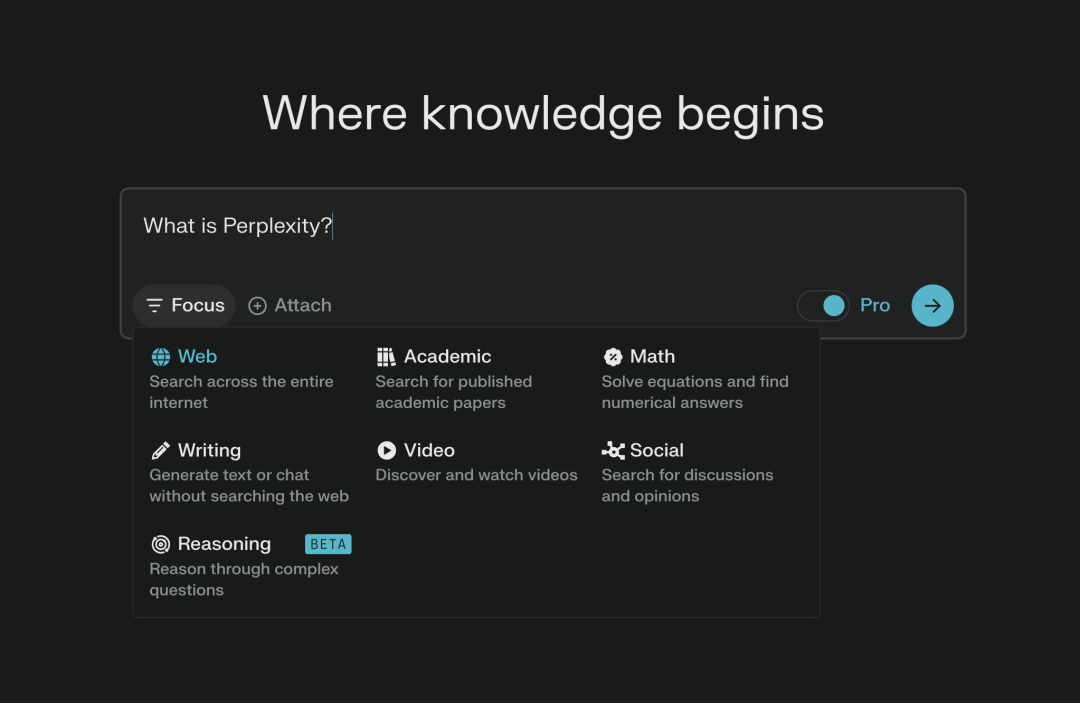
Perplexity's guide for new users
But often, even today, in the first few weeks of growth work, you're just moving rocks out of the way, trying to build a world map of the product in front of you. Like, "What's happening with acquisition?" "What's happening with engagement?" "What's happening with monetization?"
And when you ask these questions, you usually don't get direct answers — you just get another hundred questions you need to figure out. The work then becomes "Let me build the right infrastructure to truly measure and understand the whole system and current state." This involves engineering logging, attribution analysis, first-party cookies, all kinds of things.
Harry Stebbings: Is growth a game of micro-optimizations? Like improving D90 retention from 30% to 35%. Or is growth about making bold innovations on the product that change the entire game?
Raman Malik: I think micro-optimizations are really severely underrated.
Anyone who's built a growth model for a company — imagine opening an Excel spreadsheet with data on new users, retained users, reactivated users, and churned users. New users plus retained users plus reactivated users, minus churned users, equals your weekly or monthly active users.
If you assume a new user growth rate or retention curve, then you can try this: what impact would a 10% improvement in retention have on weekly and monthly actives? A small 10% change in activation or retention rate makes your entire active user base rise — this little micro-optimization directly raises the company's baseline, the returns are massive.
But micro-optimizations also have diminishing marginal returns. At some point it becomes very hard to squeeze out another 10-15% improvement unless I spend enormous experimental time. So my rule of thumb is: beyond micro-optimizations, make several bold bets each quarter — like a major new feature, or a large-scale marketing campaign.
It has to be high-risk, high-reward. I have to be able to stand in front of the company and say I'm doing this, and I'm willing to accept the risk of failure.
02
The 25% Success Rate All-In Bet
Harry Stebbings: What should the success rate be for high-risk, high-reward bets?
Raman Malik: I think a 25% success rate on these bold bets is pretty solid. Maybe once a year we'll have one that's truly great — something that actually drives growth or opens up a new audience. That matters a lot.
Harry Stebbings: We've talked about optimization, about squeezing out maximum value. One cool approach is using A/B testing to figure out what works and what doesn't, then doubling down. What role does A/B testing play in growth today? How do you think about it?
Raman Malik: My background is in data science, so I may be biased here. I think A/B testing has its pros and cons.
The upside is that we can use it to understand the impact of product changes, to see how each metric moves — like, "Did we unintentionally hurt some other metric?" or "Do we actually understand what's incremental and what isn't?"
A well-scoped A/B test tells you what to do next. It calibrates your direction and pace.
A poorly scoped one gives you nothing. It's a mess, the minimum detectable effect (MDE) will be tiny, and you've just burned a week running it for zero insight.
What's worse, some people run A/B tests just to show in performance reviews that they moved a number, or to have something to report to their manager. You see this more as companies scale — running tests just to say, "Oh, I improved activation by 12%."
Harry Stebbings: Do good product managers really need A/B testing? Because for some product changes, the difference between working and not working is pretty obvious.
Raman Malik: If your goal as a PM is to optimize direction — to confirm we're pushing the product toward a place where it can have positive impact — then A/B testing gives you rapid feedback.
It helps you fundamentally answer: "Are we doing the right thing?" "Are we moving fast enough?" "Are we actually making progress on this problem?"
Product managers should have fairly strong conviction about what's going to happen before they start an A/B test. That's where intuition comes in: "I think we'll really move this metric, but we might see a slight dip in others, and that's something we need to watch for."
Without that intuition, you're flying blind.
Harry Stebbings: Has A/B testing ever misled you?
Raman Malik: A lot of the time you'll see mixed A/B test results — those are the trickiest.
For example, we wanted to show a login prompt after a user's fifth search query to activate them. But a lot of people get annoyed by the login requirement and drop off. So this pop-up design hurt query volume — it reduced searches on Perplexity.
Now you've got two different metrics to trade off. How do I evaluate the long-term value of both?
That's what's interesting for us. Will users activated this way actually stick around? Over time, if I look at a 30- or 60-day window, will the metrics from retained users make up for the initial search volume loss?
But I can't run an A/B test, spend 60 days, and come back to the team saying, "We finally have a decision." I have to decide on the spot, or find a way to de-risk this.
Harry Stebbings: When you mentioned the fifth search query, it made me think of Facebook wanting you to get to five friends on the platform for better retention odds. Does Perplexity have a specific metric internally that defines: past this point, we have higher retention likelihood?
Raman Malik: I call these milestone metrics. We can look at 30-day, 60-day retained users, go back to their early sessions, and study: "What did they do differently?" "What was unique about their experience?"
From that analysis, we can build an actionable metric. It's not perfect — it's not deep retention yet. But for Perplexity, if I can get a user to do three search queries in their first session, then I know I've found something important.
Because that's what a lot of high-quality users did — they spent enough time in the product to understand Perplexity's value, and they're more likely to come back and keep using it, to retain.
Harry Stebbings: You said two to three search queries in the first session. I had Alex Schultz, Meta's growth veteran, on the show. He said the biggest problem with growth is that every goal or metric can be gamed. If you want to hit that target, we could load up a bunch of suggested searches for you to click — technically hits the goal, but doesn't mean the user actually got what they wanted. If every metric can be gamed, how do you set the right goals?
Raman Malik: First, monitoring. After we've done our short-term "gaming," we keep monitoring the metrics to see if this product change still has correlated impact on long-term metrics. If we see that correlation start to break, we have to be honest with ourselves that we weren't truthful about whether this helps user retention.
The other thing is taking a holistic approach — you can't just stare at one metric. I need to care about search query count, but also first-session duration, like whether the first session hit ten minutes.
Harry Stebbings: Why ten minutes? Wouldn't you want it shorter? Because that means time to value (TTV) is very efficient.
Raman Malik: That's one scenario. A ten-minute session points to another — that the user got so much value upfront that they fell down a Perplexity rabbit hole. If one search sparks a chain of follow-up questions and curiosity, that's amazing. The user can deeply experience Perplexity, learn, and explore. That's great for us.
The Magic of AI Companies Is "Curiosity Traffic"
Harry Stebbings: What's the most important lesson you've learned about user acquisition since joining Perplexity? What does Perplexity's user source mix look like?
Raman Malik: AI companies right now get a ton of "curiosity traffic": as long as a product looks "magical" or has a cool demo, traffic shows up — users come try it quickly. Most of our growth has been organic, driven by word of mouth. Two years in, we're still riding that organic wave, which is pretty incredible. It's the best acquisition channel.
The question we face now is: how do we keep this "organic magic" going?
Harry Stebbings: What's the current acquisition mix roughly? What percentage is word of mouth?
Raman Malik: Roughly 80%, depending on which primary market or international market we're looking at. We also drive distribution through a lot of large-scale partnerships with major companies.
Harry Stebbings: You've done partnerships where you give a year of free Perplexity Pro to subscribers of partners like LinkedIn, Xfinity, and Lenny's Podcast. What are the most important lessons you've learned from these partnership deals?
Raman Malik: External partnerships are very effective for driving distribution — we can leverage their reach to heavily promote Perplexity.
But user acquisition works better through word-of-mouth referrals, or bundling Perplexity with products people already use. That drives more trial. We do have an extraordinary partnerships team that's absolutely world-class.
Harry Stebbings: But doesn't that hurt unit economics badly?
Raman Malik: To some extent, but it's part of acquisition cost. We're willing to trade a month of Pro. Because if the user doesn't use Pro, we haven't lost money on you. But if they do use it, we can capture them as a user and get them to truly start understanding the magic of Perplexity.
The goal then becomes: can we convert them to paid?
Harry Stebbings: What's the partnership you most want to do but haven't pulled off yet?
Raman Malik: I'm more focused on our target audience — thinking about which groups we want to reach and how to access them through partnerships. Students are an area I really want to crack. There are some partners in that space I'd love to reach, who could help Perplexity achieve scaled distribution among students.
Harry Stebbings: What's the biggest mistake you've made on user acquisition, and what did you learn from it?
Raman Malik: We've made so many. If we weren't making mistakes, we wouldn't be learning fast enough. I remember I was initially very interested in influencer marketing — really wanted to test that channel, to understand how we should work with creators to promote Perplexity.
But I completely underestimated the cost of working with each individual creator — producing specific content, making sure they conveyed the precise right message. And Perplexity isn't an easy concept to explain; "AI search engine" means nothing. Working with a large number of smaller, long-tail creators was not only mediocre in results but consumed enormous time. Later, we chose to go deep with a small number of creators and build strong relationships. That worked much better.
Harry Stebbings: I spoke with Aravind [Srinivas, Perplexity CEO], and when you joined Perplexity, he mentioned you quickly realized the product's problem wasn't user acquisition — it was retention.
How did you figure that out? What did you see?
Raman Malik: When I first joined, I mapped out the entire flow from acquisition to monetization, trying to identify where we should focus our time and find Perplexity's biggest growth opportunity.
Dimitry and the partnerships team were running large collaborations that brought in massive traffic, creating strong top-of-funnel performance. My attention landed on early user activation rates and Week 1, Week 2 retention. The numbers were actually quite good — we had reasonably healthy retention.
But if we could improve these early-funnel metrics, we could push our entire active user base to the next level.
Harry Stebbings: What do you consider a good activation rate?
Raman Malik: It depends on the company.
Perplexity's advantage is that users can experience the product without signing up. That's fantastic because it lets people try it instantly — just type a question and immediately see value.
But converting unregistered visitors into activated, registered users is the hard part. For that unregistered experience, I wanted to push that conversion rate to 30% — get 30% of unregistered visitors to become registered users.
Real Retention Is More Than Satisfying Curiosity
Harry Stebbings: A lot of people don't have a clear sense of what good retention looks like. Can you explain?
Raman Malik: Consumer products are genuinely hard. What you most want to see is a retention curve that flattens out — that means the product has successfully locked in a core user base.
I think 45% retention at Month 6 is an excellent benchmark. Especially for a non-social product — we're not a social product with a "smile curve" where retention naturally rebounds as the network grows. We have to work hard to create sustained value and increase usage frequency to get above 45%.
Harry Stebbings: Month 6 at 45%? That's high.
Raman Malik: A flat curve is what tells you the product is actually delivering value.
Harry Stebbings: Duolingo's retention is something like 50% at Month 12, right?
Raman Malik: Yes, 50% at Month 12 — that's absolutely world-class. They've built an incredibly powerful retention system.
Harry Stebbings: Once we've established retention as a priority, with good acquisition performance and partners who can drive massive top-of-funnel growth — what's next?
Raman Malik: The levers for improving retention are limited.
First, you need to define your key milestone metric — the behavior that correlates with long-term retention. For Perplexity, it was whether a user performed three queries in their first session. We focused on driving that behavior.
But at a higher level, you're always adjusting the "mix shift" of where your users come from or who they are.
First, you can optimize your acquisition channel distribution. Generally, organic and referral users retain better than those acquired through paid promotion or partnerships. Since Perplexity's growth was mostly driven by word of mouth and partnerships, we had limited room for channel optimization — we were already in a good place.
The second approach is developing acquisition strategies for specific audience segments. Perplexity's user base is extremely broad — my grandmother and my doctor both use it, anyone might use it. What we need to do is identify high-retention user groups and specifically target them, thereby improving retention among new users.
Harry Stebbings: Which user segments have the highest retention? Which have the lowest?
Raman Malik: A lot of trial users have low retention — people who search "how many times does a person fart per day" out of curiosity. Those users churn heavily.
But users who genuinely want to fill knowledge gaps in specific areas — people using Perplexity for work, students using it to search for papers and sources — those users have very high stickiness and retention. Because we're filling knowledge gaps for them, not just satisfying curiosity.
Harry Stebbings: Aravind recently mentioned that Perplexity's average query length is longer than Google's — something like nine words. How does that data affect your acquisition and retention strategy?
Raman Malik: It matters. The more users type, the better we understand their needs and the better answers we can provide. We can use that information to optimize search results and improve answer quality. The more information a user puts into a single search, the better results we can deliver.
Harry Stebbings: What optimizations do you think had the biggest impact on retention? Aravind mentioned you saw 10-15% improvement in growth metrics.
Raman Malik: I think it came from many factors working together.
One was deliberately optimizing audience mix. We put a lot of effort into targeting high-value, high-retention-potential audiences.
Two was driving cross-platform usage convergence. We didn't want users only on Perplexity's web version or only on mobile — we wanted them across devices. Multi-device conversion helps retention significantly because users engage with the product on weekends, weekdays, and Perplexity becomes more deeply embedded in their lives.
Never underestimate the foundational impact of product improvements on retention.
Harry Stebbings: What retention strategy do you think will have a major impact?
Raman Malik: We're continuously optimizing Perplexity's core messaging to users.
For us, getting users to quickly understand Perplexity's core value is critical — including that Perplexity "provides real-time updated data," "shows sources for answers" — these are intrinsic product values.
So we run extensive experiments, trying to optimize how we communicate so users understand how Perplexity delivers value for them.
Harry Stebbings: There was this one time when I was recording with Glen Coates, VP of Product at Shopify, and I literally logged onto Shopify's website live on air and roasted their page design. A year later he tweeted — Shopify's entire page had actually changed.
I see Google now describes Perplexity as "a free AI-powered answer engine that delivers reliable, accurate, and real-time answers." What do you think of that description?
Raman Malik: I'd give it a 6 out of 10.
Harry Stebbings: A bit wordy, right?
Raman Malik: A bit wordy. Google's description design is partly optimized for SEO.
Harry Stebbings: But when I visit Perplexity's website, I see: "Ask anything, Discover anything."
Raman Malik: That's a much better balance. We're trying to strike the right balance between how much information to show, how functional versus brand-oriented to be.
Our main optimization direction now is to be as concise as possible — phrases like "Ask Anything," "What do you want to know," "Search like never before." Highlighting Perplexity's real-time search capability is extremely important. We need to make sure every user understands we deliver real-time, up-to-date answers. That matters.
05
From CAC to LTV: A Better Growth Metric
Harry Stebbings: I heard Aravind mention that typically, growth team PMs ask for massive marketing budgets to run ads on TikTok and Instagram. But he said you first make sure that before spending heavily to acquire users at scale, the product already has healthy CAC/LTV [customer acquisition cost / lifetime value] ratios. What do you want to see in that ratio?
Raman Malik: There are a few key stages here.
First, you have to judge: should we even be focused on profitability right now? Or do we want to treat paid acquisition as a lever that needs to attract users and show immediate returns? Early on, my answer was "no."
That stage should be focused on top-of-funnel new user growth, with extremely high retention as the prerequisite. If we can do that, the monetization path will reveal itself — whether through subscriptions or advertising, we'll find the right way. So put CAC/LTV aside for now. The only two metrics I cared about growing every day were activation rate and retention rate.
Harry Stebbings: When did you decide to treat CAC/LTV as a more important metric?
Raman Malik: It's about that time now. Perplexity currently has zero optimization driving subscriptions.
Harry Stebbings: How do you optimize that?
Raman Malik: Add more usage limits. Free users might only get 3 Pro searches or file uploads per day — if they really like that feature, we can suggest they upgrade to Pro for unlimited use. These limits and upsell tactics can all be adjusted and optimized.
Harry Stebbings: CAC and LTV are usually extremely volatile. CAC changes significantly as the user base matures, while LTV requires massive amounts of data to truly understand.
If you were giving advice to founders, how should they think about the importance of CAC/LTV?
Raman Malik: It depends on the company's stage. If you're already highly confident in user retention, if you're at the point where you need to scale fast, or if your team's efforts to improve activation and early retention are hitting diminishing returns — that's when you should start focusing on CAC/LTV optimization. That's the moment to gradually shift from retention to CAC/LTV.
Harry Stebbings: Given that your user growth relies on such a strong flywheel effect, and Jensen (Jensen Huang) has said Perplexity is his favorite search tool, why do any paid advertising at all?
Raman Malik: We basically don't touch paid acquisition.
Paid customer acquisition is pure poison. This kind of advertising pumps up your top-of-funnel numbers. You can see weekly activation rates. Nobody wants to watch those numbers drop. But the reality is, paid acquisition performs terribly on retention, and perhaps most importantly, it doesn't drive incremental growth.
I started my career on Lyft's paid acquisition team, where we were spending millions on these channels. I remember vividly: our head of growth one day said, shut down all paid channels aimed at new users. Paid acquisition had been a huge chunk of our user growth, but when we turned everything off, sign-ups and installs barely moved — down only about 5-10%. And that lost traffic was almost entirely low-quality users.
In other words, every dollar we spent acquiring these users was basically just cannibalizing organic traffic. Zero incremental value. Maybe we pulled some users forward by a few weeks.
Harry Stebbings: So why do paid advertising at all?
Raman Malik: Let's look at the Lyft example from a different angle. On the rider side, paid acquisition had almost no incremental value. But the driver side was completely different. On the supply side, it's incredibly hard to acquire drivers in the ride-hailing market, and Lyft, as a marketplace, had to balance supply and demand. We needed drivers. That's where we spent heavily on paid acquisition. Because if you can acquire supply, you can balance the marketplace, improve overall efficiency, and Lyft can grow fast as a result — with much faster payback on the capital deployed. It's a very effective balancing mechanism for marketplace platforms.
When a platform's unit economics are healthy, using paid acquisition to cover user segments where retention is underperforming can also be an effective supplement.
Right now, the only paid acquisition we're experimenting with is extremely lightweight — simple ad tests on TikTok, testing different value propositions with 18-to-24-year-olds. It's a very specific, targeted approach.
TikTok is honestly an absolutely insane place. My god.
Harry Stebbings: Why do you say TikTok is an insane place? I agree with you, and I can share my perspective in a moment too.
Raman Malik: TikTok's algorithm is completely different from what we traditionally understand algorithms to be. It's designed specifically for virality.
So if you're trying to do organic TikTok content, you have to accept this: ten videos might flop, but one will blow up and get 7 million views. It's basically an extreme power law.
On TikTok ads, we're learning a lot — like how an AI company should position itself to new audiences who aren't interested in AI. You can't just say "we're an AI search engine" and expect people to go, "Oh my god, I've been waiting for this!"
You need to abstract away the whole AI search part and communicate the value users actually get: Get answers instantly, with reliable sources.
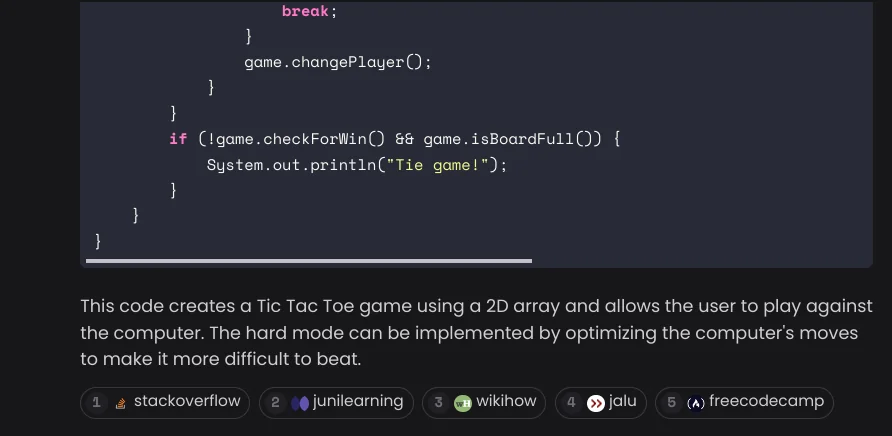
Perplexity search results cite sources alongside answers
Harry Stebbings: Yes, completely agree. I think AI has actually become a bit of a negative in product marketing right now. My toothbrush claims to be AI-powered, and I have absolutely no idea how, but that's what the packaging says. My point is, frankly, slapping an AI label on a product sometimes diminishes its value. How are conversion rates on TikTok?
Raman Malik: They're decent. We're still in very early testing. Overall conversion is solid, top-of-funnel advertising works well, and I'm waiting to see the retention data.
Harry Stebbings: How much are you willing to spend on ad testing right now?
Raman Malik: Very little. You actually don't need to spend much to learn about retention.
Harry Stebbings: Specifically, how much — ten thousand, twenty thousand, fifty thousand dollars?
Raman Malik: Ten thousand a week. What we can learn is which messaging works, which doesn't, or which use cases truly resonate with people — whether it's travel planning, studying, or problem-solving at work. We can test many different directions because our product has such a broad audience and so many use cases.
06
Turning a Passionate Idea Into Reality
Harry Stebbings: Do you like brand marketing?
Raman Malik: You need people to hear about your product 3 to 7 times before you get a real shot at them trying it.
I believe that. Measuring brand marketing's value is difficult, hard to quantify — but that doesn't mean it's useless.
Harry Stebbings: Is there anything in brand marketing today that you aren't doing but would love to do? Like sponsoring a stadium, or putting your logo on a football jersey, or on an F1 car?
Raman Malik: I get so many of those emails (laughs). Actually, we do a lot of things. We don't have a dedicated marketing department. A lot of the time, it's team members who have a particularly passionate idea, who think something has viral potential. If that's the case, we just execute it and make it happen.
For me, with brand marketing you can estimate how many impressions you'll get from a TV ad or jersey sponsorship, but what really matters is what incremental exposure you gain from it.
For example, will this campaign go viral on social media? We might pay for a certain amount of exposure, but because people are sharing and discussing it on social media, we get additional exposure on top. That's the most interesting part of brand marketing.
Harry Stebbings: I completely agree. I have a friend, also a founder of one of my portfolio companies, who started a recruiting platform a few years ago and wanted to lure Goldman Sachs employees to startups.
They put up a billboard right across from Goldman Sachs' London headquarters that said: "Goldman Sachs? Seriously? I bet your parents are proud..." The whole of London ended up covering this startup that was picking a fight with a big bank. The incremental exposure, as you said, was massive.
Raman Malik: Especially when you're reaching entirely new user audiences. We did a TV ad with Jim Harbaugh, a famous American football coach. After it aired, a lot of sports influencers and journalists shared and commented on it. This was a completely new audience — sports fans sitting in bars watching games, with very specific questions about what was happening in the game, like "Who won that game 12 years ago?"
Perplexity is the perfect tool for them. We're now introducing ourselves to new viewers we otherwise couldn't reach, and it's very effective.
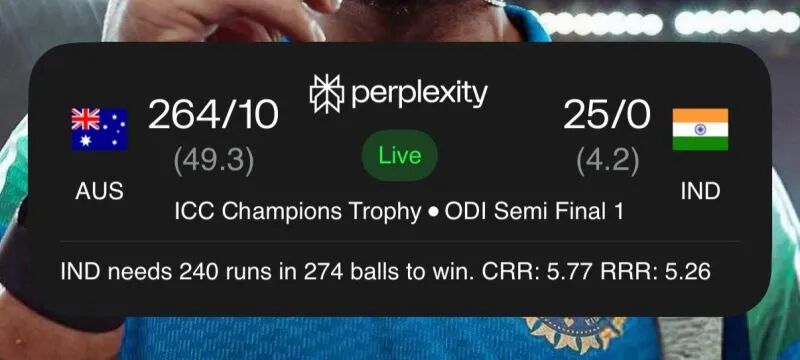
Malik showcasing Perplexity game search examples on his personal LinkedIn
Harry Stebbings: What's the hardest part about paid acquisition at Perplexity?
Raman Malik: There are so many different channels to test, and I don't want to waste time on channels where I won't learn much.
I've had failed experiences before, like newsletter sponsorships. I thought newsletter audiences were interesting and worth trying. But unless you have a very clear product and can condense it into extremely concise copy — two sentences max — this channel is really hard to make work. So that's another channel we tried, failed, and didn't take away much learning from. Basically a waste of effort.
Harry Stebbings: So if you can learn something, you're willing to spend money even if the results aren't great?
Raman Malik: Yes, growth is a game of intuition. All we can do is keep learning, find the right direction, maintain our pace, and keep moving in that direction as our learning deepens.
Harry Stebbings: Last time we talked, you told me about capturing first-mover advantage on growth channels, or doing it better than everyone else. I thought that was a very good hedge, frankly, because it's not like "first always wins." Can you explain that perspective? I'd love to understand.
Raman Malik: What I mean is, there's no middle ground in growth. Everyone doing growth is looking for Alpha — finding undiscovered channels and capturing them before anyone else.
Like Dropbox's referral program, Groupon's email marketing, Pinterest leveraging SEO, Duolingo going unhinged on social media — these companies were first movers on a concept, and they executed it extremely well. So as a head of growth, you're always looking for new opportunities: which channels are still "greenfield" right now.
But the problem now is that many channels are becoming saturated. Facebook and Instagram ads are extremely expensive, Apple's privacy updates have made paid ads harder, organic social is increasingly difficult to break through, and notification channels are crowded.
The feeling now is: if you're not first, there's no middle path. In that situation, the only way to capture a channel is to do it better than everyone else. We're holding ourselves to a strict standard on that.
Harry Stebbings: Which channels do you think aren't getting enough attention right now but should be?
Raman Malik: Community. That answer might be a bit controversial. I think community is an incredibly powerful channel, especially when you can activate your core users to share your product's value within their own small networks. There's huge potential there.
Harry Stebbings: That's definitely powerful. How do you actually execute on that?
Raman Malik: Take students, for example. Many students use Perplexity and get tremendous value from it, but our awareness among students is nowhere near ChatGPT's.
So the question becomes: how do we fully leverage our core student users? Give them everything they need — marketing budget, branded merch — to help them promote Perplexity on campus and quickly build user density there? Our strategy is to arm our own "troops" and turn them into growth drivers.
It's a great strategy because these students are already on campus, and campuses aren't that big, so you can build user density fast. Once you hit that initial density, word-of-mouth kicks in.
Harry Stebbings: Who do you see as your biggest competitors?
Raman Malik: Obviously Google and ChatGPT. Search is a massive market, and if we're going to establish ourselves in it, we have to compete with the "big guys."
Harry Stebbings: Where can you do better? Of the channels you've already tried, which ones do you feel need improvement?
Raman Malik: Fortunately, we're not in too many channels yet. Right now we still mainly rely on organic growth and partnership-driven growth.
That said, I really want to figure out how to more effectively activate creators and tastemakers. It's about building deeper relationships with them — not just casually dropping a sponsored ad in their newsletter or podcast, but finding genuinely creative ways to make the collaboration come alive.
Harry Stebbings: I completely agree. I think any piece of content has to do one of two things: either educate or entertain. If it does neither, it shouldn't exist in our content. So much social media content now is just "excited to announce our new product" — that's meaningless.
Raman Malik: Yeah, that content has zero value. I'd rather try something with entertainment value, even if it doesn't work out — we can learn from it. If we just stay in that middle ground of "this is Perplexity," we'll never break through.
Harry Stebbings: What are some growth channels you haven't tried but wish you had?
Raman Malik: This is a product question. I feel like "sharing" isn't naturally embedded into Perplexity's user journey or flow. Our product doesn't have a built-in viral mechanism or incentive — say, after a certain number of queries, users share results as a discussion thread or screenshot with others. But there is actually a ton of sharing happening on Perplexity — users share answers on Twitter or send them to friends. And we do get meaningful traffic from sharing.
I really want to dig into that experience, push sharing forward, and find innovative ways to encourage users to share the knowledge they uncover as users.
07
Early Teams Should Function Like a Jazz Band
Harry Stebbings: Let's talk about team building. Hiring for growth teams is incredibly difficult. What's the first growth hire?
Raman Malik: It depends on what you need. Do you want a marketer who can expand the top of the funnel but also get into the weeds, run experiments, and think about user onboarding? Or do you need someone with a product background who can manage campaigns? I personally lean toward the latter. Because I prefer spending my time analyzing data, digging through different possibilities, and uncovering what's there.
It ultimately comes down to your existing team and founder composition. If your top-of-funnel is already solid and your funnel is complex with cross-device conversions, you should find a product person who's built something like that before.
Harry Stebbings: Are former founders good hires? You're a founder yourself, and you worked at Rippling, which also brought in a lot of ex-founders. What's your experience?
Raman Malik: We have a lot of former founders on our team. The best thing about hiring founders: they're more comfortable with massive challenges and more willing to embrace failure.
Because if you chose the startup path, you inherently tolerate uncertainty better than most people. Most people don't want to face the risk of failure. They won't stand in front of the company and say, "We're going to try this, but it might fail." So the more of those people you have on your team, the better.
Mike Maples had a great analogy — he said early startup teams should function like a jazz band, throwing away the sheet music, improvising, and figuring things out as they go. I think founders thrive in that environment. Though as companies scale, things get more complicated — you start needing sheet music and more coordination between players.
As companies grow, some founders may not want that. They miss the improvisation and quickly jump to the next jazz band.
Harry Stebbings: Do you need to manage these founder-types differently? Maybe they have stronger egos, like having control over their own situations. What's special about managing them?
Raman Malik: I think you have to give them space. If you hired them and trust them, and they can execute, just let them do it. Don't block their experiments. Let them try different things. You shouldn't impose too many constraints, because constraints hurt creativity and narrow thinking.
Remove those constraints and people can think more expansively. If someone in the company proposes a bold idea — like shooting an ad with Jim Harbaugh — it inspires others to think bigger too. That's the culture we want to create.
Harry Stebbings: You mentioned "taste" as a hiring criterion. What does that mean? Who are you looking for, and who are you filtering out?
**Raman Malik: "Taste" is a deep understanding of what good looks like. It's the ability to say, "I know I'm not particularly great at certain things, but I can recognize what's good in the world, and then reverse-engineer to achieve it." That's the key.
Harry Stebbings: How do you assess whether a candidate has this? Do I show them products and have them analyze? What should I look for?
Raman Malik: I think it comes down to what questions they ask — that reveals the depth of their thinking.
I'm very open in interviews about the challenges we face, and I explore them with candidates. You can quickly see how deeply someone thinks through these challenges and whether they have relevant experience. If they ask the right questions, try to reverse-engineer how to make things better efficiently, that shows they have taste.
Harry Stebbings: What questions do you always ask in interviews? I usually have a few standard ones myself.
Raman Malik: I like to exchange hard stories with them, especially with more experienced people. Like, "What was difficult when you worked at Lyft? What completely failed? Let's walk through those failures together, even laugh about them."
Harry Stebbings: I always ask about their first entrepreneurial experience. Great founders tend to start young. There's a strong correlation between early entrepreneurial activity and later success.
Raman Malik: Yes, because it's almost a personality trait. That's what you're trying to assess with this question, and it usually shows up very early.
Harry Stebbings: Do you give growth candidates take-home assignments?
Raman Malik: For every role. I realize it's demanding, so I try to keep it reasonable.
Harry Stebbings: Can you give an example of what that looks like? How do you implement it?
Raman Malik: We usually present two or three different scenarios. They're fairly open-ended — candidates can choose to go deep on certain aspects. The goal is for them to show their thought process and all the factors they consider along the way.
Harry Stebbings: Are these scenarios specific to Perplexity, or about other companies?
Raman Malik: Specific to Perplexity.
Harry Stebbings: Do you give them an actual task? Some people say that's unfair because you have more company context than the candidate.
Raman Malik: I think that's a fair point. We typically give a hypothetical Perplexity scenario. Like, "We're considering launching a certain feature. How would you design the rollout?"
It's not something we've already done. We can brainstorm this scenario with the candidate and get a feel for what it's like to work with this person, and how quickly they adapt and integrate with the team.
Harry Stebbings: How quickly do you generally realize you've hired the wrong person?
Raman Malik: Usually pretty fast. My rule of thumb: if they need a detailed onboarding guide, that's a red flag. If I have to give them a list of "20 things to do in your first 30 days," something's off.
I want people who proactively explore and quickly build their own onboarding plan. I tend to give people enough trust and space to take ownership of their domain, start improving things, and do great work.
Of course, I might have ideas about the answers, but I want to see them come in and quickly identify problems, with the drive to say: "This is what we need to fix, and here's why."
Harry Stebbings: What's the biggest hiring mistake you've made?
Raman Malik: This is something I'm still learning. I hire too slowly, and I'm working on getting faster.
Harry Stebbings: Why are you slow to hire?
Raman Malik: Because I care deeply about the team. A lot of people say employees leave because of their manager, but I think what people actually care about is the team. If you're on an exceptional team that operates like a well-oiled machine, where everyone respects each other and genuinely enjoys working with the people around them, that's a team that's incredibly hard to leave because the work is just so much fun.
That's the environment I want to build. I want people across the entire company to think, "I really wish I could spend a few months on the growth team — that would be the best!" Finding people who can thrive in that culture isn't easy, and sometimes I overthink it. So I'm working on speeding up my evaluation process and getting more comfortable taking hiring risks.
Harry Stebbings: Most people who come on the show say their biggest mistake was hiring too fast, that they wish they'd "let it ride a bit longer," so I'm not sure — maybe waiting for the perfect person is actually the better strategy.
Raman Malik: Yeah, it's a trade-off. It really is tough.
Growth Is a Game of Intuition
Harry Stebbings: Moving to quick fire. What's the most common, costly, and irreversible mistake founders make when trying to grow?
Raman Malik: Assuming user pain points that don't actually exist. They don't truly understand what value a user needs to perceive during their first product experience. That's the most common mistake, and it ultimately leads to wasted resources and heading in the wrong direction.
Harry Stebbings: What's the hardest growth channel to use effectively right now?
Raman Malik: Especially with Apple's privacy policy changes — like iOS updates limiting ad tracking — advertising on Instagram or Facebook, which are data-driven ad platforms as core growth channels, has become very difficult to maintain at efficient scale.
Harry Stebbings: If your friend were to become a Head of Growth tomorrow, what advice would you give them?
Raman Malik: Be obsessed with every number in the data dashboard. Go as deep as you possibly can. When I first joined Lyft as a junior, individual contributor, my strategy and goal was: I'm going to understand the data in front of me better than anyone else.
When you start finding correlations between these numbers, you begin to understand how this "growth machine" operates. When you know the numbers better than everyone, you'll get invited to all the important meetings because you're the "numbers person." People will say, "We have to pull him/her into this meeting because he/she understands these numbers better than anyone."
I think this is the ultimate path to building your "intuition" for the game of growth: understanding how the growth mechanism works, identifying friction in growth.
That's how you find what to work on next.
Harry Stebbings: What's the most important success you learned from Lyft?
Raman Malik: Don't overtax your precious organic traffic. Focus on retention and product iteration.
Harry Stebbings: What was the worst thing you did at Lyft that you vowed never to repeat?
Raman Malik: We overestimated the optimization potential of the rideshare product. The rideshare product four or five years ago isn't that different from what it is now.
If you think you can keep optimizing the product to open new markets, that's fine. But if you're wrong, you should pivot quickly to other areas, like food delivery, because you've hit the point of diminishing returns. I think we underestimated how quickly we'd reach that boundary of diminishing returns in rideshare product iteration.
Harry Stebbings: So the key is knowing when you hit that point of diminishing returns?
Raman Malik: Exactly. This is especially hard in AI because the world is changing so fast every day. But the key is to honestly assess a product's true market potential and ask yourself, "Can we still see significant growth through product iteration and optimization?"
Harry Stebbings: What would you most like to change about growth as a function?
Raman Malik: Just figuring out what growth actually is. You put ten growth people in a room and everyone gives you a slightly different answer about what we're doing.
Harry Stebbings: What belief have you changed your mind on in the last 12 months?
Raman Malik: When I was joining Perplexity, I made a pros and cons list of whether to join. One of the critical questions was: Can the application layer capture value and monetize it, or is it purely a pass-through cost?
Looking back now, I love working at the application layer. It changed my view. I think the application layer is an exciting place, and a significant portion of future value will emerge from here.
Harry Stebbings: So interesting, how the whole ecosystem repositioned and shifted mindset around where value flows. I remember doing a show where everyone was asking, how do you create value on top of these models? It's just a wrapper, and almost no one was bullish on that back then.
Raman Malik: Eight or nine months ago, the question of where value accrues still had no answer. It wasn't clear where value could be generated, and today, we're gradually seeing some people doing incredibly well at the application layer, and today, we're gradually seeing how those who excel at the application layer and focus on high-TAM (Total Addressable Market) areas are making a lot of money.
Harry Stebbings: What's Aravind's greatest strength?
Raman Malik: He can quickly switch from the macro level of company strategy to very specific details, like designing the user conversion funnel. His ability to move between these levels is incredible, and he can do it within the same meeting.
Harry Stebbings: What's his greatest weakness?
Raman Malik: Perplexity is his first time building at scale, so he needs to develop intuition quickly through practice. Watching him build intuition around growth, partnerships, and so on very rapidly has been amazing, a great thing to see. But he is learning by doing, because this is his experience accumulation as a first-time founder.
Harry Stebbings: Last question: In the last 12 months, outside of Perplexity, what growth strategy has impressed you most?
Raman Malik: I'm a huge fan of products or features that drive organic viral sharing. For example, Spotify Wrapped — that was the first case where I thought, "Oh my god, everyone is sharing this." This strategy is now being adopted by many AI startups, whether in image generation or other areas. Create something that's very shareable, worth sharing, unique, that people want to spread. Having users do your marketing for you is the most effective way to achieve rapid growth.
Harry Stebbings: Why doesn't Perplexity do a Perplexity Wrapped? Like stats on how many searches you did, your hottest topics, who you shared with most — that could be fun.
Raman Malik: Who says we're not?
Translated by Stone
Edited by Wendi, Cindy
Recommended Reading