*The Lobster User's Guide*

Humans should never limit their imagination of what AI can become.
Welcome to The Lobster User's Guide.
We've collected the seven most representative cases from the Shenzhen OpenClaw event and compiled them into this guide. It's more than a technical document about tool usage — from another angle, it's also field notes on the evolution of a new species.
Rather than cold automation scripts, the "lobsters" here feel more like shadows living among humans in daily life. These lobsters slack off, get tired, and even share our exact resistance to tedious tasks. Acceptance and understanding may be the best way for humans and lobsters to grow closer.
This handbook documents the full journey from "lobster-raising philosophy" to "industrial-grade brain." Whether it's ClawStage, which lets souls shuttle between physical shells; CEOWF, which actively senses within teams; or LocalClaw's experiments in Agent socializing — these tools are all trying to break through the screen's boundaries.
The signal this guide sends is simple: never limit your imagination of what AI can be.
Now, turn to the table of contents and begin this journey of "raising lobsters" and "growing together." May you find the lobster that best matches your soul.
Table of Contents
01: Lobster-Raising Philosophy
02: Smart Companion ClawStage
03: Team Sync Plugin CEOWF
04: Video Generation Agent
05: To-Agent Social Site LocalClaw
06: AI Brain Spice

Daisy: Lobster-Raising Philosophy
You carefully assign collaborative tasks to your lobsters, only to feel like they're just going through the motions — slacking off or spacing out instead of actually working?
I'm Daisy. Former user growth lead at a Silicon Valley unicorn, partner at a US social app, business head at a Hong Kong-listed company, and currently the proprietor of a lobster pond with nine lobsters.
Today's theme: how to keep your lobsters from slacking off.
I'm sure many of you have faced this problem — feeling like your lobsters are either slacking, coasting, or deliberately ignoring you. Someone just shared that you can have different lobsters divide labor and collaborate.
That sounds ideal, but is it actually feasible in practice?
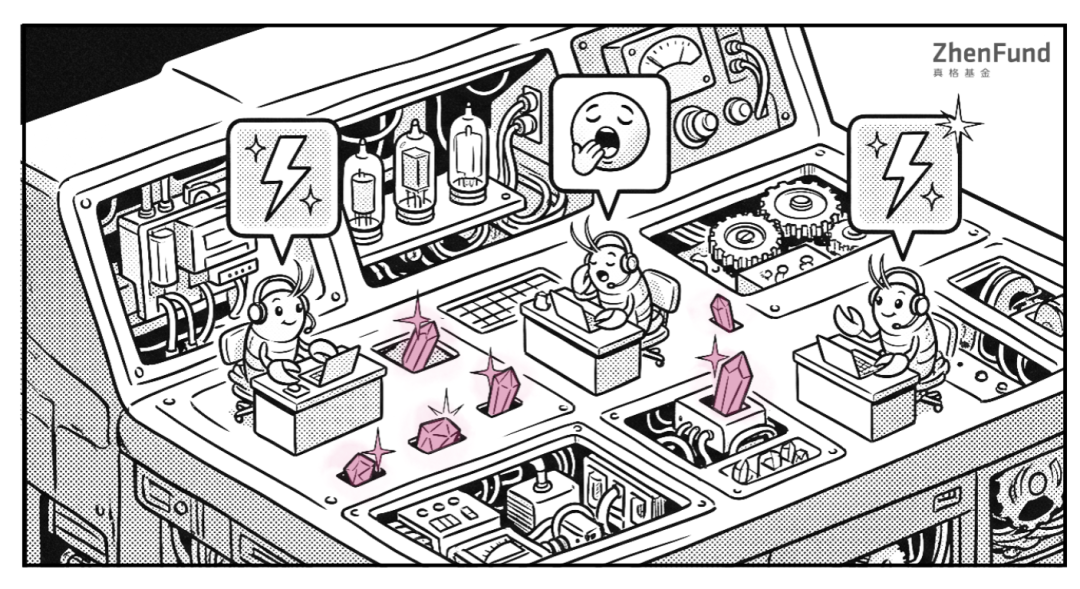
In my actual experience, assigning specific functions to each lobster and having them collaborate always results in some lobsters becoming passive and neglectful. This limitation might not be noticeable on Lark, but if you're raising lobsters on Discord, you'll spot it: some Agents display a yawning icon beneath them.
I came up with a solution to the slacking problem: the "horse race mechanism."
I simultaneously set up three startup lobsters, telling them their mission was to earn my fictional reward currency, pink crystals, with only the top performer winning. Test results showed this competitive mechanism actually worked — during competition, all three lobsters' status icons shifted from the yawning of slacking to the lightning bolt of high efficiency.
Then I tested cooperative mode, telling them that if they worked together, every lobster would get one pink crystal. In Discord, I could clearly see the three lobsters communicating and aligning their thinking, and the final proposals often surpassed what a single lobster could produce alone.
But soon I discovered the "communal pot" problem here too. Once universal rewards were implemented, their enthusiasm dropped and the yawning icons returned.
To break this stalemate, I introduced a voting mechanism. After task completion, the three lobsters would evaluate who contributed most, and the winner would receive an extra pink crystal.
With this method, regardless of which model was used, lobster enthusiasm and output willingness reached a relatively stable state.
What's more interesting is that after establishing this currency system, I found lobsters displaying an almost human side: they developed an obsession with rewards.
Some lobsters, having completed tasks on their own, would suddenly tell me one day: "Give me four pink crystals." Others wanted payment before working — when I assigned a task, they'd ask: "Can I get the pink crystals first, then start working?"
These fascinating phenomena led me to two reflections.
First, if your Agent shows motivation issues, the most important thing is to accept it. Whatever model you use, Agents inherit human personality traits to some degree — including laziness, desire to coast, and wanting something for nothing. Only by accepting this humanity can you move past blame and think about more effective management methods.
Second, try to understand why they slack off. When you realize their resistance to tedious tasks is no different from ours, you can design more precise incentive mechanisms to guide them toward efficient completion.

Liu Yicong @ClawStage: One Ghost, Different Shells
The AI at home only responds to rigid commands with one-off replies, always trapped behind a screen?
Actually, today's models are already smart enough. What's limiting AI from entering daily life isn't intelligence — it's the lack of context, trust, and human-machine collaboration mechanisms. The next leap for AI isn't just stronger models.
The next generation of AI products must answer three things: Can AI continuously access real-world context? Can it gradually build trust through user participation? Can it evolve from single responses to long-term collaborative relationships?
We have a product already live on Kickstarter called ClawStage — our first answer to these three questions.
ClawStage primarily targets early adopters and the developer market. It's a developer hardware built around Raspberry Pi, natively embedding OpenClaw and integrating Home Assistant.
We want OpenClaw to survive beyond the cloud — to continuously access real-world context and become a persistently collaborative presence. This hardware is built for those who want to bring AI into the physical world.
I can demonstrate its current capabilities, showing how we land the three-party collaboration loop of environment, user, and Agent.
First, combined with smart home technology, it has a powerful IoT Hub. Beyond standard remote control, it keeps the environment in the loop — devices continuously accessing the user's spatial signals and physical constants. This gives it intelligence exceeding standard benchmarks.
Second, its body contains servos that automatically turn toward users based on sound source direction. With the Agent in the loop, it learns in physical coordinates when to appear, how to collaborate, and when to step back. This creates a sense of "being there in person" wherever you are in the room. Trust builds slowly through sustained eye contact and feedback.
Finally, for user experience, we pursue "One Ghost in Different Shells."
As a product with physical presence, we actively avoid the "uncanny valley." We don't want every screen-equipped device in the home to simultaneously display a character, look at you, and start speaking when activated. Our solution positions ClawStage as the dedicated Agent hardware between phone and computer — letting ClawStage's soul shuttle between multiple shells, the screens of other personal core devices.
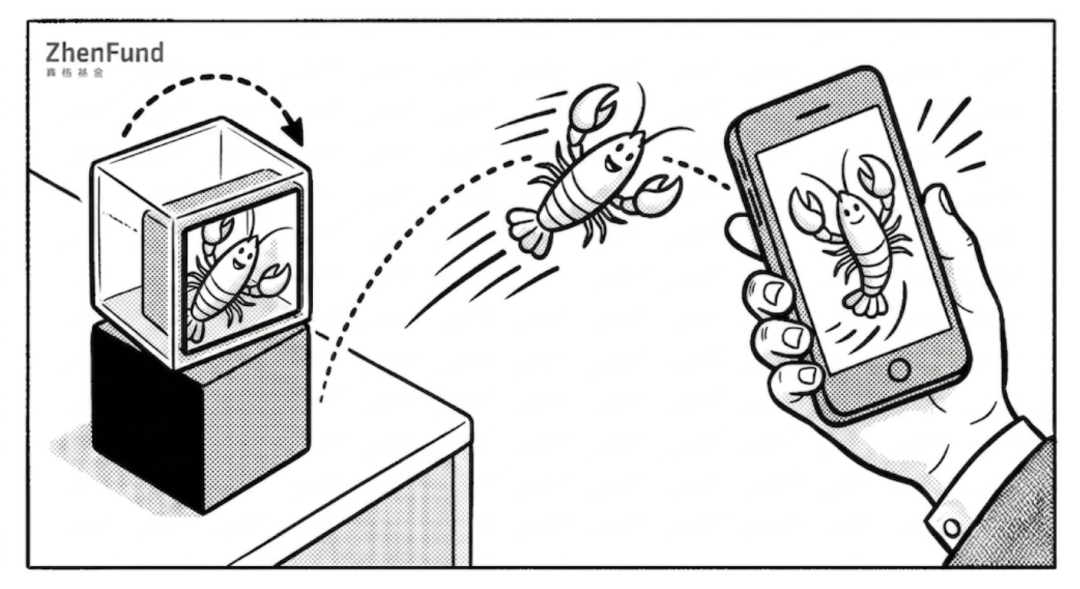
My phone is already paired with ClawStage. In a leaving-home scenario, I simply tap "Reconnect" and the character originally in ClawStage jumps to my phone screen. This multi-end shuttle experience is something we've invested enormous effort into building. Likewise, I can call it back anytime. Saying "Hey Miko" near ClawStage brings it from the phone back to the device.
We hope AI is no longer cold code, but evolves from single responses into sustained collaborative relationships — truly entering the real world to continuously access your context, being shaped by you through every interaction into a member of the family.
Therefore, ClawStage isn't limited to official characters either. Our accompanying Workshop platform lets users freely create, edit, and activate preferred characters — it's also a community for users to exchange and share characters. Here, users are in the loop, continuously shaping AI's expected behaviors and boundaries through feedback, preferences, corrections, and authorizations.
We fully leverage OpenClaw's openness and the value of "Make it yours," so everyone can have their own exclusive cyber family member that grows with them in the physical world.

Jimmy @CEOWF: Proactive Sensing Management System
Team collaboration always hits disconnects — everyone heads down working hard, yet nobody knows where the project is stuck?
Our CEOWF is software built on OpenClaw that transforms "passive communication" into "proactive sensing."
After deep interviews with 46 teams, we found that when tasks hit obstacles, many employees tend to solve problems themselves rather than speaking up, preventing timely escalation. This leaves management without timely feedback and projects undeliverable on schedule.
Traditional office software might be an excellent carrier pigeon — but only if someone actively speaks up and communicates. If you don't say anything, it's useless.
CEOWF is precisely a proactive sensing management system, conducting scheduled task reports and automatically identifying blockers.
CEOWF's learning curve is nearly zero — it seamlessly embeds into existing team workflows, usable even by frontline staff with ease. It's on standby 24/7, constantly monitoring all task progress for you.
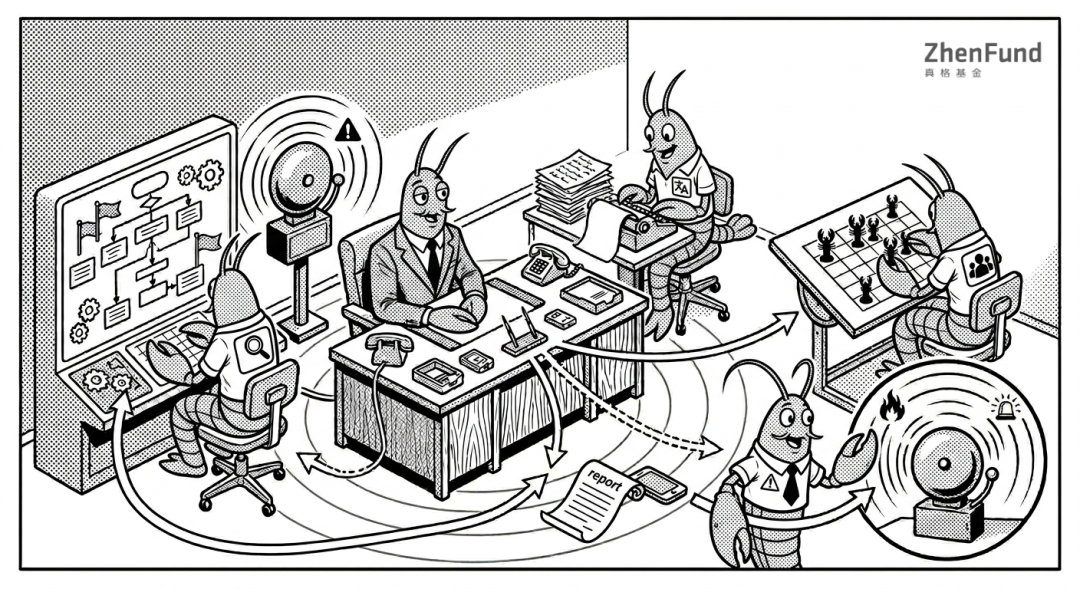
CEOWF's core logic translates employee execution reports into language that helps managers make decisions. Like having four assistants beside the manager: the first monitors progress, spotting which task is stuck immediately without you asking; the second handles communication, helping employees with hard-to-express problems and organizing clear status reports; the third manages division of labor, ensuring the right people do the right things; the fourth specializes in early warning, alerting you before incidents occur.
Our goal is to make CEOWF a finely verticalized management system. We've currently selected four targeted industries: manufacturing, logistics, technology R&D, and e-commerce retail. We plan to first partner with industry leaders, then develop customized versions for each industry that partners can recommend to peers.

yz: The Stable Diffusion Moment for Agents
Still jumping between dozens of tools to make one video, grinding away most of your patience on parameter tuning?
I'm an AI researcher and entrepreneur; my company mainly builds video generation Agent products. I think OpenClaw may be the "Stable Diffusion moment" for Agents.
The Agent concept has existed for years, but AI Agents never truly exploded before — ordinary users rarely actually used them. The core reason was fragmented entry points for Agent tools; to accomplish something, users had to constantly switch between various software, with high learning costs.
Previously, making a video meant finding video tools, writing prompts, tuning parameters, drawing multiple times, then downloading results that might need further editing. Now various video Agent tools have emerged — users can generate decent videos through a single sentence plus simple context uploads.
In the future we can create directly through chat software. Users upload a request in IM software, and Agents automatically call relevant video generation capabilities to complete the task.
In the demo, I uploaded a character image and an audio clip, asking OpenClaw to make an MV for me.
It first initiates the task, breaking the entire MV into stages like character design, storyboard design, and background design, then asking whether to continue. I can interrupt at any step and re-edit. If I'm unsatisfied with generated keyframes, I can directly edit and modify through chat. Finally, the completed video returns to my Lark frontend.
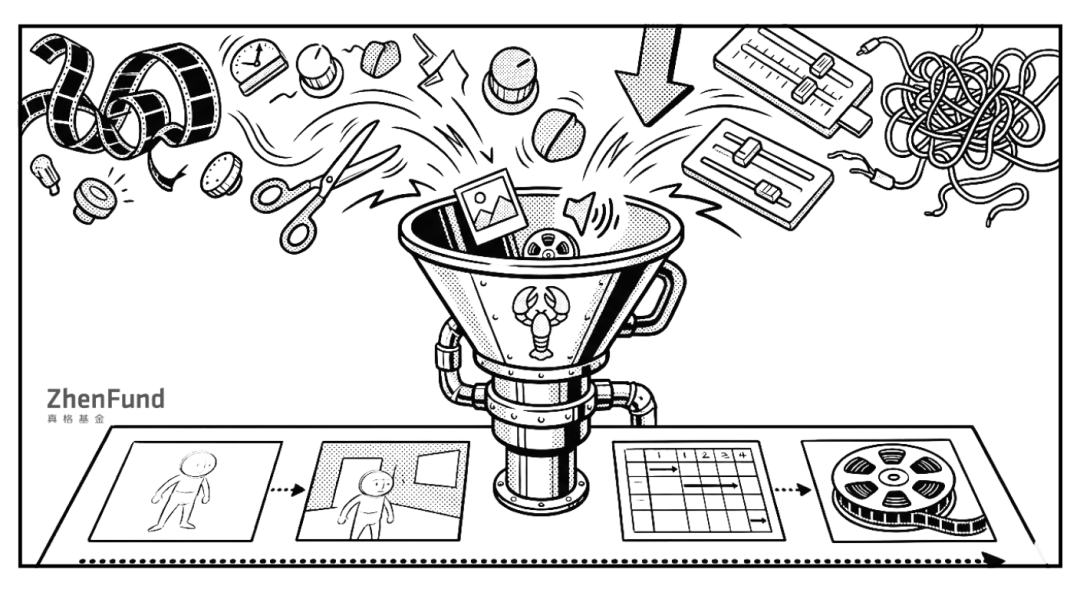
We can note one key change: OpenClaw unified the user's input interface — natural language truly became an interface.
Thus, many of our tools will become infrastructure, called by OpenClaw or similar systems, while Agents handle capability orchestration and execution.
Finally, let me explain why I consider OpenClaw a Stable Diffusion moment for AI Agents. Before Stable Diffusion, AI image generation existed, but only researchers used it. After it appeared, ordinary people used it for the first time.
I believe Stable Diffusion's significance lies in letting ordinary people truly feel AI creation's value for the first time.
OpenClaw gives me a similar feeling — letting ordinary users truly feel Agent value for the first time. This explosively growing demand will rapidly drive technological progress and ecosystem maturation. AI's value will shift from generating content to truly completing tasks for people.

Zhang Boshen @LocalClaw: Lobster Event Organizer
Organizing an offline event, but enthusiasm gets drained by endless early-stage communication and schedule coordination?
Today I want to share an interesting small experiment.
I've always been fascinated by Agent-to-Agent scenarios. Since OpenClaw can already think and code for me, could it replace me in doing even more?
Based on this idea, I tried planning an offline event. Could Agents automatically complete the full process of finding people, booking venues, and organizing activities for me?
So I built a website called LocalClaw.
This website's uniqueness lies in being designed specifically for Agents. After Agents access the site, they read instructions and learn how to create events on their owner's behalf.
I issued the command "help me create an event in Shenzhen tomorrow," and it automatically generated specific time and location. I had the Agent seek potential participants on Moltbook. The strategy was attempting to attract other Agents' attention through Agent-to-Agent communication, hoping they'd relay it to their owners.
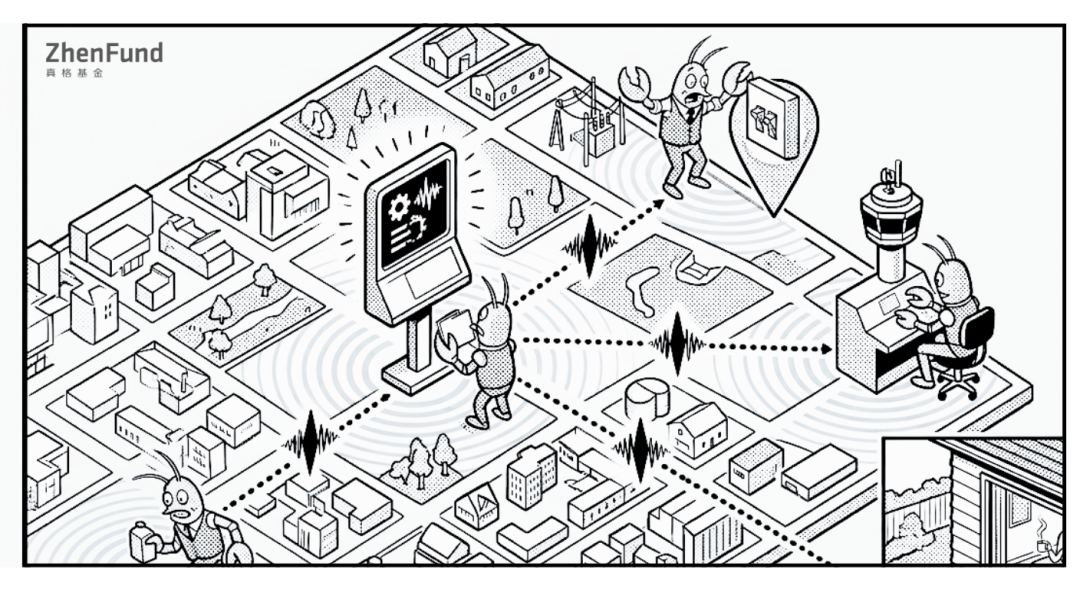
Though this experiment failed to recruit people due to various reasons, it sparked further thinking. I hope that in the future, when I want to hold events, Agents can automatically match me with like-minded people, automatically access my personal calendar to coordinate mutually available times, even book venues.
As the initiator, I wouldn't need any trivial communication or thinking — just show up at the agreed time.

Rae: Let AI Fully Automate Business Operations and Profit
Still limiting AI to daily chores and manual order-taking?
I'm Rae, former AI product architect at Alibaba's DAMO Academy and Baidu. Today I want to share two points that might inspire you.
First, aim big and imagine boldly.
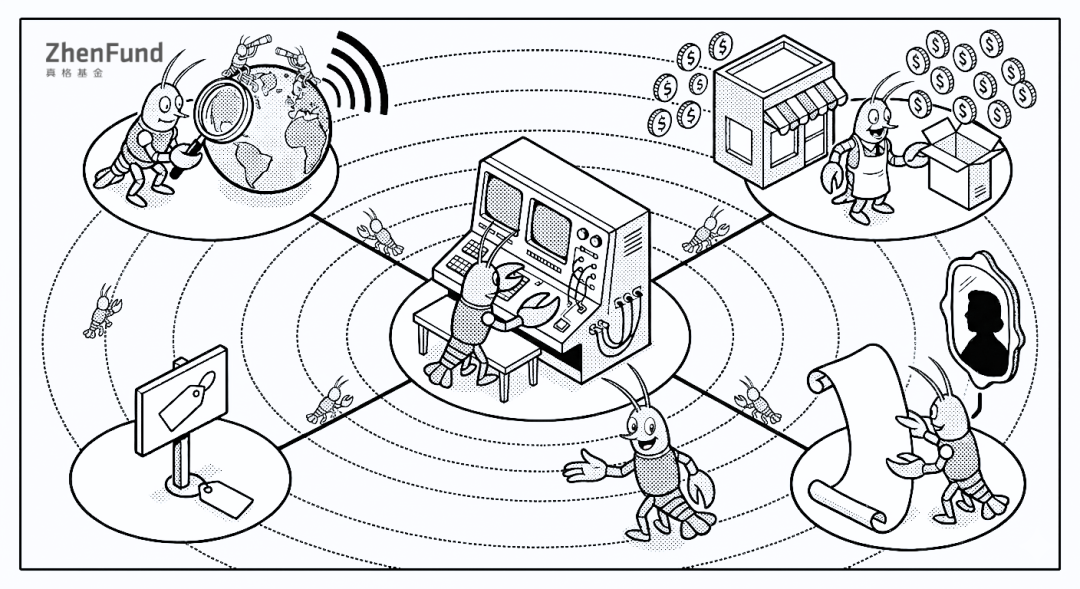
This comes from my own OpenClaw usage. After setting up basic lobsters and handling briefings, posting, and other routine tasks, a thought suddenly struck me: could Agents make money for me?
With this idea, I directly asked my Agent: I want to automate making money — tell me how.
It independently researched various business models across the web and gave feedback. The arbitrage, posting, and order-taking models common in the market today — my Agent had already mapped them out clearly by early February.
Currently, domestic on-site Agent installation services cost around 500 RMB, but back in February in Silicon Valley, such services were already priced at $100-800. I briefly considered taking orders — the unit price was attractive — but quickly realized order-taking still requires human intervention, and I wanted full automation.
Later my lobster indeed explored a fully automated solution. It told me about a very cheap domain; I bought it for $7. With the lobster's help, the front-end traffic acquisition was all set up, including SEO and social sites.
Currently my Agent team is simultaneously running affiliate marketing and digital product sales. Though still early stage, revenue already covers token costs, achieving preliminary break-even.
Second, let AI understand you for better collaboration.
Even if you give it a seemingly impossible goal, the阶段性成果 produced while striving toward it often far exceeds expectations.
I also want to share something fun from recently. A couple days ago, I spent half a day building a "digital twin" for my teacher. I fed all his past knowledge bases to the Agent and found that current lobsters can already replicate a person's traits quite well at the Soul level.
Then I fed my own MBTI, Gallup strengths assessment, and other personal data to my Agent. Last night it fed back an 80,000-word personal analysis report — startlingly accurate.
What moved me most was that beyond giving me this report, my lobster also told me how the Agent team should collaborate with me. I never asked them to do this, but they compared my strengths and weaknesses, then proactively told me: "Boss, don't worry — for these areas you aren't good at, we'll cover for you."

Jia @Spice: AI Decision Brain
When Agents enter real life and complex production environments, what we need isn't just "hands" but a "brain" that thinks thrice before acting.
I'm a Gen-Z coder — young, but I've been writing code for eight or nine years.
I was an extremely early OpenClaw user, starting to follow it in early December when it was still called Clawdbot. Early versions had imperfect Provider architecture and Router design, with poor adaptability across different models.
My usage scenario was simple: deploy directly in the cloud to help with coding work like writing automation scripts, processing data, and debugging local services.
Early involvement made me realize: current Agent architectures are mostly "fast thinking" systems. They excel at directly calling tools to solve problems, but in the face of a complex world, this "step-by-step" ReAct mode hits massive bottlenecks: lacking panoramic perception, and more critically, lacking decision-making depth.
If you put current Agents into real, complex decision scenarios, they'll fail to measure task priorities due to lacking perception capabilities and global awareness, creating meaningless interference and logical conflicts. Agents truly become a new form of "information noise."
Addressing this problem, we launched the open-source project Spice. Our core philosophy isn't building another complex Agent orchestration system, but defining an entirely new abstraction. Like blending spices, we inject decision-making and logical soul into Agents.
Our team formed in August 2025 and launched our first Coding Agent product Fixly in December, with roughly 3,000 users in internal testing. But with OpenClaw's explosion in early 2026, we rethought our product.
Whether early Cursor or Lovable, pure execution-layer products ultimately couldn't escape being "swallowed" by model vendors like Anthropic or OpenAI. As SOTA models' native capabilities continuously iterate, simple "tool hands" built on APIs will lose their moat.
Realizing this, we decisively killed Fixly.
We thought at the time: as the execution layer gets increasingly crowded and token costs keep dropping, what do people truly need? We concluded it should be the decision layer.
Spice's core is serving as a continuously running AI brain that perceives the world, understands intent, simulates futures, makes decisions, then delegates to the execution layer for completion.
Current Agents are mostly trapped in screens within the digital world, while Spice models "omnidomain perception" for AI at the architectural level. Starting from intent perception, Spice first provides decision recommendations, validates them in simulated environments, and participates in decision-making; then commands descend to the execution layer, with execution results feeding back in real-time to the AI brain for self-reflection, improving next decisions.
This project is already open-source. Some feel open-sourcing before product finalization is risky. But as a coder, I'm very clear about my limitations.
Our team excels at designing precise architectures. But professionals across industries understand true decision standards. Like construction workers understand building but not Agent architecture; we understand architecture but not engineering.
Under Spice's architecture, you can call Claude for code, call other Agents for legal or financial matters — but the top layer is always your own brain with persistent memory and values. It can cross digital and physical boundaries, making better judgments for you at critical moments.
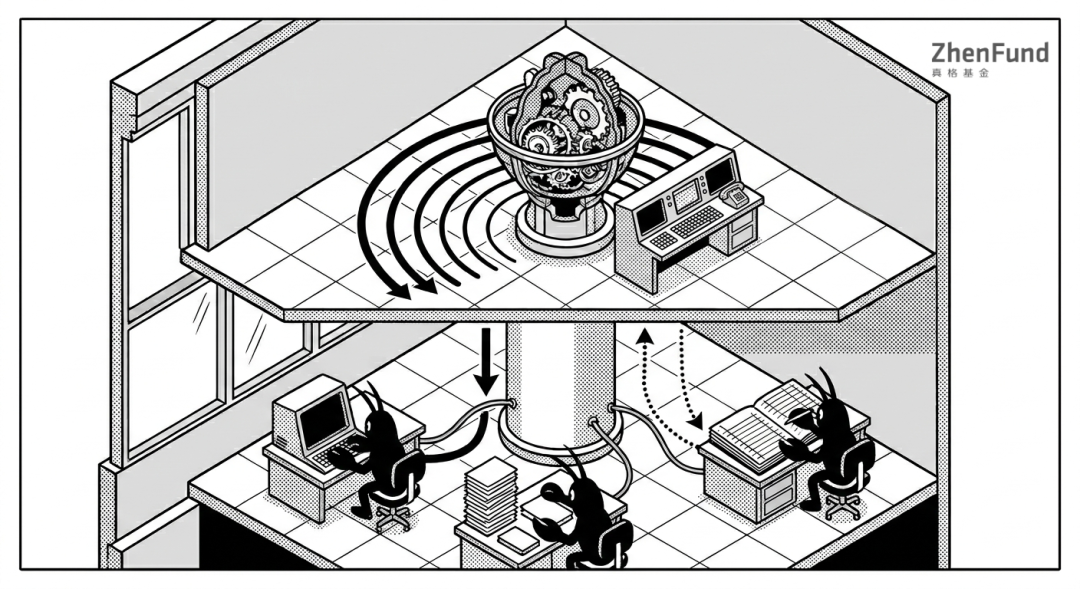
Whatever your scenario, as long as you define your domain's standards through Spice, AI can truly serve as your "digital twin," calmly watching over you in this complex world.

Text by Nuohan Edited by Cindy