Z Talk: A Conversation with Uzis Founder Sen Wang — Dropping Out, Returning to China at 22, and 10x'ing GMV in Three Years Selling Basketball Socks
We don't do anything outside of basketball, and it's impossible to understand that many people.
Wang Sen is looking forward to China's first 3x3 men's basketball Olympic match on July 31.
The Paris Olympics will open in two days along the Seine. "I hope our ambassador Zhang Ning can perform well, and it would be even better if he could win gold," said Wang Sen, founder and CEO of Uzis.
Last summer, during the CBA offseason, Zhang Ning traveled to 3x3 basketball courts around the world in an all-out "Wandering Earth" campaign to earn points, eventually qualifying as captain to lead China to Paris. When Uzis signed Zhang Ning in 2019, he was still a controversial "internet celebrity" player who had even been demoted to the CBDL. But he wasn't afraid, didn't back down, and refused to admit defeat. "Signing him early was like a calculated bet, and we ultimately bet right," Wang said.
Wang Sen once harbored dreams of playing professional basketball in the NBA. Born in 1994, he trained daily in high school, squeezing in time to play pickup games at the YMCA, and the 175cm-tall teenager even hung from pull-up bars like Michael Jordan in hopes of growing to 2 meters.
He never became an NBA star. After dropping out of Michigan State University's marketing program, he returned to China to start a business. From 2015 onward, he worked at an investment firm, built an app, sold disposable hair gel, and tried his hand at restaurants. But he ultimately returned to his love of basketball. In 2017, at age 22, Wang founded the basketball brand Uzis in Changsha.
Uzis does only basketball-related things. Beyond "passion," the keyword Wang repeatedly emphasized in our interview was "focus." Starting from the niche category of basketball socks, Uzis became Taobao's top basketball sock brand in three years, with sales increasing tenfold. In 2022, Uzis's revenue exceeded 300 million yuan.
Early on, Uzis faced a strategic choice: make all kinds of socks, or expand into apparel and accessories for basketball players? Between focusing on the supply chain and focusing on the audience, Wang chose the latter.
"We just love basketball and are good at understanding basketball people, so we focus on basketball," Wang said. We can't understand that many people, we can't do every sport—doing too much makes you lose focus.
In Wang's view, there are no non-consensus views in the sportswear industry. You need to focus, prioritize technology, and improve quality. "Actually, much of this is consensus in the industry—the key is whether you can truly walk the talk."
In 2021, ZhenFund invested in Uzis's angel round. With the Olympics about to open, we invited Wang Sen for an in-depth conversation. We discussed the decision to sign Zhang Ning, his journey of dropping out to start a business, and his thinking on the sportswear industry, product innovation, and management transformation.
Below is our conversation with Uzis founder and CEO Wang Sen.
01
"I've Always Craved Winning"
Q: What have been the most pivotal life experiences for you?
Wang Sen: Playing sports was pivotal. My dream since childhood was to become an athlete. I joined sports teams and track teams early on—I've basically tried every sport you can imagine: taekwondo, table tennis, tennis, boxing, Wing Chun, nunchaku, basketball, soccer, track, surfing, sailing, and more.
I was also influenced by my father, who used to be a sanda fighter. In first or second grade, my dad made me put on boxing gloves and spar in front of many friends. I was very young, very afraid of losing face, but I had no choice—I gritted my teeth and did it. In fourth grade, I learned taekwondo, and the final step for the blue belt test was sparring. The coach paired me with a sixth grader. He was much taller than me. I was terrified, I cried, I didn't dare to fight, but again I had no choice—I gritted my teeth and fought.
Starting in fifth or sixth grade, watching the NBA had a huge influence on me. I loved the Cavaliers' LeBron James and that kind of野蛮打法 [physical/aggresive style], and I often fantasized about whether I'd grow to two meters by age 18. I was already 175cm after middle school, but I never grew taller after that. To this day, I still remember the craving for victory that sports gave me. That passion is in my bones.
Q: Have you always craved winning?
Wang Sen: I've always craved winning. If I think something is worth doing, I have to take it to the highest level.
My childhood dream was to play in the NBA and become a Finals MVP. Later I realized that wasn't happening, so my goal became to build a top-tier basketball company. In middle school, those competitive times ignited a powerful competitive drive. Our class was basically a sports class—my classmates were mostly the best athletes, breaking many records. I hated being on the same team as people at my level who I constantly competed with; I wanted to be on opposite teams so it would be more challenging. I liked competing against people stronger than me.
Q: How did the idea of founding a basketball brand come about?
Wang Sen: The entrepreneurial idea started in high school. I was studying in America and had some free time to read business books. Plus my father was in business, so he subtly influenced me, and I gradually developed the idea of starting a company.
Later I dropped out of university and wanted to return to China to start a business, but my family wouldn't allow it. So I first worked at an investment firm, but I couldn't stop thinking about entrepreneurship during that time. In 2015, I started businesses doing an app, selling disposable hair gel, and restaurants, but ultimately decided to create my own product. Uzis started as a basketball sock distributor. After six months of distribution, I felt the partnership wasn't smooth in various ways, so I decided to build my own brand.
The biggest difference this time was that I genuinely loved basketball—it was completely my own chosen path, and my level of commitment was extremely high. With a mindset of proving myself, I knew that once I took this step, I had to succeed. It was basically a fight with no retreat.
Other factors may have involved some luck. At the time, basketball socks hadn't yet become popular in China, and we seized this opportunity by focusing on the basketball sock category, gradually building from there.
Q: Why did you choose to drop out and start a business?
Wang Sen: My original dream was to become a professional basketball player in the NBA. But in high school I had many ideas, and although I kept playing basketball with improving skills, the lack of a clear plan and guidance ultimately shattered my NBA dream.
In university, I personally couldn't tolerate living without purpose—I felt like a walking corpse. So I began searching for my next dream. I started asking myself internally: What do I do next? What do you really want to do? What kind of person do you want to become? I decided to start a business and become an entrepreneur. Within one or two weeks of my NBA dream shattering, I made the decision to drop out.
Many life decisions aren't based on logic but on a feeling. Before returning to China, I set a goal for myself: drive alone from Chicago to Los Angeles across America. I was young then, with many emotional thoughts. I felt that if I was going back, I couldn't do it simply—I had to set a challenge for myself.
I wanted to test my determination to return and start a business. I told myself: If you're really going back, then drive alone from the East Coast to the West Coast. If you can do it, that proves you're determined enough.
I spent $6,000 on a modified vintage used car, a blue Chrysler PT Cruiser. Five days to Los Angeles, two tires blew out, and I called 911 to help change a spare. Later a truck came rushing from behind, getting closer and closer, and when it was about to hit me, I swerved sharply into the grass of the highway buffer zone. As I left, I saw in my rearview mirror that he was comforting his dog beside him. The whole thing was like a movie.
On the road I kept talking to myself, listening to songs, thinking about questions. From east to west, at first you see many cities, then in the middle there are many deserts and snowy mountains. That experience subtly had a huge impact on me. When I reached Los Angeles, I sold the car for $3,000 and flew back to China.
Q: What did that trip clarify for you?
Wang Sen: I felt my own determination, that I had to do something. Since I had set out on this path, I would never look back.
Q: What kind of person do you want to become?
Wang Sen: When I watched YouTube, I loved motivational videos the most. One video asked you to imagine your future self. So I started imagining my future self. I thought, my physical fitness would definitely still be excellent, and I'd still love sports. At the same time, I'd definitely be wearing a very crisp suit, maintaining a handsome physique. And then, ringing the bell at Nasdaq. I had roughly this kind of vision. I even thought about what I'd say in media interviews.
Q: What would you say?
Wang Sen: First, I must thank my father very much. He ignited the passion and fighting spirit I should have, and I'd expand on this theme. And when I imagined it, I'd tear up, feeling certain I could do it, my heart racing. I'd turn off all the lights in the room, play the video's audio, and keep listening. Like this, I decided. It's decided. That's it.
02
"We Don't Do Things Outside Basketball"
Q: How was Uzis's founding team assembled?
Wang Sen: Supply chain lead Li Hongji I met playing flag football, and marketing lead Yang Xiaoru and Li Hongji met through an online community. Through these connections, the three of us came together and decided to start a business together. We all loved basketball, loved sports, and wanted to start a business to accomplish something—we had shared pursuits and dreams that bound us together.
Initially, there was another founding team member who, like Li Hongji, skateboarded. But later he couldn't commit full-time, still had to study, and his family opposed it, so we made the hard decision to buy back his equity and let him leave. At the time I was full-time, Li Hongji took a leave of absence, and Yang Xiaoru quit his job—the three of us poured all our time into Uzis. Our determination and resolve were immense.
Q: Why did you choose basketball socks as your entry point?
Wang Sen: Directionally, my partner found this opportunity first. Wearing long basketball socks was very popular and common in America, but in 2017 most people playing basketball in China didn't wear long socks. Basketball socks are long because basketball shoes are high-tops—short socks chafe the ankle skin. We felt the same trend would emerge in China.
Meanwhile, basketball socks faced less competition, and sock costs weren't that high, so inventory wouldn't be too expensive. Plus I have an impulsive personality myself, so we chose basketball socks as our entry point.
Q: Nike also started by distributing Onitsuka Tiger. Is distributor-to-brand a universally successful path?
Wang Sen: We understand that most entrepreneurs don't have many resources or experience at the beginning. My partner first found this brand. He has a more cautious personality, so we started by purchasing inventory and selling others' products to get a feel for things. Starting from a smaller scope is still quite good. This is both a pattern and a coincidence.
Working with distributors, we also faced issues with high costs, low efficiency, slow speed, and delayed responses. There was some internal disagreement — some felt that American brands, after all, carried more name recognition. So we decided to first investigate the supply chain to assess feasibility. After looking into it, we found that the supply chain side wasn't actually that complicated. That's when we made the decision to create our own brand.
Q: How did Uzis get started in its early days?
Wang Sen: During the cold-start phase, we explored directions in design, craftsmanship, and business model, searching across all these dimensions before finally landing on the approach that suited us best.
Initially, we followed the product model of the brand we'd previously distributed — finding images online to modify and adapt, things like big red lips, big hearts. We also collaborated with well-known Chinese illustrators, turning their artwork into printed socks to emphasize basketball culture. After about half a year, we realized this product model seriously hurt production efficiency and couldn't handle large-volume orders. Plus, the high-temperature, high-pressure processing for printed socks damaged the material. So we abandoned printed socks and switched to knitted socks — a massive reform of our product line.
Looking back, we definitely benefited from market tailwinds. By tailwinds, I mean there were lots of people playing basketball, real demand for basketball socks, but the category hadn't been fully exploited yet.
On the marketing channel side, Douyin and Dewu were just emerging at the time. We reacted quickly, seized the channel timing and tailwinds, and got in early. We partnered with China's one-on-one basketball tournament King of the Street and sponsored some players on the show. From there, we gradually built up some name recognition. Later, as Douyin rose to prominence, we also capitalized on early influencer marketing opportunities on the platform, investing in KOLs and getting into Douyin livestreaming ahead of others.
The decision to enter Douyin and Dewu was made by our marketing lead, Yang Xiaoru. He saw the potential, and we backed him to run with it. Compared to the rest of us, he's always been someone highly sensitive to information — likes digging into all kinds of things, used to be a Hupu forum moderator. Back when he went to school, he'd carry a keyboard and mouse in his backpack because the peripherals at internet cafés would affect his performance; he ranked in the top ten in China for CrossFire. After joining the team, he injected enormous energy into our brand marketing.
Q: What stages can Uzis's development be divided into?
Wang Sen: Broadly speaking, three stages. The first was pure passion-driven "wild growth." The second was a phase with some rational thinking, but still mostly reckless — "wild growth 2.0."
The third stage, where we are now, is when we recognized the objective laws of the market and began shifting to "rational passion." At this stage, it's no longer just burning passion blindly — more rational thinking is woven in.
Q: What have been the key inflection points for Uzis?
Wang Sen: On the product side, the first major milestone was ending our distributor partnerships and starting to build our own brand — that was an important turning point.
The second was launching our first basketball sock hit, "Junzi Hao Qiu" (The Gentleman Loves Basketball), a Chinese-style design, following a series of marketing moves. After that, we rolled out more hits, including a breakout in our apparel category — a pair of long pants.
On the management side, the first milestone was formally structuring our partner equity framework for the first time. The second was establishing a more scientific all-hands stock ownership and incentive partner mechanism. Now, we've entered a stage of strategy-driven, all-hands management.
Q: Looking back today, what decisions led to the birth of your hit products?
Wang Sen: There was a knitted sock product called "Armor" that later became a hit. During R&D and design, we kept thinking about how to differentiate it from a particular Nike sock on the market.
Through continuously adjusting our product line, we gradually identified some patterns for hit products — what we shorthand as mecha-inspired, techwear-inspired design. While ensuring functional needs are met, the visible markers on the exterior show greater visual tension.
Most successful product innovation comes from differentiation that users can accept. If there's no differentiation, why would users pay? But if the differentiation goes too far, users might not accept it. So at the product innovation level, there's a curve of innovation index versus innovation returns, with a peak. Higher innovation degree means higher returns. Past that peak, if users completely don't understand a product, it won't sell — that's the balance to strike. So for products, we focus on finding ways to differentiate on the foundation of market acceptability.
Q: What challenges has Uzis faced along the way?
Wang Sen: Especially this year — probably the hardest year in our entrepreneurial history. For a company's development, once the tailwind period ends and competition intensifies, you have to truly realize how to break through. In a market with real competition, when strategic thinking has to cascade from organizational goal alignment down to department goals and then to individual role goals, you need very solid management capability — that's not something you can ride to on tailwinds alone. We've placed very high importance on strategy from early on.
Uzis is currently in a reform phase. From growth during the tailwind period to now conscious strategic growth; from luck-based growth to capability-based growth. This era is no longer the early startup period where pure passion could drive things — it increasingly demands strategic thinking, holistic perspective, logic, and consistency. This is also a management transformation. If a company can get through this transition, it will welcome a new turning point of vitality.
Q: The essence of strategy is choosing what not to do. What has Uzis chosen not to do?
Wang Sen: We don't do anything outside basketball. We only do basketball-related things.
"We Can't Understand That Many People"
Q: What are Uzis's top priorities for near-term development?
Wang Sen: The three most critical priorities are product, marketing, and organization. These three determine our company's life or death. Supporting priorities include supply chain, finance, informatization, and so on.
At the product level, the key is committing to a category. Once the category is set, you need to determine how to approach it. For example, our anchor category is basketball socks, and basketball socks prioritize functional aesthetics. From functional aesthetics, R&D priorities derive — establishing a research center, studying yarns, partnering with upstream suppliers. Each link connects to the next, top to bottom, direction cannot deviate.
Category selection is extremely critical. If you solidify the basketball sock position, it can continuously bring you the basketball audience. Early on we also faced a choice: make all kinds of socks, or make different products around the basketball audience. We ultimately chose to focus on the basketball audience and expand categories horizontally.
One reason is that the basketball market itself is big enough.
Another starting point was thinking about what we're good at. We just love basketball, we're good at understanding basketball people, so we focus on basketball. If we made all different kinds of socks, we'd face all different kinds of people: basketball socks, soccer socks, running socks, hiking socks — deeply understanding each group is very hard. We can't understand that many people, we can't do every sport, doing too much makes you lose focus.
Q: For the specific category of basketball socks, what core characteristics must you absolutely nail?
Wang Sen: Basketball socks are still a category where functional aesthetics dominate, with trendy aesthetics as accent. The functional-to-trendy ratio is roughly 7:3.
We mainly think about basketball sock design from the functional angle, making sure not to stray. The beauty of iPhone or Dyson hair dryers, for example, is a kind of functional beauty. Most of a basketball sock's surface is hidden inside the shoe — what consumers care about more is always the wearing experience, with some aesthetic and visual accent on top.
Q: After reaching the conclusion to "focus on audience rather than supply chain," what new observations have you made about basketball audience needs?
Wang Sen: From the functional level, basketball socks have four key functional points: wrap, cushioning, breathability, and slip resistance.
These functional points have many different approaches — what knitting structure to choose for wrap; different yarns have different moisture absorption rates, different slip resistance coefficients, different durability and anti-fatigue properties. These are all details we need to deeply research. Subtle functional differences bring improvements in physical sensation and psychology. Layer enough differentiated details together, and users feel that wearing basketball socks to play basketball is simply the better choice.
Can you not play basketball without basketball socks? It's not that absolute. But as humans participating in activities, beyond functional needs, we have psychological needs too. For example, if I'm going to play basketball today, wearing basketball socks just looks more professional, feels more like basketball. Psychological shaping, the boost of mental energy — that's important too.
Q: You've said "We believe that one day, our brand can defeat Nike and Jordan Brand, defeat Adidas, conquer the CBA, conquer the NBA, conquer the world." How far is Uzis from that goal now?
Wang Sen: Basketball socks involve various knitting techniques. There are thousands upon thousands of yarn choices. The ankle can be square-knit, circular-knit, or semi-arc knit — different knitting methods bring different physical sensations and visual impact. So at the sock-knitting level, we'll gradually introduce basketball socks with our own unique knitting techniques. For other general sports brands, basketball socks aren't a major category, and their investment is relatively small. This is one advantage of our basketball category focus.
At the raw material level, we learn from many Japanese sock companies. They define what makes the most comfortable sock from every angle. For example, when stretched on a sock form, how many centimeters the toe, Achilles, and cuff sit from the form determines comfort for people of different weights. In this field, there are still many technical details for us to unearth.
Take yarn — the strongest is still Japanese and American yarn. They start from the source, including petroleum refining, yarn extraction, and so on — tracing upstream in the industry chain is a very long chain containing much technology and knowledge. The high functionality of these yarns stems from cutting-edge technology. At many technical levels, China lags behind foreign countries, but we've put in hard work and our growth rate is very fast.
Now we've also established a research center specifically to study innovative products. Different machines produce different knitting principles, and different knitting principles produce different appearances and wearing sensations. It's like doing experiments — we need to constantly experiment, combine, collect data, and adjust based on feedback.
If you want to achieve extreme experience at the functional level, you need to polish many product details. While it won't give users an unprecedented new feeling like using an iPhone for the first time, it will subtly elevate users' detailed experience. The experience shaped by long-term wear of these socks will ultimately form our product's unique competitiveness.
Q: What is Uzis's long-term vision? What kind of company do you hope to become?
Wang Sen: Our long-term vision is to become the world's leading basketball sports brand. Our mission is to continuously create next-generation value for our core basketball users, including next-generation product value, next-generation experience value, and so on. Based on this vision and mission, our strategic positioning is to become the next-generation basketball brand.
Q: What makes a "next-generation basketball brand" new?
Wang Sen: "New" has two dimensions — "looks good, plays hard." We need to build next-generation products around both aesthetics and performance. Our users love products that look good and play hard, and they want to become people who look good and play hard.
For the new generation of young basketball enthusiasts, their athletic gear needs to work both on and off the court. They don't switch outfits like professional athletes do — one set for the game, another for after. So our products need to be stylish while also delivering functionality.
At the same time, we want to communicate and inspire a distinctive athletic spirit: the Chinese spirit of "where there's a will, there's a way." Western sports messaging tends to be more direct — "Just Do It," "Nothing Is Impossible" — and many domestic brands have followed that approach. But the Chinese athletic spirit carries deeper meaning; it resonates with people on a more profound emotional level.
"The Industry Agrees on Most Things; What Matters Is Walking the Talk"
Q: What stage is the athletic apparel industry in right now? What new trends and opportunities do you see ahead?
Wang Sen: The sports industry is currently in a phase of fragmentation. Generalist sports brands are gradually splintering into more specialized ones. On the consumer side, people are becoming more open and willing to experiment with innovative products. On the supply chain side, the cost of making products keeps falling. Internet and social media platforms have also made product discovery much faster. Together, these factors are driving massive fragmentation in sports. Nike's market share is being chipped away by running-focused brands like ASICS and On.
This fragmentation trend will continue. On the functional level, people want products more tailored to specific sports. On the identity and cultural level, they want what they wear to signal expertise in that sport.
Take basketball shoes: they'll gradually fragment into many different types — for different body types, different courts, different skill levels. Styles will diverge too: performance-focused basketball shoes, lifestyle basketball shoes, and hybrids that work both on and off the court.
How long this fragmentation lasts, and how many distinct sports brands it produces, remains unknown. We don't know how many will successfully establish themselves. Some sports are too niche to support a brand at all.
Q: What non-consensus beliefs does Uzis hold in the athletic apparel industry?
Wang Sen: Actually, most things in this industry are consensus — the key is putting knowledge into action.
Many things are widely agreed upon: focus matters, technology matters, quality matters. Everyone knows R&D is important, but actually committing to technical investment, constantly refining and iterating products — that's extremely difficult. When it comes to execution, every company's priorities and follow-through differ, and that's what creates distance between them.
Beyond execution, it comes down to who lasts longer, who stays more convinced. Even when everyone agrees, many drift off course, distracted by other temptations. We could chase the lifestyle direction too, but if we did that at the expense of our focus on basketball, we'd betray our original purpose.
What we do best is self-criticism — continuously working to improve ourselves in management, product, and many other areas. We can clearly see our strengths and weaknesses, adjust in real time, and break through fixed mindsets. That's our real edge.
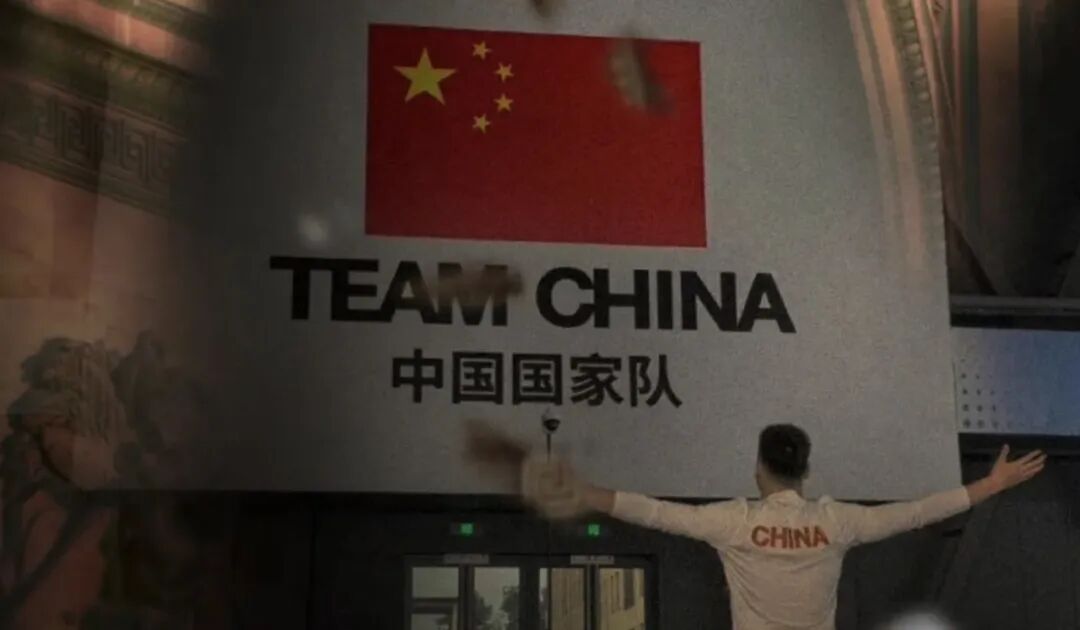
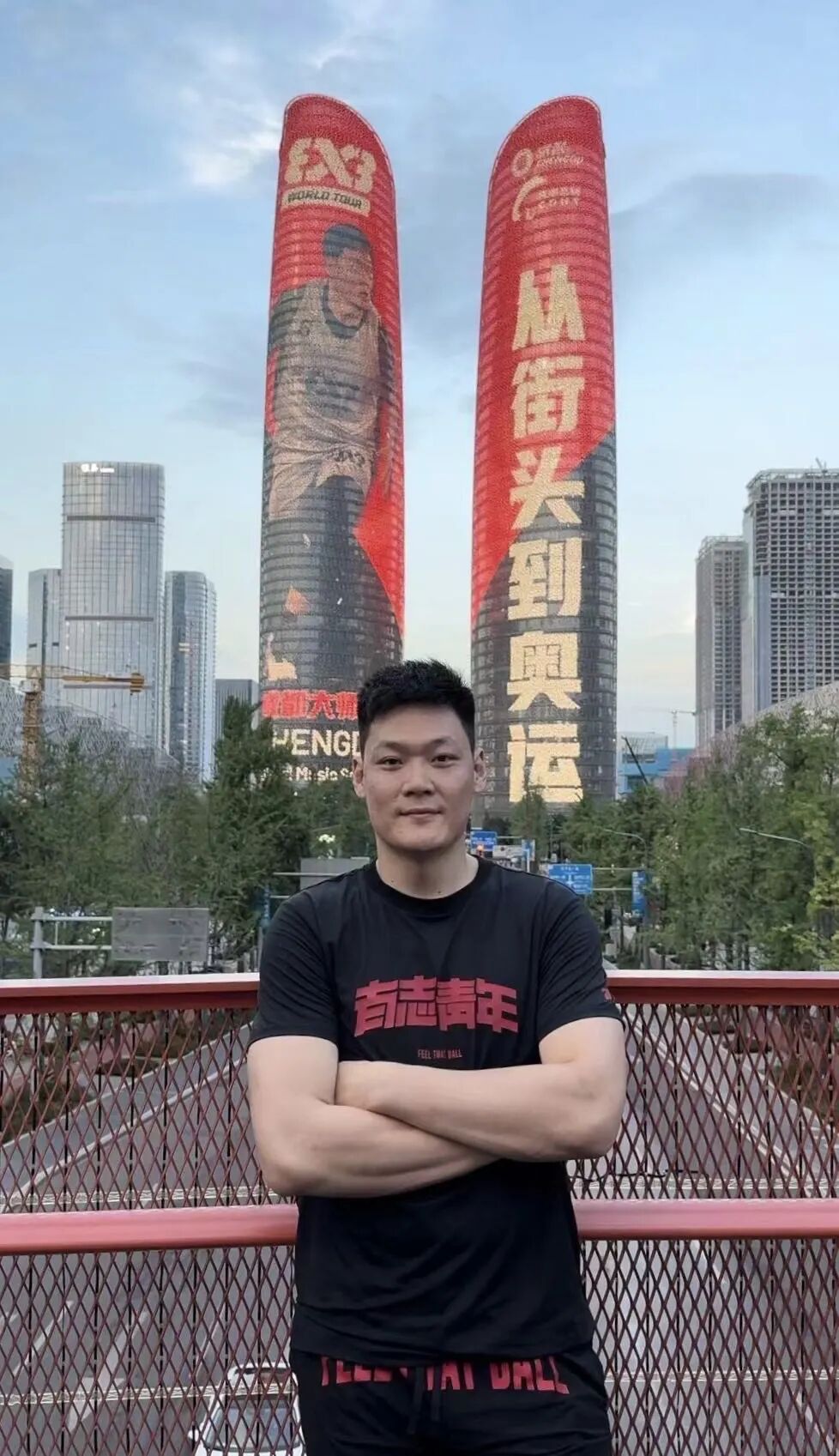
Q: The Paris Olympics are about to open on the banks of the Seine, and Uzis ambassador Zhang Ning will lead China's 3x3 men's basketball team. When you signed him in 2019, what did you see in him?
Wang Sen: This decision came mainly from Yang Xiaoru, one of our founding partners. Xiaoru knew Zhang Ning well and was struck by his relentless competitive spirit and that extremely rare, fierce will to win. He suggested we sign him internally.
We signed Zhang Ning back during the 2018 Dunk of China reality show — he wasn't even a professional player yet. Unexpectedly, he went pro and grew into one of the CBA's biggest stars. That early signing was a calculated bet, and we bet right.
Most Chinese basketball players don't enter the CBA from university; they come up through youth training programs run by various teams. Before this, the CBA didn't have a very open draft system, so Zhang Ning's path was unusual in China. We should especially thank Chairman Yao for pushing the draft forward, giving more promising young players a chance to be seen.
From his days as CUBA's top scoring guard, Zhang Ning has carried an extraordinary fighting spirit. Most players obsess over offensive skills, but Zhang Ning's defense is fierce and aggressive. His games are packed with passion and charisma — that's what won over so many Chinese basketball fans. Last summer, he and his teammates traveled the world playing tournaments to earn qualification points, enduring brutal scheduling: often 20-plus hour flights, sometimes playing straight off the plane, ultimately leading China's 3x3 team to Paris. Zhang Ning later described that period: "Most people can't imagine our lives right now. I can sum it up in four words: Wandering Earth."
Zhang Ning embodies our brand spirit perfectly. He holds a pure love for basketball. Though he had chances to take many ads and commercial appearances, he avoided over-commercializing himself. Even when his CBA salary was modest, he always wanted to play professionally and never abandoned that dream. He has the heart of a true believer, with utterly pure ambition.
Q: What is Uzis's brand spirit?
Wang Sen: One sentence: where there's a will, there's a way. In English: "There is a will, there is a way." It comes from ancient Chinese texts, about the importance of ambition. Every Chinese person knows it.
Youzhe Uzis places heavy emphasis on individual agency. Many people look for external reasons — and those exist — but each of us needs to actively exercise our agency, which is deeply connected to inner ambition. Without firm resolve, even favorable conditions won't help much.
Our original slogan was "All the Way Up," meaning forging ahead without looking back, taken from a hip-hop song title. Early on, whether for our brand name or slogan, we were pretty casual — say whatever felt right. But we gradually came to understand how important slogans are for communication.
We went through many slogans along the way. Eventually we decided "where there's a will, there's a way" best fit our needs: it communicates the Youzhe Uzis spirit while differentiating us from other brands. Most brands on the market use relatively direct, plain-spoken athletic messaging: "Anything is possible," "Keep moving," "A feeling beyond speed." But what we want to convey through "where there's a will, there's a way" is an expression of Chinese athletic spirit that resonates more deeply with people in this country.
Q: How do you spend your days?
Wang Sen: I've written OKRs for myself spanning ten years. My first major goal is to become a top-tier entrepreneur. My second: I still have serious ambitions for training — I want to become an elite dunker.
Around these two goals, I wake up at 5:50 AM, read and study from 6 to 8, have breakfast from 8 to 9, then work the full day, train after work, and sleep before 11 PM.
I mainly divide my time across four areas: work, learning, training, and family.
At work, I focus on strategy — essentially making sure each department's priorities are clear. Like a commander, I need to accurately grasp what matters, monitor progress regularly, and ensure we're pointed in the right direction.
For learning, I read on Dedao every day; my reading time exceeds 85% of users. I figure it's better to read a little daily than binge and then stop for long stretches. Over time, you end up reading far more than others. I pick books that interest me and where I need to strengthen my thinking — recently I've been reading On War by Carl von Clausewitz, the founder of German strategic studies. It covers the art of command, how to lead, what qualities a commander should have. All of this connects deeply to entrepreneurship.
For training, I alternate days on and off. I have a clear program focused on explosive power for dunking. I need to manage my physical condition carefully — sleep, diet — to maintain good training state. For entrepreneurs, if work isn't organized well, it affects training; if training goes poorly, it affects family. It's all interconnected.
For family, what matters is shifting your state. Family isn't really a time management problem — it's a state management problem. At work we tend toward rationality; at home, you need to shift from pure rationality to something more emotional.
Q: Which founders do you admire most?
Wang Sen: I admire two founders most: first, Elon Musk; second, Ren Zhengfei. I hope to learn from Musk's innovative spirit — his willingness to break and build, his conviction in action.
I also deeply admire Ren Zhengfei's strategic thinking and vision. His grasp and execution of strategy are exceptionally strong. Despite Huawei's massive scale, they approach everything with crystal clarity about their goals. They know what they're good at, what they're not, what they should do, and what they shouldn't.
By Wendi & Stone
Recommended Reading