With nothing but sleeves and kite string, he built a dexterous hand with full degrees of freedom in 90 days

Strength is the price of excellence.
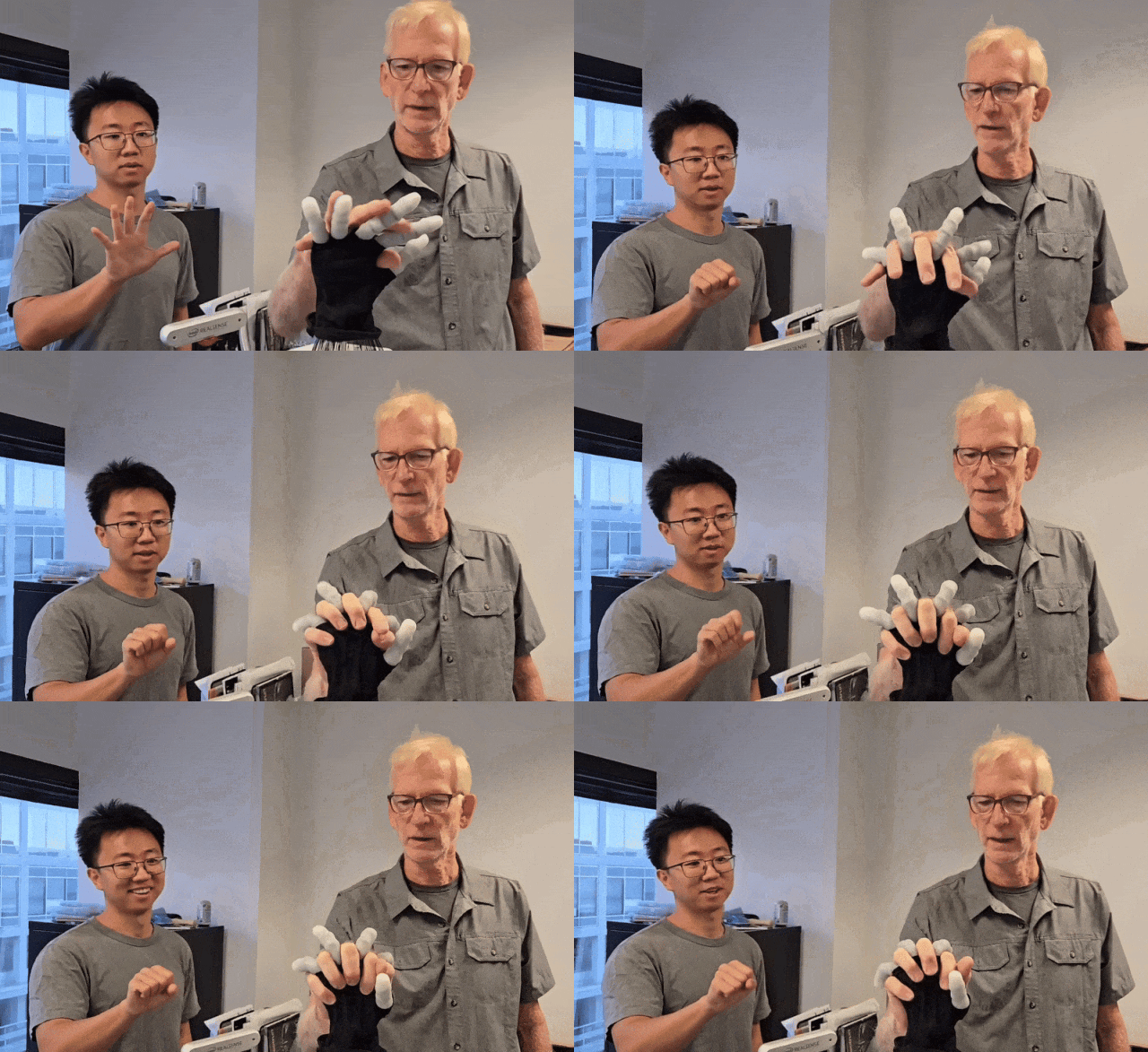
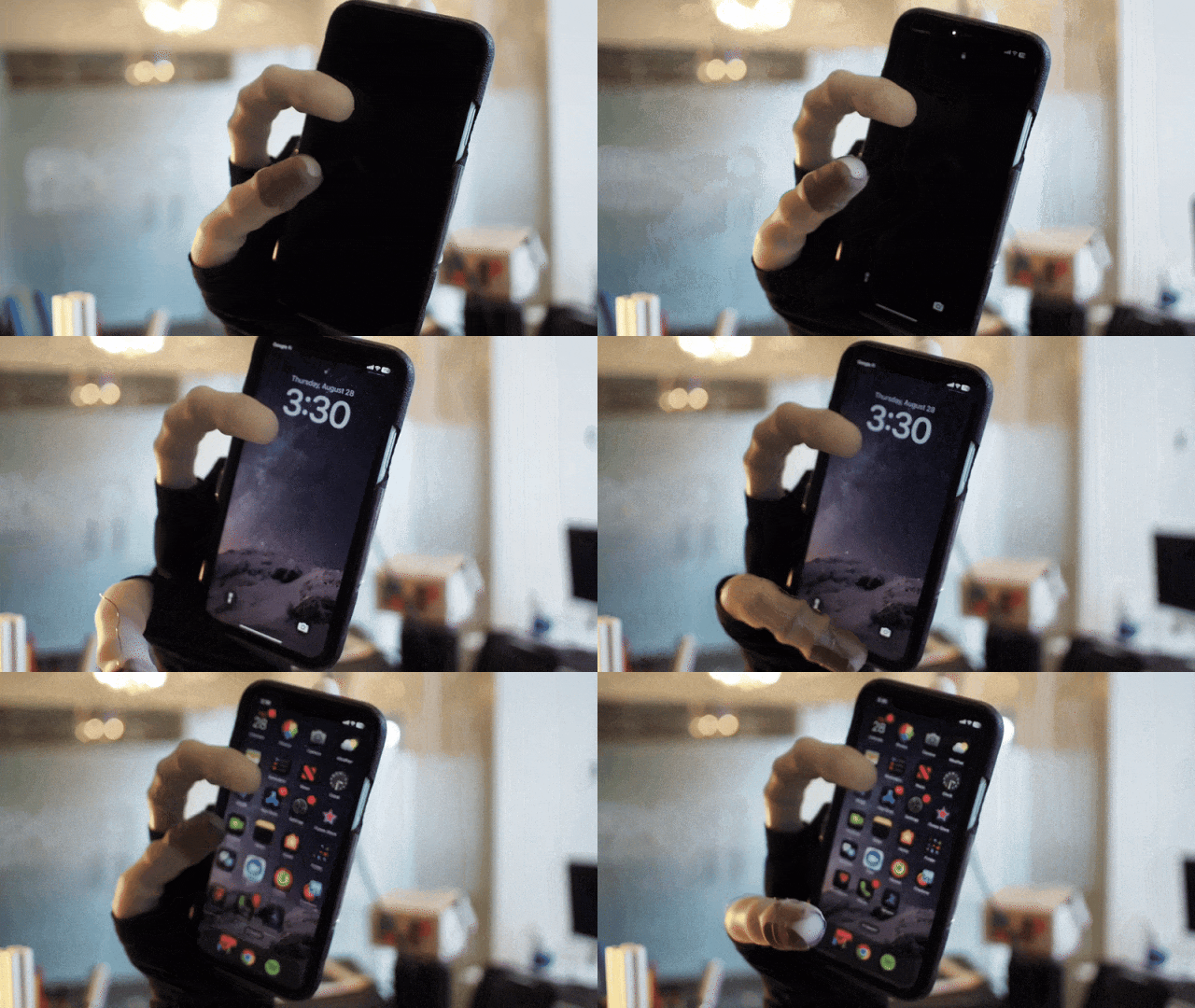
In March 2025, Daxo pivoted to building dexterous hands. Three months later, founder Tom Zhang and his team produced what was then the world's most dexterous hand: 108 motors in the entire hand, 20 per finger, theoretically capable of "infinite degrees of freedom."
They demonstrated remote teleoperation to rotate a pen—a global first—and drew a perfect circle using only finger movements, without wrist or arm motion, also a first.
By comparison, Tesla's Optimus dexterous hand has 17 motors with a per-unit cost exceeding $6,000, while Daxo's hand packs nearly four times as many motors at just $1,200.
Dexterous hands are among the most complex components in humanoid robots. Yet Zhang's approach has always been simple: He always looks for "the steepest mountain."
He often cites the Wright brothers. When they built their airplane, they used nothing more than bicycle shop parts and sprockets, but because they grasped the true core principle of aerodynamics, the plane could fly. Zhang believes that for decades, robotics may have overlooked a new principle. Daxo's first-generation dexterous hand contained over a hundred motors, using no revolutionary ideal materials—mostly everyday items available on Amazon like kite string and burn-recovery compression sleeves. He simply reorganized them to achieve astonishing dexterity.
Born in 1996 in a mountainous region of Shaanxi, he grew up in a cave dwelling and was the first student from his town to attend middle school in a big city. Later he received a full scholarship to attend high school in Singapore, led a robotics club in competition, and double-majored in mechanical engineering and computer science at Cornell. He never knew what his next step would be, but in every new environment, he explored relentlessly and without reservation. Through the process of continually climbing another mountain, he gradually found something he could devote himself to entirely.
After his junior year, he took a year off to intern at iRobot in Medford, Massachusetts; Rapyuta Robotics in Tokyo; and Uber ATG in Pittsburgh—simply to understand how work functioned. Upon realizing that what he truly needed was a sense of purpose, he chose to pursue a PhD in Robotics at the University of Pennsylvania.
In third grade, he first glimpsed the infinite possibilities contained within entrepreneurship from a fellow townsman. For more than a decade after, he journeyed far and trained hard, finally arriving at a critical point: he could begin a company, tackle a systemic problem, and invite more people to participate in a new paradigm shift.
That's why he wrote on X: We found a new mountain, and its peak is even more beautiful.
ZhenFund became Daxo's first-round investor at its founding in 2023 and has accompanied the company ever since. This content comes from Building Deep Tech; below is the full translated piece from ZhenFund.

The First Twelve Years of Life
Q: Tom, great to meet you. Could you start by briefly introducing yourself and what you're working on now?
Tom Zhang: My name is Tom Zhang. "Zhang" is my Chinese surname. I picked the name "Tom" during my PhD. All my papers and academic publications use this English name, mainly for convenience.
I was born and raised in China, from a place in the northwest—not one of the hot cities people usually mention. If the Terracotta Warriors are a familiar landmark, then further north, near the mountainous border with Inner Mongolia and Mongolia, is where I grew up.
Q: What is your team currently working on?
Tom Zhang: We pivoted at the end of March this year. We built the world's highest-degree-of-freedom dexterous hand in three months. The entire hand has 108 motors, 20 per finger, theoretically achieving "infinite degrees of freedom."
For comparison, Tesla's Optimus robot third-generation dexterous hand has about 17 motors; our count is more than four times that. We've already demonstrated several world-firsts, such as remotely teleoperating a pen rotation—this was the first time achieved—and drawing a perfect circle using only finger movements without wrist or arm motion, also a first.
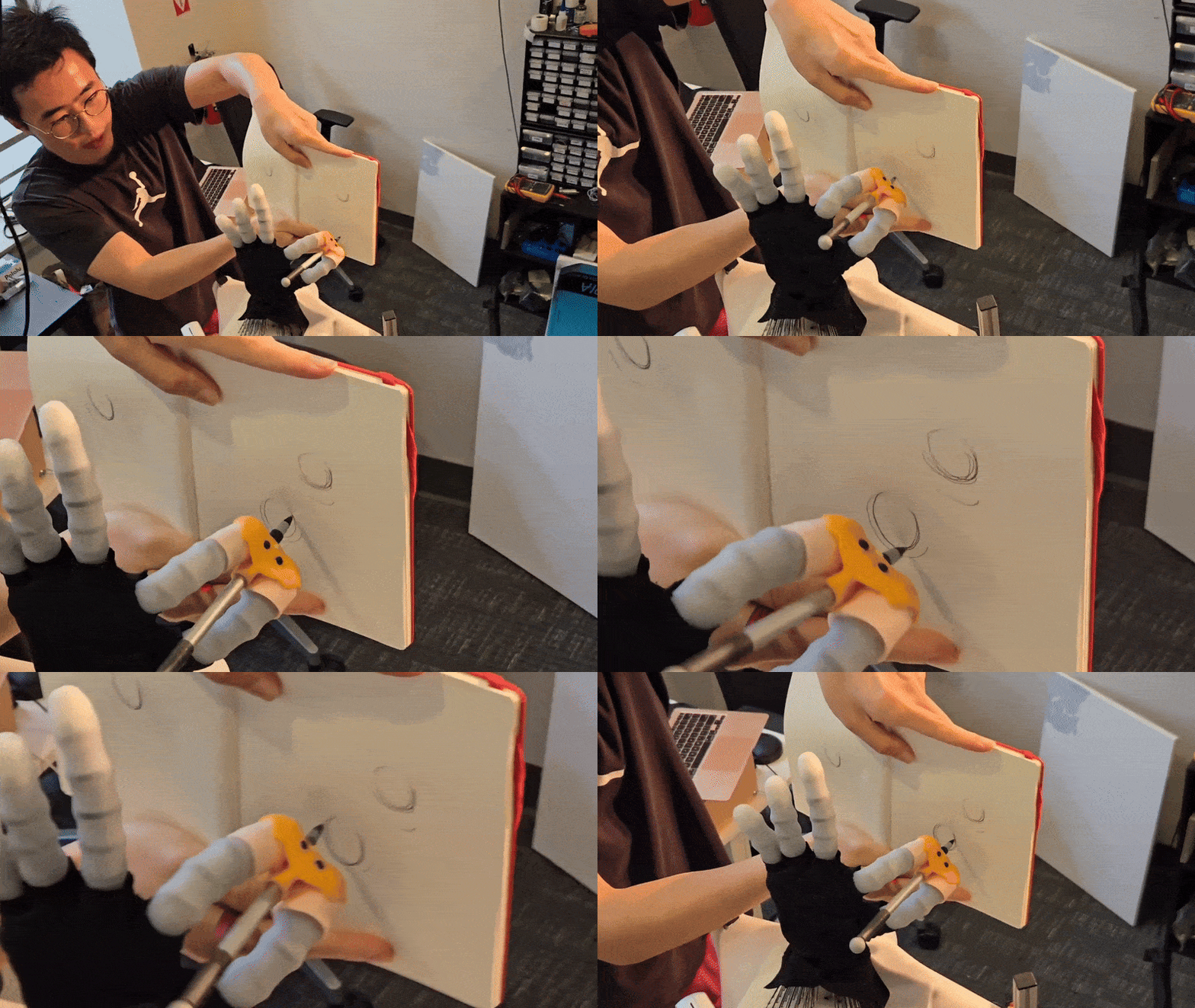
Every time we release a new demo, people are pretty surprised. Our iteration speed is also very fast; we're already working on the second generation. We believe this new robotics paradigm is truly opening up space for human productivity.
Q: Could you tell us more about your upbringing?
Tom Zhang: I spent the first 12 years of my life in the mountains. The houses there are called "yaodong"—cave dwellings carved into hillsides, finished with doors and windows. I lived in one for many years. A lot of people don't believe it, but they're actually quite comfortable. What I remember most vividly from my childhood is that feeling of being intimately connected to nature.
Outside the cave dwelling was usually a courtyard, planted with all kinds of crops and flowers. My grandmother's courtyard had apples, pears, plums, hawthorn, cherries, walnuts. I ate everything fresh-picked as a child. Those were my first 12 years.
Later I went to Xi'an for middle school—my first time in a big city. My parents stayed behind; I started boarding at age 12 and stayed for three years. After that, I went to Singapore on a scholarship.
Singapore was where I seriously started learning English. I'm deeply grateful for the education system there—tuition, housing, meals were all covered, plus 200 Singapore dollars monthly stipend. It felt like a PhD scholarship, like "being paid to learn."
There, I first encountered a truly diverse world, experiencing different religions, languages, and cultures. I would visit different religious sites, trying to understand what "faith" meant. That was also my first exposure to robotics. By my third year, I had become captain of the Robotics Club, leading the team in Asia-Pacific and world championships.
Q: You mentioned going to boarding school at 12. Thrust from nature into the city, what changed for you?
Tom Zhang: This is something I usually only discuss with fairly close friends.
I was the first student from our town to attend middle school in a big city. The previous route was to go to Yan'an first, then Xi'an. That year, a classmate happened to have a relative teaching in Xi'an who said we could take the entrance exam there. Four or five of us from our class went together; I was the only one who passed and got a scholarship.
There were classmates with excellent grades who couldn't go because tuition was too expensive. I was lucky—the school waived most of my fees. The total was originally 28,000 yuan; I only had to pay 8,000, which my parents could barely manage.
When I first arrived, I was completely different from my urban classmates: I had shaved my head nearly bald, wore cloth shoes handmade by my grandparents with black uppers and thick white soles, and spoke with a hometown accent that made others laugh. I didn't let it bother me too much at the time.
I still remember the first time I heard someone say "those Nike shoes cost over a thousand yuan"—I was shocked: How could shoes possibly be that expensive? That was the first time I realized that the city and where I came from were two different worlds.
During those years in Xi'an, I lived at school on weekdays and stayed with relatives or teachers on weekends. But everyone has their own life, their own children, and sometimes kids say blunt things to each other. So I gradually developed a habit: arriving at school two hours early on Sundays to wait for the gates to open. The school opened at 6 p.m.; I'd get there at 4 p.m. and walk around alone near the entrance. The moment I stepped inside, I felt like I was back in the world.
I wasn't the best student in my class when I arrived, but I always believed in myself, always thinking "I can do this." My grades kept improving, and by ninth grade I was among the top in my grade. My best ranking was second in the entire grade of over two thousand students.
There were also small cultural shocks, like not knowing you shouldn't point at people with your middle finger—finding that out the hard way and surprising everyone. Another time, I kept failing the standing long jump in PE until my father visited and bought me my first pair of leather shoes. I'd been wearing cloth shoes the whole time. Once I switched, I cleared the line immediately. That was when I realized: "So the city really can bring a different experience."
Those three years of school are somewhat hazy in retrospect, with difficulties and growth alike. I often think of the classmates who went to take the exam with me but couldn't come; they're all doing well now too. It really was a remarkable period.

Intensity Is the Price of Excellence
Q: Was studying easy for you?
Tom Zhang: I don't think I ever struggled much academically. When I went to Xi'an for middle school, nearly all my classmates were in various cram schools. But I didn't have that option and never attended any. I just did my homework and listened attentively in class.
Every class was genuinely interesting to me; I'd give it my full attention, so I never needed extra tutoring, and my grades kept climbing. During those first 12 years in the countryside, my parents were strict with me, but I never felt academically strained.
But I did have a persistent confusion as a child: Why are some people so "certain"? For example, when a problem clearly has many variables and possible answers, why would someone be so sure? I'd often wonder: Why can they be so certain? Someone might say "this singer is the best in the world." I'd ask: How can you claim that?
So studying itself wasn't hard, but I was always wrestling with "why others are so certain."
Q: Since you questioned certainty itself, when your grades improved and more directions opened up before you, how did you know which path to take?
Tom Zhang: Honestly, I had no idea at the time. Looking back, every step contained chance, confusion, and a bit of luck.
When I went to Xi'an for middle school, many parents hesitated about sending their children away so young. My parents were straightforward: Go. When I later went to Singapore, my parents didn't even know where Singapore was. They only knew that with a scholarship I could go; otherwise it was too expensive, so I went. I even read the scholarship contract myself.
Later, I went to Cornell to major in mechanical engineering and computer science. There was a small episode in between. When I applied to different schools, I put down different majors for each. Biomedical engineering at Johns Hopkins, environmental engineering at University of Michigan–Ann Arbor, education and cognitive science at Vanderbilt. My logic was simple: whichever program was strongest at whichever school, that's what I'd apply to.
As for why I ultimately chose mechanical engineering at Cornell—it's because I've loved "making things" since I was little. As a child I liked playing with modeling clay, drawing, building models. My parents are doctors, so there were discarded X-ray films at home that I'd fold into little cars and boats, stuffing electronic parts inside.
When I got to Cornell and saw they could do all kinds of cool engineering projects, I felt it was perfect for me. But honestly, there was no grand ambition at the time. Many decisions only took shape as I walked the path.
When I was fifteen or sixteen, I often told people: "I can't see myself past eighteen." Real clarity only began around my sophomore and junior years. That's when I gradually realized what I truly wanted to devote myself to, and started concentrating my energy.
Q: If someone is currently at a life stage where they don't know what to choose and want to try different directions, what would you advise?
Tom Zhang: I'd say, exploration itself is very good. Though I was confused then too, I was never idle.
In undergrad, I double-majored in mechanical engineering and computer science while being especially interested in robotics. I designed MEMS and PCBs in an electrical engineering lab, joined a drone team designing fixed-wing aircraft fuselages and wings.
I took operations research, comparative literature, cryptography, even studied Japanese and German. I basically tried everything available.
By junior year, I was genuinely confused. Classmates were either interning or preparing for PhD programs, and I was thinking: How can they be sure this path is right without trying anything else? So I simply took a gap year and did three consecutive internships.
I interned at iRobot in Massachusetts, then Rapyuta Robotics, and finally spent a full year at Uber ATG—just to figure out what "work" actually was.
Q: I love that kind of exploration.
Tom Zhang: Yes, that year really helped me understand many things, such as that I didn't really want to join a company. Having interned at companies at different stages, I found I wanted more "project ownership" and "sense of purpose." So I decided to either start a company or pursue a PhD.
When I didn't know what to do, I tried everything I could. I even took a nuclear fusion course, trying to figure out if fusion or fission was the future. So my knowledge is quite eclectic; I can hold conversations with fusion reactor engineers.
My advice is, if you're already certain about what you want to do, that's great—just don't get stuck in a local optimum; but if you're not sure yet, explore boldly, it's fine.
Q: But making a pause like taking a year off requires considerable courage. Many people worry about wasting time. How did you decide?
Tom Zhang: I'm very grateful for how my parents raised me. Though my mother was strict, after I left home they really couldn't help with my studies anymore; their only expectation was that I'd be happy and healthy. They never pressured me into anything specific.
And I'm fairly "direct" myself, not easily influenced by others. I knew the peer pressure at Cornell was intense—everyone chasing internships, fighting for return offers. But I didn't get swept up in it; I just wanted to figure out what I truly wanted.
A friend once said something I particularly like: "Intensity is the price of excellence."
Even if you haven't figured out your direction yet, you can't stand still; you need to explore with intensity. Back then my friends thought I was crazy—taking all these weird classes, running around different fields for internships. But I was just too curious, and I had plenty of energy.
I even went to a fusion reactor lab to study fuel pellets. After you've seen so many things, the anxiety of "what is everyone else doing" fades. You realize the world is too vast for anxiety.
Q: I especially like your line "action brings calm." Many people get trapped in overthinking, but you were busy doing things, leaving no room for anxiety. That may really be an antidote.
Tom Zhang: Yes, I completely agree. But this kind of high-intensity exploration also has its costs.
At Cornell I learned broadly and eclectically, satisfying my curiosity. Some classes I did well on exams, but much of it I hadn't truly mastered. It wasn't until my PhD that I went back and restudied those subjects. Only then, no longer distracted by exploring everywhere, focusing on one direction, did I truly internalize that knowledge.
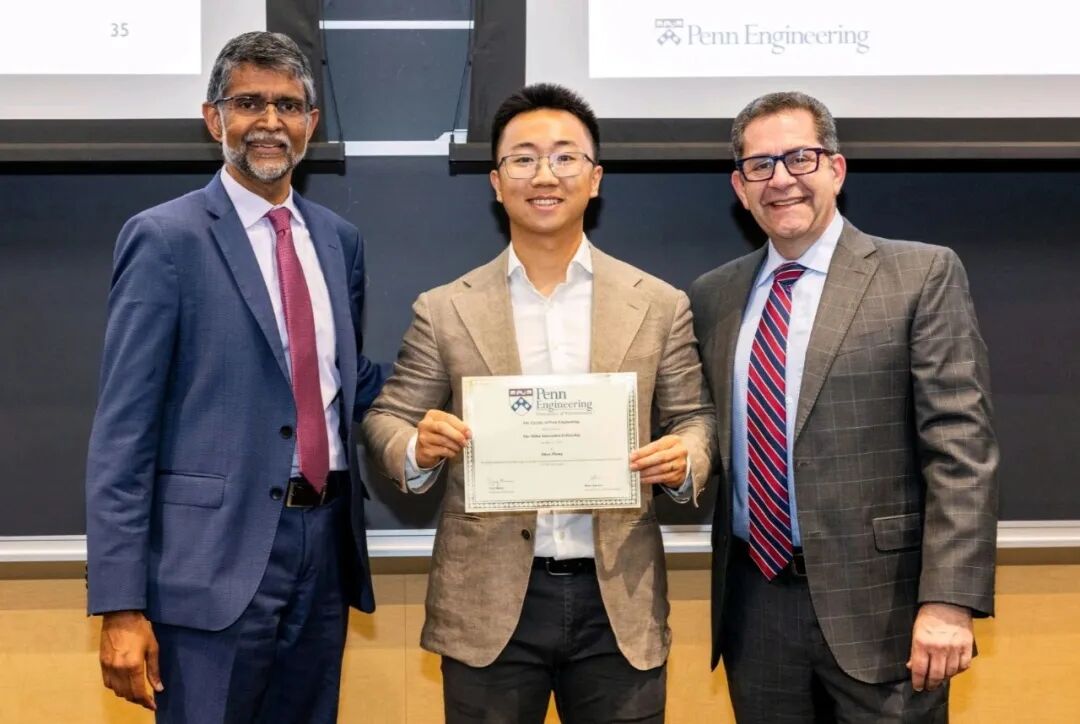
Tom Zhang at his doctoral defense

Dialing 100 Cold Calls
Q: You mentioned your PhD as the starting point of formally entering robotics. From academia to industry, from student to founder—how did you make that leap?
Tom Zhang: There's a story I've always remembered clearly.
Growing up in the countryside, almost no one said the word "entrepreneurship." Once my father and I ran into a distant relative on the street who said he wanted to start a business—to create a new brand for the apples and pears from our area.
My father immediately refuted him: Impossible. You can't even supply enough for nearby towns, how could you build a brand? But that man was remarkably calm, responding to each of my father's objections point by point, with clear logic and genuine confidence.
He later died of brain cancer. But when I was in third grade, he actually built that brand.
In our small town, when someone wanted to do something different, nearly everyone would question them. And that man was the first "entrepreneur" I ever saw in my life. I still remember his name: Jun Chen.
That conversation became a deep memory for me. Looking back, I never saw myself as a typical academic. I'm more someone pulled forward by curiosity.
Q: Your father was an academic physician, highly respected locally, so his skepticism carried weight. But that man remained remarkably firm, saying he believed in this and would make it happen. That confidence and stubbornness was your earliest impression of entrepreneurship, and this was already over twenty years ago, right?
Tom Zhang: Yes, the way he spoke, that confidence, that passion—it shook me deeply. I could sense the possibilities contained within, all the things that could happen.
As the conversation between him and my father continued, my feeling at the time was: "Why keep asking? Why keep undermining him?" But that chance encounter—I still remember the location and the evening light. That scene stayed deeply in my mind. I've thought of him many times since. Unfortunately, before he passed, I never had the chance to speak with him again.
But I think that may have been my first real spark of interest in "entrepreneurship."
Q: What was the real turning point that made you feel "I too can become an entrepreneur"?
Tom Zhang: I always wanted to "build something." I did those three internships to confirm whether I was suited to that kind of work environment.
For me, sense of purpose is extremely important. I don't particularly like overly safe, tensionless environments. Those companies were all great, with great teams, but everything was too stable, too predictable—that actually made me anxious. I just didn't know how to begin at the time.
Later I went to Penn for my PhD. The school is in a city, and Wharton Business School has strong presence there, so in my third year I took an entrepreneurship course. That was probably my real starting point for seriously thinking about founding a company.
Partly it was age—I started thinking about how much time to allocate for the starting phase of life; partly, the course itself attracted me. Many people said that course was useless, that you couldn't learn hard skills. But for me, it was the most useful course I took at Penn. I almost individually chatted with every founder who came to share, and frequently went to the instructor's office hours. The inspiration from that course was enormous.
It was also during that period that I met a group of friends—some starting companies, some in funds, some already successful entrepreneurs. The more I talked with them, the more I suddenly realized: This is actually possible for me. Before that, I'd never thought someone like me doing research could also start a company.
So I began market research, and I deeply believe in the power of research itself.
In fall 2022, I started cold-calling, chatting with people in different fields—over a hundred calls in three to four months, with roughly a 10% response rate. But every person who responded was direct and genuine. That experience showed me real problems and opportunities.
This was a process of "co-evolution" with the ecosystem. I'd take what I learned from conversations and share with friends, discuss with my entrepreneurship course mentor. The more I talked, the clearer it became, the more excited I got, until I reached a critical point: I was absolutely certain there was a direction worth committing to.
So I started.
Q: You just mentioned two things I'm particularly interested in. One is friends and environment itself. The other is "co-evolution" you mentioned—finding truly worth-solving problems through listening, distilling, and repeated validation. Both are especially important for founders.
Tom Zhang: Thank you, I very much agree. I particularly believe in one saying: You are the average of the five people you spend the most time with.
It's very hard for a person to change themselves alone. You have to put yourself in an environment that pushes you to grow, for real change to happen.
I must admit market research is really difficult. At first I had no idea what I was doing—I could only dial numbers from company websites one by one, and most would transfer me to sales departments. Once someone even directly said: "We don't do that kind of thing in America." The feeling of rejection was quite uncomfortable, and I did consider giving up.
And this process requires great patience. I had a few friends helping at the time, mostly as technical advisors. But later they felt I was too impatient, said this wouldn't work, and finally decided not to continue. I was very confused then; I said: I just want to figure out what problem to solve, how is that "too impatient"?
But I kept making calls every day. Those three to four months, my labmates started getting curious: "Tom, what are you actually doing? Today calling apple growers, tomorrow dairy farmers, the day after asking wind turbine manufacturers?"
The span was indeed enormous. But that period was especially precious. Because when you're willing to truly enter the real world, you discover that the world is far vaster than textbooks.

Daxo's Next Iteration
Q: Humanoid robots are still far from truly being "human-like." One of the hardest parts of building humanoid robots is dexterity—which is uniquely human. There are many things humans can do that machines still can't, yet you achieved this in just three months. Could you talk about your current progress? How big is the team? What's the next step?
Tom Zhang: We're currently a four-person team at Pre-Seed stage, having raised $1.35 million total so far—though this money wasn't for the dexterous hand but for our previous agricultural business. We've since pivoted and are now closing a seed round. We're rapidly pushing the next-generation product, which will unlock more physical capabilities. Of course I agree we're still far from full automation and general-purpose robots.
My thinking is actually very simple. I always look for "the steepest mountain." I see many companies currently building dexterous hands that are indeed cool, but they've hit performance bottlenecks. Trying to cram micro-motors into tiny joints—the marginal cost has become absurdly high.
We chose to climb a different mountain. Our approach is completely orthogonal, something no one has ever tried in robotics before. The reason we could build it in three months is like we've gotten on a highway, while other robotics companies are still climbing the original mountain.
I often cite the Wright brothers. When they built their airplane, they used parts and sprockets from a bicycle shop. But they grasped the correct core principle of aerodynamics, so they could fly. And I believe that for decades, robotics may have overlooked a new principle. We're now building robots based on that principle, using off-the-shelf materials.
For example, our first-generation dexterous hand contains over a hundred motors, but costs only $1,200. Most materials were everyday things bought on Amazon—kite string, burn-recovery compression sleeves, that sort of thing. We assembled them together to achieve that dexterity. That's why I wrote on X: We found another mountain, and its peak is more beautiful.
Q: Embodied AI is very hot right now, and dexterous hands have become this year's focus. Could you elaborate more on the direction for your next-generation product?
Tom Zhang: We are inviting everyone to join a new paradigm shift.
In all of human history, the only time "long-tail problems" and the "last mile" were truly solved was with large language models. Previously translation, summarization, filtering were all fragmented, until LLMs integrated them into one system. In robotics, such integration has not yet happened.
Many people see this as a hardware or software problem. But we believe it's a systemic problem.
And to solve long-tail problems, the approach is actually quite similar to LLM principles. A key characteristic of large models is complexity. If I give you a single-layer neural network, you can write the equations and understand it; but if I give you a trillion-parameter model, you could still write all the equations down—maybe trillions of pages—but you'd find you can no longer truly understand it. Quantitative change brought qualitative change.
In robotics, such magnitude leap has never occurred. For the longest time, in building machines, cars, airplanes, robots, the goal has always been to use as few motors as possible, hoping the entire system would be a "white box" where every component is fully understood. But we found this path doesn't solve the fundamental problem. People keep patching, and it only gets more complex.
At Daxo, our thinking is exactly the opposite. We simply repeat the same motor units over and over, again and again, just like large model architectures. Others want fewer motors; we want as many as possible. And performance simply emerges.
Q: I love this thinking. Deep layers, large spans, and it shows your way of thinking very clearly. Thank you so much for coming to chat today, and I look forward to seeing more of your results.
Tom Zhang: Of course. The experience of shaking hands with Daxo is really special. If you happen to pass by, let me know in advance—you're welcome to come to the office and experience it. And thank you for inviting me on the show.
Q: Definitely. Have a great day.

Text by Cindy

[