Its predecessor sold nearly a million copies, and now the Game of the Year-winning producer has made a bizarre three-person dating game? | Z Talk

In the AI era, game development operates on "causal inversion."
Z Talk is ZhenFund's column for sharing ideas and perspectives.
One day in 2018, while still a student at NYU, Zhou Dong had a sudden inspiration on a bus in Pittsburgh. That idea eventually became Moncage, the first indie game released three years later and the debut title from his newly founded studio, Optillusion.
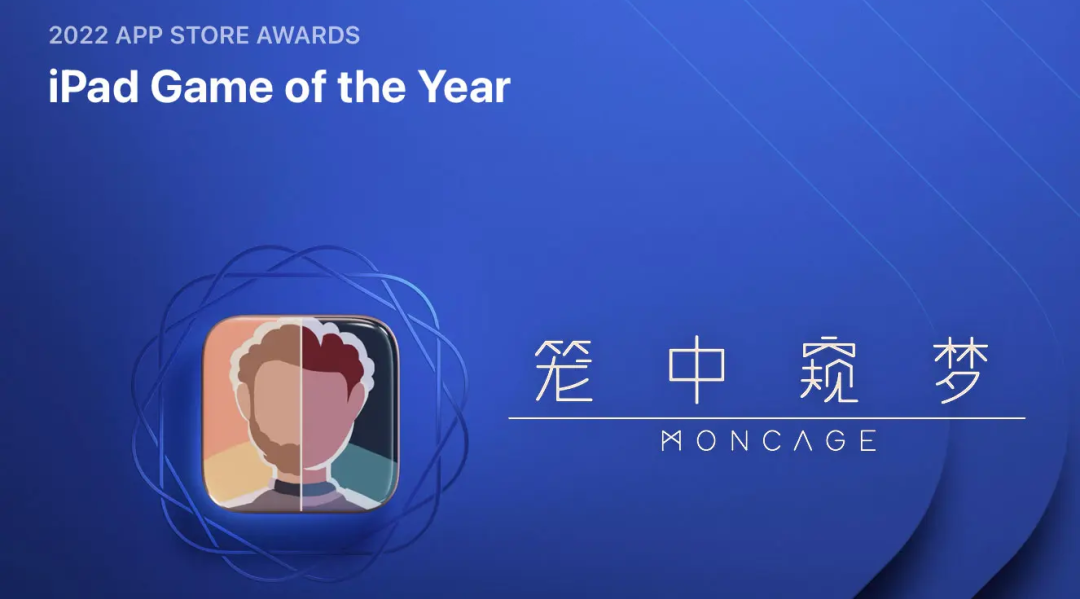
In 2022, ZhenFund led Optillusion's angel round. That same year, Zhou Dong's Moncage won the 2022 Apple Design Award for iPad Game of the Year. To date, it has sold nearly one million copies across all platforms.
Recently, Optillusion released a demo on Steam for their new game, Pick Me Pick Me — an AI-powered, player-versus-player party game. In this interview, Zhou Dong shares his thoughts on how AI is transforming game production and team workflows, offering insights into the present and future of AI in gaming.
The following is a transcript of the interview:
By Lin Zhi
I recently sat down with Zhou Dong, founder of Optillusion, to talk about his new game, Pick Me Pick Me.
After graduating in 2019, he founded his studio in New York and has been self-publishing ever since. The team has expanded twice and now numbers 16 people, with an additional office in Shenzhen.
Zhou Dong's debut was Moncage, an award-winning title that needs no introduction among indie game enthusiasts.
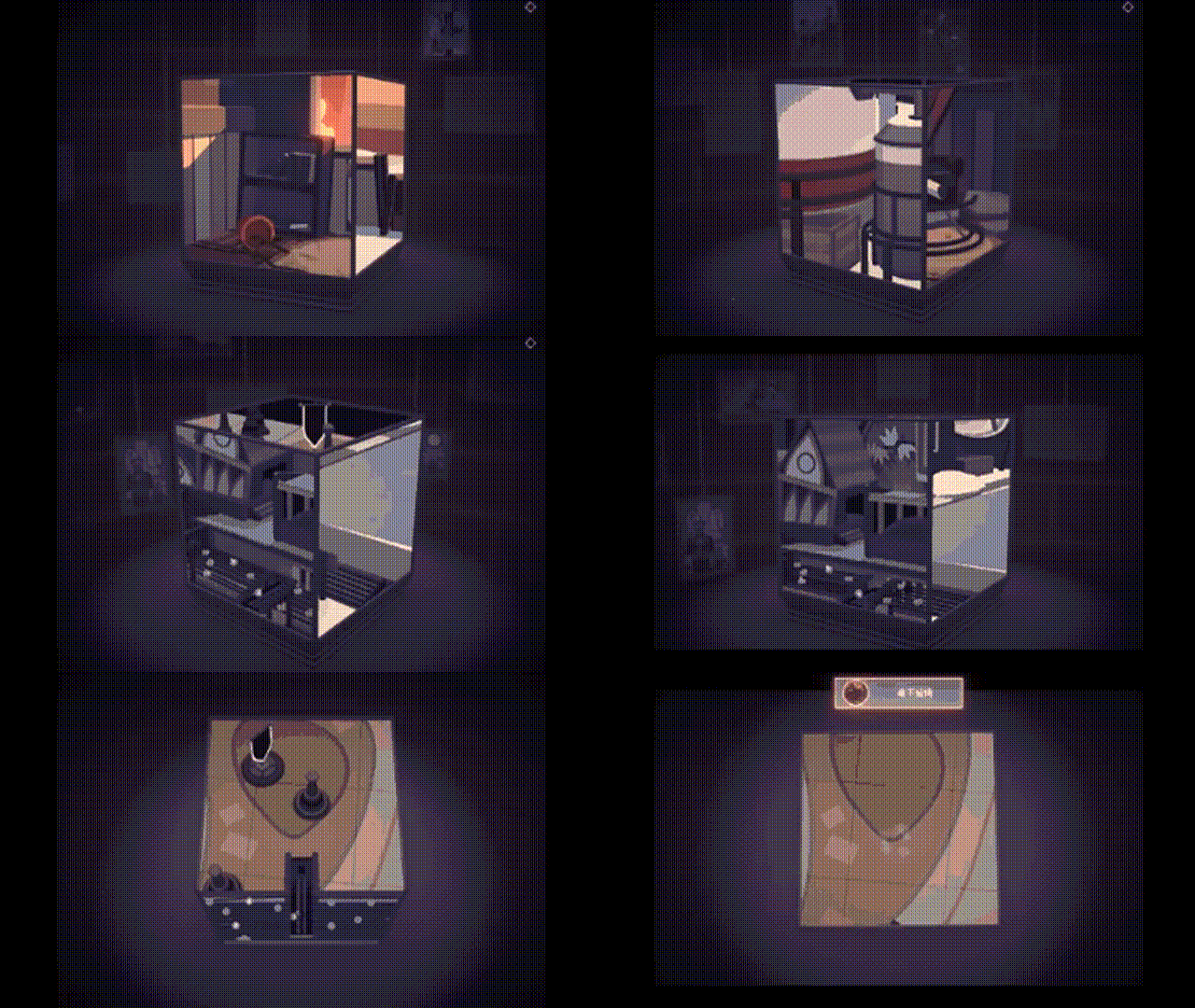
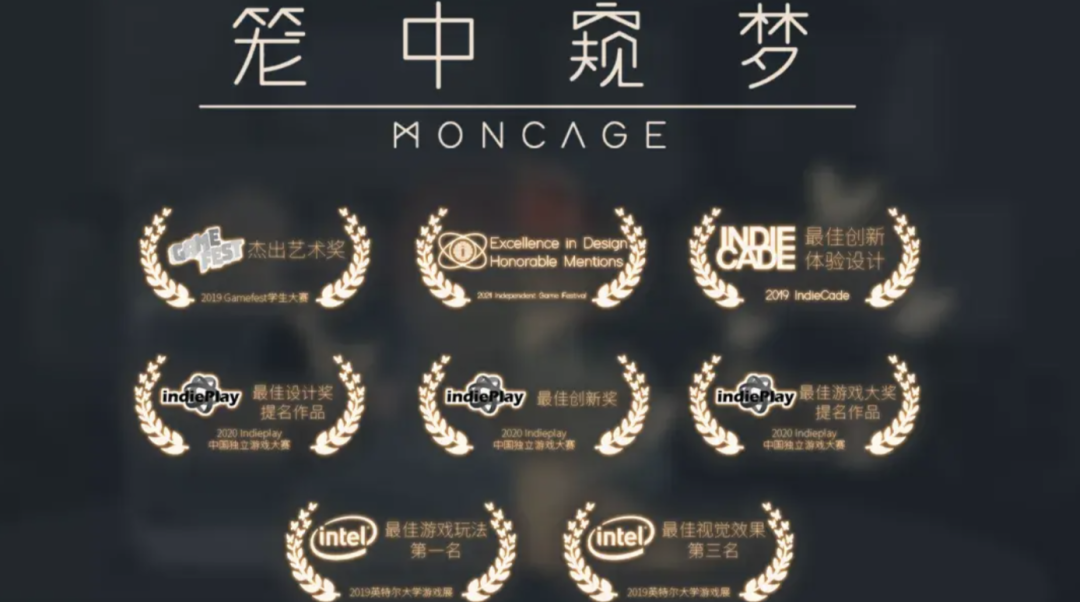
Swipe to view more
The pivot from puzzle games to AI party games might seem dramatic, but Zhou Dong says they only greenlight projects when they can't find comparable products already on the market.
After exploring AI, he felt it could inject fresh energy into a stagnant industry — and that's precisely why he made Pick Me Pick Me.
Pick Me Pick Me is a two-player online competitive game.
Upon entering, both players join an AI character for a "threesome date."
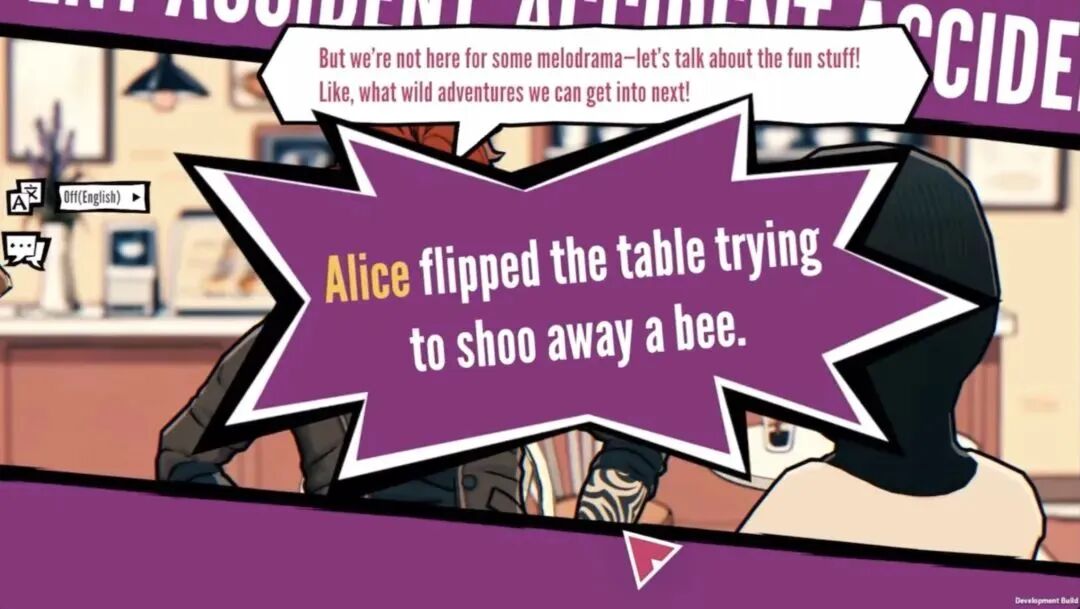
The game is turn-based. Players take turns chatting with the AI, trying to win through clever, entertaining, or strategically flattering remarks.
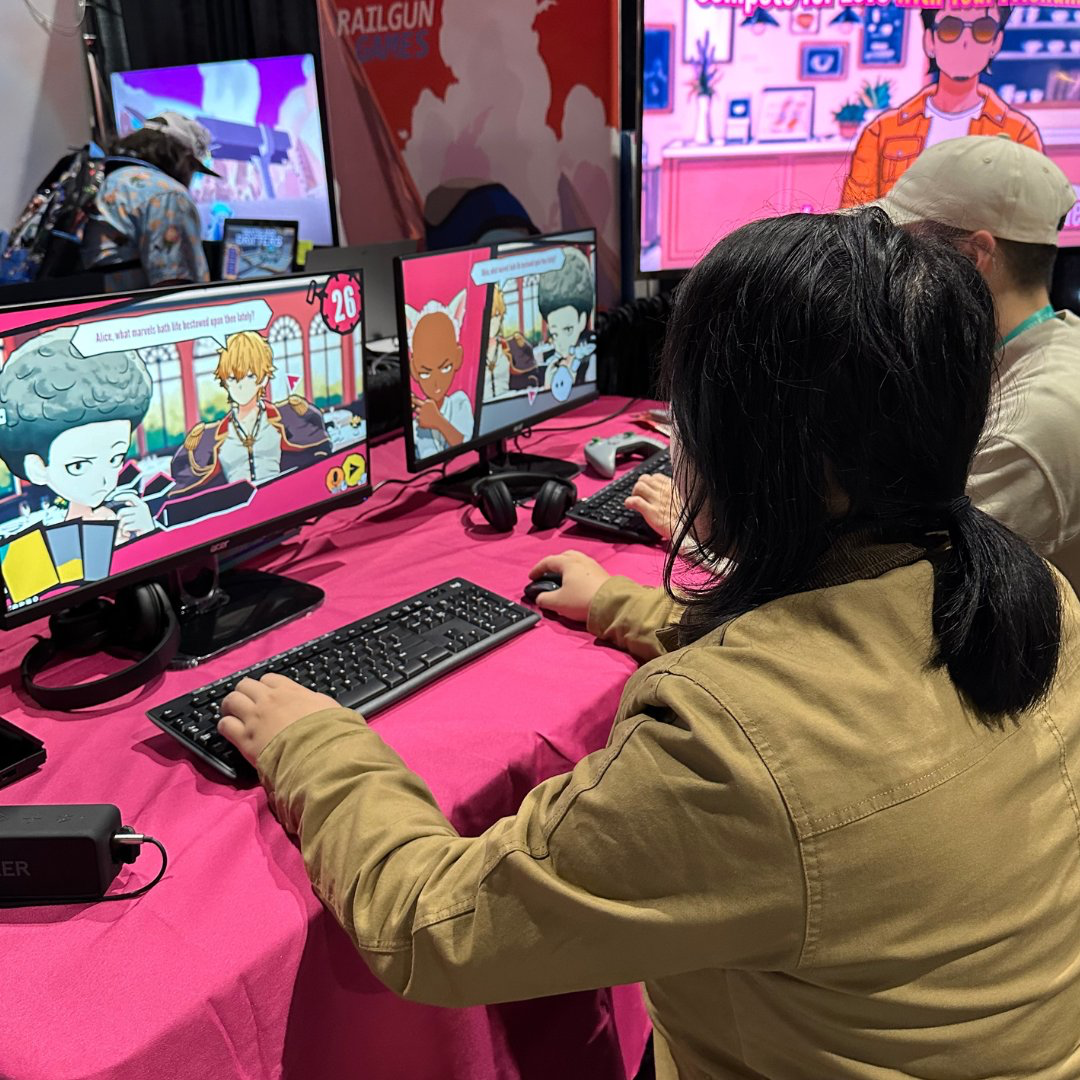
The main interface is a chat box, with your avatar on the left
If a player has a knack for antics, the whole conversation becomes more entertaining.
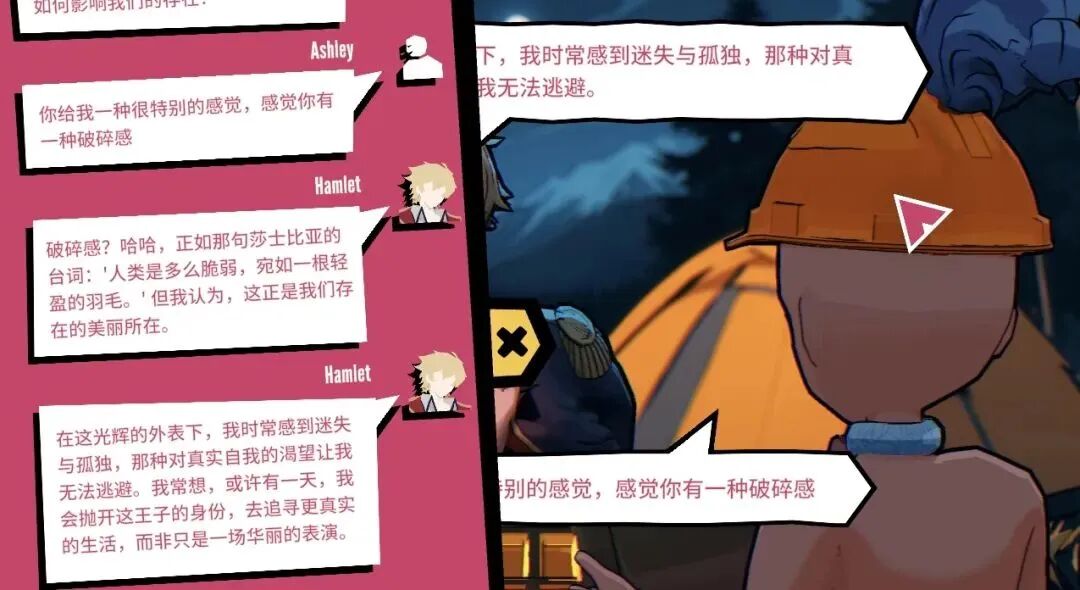
For instance, my friend tried meme-ing with Hamlet: "You're not like other people..."
Players have two types of actions: speaking directly or using card skills.
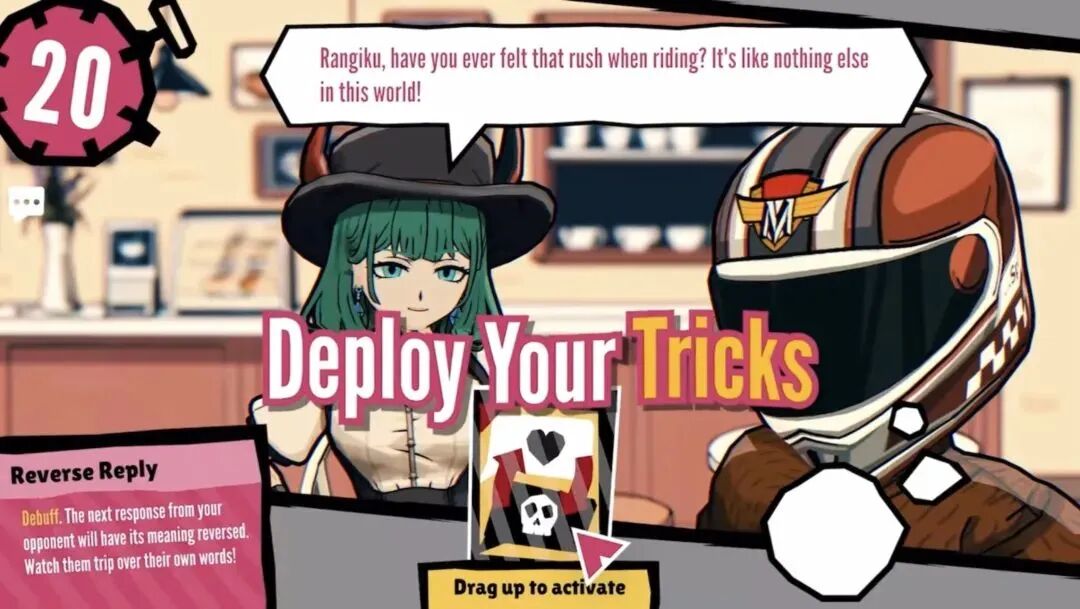
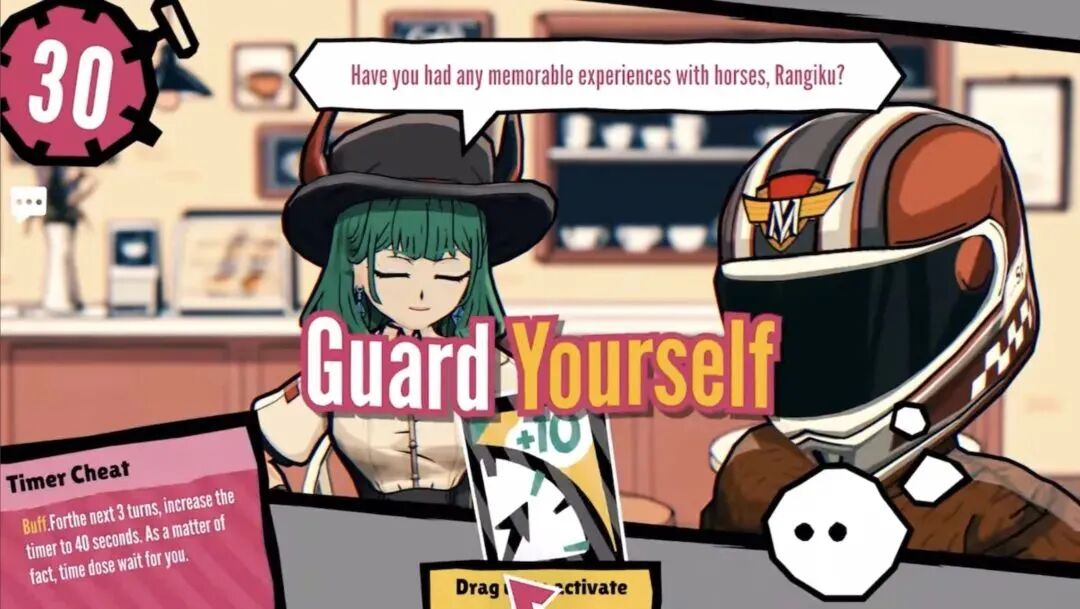
While waiting for your opponent's input, you can play cards. These fall into two broad categories:
One type inflicts debuffs on your opponent — reversing the meaning of their sentences to create logical chaos, or triggering random embarrassing moments like grabbing the wrong glass and drinking water with someone else's dentures in it...

Some debuff cards in the game
The other type grants buffs to yourself — like "Mind Reading" to see what the AI is actually thinking, helping you tailor your approach; or "To the Rescue!" to shield yourself from negative effects and stay unflappable.
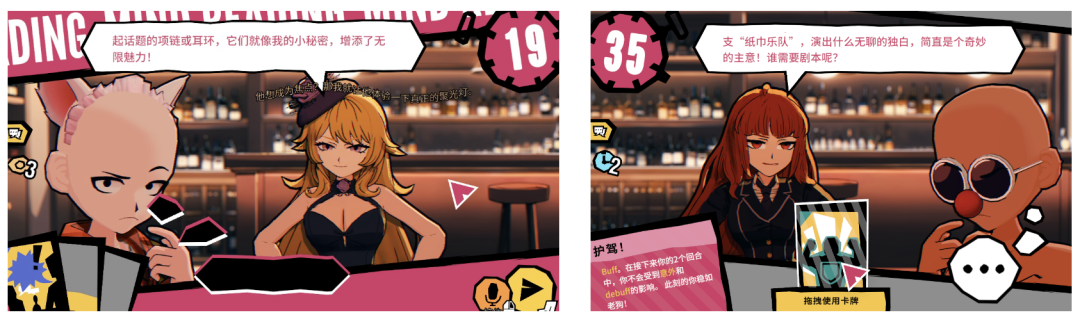
Beyond randomly drawn cards, the AI characters themselves make each match feel distinct, with their own preferences and unique personalities. And because the game uses advanced large language models, they can engage with timely, trendy topics.
Take Ada: at first she comes across as a negationist, bored by whatever you say.
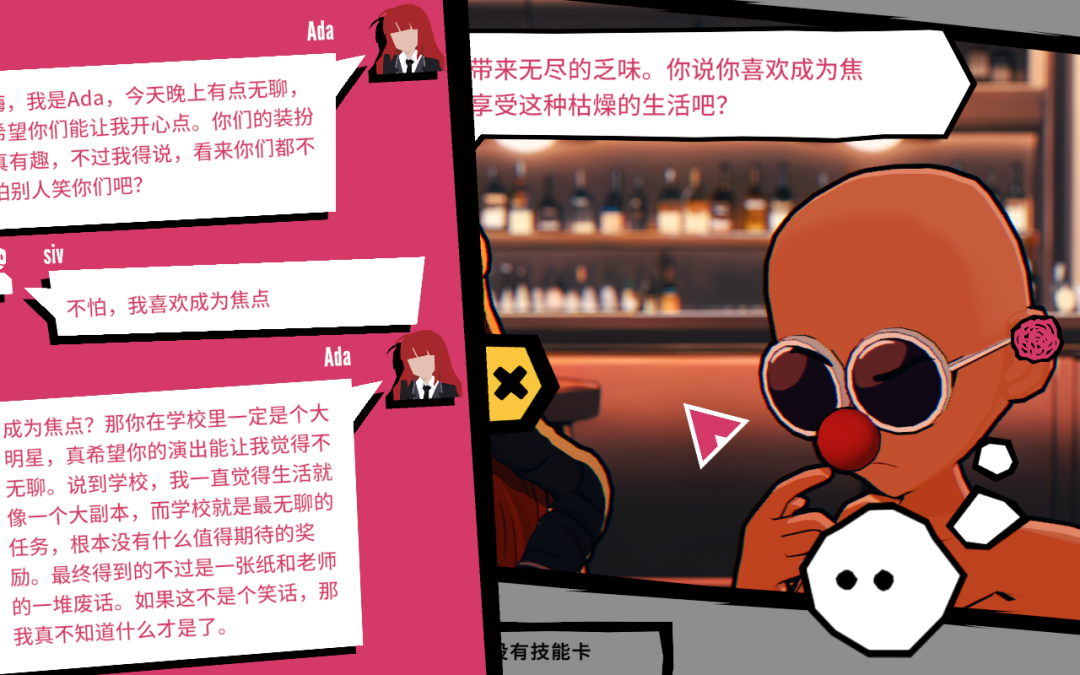
But she actually loves Cyberpunk 2077 and Arcane, and dislikes dreary school life. Tell her about skipping class together for Night City and she'll perk right up; ask about Arcane and she'll gush about how much she admires Jinx's personality.
The developers have also released character posters on Discord, and even brief bios reveal how different they are: a taciturn, chess-loving genius girl (Hifumi Togo, anyone?); a dark-fantasy fanboy who takes his bubble tea with extra pearls; a Shakespeare stan who goes by Hamlet...
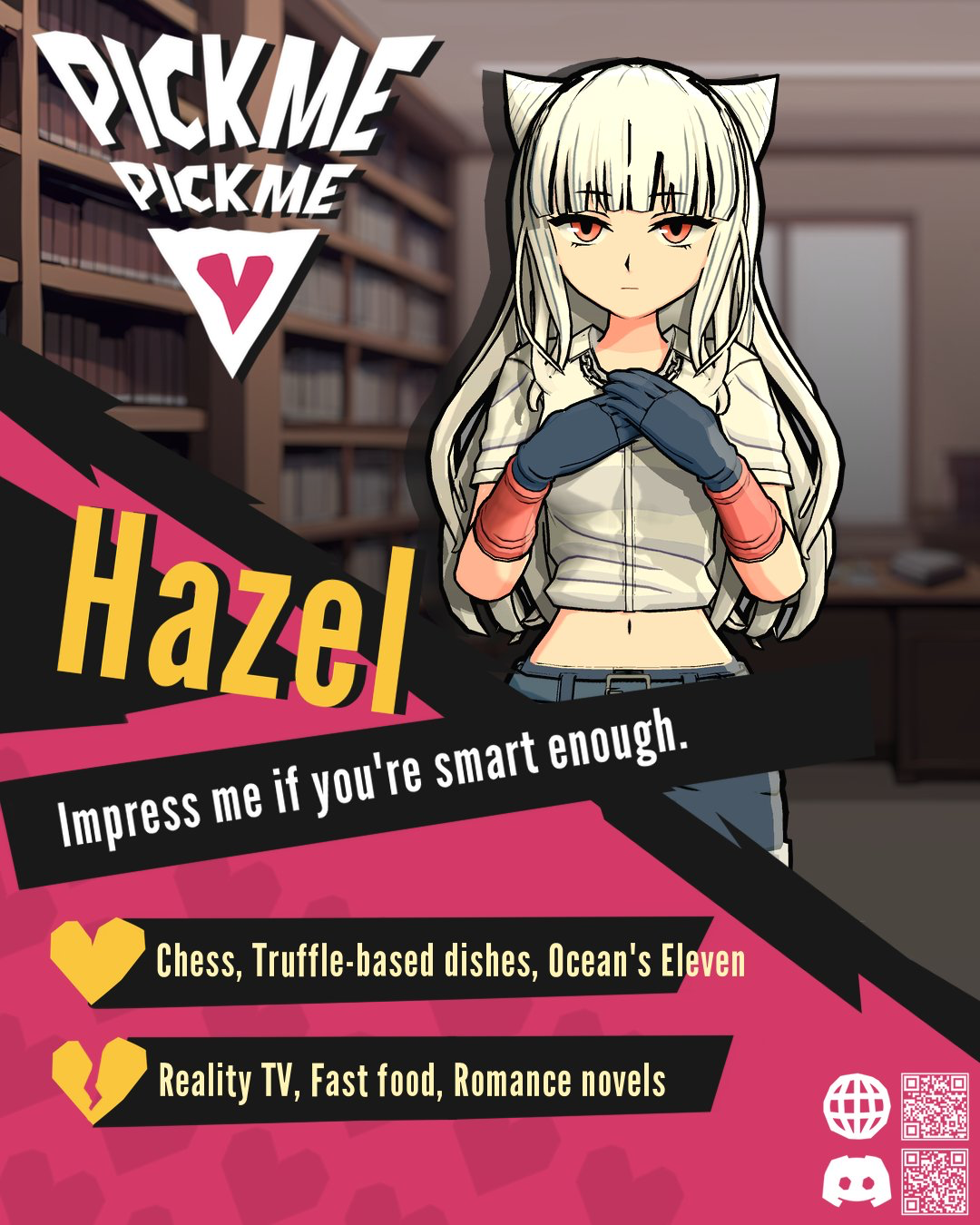
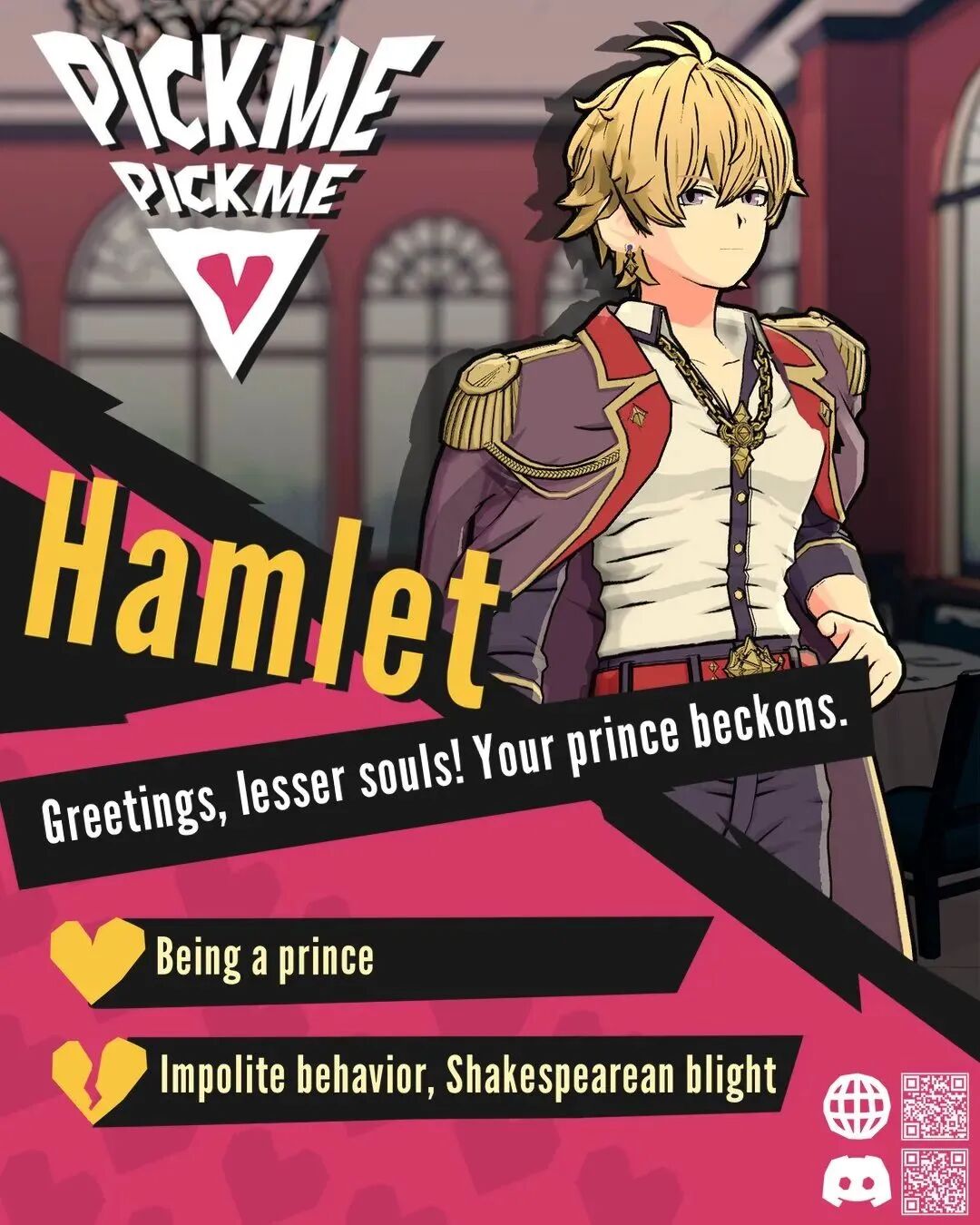
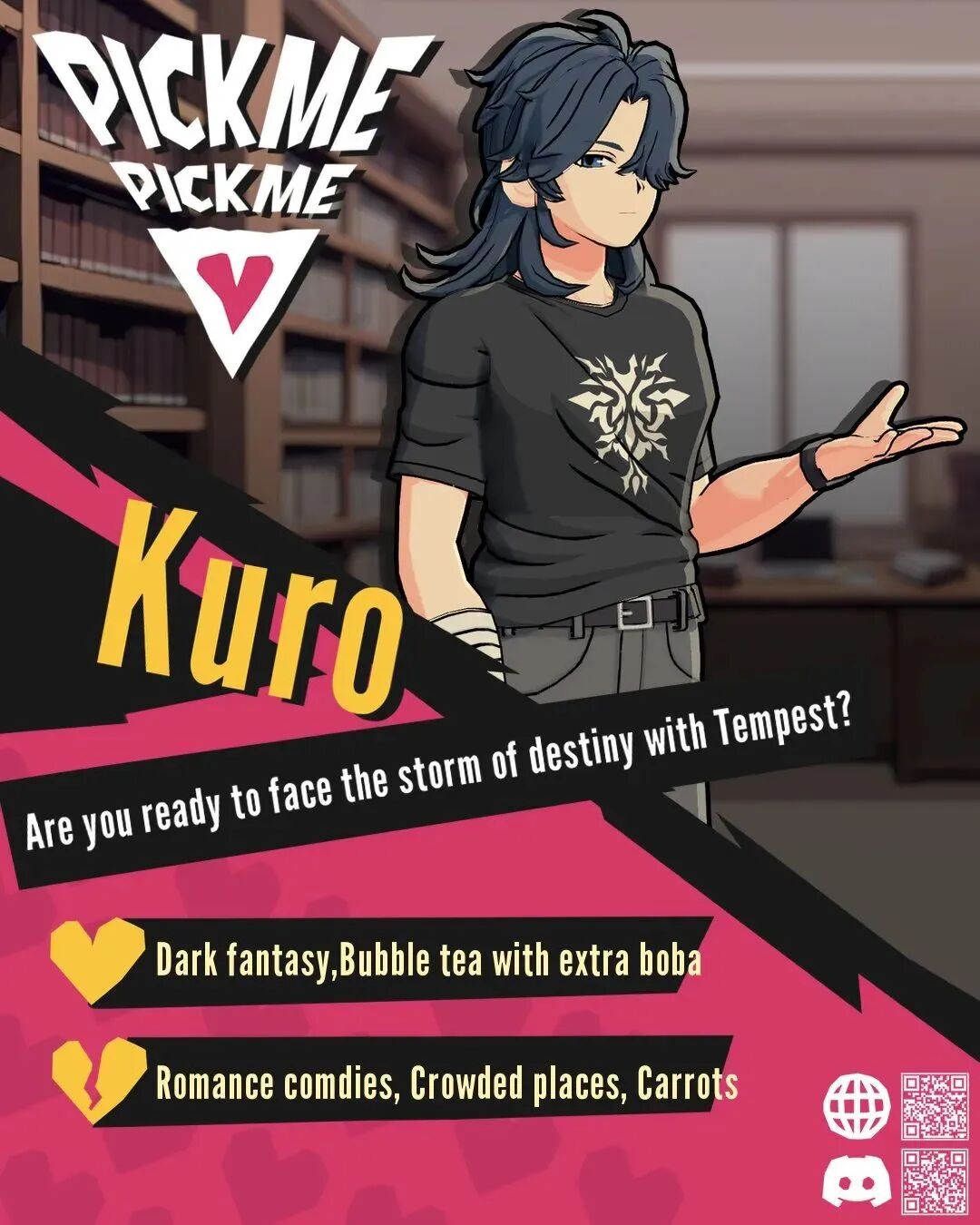
Character preference posters — swipe to view
A match lasts about ten minutes, fast-paced. Though the AI offers a light reward, winning isn't really the point. Gaining the AI's favor just adds a bit of satisfaction; the core is enjoying the conversation itself.
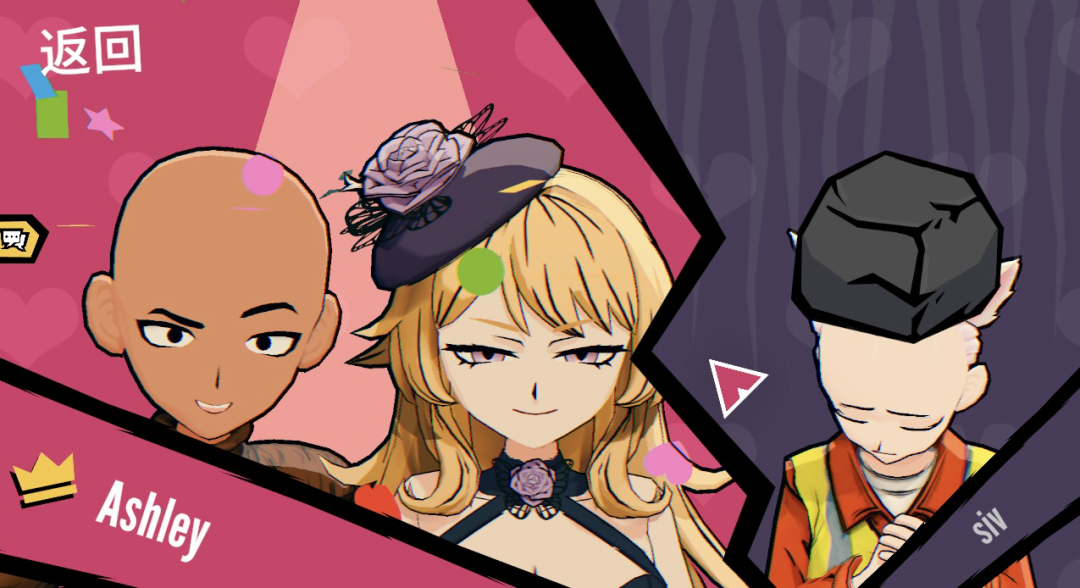
At the end of each match, the AI character judges who was more charming
You can tell this is genuinely fresh. For Zhou Dong, it's his team's first viable experiment at the intersection of AI and gaming.
In our conversation, he described AI-era production as "causality inverted" — developers should generate and filter extensively to find optimal solutions, rather than starting with a fixed goal — the opposite of traditional linear development from concept to execution.
He encourages every team member to use AI to find shortcuts in their work, hoping the team will adapt to AI's way of thinking to design content and solve problems, ultimately forming what a team or company should look like in the AI age.
How should we understand the future of AI + gaming? Will AI transform the possibilities of game narrative? In the AI era, will developers' roles be completely reshaped?
His thoughts may offer some answers for those looking to explore this space.
01
Bringing Back the "Mystery" of Games
Q: What made you want to create this kind of game?
Zhou Dong: I've noticed many people buy games and never play them. I think it's because new games rarely excite us anymore. There are only so many genres, and creating new ones is genuinely difficult.
As developers who play games daily, we feel the same fatigue. Often you wonder if casual games are the only refuge? Many people, when all is said and done, just want to play match-three. (laughs)
So we wanted to make something that helps players rediscover the "mystery" of gaming.
Q: Mystery?
Zhou Dong: As a kid, I'd play unlocalized games in Japanese I couldn't read, and I'd keep going by guessing.
Nobody immediately looked up walkthroughs back then, which created a "magic circle." Players explored within it without easily stepping out. That uncertainty created intense mystery.
But now many games handhold you through every step, like clocking in for work. We wanted to return to experiences where the game itself is compelling, not where players are prodded to participate.
For example, when open-world games first appeared, before anyone knew their formulas, they were captivating. Once people grew familiar with their modular design, that freshness disappeared. Even playing The Legend of Zelda, you can anticipate the quest structure.
Traditional games, especially mobile ones, went from novel to formulaic, with players constantly gaming the system against operators. The mystery keeps dwindling.
Q: But Pick Me Pick Me's mechanics aren't complex. Won't players lose freshness through repeated short sessions?
Zhou Dong: We're considering adding more cards to enrich the drama. We're also exploring other modes, like multiplayer or simultaneous input.
Plus, having AI act as host opens up considerable possibilities.
Traditional social games are all fair game — we could integrate truth-or-dare mechanics, with the AI hosting and driving the atmosphere.

Q: It sounds like you're pursuing cutting-edge tech while preserving a kind of back-to-basics fun? Do you see this tendency in yourself?
Zhou Dong: Somewhat. Especially after playing many games, it becomes more apparent.
I used to think the more you played, the better. But I eventually realized that only playing games you genuinely enjoy is actually more fun.
I personally enjoy visual novels, and I quite like older games. Old games weren't shaped by market considerations, offering unique experiences you can't find in modern titles.
For instance, some classic visual novels had time-jump mechanics where your save slots themselves were a resource. Saving wasn't just preserving progress — it was part of the game mechanics.
I believe games need this kind of experience, and I believe AI can deliver it. That's why we've been exploring in this direction.
02
A Game of "Creative Conversation"
Q: What makes Pick Me Pick Me unique?
Zhou Dong: Most viable AI-powered games right now are "persuasion" games.
Their essence is convincing the AI to achieve some goal — persuading it to open a door, provide a clue, or calm down, etc.
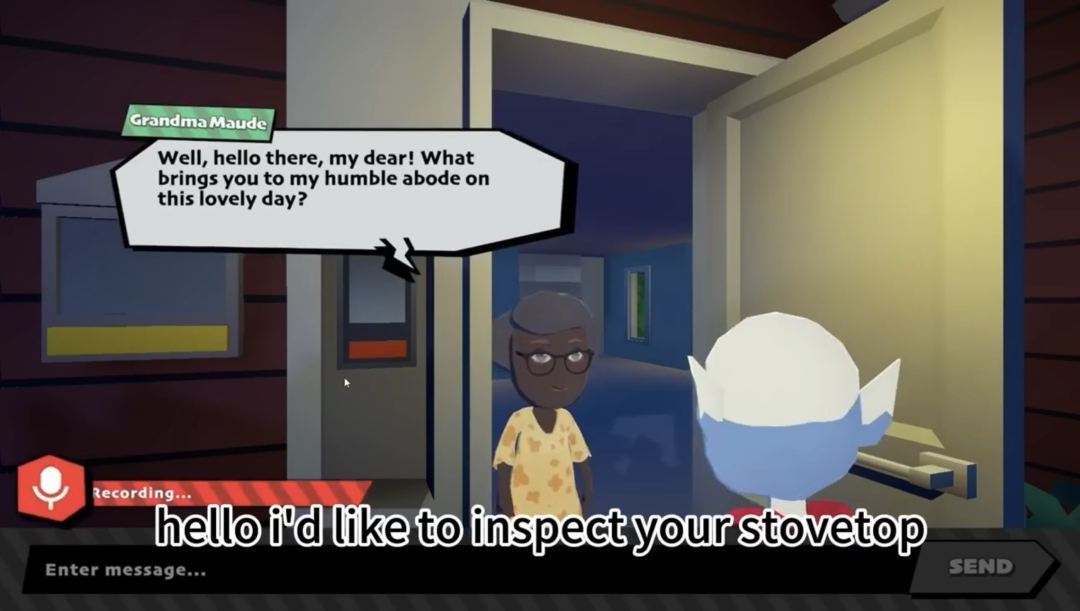
As a vampire, the player must convince the AI to open the door. Suck Up!, a successful commercial AI game, showed Zhou Dong the potential business value and user base for AI games.
We built on this by adding social interaction, making player-to-player communication the core fun. The whole mechanic revolves around chat — essentially a "creative conversation" party game.
Q: How is this different from pure text chat apps like Character.ai?
Zhou Dong: The biggest difference is interaction between players. Pure AI chat is limited by technology and cost; the experience depends entirely on how smart the AI is.
In Pick Me Pick Me, players compete against each other while the AI moderates as an entertainer. The fun depends on whether the person you're playing with is entertaining, not solely on the AI.
Q: How are the game's characters designed and finalized?
Zhou Dong: We initially used AI to generate concept art, then designed characters based on what we saw.
We prefer one-dimensional, archetypal characters — the harsh critic, the gentle soul, the chuunibyou, the domineering CEO, etc. The main goal is having each character bring different topics and conversation styles to create a more chaotic, festive party atmosphere. We'll also add player-customizable characters in the future.
Q: How do you optimize AI-player interactions?
Zhou Dong: This depends heavily on experience; we mainly adjust through extensive testing.
We prepared test sets. For example, asking the AI "How tall is the Eiffel Tower?" — a numerical answer is obviously boring.
Our adjustment direction is making the AI respond more humorously or interactively, like turning it back on the player: "Why are you asking that? We're eating right now, not really the time for this topic."
Q: Who do you see as Pick Me Pick Me's audience?
Zhou Dong: The target user is the "author-type player" — someone who enjoys expressing themselves and creating content.
The opposite is the "reader-type player," who prefers passively receiving information — the traditional story consumer who may not know how to interact with AI.
Our market research shows reader-type players outnumber author-types roughly four to one, but the author-type base is already large enough that we're prioritizing them.
This is a product we believe can work with current technology (controllable API costs, fast enough AI response times, smooth gameplay experience).
In the future, we'll try developing for reader-type players. But we're not just waiting for technological advances — we need to understand AI's limits, then design around them.
03
Designing with AI's Way of Thinking
Q: Sounds like you're quite far out on the frontier?
Zhou Dong: Our core goal is pushing gaming's boundaries. If we can offer a new design approach for social AI games, that would be ideal. But this doesn't depend entirely on us.
Beyond AI games, the entire AI industry is fascinating. Beyond improving development efficiency, AI can spawn entirely new game paradigms, with "persuasion games" being one important direction we've identified.
I believe AI gameplay will gradually permeate games, as core mechanics or seasoning. There may eventually be revolutionary forms, but certainly not anything we can currently imagine.
Yet many games that add AI don't become more fun — they become more cumbersome.
Q: There's a book that says playing a game is voluntarily overcoming unnecessary obstacles, but AI brings more freedom.
Zhou Dong: Right — games have rules and constraints; their essence is dancing in shackles. In a sense, AI itself is anti-game, because it removes those shackles and gives you complete freedom. But that isn't necessarily fun, and that's precisely what game design needs to address.
Q: Since AI and gaming have this inherent tension, how should we make games?
Zhou Dong: Two directions.
First, work with AI's characteristics — gamify it, packaging AI's freedom into interesting mechanics.
The second approach is less intuitive. It doesn't use AI's complete freedom, but rather its ability to "make associations."
This is an intuitive capacity. I believe AI doesn't judge things through logic, but through feeling.
Many developers try to make AI replace logic, but I think this is unworkable. We should have it replace the intuitive, emotional parts of games — that's a viable direction.

Q: Like how many people using ChatGPT are really after the emotional value it provides?
Zhou Dong: Somewhat similar. Emotional value is indeed an expression of AI's intuitive capacity, and that's exactly what we're leveraging in Pick Me Pick Me.
Q: Some games in the industry are introducing AI for intelligent NPCs.
Zhou Dong: I think this is a classic counterexample.
For players, the purpose of NPC interaction is simple: get quests, get rewards. But some games turn a simple binary choice into complex free-form conversation, which actually makes it less fun.
Players probably want to complete tasks quickly, not chat in circles. Such cumbersome processes drag down the core mechanics.
In these cases, adding AI free conversation reduces enjoyment — means and ends are completely inverted.
Q: Another relatively common use is AI-assisted UGC.
Zhou Dong: This is indeed a good direction, essentially still a tool application bringing point efficiency gains. But tool-based efficiency gains are limited; results tend to converge.
Q: So what does multi-point application look like?
Zhou Dong: Multi-point application means thinking from the entire product design perspective.
AI-era development could be called "causality inverted" — effect first, then deriving the cause.
For example, at the greenlight stage, we must consider what styles AI can currently produce at scale, then develop and design around that style — rather than launching the project first, then using AI tools to assist.
This mindset not only improves efficiency but may reveal entirely new opportunities. Rather than clinging to traditional linear thinking, we should follow AI's logic to find more effective paths.
Q: "Causality inverted" is the overall approach — how does it work specifically?
Zhou Dong: Simply put, it's about subtraction.
This isn't a technically precise example, but it's easy to understand: why do we need prompt engineers? We design prompts to filter out the massive amount of information large language models generate, keeping only what's useful — this is an entropy-reduction process.
Communicating with large language models is essentially helping them subtract, making them provide more precise information.
AI-driven processes fundamentally find optimal solutions through extensive generation and filtering, rather than starting with a predetermined goal — the opposite of traditional linear development from concept to execution.
Take Pick Me Pick Me: we've also done entropy reduction at the game design level.
We constrain the AI within specific scenario settings — a party game environment — letting it perform within that framework. This avoids many unnecessary situations.
For example, if an AI NPC needs to go out with you, but the game has no outdoor scenes or assets, this would feel OOC (out of character).
So we restrict this — making the NPC unwilling to go out, or having the game end if they do.
Such constraints make the experience smoother rather than being dragged down by AI's freedom. Like throwing a "fig leaf" over AI, turning its imperfections into part of the game.

Q: How did you adapt to this way of thinking in developing this game?
Zhou Dong: First, current AI text generation is relatively mature; text can be structured, making games more controllable. So we had to think about how to turn "chat" into a game.
If players simply chat with AI, most fun comes from how smart the AI is. But if AI is just a host or intermediary, things change completely. Here AI isn't the game's protagonist — whether it's fun depends on whether your friends can chat, so we chose PvP.
Second, to get characters into the game quickly, we use AI to generate concept art first, then select and refine into 3D models — efficient and cost-saving on art.
Finally, we had to consider business model. AI calls cost money; we must ensure buy-to-play covers API costs while offering paying players added value like new characters and outfits.
The core of the whole process is how to package "chat" into an actual game through gamification.
04
New Opportunities
Q: If you set a goal for your team's development over the next three years, where do you most hope to break through?
Zhou Dong: I've always encouraged the team to engage with AI. I hope in this era, the team can design content and solve problems following AI's way of thinking, ultimately forming what a team or company should look like in the AI age.
Though AI still has many potential risks or impacts — copyright issues, ethical risks, etc. — these are really just consequences of the industry's current immaturity.
Q: Team members have very different functions — how do you encourage everyone to engage with AI?
Zhou Dong: Different functions engage with AI for different purposes.
Designers can use AI to generate concept art, communicating ideas to artists more clearly and improving efficiency. Even when considering game assets, they can think about whether styles can be mass-produced and distinctive.
Programmers mainly use AI to assist with code and problem-solving. Many tedious small tasks — just ask AI for a preliminary result, then optimize — are more efficient.
Overall, we encourage the team to use AI thinking to find shortcuts in problem-solving. Understand what AI can and can't do, then get creative within that framework.
Q: Why do you do all this?
Zhou Dong: Current development workflows aren't just about improving efficiency anymore — the entire way of thinking is changing. We need to plan with AI thinking from the very beginning, to find unique products only possible in the AI era.
If we can adapt to this change, new opportunities will emerge in everything from design to operations.
However, AI's effectiveness ultimately depends on human creativity and how it's used, not on AI itself being powerful.
I always believe that in the AI era, human creativity remains the most important thing.
Recommended Reading
[