Horizon Robotics Goes Public: We Can Finally Talk About Kai Yu's Story | Z Talk
How can a risk-averse entrepreneur pull off something incredibly risky?
Z Talk is ZhenFund's column for sharing perspectives.
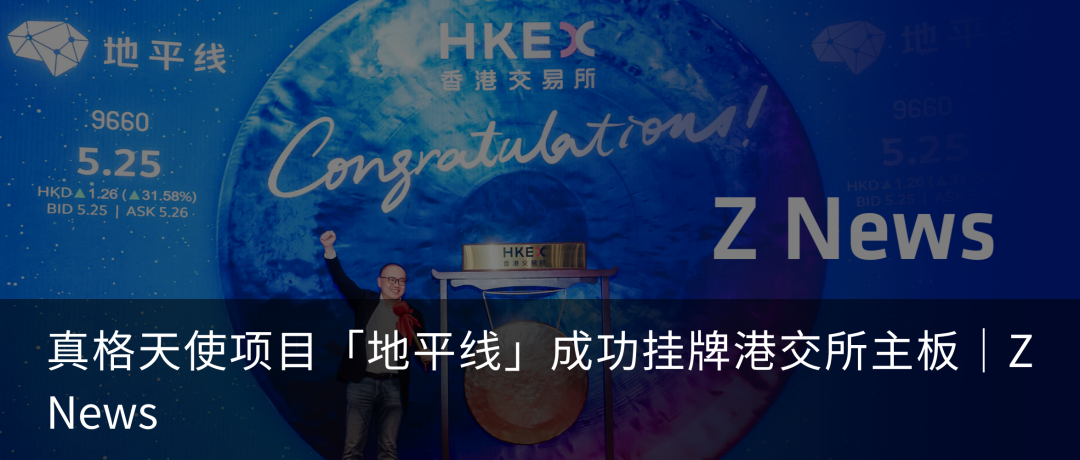
On October 24, Horizon Robotics successfully listed on the Hong Kong Stock Exchange's main board, becoming one of the most explosive IPOs in the Hong Kong market in nearly three years. This marks ZhenFund's sixth IPO this year, following Mobvoi, XtalPi, NIP Group, XCharge, and NewRank.
In 2016, ZhenFund invested in Horizon Robotics at the angel round and continued to double down at the Series A. Anna Fang, ZhenFund's founding partner and CEO, says that investing in Horizon Robotics is the most serendipitous deal-sourcing story in ZhenFund's history. Bob Xu (ZhenFund's founder) is a donor to the Future Science Prize, and in 2015 the organizing committee invited him to visit their office—Anna Fang accompanied him that day. Unexpectedly, Kai Yu was there too. "Your next investment opportunity could appear anywhere."
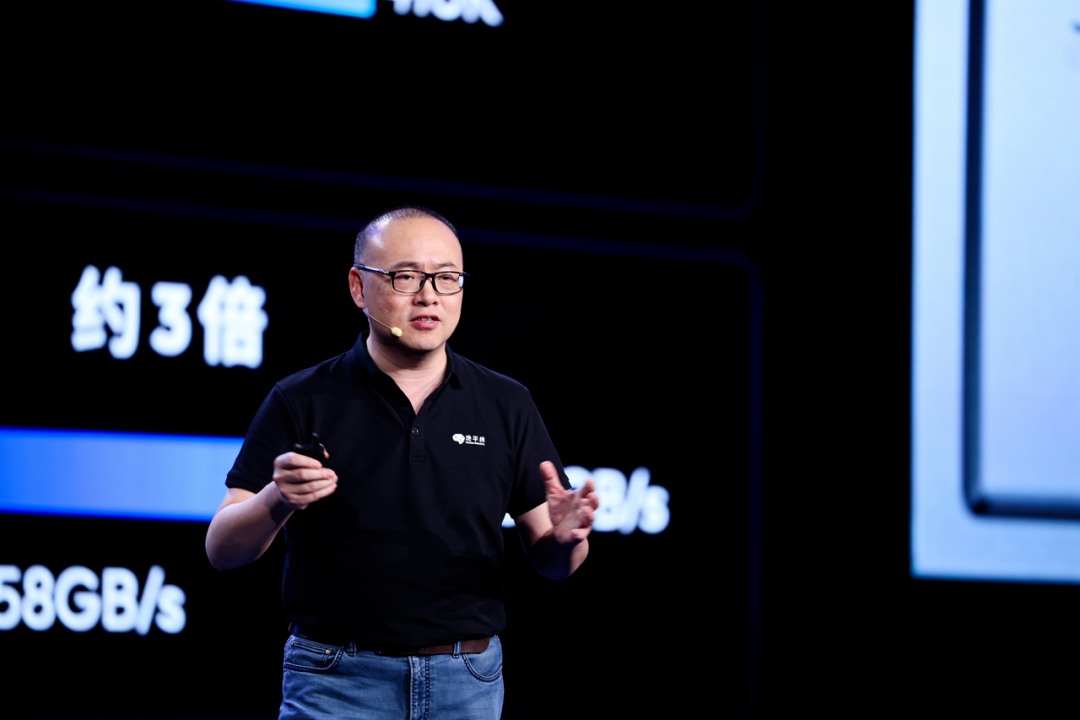
Kai Yu, founder and CEO of Horizon Robotics, is a leading force in advancing deep learning in China. In 2012, he returned to China and joined Baidu, where he built and served as executive deputy dean of Baidu's Institute of Deep Learning. In 2015, Yu left Baidu to found Horizon Robotics.
The following article comes from Zhang Peng, founder of GeekPark, tracing Yu's decade-long entrepreneurial decision-making path and that rare entrepreneurial spirit of his—"daring to embrace the unknown, yet hating risk."
By Zhang Peng
Today, Kai Yu's Horizon Robotics successfully listed in Hong Kong, opening to enthusiastic market reception with its stock price climbing steadily. I heard the fundraising significantly exceeded expectations, making it one of the most explosive IPOs in the Hong Kong market in nearly three years. Though going public isn't crossing the finish line, I'm genuinely happy for him.
It's been more than ten years since I first met Kai Yu. I remember first learning about him at the 2013 GeekPark Innovation Festival. Back then, Baidu's Robin Li was on stage being interviewed by me and proudly announced: "We've recently brought in an expert from overseas in the AI field." Only after coming off stage did I learn that person was Kai Yu. And he had been sitting quietly in the audience the whole time.
Those years, Yu built the foundational architecture for Baidu's entire AI system at Baidu and brought in Andrew Ng. In 2015, Kai Yu also took the stage at the GeekPark Innovation Festival, sharing his vision for autonomous driving technology for the first time. That year, a self-driving bicycle hand-built by Baidu's technical team slowly rolled across the front of the stage—a scene that remains vivid in my memory.
After founding Horizon Robotics, Yu also became a member of GeekPark's Frontier Society. We'd discuss technology trends, examine global tech frontiers, and backpack together through Peru and Greece exploring civilizations and history. In my impression, he's always been an entrepreneur who doesn't show "anxiety" on the surface—always seeming optimistic and carefree, without that "struggle" typical of technical founders.
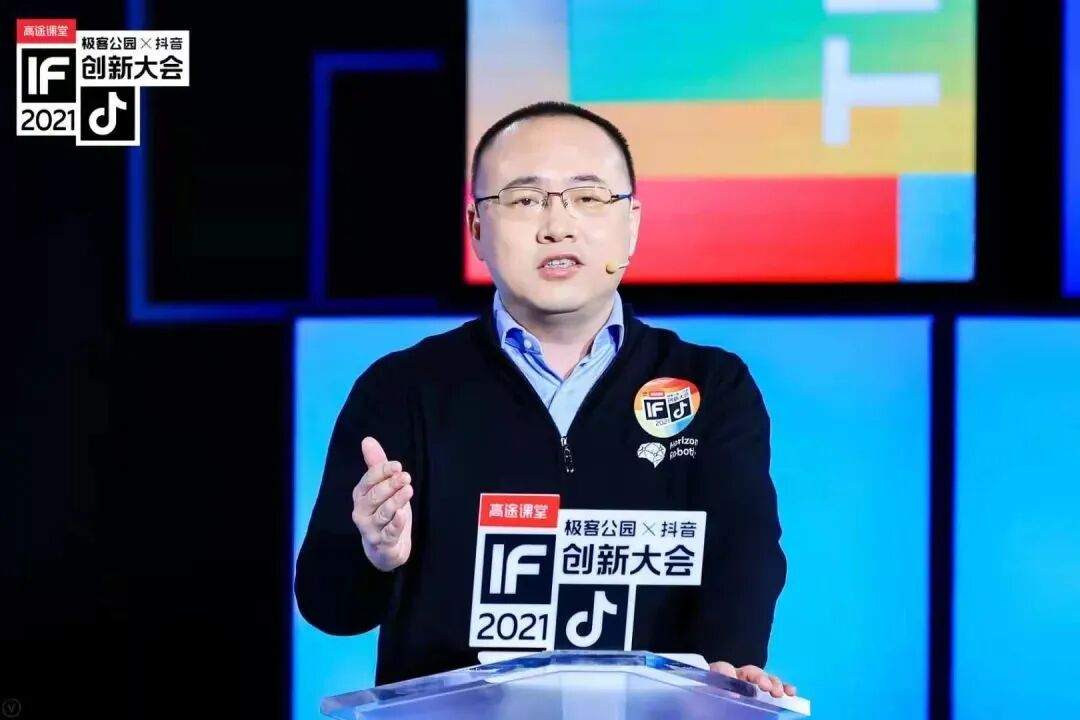
Kai Yu speaking at "GeekPark x TikTok | Innovation Festival 2021"
Source: GeekPark
The post-2010 era was when China's true first generation of technical entrepreneurs entered the scene. Most came from scientific backgrounds, many without practical business experience, yet needed to push their technology vision forward through commercial means. Yu, who wanted to "build brains for robots," was clearly a core representative of this generation. But his displayed optimism and carefree attitude felt somewhat "unreal" to me for a time, and it took me a long while to understand why he appeared so different.
Today, everyone's attention is focused on the glorious moment of Kai Yu and Horizon Robotics' Hong Kong listing. But I believe Yu's decade-long entrepreneurial journey has left some very meaningful "assets" for China's technical entrepreneurs—worth "open-sourcing" at this moment.
There are many stories, but let's start with a pivotal decision he made in 2019.
01
The Most Important Choice in Ten Years
In 2019, the new energy vehicle industry was experiencing unprecedented winter.
The then-"Wei-Xiao-Li" trio—NIO, XPeng, and Li Auto—were mockingly called the "Three Stooges of New Forces," facing the brutal test of a capital winter. New car-making forces universally fell into financing difficulties. As the only listed company among the three, NIO suffered the heaviest "wounds," with William Li being dubbed "the most miserable person of 2019."
Meanwhile, Yu's Horizon Robotics and the smart electric vehicle industry that would later become the cornerstone of his business were still running on "parallel tracks." And life was quite different from what his future customers were experiencing. In late 2018, Horizon Robotics had successfully completed a Series B round exceeding $400 million, holding about 3 billion RMB in cash.
In fact, from its founding, Yu's core vision had been: mobile internet maximized digitization and internet-ification; with abundant data, the inevitable trend was AI's great development. But independent progress in software and algorithms had limits—it needed to combine with chips to break through the ceiling, to truly develop intelligence, to build brains for "robots" in the broad sense.
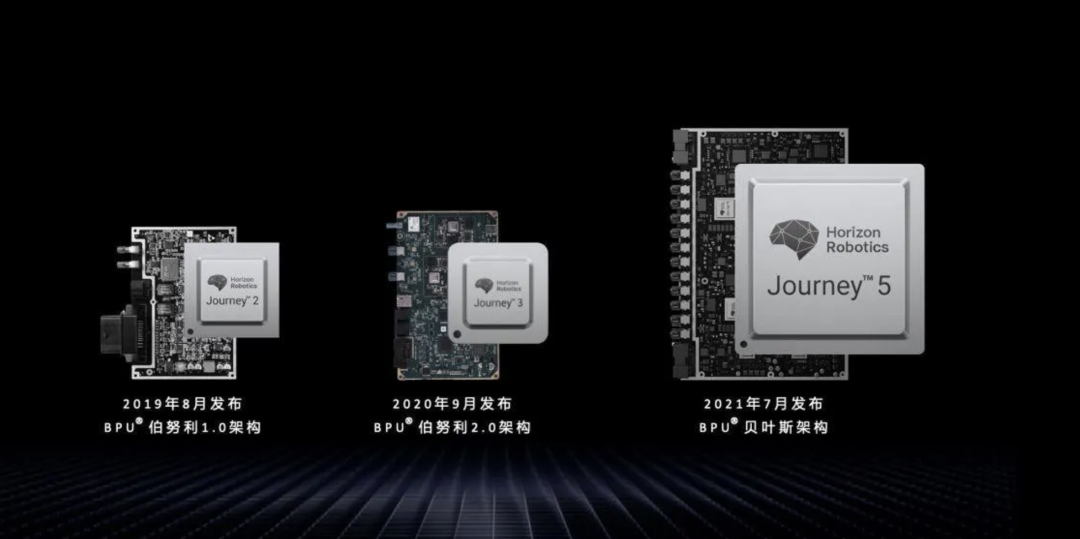
Horizon Robotics' early three generations of intelligent driving products
Image source: Horizon Robotics
So Horizon Robotics initially focused on two main areas: first, intelligent driving, which Yu most wanted to pursue; second, AIoT (AI + IoT), which offered a shorter path to realization. And Horizon Robotics actually started with AIoT (the reasons will be discussed later)—from 2015 to 2018, Yu conducted extensive experiments including smart home, partnering with Midea Group to launch smart air conditioners, and robotic vacuums. By 2019, their revenue in this area had reached nearly 200 million RMB.
Having paying customers is the biggest capital advantage for technical entrepreneurs. This made Horizon Robotics appear comfortable in a difficult capital environment—with money in hand, you can make more proactive choices.
However, in November 2019, at the darkest hour before dawn for the new car-making industry, Yu made a surprising decision: cut all other business directions that already had clear revenue, focusing solely on landing intelligent driving technology in the automotive industry.
Two aspects of this decision were unexpected: First, Horizon Robotics wasn't facing an existential crisis at the time. It had ample capital reserves and steady business progress. In many people's eyes, there was no reason for such radical strategic adjustment. This could be seen as "stabbing yourself."
Second, in 2019, public opinion was broadly skeptical about smart electric vehicles' development. NIO, XPeng, and Li Auto were all struggling to survive, desperately seeking financing. Most people didn't favor these companies' futures, viewing their efforts as desperate struggles. Yet at this moment when the wind hadn't yet arrived and market prospects remained unclear, Horizon Robotics firmly went all-in on intelligent driving, making a full bet on the automotive industry.
This counter-consensus decision looks brilliantly prescient today, doesn't it? I too once found this god-level decision almost unbelievably good. But years later, during a conversation with Yu where we deeply reviewed how this decision came about, I realized that often good decisions come from "sticking to principles."
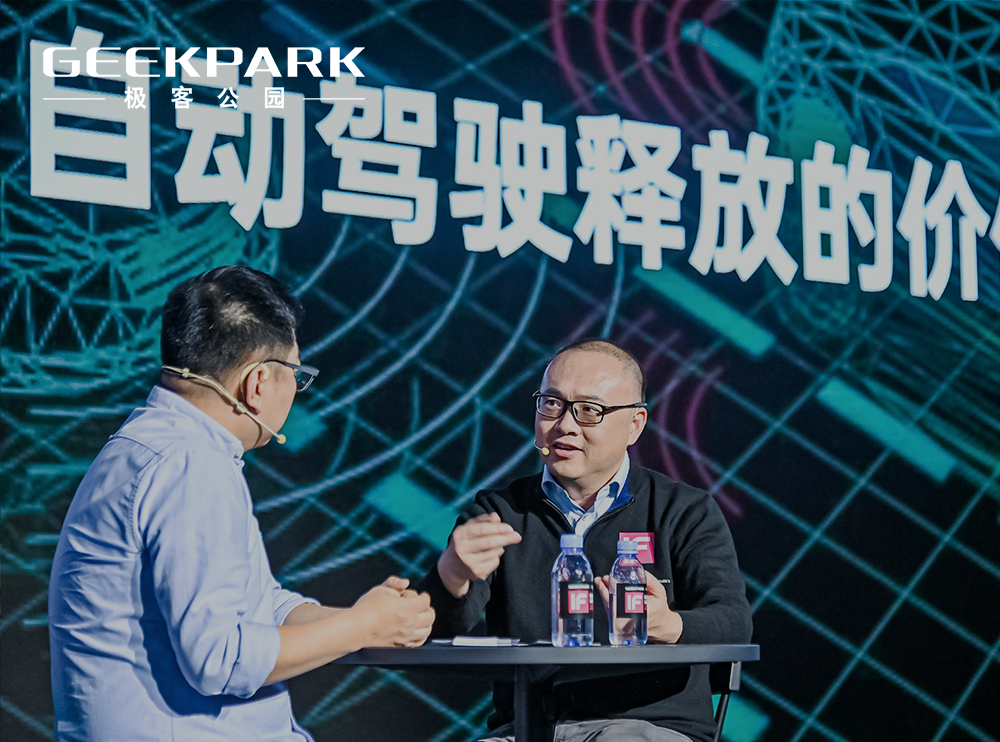
At GeekPark Innovation Festival 2022, Zhang Peng and Kai Yu discuss the enormous value released by autonomous driving and route debates
Image source: GeekPark
Before Yu's major strategic adjustment in 2019, Horizon Robotics had already engaged in internal discussions lasting half a year. The trigger was Yu's deep concern about certain businesses' slow progress. For instance, AIoT seemed to have opened markets, but each vertical appeared to require deploying troops and establishing separate bases to scale—extremely inefficient. Or in some areas where Horizon Robotics had fully tried, even after market demand was fully validated, they found the market had become so competitive that victory felt like defeat.
Yu sensed these warning signals. He couldn't shake this intuitive unease and felt he needed to "be serious about it"—repeatedly convening the executive team to explore how to break through the current predicament. The discussion process proved more complex than he imagined. Meetings originally planned to end at 6 or 7 PM often dragged past midnight due to disagreements, even arguing until dawn.
The core problem was "inertia." Inside Horizon Robotics, while Yu considered intelligent driving the first target market and had invested resources to build technical preparation from day one, he had also placed high hopes on AIoT—because intelligent driving wasn't yet a market with clear demand when he started up in 2015, but AIoT was. And through prolonged exploration, Horizon Robotics had successfully proven this field's logical soundness, even establishing certain business footholds. Even when problems with these footholds had become obvious, overturning a once-trusted business model was exceptionally difficult.
I once asked Yu how to escape this inevitable inertia fate. Yu said there didn't seem to be any great solution besides persisting in "being serious"—just don't "avoid" it, don't be "vague," keep discussing if you haven't figured it out.
As long as the team consists of "people with clear heads," inertia can be broken. As discussions deepened, more and more voices in the team began pointing toward abandoning the AIoT direction. Meanwhile, emotional torrents inevitably emerged—team members would even lose emotional control during heated debates, tears streaming down. After all, they had poured enormous time and energy into these projects. But after getting through this step, everyone was finally ready.
Yu was probably the first in the team to complete this process. He later recalled that as early as 2018, when he hadn't yet sensed anything wrong, he had chanced upon Professor Zeng Ming. Zeng Ming had bluntly warned Yu: "None of these things you're doing are worth doing, none of them break through."
At the time, Yu's "timing hadn't come"—he listened seriously, but it truly didn't stir much in him. Yet as time passed, this statement planted a seed that kept echoing, gradually sprouting, and ultimately influenced his thinking.
Professor Zeng Ming said this because he realized Yu's goal at the time was building a computing platform similar to Microsoft or NVIDIA, particularly in robotics. However, building a platform presents a paradox: do you hold onto an existing platform and wait for vertical applications to grow naturally, or proactively push vertical applications to land? Pursuing both strategies simultaneously creates enormous challenges for resource allocation, management, strategic execution, and organizational structure.
At the time, Yu's team was pushing forward on multiple vertical scenarios in parallel, trying to use these scenarios' development to drive platform formation in reverse. However, fierce resource competition made him feel like he was fighting a "positional war." Yu gradually understood that what Zeng Ming meant by "not breaking through" was that simultaneously investing in multiple scenarios would tear resources apart, making it difficult to form a solid platform.
Yu therefore very seriously studied Microsoft and Android's development processes, understanding that vertical scenarios could also nurture platforms. For example, Microsoft's success didn't stem from building a platform from the start, but from deeply cultivating a vertical scenario (white-collar office software) that drove Windows' rise. Microsoft centered on white-collar productivity tools, with Office as its core product, which in turn supported Windows' success. So for Horizon Robotics, if choosing one vertical scenario to support a future platform, it could only be intelligent driving.
After nearly half a year of repeated discussion, the Horizon Robotics team finally reached an important logical consensus: while the AIoT market was broad, individual scenarios were too fragmented. Breaking into each scenario deeply required enormous resources and energy, and even if successfully penetrated, the returns would be minimal. Ultimately, they decided to cut all businesses except intelligent driving.
At the time, Horizon Robotics had about 1,200 employees, and this decision meant laying off 500 people—essentially deciding to slash nearly half the workforce while the company had ample cash to support strategic adjustment. Horizon Robotics was five years old.
Over the past 20-plus years, having witnessed several generations of Chinese entrepreneurs rise and fall, I've increasingly felt that five years is really a small cycle. The core of this cycle is "entropy increase."
A startup team is like a living organism—the essence of life is "entropy reduction," but growing is essentially "entropy increase." Generally, a startup team's golden period is in the first 2-3 years, after which the initial energy at founding is exhausted. As scale, environment, and business develop, the entire system inevitably grows more complex, with variables and chaos continuously compounding into a state of persistent entropy increase.
And to achieve "entropy reduction," there are only two methods—inject energy into the system (such as being truly market-recognized and achieving rapid growth), or restart the system to its initial state—make the system smaller, make goals more focused.
I feel that what Yu did in Horizon Robotics' fifth year was exactly this. When the AIoT market had become clear that the energy it brought couldn't balance the "entropy increase" it caused, the best choice was to restart while in the best condition (holding 3 billion RMB in cash), then maintain sufficient energy, protect your own "vitality" to have a chance to face the inevitable "uncertainty."
Of course, why choose to go all-in on intelligent driving in 2019 involved many objective changes in technology and industry trends that won't be discussed much here. Because I feel the hardest part of this choice wasn't seeing these objective changes, but truly making explicit trade-offs subjectively. Yu said that at the time, it was about preserving sufficient energy for intelligent driving—the thing he wanted to do five years ago and now clearly should do—because you can predict the general trend, but you can't predict which day will be your critical point.
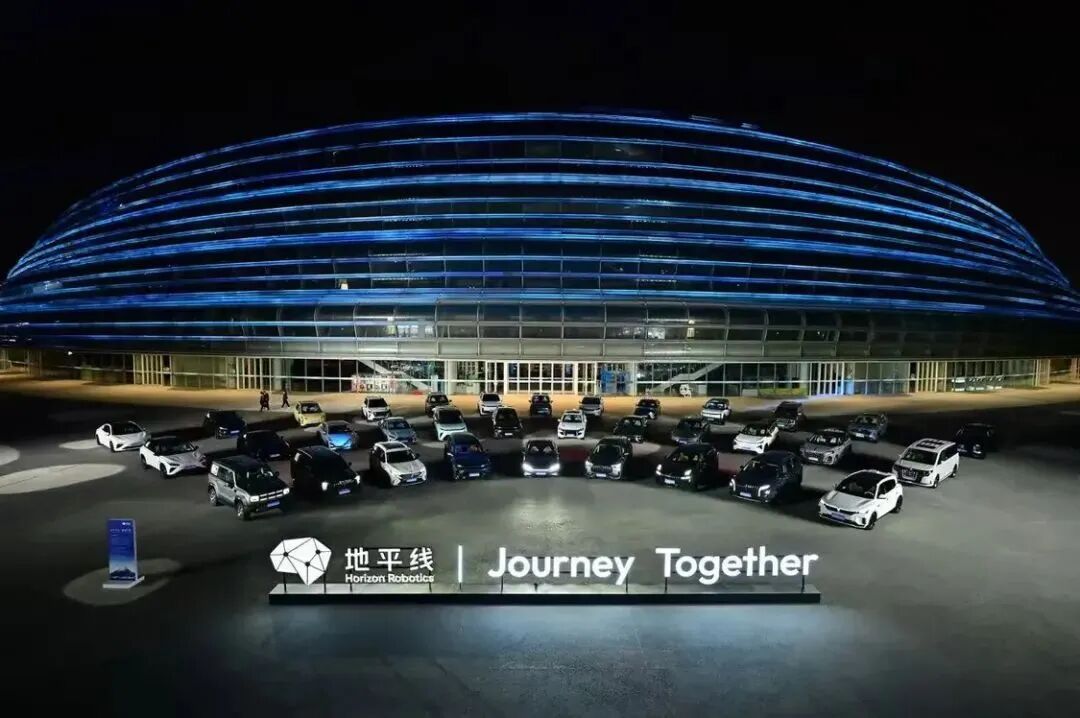
At Horizon Robotics' 2024 product launch, mass-produced models equipped with Horizon Robotics products were displayed | Image source: Horizon Robotics
In fact, the smart vehicle inflection point arrived unexpectedly earlier than expected. In the first half of 2020, Tesla's Shanghai factory began production, causing Tesla's market cap to rapidly explode from tens of billions to hundreds of billions of dollars. This change not only saved "Wei-Xiao-Li" but also greatly benefited Horizon Robotics. The smart electric vehicle competition quietly kicked off in 2020, with Horizon Robotics being the only company that had prepared, dug trenches, and set up guns.
The result: by 2023, Horizon Robotics had reached mass production cooperation with all top ten Chinese automakers (groups) by sales volume. In the first half of 2024, cumulative shipments of the Journey series computing solutions exceeded 5 million sets, making Horizon Robotics the automotive computing platform supplier with market share second only to NVIDIA.
02
Technical Entrepreneurship Must Embrace the Unknown,
But Hate Risk
As mentioned earlier, what's most distinctive about Yu in my impression is that he always projects an optimistic aura. Even when he occasionally recalled the difficulties and challenges faced during entrepreneurship, thinking back to my interactions with him at the time, I truly couldn't find externalized anxiety or pain.
What gave him the ability to face everything with such calm, discussing global scenery, civilizations, and history with me, while also making technical entrepreneurship—a path that has wounded many entrepreneurs in China—work? Either he's really good at "acting," or there must be some trick to it.
Later I finally understood it—in one sentence: to be optimistic, you need room to choose, and to have room to choose, you need "money in the bank."
Unlike many startups, Horizon Robotics has rarely been troubled by funding issues since its founding. Prospectus data shows Horizon Robotics completed 11 funding rounds, raising approximately $2.363 billion. As of end-June 2024, Horizon Robotics' cash and cash equivalents reached 10.45 billion RMB. This allows Yu to remain relatively composed when facing market changes and competitive pressure.
We shouldn't just look at this from the angle of Yu's strong fundraising ability. More deeply, it's his unique worldview, which indeed has distinctive characteristics among China's first generation of technical entrepreneurs, and also resonates with the times.
Why were China's first generation of technical entrepreneurs born after 2010? The rise of internet, the formation of mobile internet, boosted the wave of entrepreneurship, while the digitization process and China's upward breakthrough momentum in the global industrial chain also reached a critical point.
The era indeed gave opportunities, but entrepreneurship is always a nine-deaths-one-survival affair. In fact, over past decades, the main risk of failure for Chinese entrepreneurs has come from insufficient risk management. Companies pursued extreme growth in favorable cycles while ignoring potentially fatal risks from adverse cycles. Once when discussing this with Yu, he said people often only focus on the "door of life" while neglecting the "door of death"—excess overflows, without trade-offs, there's no option to "live facing death."
Actually, the winner-takes-all methodology of competing for speed and going all-in from the internet and mobile internet eras further amplified this problem. When this model penetrated technical entrepreneurship, it more easily brought systematic risks to entrepreneurs. Often, it wasn't that the technology vision was wrong, but that the rhythm was wrong due to risk management. And once entering an "entropy increase" cycle, it's easy to never achieve "entropy reduction" again, ultimately falling before dawn and missing the value that should have been theirs to create.
Yu was quite clear-sighted on this issue. I once asked him—as someone who founded Baidu's autonomous driving business and could be called China's first person in Robotaxi (self-driving taxis), why didn't he go straight for L4 autonomous driving when starting up in 2015? Even L2+ within the company was on "slow simmer"—why did he first do AIoT?
He said it's a fault tolerance problem. Under a correct vision, the core difference between large companies and entrepreneurs is tolerance for fault tolerance. In 2015, in his view, Robotaxi's fault tolerance was too low for a startup like his, because if you can't achieve 100% safety, it's equivalent to 100% not achieved. This extreme requirement made the commercialization path of autonomous driving too challenging for startups.
In fact, in technology, judgments on technology trends often converge; what truly determines enterprise fate are those critical inflection points. These inflection points may come earlier or later due to changes in market, technology, policy, and other factors—maybe a few years early or late, full of uncertainty. As they say, "when the era skips a frame, a startup loses one life."
So why did Yu, who initially didn't go straight for L4 autonomous driving due to fault tolerance concerns, abandon the AIoT foothold in 2019 to go all-in on L2+ intelligent driving?
I think it's still because he wanted to increase "fault tolerance." Continuing AIoT would become organizational "entropy increase," while intelligent driving, though domestic market demand hadn't yet risen, by this point technology and industry had changed—it was now "dealing with uncertainty with certainty," rather than the 2015 technological moment of "finding certainty within uncertainty."
If Yu had still simultaneously invested in automotive and AIoT businesses in 2019, it would have decreased his fault tolerance on intelligent driving. After all, if not for Tesla's market rescue in 2020, the intelligent driving market inflection point could well have been delayed by two years. Yu was entirely focused on how to win more years of choice rights to face uncertainty. As for the turning point of fate occurring the year after Yu made his strategic trade-offs, Yu admits that wasn't precise prediction, more like luck.
In fact, Yu's sensitivity to and aversion toward risk runs through his entire entrepreneurial journey. Even in 2020, after Tesla's success triggered the smart electric vehicle industry boom, when NIO, XPeng, Li Auto and other emerging carmakers rapidly became capital market darlings, driving valuation increases for many supply chain-related startups with the situation looking overwhelmingly positive—he did another counter-consensus thing.
First, Yu began sensing something "off" about this capital-driven model. He believed that when markets go crazy to a certain degree, it means approaching the critical point of bubble burst. In this context, Horizon Robotics chose a counter-trend strategy. At the time, Horizon Robotics had successfully raised about $800 million, but Yu felt a market adjustment might come. So he applied to shareholders to raise funding again without increasing valuation, and successfully obtained another approximately $800 million.
This funding later proved crucial. As capital markets sharply cooled, Horizon Robotics, with its ample capital reserves, avoided panic from deteriorating market conditions and could continue focusing on product, technology, and customer development. By contrast, many companies had raised valuations during the hot market but actually raised little funding; after the bubble burst, these companies suffered greatly.
If Yu were an investor, he'd definitely be risk-averse. But he's an entrepreneur—to get things done, you must embrace risk. How does this seemingly contradictory thing become self-consistent at Horizon Robotics?
Yu, coming from a scientist background with clear technical vision judgment on AI, his 2015 decision to start a business, to choose the goal of "building brains for robots," may be the greatest uncertainty he embraced in his entire life. And every step on this path, he indeed left himself room and increased tolerance—whether the decision's surface appearance was cautious or resolute, the essence was reducing all reducible "visible risks" after having taken on the greatest uncertain risk.
And this worldview of "since you're already climbing the mountain, don't dance on the cliff edge" is too well-matched for technical entrepreneurs, especially for technical entrepreneurs in China's current industrial environment. There's no absolute luck, no absolute brilliance—it's all resonance between people and their era.
Even, I think "daring to embrace the unknown, but hating risk" may be the lesson China's technical entrepreneurs should draw from history. That is, to have the passion of "fire in the valley" in your heart, daring to surpass the era in goals, while also having the method of "the doctrine of the mean" in hand, achieving vitality that moves with the times.
Alright, while Yu hasn't yet gone from legend to myth post-IPO, I've finished my genuine understanding of him as a long-time friend. But I believe his story has just begun, and I'll boldly predict Horizon Robotics' future direction.
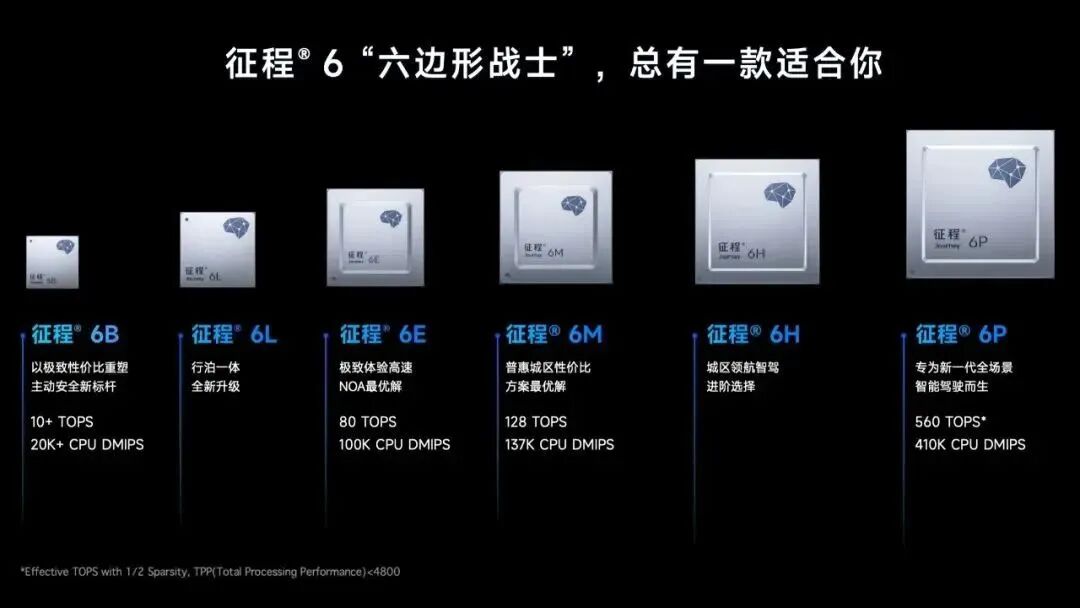
Horizon Robotics' latest Journey 6 series | Image source: Horizon Robotics
Looking back, Horizon Robotics has always been "a software company disguised as a chip company." In low-end and mid-range autonomous driving markets, Horizon Robotics used a "using four ounces to move a thousand pounds" strategy, escaping delivery difficulties by nurturing an ecosystem and achieving remarkable success.
As autonomous driving technology gradually advances toward full-scenario application, technical requirements become increasingly stringent. Competition has now entered peak showdown. Globally, truly qualified teams to participate in this competition are few and far between. Therefore, Horizon Robotics will certainly go all-out, combining software and hardware advantages, to truly unlock consumer demand for autonomous driving, and ultimately push to redefine automobiles.
Horizon Robotics early on approached from a software and algorithm perspective, using chips as a support point to break through technology development bottlenecks, then from chips, transformed software and algorithm capabilities into intelligent driving value. So building the future operating system for the automotive field and even robotics field is what appears to be the more reasonable endgame.
Whether Yu thinks this way, I don't know. But let's congratulate and wish him well in this manner. Going public is a milestone, and also a new starting point. And great goals themselves are a form of energy injection—they can combat "entropy increase."
Recommended Reading