Yuan Liu of ZhenFund: What Kind of Entrepreneur Stands Out in This Era? | Z Talk
Great investors recognize patterns; great founders break them.
Z Talk is ZhenFund's column for sharing perspectives.
Recently, the 2024 China Gen Z Young Entrepreneurs Conference, hosted by wteam, concluded successfully in Guangzhou. The conference attracted over 500 Gen Z young entrepreneurs, with nearly a hundred investment professionals and industry experts in attendance.
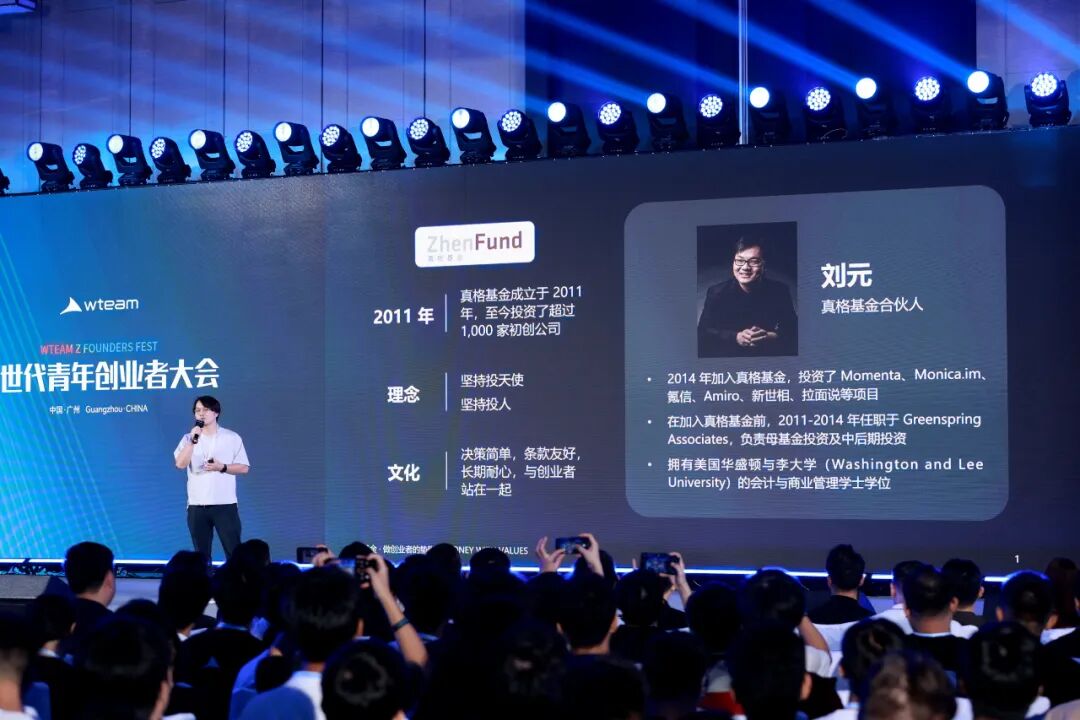
Yuan Liu, partner at ZhenFund, shared his insights as an investor on entrepreneurial spirit and market trends, expressing his expectations and encouragement for young entrepreneurs.
Below is the full text of his speech:
01
Prodigies, Veterans, Operators, and Technologists
ZhenFund's People-First Investment Philosophy
Hello everyone, I'm Yuan Liu from ZhenFund. I'd like to share, from an investor's perspective, what we've observed as bystanders in 2024 — a year of turbulence and unpredictability.
Compared to other VC firms in the market, ZhenFund has two distinguishing principles in our philosophy: First, we consistently invest at the angel stage, striving to be an entrepreneur's very first source of funding. Second, we maintain a people-first investment principle.
This is a "weak player" mindset. We don't predefine sectors or themes, because we don't know what will become hot, nor which industries will shine in the future. We expect entrepreneurs to tell us.
ZhenFund was founded by entrepreneurs. Among our four current partners, Yusen Dai (managing partner at ZhenFund) also comes from an entrepreneurial background at Jumei. So we understand entrepreneurs' needs very well. Therefore, we approach things from the entrepreneur's perspective — simple decision-making, founder-friendly terms, and a series of methods to build our angel investment product.
Over the past decade or so, we've been studying and analyzing what kind of entrepreneurs might become the next generation of outstanding founders.
ZhenFund basically invests in four types of people, which we categorize as: "prodigies," "veterans," "operators," and "technologists."
"Prodigies" are those who start companies very early. For example, while everyone around them on campus is still worrying about GPA or internships, the "prodigies" have already decided to start a company. Compared to entrepreneurs who begin in their thirties or forties, this group starts at 20 and begins accumulating crucial entrepreneurial experience much earlier — things like "how to be a good CEO," "how to recruit a team," and "how to raise funding." Many companies we've invested in, including Xiaohongshu, had founders who started their first company while still in school.
"Veterans" are serial entrepreneurs. These people never went to work for someone else — they kept building their own companies. We can observe that, in both China and the US, the founders of almost all exceptionally successful large companies share this common trait: they've been entrepreneuring since school. And the young people here today who are currently starting companies — you're taking that same first step as the most impressive founders.
"Operators" are people like Li Nan (founder of Angry Miao, a ZhenFund portfolio company). They didn't start their own company right away, but built something remarkable from 0 to 1 at a large company, then transitioned from executive to entrepreneur.
"Technologists" are exactly what the name implies — they represent the highest technical level nationally or even globally, including professors, PhDs, and leaders of key projects at major tech companies' research institutes.
02
From Growth-First to Profitability-First
Looking back at the previous generation, we saw BAT, TMD, and a series of subsequent unicorns listing in the US. But it's been a while since we've heard of a formidable Chinese tech company doing an IPO on the world's largest capital market. This is due to both geopolitical and economic factors.
If IPOs aren't happening, growth-stage investors can't invest in pre-IPO projects, early-stage investors lack later-stage buyers to pass the baton to, and the entire exit cycle breaks down. As a result, the pace of primary market investing has slowed.
I think this has very direct implications for young entrepreneurs. The funding paradigm has shifted from pursuing growth (hoping for Series A after angel, Series B after A) to prioritizing profitability. As wteam's slogan suggests, entrepreneurial spirit and self-sufficiency have become extremely important. What's needed now is the ability to make money calmly — which teams have the entrepreneurial spirit to do more with less, rather than raising more money through growth and competition to expand chaotically as in the past.
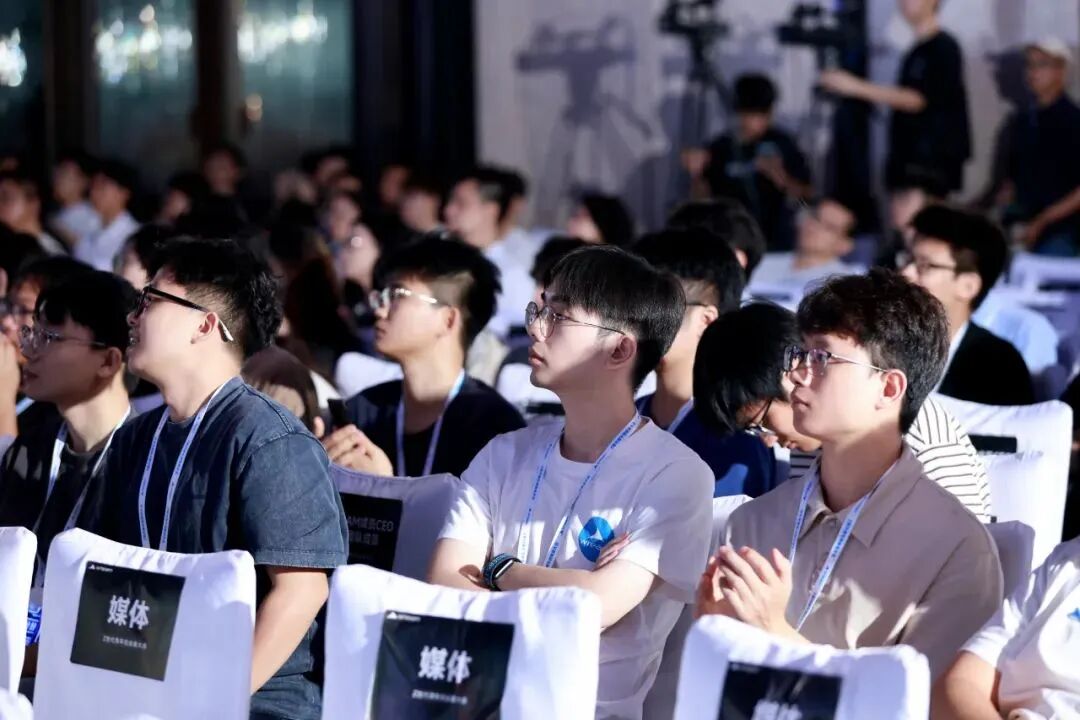
Objectively speaking, many projects couldn't raise money this year. This is also a kind of consensus convergence — many people aren't willing to take risks. Everyone prefers to invest in founders who've taken companies public, or serial entrepreneurs with proven success. We like these people too, but if more people invest in this type of founder while no one invests in "prodigies," the path for young founders to obtain funding through financing narrows considerably.
03
For Entrepreneurs, the Courage and Perseverance to Take Risks Matter Most
For entrepreneurs, which qualities matter most? First, the continued courage to take risks. Second, perseverance — the determination not to give up when facing difficulties. This determines how far your entrepreneurship goes and how long you persist.
Entrepreneurial experience and age at starting up also matter. This is why wteam is so attractive to ZhenFund — wteam's CEOs are all extremely early-stage entrepreneurs who started companies as undergraduates. I later realized that starting a company during undergraduate years, especially building a sustainably operating business, is a very counter-consensus, counter-conventional choice. It's also the most correct thing great entrepreneurs can do before building great companies, and it accumulates the most important experience.
Entrepreneurship only yields feedback through practice. We ask ourselves today: what groups are actually worth investing in? There was a period when we worked hard to connect with executives at major tech companies — ByteDance, Kuaishou, Xiaomi, and others. We later discovered that at large companies, unless someone has built something from 0 to 1, being too senior in rank is often not suitable.
If someone at a major company specialized in PR, HR, or served as an intermediary information broker, climbing the corporate ladder through hierarchy, often they were simply "standing in the right place" within "big company politics." People who've worked at major companies for 20 years have, in fact, spent a long time proving they are not entrepreneurs.
Later, we conducted important internal reflection and realized we'd been going in the wrong direction. We shouldn't look for the most senior people at major companies, but rather the youngest people who decided not to work for others and to build their own companies.
Recently we've also been thinking: are projects that raise three rounds in a year the best projects? Looking back now, the most impressive projects — ByteDance, Kuaishou, Pinduoduo — were never market hotspots in their funding history. They weren't what everyone talked about when they met, nor did they quickly form investor consensus that then fizzled out. They developed steadily and consistently.
Introversion versus extroversion is also a consideration. We've found that the best founders are often introverted. Because extroverted founders tend to be expressing themselves, while introverted founders are more often listening. Good entrepreneurs should understand users and customers, knowing what they're thinking. So we later discovered that, rather than what founders say, we should look at what they observe, and what they hear when they're not speaking.
Although I'm an early-stage investor, I have complex feelings about the entrepreneur group. An investor's job is pattern recognition — finding patterns from the past. An outstanding founder's job is breaking patterns.
There's a book called Iconoclast. For investors to make big money, they need to invest when it's cheap and exit when it's expensive. This must be non-consensus, because if everyone wants to buy and invest in a company, the price will definitely be high. Looking at many AI large model companies today, this is exactly the case.
Investors only make big money in the non-consensus quadrant — in a 2×2 matrix, when it's both non-consensus and the right choice, meaning everyone else is wrong and you're right. So investors must make non-consensus choices.
But what are investors actually doing?
Investors are all chasing trends. A trend means everyone thinks alike — competing within consensus. Peter Thiel's book Zero to One essentially has one sentence: monopoly should pursue small monopolies, not big competition; don't go to big markets, go to small markets. But this is opposite to how many investors think.
Now we're also gradually realizing this — competition never brings gross margin and profit. If you want to build a sustainably developing company, we hope founders can find things others haven't found, even if it looks small at first.
04
What I'd Like to Say to Entrepreneurs...
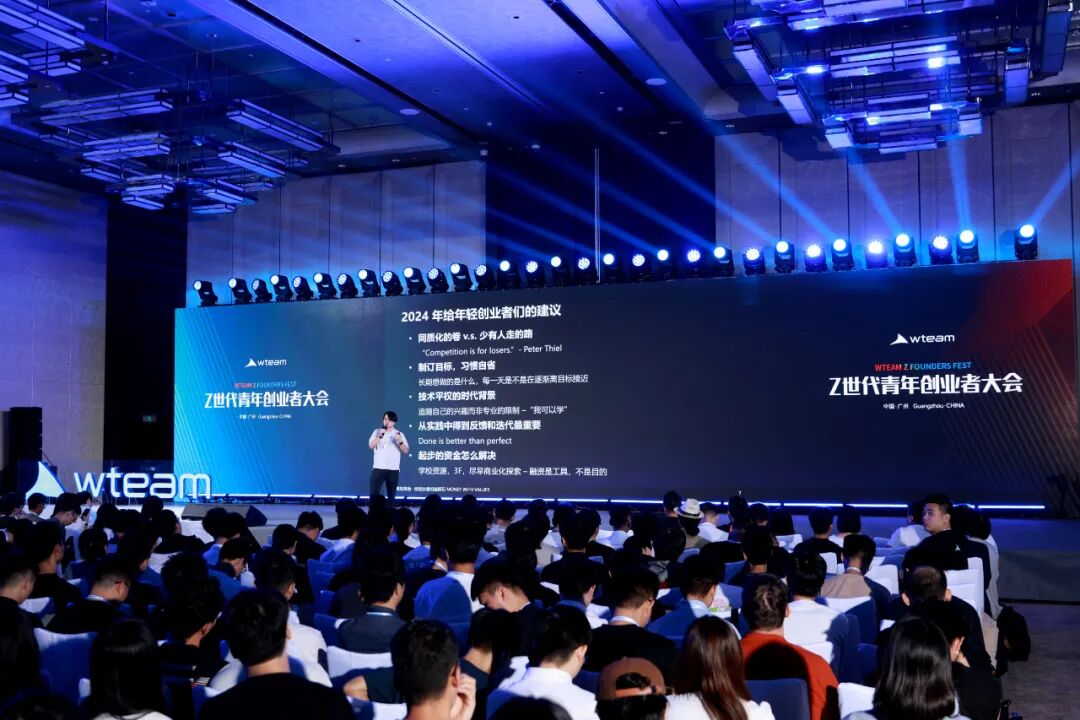
If I were to give entrepreneurs some advice, the first point is don't engage in homogeneous competition, don't get caught in involution, take the road less traveled.
Don't always think about how much better your technology is, or how superior your product is. Instead, think about what needs haven't been captured? What things are worth doing? What areas have potential users but no one is serving? Do things first.
The second point is set goals and cultivate self-reflection. We love asking entrepreneurs: what kind of person do you want to be in five years? What kind of company will yours be in five years? Have long-term goals. Think about whether what you do each day, each week, each month brings you closer to that goal.
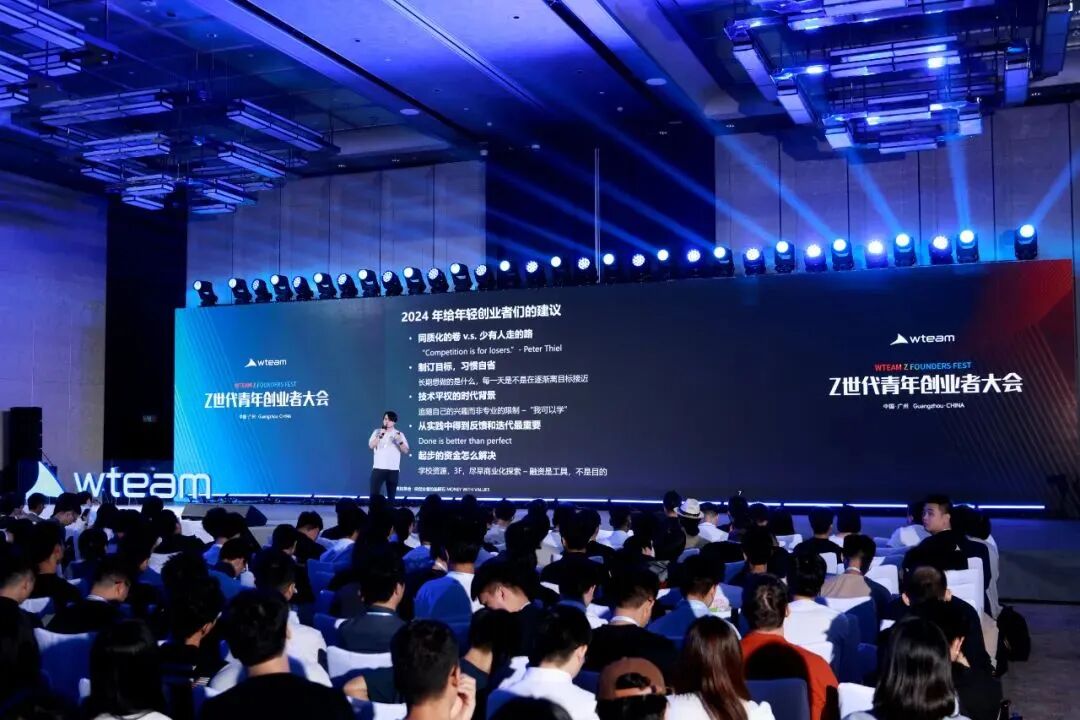
Third, youth itself is competitiveness. Looking at companies like Cursor and Magic AI in the US, many founders are post-00s, able to raise over a billion dollars in Silicon Valley.
Looking now, especially in Silicon Valley, the founders of the most technically impressive companies and unicorns are rarely post-80s — they're basically post-90s, post-95s, occasionally post-00s. Because the younger you are, the faster you adapt to new changes, and the less you're constrained by past experience.
Fourth, in today's market, going global is extremely important. In recent years, Chinese entrepreneurs have shown unprecedented determination, courage, and capability to conquer global users. We can see in the top ten of US app stores, SHEIN, TikTok — these are all culturally strong products. Whether fashion or short drama video content, if you'd shown these to investors ten years ago, they would've said the cultural requirements are too high, making it hard to establish position in foreign markets. But today Chinese founders are doing very well in these culturally high-barrier industries. This also includes hardware — DJI's drones, Bambu Lab's 3D printers, and many home appliance companies we've invested in, all with very strong overseas capabilities.
Finally, I'd like to say: looking back over the past 20 years as an investor, there are very few Chinese companies worth investing in that can make big money — basically ByteDance, Kuaishou, Meituan, Pinduoduo, and a few others. If you joined any of these companies as one of the first 100 people, you'd be formidable in terms of both personal growth and financial returns.
How do you find such impressive companies worth joining? Investors often think about this question, and you can too. Where is the next Zuckerberg, the next Yiming Zhang right now? What are they most likely doing? I think there's a good chance they're at wteam — that's why I specifically came here. They might be doing their first startup right now.
Recommended Reading